Categories
Festivals Sermons

What Makes Pesah Work? – Shabbat HaGadol, 5780

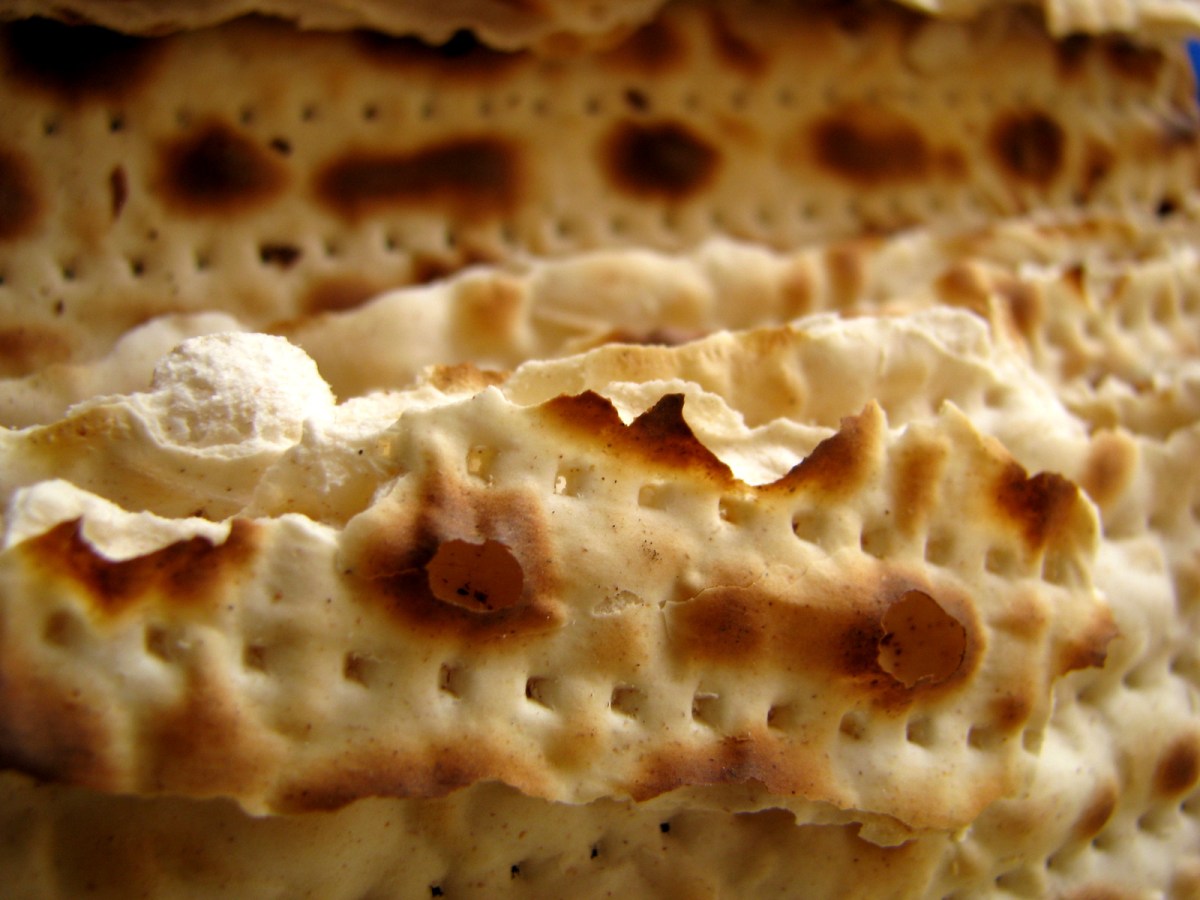
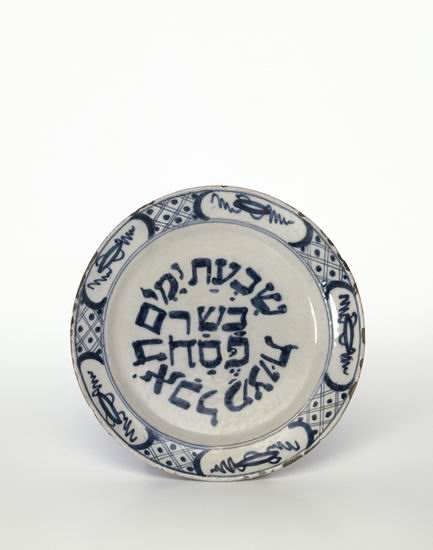
A few years back, in the week before Pesah, I was somewhat surprised to see an ad on my Facebook scroll for a Passover seder at a nearby Italian restaurant. This was not a kosher restaurant, and clearly all the more so during Pesah. So OK, there are Jews in this world for whom kashrut, for Pesah or otherwise, is not so high on the list of priorities. But the thing that got me was the line, “A Very Reformed Seder Service (20 min.).”

Now, leaving aside the term “reformed,” which many Reform Jews read as a slur – reform is an ongoing process, not something that was done in the past – the enticement that the ad seemed to be presenting was that this seder experience would be long on food and short on ritual, discussion, or singing. 

Now, it’s curious that Facebook thought I would be interested in this seder (perhaps the algorithm has since improved). But all the more so, it’s curious that some people would be so inclined as to minimize the best part of Pesah, that is, the story, and (I presume) toss out many of the essential, traditional food items in favor of a pasta dinner? Particularly because, being the second-most-observed ritual of the Jewish year, the seder formula clearly works.

Prior to this year, statistics have shown that about three-quarters of American Jews come to a seder. What will happen this year is probably a dramatic decline in the number of seder attendees, because my assumption is that the majority of us go to somebody else’s seder, and in our current circumstances, we cannot do that. (That is the primary reason, BTW, that I am live-streaming the second-night seder from my home.)

But what makes the seder so popular? Is it the food? Is it the story? The songs? The gathering of family? The short answer is, yes to all.

This will not be the first time that I have mentioned Marshall Sklare, the Brandeis sociologist who chronicled American Jewry in the middle of the 20th century, suggested that American Jews are most likely to maintain Jewish rituals that:

  1. May be redefined in modern terms
  2. Do not demand social isolation (i.e. requirements that separate the Jew from the wider society; yes, I know that sounds curious in the present moment!)
  3. Offers a Jewish alternative to a non-Jewish holiday (e.g. Easter, Christmas; this was something that was brought to my attention by one of our teens at a USY “Lunch & Learn” I facilitated last week, so it’s still valid)
  4. Centers on the child
  5. Is infrequent (e.g. annual, rather than weekly or daily)

Sklare pointed to the Pesah seder and the lighting of Hanukkah candles as being the best examples of such rituals in his book, America’s Jews, published in 1971. And really, little has changed in the last four decades: Pesah may still resonate because it pushes all those buttons. And Dr. Sklare’s thinking seems to still be on the money, half a century later. In this time of decreasing Jewish engagement, particularly outside of Orthodoxy, Pesah is a model that still works.

Away from the cold, academic glare, however, something else is true: Pesah works because we make it work. Perhaps in accord with Sklare’s first observation, that a ritual is likely to be observed if it may be redefined to suit contemporary issues, the message of Pesah continues to resonate with us. Slavery is still an unfortunate reality of today’s world (go to slaveryfootprint.org for more information on that); poverty and oppression may be found just about wherever we look. Those members of our people who fought for civil rights in the 1960s read the haggadah in that context, and there are those who read it today with the various ongoing struggles for equality – for women, for gays and lesbians, for non-Orthodox Jewish movements in Israel – in mind.

But I think there is more to the story.

In the central portion of the seder, the telling of the story of the Exodus from Egypt (the item identified as Maggid, “telling”), there is a classical midrashic exposition of a passage from the Torah. The passage is the one that begins, “Arami oved avi,” “My father was a wandering Aramean.” (Deut. 26:5-8). You are probably familiar with it. The Torah presents these verses as the proto-liturgical  monologue that the Israelites would recite when bringing their first fruits to the kohen, the priest, on Shavuot, and it encapsulates the story of Jacob and his family going down into Egypt, where they became a great nation, and then were enslaved, and God took us out of Egypt with a mighty hand and an outstretched arm, etc., etc.  

Within the midrash is the following comment on four words from Deut. 26:5:

וַיְהִי שָׁם לְגוֹי גָּדוֹל. מְלַמֵּד שֶׁהָיוּ יִשְׂרָאֵל מְצֻיָּנִין שָׁם

Vayhi sham legoi gadol. Melamed shehayu Yisrael metzuyanim sham.

They became a great nation. It teaches that the Israelites were distinguished there [in Egypt].

The Rabbinical Assembly’s “Feast of Freedom” haggadah (which I use in my home) elaborates on this as follows:

[The Israelites] became unique… through their observance of mitzvot. They were never suspected of unchastity or slander; they did not change their names and they did not change their language.

What makes us a great nation, ladies and gentlemen, is just as true today: we have our own heritage, our own traditions, our own laws. We also have our own language, the Hebrew language, which underwent a tremendously successful revival in the last century as a modern tongue. We also continue to keep our own Hebrew names, which we continue to use, for example, when we call our daughters to the Torah for bat mitzvah, and when our sons stand under the huppah, and at various other points in the Jewish life cycle.

This is our Jewish framework. But in addition to this, wherever we have lived, we have also taken on some of the aspects of the wider (i.e. non-Jewish) society, although for the most part we were never entirely assimilated to the point where we lost our tradition. Indeed, you might make the case that it is in fact Judaism’s flexibility that has enabled us to maintain our distinctiveness while living among non-Jews, to be both Jewish and something else. 

Rashi, living in 11th-century France, spoke French and followed some French customs (he was a wine merchant, and historians suggest that he also wore a beret, smoked Gauloises, and exuded ennui). 

Rashi

Maimonides, in 12th-century Egypt, was a court physician to the sultan in Cairo, who treated Jews and non-Jews. 

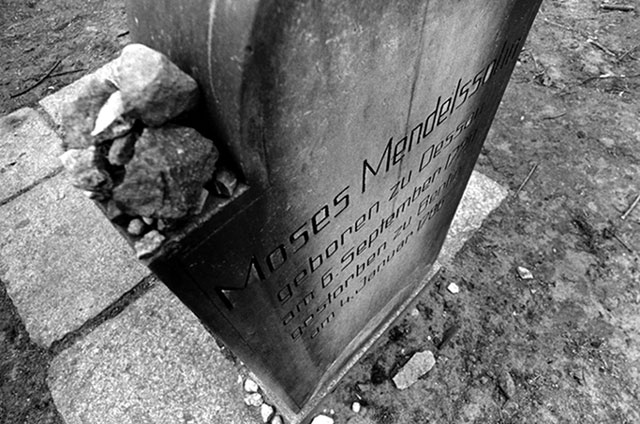
Moses Mendelssohn, widely considered the first modern Jew, joined the elite salons of 18th-century Berlin while continuing to practice his faith. 

Theodore Herzl, in the late 19th century, was a secular Hungarian Jewish journalist, and yet he arguably launched the most successful modern ideological product of Judaism, that is, Zionism. 

Throughout our history, although we kept Hebrew and our names and the Torah, we have navigated the wider culture and adapted to new environments and new host societies. And we have incorporated some things from the non-Jews around us as well: foods, including ritual foods, vary tremendously within our communities. And music and spoken languages and a whole range of minhagim, of customs, differ greatly depending on where your ancestors landed.

Yet there are certain commonalities of Jewish life that have continued for two thousand years or more – just one example: leather tefillin were found at Qumran, the site where the Essene sect lived at the northern end of the Dead Sea 2,000 years ago. But in every generation, each of us has seen ourselves come forth from slavery to freedom in our own context. We have never lived in a vacuum; we have continually scoured our tradition for contemporary relevance, searching for how the great works of the Jewish bookshelf continue to speak to us. Etz hayyim hi lemahazikim ba. The Torah is our Tree of Life, and in holding on to it we have upheld our nationhood even as we have clothed it in new styles and fabrics.

Had we been rigidly committed to one particular mode of living, Judaism could have died many times over: when the Babylonians destroyed the First Temple in 586 BCE. Or when the Romans laid waste to the Second Temple in 70 CE. Or after the great yeshivot around Baghdad closed up shop in the 11th century CE. Or after the Expulsion from Spain in 1492. Or after the Shoah / Holocaust.

So here is a suggestion. When you sit down to your seder on Wednesday evening, do what Jews have always done: make it yours! Make it relevant! Don’t just do what you’ve always done. That is NOT how Jews do it!

Here are some examples:

When the Four Questions come up, don’t just limit yourself to those traditional four. Ask more questions!

When telling the story of Pesah, don’t simply read what’s in the good ol’ Maxwell House haggadah. Have somebody summarize it in their own words. Get up from the table and act it out! Assign parts!  Have everybody improvise parts of the story! If you have time, prepare some costume items: a staff for Moses, a crown for Pharaoh, a megaphone for God (maybe there is an app for that?), etc.

Plague masks

Have discussion questions prepared: What are you a slave to? What are the things that you are grateful for? What are the things that make your life bitter? In what ways do you feel free?  Why is spring the best time of year? What hametz-laden item do you miss the most during these eight days and why?

These ideas work for families, for children, for sullen teens, for adults, everybody!

Ladies and gentlemen, what makes Pesah work is you! Your creativity, your enthusiasm, your joy. It’s not just about the kids, as Sklare suggested. It’s about you, living here in 21st-century America. 

So go ahead, set the text of the haggadah to the music of Lil Nas X, or to the music of Hamilton, or whatever. Make it yours. Make it relevant. That is how we will maintain our Jewishness and the eternal appeal of our rituals. Hag sameah!

~

Rabbi Seth Adelson

(Delivered at Congregation Beth Shalom, Pittsburgh, PA, Shabbat morning, 4/4/2020.)
Categories
Festivals Sermons Yizkor

Remembering and Forgetting – Shemini Atzeret 5780 / Yizkor

As I have aged, I have learned to be somewhat more forgiving of my own brain. When I was younger, it seemed that I remembered everything. Today, I sometimes feel lucky if I remember the most important things: to spend time with my children, to eat lunch during a busy day at work, to tell my wife how much I love her.

How many of us are sometimes frustrated by not being able to remember something? Where you left the keys, as a relatively innocuous example, or something more contentious, like your spouse’s birthday. How many of us wish that our brains worked more like the RAM in a computer – efficient storage that is always available and easy to find? Wouldn’t it be awesome if you never forgot anything?

You may have heard that there are a handful of people in the world who are endowed with a curious condition that enables them to remember everything. That is, you give them a random date on a calendar, from fifteen years ago, and they will tell you what they wore that day, what they ate for lunch and who they bumped into on the street. This condition is known as “hyperthymesia,” and although it does not allow for “total recall,” it does allow a person with the condition to remember virtually everything that relates to them. For example, while a person with the condition might remember what clothes she was wearing on a certain day, she may not be able to recall what her friend was wearing, unless the friend’s outfit was somehow related to her personally. Dozens of cases have been reported in the last 13 years or so, since the condition was formally identified by neurobiologists. The actress Marilu Henner, whom you may recall from the late ‘70s/early ‘80s TV show, Taxi, apparently has this condition.

Imagine for a moment how cool that might be! School would be a breeze; you would never be embarrassed again by not knowing the name of somebody who you met five years ago at a party after a few drinks; you would never misplace your keys ever again. Speaking as a rabbi, I could definitely see how such a condition would make my life and my work so much easier.

And yet, maybe not.

There is a good reason to forget things, and perhaps the reason why, evolutionarily speaking, this feature did not become standard among humans.

Certain things need to be forgotten, and particularly those things that cause us pain and emotional anguish. We need to forget the pain of loss, the grief associated with the death of a parent or sibling or God forbid, a child. We need for ebb of time to dull the sharp memories, the ones that push our sorrow buttons. We need for those memories to be less fresh, so that we can go on about our lives with some semblance of normalcy.

Not to forget entirely, of course. But rather, to lessen the heartache somewhat. For the person who remembers clearly what he or she did on any particular day, a great personal loss must be ever-present. The stabbing pain of feeling like, “How can I possibly live without her?” must be as fresh a decade later as it was at the start of shiv’ah.

Thank God for the hollowing-out of memories that time brings. We learn to live with loss, but of course it takes time. That is the point of shiv’ah, of sheloshim, of yahrzeit – the calendrical framework of Jewish mourning. Seven days of deep pain, pain which prevents us from leaving the house, which can only be slightly soothed by the presence of others in our homes bringing comfort. Then three more weeks of somewhat less grief, when we saunter out of our homes, return to work maybe, but still feel like nothing’s quite right. And then the balance of a year, in which we acknowledge our ongoing grief by limiting our joyous activities.

And thereafter, we set aside just a few days for remembrance, to recite prayers of memory.

Memory is essential to Judaism, and our framework of mourning is known to be one of the best. But even beyond that, we have not one, but two days in the contemporary Jewish calendar called “Yom haZikaron,” the day of remembrance: Rosh Hashanah we all know. Less known to American Jews, but extraordinarily important in Israel is the national Memorial Day for fallen soldiers, a day marked by solemn ceremonies around the country, set aside for public grief for those who gave their lives defending the State of Israel. (It is an unfortunate shame that we Americans do not take our own Memorial Day as seriously as Israelis do.)

But even so, our relationship to memory is complicated. Our tradition wants us to remember things that we did not personally experience: the entire holiday scheme of the Jewish year is intimately tied to our history: the Exodus from Egypt; receiving the Torah at Mt. Sinai; wandering in the desert; the destruction and rebuilding of Jerusalem; the Sho’ah. We are, in some sense, striving to constantly relive our ancient, communal memories, to make sure that we do not forget, that we remember to connect our gratitude for what we have today with all of those past events. We have a history that stretches back thousands of years, and we carry it with us wherever we go. That is an essential piece of Judaism.

And yet, even though we set aside one day a year to mourn the desolation of Jerusalem by the Babylonians and then the Romans, we do not relive that every day. We understand that communal grief has its day. Even though we remember and mourn the 6 million murdered by the Nazi machine in our own time, we also still acknowledge that there can be joy in our lives. On Shabbat morning, we read from Megillat Qohelet, the book of Ecclesiastes (3:1-4):

לַכֹּ֖ל זְמָ֑ן וְעֵ֥ת לְכָל־חֵ֖פֶץ תַּ֥חַת הַשָּׁמָֽיִם׃
עֵ֥ת לָלֶ֖דֶת וְעֵ֣ת לָמ֑וּת עֵ֣ת לָטַ֔עַת וְעֵ֖ת לַעֲק֥וֹר נָטֽוּעַ׃
עֵ֤ת לַהֲרוֹג֙ וְעֵ֣ת לִרְפּ֔וֹא עֵ֥ת לִפְר֖וֹץ וְעֵ֥ת לִבְנֽוֹת׃
עֵ֤ת לִבְכּוֹת֙ וְעֵ֣ת לִשְׂח֔וֹק עֵ֥ת סְפ֖וֹד וְעֵ֥ת רְקֽוֹד׃

A season is set for everything, a time for every experience under heaven:
A time for being born and a time for dying, A time for planting and a time for uprooting the planted;
A time for slaying and a time for healing, A time for tearing down and a time for building up;
A time for weeping and a time for laughing, A time for wailing and a time for dancing;…

The words of Qohelet ring across the ages: we cannot dwell in grief forever; neither can we ignore that grief. Rather, there is a time for that.

Qohelet does NOT say, there is a time to remember, and a time to forget. But the Catalogue of Times also reflects back to the opening verses of the book (1:4-5):

דּ֤וֹר הֹלֵךְ֙ וְד֣וֹר בָּ֔א וְהָאָ֖רֶץ לְעוֹלָ֥ם עֹמָֽדֶת׃
וְזָרַ֥ח הַשֶּׁ֖מֶשׁ וּבָ֣א הַשָּׁ֑מֶשׁ וְאֶ֨ל־מְקוֹמ֔וֹ שׁוֹאֵ֛ף זוֹרֵ֥חַֽ ה֖וּא שָֽׁם׃

One generation goes, another comes, But the earth remains the same forever.
The sun rises, and the sun sets— And glides back to where it rises.

With each rising and setting of the sun, life goes on. Our pain will ease; the peaks and troughs of life will even themselves out. And we continue. We go on. We live with our memories, the painful ones and the joyful ones. We do not forget, but we manage with what is on our plate.

This is the last Yizkor / remembrance service that we will observe in the one year of mourning following the anti-Semitic attack in our neighborhood. There will always be a before and after in Pittsburgh; there will always be a weightiness in our hearts for those whom we lost, and for the sense of security our community lost. That day will be seared in collective memory forever. We will never forget.

I must say that I am somewhat relieved that the actual Yahrzeit (annual day of remembrance which corresponds to the day on the Jewish calendar when a loved one passed away) is a few weeks after the date that the rest of the world will associate with Pittsburgh. When the media people doing follow-up stories leave, when the cameras have moved on, we will muster our grief together and mark the 18th of Heshvan (November 16, 2019) by saying Qaddish as a community – quietly, mournfully, appropriately.

The horror of that day and its aftermath will continue to live with us. But as it recedes in memory, as we learn to grapple with it from a distance, as we remember those whom we lost, we also re-establish our sense of selves: who we are, what we stand for, and why we must continue to lean into our tradition. We re-establish our violated sanctuary as sacred space.

I remember Cecil, who wrote me notes of gratitude which I could not read. I remember Dan, always with a smile, always with a friendly update. And my memories of them drive me forward to proudly wave my lulav and etrog, to recite words of tefillah with my community, to celebrate around the Shabbat table and resonate with our ancient tradition.

I continue to meditate on the words of Qohelet – dor holekh, vedor ba… vezarah hashemesh uva hashamesh – one generation goes, and another comes, the sun rises and the sun sets – and understand that I am neither the first nor the last Jew to feel the pain of hatred, of persecution, of murder. I will not be the last Jew to cry out in anger and frustration, as Rabbi Levi Yitzhaq of Berditchev did in bringing a din toyre, a lawsuit against God. I will not be the last Jew to recite Qaddish for martyrs.

But I will certainly do whatever I can to try to make this world a place where more Jews, and more people everywhere, are liberated from painful memories.

As we turn now to Yizkor, the service of remembering, we should be at once grateful that memories recede, and also grateful that we have the framework of our tradition to guide us through dark times and to sanctify our holy moments.

~

Rabbi Seth Adelson

(Originally delivered at Congregation Beth Shalom, Pittsburgh, PA, Shemini Atzeret, Monday morning, 10/21/2019.)

Categories
Festivals Sermons

Happiness? Or Meaning? (Turn! Turn! Turn!) – Shabbat Hol Hamo’ed Sukkot 5780

Sukkot is acknowledged throughout Jewish tradition as the happiest festival of the year. We referred to it today in Shaharit / the morning service as “Zeman simhateinu,” the time of our joy. The Torah reading from this morning included the commandment, usmahtem lifnei Adonai, you shall rejoice before God on this holiday.

And what’s the best-known Sukkot song?

וְשָׂמַחְתָּ֖ בְּחַגֶּ֑ךָ… וְהָיִ֖יתָ אַ֥ךְ שָׂמֵֽחַ׃

Vesamahta behaggekha… vehayyita akh sameah.

You shall rejoice in your festival, and you shall have nothing but joy. (Devarim / Deuteronomy 16:14-15)

But what does it mean to rejoice? To be happy? And is happiness a goal unto itself, or should we rather seek “meaning”? And what does “meaning” mean, anyway?

When I was a sophomore at Cornell, the folk singer Pete Seeger played on campus. I have always loved folk music, and Seeger’s performances (he was already quite advanced in years then) were special because of the way he incorporated the audience, urging them to sing with him as he accompanied on the banjo.

One of Pete Seeger’s best-known songs goes like this (sing with me):

To everything (turn, turn, turn)
There is a season (turn, turn, turn)
And a time for every purpose under heaven
A time to be born, a time to die 
A time to plant, a time to reap 
A time to laugh, a time to weep 
A time to kill, a time to heal

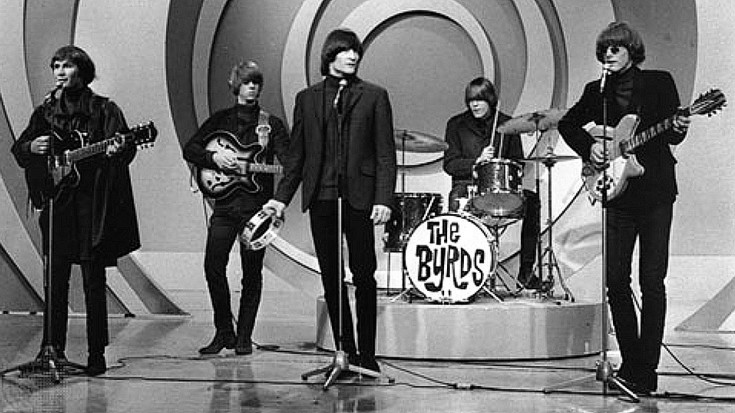
Of course, it was popularized by the Byrds. But Seeger wrote the music.

Not the lyrics, however. It is almost a direct quote of the opening verses of Chapter 3 of the King James translation of Ecclesiastes, known in Hebrew as Qohelet, some of which we read earlier. This particular passage, to which scholars refer as “the Catalogue of Times,” is a reminder that while every event in life occurs in its proper time, we have no control over these times; the “when” is solely in the hands of God. Since they are paired as opposites, one way of reading this is that neither happy times nor sad ones are to be expected. Reality is such that sometimes we are happy, sometimes we are sad, and much of the time we are neither.

Qohelet, ostensibly written by an ancient king of that name, is among the more-challenging books of the Tanakh, theologically-speaking. It puts itself forward as a book of philosophy (e.g. 1:14: “I observed all the happenings beneath the sun, and I found that all is futile and pursuit of wind.”), but, somewhat like the book of Job, leaves us with a very unsatisfying conclusion. To Qohelet, effectively everything that we pursue – wealth, wisdom, food and drink, labor, and so forth – is vanity and emptiness. Nothing will bring you lasting satisfaction. Qohelet’s conclusion is, therefore, merely to enjoy the things that you have when you have them, fear God and perform the mitzvot. That’s it.

Not very satisfying, right? Perhaps, though, there is an important message here. After all, there must be a reason that we read this book during Sukkot, the most joyous festival of the year. So what’s the reason? One possibility is that Qohelet points to the transience of human life, which is also suggested by the fragile, temporary sukkot in which we are commanded to live for the week. Another is that fall is the season that most suggests mortality, a feature of our lives that the Catalogue of Times clearly invokes.

Here is another thought: in the wake of Yom Kippur, after beating our chests and seeking return and forgiveness and afflicting our souls and so forth, it may be our intent to seek happiness, albeit perhaps from a new perspective. Qohelet is a reminder that happiness is not an end unto itself, but rather ebbs and flows with the randomness of our lives.

Speaking of ebb and flow, allow me to return for a moment to Cornell University of the late ‘80s and early ‘90s. Despite a physical chemistry lecture that occasionally made me consider javelin catching as a career, those were great days. The academic ferment of that particular ivory tower provided a rich backdrop for developing strong social bonds and discovering who I was as a person. I had good friends and good times. It makes me think of the well-known song, “Those Were the Days” (Mary Hopkins, 1968, although based on a Russian folk tune).

We tend to speak of the “good old days.” Maybe those were they; there is a time for every purpose under heaven.

But perhaps reality is not so simple; we do tend to see the past through etrog-scented glasses (or something like that). The gypsy-punk band Gogol Bordello recorded a philosophically-minded song titled “Ultimate,” which decries the existence of such days. On the contrary, the song suggests that to refer to the “good old days” is in fact an insult to both the present and future:

There were never any good old days,
They are today, they are tomorrow
It’s a stupid thing we say
Cursing tomorrow with sorrow.

Qohelet, I think, would agree with Gogol Bordello. There were no “good old days,” says Qohelet. Ve-ein kol hadash tahat hashamesh. And there is nothing new under the sun (Eccl. 1:9).

Maybe my university days were the good old days, or maybe these days are just as good, and 5780 will be even better. Only God knows, and about that I’m not even so sure.

One thing, however, is certain: happiness is fleeting, while “meaning” is enduring. Rather than seek happiness, we should seek meaning. That is a message that is difficult for a college student to understand, but it is a message that we can glean from Jewish tradition.

An article in The Atlantic from a few years back cited a study published in the Journal of Positive Psychology that

asked nearly 400 Americans aged 18 to 78 whether they thought their lives were meaningful and/or happy. Examining their self-reported attitudes toward meaning, happiness, and many other variables — like stress levels, spending patterns, and having children — over a month-long period, the researchers found that a meaningful life and happy life overlap in certain ways, but are ultimately very different. Leading a happy life, the psychologists found, is associated with being a “taker” while leading a meaningful life corresponds with being a “giver.”

This is a fascinating revelation. Perhaps Qohelet’s suggestion to fear God and fulfill the mitzvot is an ancient attempt to steer us away from seeking happiness in favor of meaning. You might make the case that a certain portion of the mitzvot are about giving, not taking: giving your time and yourself over to holy pursuits. It’s not what we reap in this world, to borrow Qohelet’s language, but rather what we sow.

And that may in fact be one message of Sukkot. Why does the Torah command us to live in a shack in the backyard for a week? To remember that it is not our possessions that are important and valuable; that meaning may be sought in the simplest environment. That living in a sturdy, well-appointed home, when compared to a shaky, non-climate-controlled sukkah, might seem more like taking than giving.

The article goes on to say:

Meaning is not only about transcending the self, but also about transcending the present moment — which is perhaps the most important finding of the study, according to the researchers. While happiness is an emotion felt in the here and now, it ultimately fades away, just as all emotions do; positive affect and feelings of pleasure are fleeting. The amount of time people report feeling good or bad correlates with happiness but not at all with meaning.

Meaning, on the other hand, is enduring. It connects the past to the present to the future. “Thinking beyond the present moment, into the past or future, was a sign of the relatively meaningful but unhappy life,” the researchers write. “Happiness is not generally found in contemplating the past or future.” That is, people who thought more about the present were happier, but people who spent more time thinking about the future or about past struggles and sufferings felt more meaning in their lives, though they were less happy.”

In other words, happiness is in the moment. Those university days were joyful for what they were, but the real satisfaction of living comes from the fullness of life’s experiences: the glorious and the miserable, the bountiful and the meager, the cacaphonous and the silent, and the entire palette of humanity in between. The researchers agree that “What sets human beings apart from animals is not the pursuit of happiness, which occurs all across the natural world, but the pursuit of meaning, which is unique to humans.”

To everything there is a season, and we all need the carefree periods in our lives in which to pursue the momentary happiness that sustains youth. But we also need, at some point, to reach deeper, to seek out those things which bring us meaning, to give as much as we have taken, and maybe more. The good old days are indeed today and tomorrow.

So it is as much comforting your screaming child in the middle of the night as it is to see her standing under the huppah, as much receiving a wonderful promotion as losing a parent that makes life meaningful and rich. These are the things that make us human, and this is the takeaway from Sukkot.

As we celebrate the transience of life on this joyous festival, we would do well not only to fulfill the mitzvah de’oraita (commandment from the Torah) of being happy in the wake of Yom Kippur, but also to reflect on the discomfort that comes with being removed from your house for a week. Spend some time in the sukkah, with the bugs and the rain and the cool fall breeze. It’s the human thing to do, and will help make these days as good as the good old days.

~

Rabbi Seth Adelson

(Delivered at Congregation Beth Shalom, Pittsburgh, PA, Shabbat Hol Hamo’ed Sukkot, 10/19/2019.)

Categories
Festivals Sermons Yizkor

Memory: The Golden Lacquer of Jewish Life – Second Day Shavuot 5779 / Yizkor

If I were to ask you, what are the primary features of Jewish life, what would you say?

I might argue that the glue that holds all of this together is memory: memory of our personal Jewish journeys, memory of our collective experience, memory of those who came before us. We pay attention to that last one in particular on Yizkor days, but of course our memory is always with us.

I participated in a panel last week at Rodef Shalom Congregation as a part of their annual congregational meeting. Rabbi Aaron Bisno of Rodef Shalom, Rabbi Jeff Myers of Tree of Life, Cantor Julie Newman of Tiferet, and I discussed the future of synagogues, moderated by Rabbi Danny Schiff. Rabbi Schiff’s first question was, “What is causing the disengagement from synagogues today?” Not a simple question, and of course nobody knows exactly what the answer is. But certainly we have a great challenge before us in making the synagogue “work” the way it has done in the past.

One reason, I think, that it is so much harder today to create the communal Jewish experience in synagogues is that we have become much less reflective as a society. We are so much more in the current moment than ever; the way the news cycle turns over, we hardly process yesterday’s craziness before today’s madness hijacks our attention. And that frantic pace has infected the entire range of our lives. Twitter is not a reflective medium. And I find this deeply troubling.

But Judaism, and synagogues in particular, offer us the reflective framework to reflect, if we only take it. Our tradition, which ideally infuses our lives with holiness, offers a refuge from the cut-and-thrust of life today. And we really need that refuge.

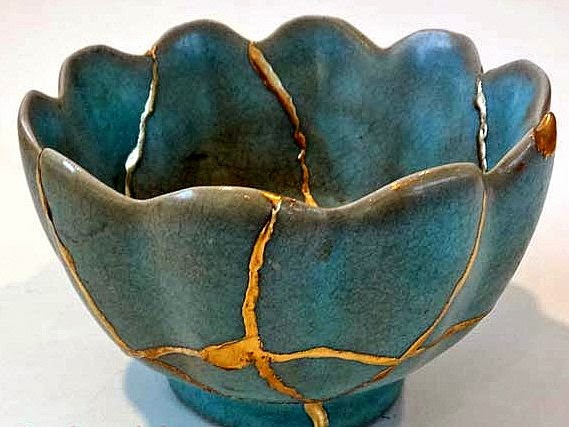
It was with great pleasure that I encountered a recent piece by New York Times columnist David Brooks that captured a beautiful metaphor for Jewish life. In it, he describes the centuries-old Japanese craft known as Kintsugi bowls. These are ceramic bowls that are hundreds of years old, but what makes them special is not the age or the design of the bowl, but that they have at some point been broken, and then the shards are put back together with the Kintsugi technique, which dates to the 15th century, and uses a combination of gold and lacquer.

Kintsugi bowl

The resulting bowl has exquisite gold veins running through it, making an otherwise-ordinary bowl unique. Every one is different; every pattern is special. As Brooks puts it,

There’s a dimension of depth to them. You sense the original life they had, the rupture and then the way they were so beautifully healed. And of course they stand as a metaphor for the people, families and societies we all know who have endured their own ruptures and come back beautiful, vulnerable and whole in their broken places.

What fascinates me about this concept is that it is very Jewish:

  • On a personal level, what is broken can be made whole again (cf. Yom Kippur). In fact, the Jewish holiday cycle reinforces over and over the idea that we are all individually broken, and that we can always seek and achieve wholeness once again.
  • From the perspective of the Jewish nation, it is our brokenness that has enabled us to continue as a people (cf. Tish’ah Be’Av). Destruction and rebuilding are an essential piece of Jewish history; our nation is conceived in emerging from slavery; the Second Temple follows the destruction of the First; the yearning for rebuilding has spurred us onward since the destruction of the Second Temple; establishment of the State of Israel followed the Sho’ah, and so forth.
  • Memory is the golden lacquer of Jewish life. What makes us unique and special is our personal and collective memories, our having been broken through loss and suffering, and then repairing ourselves with the reinforcement of remembrance.

We are not the people who shy away from brokenness. On the contrary, Judaism highlights the fragility of human life. On Rosh Hashanah and Yom Kippur, during the central Untaneh Toqef prayer of the Musaf service, we are reminded in a stream of Tanakhic and midrashic references of our frailty and our capacity to be healed once again:

אָדָם יְסוֹדוֹ מֵעָפָר
וְסוֹפוֹ לֶעָפָר
בְּנַפְשׁוֹ יָבִיא לַחְמוֹ
מָשׁוּל כְּחֶרֶס הַנִּשְׁבָּר
כְּחָצִיר יָבֵשׁ וּכְצִיץ נוֹבֵל
כְּצֵל עוֹבֵר וּכְעָנָן כָּלָה
וּכְרוּחַ נוֹשָׁבֶת וּכְאָבָק פּוֹרֵחַ
וְכַחֲלום יָעוּף

Our origin is dust, and our end is dust.
With one’s soul a person brings bread
[Jewish text compares humanity to] a broken vase
Dried-up grass and a withering bud
A passing shadow and a fading cloud
Blowing wind and blossoming dust
And like a dream that floats away.

As we recite these words on High Holidays, we acknowledge that we are as much a product of our cracks as we are our whole pieces, that the essence of life is being broken and repaired; that our brokenness makes us stronger, more beautiful, more resilient.

Leonard Cohen (zikhrono livrakhah / may his memory be for a blessing) sang, “There is a crack in everything. That’s how the light gets in.”

Montreal, May 2019

It has been speculated that Cohen was referencing here the concept, from Rabbi Isaac Luria’s kabbalistic formulation, of the shevirat hakelim, the breaking of the vessels. It’s a complicated tale, but in brief, when God created the world, said Rabbi Luria in 16th-century Tzefat, the primordial vessels (kelim) were unable to contain the light poured into them, and they shattered, casting sparks of light into the universe. Creation of the world necessitated the breaking of these vessels. The world begins with an act of brokenness, and those Divine sparks that are still out there for us to uncover are there due to that breakage.

The cracks within each of us are there for good reason – they help us see the Divine, the kedushah / holiness in ourselves and the kedushah in others.

Like the Kintsugi bowls, our lives, our personalities, are enhanced by the fracturing and repairing. We are made more beautiful by our unique flaws, and the Godly light that shines through each of us, reflected by the golden glue of memory, helps us illuminate each other and the world.

And all the more so, on a Yizkor day, a day on which we remember those who came before us, we recall that those who gave us life did so not that we should be perfect, not that we should be without flaw, but quite the opposite. Our parents, our spouses, our siblings, all those whom we remember today, their imperfections were what made them who they were, made them holy. And so too did they see the cracks in us that make us all individually, uniquely human and yet infused with Divine light.

Ladies and gentlemen, I have often remarked that we, the Jews, do death and mourning very well. Yizkor, yahrzeits, plaques, shiv’ah, sheloshim, qaddish, etc.. We have the tools with which to wrap our minds and hearts around the grief that comes with loss. We have the communal framework that enables us to support each other in times of great pain. We are awesome at reflection and remembrance.

But even more so, it is the memory of losing those whom we love most that makes us who we are. That memory is what holds the shards of our souls together, that stitches us back up, scarred from the experience, but ultimately making us stronger, more nuanced, more human, more able to perceive and reflect the holy sparks all around us.

~

Rabbi Seth Adelson

(Originally delivered at Congregation Beth Shalom, Pittsburgh, PA, second day of Shavuot 5779, 6/10/2019.)

Categories
Festivals Sermons Yizkor

We Need More Ritual – Pesah Day 8 / Yizkor 5779

A little more than a week ago, two days before Pesah, Rabbi Amy Bardack, a member of this congregation whom many of you know, walked into my office to sell me some hametz. Now, of course, you know how this works: members of the community sell their hametz to me, usually by filling out a form that declares the sale, and then I in turn sell their hametz, plus my own, plus all the hametz in this building, to somebody who is legally permitted to own it during Pesah, according to halakhah / Jewish law. (As you may know, it is not only forbidden to eat any form of the five species of hametz – wheat, barley, oats, spelt, and rye – during the eight days of Pesah, but also it is forbidden to own or benefit from it. And, by the way, if you do not sell your hametz or get rid of it all, and you own it during the holiday, then it may never be eaten by a Jewish person, ever.)

So the stakes are pretty high here, particularly for expensive items like single-malt Scotches, etc.

So most people fill out the form and send it in with a donation, and my assistant Audrey collates all the addresses and makes a list for our communications director Anthony.

But Rabbi Bardack did not merely send the form in, along with a donation for ma-ot hittin, providing for the needy in our community before the holiday. She felt she needed to make a complete ritual out of it, so she came to my office and made the exchange the old-fashioned way, face-to-face.

I asked her why it was so important to make the sale in person. She responded that she wanted to do it “right,” and that there was something particularly holy about performing a ritual in the traditional way.

Ritual, said Rabbi Bardack, gives us a moment of purity. No matter what kind of craziness might be going on in our lives, our work, our families, no matter what sort of political insanity is taking place on the national stage, no matter what sort of bloodshed might be taking place in the world, performing a ritual is a brief respite, an opportunity to feel holy, at least for a moment.

We all have the opportunity to push aside everything else for a moment of qedushah, of holiness. In fact, we have that opportunity multiple times every day. One tradition suggests that we should say 100 berakhot / blessings every day; you can almost fulfill that merely by reciting shaharit, minhah, and ma’ariv (the three regular daily services in Jewish life). But even if you cannot pray that much, you have opportunities to raise your HQ (holiness quotient) all day long: every time you eat something, for example, you can say a berakhah that will elevate your sandwich or snack food from the mundane to the divine. (The Talmud, in Berakhot 35a, tells us that eating food without saying a berakhah is something akin to theft.) Or every time you smell a fragrant plant or flower or tree. Or see a rainbow or a beautiful mountain. Or hear good news, or bad news. There are many such opportunities for holiness – they need not be relegated to Shabbat morning in the pews.

Ritual gives us a moment of purity. We cannot control so many aspects of our lives. But we can be momentarily holy.

David Brooks, a columnist for the New York Times, recently opined that we need ritual. He describes playing a game called, “There should be a ritual for…”

There should be a ritual for when a felon has finished his sentence and is welcomed back whole into the community. There should be a ritual for when a family moves onto a street and the whole block throws a barbecue of welcome and membership. There should be a ritual for the kids in modern blended families, when they move in and join their lives together. There should be a ritual for when you move out of your house and everybody shares memories from the different rooms there.

He points to various religious rituals to make his case. Brooks, who is Jewish, also notes that the majority of rituals in Judaism involve a physical action: putting on tefillin, lighting candles, and so forth. And they help frame our days, our lives, with the sense of connection – to God, to community, to family, to others around us who also need that connection.

So great is our hunger for rituals that when we come upon one of the few remaining ones — weddings, bar mitzvahs, quinceañeras — we tend to overload them and turn them into expensive bloated versions of themselves.

Between these lavish exceptions, daily life goes unstructured, a passing flow of moments. This means we don’t do transitions well. Rituals often mark doorway moments, when we pass from one stage of life to another. They acknowledge that these passages are not just external changes but involve internal transformation.

Our society has become so informal, he suggests, that we have let old rituals go and not replaced them with new ones. We are therefore running a kind of “ritual deficit,” wherein we need to mark the holy moments of our lives, but we do not have the tools or even the framework in which to do so.

And that brings us back to today. Yes, this is the eighth day of Pesah, a holiday marked with a plethora of associated rituals: the cleaning, the hunt for hametz and the burning thereof, the aforementioned sale, the siyyum (learning a tractate of Talmud in order to celebrate and not fast on the day before), the seder and everything associated with it (lots of discrete sub-rituals there), services with special melodies for the festival, the recitation of Tal, and so forth. Loads of rituals. In fact, I am often surprised by the staying power of Pesah rituals. We had 80 or so people show up for the siyyum eight days ago, far more members of our community than are aware of, say, the 10th of Tevet or the 17th of Tammuz, other minor fast days. We know from our own survey data that virtually all the members of Beth Shalom attend a Pesah seder. This is a holiday that continues to draw us into ritual like no other.

And then there’s Yizkor, more properly referred to as Hazkarat Neshamot, the ritual of remembering the souls of those whom we have lost. This is, in fact, our first such public remembering since the 18th of Heshvan, just over six months ago. This is a ritual that is so deeply connected to who we are as Jews.

There is something very important here – not only the value of ritual in general, but in particular, the way that we grieve for those whom we have lost. We do death well. Memorials, remembrance. We have the tools with which to wrap our minds and hearts around grieving for a lost loved one.

And, let’s face it: this is not the way our society is moving. Everything that happens in the world today is so viscerally current. It’s what scrolls by on our phone from one moment to the next. By the time one piece of news has hit the media, we barely have time to process it before we are on to the next item. We went in the last week or so from lamenting the burning of Notre Dame to mourning the murder of over 300 Catholic Sri Lankans.

But we take time to remember those whom we have lost. We have seven days (shiv’ah) surrounded by friends and family during the deepest days of grief; we have thirty days (sheloshim); we have a full year of mourning for parents. And then we have yahrzeit, an annual commemoration. And four times a year we have Hazkarat Neshamot (Yizkor). So many opportunities to remember. So much time in which to live with our grief, to recall those who gave us life, to hear their words echoing in our heads, to remember what they gave us, how they made us who we are.

David Brooks draws a fine point on it:

People can understand their lives’ meaning only if they step out of their immediate moment and see what came before them and what they will leave behind when they are gone.

It is through remembering those whom we lost that we draw out the meaning of our own lives. Why am I here, if not to live out and teach the values that my parents gave me? Why am I here, if not to strive to leave this world in a better state than it was when I entered it? Why am I here, if not to seek those moments of holiness, of purity, through ritual?

We need ritual. We need memory. We need meaning to fill out the whys of our lives.

Shabbat shalom, and hag sameah.

~

Rabbi Seth Adelson

(Originally delivered at Congregation Beth Shalom, Pittsburgh, PA, Shabbat morning and the eighth day of Pesah, 4/27/2019.)

Categories
Festivals Sermons

In Every Generation: The Return of Anti-Semitism – Pesah Day 1, 5779

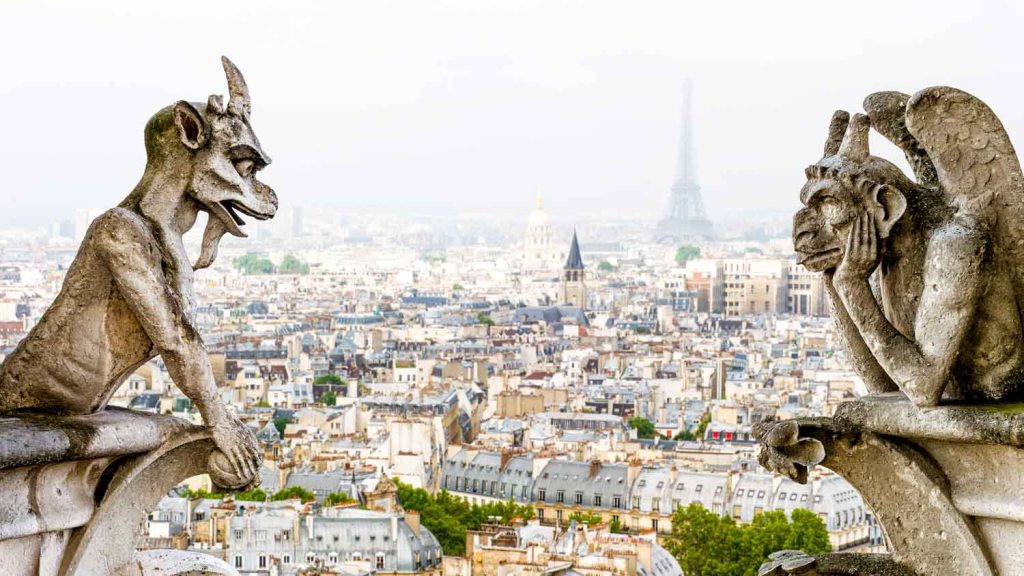
It was indeed tragic to watch Notre Dame de Paris on fire last week, to ache for the loss of a building so deeply connected to the history of Paris and Europe, to lament the destruction of antiquities and works of art. But the burning of Notre Dame is, I am sorry to report, a fitting metaphor for our current moment, when religious engagement is on the decline in the West, and the order of the Old World continues to slip away.

Gargoyles of Notre Dame

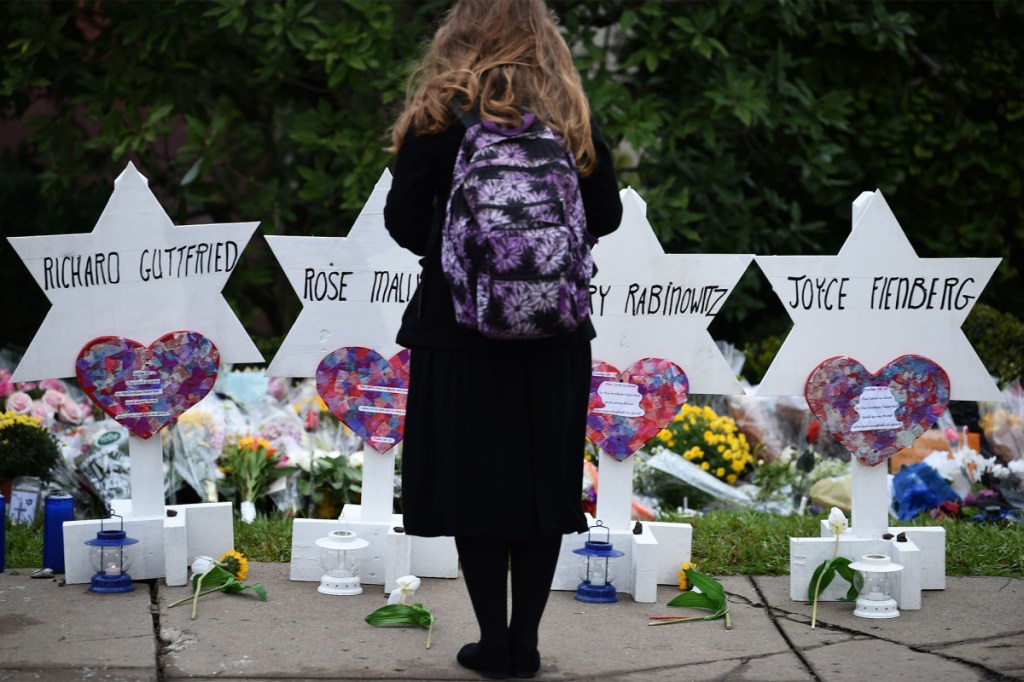
It is notable to me that we are living in a time in which many Jewish people feel kinship with our Christian, Muslim, Hindu, Sikh, and Buddhist neighbors, our partners in faith; consider the interfaith cooperation that has happened here in Pittsburgh in the wake of the 18th of Heshvan (the Hebrew date of Oct. 27th, 2018) – the local Muslim community fundraising, the churches that have reached out to us, the huge interfaith vigil, the members of our community that stepped forward to offer comfort to the Islamic Center of Pittsburgh after the Christchurch shooting, and so forth.

That has certainly not always been true. Religious differences, as we know, have historically yielded enmity and outright hatred between people of different faiths; blood libel accusations, wherein Jews in medieval Europe were falsely accused of killing Christian children to use their blood for making matzah, often emerged around this time of year.

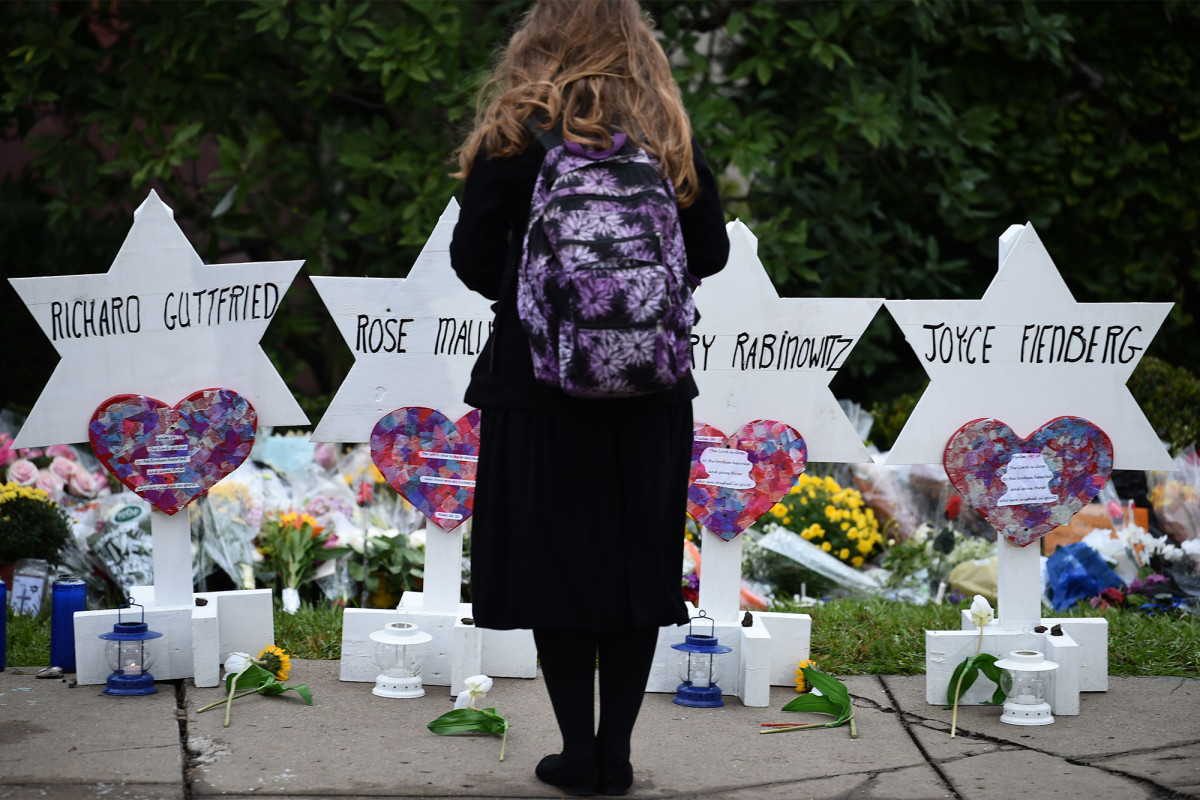
One theory about why we actually open the door “for Elijah” during the seder is that it is an attempt to show the non-Jewish neighbors that we are not doing anything nefarious. Nowadays, we might think of the open door as, rather, a metaphor for seeking opportunities to collaborate with our neighbors for the common good. Consider the program 2 for Seder, created by the daughter-in-law of Joyce Fienberg, z”l, an opportunity to share the Pesah ritual with people who have never been before.

***

I attended a meeting last week in New York that I need to tell you about. The meeting was convened by the Jacob Blaustein Institute for the Advancement of Human Rights, at the office of the American Jewish Committee in New York.

The purpose of the meeting was for people knowledgeable about anti-Semitism in America to share information about it with a very special guest, Dr. Ahmed Shaheed, who is the United Nations’ Special Rapporteur on Freedom of Religion or Belief. Dr. Shaheed, a diplomat from the Maldives whose last big project was documenting human rights abuses in Iran, is preparing a report on worldwide anti-Semitism to be delivered to the United Nations General Assembly next fall.

Seated around the table were a bunch of bold-faced names from the Jewish world who are experts on anti-Semitism. Among them were Mark Potok, formerly of the Southern Poverty Law Center and a well-known authority on hate groups, Ira Forman, US Special Envoy for Monitoring and Combating Anti-Semitism in the Obama administration,  Oren Segal, director of the the ADL’s Center on Extremism, Deputy Inspector Mark Molinari, head of the NYPD’s Hate Crimes Unit, Steven Bayme, Director of Contemporary Jewish Life at AJC, Brian Levin, Director of the Center for the Study of Hate and Extremism at Cal State University, San Bernardino, and others. Now I am clearly not an expert on the subject like all of these folks, but Dr. Shaheed had specifically requested hearing from the Pittsburgh Jewish community, so Jeff Finkelstein (CEO of the Jewish Federation of Greater Pittsburgh) and I were also seated around the table.

Among the things I learned were the following:

  • Our nation has seen annual increases in hate crimes for the last five years.
  • Hate crimes against Jews are vastly over-represented; 13% of all hate crimes are anti-Semitic. In NYC they are the majority of hate crimes.
  • The biggest single day for hate crimes in America in recent years was Nov. 9, 2016, the day after Election Day.
  • White supremacists have turned their focus to fighting the “white genocide,” which is, according to their understanding, engineered by Jews.
  • There is, in particular, a spike in online anti-Semitism. White supremacists gather in the darkest corners of the web to foment horrible ideas about Jews. It is worth noting that the Pittsburgh shooter and the Christchurch, NZ shooter were motivated by more or less the same types of online hatred, even if the latter did not go into a synagogue.
  • Anti-Semitism is now evident on the left and the right of the political spectrum, and although we tend to think of these two varieties as coming from different places, they now share memes and other material about the evil of the Jews.

I was asked to speak about how anti-Semitism has affected us in Pittsburgh, and I reported the following:

Five months after October 27th, many of us have returned to what looks outwardly like normalcy.  Even so, I have congregants who are still grieving, whose children are traumatized. I am told that it is difficult to get appointments with local therapists. The recent mosque attacks in New Zealand brought some of the pain back to the surface for many of us in Pittsburgh.

Brad Orsini, the Director of Jewish Community Security at the Jewish Federation of Greater Pittsburgh, has informed me that there has been a marked increase in anti-Semitic activity since October 2018 – more graffiti, more threatening phone-calls, leaflets, etc. He is called to respond to new threats almost every day. There are now four white supremacist organizations operating in Pittsburgh, whereas prior to Oct. 27th, there were only two.

Every Jewish building now has expensive armed guards, and is spending money we don’t have on making ourselves harder targets – metal detectors, silvered windows, electronic doors, and so forth. At least one synagogue in my neighborhood is opting to arm congregants with proper training. We cannot manage hatred, but we can at least try to prevent it from entering our communal spaces.

And beneath the surface, while we continue to grieve for those whom we lost in October, we are now all more anxious, more circumspect.”

Toward the end of the day, all of us in the room were challenged to state whether or not there might be some good news in all of this. Rabbi Noam Marans brought us back to interfaith cooperation: religious groups and individuals today are far more willing to cooperate with one another, and we see evidence that civil society is largely united against those who hate.

Certainly, in the wake of the 18th of Heshvan here in Pittsburgh, we all felt a very strong sense of neighborliness infuse the already-pretty-neighborly feel of our city. On Monday, two days after, I was visiting a congregant in the hospital, and after parking my car, an African-American woman saw me on the street, asked “Are you Jewish?” and when I said yes, offered to give me a hug, which I gladly took.

So the bad news regarding this is that, going back to where we started, religion and faithful living have a diminishing audience and therefore much-reduced influence in our society. So while at one time, anti-Semitism flowed to some extent from people of faith, today its primary purveyors are not religious. As you have heard me say before, the fastest growing religion in America is “None.” Rabbi Marans pointed out that 23% of Americans are now people without any religion, so no matter how much interfaith cooperation there is, we are not going to reach them.

Others around the table pointed to various types of initiatives that seek to help skinheads and Klansmen and other disenfranchised haters to see the humanity in the objects of their hatred, and to lift them up out of the swamp of racism and anti-Semitism. But while these groups have had a few successes, these are tiny compared to the challenge of entrenched fear and loathing digging ever deeper online.

So while there is not a lot of good news, perhaps the only thing we can lean into is Jewish tradition. Anti-Semitism is not new; we have always lived with this. Two items, in particular, from the traditional Pesah haggadah text, might be helpful to recall:

  1. The haggadah reminds us that,
    אֶלָּא שֶׁבְּכָל דּוֹר וָדוֹר עוֹמְדִים עָלֵינוּ לְכַלוֹתֵנוּ
    “In every generation, there are those who rise up to destroy us.”
    While for some decades now, many of us believed that this ancient fear was passé, we can no longer think that way. We must be more vigilant than we have been in recent decades.
  2. Later in the haggadah, we read,
    בְּכָל־דּוֹר וָדוֹר חַיָּב אָדָם לִרְאוֹת אֶת־עַצְמוֹ כְּאִלּוּ הוּא יָצָא מִמִּצְרַיִם
    We are continually obligated to see ourselves as having personally come forth from slavery, and to act on that vision to eliminate oppression from this world. In light of our new reality, this year we will very much see ourselves as being allied with people of faith around the world who are targeted for their religion, and we will act in solidarity with them. No Jew will feel the freedom to worship in safety when people of faith around the world feel that they too are bound by the shackles of fear.

We have to support initiatives that bring people together to breed harmony and compassion for the other. We may not be able to reach everybody we need to reach, but more love and connection will yield a bulwark against hatred.

As we gather once again tonight around the seder table, perhaps you might ask your family members and friends what they have done to gain allies, to raise the bar of cooperation, to ensure that those of us who love our neighbors win out over the forces of those who hate.

There is a custom from Rabbi Naftali Tzvi Horowitz of Ropshitz (Ropczyce, Poland, 1760-1827) that Elijah’s cup, the fifth cup on the table representing our desire for future redemption, be filled with wine from the cups of all the participants around the table. The suggestion is that we all have to play a role in bringing about that redemption; now is the time for us all to work together, even with those who are not at our seder table, to box out the forces of hate.

Shabbat shalom and hag sameah!

~

Rabbi Seth Adelson

(Originally delivered at Congregation Beth Shalom, Shabbat morning and the first day of Pesah, 4/20/2019.)

Categories
Festivals Sermons Source Sheets

A Great Discussion For Your Seder Table: Let’s Think About Redemption Differently – Shabbat HaGadol 5779

Pesah is the festival of redemption. Yetzi’at mitzrayim, the Exodus from Egypt is the archetype, the redemption that defines all future redemptions. In our tefillah, our Jewish liturgy, we invoke yetzi’at mitzrayim not only on Pesah, but year-round, every day. The haftarah (prophetic reading) for Shabbat HaGadol draws a fine point on it (Malachi 3:23):

הִנֵּ֤ה אָֽנֹכִי֙ שֹׁלֵ֣חַ לָכֶ֔ם אֵ֖ת אֵלִיָּ֣ה הַנָּבִ֑יא לִפְנֵ֗י בּ֚וֹא י֣וֹם ה’ הַגָּד֖וֹל וְהַנּוֹרָֽא׃

Lo, I will send the prophet Elijah to you before the coming of the awesome, fearful day of the LORD.

This penultimate line, which is then repeated as the last line (so that we don’t end on an unpleasant note), is not only the source of the name of Shabbat HaGadol, but also a reference to redemption, some future redemption. Eliyahu HaNavi is the herald of redemption – that’s why we often reference Eliyahu at liminal moments: havdalah, berit millah, Pesah.

But what are we hoping for, really? “Redemption” could mean many different things. In the ancient rabbinic mind, it meant restoring the sacrifices in the Beit haMiqdash, the Temple in Jerusalem, Jewish rule in Israel, united under a Davidic throne, i.e. mashiah. (By the way, that word means “anointed,” as does the Greek word christos, which comes to us in English as “christ.”) For some, it also meant resurrection of the dead, which we still find enshrined in the second paragraph of the Amidah, the standing, silent prayer that is one of the essential building blocks of every Jewish prayer service.

In other words, some of our ancestors yearned for a throwback to the good ol’ days under King David, when all the Jews were in one place at home and the Temple was functioning.

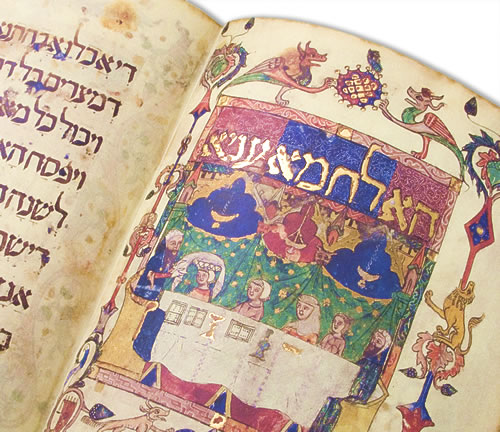
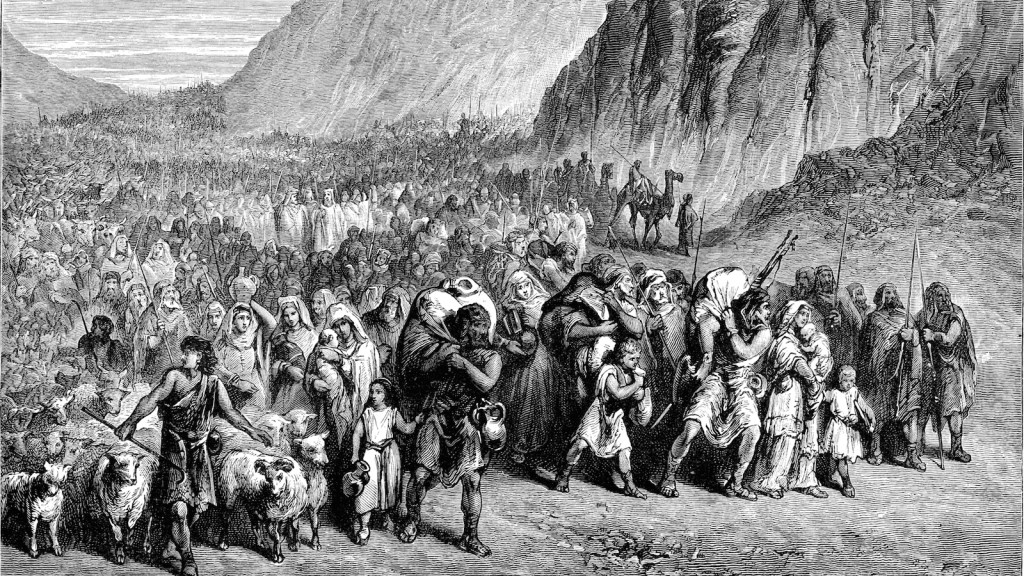
But perhaps the seder, and in particular the “traditional” text of the haggadah (the book that we read from on the first two nights of Pesah), which developed over centuries of exile and dispersion, were trying to emphasize a different, more immediate kind of redemption? Perhaps the great redemption, symbolized by the Exodus from Egypt, seemed simply too big, too unbelievable to be able to wrap our brains around, and so the rabbis conceived of something else

While Jews have focused for millennia on national redemption, perhaps that the haggadah is trying to tell us is that our focus should be on what you might call “personal redemption.”

So how might we see this reflected in the seder? Consider the following: before we tell the story of yetzi’at mitzrayim, during the “Maggid” (i.e. story-telling) section of the haggadah, what do we say (in Aramaic, BTW, so that we can all understand it, at least theoretically)

הגדה של פסח, מגיד, הא לחמא עניא ג׳
הָא לַחְמָא עַנְיָא דִּי אֲכָלוּ אַבְהָתָנָא בְאַרְעָא דְמִצְרָיִם. כָּל דִכְפִין יֵיתֵי וְיֵיכֹל, כָּל דִצְרִיךְ יֵיתֵי וְיִפְסַח. הָשַּׁתָּא הָכָא, לְשָׁנָה הַבָּאָה בְּאַרְעָא דְיִשְׂרָאֵל. הָשַּׁתָּא עַבְדֵי, לְשָׁנָה הַבָּאָה בְּנֵי חוֹרִין

Pesah Haggadah, Magid, Ha Lahma Anya 3
This is the bread of poverty that our
ancestors ate in the land of Egypt. Let all who are hungry come and eat, anyone who is in need should come and partake of the Pesah sacrifice. Now we are here, next year we will be in the land of Israel; this year we are slaves, next year we will be free people.

Why do we open with this? To focus our attention not only on the ancient, national redemption from slavery in Egypt, but also on redemption that might be achieved in our day. The goal is to remind us, right up front, that there are people in need all around us, and it is up to us to reach out to them – not necessarily in that moment, but tomorrow, next week, next month, and thereafter.
Consider the following from the 20th-c Israeli poet Yehuda Amichai, from one of his best-known poems, תיירים / Tourists:

אמרתי בלבי: הגאולה תבוא רק אם יגידו להם: אתם רואים שם את הקשת מן התקופה הרומית? לא חשוב: אבל לידה, קצת שמאלה ולמטה ממנה, יושב אדם שקנה פֵּרות וירקות לביתו

I said to myself: redemption will come only if their guide tells them, “You see that arch from the Roman period? It’s not important: but next to it, left and down a bit, there sits a man who’s bought fruit and vegetables for his family.”

What is the ge’ulah / redemption that Amichai is reflecting? Is it the throwback to the good ol’ days? Is it even national statehood? No. Rather, it’s an understanding not of the value or fantasy associated with ancient stones, but our current reality of relating to each other as people. Not national mythology, but personal relationships. The tourist that understands that the value of the living person and society is greater than the archaeological wonders has achieved personal redemption.

Consider the following midrash:

ויקרא רבה ט׳:ג׳
מַעֲשֶׂה בְּרַבִּי יַנַּאי שֶׁהָיָה מְהַלֵּךְ בַּדֶּרֶךְ וְרָאָה אָדָם אֶחָד שֶׁהָיָה מְשֻׁפַּע בְּיוֹתֵר, אֲמַר לֵיהּ מַשְׁגַּח רַבִּי מִתְקַבְּלָא גַבָּן, אֲמַר לוֹ אִין, הִכְנִיסוֹ לְבֵיתוֹ הֶאֱכִילוֹ וְהִשְׁקָהוּ, בְּדָקוֹ בְּמִקְרָא וְלֹא מְצָאוֹ, בְּמִשְׁנָה וְלֹא מְצָאוֹ, בְּאַגָּדָה וְלֹא מְצָאוֹ, בְּתַלְמוּד וְלֹא מְצָאוֹ, אֲמַר לֵיהּ סַב בְּרִיךְ, אֲמַר לֵיהּ יְבָרֵךְ יַנַּאי בְּבֵיתֵיהּ, אֲמַר לֵיהּ אִית בָּךְ אֲמַר מַה דַּאֲנָא אֲמַר לָךְ, אֲמַר לֵיהּ אִין, אֲמַר לֵיהּ אֱמֹר אָכוֹל כַּלְבָּא פִּיסְתְּיָא דְּיַנַּאי, קָם תַּפְסֵיהּ אֲמַר לֵיהּ יְרוּתָתִי גַבָּךְ דְּאַתְּ מוֹנֵעַ לִי, אֲמַר לֵיהּ וּמַה יַרְתּוּתָךְ גַבִּי, אֲמַר לֵיהּ חַד זְמַן הֲוֵינָא עָבַר קַמֵּי בֵּית סִפְרָא, וּשְׁמָעִית קָלְהוֹן דְּמֵנִיקַיָא אָמְרִין (דברים לג, ד): תּוֹרָה צִוָּה לָנוּ משֶׁה מוֹרָשָׁה קְהִלַּת יַעֲקֹב, מוֹרָשָׁה קְהִלַּת יַנַּאי אֵין כְּתִיב כָּאן אֶלָּא קְהִלַּת יַעֲקֹב

Vayiqra Rabbah 9:3

Rabbi Yannai was once walking along the road, and saw a man who was extremely well dressed. Rabbi Yannai said to him: Would you like to come over to my house? The man replied: Yes. Rabbi Yannai brought him into his home, and gave him food and drink. As they were eating and drinking together, he examined him in his knowledge of Bible, and found out that he had none; examined his knowledge of Mishnah, and he had none; his knowledge of aggadah (midrash), and he had none; his knowledge of Talmud and he had none. Rabbi Yannai then told him: Wash and recite birkat hamazon. Said the guest: Let Yannai recite birkat hamazon in his own home. Seeing that he could not even recite a berakhah, Yannai told him: Can you at least repeat what I say? Said he: Yes. Said Rabbi Yannai: repeat the following: ‘A dog has eaten Yannai’s bread.’ Offended, the man stood up, and grabbed Rabbi Yannai by the coat! He then said: My inheritance is with you, and you are withholding it from me! Said Rabbi Yannai with puzzlement: What legacy of yours is there with me? He replied: Once I passed by a school, and I heard the voices of the little children saying: ‘Moses gave us the Torah, the inheritance of the congregation of Jacob.’ They did not say ‘the inheritance of the congregation of Yannai,’ but the ‘congregation of Jacob.’

The midrash is trying to teach us that Torah is not reserved for the few who know and understand it, but rather for all, and that the way that we act on our textual heritage is by reaching out to everybody, not to the select few whom we like.

While we continue to emphasize redemption in many of our rituals, including the seder, redemption can come in different forms and quantities. Rather than think of the great ge’ulah as an echo of yetzi’at Mitzraim, perhaps we can re-orient ourselves to consider that personal redemption will come when we all recognize the humanity in the other, when we reach out in meaningful ways to the people around us. That Torah is for all, and it teaches us to be in relation with all.

Perhaps that is what Pesah comes to teach us.

חג שמח! Happy Pesah!

~

Rabbi Seth Adelson

(Originally delivered at Congregation Beth Shalom, Shabbat morning, 4/13/2019.)

Categories
Festivals Sermons

We Need More Nuance – Shabbat HaHodesh 5779

I recently read an article in Harper’s Magazine about the slow death of the long-form book review. It was a lengthy lament on the decline not merely of book reviews, but also an appreciation of nuance overall in our current media environment. The author, Christian Lorentzen, a former book reviewer for New York magazine, opined that even respectable media outlets have focused on covering books in a way that suits today’s climate: shorter bits, recommended lists, author Q&As, thumbs-up-thumbs-down-type coverage. In one passage, acknowledging that the reality is that even the New York Times Book Review is ultimately in search of more clicks, the author drew a fine point on it

… For certain types of journalism the quest for traffic is incompatible with, if not antithetical to, the task at hand. Once a critic has decided, or been assigned, to review a book, should any questions of attracting traffic figure into the work of analysis and evaluation? If they do, such concerns will inevitably push the reviewer to declare the book either a masterpiece or a travesty, or to point up its most sensational elements if there are any to speak of. A conscientious review admitting either to ambivalence or judgments in conflict with one another won’t travel as quickly on social media as an unqualified rave. As BuzzFeed books editor Arianna Rebolini put it…, “Are you going to put your time into something that’s not going to share well?”

Lorentzen takes us all to task. Book coverage, like virtually everything else, has been reduced to black and white. It’s either awesome or horrible, enthusiastically recommended or panned. We either “like” it (with a thumb icon) or we don’t. Not much room in that thumb for nuance, for accepting some good points with some weaknesses. The subtlety that should mark any great work of literature is lost, because such subtlety is virtually invisible in an online environment in which EVERYBODY IS SHOUTING in capital letters.

And so too throughout society. On every issue, we are all polarized. You either agree or disagree. End of story. The middle won’t hold, because it doesn’t attract enough online traffic.

Who has time for nuance? I can’t help but view the world through my professional Jewish lens. And I see a parallel between long form book reviews and (get this!) Conservative Judaism.  Our greatest challenge, being in the middle of Jewish life, is that we cannot be described in a soundbite. An unofficial slogan of the Conservative movement, in the middle of the 20th century, came from Rabbi Mordecai Waxman, who was the senior rabbi at Temple Israel of Great Neck on Long Island for 55 years, from 1947 until 2002. His slogan, “Tradition and Change,” used to resonate throughout the movement. We stand for halakhah, Jewish law, (i.e. tradition) and yet we exercise our right as modern Jews to interpret halakhah (that is, to make some change) to adapt to the framework of contemporary life.

A classic example is that, in 1950, the movement’s Committee on Jewish Law and Standards, in an effort to encourage Shabbat observance when more and more American Jews were moving to the suburbs, passed a teshuvah, a rabbinic opinion, that said that if you do not live within walking distance of a synagogue, it is better that you should drive to be with your qehillah, your community on Shabbat than not to go at all, even though driving a car with an internal combustion engine is clearly prohibited according to halakhah.

The challenge to the Conservative movement is putting forward a nuanced vision of Judaism while living in a dramatically non-nuanced world. The idea of “Tradition and Change” works well on the Jewish bookshelf, but it hardly gets people very excited about our heritage.

We the Jews are masters of nuance. Rabbinic literature is filled with examples of the subtle parsing of words and concepts. One such example that came across my desk this week, courtesy of Rabbi Jeremy Markiz, the director of Derekh, relates in particular to the language of the haggadah.

One passage which you really should discuss around your seder table, is a direct quote from the Mishnah of Pesahim, the book of the Mishnah dedicated to all aspects of Passover (10:5). You might miss it if you’re only focused on singing the Four Questions and Dayyenu, and for sure if you’re skipping right to dinner

בְּכָל דּוֹר וָדוֹר חַיָּב אָדָם לִרְאוֹת אֶת עַצְמוֹ כְאִלּוּ הוּא יָצָא מִמִּצְרַיִם, שֶׁנֶּאֱמַר (שמות יג), וְהִגַּדְתָּ לְבִנְךָ בַּיּוֹם הַהוּא לֵאמֹר, בַּעֲבוּר זֶה עָשָׂה ה’ לִי בְּצֵאתִי מִמִּצְרָיִם

… In every generation a person must see him/herself as though s/he [personally] had gone out of Egypt, as it is stated, “And you shall tell your child on that day, saying, ‘It is because of what the Lord did for me when I came forth out of Egypt’” (Exodus 13:8).

This is the call to arms of the seder. It is the line that is most important because it connects our history to who we are and how we live today

What does it say? Each of us must see ourselves as having personally come forth from Egypt. How might that guide our actions? If we are truly internalizing that notion, then it should mean that we should let that vision of ourselves guide us in eliminating oppression from our world.

But hold on a minute. Rabbi Markiz pointed me to the Mishneh Torah of Maimonides / Rambam, his 12th century halakhic work that gives a thorough snapshot of living Jewishly. And while Rambam sometimes quotes the Talmud directly, here he changes the words somewhat (MT, Hilkhot Hametz uMatzah 7:6)

בְּכָל דּוֹר וָדוֹר חַיָּב אָדָם לְהַרְאוֹת אֶת עַצְמוֹ כְּאִלּוּ הוּא בְּעַצְמוֹ יָצָא עַתָּה מִשִּׁעְבּוּד מִצְרַיִם שֶׁנֶּאֱמַר (דברים ו כג) “וְאוֹתָנוּ הוֹצִיא מִשָּׁם” וְגוֹ’. וְעַל דָּבָר זֶה צִוָּה הַקָּדוֹשׁ בָּרוּךְ הוּא בַּתּוֹרָה “וְזָכַרְתָּ כִּי עֶבֶד הָיִיתָ” כְּלוֹמַר כְּאִלּוּ אַתָּה בְּעַצְמְךָ הָיִיתָ עֶבֶד וְיָצָאתָ לְחֵרוּת וְנִפְדֵּיתָ

In every generation a person must show her/himself that s/he personally had come forth from Egyptian subjugation, as it is stated, “God freed us from there…” (Deut. 6:23). And regarding this, the Holy Blessed One commanded in the Torah, “Remember that you were a slave in the land of Egypt…” (Deut. 5:15, 15:15, 24:22), that is to say, as if you yourself had been a slave, and you came forth into freedom, and you were redeemed.

So here is the nuance:

  1. Rambam changes the imperative from “see oneself” (lir’ot) to “show oneself” (lehar’ot). The second form is causative (hif’il). Don’t just picture yourself as a former slave, says Rambam. Rather, show yourself. Do something that will bring this understanding home, will make it personal. Go from passive to active.

  2. Rambam also changes the proof-text. Instead of the verse quoted in the Mishnah, about what God did for me when I came forth from Egypt, he cites an explicit statement of what God did, i.e. freed us from Egypt’s clutches, and then backs it up with an oft-repeated line in the Torah about remembering that we were slaves. The impression with which we are left is stronger. Don’t think of freedom merely as a gift from God for which we should be grateful. Rather, remember that you were a slave, and now you’re free, and you have to act on that.

You can feel free to use Rambam’s words in your seder if you’d like. In fact, I encourage you to print them out and compare them back-to-back one night. But you can’t stop there – the point of the seder is not merely intellectual discussion. It is, rather, a call to action.

Show yourself what it means to be free. Contribute your time to help others – by working in a homeless shelter, or joining a group that is working to prevent gun violence, or reaching out to the local Muslim community, or the local African-American community, to work toward better inter-faith and inter-racial relations, or many other such activities, or speaking up when your own government separates migrant families at our southern border. Don’t just picture yourself as a slave; show yourself what it means to be free. Prove to yourself that your freedom moves you to act on the behalf of those deprived of it.

It is a subtle textual emendation by Maimonides. But it could make a huge difference in this world. We cannot afford NOT to parse the nuance. We cannot reduce ourselves to the Like/Dislike sickness that has afflicted our society. We the Jews have a proud tradition of textual interpretation based on subtlety; let’s put it to work as we show ourselves and others that we understand the value of nuance.

~

Rabbi Seth Adelson

(Originally delivered at Congregation Beth Shalom, Shabbat morning, 4/6/2019.)

Categories
Festivals Sermons Yizkor

Virtual Visitation – Shemini Atzeret 5779 / Yizkor

We, the Jews, are good at memory. It’s an essential part of our tradition. What are the ways that we remember people who have passed from this world?

  • Reciting Qaddish / other Yahrzeit (anniversary of death) observances
  • Yizkor (memorial services observed four times per year)
  • Book of Remembrance
  • Plaques

We are thorough at remembering. I think that might have something to do with our history. For much of the last two millennia, the Jews have moved around a lot, and every time we had to pick up and move to a new locale, we had to leave the cemetery behind. (Yes, the book of Shemot / Exodus records how the Israelites took Yosef’s bones with them as they fled Egypt, but that was an unusual circumstance.) It could be that we developed these regular rituals for remembrance.

When I look through our list of yahrzeit names, I often see that those who are observing yahrzeits are far away – who have since moved to Florida or Texas or New York – but their mother or sister or cousin is buried here in Pittsburgh. My grandparents are all buried in the Boston area; I don’t know if I will ever get to their graves again to visit. But I of course carry my memories of them, and I have shared some of those memories with my children. My grandmother, who, when she left her shtetl at the age of 8 in 1921, left her grandparents behind in the earth of Volhynia, Ukraine, could never have even thought about going back to visit them after she arrived in Boston. (For years, my mother and I have been thinking about traveling to the Ukraine to see if we can find them. BTW, I am captivated by the fact that I can see my grandmother’s little town on Google Maps. It’s nothing more than an agrarian crossroads, and the likelihood that the Ukrainians have maintained the Jewish cemetery there seems pretty slim.)

As the Jews were uprooted throughout history and went from Israel to Iraq, to Rome, to Spain, to France, to Germany, to Iran, to Yemen, to Morocco, to India and China and Jamaica and Chile and the Lower East Side and all the other places they went, they did not have the luxury of going back to visit.

So we developed virtual visitation. We carry the names, the faces, the memories of our departed loved ones wherever we go. We carry with us at all times those who have left us behind, and we take those memories down from our mental shelves from time to time. One of the great things about how we Jews mourn is that we force ourselves to remember. We are never entirely healed by a loss, but all that active remembering brings us comfort.

A couple of weeks ago on Yom Kippur, as we dedicated the new memorial plaques to be placed on the walls of Beth Shalom, a name caught my eye: Melaku Allen. Usually, the names that I see enshrined on plaques are drawn from the traditional Eastern European canon of names: Bernstein, Cohen, Levine, Shapiro, and so forth. Lots of Irvings and Idas and Morrises and Minnies. Not too many Melakus.

I actually wasn’t sure even how to pronounce the name.** The plaque was being dedicated by our member Dan Schwarcz. So I asked him about it at kiddush on the Shabbat between Yom Kippur and Sukkot. This is the story he told me.

Melaku Allen was the son of an Ethiopian Jewish father and a Christian, African-American mother, and he grew up in New Jersey. His father returned to Ethiopia when he was young, but Melaku, captivated by the traditions of his absent father, was drawn to Judaism, and underwent no less than three conversions: first by a Reform rabbi, then a Conservative rabbi, and then an Orthodox rabbi. He met Dan when they became roommates; Dan was in graduate school, and Melaku worked for NJ Transit. That was in the mid-1980s, and Melaku was not young then – he had already served his country in Vietnam, where, among his tasks was the spraying of the toxic defoliant Agent Orange. Melaku told Dan that he had been regularly covered with the stuff.

Dan and Melaku became very good friends, although they came from very different cultural backgrounds. Melaku occasionally referred to the two of them, jokingly, as the Schwarcz brothers. And they used to daven together at a little shul called the New Freedom Synagogue, so named because it was sponsored by an organization that was helping to resettle Jews from the Soviet Union, who were arriving in greater numbers in the 1980s.

But eventually, the Agent Orange exposure caught up with Melaku, and in 1987 he died of cancer. His funeral, Dan said, was unusually awkward, because his mother’s family was Christian, but it was a Jewish service. The synagogue members wanted to physically bury him, according to Jewish practice, but Melaku’s mother’s family was shocked by the practice. The officiating rabbi, who must have been a skilled communicator, explained gently that this was Melaku’s wish, to be buried according to Jewish tradition, and that the Jews consider it one of the highest forms of hesed, loving-kindness, to bury our deceased loved ones as a community, each of the assembled mourners helping out. So the Jews began the process of burying Melaku, and the assembled group seemed very tense and awkward, until Melaku’s mother stepped forward, picked up the shovel, and put some earth into his grave. There was a feeling of relief, and the Jews and the Christians all buried Melaku together, shoveling the earth together in fellowship while they remembered this man who died too young.

Dan did not have to take upon himself the obligation for remembering Melaku. He was not a relative.

But Melaku did not have anybody else to recall him in the Jewish way. So Dan took the virtual visitation upon himself. And then he went a step further to recall him with a plaque, which will now sit on the wall in Beth Shalom as long as this building stands.

One of the wonderful things about Judaism is that remembrance is all-encompassing. We remember and grieve for all those whom we have lost. The sibling from whom one was estranged. The abusive parent. The stillborn child*. Those that perished in the Shoah, and of course for many of them there is nobody to mourn. Those that gave their lives to defend their country, and in particular those who gave their lives for the state of Israel.

That is one reason that I urge people not to follow the old Ashkenazi custom of not staying in the room for Yizkor. We need more remembrance. We can always offer words of Yizkor. The need for recalling those for whom there is nobody saying qaddish is far greater than old-world superstitions.

And even for those for whom there is no plaque, and no living relative, we continue to recall them. Just as Moshe fulfilled the promise that the Israelites made to Yosef, hundreds of years prior, to take his remains up from Egypt with him, we fulfill that obligation to all who came before us, carrying the spiritual remains, if you will, of all Jews who came before.

There is a Jewish cemetery in Berlin, which I once visited on a tour of Jewish sites there, where Moses Mendelssohn is buried. Mendelssohn, of course, is the father of the Haskalah, the Jewish Enlightenment that began in the 18th century, as Jews stepped out of the shtetl and into Western society. Mendelssohn was, arguably, the first modern Jew: he lived an observant life and wrote extensively on Jewish topics, but also entered the salon culture of Berlin, wherein he schmoozed and sparred with non-Jewish German philosophers of the time, most notably Gotthold Ephraim Lessing. He is one of the three great Moseses invoked in the piece of Jewish intellectual folk wisdom: From Moses [the biblical one] to Moses [Mendelssohn], there is none like Moses [Maimonides].

The Nazis destroyed the cemetery, and as you walk through it you see fragments of the matzevot (gravestones) in the ground. But when I visited in 2001, there was one matzevah standing: that of Mendelssohn. It’s a recreation, of course – it’s not the original. But it’s a stark, powerful statement of memory.

MosesMendelssohn 2

Does Mendelssohn need a marker? No. We recall him every time a contemporary Jew acts like a citizen of the world: dressing like an American, or studying at a French university, or voting in a democratic election in the State of Israel, or recording a hit rap album (with a nod to Mac Miller, z”l). Our virtual visitation of Mendelssohn consists of living proudly as Jews who are welcomed into the broader society.

We continue to mark Moses Mendelssohn’s passing, and Melaku Allen’s, and all those whom we recall today, as we make our way through life, virtually and physically. But the essence of remembrance is not what’s on the wall, or in the Book of Remembrance that you all hold, or even in reciting Qaddish or lighting a candle. It is in what is in our hearts as we remember them, the things that they gave us, the moments we shared, the times we hear their voices coming out of our own mouths. Those are the items that sustain and honor our beloved parents, sisters and brothers, wives and husbands and partners, our sons and daughters and friends and all those whom we recall, as we continue through life.


~

Rabbi Seth Adelson

(Originally delivered at Congregation Beth Shalom, Shemini Atzeret 5779, 10/1/2018.)

* Yes, some have the custom not to mourn children who do not live past 30 days. But first of all, that is because in the pre-modern world, many, many children died this way. Also, it’s just a custom. If it helps you heal to mourn for a miscarriage, a stillbirth, a baby who died soon after birth, then you have every right to do so.

** Dan tells me that while his mother accented the first syllable, “MEL-a-ku,” his Jewish friends accented the second and turned the k into a khaf: “mel-A-khu.” I cannot confirm this, but my suspicion is that it is an Amharic (Ethiopian) cognate of the Hebrew melekh, meaning “king.” Amharic and Hebrew are both in the Hamito-Semitic family of languages.

Categories
Festivals Sermons

Un-Defaulting the Default – Shabbat Hol Hamo’ed Sukkot 5779

A powerful public figure – a politician, a comedian, a big-shot producer, a judge – attracts our attention. Somebody, or perhaps several somebodies, usually people of whom we have never heard, publicly accuse this person of horrible things. These are deplorable, unimaginable things – actions that we really don’t want to picture the people who lead us doing. And these allegations are splayed across our screens, coming out of our radios, shouting at us from print headlines, such that we cannot avoid them. Our children ask us: Why? What? How? We struggle to answer.

This detestable ritual has long played itself out in the American public square. It’s not new, although it is happening much more frequently. And nearly every time, the accused is a man, and the accusers are women.

I cried this week. I cried in particular yesterday when I heard this, a female protester addressing a male senator of the United States:

I was sexually assaulted and nobody believed me… and you’re telling all women that they don’t matter, that they should just stay quiet because if they tell you what happened to them you are going to ignore them. That’s what happened to me, and that’s what you are telling all women in America, that they don’t matter. They should just keep it to themselves because if they have told the truth you’re just going to help that man to power anyway.

I struggled greatly this week to balance the joy of Sukkot with our collective national anxiety. Sukkot is the most joyous festival of the year (even as we remind ourselves of our vulnerability by living in temporary shacks). It’s referred to rabbinically as “hehag” – i.e. THE festival. The pre-eminent festival. The one that will still be observed even after the mashiah / messiah arrives.

And yet, Rabbi Jeremy Markiz and I were trying to make sense of the news on Thursday. And he gave me a useful framing of our current predicament.

Sukkot is a festival of invitation, one in which we invite holy guests into our sukkah. This ceremony, known as Ushpizin, is derived from the Zohar; it’s a mystical custom that welcomes guests from the Tanakh / Hebrew Bible into the sukkah to dine with us each night.

The challenge facing our nation at this precise moment, said Rabbi Jeremy, is one of invitation. It is only relatively recently that women have been welcomed into certain quarters of society – voting rights, some professions, positions of power, and so forth.

sarah verivqa

And yet, even when women are invited, are they actually allowed in on the same terms as men? Is the invitation extended to men somehow more forgiving? Are we hearing women’s voices the same way we hear those of men? And who is actually doing the inviting, anyway?

Let’s consider the Jewish world.

Rabbi Regina Jonas (1902-1944) was the first woman ordained as a rabbi in 1935, her semikhah (ordination) granted by Rabbi Max Dienemann, the head of the German Liberal Rabbis’ Association. Following Rabbi Jonas, the next woman to be ordained was Rabbi Sally Priesand in 1972, ordained by Hebrew Union College in Cincinnati, and the first woman ordained as a Conservative rabbi was Rabbi Amy Eilberg, in 1985.

220px-ReginaJonas
Rabbi Regina Jonas

So let’s run the numbers here for a moment: let’s say that rabbinic Judaism, that is, what we call Judaism, has been around since the redaction of the Mishnah, roughly the end of the 2nd century CE. So from the year 200 until the year 1935, the only rabbis were men. That’s more than seventeen centuries. The first bat mitzvah was in 1922 (Judith Kaplan, the daughter of Rabbi Mordecai Kaplan). While the practice of mixed seating was common in liberal American synagogues from the first half of the 20th century, counting women in a minyan did not become widely practiced until the 1970s.

Yes, the Talmud, written entirely by men and concluded by the 5th century, did not seek to include women. Despite the towering presence of Rabbi Meir’s wife Beruriah in the pages of the gemara, she of great learning and quick wit, the overarching theme in the Talmud is that free, adult Jewish males are the highest form of person. All others are in lesser categories, obligated to fewer mitzvot, and excluded from some of the central rituals and activities of Jewish tradition. And that is the way things remained until the late 20th century, even in the most liberal quarters of the Jewish world.

I was not too far into my journey to the rabbinate when I realized that female rabbis and cantors were judged by a totally different standard. A married cantorial classmate was regularly hit on by male congregants at a student pulpit. A rabbinical classmate was told that her outfits were unacceptable. Though they could not state it explicitly, some congregations made it clear that they were not interested in female applicants for clergy positions. And that was, by the way, a full 20 years after Amy Eilberg was ordained at the Jewish Theological Seminary.

And maybe you heard about my colleague Rabbi Keren Gorban’s tale, delivered at Temple Sinai over the High Holidays, about her being targeted by a teacher and mentor at Hebrew Union College, the Reform seminary.

So even though it has been almost a century since men invited women into the same rituals and positions of authority that they have enjoyed for two millennia, we have still failed to see them as equals; perhaps they have not truly, honestly been invited.

There is of course nothing new here; men have done horrible things to women as long as people have walked this Earth. Several women that I have known, including some very close to me, have told me about being raped. It’s impossible to know exactly how many incidents of sexual violence take place in this country, since estimates suggest that at least 60% of them go unreported, but one common figure I have seen quoted is that 1 in 3 women will be victims of sexual violence in their lifetime (see, for example, http://www.cdc.gov/ViolencePrevention/pdf/NISVS_Report2010-a.pdf).

Is it a good thing that we are hearing more such stories, particularly the high-profile ones come to our attention? Unquestionably yes. As uncomfortable as it is for all of us to hear, we have to acknowledge that there is a serious problem in human society – that some people can and do abuse dynamics of power, both power of position as well as physical power, and inflict intense pain and suffering on others.

How on Earth can we expect to change that dynamic if we do not hear these stories? How can we teach our boys not to accept the old, lascivious standard of “boys will be boys”? How can we invite all in equally? How can we create a new “normal,” one that represents a step forward as a species, wherein every boy or man will understand that power is not to be abused? Wherein we will no longer laugh away the sexist remark, the demeaning gesture, the dismissive rolling of the eyes?

To be sure, society is changing, gradually. We are moving to a position in which the male-centered default of old is being abrogated. I am sure that you have heard that there are many more female candidates for public office running this year than in past years. Thank God, we have three women on the Supreme Court, but of course we can do better.

Sukkot is about un-defaulting the default. We take ourselves out of our climate-controlled, comfortable homes; we spend the week living (or “living”) in a temporary shack that, if we’re lucky, has electric lighting, but not much of a roof. It’s meant to be a reminder that all of what we have is temporary. Don’t forget where you came from, where you’re going, and before Whom you will be required to give an accounting (Pirqei Avot 3:1). It reminds us not only of our own vulnerability, that no matter how much we try to insulate or cloister ourselves, we can always be stripped of our stuff, but also of the imperfection of this world, of how much work there is to be done to right the wrongs and feed the hungry and roof the roofless.

How much more so, then, in this season of joy, to remember that we still have a long way to go before a woman is invited in, with equal force and equal attitude to the man who is already there.

Some of you may recall that two years ago on Sukkot, I spoke about the egalitarian Ushpizin found in our siddur. (If you want to check it out, it’s on p. 424). While the medieval kabbalistic tradition highlighted Avraham, Yitzhaq, Ya’aqov, Yosef, Moshe, Aharon, and David, our Conservative siddur lists seven women whom we invite in as well: Sarah, Rivqah, Rahel, Leah, Miriam,  Devorah, and Ruth. And so we invite them, women and men as equals to join us in the sukkah.

rahel veleah

It’s an esoteric custom, not well known in the non-Orthodox Jewish world. But it’s essential today – just as we invoke the Imahot / matriarchs every time we say an Amidah here at Beth Shalom, just as we count women as equals under halakhah / Jewish law, just as we call a bride and groom to the Torah before their wedding, just as we celebrate bat mitzvah and bar mitzvah with no distinction between them, just as we welcome girl babies into the world with a ceremony that parallels the boys (with just one small omission…), we must continue to invite women into the sukkah, into the synagogue, and into all spheres of society as equals. We have to listen to and elevate their voices. And we as a society need to do some serious teshuvah regarding the realities of sexual violence. We need to un-default the default. That is the lesson of this Sukkot.

Shabbat shalom. Mo’adim lesimhah, haggim uzmanim lesasson.


~

Rabbi Seth Adelson

(Originally delivered at Congregation Beth Shalom, Shabbat morning, 9/29/2018.)