Categories
Sermons

Dancing in the Hard Rain – Vayishlah 5777

I think I know where Bob Dylan is.

I’m sure that you have all heard that Mr. Dylan, aka Robert Zimmerman, joined the most elite club in the world this year: he won the Nobel Prize for Literature. And it seemed for some time that he was avoiding the honor. The Nobel committee had a hard time finding him. He did not return phone calls. It seemed that he was not interested in claiming the prize. (Perhaps, unlike many Nobel laureates, Dylan doesn’t really need the money or the kavod / honor.)

Although he eventually agreed to accept the prize, Mr. Dylan seemingly snubbed the Nobel institution by skipping the award ceremony, citing “pre-existing commitments.” A New York Times reporter tried to discover what, exactly, Mr. Dylan’s commitments were; he was not performing that night anywhere in the world, and he did not seem to be at any of his various residences (at least the ones that the reporter was able to check).

I suppose this is not too surprising for a performer who has always seemed to alternately loathe and love his audience. He may be best known for angering fans at the Newport Folk Festival in 1965 by pulling out an electric guitar, a deliberate affront to the folk scene of the time. His performances have been unfortunately erratic; you never know when you see Dylan which Dylan you’re going to get.

Regardless, looking back over his 50+ years of music, there is no question that (a) he deserved this award, and (b) his lyrics are essentially timeless. They are as incisive today as they were a half-century ago.

Bob Dylan, in the beginning - CNN.com

So it seems that the Jews have yet another Nobel laureate among our ranks (some count our tribe’s prizes at an impressive 20%, although that requires casting a wide net of the ever-contentious definition of “Who is a Jew?” I’m sure Mrs. Zimmerman is very proud, wherever she is.

But I think I know where Bob Dylan is. He’s in mourning. He’s deeply, deeply embarrassed. He’s nursing his wounds. Actually, our wounds.

When I heard Patti Smith singing “A Hard Rain’s a-Gonna Fall” for the Nobel award ceremony, it hit me. I think I know why Bob didn’t show up.  Bob was not there not because he had another engagement but because his heart is broken. I think that Bob simply cannot handle today’s reality.

Never mind that the CIA believes that Russia hacked our election. Forget that a climate-change skeptic has been nominated to head the EPA, an oil executive with ties to Russia to head the State Department, and to head the Department of Energy a man who once said that if he were president, he would eliminate the Department of Energy. Never mind the chief strategist who used to run the premier website dedicated to peddling racism, sexism, anti-Semitism and conspiracy theories.

Leave all that aside for a moment, if you can. The biggest casualty of the current moment is the truth. What has come to the fore in 2016 is that many of us (with, by the way, diverse political views) have been deceived by fake news stories and distracted by social-media’s unquenchable desire for ever more clicks on ever-more-sensational items. When we become committed to false narratives and outright lies that are retweeted by authority figures, when folks in dire straights are so desperate that they are willing to swallow campaign promises that are so obviously far-fetched, I am very concerned for the future of our society. Truth has been compromised, and trust is being eroded.

As a non-political example, try to change the mind of somebody who has accepted the idea that vaccination against measles is dangerous. Although the concerns regarding autism have been debunked, and it is abundantly clear that the benefits of vaccination outweigh any perceived risks, it’s a lie – a fake news story that simply will not go away.

In rabbinic literature, the truth is understandably very important – so important, in fact, that there are multiple passages in our textual tradition about witnesses, people called on to testify to the truth. Witnesses in Jewish law have a whole host of restrictions and expectations. Rabbi Hanina (Babylonian Talmud, Shabbat 55a) tells us that the Hebrew word for truth, emet, is the personal seal of God. We come to kedushah / holiness through truth.

The founding fathers forged this nation on the basis of a handful of simple truths. How will we know the truth, when there is so much falsehood? How will our rights remain unalienable, if those truths are no longer self-evident?

Oh, what did you see, my blue-eyed son?
Oh, what did you see, my darling young one?
I saw a newborn baby with wild wolves all around it
I saw a highway of diamonds with nobody on it
I saw a black branch with blood that kept drippin’
I saw a room full of men with their hammers a-bleedin’
I saw a white ladder all covered with water
I saw ten thousand talkers whose tongues were all broken
I saw guns and sharp swords in the hands of young children
And it’s a hard, and it’s a hard, it’s a hard, it’s a hard
And it’s a hard rain’s a-gonna fall

Bob’s blue-eyed son has traveled the world, observing the depth and breadth of Creation and humanity. His innocence is long gone. His youthful idealism has long since been trampled by the truth. And in the song, the son is a witness to truths that must be told.

I learned from Rabbi Wikipedia that Bob’s Hebrew name is Shabtai Zisl ben Avraham (Wikipedia neglected to mention his mother’s Hebrew name; if he ever shows up here and Milt gives him an aliyah, I guess we’ll find out.)

Bob wrestled with his Judaism for many years. He even toyed with Christianity, but he came back to us.

And meanwhile, this is the week of Yisrael. We who wrestle with God. And the character that assigns this new name to Ya’aqov is the angel with whom he wrestles in Parashat Vayishlah.

The commentators go different ways on who, exactly, the angel is. Rashi cites a midrash (BT Menahot 42a) suggesting that this is his brother Esav’s ministering angel. I have always preferred the beautiful notion, echoed by the Gerrer Rebbe (aka the Sefat Emet, the “lip of truth”), that Ya’aqov is actually struggling with himself.

But rather than focusing on the angel, I’d rather consider the struggle. This is not wrestling, I think. Rather, they are dancing — locked against each other all night long, neither willing to forfeit the lead.

We are all engaged in some kind of holy dance — with ourselves, with our community, with our work, with our leaders, with our family, and so forth.

This delicate dance — the waltz of ages, you might call it — is an attempt to move forward with our lives even as we acknowledge and try to manage some of the brokenness around us. We cling to our mystical partner for dear life, hoping that the ground does not give way, that we don’t trip or stumble. Just like Ya’aqov and the mysterious heavenly visitor. We dance with the truth.

Oh, what’ll you do now, my blue-eyed son?
Oh, what’ll you do now, my darling young one?
I’m a-goin’ back out ’fore the rain starts a-fallin’
I’ll walk to the depths of the deepest black forest
Where the people are many and their hands are all empty
Where the pellets of poison are flooding their waters
Where the home in the valley meets the damp dirty prison
Where the executioner’s face is always well hidden
Where hunger is ugly, where souls are forgotten
Where black is the color, where none is the number
And I’ll tell it and think it and speak it and breathe it
And reflect it from the mountain so all souls can see it
Then I’ll stand on the ocean until I start sinkin’
But I’ll know my song well before I start singin’
And it’s a hard, it’s a hard, it’s a hard, it’s a hard
It’s a hard rain’s a-gonna fall

Dylan ends with a hopeful note: those of us who are committed to the truth can help repair the world.

The hard rain has begun. It will be up to us to continue to dance through the rain, to take on the struggles that come, to stand up for the many people whose hands are all empty, to illuminate the face of the hidden executioner, to safeguard our waters, to make sure that souls are not forgotten.

Wherever we are headed as a society, I hope that our people will always be able to stand for the truth, even when it hurts. Truth matters more than partisanship. It matters more than victory. Truth outweighs budgets and process and matters of diplomacy. It is the essential check in the system of checks and balances.

As we approach Hanukkah, the holiday wherein we recall our duty to spread light in an otherwise dark world, the optimistic take-away may be that our tradition continues to mandate the pursuit of light and truth: that we as a people will always be compelled to lift up the downtrodden, clothe the naked, take in the homeless, and feed the hungry.

Shabtai Zisl ben Avraham, if you’re listening, please know that hiding from the truth is not what we Jews have ever done. In fact, we stand up for the truth, for the facts on the ground, for what is right for humanity. And we need you now as much as we did in 1962 when you first told us about that hard rain.

Return to us, all of us here on the dance floor as we continue this waltz of ages.

~

Rabbi Seth Adelson

(Originally delivered at Congregation Beth Shalom, Shabbat morning, 12/17/2016.)

Categories
Sermons

Jewish Sensibilites and Ya’aqov’s Deception – Toledot 5777

One of the essential questions that we as Jews must ask ourselves is, what are the values that guide us? Aside from rituals and Jewish law, how does our textual framework teach us how to live? What are the values we want our children to carry? How can we use the values expressed in our tradition to live better in this world?

Why are these questions so important? Because we see from demographic data that while there is a hardening on the theological right with respect to living a halakhic lifestyle, with ever-more-stringent approaches to Jewish law, the non-Orthodox world is drifting away from that traditional mode of Jewish living. One does not need to see survey data to know that fewer of us observe Shabbat traditionally, fewer of us are showing up for daily prayer, fewer of us are keeping some form of kashrut, fewer of us are marrying fellow Jews, etc.

And yet, most of us are proudly Jewish, acknowledging on some level our Jewish heritage and at least some of our Jewish traditions. (There is no simhah today, so most of us in the room are regulars – people who are committed to some form of traditional Jewish observance, including tefillah / prayer. But you’d probably all be surprised by how many Jews I hear telling me about how they are proud to be Jewish, love our tradition, are committed to raising Jewish families and to being part of a community, but just have no interest in or understand being in synagogue for services.)

Given that many of us want to maintain some kind of connection to Judaism even as we disconnect from Jewish observance, one answer is that we have to focus on the Jewish values that move us.

What are some of these values?

    • Honesty
    • Integrity
    • Charity
    • Doing for others in need
    • Hakhnasat orehim  / welcoming guests
    • Ahavat hinnam /

      boundless love

    • Community, and all it suggests
    • Study
  • Etc.

With help from the Judaism Unbound podcast, I recently came across an interesting article by Dr. Vanessa Ochs, a professor of Religious Studies at the University of Virginia, entitled “Ten Jewish Sensibilities.” It appeared in the journal Sh’ma in 2003. In it, Dr. Ochs identifies ten Jewish values which, she proposes, many Jews draw on in their daily lives, even if they do not practice any of the ritual aspects of Judaism. I do not need to list them all here, but they include such basic principles as teshuvah / return (she translates as “turning), tiqqun olam / repairing the world, shelom bayit / maintaining peaceful relationships, and so forth.

I would like to draw your attention to two of these sensibilities: top of the list, havdalah – literally separation, but understood here as making distinctions in time and situations. That is, acknowledging that Jews create holy spaces in time, not places or people.

Number 10 on the list is zekhut avot, recalling the good deeds and attributes and acting upon the merits of those who came before us. We’ll come back to these in a few minutes.

Now, of course these values come, as does all of Jewish life, from the Jewish bookshelf. Just as we know that we must drink four cups of wine at a Pesah seder or light the Hanukkah candles from left to right from our ancient literature, so too do we understand that eliminating oppression or questioning authority are Jewish values gleaned from sources in the Torah, Talmud, midrash, codes, and so forth.

But what happens when values that are apparent in those sources seem to contradict values that we hold dear? Let’s take a look at a passage from Toledot.

Open the humash. Gen. 27:19-27 (98, 156). This is where Rivqah has prepared some meat for Yitzhaq and put an animal hide on Ya’aqov’s arms in order to deceive his father and receive the blessing that he intends for Esav.

יט  וַיֹּאמֶר יַעֲקֹב אֶל-אָבִיו, אָנֹכִי עֵשָׂו בְּכֹרֶךָ–עָשִׂיתִי, כַּאֲשֶׁר דִּבַּרְתָּ אֵלָי; קוּם-נָא שְׁבָה, וְאָכְלָה מִצֵּידִי–בַּעֲבוּר, תְּבָרְכַנִּי נַפְשֶׁךָ.

19 And Jacob said unto his father: ‘I am Esau thy first-born; I have done what you have told me. Arise, sit and eat of my venison, that your soul may bless me.’

כ  וַיֹּאמֶר יִצְחָק אֶל-בְּנוֹ, מַה-זֶּה מִהַרְתָּ לִמְצֹא בְּנִי; וַיֹּאמֶר, כִּי הִקְרָה ה’ אֱ-לֹהֶיךָ לְפָנָי.

20 And Isaac said unto his son: ‘How is it that you have found it so quickly, my son?’ And he said: ‘Because the LORD thy God sent me good speed.’

כא  וַיֹּאמֶר יִצְחָק אֶל-יַעֲקֹב, גְּשָׁה-נָּא וַאֲמֻשְׁךָ בְּנִי:  הַאַתָּה זֶה בְּנִי עֵשָׂו, אִם-לֹא.

21 And Isaac said unto Jacob: ‘Come near, please, that I may feel you, my son, whether you be my very son Esau or not.’

כב  וַיִּגַּשׁ יַעֲקֹב אֶל-יִצְחָק אָבִיו, וַיְמֻשֵּׁהוּ; וַיֹּאמֶר, הַקֹּל קוֹל יַעֲקֹב, וְהַיָּדַיִם, יְדֵי עֵשָׂו.

22 And Jacob went near unto Isaac his father; and he felt him, and said: ‘The voice is the voice of Jacob, but the hands are the hands of Esau.’

כג  וְלֹא הִכִּירוֹ–כִּי-הָיוּ יָדָיו כִּידֵי עֵשָׂו אָחִיו, שְׂעִרֹת; וַיְבָרְכֵהוּ.

23 And he discerned him not, because his hands were hairy, as his brother Esau’s hands; so he blessed him.

כד  וַיֹּאמֶר, אַתָּה זֶה בְּנִי עֵשָׂו; וַיֹּאמֶר, אָנִי.

24 And he said: ‘Are you my very son Esau?’ And he said: ‘I am.’

כה  וַיֹּאמֶר, הַגִּשָׁה לִּי וְאֹכְלָה מִצֵּיד בְּנִי–לְמַעַן תְּבָרֶכְךָ, נַפְשִׁי; וַיַּגֶּשׁ-לוֹ, וַיֹּאכַל, וַיָּבֵא לוֹ יַיִן, וַיֵּשְׁתְּ.

25 And he said: ‘Bring it near to me, and I will eat of my son’s venison, that my soul may bless thee.’ And he brought it near to him, and he did eat; and he brought him wine, and he drank.

כו  וַיֹּאמֶר אֵלָיו, יִצְחָק אָבִיו:  גְּשָׁה-נָּא וּשְׁקָה-לִּי, בְּנִי.

26 And his father Isaac said unto him: ‘Come near now, and kiss me, my son.’

כז  וַיִּגַּשׁ, וַיִּשַּׁק-לוֹ, וַיָּרַח אֶת-רֵיחַ בְּגָדָיו, וַיְבָרְכֵהוּ; וַיֹּאמֶר, רְאֵה רֵיחַ בְּנִי, כְּרֵיחַ שָׂדֶה, אֲשֶׁר בֵּרְכוֹ ה’.

27 And he came near, and kissed him. And he smelled the smell of his raiment, and blessed him, and said: See, the smell of my son is as the smell of a field which God has blessed.

Superficially, this passage does not read so well to me. It highlights Ya’aqov’s deception, and this is in fact a theme that runs through Ya’aqov’s life (e.g. the lentil stew, Gen. 29:34; his marriage to Leah and Rahel, Gen. 29:21-30; his sons’ selling Joseph and lying to their father about his death, Gen. 37:29-35). Although the blessings seem good, at least to an ancient audience, the means by which Ya’aqov achieves them are certainly not.

https://i0.wp.com/www.medart.pitt.edu/image/france/france-t-to-z/vezelay/capitals-nave/veznave30as.JPG

Most of the commentaries seek to excuse Ya’aqov – they argue that he was fulfilling God’s destiny; that Esav was truly evil; that Yitzhaq was not only actually blind, but also blind to the fact that his younger son was really the good son, and so forth. But one midrash, from Bereshit Rabba, actually suggests that when Ya’aqov goes to fetch a few goats from the flock so his mother can prepare them (27:14), he does so “under duress, bent, and weeping.”

יב  אוּלַי יְמֻשֵּׁנִי אָבִי, וְהָיִיתִי בְעֵינָיו כִּמְתַעְתֵּעַ; וְהֵבֵאתִי עָלַי קְלָלָה, וְלֹא בְרָכָה.

12 Perhaps my father will feel me, and I shall seem to him as a mocker; and I shall bring a curse upon me, and not a blessing.’

יג  וַתֹּאמֶר לוֹ אִמּוֹ, עָלַי קִלְלָתְךָ בְּנִי; אַךְ שְׁמַע בְּקֹלִי, וְלֵךְ קַח-לִי.

13 And his mother said unto him: ‘Upon me be your curse, my son; only heed my voice, and go fetch me them.’

יד  וַיֵּלֶךְ, וַיִּקַּח, וַיָּבֵא, לְאִמּוֹ; וַתַּעַשׂ אִמּוֹ מַטְעַמִּים, כַּאֲשֶׁר אָהֵב אָבִיו.

14 And he went, and fetched, and brought them to his mother; and his mother made savory food such as his father loved.

So while the hermeneutic conversation, the discourse of rabbinic interpretation surrounding this passage in general supports Ya’aqov and Rivqah and the whole operation, there is in fact at least one voice, echoing across the ages that suggests that deception is not, in fact, a value we should support. And I think that most of us agree with that opinion, despite the conspiracy to defraud Yitzhaq.

So that brings us back to Vanessa Ochs’ Jewish sensibilities. On the one hand, we aim to emulate our ancestors and follow their lead based on their merits: zekhut avot. On the other, we also know that nobody in the Jewish canon is without fault, that they are all exceedingly human characters. Thus we must draw distinction (havdalah, if you will) between having the means justify the ends, as in this case, vs. always behaving in an upright, honest way. Ya’aqov, according to the midrash, knows that what he is doing is wrong, and we do too. So we can acknowledge and learn from this story, even as we concede that Ya’aqov’s outright deception of his father is reprehensible.

While the Torah itself may suggest that the end may justify the means, the rabbinic lens, the midrash, disagrees. And yet both of these ideas sit on the Jewish bookshelf in the same corner of the whole panoply of human behavior described by our tradition.

The lesson that we may draw from this is that havdalah is not just what is recited on Saturday night (the separation of Shabbat from weekday), it is not only about the division of time between holy and ordinary. It is an essential tool in how we relate Torah to who we are and the choices we make. Real wisdom comes from making distinctions. And we do that very well as Jews.

And to come back to where we started, the greater Jewish value that we must teach and live is discernment, perhaps a more refined version of havdalah: digging into our collected body of wisdom to extract the best way to handle a situation, given all the factors in play. I think that if we can relate that to the next generation, we will have a rosy Jewish future.

Shabbat shalom.

Categories
Sermons

Welcoming Brokenness – Vayyera 5777

I had a wonderful moment last week. It was the moment when this sermon came together. It was on Wednesday, my day off, and I was actually on the elliptical machine at the JCC (I sometimes do my best thinking when I’m working out). I was listening to Leonard Cohen (zikhrono livrakhah – may his memory be for a blessing), to his song “Take This Waltz,” from his 1988 album, I’m Your Man. The song is actually a loose English translation of the Spanish poet Federico Garcia Lorca’s poem, Pequeño vals vienés, (a little Viennese waltz):

Now in Vienna there are ten pretty women
There’s a shoulder where Death comes to cry
There’s a lobby with nine hundred windows
There’s a tree where the doves go to die
There’s a piece that was torn from the morning
And it hangs in the Gallery of Frost

Ay, Ay-ay-ay
Take this waltz, take this waltz
Take this waltz with the clamp on its jaws

This song speaks of the pain of love, the fragile beauty of life, the infinite transience of the human experience. It makes me yearn: for desire and loss, for happiness and grief, for perfection and failure, the whole continuum of what it means to be benei Adam, the descendants of Adam and Eve.

Photos | The Official Leonard Cohen Site

Leonard Cohen passed away nearly two weeks ago; he was suffering from cancer, although a statement released by his manager on Wednesday said that he had taken a fall in the night which hastened his death. His oeuvre – songs, poems, prose – speaks of all of the yearnings that make our lives meaningful and rich and sad and joyous.

Now if you have been listening to me speak over the past year and change, you may have noticed that I constantly talk about making Judaism meaningful – that our task as a synagogue and indeed as a community is to create meaning in a Jewish context. And let’s face it: this is not easy.

What is it about synagogue services that is meaningful? Here are some possibilities:

  • Prayer
  • Meditative moments
  • Reading the Torah
  • Learning
  • Community
  • Singing

But what about for people who don’t know how to pray, or do not understand Hebrew, or are unfamiliar with the Torah, or do not know anybody in the room? How will they derive meaning from what we do? What about visitors who have never been in a synagogue before? What about guests or even members of the congregation who are not Jewish? Do we want them to have a meaningful experience as well?

The answer is yes. Yes, we want everybody who enters here to appreciate what we do and how it might elevate us.

Synagogues tend to run on momentum – the momentum of “this is what we do; this is how we do it.” We have done things this way for a long time, such a long time that many of us who do it regularly cannot imagine doing it any other way, and that we have difficulty imagining that some might not appreciate it or know what to do. Dr. Ron Wolfson, professor of education at the American Jewish University in Los Angeles, has made a career of helping synagogues improve themselves by trying to make members appreciate what it’s like to those who are not “insiders.” He tells the story of the uncle of a bar mitzvah, who is called to the Torah, and he’s really nervous because he hasn’t done this in a long time. So the gabbai, trying to help him out, says to him in an undertone, “Now kiss your tzitzis.” The man is taken aback and reacts audibly, so that the whole congregation can hear, by exclaiming, “Kiss my WHAT?”

We, the synagogue regulars, often fall into the trap of assuming that everybody knows or understands what we do and why we do it. But that is, of course, far from the truth. On the contrary: even some of us who are regulars do not know what we do or why we do it. (That’s why I am offering a learners’ service once a month, starting in three weeks – the third Shabbat morning of each month.)

But one thing that should draw people to synagogues, whether they know the service or not, is the human desire to seek wholeness, to seek healing of the soul. There is no heart that is as whole, said Rabbi Nahman of Bratslav, as a broken heart. That is one reason that our siddur is called Lev Shalem, a whole heart – because we enter tefillah broken-hearted with the intent to make it whole again.

We all know that this is a fractured world, one in which hopes are easily crushed, where idealism is squelched, where we sometimes find pain when we look for solace. And sometimes, when we are truly in adversity, those are the times we need God the most, however we understand God. And we want all who enter this space, regardless of their familiarity with Jewish ritual, to feel that they can satisfy this need here.

Every now and then, those solace-seekers come into a synagogue seeking to mollify the pain. And here’s the message for the day: we have to welcome them in. We have to embrace all who enter so that they may find comfort. We have to go out of our way to make this sanctuary, this respite from the cruel world that awaits outside, a place of warmth and inclusiveness and caring.

Our synagogue happens to be place where any new face will invariably be greeted by numerous people.  Based on what I have seen, it’s a rare instance where newbies are not engaged in conversation during Kiddush.  These are all wonderful things – you are all refreshingly friendly. But there is always room for improvement.

At my last congregation, we made an effort once to improve our lobby to make it more inviting. We bought some comfy chairs, put in a K-cup coffee machine, and encouraged people to hang around. We also put up a display of little pamphlets on Jewish topics, with the intent of helping people find easy info on topics relevant to their lives. Some of the pamphlets had to do with grief and loss, such as “Talking to Children About Death” and “Making Sacred Choices at the End of Life” and “Taking Your Sadness to God.”

A long-time member of the congregation, a former president, came up to me not long after installing this display, and waved her hand dismissively at the display.  “This,” she said, shaking her head, “this is not us.” She meant that the face that the congregation should put forward is an uplifting one, not an image that reminds us of pain and suffering and loss.

But she was wrong. It was us. It is us. We all suffer. Thank God, we have moments of joy. Thank God, we have moments of life and light and ecstasy. But we also have moments of grief and pain. And it is in those times that you need a synagogue, a community, a ritual framework.

Whenever Parashat Vayyera comes up, I have to speak about hakhnasat orhim, the welcoming of guests. Any of you who have been to a parlor meeting with me over the past year know that we study the first part of today’s parashah, what we read this morning, to parse out from it the actions that Abraham performs in welcoming strangers into his home. It is an episode in the Torah that speaks very heavily to how we must conceive of ourselves today. This is our tent – Mah tovu ohalekha Ya’aqov – how good are your tents, O Jacob – and we want people to come in. All people.

I made an observation on Thursday morning at shaharit that, while it is architecturally sensible for the door into a sanctuary to be located at the back, it might be spiritually wrong. How do you think it looks to somebody coming to synagogue for the first time to walk in and see only the backs of others?

Perhaps the entrance should be up front, near the aron haqodesh, the ark. Maybe we should rise for visitors as we do when we take out the Torah. That’s how important it is to welcome others into our tent – to acknowledge the holiness in each person who enters.

Wouldn’t it be wonderful if the visitor who comes in, particularly the one who needs comfort in the context of grief, is greeted at the door by somebody who can sit with that person and help her/him through the service experience? Wouldn’t it be a good thing if the regulars among us were to offer a place at a Shabbat table to all who are in need?

Folks, Listen!: Embracing Brokenness

To return to Leonard Cohen, the bard of brokenness, I’ll remind you of a line from his 1992 song, “Anthem,” which I mentioned in the study passage last week.

Ring the bells that still can ring
Forget your perfect offering
There is a crack in everything
That’s how the light gets in

Embedded in the reference to Lurianic kabbalah is the suggestion that fracture yields light; that being broken enables us to receive the goodness that God gives, the support of community, the wisdom of the generations. Brokenness, in some sense, enables us to thrive.

And that is why we as a community need to reach out to all who enter and embrace them in all of their humanity. That is why we are here, and that is why we need to keep thinking about what we can do to make Beth Shalom the place where people want to come, to bring their joy, their sorrow, and their whole heart.


~

Rabbi Seth Adelson

(Originally delivered at Congregation Beth Shalom, Shabbat morning, 11/19/2016.)

Categories
Sermons

Positive Judaism – Noah 5777

Those of you who have been to the melaveh-malkah-in-the-sukkah that my family and I have hosted for the last couple of years know that I love folk music. Way back when I was an undergraduate at Cornell, I saw Pete Seeger perform. Just a tall, gangly guy with a banjo. He was not young then, but he was magical. Mr. Seeger had the amazing ability to ask the audience to sing along with him, and they would do so in four-part harmony. Magic.

My physical chemistry professor, a man whom I still think of to this day as the most boring person on Earth, was seated a row in front of me to my left. He nodded off during the concert, and I felt a certain satisfaction in that my opinion of him was confirmed.

When Pete Seeger died nearly three years ago at the age of 94, his obituary in the New York Times chronicled all the political turmoil of his life: protests of his concerts by members of the John Birch Society, his testimony before the House Un-American Activities Committee, and so forth. But that obit concluded with a striking statement of Mr. Seeger’s personal take on life. “The key to the future of the world,” he said, “is finding the optimistic stories and letting them be known.”

I have said on multiple occasions in this space that I am an optimist: on Israel, on the Jewish future, on life in general. Those of you who were here on the High Holidays may recall that I mentioned that the Judaism we need to emphasize, if we want our children and grandchildren to embrace it, is positive Judaism. By that I mean that we have to give them Jewish experiences that are affirming: being welcomed warmly into a Jewish community, having prayer experiences that make one feel transformed and invigorated, having affirmative interactions with Jewish institutions, interacting with clergy and communities that validate who we are and why we are here, that are not judgmental, that do not draw lines to exclude people.

Now, if you know a little about the history of contemporary movements in Judaism, you might know that the Conservative movement’s origins are in a group of scholars in the mid-19th century known as the “Positive-Historical School.”

The Reform movement emerged in the early 19th century in the German-speaking lands as a congregational movement led by rabbis who wanted to reform Judaism – to make it possible for Jews to live like Germans on the street and Jews in the home.

At the Reform conference in 1845, Rabbi Abraham Geiger and other early reformers were advocating for German to be the sole language of Jewish prayer. A more traditional reformer, Rabbi Zecharias Frankel and his allies argued that Hebrew was the language of the Jews, and should always be the language of prayer. In less than a decade, Rabbi Frankel & Co. launched the Jewish Theological Seminary of Breslau, the original home of the Positive-Historical School: “positive” because they affirmed the binding nature of halakhah / Jewish law, and “historical” because they embraced the critical, scientific approach for understanding how Judaism developed over millennia, a philosophical stance which the Orthodoxy of the time opposed vigorously.

We, the Conservative movement, emerged from the Positive-Historical School. Yeah, I know, it’s not such a great title.

But, to quote Rav Kook, “הישן יתחדש והחדש יתקדש.” “The old shall be renewed and the new shall be sanctified. Together, they shall become torches that shall illuminate Zion.”

For more than a century, we in the theological center of Jewish life have been called “Conservative,” mostly because in changing Judaism for contemporary times, we have moved conservatively. The siddur that you hold is very similar to a traditional siddur; only a very few can readily identify how it is different.

And we have never lost our positive, historical roots. But we have to understand those words differently in the 21st century.

To be positive today, we have to be open. Open to change, open to new ideas, open to new members of the community whom we may have traditionally excluded. We have to be open to the principle that what goes on inside this prayer space reflects how we live outside; that is, that women and men are treated equally with respect to Jewish law; that we consider how the ways we live differently today affect our relationship to tradition.

We have to make sure that we do not merely force our children to memorize ancient words in a strange language, but that we teach them the underlying values of tefillah. We have to ensure that whatever we do here, it’s not just because “that’s the way we’ve always done it,” but because it’s meaningful and brings us closer to God, closer to ourselves, and fills our lives with kedushah, holiness.

A good example of what it means to be positively Jewish is in a part of the service that very few of us hear, and yet it is such an essential statement of who we are as contemporary Jews.

Take a moment to open your siddur (Siddur Lev Shalem, the Conservative movement’s most recent Sabbath/Festival prayerbook) to p. 103. You’ll see on this page and the one that follows a series of 14 berakhot, blessings. We recited them at 9:01 this morning, and we recite them every single morning here at Beth Shalom. They are known as “birkhot hashahar,” the morning berakhot.

There are two patterns that might be discerned here. For the eleven of them (the first and then the fifth through the 14th) they follow the trajectory of how one begins the day: the rooster crows (are there any roosters in Squirrel Hill?) at dawn, then you open your eyes, get dressed, and go on about your morning routine. All of these eleven come from one passage of the Babylonian Talmud (Berakhot 60b) as things you should say as you start each day.

But the second, third, and fourth berakhot do not match the pattern. They say the following:

Praised are You, God, who made me in the Divine image.

… who made me free.

… who made me a Jew.

Now, anybody who has some familiarity with a traditional siddur knows that that’s not how these berakhot are worded. Rather, they are phrased in the negative, based on the language found elsewhere in the Talmud (Menahot 43b). In contemporary Orthodox siddurim you’ll find:

… who has not made me a gentile.

… who has not made me a slave.

… who has not made me a woman.

These berakhot were designed to acknowledge in ascending order the different levels of commandedness: classically speaking, free, adult male Jews were obligated to 613 mitzvot; slaves in Jewish homes were obligated to somewhat less than that, and gentiles are obligated to very few mitzvot (some say seven – as reported in today’s parashah).

Now, there is an obvious difficulty with the third berakhah; in traditional prayer books, women say “she-asani kirtzono,” “… who has made me according to His will.” And there is another difficulty: the Talmud does not say “… who has not made be a gentile,” but DOES say, “who has made me a Jew.”

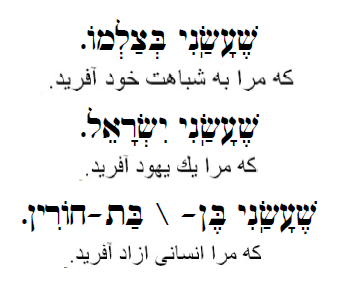
farsi-birkhot-hashahar
Endings of these berakhot with Farsi translation, prepared for a Persian siddur. This order differs slightly from that found in Lev Shalem, although it is the same as that found in older Conservative siddurim.

So in 1946, with the publication of Rabbi Morris Silverman’s venerable “Sabbath and Festival Prayerbook,” which was found in the pews of virtually all Conservative synagogues until the 1980s, the language of those berakhot was changed to reflect who we are, rather than who we are not. Rabbi Silverman “positivized” all three, based on the positive formulation of she’asani Yisrael, and other positively-formulated variants of these berakhot used in various places and times throughout the last 2,000 years. We still use them today.

Leaving aside the problem of insulting most of humanity, I think the greater good of emending these berakhot is the statement of positivity. We should begin each day by saying, I am proud to be a free Jewish person, made in the image of God. I am exhilarated by the prospect of beginning my day by acting on the positive relationships suggested by those statements.

And not only that, but I also read another message about liturgical change here. While there are certain key elements of the siddur that have remained fixed for nearly two millennia, there are far more specifics that were in flux for many centuries, until the printing press arrived in the 15th century and caused standardization across vast swathes of the Jewish world. Prior to that, there was much more creativity in tefillah. (Another two points for history.)

The message is, “We have the power to make our Judaism positive. We can embrace the optimism. We can look into our future and see that change will yield positive benefits to how we connect Judaism with who we are, and thus ensure the future of our tradition.”  

I don’t know about you, but I’m thrilled to be free, to have the imprint of divinity on my spirit, to be an inheritor of our two millennia of tradition. I love all those things, and I say them proudly every morning.

Having a positive approach to Judaism, not throwing up walls and dividing people, is an attitudinal shift that is good for the Jews. To paraphrase Pete Seeger, the key to the future of our people, and maybe the world as well, is finding the positive stories and letting them be known.

Shabbat shalom!

Categories
Kavvanot

A Post-Election Thought

You may have noticed that I have until now studiously avoided speaking about the presidential election explicitly, even though of course we have all been thinking about it (and perhaps agonizing about it) for months. There are several reasons that I have avoided this subject, and I identified those reasons in the Chronicle article on the subject a few weeks back.

The American people have spoken, and regardless of your own political views, there is no question that this election has upended the establishment. This vote came, I think, from a place of anxiety, of deep frustration and a measure of hopelessness from across large swathes of America. We are a nation gripped by many, seemingly intractable problems: the epidemic of addiction, the decline of manufacturing jobs, the divide between rich and poor and the related squeezing of the middle class, the ongoing challenge of racial justice, the continuing rise in health care costs, the rising temperature of the Earth, and so forth.

I hope that these issues will be addressed by our leaders in the coming months and years. I hope that we will have the fortitude to take on these challenges as an undivided nation.

One thing of great concern to me, however, is that the fissures in American society inflamed by the discourse of the past year will hinder that progress. I am worried about all of the “isms” that have been let out of the bottle: the anti-Semitism, racism, anti-immigrant-ism, anti-Muslim-ism, the mocking of people with disabilities, fat-shaming, and perhaps most troubling, the sexism: flagrantly disrespectful language and behavior meant to denigrate and objectify women.

I want our leaders to reflect the holiness in human relationships; I want those who serve the public to be role models for my children, particularly since such role models seem to become more and more scarce.

I pray that the man who will soon be president will take a different tack, that he will, when he occupies the Oval Office, discover a humility that will compel him to lead in a way that embraces our differences, that acknowledges that America is greatest when it is both diverse and inclusive.

I have been thinking this week a lot about George Washington. President George Washington, who worked more than 300 slaves on his Mount Vernon property even as he led this country; the same President George Washington, who said, in his letter to the Jewish community of Newport, Rhode Island in 1790:

For happily the Government of the United States, which gives to bigotry no sanction, to persecution no assistance, requires only that they who live under its protection, should demean themselves as good citizens.

There is, no doubt, some irony in these words, delivered just three years after the Constitutional Convention declared an African-American man to be counted as only three-fifths of a man for election purposes. And we should also remember that the 19th Amendment, giving women full suffrage, was only ratified in 1920. It is abundantly clear that, 226 years after Washington’s letter, we are still working on the project of making these states a more perfect Union. This journey is not complete.

The Talmud notes that the reason the Second Temple was destroyed in the year 70 CE at the hands of the Romans was due to sin’at hinam, baseless hatred; this malignancy on the human spirit is still found within us. We all have the capacity to hate. But we also have the capacity for ahavat hinam, unbounded love.

As we enter the next in a long line of peaceful transfers of political power, I hope not only that we can rise to the challenges of the 21st century, but that we can also continue the work of eliminating the toxic -isms which continue to plague our society. We must stand up to hatred and fear, name-calling and conspiracy-mongering, bigotry and persecution of all kinds, so that we may continue to move forward together. Let’s make the future one of ahavat hinam, a love that will envelop and empower all within our midst for the betterment of our society.


~

Rabbi Seth Adelson

Categories
Festivals Sermons

Remaining Human – Shabbat Hol Hamo’ed Sukkot 5777

One of the major themes I presented during my series of High Holiday sermons is that the point of fulfilling mitzvot, of “doing Jewish,” if you will, is to connect those holy opportunities with our lives, to bring meaning to who we are and how we live today.

Along those lines, what does building and “dwelling” in the sukkah teach us? That life is uncertain. That even after the Aseret Yemei Teshuvah, the Ten Days of Return, after having been through the process of repairing our relationships with each other and with God, that we are still vulnerable. That although we might be inclined to look around ourselves and say, “Hey, this isn’t so bad. I’ve got another year in front of me. 5777 is looking pretty good,” that we should not forget that things could change. The story is not yet over.

In my mind, I always strongly associate Sukkot with the sights / sounds / smells of fall: trees aflame in color, winds to herald the winter chill, the scent of dead leaves and damp sod. Sukkot is the end of the holiday cycle, and it suggest frailty. Everything comes to an end, chants the latter half of Tishrei. And yet, it’s a joyous time – zeman simhateinu, the season of our joy, as it is called in our liturgy. This is hehag, THE festival.

I recently read an opinion piece from the Wall Street Journal by Rabbi Jonathan Sacks, former Chief Rabbi of the British Empire, in which he reminds us of the need to remember to sanctify life as we sail into the future.

This is not the future of the Jetsons or Star Trek, but rather the future in which artificial intelligence eventually puts everybody out of work. Consider the fact that right here in Pittsburgh, even as we speak, there are driver-less cars prowling the hilly streets for the ride-sharing service Uber. It is only a matter of time before millions of people who drive for a living – cabbies and truckers and bus drivers and railway engineers – will be unnecessary and hence lose their jobs. It will not end there.

https://images.duckduckgo.com/iu/?u=http%3A%2F%2Fwww.borgenmagazine.com%2Fwp-content%2Fuploads%2F2015%2F05%2FBig_Data_Development1.jpg&f=1

Rabbi Sacks points to a trio of futurist authors, who suggest not only that we will soon enough have automated surgeons and teachers and journalists and attorneys, but that the future will belong not to those who can capture our hearts, but those who control our data. “Google, Amazon and Facebook,” he says, “already know us better than we know ourselves. People will eventually turn to them for advice not only on what to buy but on what to be. Humans will have become strings of genomes, little more than super-algorithms.”  Think, The Matrix. The system will only get out of us what it needs based on our numbers.

The antidote to this particularly dire vision is our ongoing commitment to recalling the sanctity of human life. We can never be reduced to numbers if we are reminded of our fundamental humanity.

Although the coming technological change is unprecedented in its scope, there is no question that Judaism has managed such change historically. I spoke on Yom Kippur about Rabban Yohanan ben Zakkai’s choosing Yavneh over Jerusalem, that is, learning Torah over sacrificing animals. RYBZ chose to move forward, to choose Torah – words – over the barbaric practice of offering rams and sheep up to God on a fiery altar. In addition to progressing from the Bronze Age to the Information Age, we have managed expulsions and slaughters, dispersions and forced conversions. We have survived assimilation and secularism. We made it through the disco years and decades of questionable taste.

We know how to handle change.

But the future will require the acknowledgment that no matter how much Big Data knows about us and can convince us to behave this way or that, that we continue to learn and teach, to seek holiness in our relationships with each other, to elevate ourselves through our traditions. The futurists, says Rabbi Sacks, point to a new form of idol-worship for today, and citing a verse from Psalms, he says:

“Their idols are silver and gold, the work of human’s hands.” When technology becomes idolatry it ceases to be life-enhancing and becomes soul-destroying. The moment humans value things, however intelligent, over people, they embark on the road to ruin.

So what does this have to do with Sukkot, Rabbi?

This is why this festival is so essential. Actually, let me expand to the entire month of Tishrei. Rabbi Sacks wrote about the essential concern of Rosh Hashanah as being the creation of humans in the image of God. It is this Godliness, with which our humanity is imbued, that leads us to seek forgiveness from each other during the first half of the month of Tishrei, and to celebrate with each other, even as we are reminded of our essential vulnerability, in the second half.

Sukkot is tactile. It’s not a heady holiday like Yom Kippur. It involves building, and marching around with greenery, and slapping willow branches against the ground with all your might in climactic ecstasy with the conclusion of this festival (join us tomorrow morning for Hoshana Rabbah if you want to find out what THAT’s all about). And then we conclude with singing and dancing with the Torah in joyous abandon. This is a physical journey much more so than an emotional one.

One of the pleasures of Sukkot is sukkah-hopping – going to friends’ sukkot to hang around, to schmooze, to eat, to spend quality time with each other. A good friend of mine, a former congregant in New York, is convinced that Sukkot is the secret weapon in the Jewish arsenal of re-engaging disaffected American Jews. He has a grand scheme to put free, easy-to-build sukkot in the hands of people who would otherwise not buy one, with the only condition that they use it during the holiday. This festival brings people together, he reasons. It is joyous and fun and builds community and connection. If more Jews participated in the mitzvah of leshev basukkah, he figures, then we have a better shot at rebuilding our connection to Judaism.

He has asked to remain anonymous, but he donated four such sukkot to this community this year, and so there were four more families celebrating in their own sukkot in Pittsburgh in 5777. Maybe next year we’ll get even a few more.

The Slonimer Rebbe taught that Yom Kippur appeals to the middah (attribute) of yir’ah, of fear of God, but the middah for Sukkot is ahavah, love. The two balance each other out, and so the month of Tishrei includes equal measures of yir’ah and ahavah. But let’s face it: in simply counting the number of people in the room, far more Jews are motivated by yir’ah to show up on Yom Kippur. Couldn’t we use a little more ahavah in Jewish life?

Our goal as Jews is to avoid living in the dystopian future of The Matrix; we cannot become subjects to our technology. We have to continue to be human, to live in the here and now, to worship only the God of Abraham and Sarah. Ritual binds us to reality, and qal vahomer, all the more so on Sukkot, when the rituals are all so physical.  These holy opportunities are all the ways that we maintain our connections to the physicality of Creation, to God, and to each other. This is how we maintain our humanity, the sacredness of life in all of its loving, fearful, vulnerable glory.

So while the future may be filled with robots and data, and may be more and more dehumanizing, the antidote might be found by peering through the sekhakh (the greenery on the roof of the sukkah) in order to see the stars, while we dine and socialize in those frail booths, and feel the ahavah, the love of this holiday. Hag sameah!
~

Rabbi Seth Adelson

(Originally delivered at Congregation Beth Shalom, Shabbat morning, 10/21/2016.)

Categories
Festivals Kavvanot

A Brief Thought for the End of the Holiday Season

The Hebrew month of Tishrei is not dissimilar to a roller-coaster ride: a slow, exhausting chug uphill through the Aseret Yemei Teshuvah / Ten Days of Return bracketed by Rosh Hashanah and Yom Kippur; joyful descent through the festivities of Sukkot; a loop through Hoshana Rabbah and Shemini Atzeret and the dramatic finish of Simhat Torah. With each hakafah, each march around the synagogue carrying lulav and etrog or the sefer Torah, we savor the skill and precision with which our tradition helps us cling to our lives as we are in the balance, as we acknowledge our own vulnerability. And then we return safely to the ground, ready for a year of promise and love and new challenges.

roller coaster

As we prepare to start the cycle of Torah once again, we do not pause; we never stop reading the Torah. When we conclude on Tuesday morning the final verses of Devarim / Deuteronomy, the very next aliyah (Torah reading) will open with the grand, mystical “bet” of Bereshit / Genesis, that beginning of beginnings. The Hebrew letter bet is closed on three sides, suggesting that one can only move forward from the opening, deeper into the text of the Torah, deeper into our lives. We cannot go back. 5776 is gone. From this point, there is only progress as we sally forth into 5777 and our next chapter. Shabbat shalom, hag sameah, and shanah tovah!

Categories
Kavvanot Yizkor

A Yizkor Thought: The Wind Telephone – Yom Kippur 5777

As we recall our loved ones who have passed from this world, I’d like to share a brief story I heard recently on Public Radio International’s program, “This American Life.”

It comes from the town of Otsuchi, nearly 600 km north of Tokyo, which was devastated by the tsunami in 2011; many there died, over 400 are still classified as “missing.” In this town, a local man built a phone booth in his garden, on a hill overlooking the Pacific Ocean, so he could “speak” to the relatives he lost in the storm. He called it the “Wind Telephone.” It’s an old-fashioned sort of booth, with a black, rotary phone inside that’s not connected to anything. But this man, Itaru Sasaki, would sit in the booth and speak to his dead relatives.

Soon, word got out that this was a kind of magic phone. Other people came to sit and speak with their deceased family members. They dial the phone, and talk. Mr. Sasaki’s phone became a national phenomenon.

Japanese society is extraordinarily reserved; the Japanese are not inclined to talk with others about painful things. And what this Wind Telephone allowed people to do was to pour out their hearts, alone, in view of the ocean that destroyed their lives, and in some sense “speak” to those whom they missed so much.

A recent documentary about the phone on Japanese state television captured some of the conversations:

One man says, “If my voice can reach you, please listen to what I have to say….”

Another: “Come back fast, wherever you are. I hope you are alive.”

One writes in the guest book: “Where are you, mother? I’m sorry I was not a good child. I miss you.”

A woman brings her grandchildren: “Hi, Grandpa. How are you? I’ll be in 4th grade next year. Grandma is fine too.”

An older man, a farmer, says: “Nobuyuki, is Mom with you? Sorry to ask this, but take care of her, and Grandma and Grandpa too. I’ll be back.”

It’s heartbreaking. You can feel the grief of their words, hear the pain of loss and devastation echoing in this booth as it sits alone in the wind.

As Jews, we remember those whom we have lost in multiple ways – we light candles, we recite qaddish, and we gather four times per year for the ceremony of Yizkor. Most of our rituals associated with mourning and remembering are communal; as with much of Jewish life, we do these things together, as a community. The gathering of our people in the synagogue is our Wind Telephone; the community itself functions as the conduit through which we remember, through which we grieve.


~

Rabbi Seth Adelson

(Originally delivered at Congregation Beth Shalom, Yom Kippur 5777, 10/12/2016.)

Categories
High Holidays Sermons

4 Whys #4: Why Do We Need Torah? – Yom Kippur 5777

As you surely know by now, this is the fourth and final sermon on the topic of “Why?” On the first day of Rosh Hashanah, we covered, “Why be Jewish?” On the second day, “Why do we need the mitzvot, and Shabbat in particular?” Last night, we discussed why we need Congregation Beth Shalom.

Today’s why is, “Why do we need Torah?” Why do we need to learn the words of our ancient tradition, our stories, our customs and principles and values and laws?

***

I recently heard a podcast that positively blew my mind. It was on Radiolab, which is an NPR program about ideas, often featuring scientific subjects.

The idea featured in this particular episode is about inter-connectedness, about networks, but not how we usually think of them. It was uncovered primarily by a professor of forestry from University of British Columbia, Suzanne Simard, whose research has demonstrated, effectively, that trees are networked with each other through something called a mycorrhizal network, and that this network helps the trees support each other.

The way it works is as follows: in the soil, there are tiny, nearly invisible tubes called mycorrhiza, which are parts of various kinds of mushrooms. Fungi. There can be miles of these tubes in a pinch of soil. The tubes affix themselves to the roots of trees, and engage in a kind of exchange with them: the tree provides sugar to the mushrooms, and the mushrooms provide minerals to the tree.

Brain Hibiscus rosa-sinensis is the example of an ideal leaf The Fungi ...
Note to plant pathologists: yes, I know this is not the kind of fungus we’re talking about here. But it’s a pretty photo nonetheless, don’t you think?

OK so far? It’s even better than that.

Not only is there an exchange between the fungi and the tree, but the fungi, which are connected to many of the other trees nearby, actually share nutrients through the network between trees. And the trees support each other – when one tree needs more nutrients, the other trees will, with the help of the network, send them. When there is a shortage of one type of nutrient, the mycorrhizal network will hoard that nutrient and dole out to the neediest trees. The network also ropes in the assistance of other creatures – bacteria and insects – to help maintain the whole system.

It’s almost as though the forest is “thinking,” like some kind of huge plant brain; strategizing, sharing, supporting.

What is truly revelatory and beautiful about this is that it seems that there is no such thing as a lone tree. Each tree is linked into the whole system. Prior to discovering the network, Dr. Simard had noticed that when you pulled out one tree, sometimes another nearby tree of a different species would die, clearly a result of upsetting the balance in the network.

So why am I telling you this?

When I heard this story, my mind immediately went to us, the Jews, and how we are linked together.

When you think about it, it’s downright unbelievable that we are still here. I mentioned this briefly on Rosh Hashanah – we outlasted the great empires that ruled Israel, that destroyed the Temple in Jerusalem, that dispersed us all over the world. We have long since bid goodbye and good riddance to the Babylonians, the Romans, the Ottomans, the Russian czars, the Fascist regimes of the middle of the 20th century.

What has kept us alive? I would like to propose that our metaphorical mycorrhizal network, the invisible, powerful connection that has maintained our network and supported us is Torah. Not THE Torah, that is, the Pentateuch, the first 5 books of the Bible, but “Torah,” without any definite or indefinite article. It is a much more comprehensive term. Torah is what flows from THE Torah.

It refers to the entire Jewish bookshelf.  Torah obviously begins with the Torah, which we read through each year. But that is just the beginning – Torah in its greater sense is all of our collected learning, including the rest of the Tanakh (Torah, Nevi’im, Ketuvim – the entire Hebrew Bible), and it flows through the collected network of rabbinic texts which make up the Jewish bookshelf: the Talmud, commentaries and supercommentaries on the Torah, midrashim, halakhic codes (Jewish law), mussar (ethical commentaries), Hasidic stories, kabbalistic literature, the words of tefillah (prayer), Jewish music and artistic interpretation, and on and on.

“Torah” in its greater sense is the ongoing project of two thousand years of intellectual development: debating the meaning of our ancient texts across generations, continents, and centuries; it is the thread that connects us to each other, to our ancestors, to our families, to Israel, to our people.

Torah (in its greater sense) is what holds us all together. It is our unseen, yet essential network. None of us are individual trees; we are the Jewish forest, connected by a textual, mycorrhyizal network, sharing and distributing all of that wisdom, ancient and modern.

What holds us together is words. Centuries ago, we were dubbed by the Muslim world as Ahl al-Kittab, the People of the Book. But we took that moniker proudly as our own: we are Am haSefer.

“Ours is not a bloodline,” write Amos Oz and his daughter Fania Oz-Salzberger in their book, Jews and Words, “but a textline.” What connects us from generation to generation is not Hanukkah candles or matzah or even Yom Kippur. It is not our being an extended cousins’ club. It is not mah-jongg, or eating Chinese food on Christmas. It is our collected body of wisdom. What connects Moshe (Rabbeinu) on Mt. Sinai to Moshe (Maimonides) in 12th century Cairo to Moshe (Mendelssohn) in 18th century Berlin is that thread of interpretation that makes the matzah come alive for us today. Without the text, it’s just a lousy, unsalted cracker.

In what is one of the best-known stories found in the Talmud (Babylonian Talmud Gittin 55b-57a), Rabban Yohanan ben Zakkai effectively launches rabbinic Judaism by having his students smuggle him out of besieged Jerusalem in a coffin.

The year is 69 CE. The Jews have been revolting against the Romans for a few years, trying to preserve their way of life, their land, and particularly their Temple, the Second Temple in Jerusalem, wherein they have been sacrificing animals and produce to God for nearly a thousand years. The Romans, led by Vespasian (who is not yet the Roman Emperor), have taken Israel by force, and have surrounded Jerusalem.

After having been smuggled out as a corpse, Rabban Yohanan arrives at Roman military headquarters, and pops out of the coffin in front of Vespasian. A lively debate ensues in which the Romans exhibit their inclination to live by the sword, and Rabban Yohanan counters with proto-rabbinic wisdom: “All neighbors who do harm to others find that they have done it to themselves,” he says. Vespasian understands that he is in the presence of a very wise man.

Then something happens that changes the course of Jewish history.

Rabban Yohanan has predicted that Vespasian will soon be the emperor, and sure enough, while they are speaking, a messenger arrives to crown him as Caesar. Vespasian says to him, “I am now returning to Rome, and will send somebody else to take my place. You may, however, make one request of me, and I will grant it.”

Rabban Yohanan says, “Give me Yavneh and all its sages.” That is, give me a little, out-of-the-way, sleepy seaside town where I can assemble a crack team of rabbis to figure out what comes next in Jewish life.

He did not say, give me back Jerusalem. He did not say, just let me keep the Temple and let the Kohanim continue making sacrifices for the Jews.

He said, give me space to start writing the first chapter in the textline. I need a forest where I can plant some fungi.

20161014_095403_resized


Sometimes, we have to conquer our fears of the future and embrace change. Rabban Yohanan ben Zakkai and the rabbis of Yavneh fashioned from the rubble of the Roman destruction not a Third Temple, but rather what we know today as Judaism. Thanks to Rabban Yohanan and his scholars, Judaism was re-invented. We, the Jews underwent a paradigm shift, eliminating the barbaric rituals of animal sacrifice and replacing it with the meditations of our hearts. This was the biggest historical turn for our people since leaving slavery in Egypt and receiving the Torah, 1300 years prior.

We all need to be a little bit more like Rabban Yohanan ben Zakkai: facing down our fears, letting go of what was, and embracing the future. That’s why I spoke last night about re-envisioning this synagogue, about the vision of Beth Shalom as a center of contemporary Jewish life and learning for the whole region.

And that brings me back to our mycorrhizal network, about our need for Torah, about our need for connection to each other through our ancient wisdom. But first, a collective “Al het.”

Al het shehatanu lefanakha. For the sin we have sinned against you God, by practicing Judaism without seeking meaning within it.

If there is a bottom line to everything that I have said over the past ten days, it is that Judaism’s future depends on our willingness to let it bring meaning to our lives.

Why are we like so many individual trees, not connected to the network? Because we have failed as a community to look to our textual heritage. Because we have assumed that being Jewish meant lighting Hanukkah candles and saying kaddish and “having a bar mitzvah,” without making any serious effort to connect these things to who we are, how we live, what we feel. Because Judaism loves to tell us more about how to do something rather than why.

The key to the Jewish future is the mycorrhizal network of Torah. Rabban Yohanan ben Zakkai pulled off a nervy stunt to get an audience with Vespasian so he could ask, not for ritual, not for ancient sacrifices, NOT EVEN FOR JERUSALEM, but for Torah.

20161014_095628_resized

As disconnected trees, we will die. As trees whose roots intertwine with the tiny underground tubes, connecting us to our Etz Hayyim, our tree of life, we will thrive.

That’s why we are still here. That’s what makes us a community, a qehillah, brought together for a holy purpose, sustained and nourished by the words of Torah, thousands of years of collected knowledge that is still fresh and fragrant today.

****

Why have I devoted these four sermons, nearly 100 minutes of talking, over 10,000 words, to answering the question of “Why?”

I told you on the first day of Rosh Hashanah that these are essential questions that we must be asking if we want there to be a future to progressive Judaism.

But more importantly, I want to make you care. I want you to understand the value of what we have inherited. I want you to ask why, and then go seek out the answer. And sometimes, all it takes to appreciate what we do as Jews is a new take, a fresh perspective, a captivating insight.

And beyond that, we should never do anything merely because “that’s the way we’ve always done it!” That answer is insufficient for me, and it will not further the cause of connecting Jews with Judaism.

We need to ask “Why?” more. And we need to dig deeper into the Jewish bookshelf to find the answers.

Shanah tovah!

~

Rabbi Seth Adelson

(Originally delivered at Congregation Beth Shalom, Yom Kippur 5777, 10/12/2016.)

Categories
High Holidays Sermons

4 Whys #3: Why Do We Need Congregation Beth Shalom? – Kol Nidrei 5777

This is the third installment in a four-part series, “The Whys of Judaism.” On the first day of Rosh Hashanah, we discussed “Why do we need Judaism?” On the second day, it was “Why do we need the holy opportunities known as mitzvot?” It might be a good idea to read those posts before reading this one.

***

Today’s why: Why do we need Congregation Beth Shalom?

How many of us in this room grew up as members of the Beth Shalom community? Raise your hands.

This congregation has had an impact on many, many people, and has been an anchor of Squirrel Hill for just shy of a century. 2017 promises to be a very exciting year for Beth Shalom, and we are all fortunate to be a part of it. Judy and I feel extraordinarily lucky and grateful to be here with you at this time, and looking back over the past year, over 5776, we have seen wonderful growth and excitement. We are very happy to be with Beth Shalom as we begin the next hundred years.

Actually, some of us in the room may not appreciate what it means to be a part of a thriving community; not all synagogues are thriving. Yes, I know that some of us here look back to a time when the membership of this congregation was twice what it is today. But unlike most synagogues, this one is growing. We gained over 50 new member families over the past year, which is truly outstanding. And I’m confident that we will continue to grow and I will share with you why.

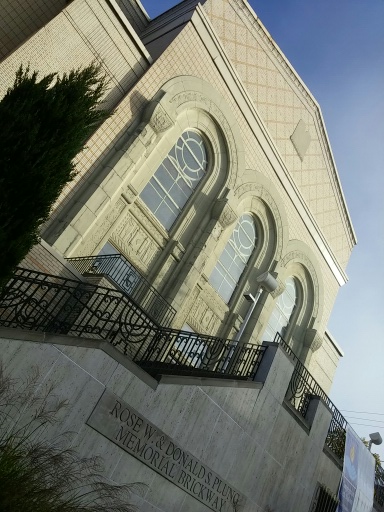
beth-shalom-exterior

But let’s face it: times are tough for membership-based organizations of any kind, and even tougher for religious institutions. People are wary of institutions. We are less loyal today. We are less likely to pay for things that do not necessarily give us some kind of immediate gratification. And of course, secularism is on the rise; you may be aware that the fastest-growing religious group in America is “None.”

And so the synagogue, if it is going to sustain its membership model, must demonstrate its immediate value.

Just a week and a half ago, there was a story on the front page of the NY Times Business section about a new development in Japan for what we Jews might call “unaffiliated” Buddhists. It’s a service provided by Amazon to order a Buddhist priest for rituals. You point and click, and the priest comes to you. Not bad, eh?  You know, Rent-a-Rabbi / Buy-a-Buddha.

The problem is that nobody is a Buddhist for just a half-hour once a year when they need a memorial service on the anniversary of the death of a departed loved one (which, BTW, is called in Japanese, “yahrzeit”).

Similarly, you cannot really be Jewish for a few hours a year either. And that is one primary reason for the existence of synagogues. We are not part-time Jews, flipping on the Jewish switch when you are saying qaddish or standing under the wedding huppah; we are Jewish throughout our lives.

And that’s why we need synagogues. The synagogue is not just valuable, it’s vital, and not just for the reasons that immediately come to mind:

  1. We offer a sense of qehillah, community. I spoke about this extensively last year, so I’ll just briefly remind you that our society has very few gathering places today. The synagogue is one place where you can rub elbows with other members of your community in real time, where you can belong. And that’s not only rare, but also priceless.
  2. We are a full-service organization for the entire Jewish lifecycle. We are here for you from, as they say, cradle to grave. We are here not only to offer support in times of need, but we offer resources to help you be Jewish and to be a better person at every stage of your life.
  3. Something that Rabbi Ed Feinstein of Valley Beth Shalom in LA said, which I find quite striking, which is that the synagogue is the only place that teaches you how to be a family. We are all about relationships. We are multi-generational, and we offer a rare framework in which it is possible to spend time together as a family, to learn together, and to discuss together our relationships in the context of holidays, lifecycle events, learning, services, and so forth. We create a space for true inter-connectedness in a way that few other organizations can.And here are just a few ways we do that: our Early Learning Center; our children’s services; Shababababa, which attracts 100 or more people once a month for a Friday night service; the Kiddush Club creates a space on Shabbat after services where families can hang out together; the pre-Benei Mitzvah Retreat, which we will be an annual event; and on and on.

But here is the reason that we really need Beth Shalom: that this congregation is the laboratory where we will strive to create the Jewish Future with a capital F here in Squirrel Hill.

On the first day of Rosh Hashanah I made the case for why we need Judaism, that is, because it can enrich your life, heighten your ability to understand yourself, improve your relationships, and make this a better world. And we need a place where we can do those things; that place is Beth Shalom.

Yes, there are other synagogues nearby, but I am absolutely certain at this point that Beth Shalom is poised to become the center of traditional, and yet fully contemporary Jewish life and learning in Western Pennsylvania.  I know this is a lofty statement. Please bear with me as I explain.

****

Some of you have heard me reference many times the Pew Research Center’s study of American Jews from 2013. That data has been a goldmine. Among the valuable revelations that the study gave us were that virtually all of us (94%) are proud to be Jewish. That may not have been historically true, in days when garden-variety anti-Semitism and the stigma of being an immigrant pressured our parents and grandparents to assimilate as quickly as possible.

Another fascinating piece of data is that most of us, around 72% believe in God, however we might understand what it means to “believe in God.”

These two data points alone suggest the need for synagogues, wherein Jews can gather to exercise their pride in Judaism and their relationship with qedushah / holiness.

I was recently struck by an idea, promoted by Rabbi Amichai Lau-Lavie on a podcast of Judaism Unbound (http://www.judaismunbound.com, Episode 29), that the synagogue can be not only a laboratory for spirituality, but should be infused with creativity somewhat like an art studio.

Beth Shalom has the potential to become that creative studio for Judaism in this neighborhood.

I have a vision to entirely re-think what it means to be a synagogue. To make that vision a reality will require change, and a bit of risk, and a vote of confidence from you, the congregation.

I have said before in this space: the Beth Shalom of the future cannot be the Beth Shalom of the past. We have to change our model.

Here’s why: What motivated our parents and grandparents to build huge edifices like this was intimately tied to a specific point in time, in the middle of the 20th century, when Jews were finally “making it” in America, gradually being welcomed into the wider society. The Jews were movin’ on up.

And in the wake of the Shoah, the Holocaust, and the creation of the State of Israel, there was a certain pride that American Jews took in boldly identifying with Jewish national struggles and aspirations. So they paid their dues to institutions, many institutions, built big buildings, and assimilated into American culture. For the most part, they relegated their Judaism to Friday night or Saturday morning, expected the rabbi and cantor to live Jewishly on their behalf, and from Saturday afternoon until the next Friday dispensed with many of the old-world trappings that Jewish practice demands.

Our children have none of these motivations. They have nothing to prove about their Jewishness. They live in a world where identity is fluid, which is at the same time as liberating as it is lonely and bewildering. They feel that they have little need for or interest in institutions. They did not grow up trying to “fit in” as Americans, because there is no question on that front. They have never known a world without Israel, and I am saddened that many of them have learned to squelch their Jewishness on college campuses, lest they be tagged as pro-Zionist, a dirty word in some quarters.

Whereas in the past, synagogues could depend on hooks like High Holiday tickets and the bar/bat mitzvah process to prop up our membership rolls, that  model is mostly gone. So we have to do something to make a positive change. We have to give our children a legacy that they will rise to meet. To recall the challenge of today that I identified on Rosh Hashanah, we have to find a way to make them care.

The vision of Beth Shalom’s future will be to cultivate within all who enter a sense of what it means to be positively Jewish. Not reflexively Jewish, as most of us have historically been.   In other words, when you can be anything you want, we have to convince you of the value of wanting to do Jewish and to do it here.

To demonstrate that our tradition enriches your life, and that the synagogue is the place where you can share it with others, where you can learn to act, collectively and as individuals on  Jewish values. That is what we need to do.

How do we do this? By creating positive Jewish experiences. Jewish involvement that is meaningful. Jewish experiences that are contemporary. That are thoughtful and multi-layered. That include women and men and gay and straight and transgender as equals. That acknowledge that not all Jews are white, or know some Yiddish. That face the reality that many of us are now married to people who are not yet Jewish, and that we must reach out to all people in our midst. That open new doors, new portals to all.

The future of this congregation will be built on the framework of the past, but with a commitment to reach people that the current model is not reaching.

How do we reach all of those people? We have to create a set of programming that is awesome, that is so well-done, presented by a top-shelf lineup of speakers and artists and presenters of all sorts, people who will show us the richness of what Judaism has to offer.

So we are embarking at this very moment on a great challenge indeed, one that will, in fact, re-envision the synagogue for this century. A team of members of this congregation, plus our Executive Director Rob Menes and I have crafted a road map for the future of Beth Shalom. It’s called Derekh, literally, the way. (Derakheha darkhei noam, vekhol netivoteha shalom. The Torah’s ways are of pleasantness, and all of its paths are peace.)

Derekh will feature five portals of entry, five ways in which people can become involved in Jewish life:

  1. Jewish learning.
  2. Hesed / Acts of lovingkindness
  3. Israel
  4. Culture
  5. Mindfulness

The cornerstone of the operation, the first portal of Jewish learning will be the Open Community Beit Midrash, which will be a new twist on an ancient Jewish place. As you may recall from when I described this last year at this time, the synagogue was classically a beit tefillah, a house of prayer, and also a beit midrash, a house of study.

Today, the beit midrash is a place for the handful of Jews who are  highly Jewishly knowledgeable: rabbis, rabbinical students, Talmud scholars and the like. But I want to create, here at Beth Shalom, a new kind of beit midrash: one that is open and flexible and accessible to all. It will also be designed to reach not just members of Beth Shalom, but to bring in people from across the Pittsburgh community. This Open Community Beit Midrash will feature programming for a range of skill levels and interests from the curious- but-intimidated to the insatiable scholar.  And it will feature guest speakers and visiting scholars that are on the avant-garde of Jewish learning from across the spectrum.

Believe it or not, text-based Jewish learning is now fashionable in Israel, and not just for men in black hats. Former Member of Knesset Dr. Ruth Calderon founded one such house of study in Tel Aviv called Alma, and it has brought many Israelis, people who may otherwise have no connection to what we think of as Jewish life, to study Talmud and other Jewish texts.

And there is something of a renaissance in this area going on in America too. Mechon Hadar, founded by one of my rabbinical school classmates, Rabbi Elie Kaunfer, is a center of contemporary Jewish learning in New York that has produced a wonderful range of classes and workshops and podcasts, with people coming from all over to study there, and others (like me) taking advantage of their materials online. Sefaria is a web-based platform that enables people to share Jewish resources – texts, translations, study materials – so that anybody with a computer has easy access to our tradition.

And we can be the contemporary center for Jewish life and learning right here.

But while the center of Derekh will be the Open Community Beit Midrash, there will be so much more:

The Hesed portal, through which we will step up our commitment to deeds of lovingkindness, featuring a range of social action activities, including awareness-raising, partnering with the Squirrel Hill Food Pantry and Repair the World, for example.

The Israel portal, including regular trips, greater involvement with the Carmiel-Misgav partnership, Skype sessions between our teens and theirs.

The Culture portal: artists, films, musicians, maybe a studio space in this building for an artist-in-residence.  Just as nations are strengthened by arts and culture, so too will this portal strengthen us.

And the Mindfulness portal: Yoga, meditation, new approaches to the Jewish spiritual experience.

The goal is for Beth Shalom to be the primary resource for spiritual growth in the community, the lynchpin in generating a renaissance in Jewish life in our little shtetl. We need an infusion of exciting, meaningful programming here, and Derekh will provide that and more.

That’s our vision. That’s what will guarantee our future as a congregation.

We will need new staff to do what I’d like us to do. We’ll need to reconfigure spaces. And of course we will need to raise funds. This project, which will be significant and transformative not only for Beth Shalom, but also for the whole community, will depend on raising our endowment significantly.

So along those lines, please know that we will be in touch with you – by mail, but hopefully also in person – about contributing to Beth Shalom’s future.

We hope – we urge you to take hold of this opportunity to participate in this campaign, to consider a meaningful gift that will ensure that the Beth Shalom of the next 100 years will be more meaningful, more connective, more essential than the last 100. Beth Shalom has been here for you for nearly a century; now Beth Shalom needs you.

Why do we need this congregation? Because it will guarantee a strong, traditional, yet egalitarian and progressive Jewish anchor in this community for the next century. Because it will continue to support and nourish our subsequent generations. Because it will continue to enrich your life through community, lifelong Jewish learning, and spiritual growth. Because our lives need more qedushah, more holiness.


~

Rabbi Seth Adelson

(Originally delivered at Congregation Beth Shalom, Kol Nidrei, October 11, 2016.)