Categories
Sermons

A Contagion of Hope – Tazria/Metzora 5783

A fascinating news story crossed my desk this past week. It was about Chaim Topol, the Israeli actor who died last month at age 87, and was most famous for playing the role of Tevye the Milkman on stage in London and in the 1971 film version of “Fiddler on the Roof.” 

Some of you know that my family is big into musical theater, and this film loomed large in my childhood. I have seen it many times. Topol actually landed the role of Tevye following his appearance in the classic Israeli film from 1964, “Sallaḥ Shabbati,” which captures the tale of mizraḥi immigrants, those who came from Arab countries to Israel in the early years of the State, and the various ethnic and tribal forces in play during that time. When he first arrived in London, Topol could barely speak English, and learned his lines in Fiddler phonetically.

Topol, it turns out, was also a spy, and due to his international fame and the access to certain quarters which it granted, was able to work as a Mossad operative. He had a tiny camera and tape recorder which he always traveled with, and among his most remarkable exploits was an episode where he and famed Israeli spy Peter Zvi Malkin bugged the embassy of an Arab country by setting up what looked like a dentists’ office next door, and then drilling into the embassy through the wall. When the embassy’s security guards heard drilling and came to investigate, Topol was lying in the dentist’s chair and Malkin was pretending to work on his teeth.

Topol’s son, who went public with his father’s spycraft tales, claimed that his father enjoyed the adventure of working as a spy. It certainly makes sense that an actor enjoyed playing multiple types of roles, and “Mossad agent” is a pretty juicy role, even if there is no audience.

It is a great story, capturing the scrappy tenacity of the early years of the State of Israel, which turns 75 years old on Wednesday. But there is also a reminder here that things are not always as they seem.

That is, of course, one of the implicit messages that our bat mitzvah delivered a few moments ago. Things are not always as they seem. What the Torah describes as a skin disease, tzara’at, can be understood as a metaphor for a range of spiritual afflictions. And when we dig closely into the text of the Torah, we see that this is a completely reasonable conclusion. The symptoms of tzara’at as described do not resemble any disease we know today, and it is notable that the person who determines the course of action for an apparent tzara’at infection is not a doctor, but rather a kohen, a priest. And the thing about some spiritual afflictions is that they can spread easily. They are contagious.

One such affliction today which we seem to have in abundance is fear. We have so many things about which to be fearful: Train derailments! Climate change! Political division! Mental illness! Anti-Semitism! Virus outbreaks! Microplastics in our water! The list is long, and the folks in the news and social media biz are great at playing these things up, because they press our buttons and drive us to click on more articles and videos and ironic memes and so forth. And, of course, those things only serve to make us more fearful, creating a feedback loop of negativity.

That fear is clearly a contemporary contagion which spreads far too easily. It makes me want to, in the words of the Psalmist (Ps. 121:1), look up to the mountains and ask, from where will my help come? What will save us from all the modern plagues we face? Who will save us from the fear with which these things are infusing our lives?

The Psalmist answers (v. 2), as you might expect, that our help comes from God. God will save us from fear. And however you define God, there is quite a bit of wisdom in that. 

In challenging times, which for the Jews have been for the last 2600 years or so, we have always leaned into our framework of ritual and ancient wisdom to give us strength, to provide emotional support when we need it, to provide comfort in times of grief and loss. And that support is still available to us today. That is one reason why there are so many people here this morning: not only because we are a congregation that celebrates benot mitzvah, young women who have reached the age of majority, by calling them to the Torah, but also because we are a congregation that meets daily to engage in prayer, such that we can draw strength every day from our ancient poetry and rituals. Because we are a congregation that engages with words of Torah in many ways.

Psalm 121, was one that we recited in Shabbat morning services on October 27, 2018, after we heard the news about what had happened half a mile away, and we continued to recite that Psalm for a long time thereafter.

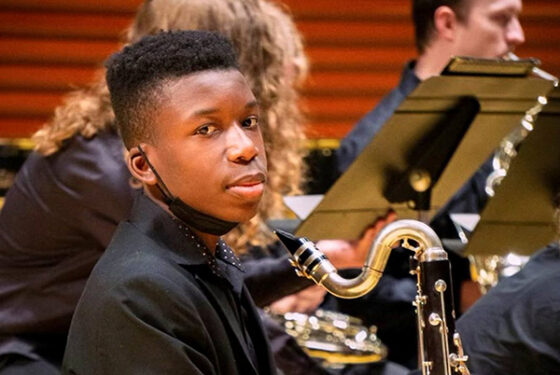
When I heard last week about the young man in Kansas City, Ralph Yarl, who was shot and wounded when he rang the doorbell at the wrong house, as he was trying to pick up his twin brothers, my mind immediately went to the contagion of fear. Thank God, 16-year-old Ralph is going to make it – he was released from the hospital four days later, and I hope that he succeeds in his goal of studying chemical engineering at Texas A&M University – it’s a great department. (It’s where I received my first Master’s degree, in chemical engineering.)
Unfortunately, 20-year-old Kaylin Gillis was not so lucky. After driving up the wrong driveway in upstate New York one week ago, she was shot and killed. The shooter’s attorney has said that the accidental trespassers “created an atmosphere and a fear that there was menace going on.” 

What is truly tragic about both of these case is that some of us are so fearful for our own safety that we absolutely feel like we must shoot first and ask questions later. 

Do we feel so unsafe in our own homes that we answer the door armed? Do we value the lives of others so little that we assume that every interaction is going to go badly? Some believe that the way to prevent innocent people from being killed is to arm even more of us. Might this lead to even greater fear, an even greater preponderance of anxious trigger-finger shootings?

Fear is a contagion.  It multiplies. It spreads.

My wife observes that I’ve been sighing a lot lately. These questions are among the many reasons I keep sighing.

There is a reason that the national anthem of the State of Israel is Hatiqvah, a poem written by the Hebrew poet Naftali Herz Imber in 1878. Hatiqvah tells the story of the hope of the Jewish people:

עוֹד לֹא אַבְדָה תְּקְוַתֵינוּ, הַתִּקְוַה בַּתְ שְׁנוֹת אַלְפַּיִים

Od lo avdah tiqvateinu / Hatiqvah bat shenot alpayim*
We have not yet lost our hope / The hope of 2000 years

The source of the phrase “Od lo avdah tiqvateinu,” we have not yet lost our hope, is found in the haftarah we read two weeks ago, on Shabbat Ḥol Hamoed Pesaḥ, from the book of Ezekiel, in that prophet’s vision of the valley of dry bones, which are re-animated by God. And once they are a standing crowd of people, the entirety of the House of Israel, they say, “יָבְשׁ֧וּ עַצְמוֹתֵ֛ינוּ וְאָבְדָ֥ה תִקְוָתֵ֖נוּ נִגְזַ֥רְנוּ לָֽנוּ׃” “Our bones are dried up, our hope is lost, we are doomed.” (Ezek. 37:11)
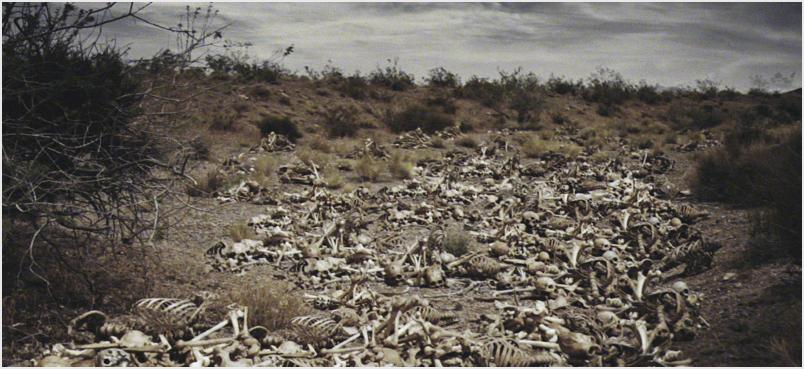
And then Ezekiel to reminds them that they will be returning to their home, to the land of Israel.

While this vision is understandably a favorite of Zionists, it is also a more universal metaphor. When all hope is lost; when we feel besieged and desiccated and despairing and metaphorically far from home, there is always hope for redemption. There is always hope for return. It is a comforting thought. Things are not always as they seem.

I wish that hope were as infectious as fear. I wish that we could look at the world and not see it falling apart, not see only decline and danger and poison and guns and threats to democracy at every turn. That miserable stuff is simply too easy to see all around us. 

I wish instead that we had a healthier spiritual affliction, one which causes us to see the good in others, the successes of contemporary life, the ways that technology continues to improve our lives, the ways in which we navigate the challenges of the current moment. We do not have to be in the valley of dry bones; we can instead emphasize the redemptive qualities of the world we have right now.

If I had one hope for humanity, it would be that, rather than inclining toward fear of the others around us, we should rather give the benefit of the doubt, and incline toward hope. I pray for optimism to be contagious.

And I am going to go out on a limb here when I say that, while my understanding of God is quite unorthodox and does not necessarily fit the descriptions which come to us from our ancient literature, I firmly hold that it is our willingness to perceive God’s presence in our lives and ourselves that compels us to reach out to one another in love, to see the beauty in all others, to feel the occasionally hidden, yet undeniable yetzer hatov, inclination to good in all people, and in humanity. That perception of God breathes the impetus of love into our being. 

Things are not always as they seem; our fear might mask our hope. But I have to believe that that hope is there, and is infectious, and that with God’s presence, we will be redeemed from fear once again. May there soon be a contagion of hope among us.

~

Rabbi Seth Adelson

(Originally delivered at Congregation Beth Shalom, Pittsburgh, PA, Shabbat morning, 4/22/2023.)

Categories
Festivals Sermons Yizkor

Allies in Faith – 8th Day Pesaḥ 5783 / Yizkor

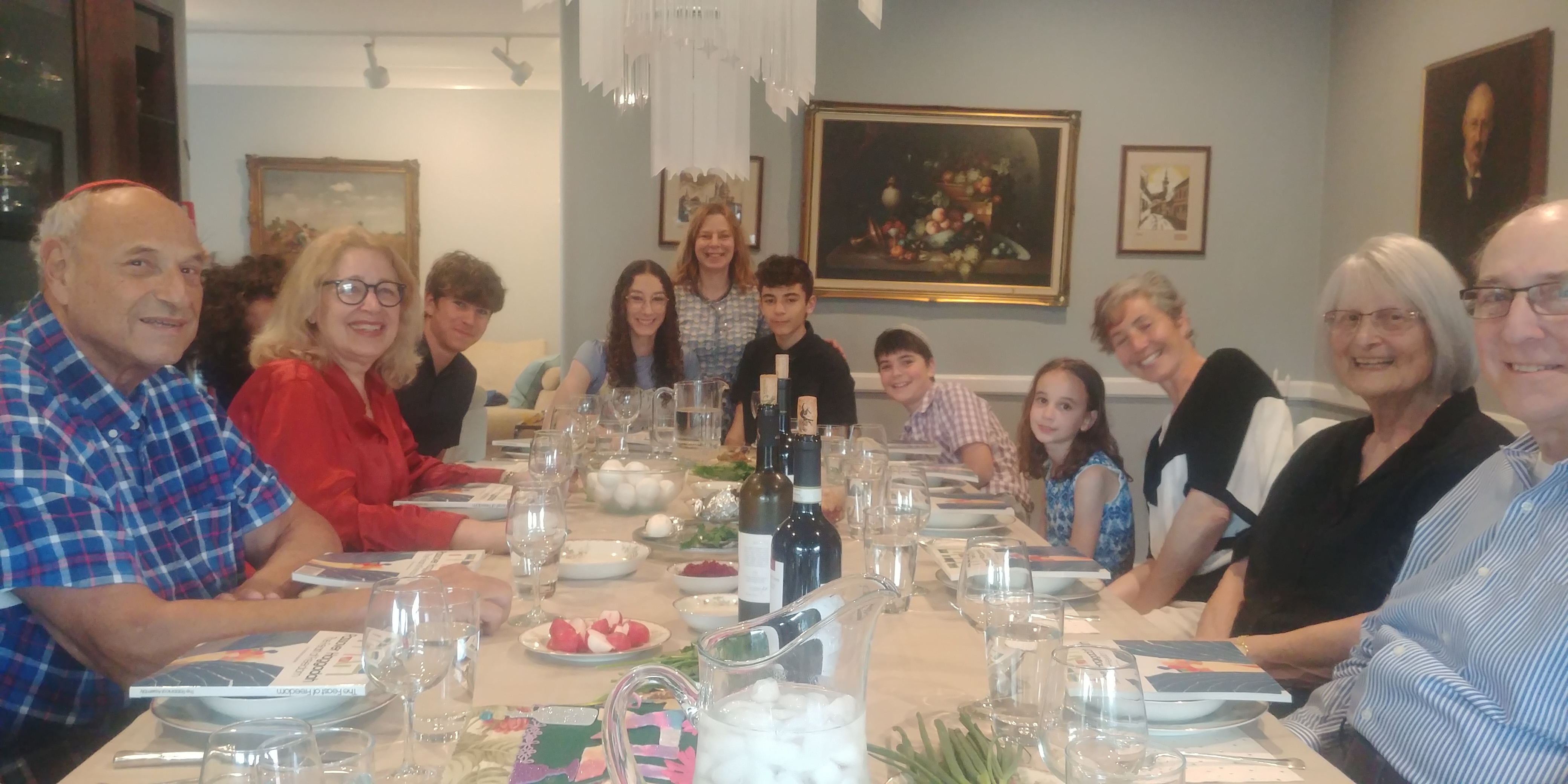
Passover, like no other holiday, trades in memory, personal and national. Just about every seder* that I have ever attended relies on memories of past sedarim, of family gatherings, of special foods, some which we liked and some which we memorably did not; memories of your funny uncle who would take a sip out of Elijah’s cup when everybody was watching the door, of good times singing Eḥad Mi Yodea and Ḥad Gadya and Dayyenu, of the hunt for the afikoman and of course all the grandparents and aunts and uncles around the table, the people who are no longer with us. And certainly the remembrance that comes with Yizkor at the end of Pesaḥ puts a final flourish on the sense of personal memory that this holiday features.

And also perhaps like no other holiday, Pesaḥ trades on historical memories of our people. Yetzi’at Mitzrayim, the Exodus from Egypt, is not only the foundational moment of Benei Yisrael, the people of Israel, but is also an essential statement of who we are as a people. The family of Ya’aqov / Jacob descends into Egypt as a group of 70 people escaping famine, and emerges 430 years later as a great nation, ready to receive the Torah and inherit the Land of Israel which has been promised to them. 

But this family becomes a nation by experiencing slavery and subsequent redemption, ensuring from the outset that from generation to generation Jewish people would understand what it means to be a slave, to be oppressed and persecuted, to be subjugated by another and denied our own spiritual means. Pesaḥ is therefore emblematic of all the ways in which we continue to act on that arc of slavery and redemption, in which we seek to bring about redemption for ourselves and the world by highlighting the holiness of the others around us.

And we hear that story replayed over and over throughout Jewish history, with the Babylonian Exile and return in the 6th c. BCE; the Roman destruction and dispersion of the Jews from Israel in the 1st c. CE; the Inquisition, the pogroms, the Shoah / Holocaust, the establishment of the State of Israel in 1948. 

Persecution and redemption. Displacement, dispersion, and return. These are the major themes of Jewish existence going all the way back to slavery in Egypt. That is why the memories of our people speak so powerfully; that is why the Pesaḥ seder is still one of the most-practiced Jewish observances, because it is so deeply laden with history. The Pesaḥ memory machine, every spring, serves up its products along with the matzah and maror.

As you may know, I grew up in a fairly non-Jewish place, in the rustic and handsome Berkshire hills of Western Massachusetts. My parents had to work hard to ensure that my brother and sister and I had a strong connection to our tradition, our community, our customs and rituals, that we would be deeply connected to that memory machine. Our Conservative synagogue was 17 miles away, a 30-minute car ride. The nearest kosher meat market was in Albany, NY, an hour by car over a mountain. My grandparents and many close relatives with whom we spent some holidays were three hours away in Boston. There was no Jewish day school nearby. 

Williamstown, Massachusetts. Yes, I grew up there.

Virtually all of my closest school friends were Christian, and many were active in their churches. I was often, if you will, the token Jew: the only one bringing matzah sandwiches on Pesaḥ or missing school on Rosh HaShanah. I was always in some sense an outsider. I did not share my personal and national memories with my friends and neighbors.

But one of the things I have come to understand in recent years is that what unites people of faith is far greater than what divides us. We, the Jews, have the potential to be allies with other like-minded Christians, Muslims, Hindus, Sikhs, Jains, Buddhists, Bahai, Druze, and so forth.

Consider what we share:

  • Commitment to a framework of holy behavior which elevates and enriches our lives and the lives of the other people around us
  • Cultivation of the values of respect, gratitude, compassion, charity, community, education, and justice
  • Rituals which create meaning for our lives, including regular prayer, holidays, and lifecycle events: birth, coming-of-age, marriage, and death and mourning
  • Understanding that the role of Divinity in our lives provides a template for interacting with others
  • A textual basis for all of the above

Now, of course there is tremendous variation in style and language and the range of values that we hold dear, and of course theology. As just one small example, Judaism tends to emphasize action, Christianity belief. And of course we differ on matters of religious law, and how we read and interpret our shared texts, rituals and foods and customs and so forth. 

But think of all of the potential power contained within all of those which we do share, and how, if people of faith work in concert with one another, we can truly build a better society and a better world.

At the congregational seder last Thursday night here at Beth Shalom, among the 85 attendees were five Christian guests, young adult members of the East Liberty Presbyterian Church who had requested to attend. I was certain that they were quite overwhelmed by the scene. 

But I was really somewhat anxious, given these non-Jewish attendees, about one standard passage of the haggadah, which comes deep into the seder, right as we open the door (ostensibly to invite in Elijah the Prophet). We say, 

שְׁפֹךְ חֲמָתְךָ אֶל־הַגּוֹיִם אֲשֶׁר לֹא יְדָעוּךָ וְעַל־מַמְלָכוֹת אֲשֶׁר בְּשִׁמְךָ לֹא קָרָאוּ. כִּי אָכַל אֶת־יַעֲקֹב וְאֶת־נָוֵהוּ הֵשַׁמּוּ. שְׁפָךְ־עֲלֵיהֶם זַעֲמֶךָ וַחֲרוֹן אַפְּךָ יַשִּׂיגֵם. תִּרְדֹף בְּאַף וְתַשְׁמִידֵם מִתַּחַת שְׁמֵי ה

Pour your wrath upon the nations that do not know You and upon the kingdoms that do not call upon Your Name! Since they have consumed Ya’aqov and laid waste his habitation (Psalms 79:6-7). Pour out Your fury upon them and the fierceness of Your anger shall reach them (Psalms 69:25)! You shall pursue them with anger and eradicate them from under the skies of the Lord (Lamentations 3:66).

Now, it is likely that our ancestors added these verses in the Middle Ages to cry out to God for revenge against their non-Jewish tormentors. It was a statement of defiance in the face of powerlessness, delivered when the door was open to show the gentile neighbors that they were not doing anything nefarious. Our national memory of these times is, to put it mildly, not good.

Our ancestors probably could not have foreseen a day when people of different faiths could be allies against the forces of chaos. That idea was simply not a part of Jewish memory for many centuries.

But that is where we are right now, and that is what I said on Thursday night in the presence of our Presbyterian guests. We should not read these lines as a deliberate insult to non-Jews; we should instead absolutely read them as a statement against those who malign religious faith and attack worshippers in synagogues, churches, mosques, temples and gurdwaras and children in religious schools of any sort.

I do not think that I am the only one here who sees that the chaos grows as our society, as the people around us, grow more distant from religious tradition. Without a framework of spirituality, we create a world without rules, without principles, without dedication to the holiness of the other. Truth becomes relative; we worship the idols of politics and money and power. A world without religious tradition becomes one in which each individual is their own highest authority, where there are no guideposts and no guardrails. 

The power of allyship across religious lines is extraordinarily important today. United, we are a serious force within our society, and not for the purposes of indoctrinating others into our religion, but rather for improving the condition of all people.

I mentioned in this space on the first day of Pesaḥ that the “swatting” hoaxes of last week, which have lamentably continued, are creating fear in our communities. Last week it was Central Catholic; Monday night it was students at Pitt. Our friend Rev. Canon Natalie Hall’s children were in lockdown, subject to very real fear. 

We, the allies in faith, can push back against the forces of chaos, like those who are maliciously causing these security messes. We may not entirely win; chaos has always been with us. But we can do the best we can to build bridges, to heal wounds, to discuss our memories and our history and yes, even our theology and how we read the Torah differently. And that will, I am absolutely certain, go a long way toward helping to cure this fractured world.

When we meet together and learn together and break bread together as allies, we will be prepared to navigate together the many challenges which now plague our society and world. True people of faith know that we accomplish more when build bridges instead of walls, and we must add the sense of allyship to contemporary Jewish memory.

Our grandparents, our parents, the people whom we remember today, came with their families to this country to escape the persecutions of the Old World, to flee the rigid social lines of Europe, where they had always been outsiders. Here we are free not only to practice our traditions, not only to be considered as equals to our non-Jewish neighbors, but also to work together with partners whom our ancestors could never have imagined. 

In their memory, together, we can build a better world. Thank God.

And, if you want an opportunity to learn Tanakh (the Hebrew Bible) in an interfaith setting, please join us for A Conversation Between Christians & Jews Toward Friendship & Discovery. The first session is this coming Sunday, April 23, 2023, and it will be an engaging series focused on building and strengthening connections while studying our shared texts.

~

Rabbi Seth Adelson

(Originally delivered at Congregation Beth Shalom, Pittsburgh, PA, 8th Day of Pesaḥ, 4/13/2023.)
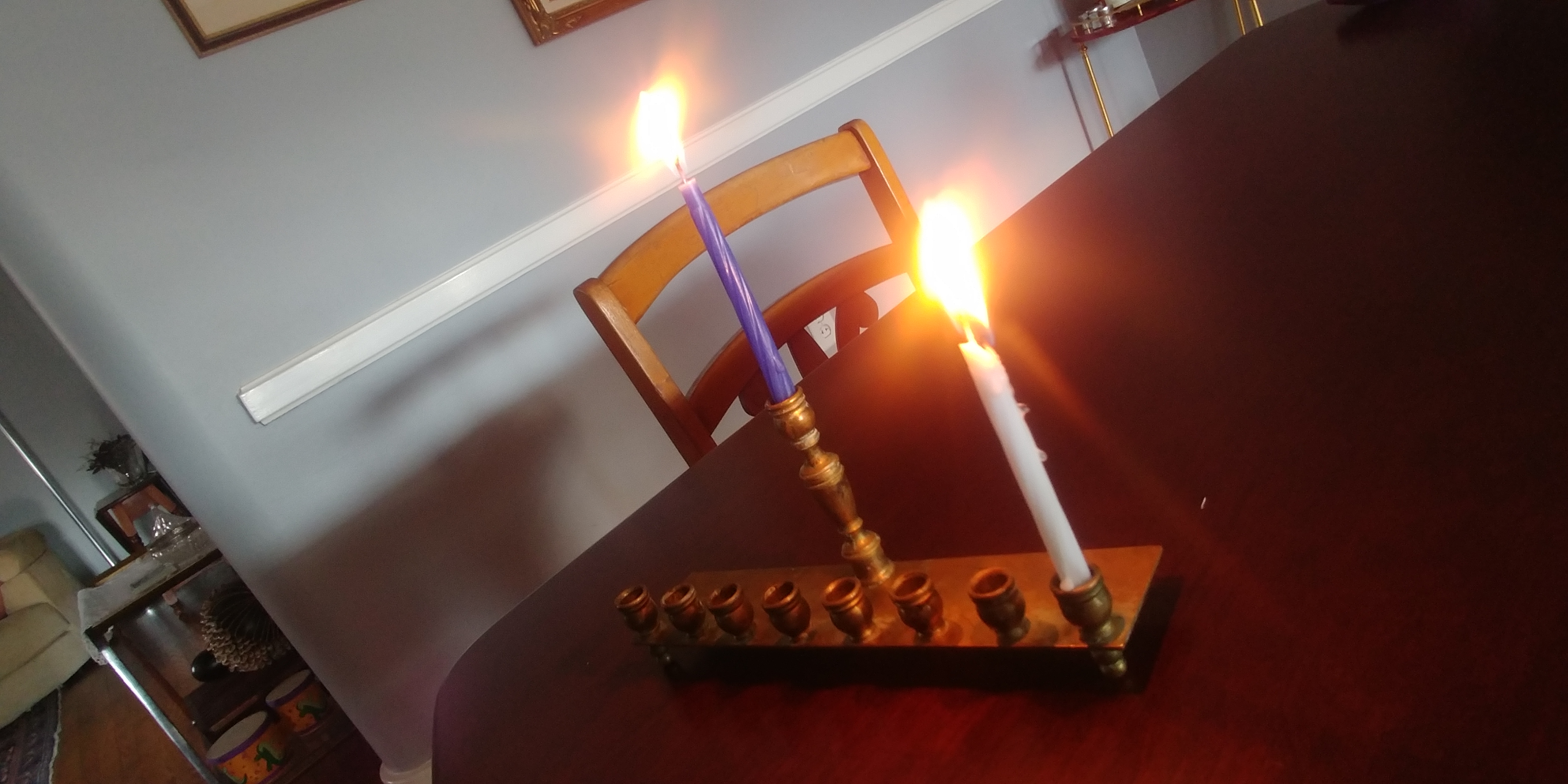
* The Passover seder (plural: sedarim) is a special dinner and storytelling ritual that is observed on the first two nights of Pesaḥ. It includes displaying and eating special foods and telling the story of the Israelites’ Exodus from Egypt.

Categories
Festivals Sermons

The Seder as a Model for Resilience – First Day Pesaḥ 5783

Last Wednesday, I was working out on an elliptical machine at the JCC when I received a text message. It was an EMERGENCY NOTIFICATION, in all caps, from the Jewish Federation Security Team. When I clicked on the included link, I landed at a page which screamed in red letters, “***This is a CRITICAL Notification***,” and explained that there was a BluePoint activation at Central Catholic, and that police were on the scene, and students were being evacuated to Rodef Shalom.

I figured that there was not much I could do, being there at the JCC in my workout clothes and all sweaty, so I went on with my workout. About a half-hour later, I received a notification that the event was a hoax, and as the day progressed, we all learned that a bunch of schools were targeted across Pennsylvania, and that they fell victim to a particular kind of terror attack known as “swatting.”

Of course, it was quite frightening for the students who were evacuated, or who were in lockdown in the building. The next day, I spoke to our friend Rev. Canon Natalie Hall, the rector at Church of the Redeemer on Forbes, and as it turns out, two of her kids were actually in locked-down classrooms. Her teenager was texting her from a closet, and as you can imagine, she was terrified. (A similar event happened at Beth Shalom a few years back when a 3-year-old accidentally hit the panic button and activated the system. Everybody in the building went into lockdown.)

I am grateful that we have systems that are designed to protect us. I am grateful that the Jewish Federation of Greater Pittsburgh has poured money into setting up these security systems; you should know that if you trigger one of the BluePoint alarm devices in the building, for Police, Medical, or Fire, not only do the emergency responders know where you are located within the building, but also everybody else who works in a Jewish institution knows that something is happening at Beth Shalom. I had no idea that we were also connected to the system at Central Catholic.

For the children who had to go into lockdown, what happened on Wednesday was completely real. They did not know, at least for a certain number of minutes, that this was a hoax. They were told that it was an active shooter. 

In our zeal to prevent terrorists from actually (God forbid) attacking people, some bad actors have discovered that they do not need to actually attack anybody (God forbid) to cause very real fear and harm. The police were tied up for hours. (Even so, somewhat ironically, I still managed to get a parking ticket, because I forgot to pay for parking at the JCC lot that morning.)

And unfortunately, it seems like fears are multiplying upon each other these days. Parents are afraid of what ideas their kids might encounter, or not encounter, in schools. Religious groups are afraid of growing secularism. Everybody’s afraid that they may be called out online if they say something that contradicts contemporary orthodoxies. Great anxiety now surrounds any type of election. We are all afraid of the water and the air and what might be in it. 

And, of course, here in Pittsburgh, some of us are quite anxious about the upcoming trial for the person who murdered 11 precious souls down the street from here on October 27, 2018. And not just for the details of the testimony, which, I am certain, will be quite unsettling. 

I am personally concerned that one unpleasant sight to which we may be treated will be people from extremist groups protesting the trial outside the courthouse. I hope those people do not show up, but as detestable as they are, they of course have the right to parade their hatred and anti-Semitism before us all, and they may just do that.

Fear, persecution, anxiety, terrorism, hatred, violence, genocide. Sadly, none of these things are new to Jewish life. We acknowledge the many ways we have suffered throughout our history at multiple points on the Jewish calendar, and Pesaḥ is a time that is especially heavy in this regard. The fear, and ultimate triumph, of our people is found all over the haggadah. Just a few examples:

  • In telling the story, the extended midrash on “Arami oved avi,” (“My father was a wandering Aramean,” Devarim / Deuteronomy 26:5-8) details the affliction, misery, and oppression which our ancestors suffered at the hands of the Egyptians. The midrash offers descriptions of the work as futile and the taskmasters as brutal oppressors who beat and terrorized and otherwise layered cruel punishments on our ancestors to maintain the level of fear and subjugation.
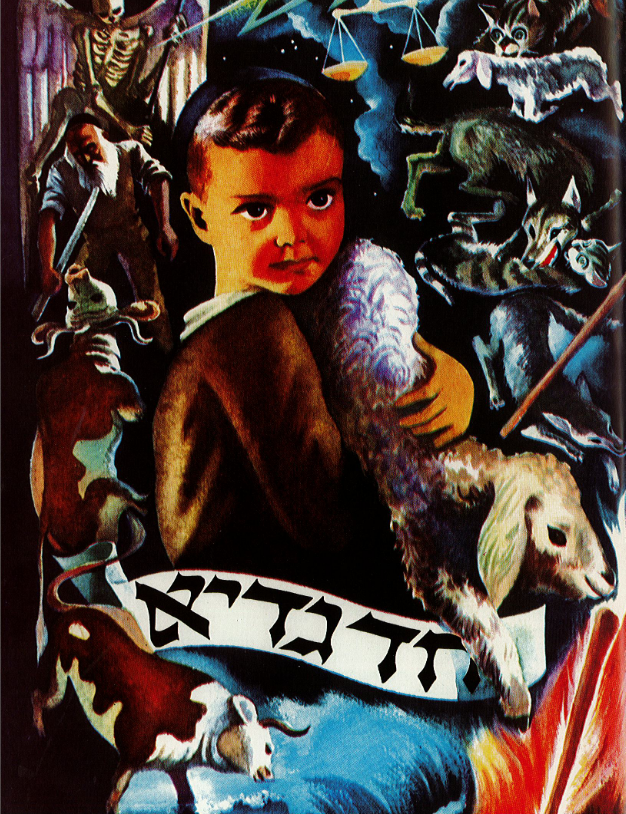
  • Elsewhere in the haggadah, we sing of the “ḥad gadya,” the single baby goat, who symbolizes the poor, enslaved Jews, and suffers at the hands of various, ever-larger and more dangerous predators until finally redeemed by the Qadosh Barukh Hu / Holy, Blessed One.
  • And then, of course, there is the moment when we “pour out our wrath” upon our oppressors, indulging in a rare, “Inglourious Basterds”-style fantasy of overpowering our tormentors, as we open our doors to beckon to Eliyahu haNavi, who will redeem us from all present and future harm.

For all the many centuries we have been telling this story, we have been subject to anti-Semitic persecution, and our current moment is no different. The Anti-Defamation League recently reported a significant jump in anti-Semitic incidents in 2022, nearly 3,700. That is a 36% increase over the year before, and a fourfold increase since 2014, when there were 912 incidents reported. 

And put in that context, the seder tells the story of Jewish resilience. We have continued doing what we do, even after the Romans laid waste to Jerusalem, after medieval blood libel accusations, after the Expulsion from Spain, after the Shoah. We keep telling the story of overcoming our oppressors. We keep welcoming in all those who are hungry. We keep singing about the poor baby goat who is redeemed by God.

Resilience is to keep doing what we are doing, and to not be afraid.

My double colleague, Rabbi/Cantor Lilly Kaufman, wrote a piece about fear and the Exodus story in which she pointed out that some fear is normal, but of course it is possible to be overwhelmed or even paralyzed by fear, and our tradition has some guidance for that. Next Wednesday morning, on the seventh day of Pesaḥ, we chant from the Torah about the dramatic escape of the Israelites from Pharaoh’s armies as they cross the Sea of Reeds on dry land. As the Egyptian armies draw near, the Israelites cry out in fear, “Was it for want of graves in Egypt that you brought us out to die in the wilderness?” (Shemot/Exodus 14:11). Moshe responds by saying, (vv. 13-14):

וַיֹּ֨אמֶר מֹשֶׁ֣ה אֶל־הָעָם֮ אַל־תִּירָ֒אוּ֒ הִֽתְיַצְּב֗וּ וּרְאוּ֙ אֶת־יְשׁוּעַ֣ת ה’ אֲשֶׁר־יַעֲשֶׂ֥ה לָכֶ֖ם הַיּ֑וֹם כִּ֗י אֲשֶׁ֨ר רְאִיתֶ֤ם אֶת־מִצְרַ֙יִם֙ הַיּ֔וֹם לֹ֥א תֹסִ֛פוּ לִרְאֹתָ֥ם ע֖וֹד עַד־עוֹלָֽם׃ה’ יִלָּחֵ֣ם לָכֶ֑ם וְאַתֶּ֖ם תַּחֲרִשֽׁוּן׃

… “Have no fear! Stand by, and witness the deliverance which God will work for you today; for the Egyptians whom you see today you will never see again. God will battle for you; you hold your peace!”

Rabbi Kaufman adds, 

Moses speaks about fear without . . . fear. This is perhaps the most important thing he does: he names the overwhelming feeling and confronts it directly and succinctly. He is supportive, confident, and empathic. He speaks not only about what God will do, but about how the Israelites will experience it. Moses promises that they will see God’s redemption, and he predicts a defining shift in how they will see Egypt from now on.

As we face whatever forms of ugly Jew-hatred come our way in the near future, we must acknowledge the fear, as Moshe does, and also look to the future when we will be redeemed from this fear. We have come so far, over so many centuries, and left so many haters in the rear-view mirror. And we have, all along, drawn strength from the framework of our tradition, drawn strength from each other as a community, and drawn strength from the Qadosh Barukh Hu.

Regarding the trial, let me suggest the following: if you are concerned about hearing or seeing unsettling details or extremist protestors or anything that will upset you, try to avoid watching TV news or reading those articles in the paper or online. I myself do not want to hear/see/read that stuff. But also know that, whatever happens, we as a community will of course do our best to keep everybody safe and to keep the haters at bay, to look out for each other and to keep on praying to God for our spiritual well-being.

But something that you might also do, particularly if you are gathered around the seder table tonight with family and friends, is to have a discussion about fear and resilience. Ask the question: “What are we afraid of right now, and what steps are we taking to overcome that fear?” Our tradition wants us to name the fear, to listen to the fear, to address the fear, and to understand that we will ultimately prevail.

Our traditions, our textual framework are there to help us navigate what has always been a frightening world for the Jews. Take these opportunities, on this ḥag ha-ḥerut, this festival of freedom, to demonstrate to each other that we shall overcome. אל תיראו. Al tira-u, said Moshe. Have no fear. 

חג שמח!

~

Rabbi Seth Adelson

(Originally delivered at Congregation Beth Shalom, Pittsburgh, PA, first day of Pesaḥ 5783, 4/6/2023. A version of this sermon appeared in the Pittsburgh Post-Gazette on 4/9/2023.)
Categories
Sermons

The Most Beloved Employee of Beth Shalom, Bar None – Ki Tissa 5783

This is the most ironic period of the Jewish year, from a gastronomic perspective. In order to fulfill the Purim day mitzvah of mishloaḥ manot, sending packages of food and treats to one another, as described in chapter 9 of the book of Esther*, many of us pack extensive and sometimes quite fancy bags full of stuff – candy, chips, fruits, nuts, and of course hamantaschen – and distribute them far and wide. And, of course, we get similar packages from others. It’s a lovely, friendly, neighborly project that has a downside: then you have piles of snack food sitting around the house.

Now, as happens every single year, Pesaḥ is exactly one month after Purim. Prior to Pesaḥ, of course, your house should be free of ḥametz, five species of grains identified in the Talmud. The most essential halakhah surrounding Pesaḥ is that from the morning of the day prior to the first seder, it is forbidden by Jews to eat, possess, benefit from and even see ḥametz. So all products containing even the tiniest amount of exposure to wheat, barley, oats, spelt, and rye, which is basically everything you received in those mishloaḥ manot bags, must be eaten (or regifted, although none of your friends are going to want their mishloaḥ manot stuff to come back to them, so to do that you’re going to have to pawn it off on your non-Jewish neighbors).

As I sat at my kitchen table last Thursday evening typing out this sermon, surveying the array of Purim goodies calling out to be consumed, I hatched a great theory about the origin of hamantaschen. Some Jew at some point in the Middle Ages, on the week before Purim realized, “Hey, I have lots of flour that I’m going to have to use up before Pesaḥ. I should make a bunch of cookies for Purim and give them to all my neighbors! Then the ḥametz will be their problem!” It was such a great idea that all the neighbors did it the following year, thus neutralizing the original intent. But a fabulous Ashkenazi custom was born.

It is clearly NOT ironic, however, that foodstuffs and eating are an essential part of Jewish holiday practices, be it Adar or Nissan or Tishrei or whatever. On the contrary, it is hard-wired into the Jewish year. We are the people for whom what you put into your mouth is as important as what comes out of it as words of prayer. 

And it is also therefore not ironic that, as we honor Michelle Vines today, we must acknowledge that she has been the most important member of the staff here for many, many years. I will say a lot more on that in a few minutes, but first a word of Torah, brought to you courtesy of Parashat Ki Tissa, which we read today.

The subject of eating comes up at least six times in Parashat Ki Tissa

  • The Israelites’ first act after making the Molten Calf is to declare a festival, and so they offer sacrifices and then they sit down to eat and drink and perform all sorts of horrible acts (Ex. 32:6). 
  • Later on, when Moshe goes up Mt. Sinai a second time, God lays down the law about idolatry and intermarrying with the Canaanites, because it will lead to eating from their unholy, idolatrous sacrifices (34:15).
  •  Immediately after, there is a reminder of Ḥag haMatzot, the feast of Unleavened Bread which we associate with Pesaḥ, when we are obligated to eat matzah (34:18). 
  • In the same holiday passage, we also find a commandment to bring as a sacrifice the biqqurei admatekha, the first fruits of your land, which we associate with Shavu’ot, and in the same verse, the prohibition on boiling a calf in its mother’s milk, a commandment which yielded a whole bunch of practical laws which are in play to this very day (34:26). 
  • And near the conclusion of Ki Tissa we learn that in the 40 days and nights that Moshe was up on Mt. Sinai, לֶ֚חֶם לֹ֣א אָכַ֔ל וּמַ֖יִם לֹ֣א שָׁתָ֑ה, “he ate no bread and drank no water” (34:28). (He must have been quite hungry when he returned.)

You might even say that the latter half of the book of Shemot / Exodus, following the Israelites’ having escaped from Pharaoh’s army at the Sea of Reeds, is food obsessed. No sooner have they chanted Shirat haYam, the Song of the Sea, that they are desperate for water (Ex. 15:24). And then they are pining for the “fleshpots of Egypt” (16:3). And then there are the manna and the quail. And so on.

When we comb through the text for this dietary thread, we see it everywhere. Why does the Torah go out of its way to tell us who is eating and drinking and why, what they are permitted and what they receive, what is forbidden and what is associated with idolatry or with proper festivals? Do those food references further the narrative? 

The theme of food in the Torah reinforces the principle, which we all know, that eating is essential to what we do. Taken together, the episodes of eating and drinking remind us that this most mundane feature of our lives, the physical source of our energy and our spirit, cannot be overlooked. Our holidays surround food; our joy and our grief are expressed over platefuls of cookies and platters of smoked fish. Food is ritual. Food is an opportunity each day to frame an ordinary act in holiness with berakhot before and after. Food is the source of our strength, and our meals punctuate our lives. And, as you may know, it is food that enables us to perform the most fundamental mitzvah of Jewish life: learning Torah. As we learn in Pirqei Avot (3:17):

אִם אֵין קֶמַח, אֵין תּוֹרָה. אִם אֵין תּוֹרָה, אֵין קֶמַח

Im ein qemaḥ, ein Torah. Im ein Torah, ein qemaḥ.
Where there is no flour, there is no Torah; where there is no Torah, there is no flour.

The Maharal of Prague, a 16th-century rabbi, notes that the Mishnah here uses the term qema, flour, rather than leem, bread. Flour is a fine powder, he says, while bread has other characteristics: it can be rough and thick; flour thereby relates to the fine qualities of the soul, while bread, in its thick roughness, does not. Also, flour is a fundamental need, like Torah. If you have no bread, but you have a reserve of flour, you can make bread. If you have no flour in the jar, once you finish your bread, you are out of luck. Torah is the very source of our spiritual sustenance; when we have no Torah, we have nothing left. 

But whether we are speaking of bread or flour or pareve cookies, food, like Torah, is essential to our lives. The Jewish army of God marches on its stomach. And we should remember this all the more so on this day when we are honoring Michelle in her retirement.

Now, this may surprise some of you, but Michelle is not Jewish. Yes, it is true that she knows as much about kashrut (Jewish dietary laws) as any rabbi in the neighborhood, and can almost cite chapter and verse of the Shulḥan Arukh, the 16th-century codification of Jewish law, in the original Hebrew regarding certain Jewish dietary practices. And not only that, she also knows which customs are in play in which communities – which hekhshers (kosher certification marks) are acceptable in which synagogues, who among us allows broccoli and asparagus, etc. And she has an encyclopedic knowledge, acquired over many years of dealing with benei mitzvah, weddings, beritot milah (ritual circumcisions), shiv’ah (mourning rituals), and every other lifecycle and communal event, of every aspect of every party. She has managed the most complex of build-outs for celebrations in the Ballroom; she has poured at least 8 million shot glasses of grape juice for Shabbat kiddush; she has been spotted at every type of affair imaginable, always with a friendly smile and a nod, always with a calm, reassuring attitude of understanding. Members of this congregation and throughout the community know that we can not only trust Michelle, but that she has long been the one to rely on. She is, and has been for half a century, the most-beloved Beth Shalom employee, bar none.

And we are extraordinarily grateful for her half-century of service to Beth Shalom and to the wider Jewish community. We want you to know, Michelle, that in addition to honoring you this morning, the Congregation Beth Shalom and other synagogue friends are also providing a special gift for you, and we hope you will use it to take a nice, comfortable vacation.

Michelle has helped carry us through all sorts of moments, the joyous and the painful, the holy and the mundane. She has been there for all of us; holding us all up. She has been maintaining that figurative flour jar of spiritual sustenance as we have drawn from it, for many years.

And we are so grateful. Kol hakavod! All the glory is yours. 

When you see Michelle at kiddush today, please don’t ask her if we are out of egg salad. Instead, please just thank her for her many years of service, and wish her good luck.

~

Rabbi Seth Adelson

(Originally delivered at Congregation Beth Shalom, Pittsburgh, PA, Shabbat morning, 3/11/2023.)

* Esther 9:22

כַּיָּמִ֗ים אֲשֶׁר־נָ֨חוּ בָהֶ֤ם הַיְּהוּדִים֙ מֵאֹ֣יְבֵיהֶ֔ם וְהַחֹ֗דֶשׁ אֲשֶׁר֩ נֶהְפַּ֨ךְ לָהֶ֤ם מִיָּגוֹן֙ לְשִׂמְחָ֔ה וּמֵאֵ֖בֶל לְי֣וֹם ט֑וֹב לַעֲשׂ֣וֹת אוֹתָ֗ם יְמֵי֙ מִשְׁתֶּ֣ה וְשִׂמְחָ֔ה וּמִשְׁלֹ֤חַ מָנוֹת֙ אִ֣ישׁ לְרֵעֵ֔הוּ וּמַתָּנ֖וֹת לָֽאֶבְיֹנִֽים׃

[The 14th and 15th of Adar were] the days on which the Jews enjoyed relief from their foes and the same month which had been transformed for them from one of grief and mourning to one of festive joy. They were to observe them as days of feasting and merrymaking, and as an occasion for sending gifts to one another and presents to the poor.

Categories
Sermons

The Future – Tetzaveh 5783

When I consider where we are as a society and where we might be headed, the words of Leonard Cohen, from the title track of his fantastic 1992 album, “The Future,” continue to ring in my ears:

Things are gonna slide
Slide in all directions
Won’t be nothing you can measure anymore
The blizzard, the blizzard of the world
Has crossed the threshold
And it’s overturned
The order of the soul

We, the Jews, are excellent at history. Regarding the future, not so much. 

Just consider what will be happening, Jewishly speaking, for the next few weeks: 

  • On Shabbat we remember Creation. 
  • On this Shabbat Zakhor, we remember Amaleq
  • On Purim, Monday evening and Tuesday, we remember how Esther saved the Jews of Persia. 
  • On Pesaḥ, we remember how we came from slavery to freedom. 

And so on. We are excellent at history.

But where in Jewish life do we remember the future? The most enduring symbol of the Jewish future to be that one that is right behind me, above the ark. Parashat Tetzaveh opens (Shemot / Exodus 27:20) with the mitzvah of kindling the Ner Tamid, the eternal light, which symbolizes the continuity of our connection with God and Torah from all the way back to Exodus. It is tamid – always burning, always reminding us of our past and the eternity of the future before us, always serving as a beacon to call us back to our tradition.

We frequently invoke yetzi-at Mitzrayim, the Exodus from Egypt, in our liturgy. We do so because it serves as a template for our future redemption, the redemption of Olam HaBa, the World to Come. But admittedly, the Olam HaBa model is somewhat inchoate, and frankly, we are in disagreement as to what the real goal in Jewish life is. There are certainly some who understand our performance of mitzvot on this Earth to bring the mashiaḥ, the anointed, supposed descendant of King David, and lead us to Olam HaBa. There are others who see our mitzvot as serving their purpose in the here and now; that is, we fulfill them because it is the right thing to do in the moment, and their reward is intrinsic. (I am in this latter camp.)

But in general, except for mashiaḥ-based ideology, which is somewhat murky and controversial, we do not really speak too much about the future. We are simply not wired that way. Judaism is fundamentally focused on the present.

Which is why Rabbi Danny Schiff’s new book, Judaism in a Digital Age, is so striking. Well-researched and thoughtfully presented, the book addresses not only the future from a Jewish perspective (and in particular, the future of the modern non-Orthodox movements), but also the future from a general point of view, the future of all humanity. And let me say this: the view is mostly pretty bleak.

He opens with a biting critique of the Conservative and Reform movements, explaining in excruciating detail about why movements which emerged “when horses were the dominant means of transportation” are not only no longer relevant, but also destined for continued decline as they confront the “hyper-emancipated” world of the digital age. 

He moves on to take a snapshot of society as it is today, how “modernity” ended in 1990 with the widespread availability of the Internet, and all of the ways that immediate access to information through digital means has changed how we live and think and socialize. He revels in the current thinking by notable futurist authors, including the very real threat to society posed by artificial intelligence, and dangles before the reader the promise of immortality based on so-called “transhumanist” ideas about the blending of technology and the human body, which may ultimately serve to destroy any traditional concept of corporeal human life as we now know it.

And here and there he asks the hard questions about Judaism’s confrontation with post-modernity. What value will there be to having rabbis and teachers when all information is available to us without the intermediaries? How can halakhic principles regarding privacy or leshon hara remain in play when all of the details of every person’s life is available to anybody else through a search engine? How can we confront the challenges posed by rising rates of isolation and economic inequality, the availability of pornography, or the endless amplification of self-importance which social media platforms encourage?

Whatever happens in the future, we will certainly respond by (a) failing to consider adequately the full consequences of new technologies, and (b) managing to eke out a new way of living despite dramatically changed circumstances. Rabbi Schiff cites David Zvi Kalman, a fellow at the Shalom Hartman Institute, regarding the way we passively accept potentially harmful innovations:

There’s a new technology in town. A few years ago it seemed like a pipe dream, but it’s now arrived on the commercial market in a big way. Large corporations are lining up to use it even as watchdogs point out serious potential for abuse. Reporters look into it, agree that there is a problem, and pen dozens of articles fretting about the downsides, demanding regulation and responsible use. The public grows concerned, and then they grow resigned. Meanwhile, the technology is adopted. Sometimes it is well regulated, more often it is not. There are a few horror stories. We learn to live with it. We move on. This is the ethical life cycle of modern technology, and its major problem is that it doesn’t know how to distinguish between technologies that complicate morality and those that destroy it – this is, it lacks the ability to say no, absolutely not.

We are seeing this tale play out over and over; consider facial-recognition technology, which is now widespread. Our response, according to Rabbi Schiff, must be to accept that the world has changed, and respond within the new paradigm:

Viewed from a Jewish perspective, the digital age is no longer about adapting Jews and Judaism to a slowly opening world of belonging and enlightenment; it is about asking how human beings should optimally function within the cacaphonous tumult of an accelerating epoch of hyper-emancipation, hyper-connectivity, and hyper-individualism.

And this is where I believe that the modern movements have the greatest potential. We are particularly well-positioned to engage with the Jewish future, perhaps in ways that more traditional forms of Orthodoxy cannot.

So first of all, I want to reassure you all that reports of the Conservative movement’s death are highly exaggerated. People have been declaring us dead for years, but I do not think that you have to look around too much here at Beth Shalom to see that this is a thriving, multi-generational community that rejoices and grieves together, that cherishes life and celebrates Jewish living and constantly engages with Jewish text and ritual. And while our membership decreased slightly during the pandemic, we are gaining members once again, continuing to buck the national synagogue trend. 

I am grateful for our excellent and committed staff. Our lay leadership is in fine shape, and we are preparing for a capital campaign so we can make much-needed repairs to our building. חזק חזק ונתחזק / Ḥazaq, ḥazaq, venitḥazzeq. Be strong, be strong, and we will be strengthen one another.

And even Rabbi Schiff concedes that if there is a new model for how to be Jewish, we have not yet found it. So meanwhile, while we are waiting for that new paradigm to emerge, we are going to continue to do our traditional-yet-contemporary thing. We will continue to pray together, to learn together, and to offer imaginative new programming through Derekh and otherwise.

Now onto the thorny questions about the future: 

  • Will we all soon be immortal cyborgs? 
  • Will the chips planted in our brains which connect us all to the shared data storage of all of human history extinguish our individual personalities? 
  • Will the AI machines we have created overthrow us or imprison us or simply exterminate us all when they realize that we are weaker and far less efficient than they are? 
  • What will happen to Judaism in a future in which God seems powerless compared to the technology we have created?

Jews have lived through many centuries of change, of social upheaval, of wars and genocides and life-changing innovations. We have made the transition from hand-copied documents to printed books to instantly-searchable gemara on smartphones. And yet, here we are, still reading Torah from a scroll produced essentially the same way for thousands of years, still basking in the glow of a Ner Tamid that – OK, so this one is electric, not an olive-oil lamp – but it is still shining as a beacon, here on Beacon Street.

We have navigated a changing world, and we will continue to do so. We will determine whether halakhah permits us to eat cultured meat that was never actually attached to any animal. We will find a way to grapple with the potential immortality awaiting us in the near future; as Rabbi Schiff points out, our sources do speak here and there about immortality. We will manage to make minyanim a few times a day, even when our physical presence and our consciousness are not in the same place. We will ask the hard questions and answer them within the Jewish system, just as Jews have always done.

Rabbi Schiff lands in a somewhat reassuring place. Regarding the AI-infused future, he says, “No matter how animated, intelligent, responsive, or reliable our AI creations might become, AI will never attain the combination of qualities that will merit the status of being ‘created in the image’ [of God].

We can do this. We in the Conservative movement are especially well-placed to do this. We have been addressing cultural, societal, and technological change for a while, and we will help us all make this transition to whatever awaits us. I’m counting on that Ner Tamid to continue shining, to continue reminding us of the turbulence of our past, the constancy of our present, and the brightness of our future. Our unofficial historical slogan has been, “Tradition and change,” and I expect that we will continue to balance the two successfully.

In the Talmud (BT Avodah Zarah 2a), Rabbi Yehoshua ben Levi said, “All the good deeds Israel does in this world will bear testimony in Olam HaBa.” Perhaps Olam HaBa will not look quite like what R. Yehoshua ben Levi envisioned, seventeen centuries ago. But whatever form it takes, Jews will be there, still meditating over our words yomam valaila, day and night, and looking to the Ner Tamid as a reminder of past and future.

~

Rabbi Seth Adelson

(Originally delivered at Congregation Beth Shalom, Pittsburgh, PA, Shabbat morning, 3/4/2023.)

Categories
Sermons

God’s Pronouns – Terumah 5783

Have you ever felt misunderstood? Mis-characterized? Mis-judged? Yeah, so that happens to all of us, and probably almost every day.

Do you think God has ever felt misunderstood? Well, if we accept for the moment the anthropomorphic projection of human feelings onto God, absolutely. (Let me say right up front here, and many of you know this already, but I have some fairly unorthodox ways of understanding God, so I will be the first to say that it is extraordinarily unlikely that God “feels” like humans do. We’ll come back to that.)

Earlier this month, the Church of England’s General Synod announced that they are currently evaluating ways of referring to God which reflect contemporary perspectives on gender. Now, for the Jews, this is nothing new or surprising. If you have been paying close attention, you might have noticed that the siddur/prayerbook we use here at Beth Shalom, Siddur Lev Shalem, avoids using gendered pronouns when referring to God in English, and avoids gendered terms such as “King,” “Lord,” and “Master,” instead using “Sovereign,” or leaving the Hebrew untranslated. I have tried to avoid gendered terms in English when referring to God. This was actually something I first heard my childhood rabbi, Rabbi Arthur Rulnick, do when I was in high school, all the way back in the 1980s.

But of course, the reality of Jewish text is that in Hebrew, the vast majority of references to God are undeniably masculine. And not only the names or descriptors for God, but every adjective, verb, pronoun including suffixes is gendered as well. And there are no gender-neutral forms in the Hebrew language. (The English use of “they” as a non-gendered pronoun does not work in Hebrew.)

Just as a quick example, consider the berakhah recited before engaging in the mitzvah of Torah study:

בָּרוּךְ אַתָּה ה’ אֱ-לֹהֵֽינוּ מֶֽלֶךְ הָעוֹלָם אֲשֶׁר קִדְּ֒שָֽׁנוּ בְּמִצְוֹתָיו וְצִוָּנוּ לַעֲסֹק בְּדִבְרֵי תוֹרָה:

Barukh Attah Adonai, Eloheinu Melekh ha’olam, asher qiddeshanu bemitzvotav, vetzivanu la’asoq bedivrei Torah.
Praised are You, Adonai our God, King of the Universe, Who sanctified us with His commandments and commanded us to be engrossed in the words of Torah.

Of the 13 Hebrew words in that berakhah, seven of them, more than half, refer to God as masculine. Changing them to, for example, feminine language would require major surgery, and would be quite awkward. And no non-gendered terms exist. While we may choose to translate to English however we want, in Hebrew there is no getting around God’s apparent male-ness, at least as far as our ancestors understood God as they wrote these words.

And yet, despite the language, can we really think of God as masculine? 

In the first Creation story of Bereshit / Genesis (1:27), when humans are created betzelem Elohim, in God’s image, they are created as “zakhar uneqevah” – male and female. There is even a midrash which describes the first human as having a male side and a female side, which were subsequently split apart (an idea also presented, by the way, in Plato’s Symposium in Aristophanes’ speech on the origin of love). 

So if people were created in God’s image and as both male and female, we can only deduce that God certainly has male and female aspects as well, and therefore God can be considered neither entirely male nor entirely female, so neither feminine language nor masculine language accurately applies to the Qadosh Barukh Hu*, even if all three of those words are decidedly masculine.

As the Talmud mentions from time to time, “Dibberah Torah kilshon benei adam.” The Torah speaks in human language. Since our language is limited, and Hebrew has no neuter forms, the default for God became masculine. The human mind has this silly habit of wanting to compartmentalize, to categorize neatly. But God, unequivocally, cannot be put into any kind of box.

But one of the most marvelous things that I learned in rabbinical school from my teacher Rabbi Neil Gillman z”l is that God language is by necessity metaphorical. God’s “mighty hand and outstretched arm”? Metaphor. The noise God makes while walking through the Garden of Eden during the breezy time of the day (Bereshit / Genesis 3:8)? Clearly metaphor. God’s voice when “speaking” to Moshe at the beginning of Parashat Terumah (Shemot / Exodus 25:1)? 

וַיְדַבֵּ֥ר ה’ אֶל־מֹשֶׁ֥ה לֵּאמֹֽר׃

Vaydabber Adonai el Moshe lemor.
God spoke to Moses, saying…

This one is so metaphorical that the second verb, lemor, to say, reinforces the fact that God is not speaking in any conventional way. God is communicating with Moshe, but since God has no mouth as we understand mouths, the Torah adds the second verb lemor / “to say” to demonstrate that “vaydabber” / “speaking” does not actually mean speaking the way that humans speak.

Ein lo demur haguf, ve-eino guf, we sing cheerfully during Yigdal, which is a summary of Maimonides’ Thirteen Principles of Faith. God has neither the form of a body, nor any kind of physical body at all. Lo na’arokh elav qedushato – we cannot even estimate the extent of God’s non-physical holiness. It is unlimited, unfathomable, unconfined.

If all God language is metaphor, then clearly God’s gender is also metaphorical in addition to being limited by human language. In a conversation I had with Rabbi Rachel Adler, whom you heard in this space last week, I suggested that we could understand that God has no gender; she replied that God encompasses all genders.

And in her landmark book from 1998, Engendering Judaism, Rabbi Adler also speaks of the power of metaphor. Metaphor is ideal for tefillah / prayer because it is, she said, “complex, multi vocal, full of resonances, because it is the language of discovery and metamorphosis, the language that points toward the unknown, the language that lights up the darkness.” The metaphorical language we use for God leaves room for human creativity in interpretation. It creates a space for us.

And while wrestling with the challenges of masculine God-language and in particular the archaic nature of the ancient metaphors which we still use, she also concedes that these metaphors continue to hold their power because they point beyond themselves and are incomplete. “Incompleteness,” she writes, “preserves metaphor’s truthfulness; rhetorical processes that distort metaphor are those that hide or deny its incompleteness.” 

In other words, the moment we understand the language as making God male, we have limited and thereby weakened God. The incomplete metaphor retains its mystery and its power. 

By instead reaching out to God with our imagination, which transcends language, we are drawn closer. By leaving space in the metaphor, we can ascend higher.

I remember so clearly when Rabbi Gillman, speaking about the language of tefillah, distinguished the Conservative movement’s approach from that of Rabbi Mordecai Kaplan, who created the first Reconstructionist siddur. Rabbi Kaplan simply changed the Hebrew in passages which challenged his theology, substituting for the second paragraph of the Shema, and the blessings over the Torah, and parts of Aleinu

Rabbi Gillman characterized Rabbi Kaplan’s approach as, “If I don’t believe it, I don’t say it.” 

And then he added, “I’m a liturgical traditionalist.” I’ll tinker with the translation instead. And that has been the Conservative movement’s philosophy regarding liturgy for nearly a century. Perhaps 97% of what we say in our tefillot here at Beth Shalom is exactly the same as what they say in Orthodox synagogues; where we differ more concretely is on the English side of the page, and in our hearts and minds.

What Rabbi Gillman taught, and Rabbi Rachel Adler also addresses, is that the ancient Hebrew has power, even when the literal translation does not work for us. But we use our imaginations to get to the place where those metaphors continue to function in our contemporary spiritual landscape.

And that is an essential message of Jewish life. What did we read about today in Parashat Terumah? That we must build a mishkan, a dwelling-place for God on Earth. And that metaphor is presented to us in the Torah in excruciating detail, spreading over five parashiyyot. And what will this mishkan do? It will enable the in-dwelling of God. Shemot / Exodus 25:8:

וְעָ֥שׂוּ לִ֖י מִקְדָּ֑שׁ וְשָׁכַנְתִּ֖י בְּתוֹכָֽם׃

Ve’asu li miqdash, veshakhanti betokham. 
Make Me a sanctuary, and I shall dwell among the Israelites.

More metaphor, of course. 

And where is this mishkan today? Where is the Temple, the Beit HaMiqdash today? Where are the sacrifices that much of this central part of the Torah reference? We build it inside ourselves, and that is where God dwells. 

Even in its great detail, the idea of the mishkan is fundamentally incomplete in the Torah.

It described a place for worship, but did not capture the entire range of how we can understand the mishkan and the sacrificial mode of worship. Parashat Terumah speaks, silently and with no physical mouth, about the way we worship today; about prayer and synagogues and moments of silence and joyous singing and wailing grief and beating our chests and prostrating ourselves and all the imaginative ways in which we reach toward God.

We have dramatically changed the mode of worship, but we are still within the Torah’s metaphor of the mishkan. And we see this over and over in rabbinic Judaism: re-imagining the Torah’s language so that it applies to us here and now, wherever “here and now” has been throughout Jewish history.

In reading these passages, we must concede that our ancestors have re-imagined so much in Jewish life. And we continue to re-imagine God, the God in whose image we are all created, the God who cannot be limited to a body, or a single gender. The mystery is more powerful when we lean into our imaginations, and do not toil in the mundanities of inadequate human language. How dare we even think that masculine terms for God can limit the Qadosh Barukh Hu to such a narrow understanding of masculinity?

Our intellect and creativity must be greater than that. Human language is limited; but metaphors leave space for all of us to be seen within. God encompasses all genders.

So is God misunderstood? Clearly. But in not entirely understanding God, we leave room for an inestimable holiness, one which is only limited by our imagination. It is in that realm, and beyond in the infinite, where God dwells.

~

Rabbi Seth Adelson

(Originally delivered at Congregation Beth Shalom, Pittsburgh, PA, Shabbat morning, 2/25/2023.)

* הקדוש ברום הוא/ haQadosh Barukh Hu, a term for God, literally means, “The Holy One, Blessed be He.” Both qadosh and barukh are also male-gendered terms. Some translate this term as “the Holy, Blessed One.”

Categories
Sermons

Action is the Goal: Engaging More Jews in Jewish Living – Bo 5783

“Actions speak louder than words.”

We think of that in particular surrounding gestures of kindness or generosity. Physically showing up to help a friend in need is often much more valuable and appreciated than verbal expressions of sympathy. 

In Jewish life, actions transmit more than words. Lighting Hanukkah candles; blotting out Haman’s name; cleaning out the hametz; tashlikh; fasting; dancing with the Torah. Yes, all of those things come with a story. And there’s so much more background and history and ideas and textual sources that go along with the story. 

But Jewish life requires action. Our tradition wants us to do something, not just think or talk about it. God wants you to get off the couch, get out into the world, and perform a physical action. And carrying out the actions of Jewish life – Shabbat, kashrut, holiday rituals – is why we are all still here. 

“But rabbi,” you might be thinking, “What about Rabbi Akiva, who said that study is greater than action?” (BT Qiddushin 40b)

I would respond by saying, of course you are correct. Who am I to disagree with Rabbi Akiva? But Rabbi Akiva’s reasoning is that study leads to action. So action is still the ultimate goal. The reason we learn is that study helps us bring meaning to the action, which makes it more valuable, which makes you more likely to do it.

In the opening words of Parashat Bo, from which we chanted this morning, included the following (Exodus / Shemot 10:1):

וַיֹּ֤אמֶר ה֙’ אֶל־מֹשֶׁ֔ה בֹּ֖א אֶל־פַּרְעֹ֑ה כִּֽי־אֲנִ֞י הִכְבַּ֤דְתִּי אֶת־לִבּוֹ֙ וְאֶת־לֵ֣ב עֲבָדָ֔יו לְמַ֗עַן שִׁתִ֛י אֹתֹתַ֥י אֵ֖לֶּה בְּקִרְבּֽוֹ׃

God said to Moshe, “Go to Pharaoh. For I have hardened his heart and the hearts of his courtiers, in order that I may display these My signs among them.”

Now, what is most curious about this verse, and in particular the word that identifies the parashah, is בֹּא / Bo. If you’ve learned any spoken Hebrew, you probably know this word: it means, “Come,” as in, “Come over here and check out this very interesting verse.” So when God tells Moshe to בֹּ֖א אֶל־פַּרְעֹ֑ה / Bo el Par’oh, he is saying, “Come to Pharaoh,” where we might expect לֵךְ, “Go to Pharaoh. 

One commentator, R. Yosef Bekhor Shor, who lived in central France in the 12th century, reads this statement as God saying, “Come with me to Pharaoh.” That is, Moshe should understand that he is coming along with God to request freedom for his people; he is not going alone.

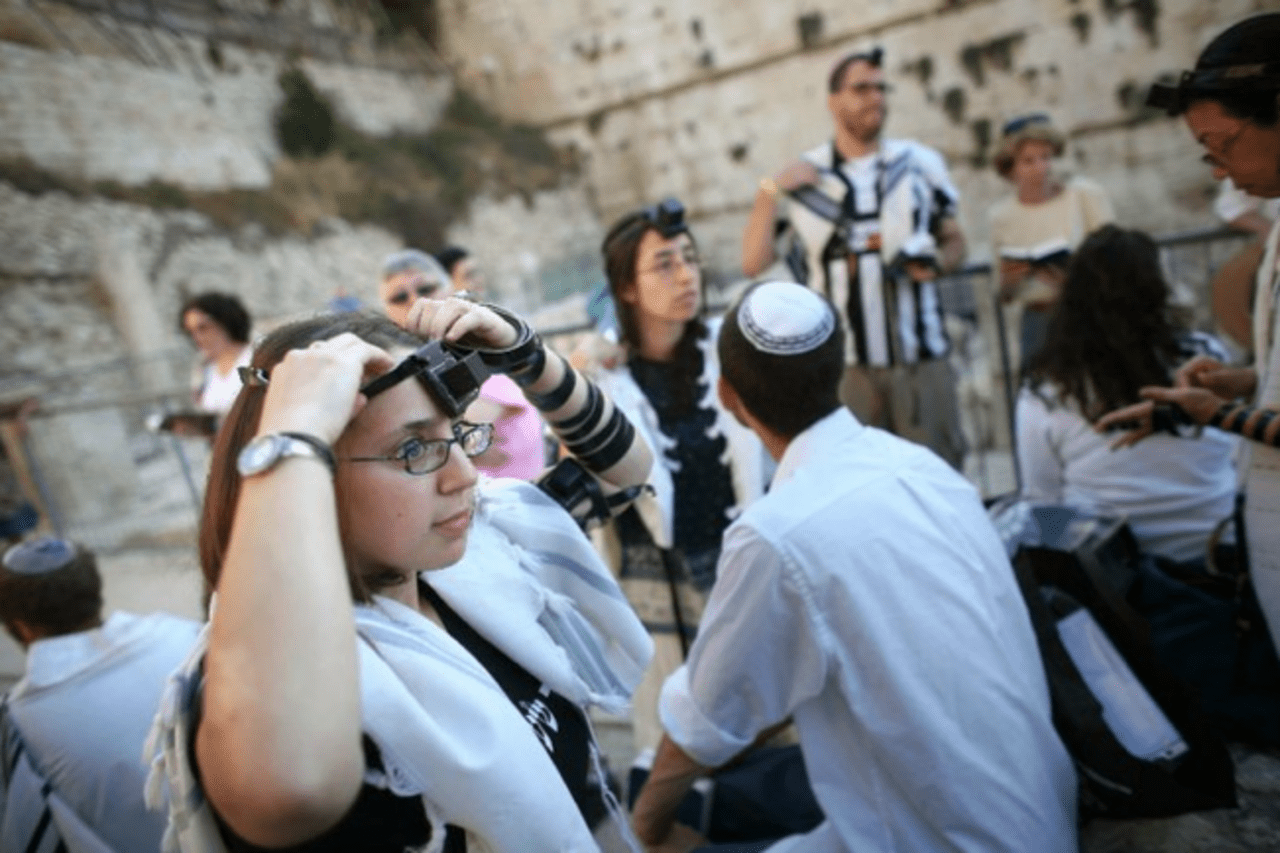
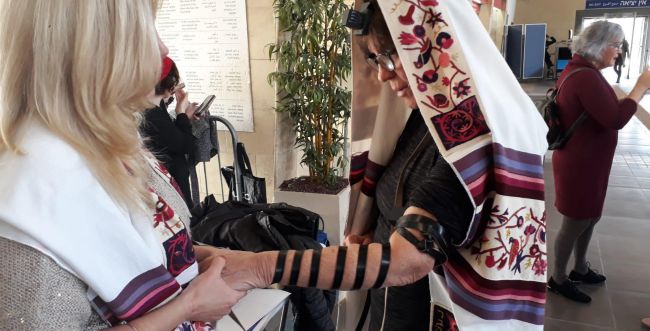
When performing any holy action, just like Moshe, it is up to us to see that God wants us to come along. God wants us to recite berakhot over eating; God wants us to refrain from physical labor and dine luxuriously with family and friends on Shabbat; God wants us to recite words of prayer, Shema and Amidah daily; God wants us to light candles and give tzedaqah and shake the lulav and etrog and wash our hands before making motzi and of course wear a tallit and tefillin at appropriate times. 

And when we perform these actions, when we connect our hearts and minds to our hands and feet and mouths in all those moments of holy opportunity, God is coming along with us. 

And, by the way, it does not matter if you fulfill the mitzvah of handwashing before making motzi in the Grand Ballroom of a palatial synagogue or in the humblest of kitchens, you still get all the credit. And God is right there with you no matter what.

Now, something which we might run up against in performing the actions of Jewish life is that some of those mitzvot and customs were historically only reserved for men. In particular, positive, time-bound mitzvot – positive, meaning things that you do (as opposed to refrain from doing) and time-bound, meaning that there is a particular time-frame in which they must be performed – from which women were traditionally exempted, and, one might say, even excluded. Think of tallit and tefillin, or leading the congregation in tefillah / prayer, or reading from the Torah or taking aliyot

I know that it is hard to believe, now half a century after the ordination of the first female rabbi by the Reform movement, and approaching forty years since the first Conservative female rabbi was ordained, that this gender differential still plays out. It is hard to believe that in this congregation, where many women lead us in prayer and in teaching. 

But there certainly remains a stubborn gender gap in performing fundamental Jewish actions, not only because many of us in this room grew up in a non-egalitarian world, but also because of the resurgent influence of Orthodoxy. 

And so as part of this vision of increased commitment to action for all Jewish adults who are benei mitzvah, the Religious Services Committee this week decided that we are going to gently begin to try to nudge all of us to take action on these positive, time-bound mitzvot, and in particular to encourage the most outward signs of commitment to our tradition.

Now, we are not ready to force anybody to do something that they do not consider themselves obligated to do. However, please consider the following:

In 1984, Rabbi Joel Roth, one of my halakhah teachers at the Jewish Theological Seminary, wrote a landmark teshuvah / rabbinic responsum which permitted the ordination of women as rabbis, but it mandated that in order for this to happen, women must “self-obligate” to all the positive, time-bound mitzvot from which they have traditionally been excluded.

Thirty years later, however, in 2014, Rabbi Pamela Barmash, who herself was permitted to be ordained due to Rabbi Roth’s teshuvah, wrote her own teshuvah on the subject of women and mitzvot. And Rabbi Barmash said something which, I think, should be broadcast loudly and proudly throughout the Jewish world.

She reasoned that the traditional exemption of women from those positive, time-bound mitzvot was solely due to their historically subordinate status. That is, they were not men, and were not equally obligated to men. And then – this is the best part – she pointed out that (wait for it!) “times have changed.” She concludes with the following statement, which is absolutely revolutionary:

The halakhah has recognized that when social customs change significantly, the new social reality requires a reappraisal of halakhic practices. The historical circumstances in which women were exempted from time-bound positive mitzvot are no longer operative, and the Conservative movement has for almost a century moved toward greater and greater inclusion of women in mitzvot. In Jewish thought and practice, the highest rank and esteem is for those who are required to fulfill mitzvot. We rule therefore that women and men are equally obligated to observe the mitzvot. 

We call upon Conservative synagogues, schools, and camps to educate men and women in equal observance of mitzvot and to expect and require their equal observance of mitzvot.

In other words, says Rabbi Barmash, all adults are invited to and indeed should strive to fulfill all of the mitzvot of Jewish life.

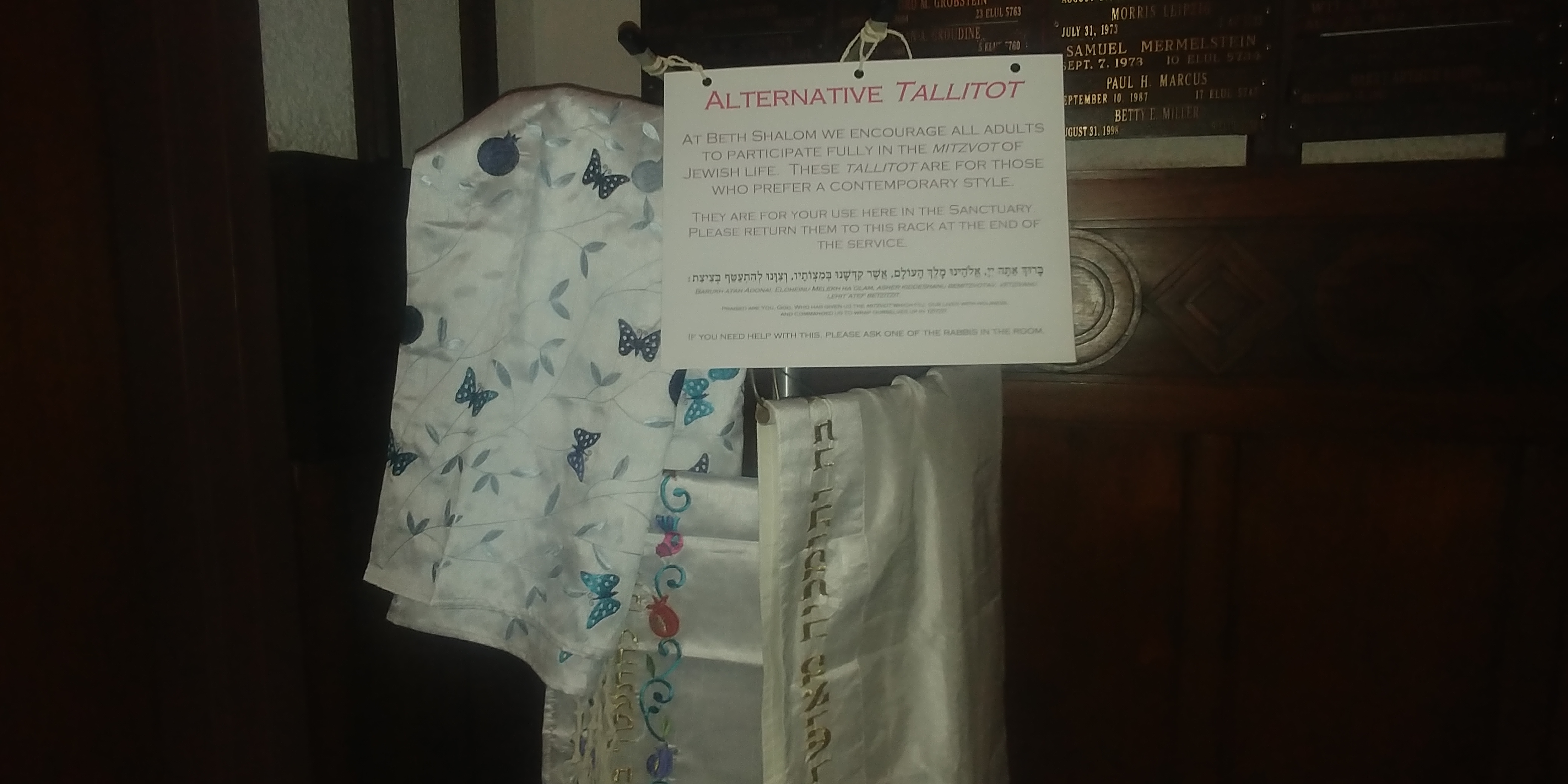
Now, as I have already stated, we are in the stage of encouraging here at Beth Shalom, not requiring. In addition to the new tallitot in the back of the room meant to encourage people who have not taken on this mitzvah, we will also have an upcoming series featuring Rabbi Dr. Rachel Adler to introduce tallit and tefillin to those who are unaccustomed or perhaps anxious about taking the next step. Even sooner than that, the Men’s Club’s World Wide Wrap is two weeks from tomorrow; we will be teaching tefillin (and tallit) here and at JJEP, and of course there will be breakfast. And the Religious Services Committee will continue to discuss how to encourage the performance of these mitzvot during our services moving forward.

Remember that all of this is in service to the goal of getting you all to do something Jewish. Not to be a passive participant, because it is the actions that bring meaning and frame our lives. It is the mitzvot of Jewish life which bring its value to heart. We cannot just talk about it; we have to live it. And God has invited us all to come along.

Rather than “compete” with the empty, material aspects of contemporary life, we have to demonstrate the value of what we do. And we have to do it.

It is through these actions that we are all – every single one of us – fulfilled in a rich and varied way, and it is through the performance of the mitzvot of Jewish life that we will continue to cast light on our generations into the future.

~

Rabbi Seth Adelson

(Originally delivered at Congregation Beth Shalom, Pittsburgh, PA, Shabbat morning, 1/28/2023.)

Categories
Sermons

Be One of the Good Guys! Thoughts on Avatar: The Way of Water – Vayḥi 5783

Over the December vacation, I was fortunate to be able to see a couple of movies in theaters, something which I rarely have time for. One that my family and I saw was the new Avatar sequel, and it was quite good (although, I must confess, about an hour too long).

If you saw the original film from 2009, you know that there is a good deal of subtle, yet identifiably Jewish content. First, the one god of the Na’vi people on the planet Pandora is called Ehua, which is a thinly-disguised rearrangement of Yahweh, the likely pronunciation of the Tetragrammaton.* (Aside: the letters YHWH are all matres lectiones, consonants which often function as vowels in ancient Hebrew; hence the name is entirely breath, suggesting that Yahweh is the spirit which flows through us all.)

Another Jewish theme clearly referenced is that of the Etz Hayyim, the Tree of Life which is the spiritual center of the Na’vi people. It is clearly echoing the role of the Torah as our spiritual center.

And, of course, it is clearly not coincidence that the name “Na’vi” sounds an awful lot like the Hebrew word נביא / navi, meaning “prophet.” 

In this newer Avatar, a shofar makes an appearance. As it rang out, Judy and I both called out “Teqi’ah,” perhaps amusing, or more likely annoying some of the other folks in the cinema. Another possibly coded Jewish theme in the new film is that the subtitle is “The Way of Water,” perhaps a reference to the essential role that water plays in Jewish liturgy and spirituality: the seasonally-appropriate prayers we say for rain and dew, the essential connection of water with God’s favor found in the second paragraph of the Shema, the prophet Isaiah’s connection of water with our spiritual redemption: ושאבתם מים בששון ממעיני הישועה / Joyfully draw water from the wells of deliverance (Isaiah 12:3), which we recite every Saturday evening at havdalah.

Now, am I perhaps seeing these movies through a Jewish lens, and reading into them things that are not there? Maybe. But some of these cues are more obvious than others.

Both the films play on the classic cinematic struggle of “the good guys versus the bad guys,” a struggle which is clearly more universal, but certainly also appears on the Jewish bookshelf. Perhaps the most significant such struggle is the story of Israel’s enslavement in Egypt and eventual liberation. (We will begin that story next week, as we move on to the book of Shemot / Exodus.)

In Avatar, the “good guys” are the Na’vi: traditional, native, respectful and in harmony with their natural environment and the flora and fauna of Pandora. They are strong and resilient and zealously loyal to each other, to their elders, and of course to Ehua. They are spiritual people, and remarkably “human” in their sense of love and caring and support of one another and their willingness to fight to protect themselves and their way of life.

The “bad guys,” of course, are the actual humans, who are invaders. On Pandora, they are weak and dependent on technology to enable them to survive. They are portrayed often as uncaring and emotion-less, and of course dedicated to exploiting natural resources for profit, which they pursue to the detriment of other creatures and nature and tradition. 

Now of course, as I am telling you this, it should be clear that the story favors the good guys, the Na’vi. We sympathize with them. They are, most of the time, the things that we want to be: communally-oriented, loyal to each other, and of course in tune with their environment. And we despise the bad guys, the humans, who are only on Pandora to conquer and subdue it and steal its natural resources. We want to be the Na’vi; we loathe the Earthlings. 

And yet, we also know that the bad guys are us. We see ourselves despoiling God’s Creation here on Earth. We see ourselves putting profit over Godliness. We see reflected in the struggle the initial challenge to humanity captured in the two Creation stories of Bereshit: the balance between פְּר֥וּ וּרְב֛וּ וּמִלְא֥וּ אֶת־הָאָ֖רֶץ וְכִבְשֻׁ֑הָ / Peru urvu umil’u et ha’aretz vekhivshuha, “Be fruitful and multiply and  fill the Earth and conquer it” (Bereshit / Gen. 1:28) and לְעׇבְדָ֖הּ וּלְשׇׁמְרָֽהּ / le’ovdah ulshomrah, “to till it and to tend it” (2:15). These films are a harsh, if overly simplistic and quite biased, critique of humanity’s relationship with God. But they replay this struggle as it is laid out in the Torah from the very beginning.

An ironic point that my daughter pointed out after seeing the film is that of course we want the good guys to win, for tradition and community and family to win out over greed, but of course, sequels are really only about making more money. So the irony is that the bad guys will never be vanquished. The struggle continues, and we humans will shell out another 12 bucks to see the next one.

A related aspect of the struggle between good and bad is reflected in an ambiguous passage of Parashat Vayḥi. As Ya’aqov lays on his death bed in Egypt, bestowing blessings upon his children, he says something curious to his son Yosef, who is essentially the hero of the last few parashiyyot of Bereshit (Gen. 49:22):

בֵּ֤ן פֹּרָת֙ יוֹסֵ֔ף בֵּ֥ן פֹּרָ֖ת עֲלֵי־עָ֑יִן בָּנ֕וֹת צָעֲדָ֖ה עֲלֵי־שֽׁוּר׃ 

Joseph is a wild ass,
A wild ass by a spring
—Wild colts on a hillside.

That’s the translation you’ll find in the Etz Hayim umash, from the Jewish Publication Society’s 1985 text, which you have here in the Sanctuary at Beth Shalom. However, check out this version of Ya’aqov’s words from the 1917 “Old” JPS translation:

Joseph is a fruitful vine,
A fruitful vine by a fountain;
As branches run over the wall.

OK, so, “wild ass” vs. “fruitful vine.” What gives? Truth is, it could go either way; most medieval commentators tend to the more friendly, fruitful depiction of Yosef. The problem is chiefly “porat,” which could be related either to פרי / peri, fruit, or פרא / pere, wild ass. If the latter, which the NJPS translators feel quite strongly about (for various reasons which I can’t get into here – if you’re interested, check out the JPS Torah Commentary Genesis volume by Nahum Sarna), then Yosef could be as wild and potentially dangerous as he is fruitful.

And so for all of us. Humanity is a mixed bag. We are good and bad. We are deep and complicated. Sometimes we are wild asses, and sometimes fruitful vines. We are certainly not black and white.

But here is the good news: you can be on the side of the good guys in this world, in real time. Right now. In fact, many of us in this room are engaged in that battle right now.

I heard a podcast this week about Shabbat by Ezra Klein, featuring the author Judith Shulevitz, who wrote a wonderful book on the subject more than a decade ago called, The Sabbath World. Apropos of nothing in particular, as far as I can tell, other than our desperate need for a day of rest, the two exchanged thoughts and ideas about the value of Shabbat. 

Klein, who claims that he attended an Orthodox day school for a few years as a child, spoke about the profound effect that Rabbi Abraham Joshua Heschel’s book, The Sabbath, had on him when he read it many years ago. In particular, Heschel speaks about how we spend six days conquering the space around us, and on the seventh day we abandon that project for higher ideals:

Six days a week we wrestle with the world, wringing profit from the earth; on the Sabbath we especially care for the seed of eternity planted in the soul. The world has our hands, but our soul belongs to Someone Else. Six days a week we seek to dominate the world, on the seventh day we try to dominate the self.

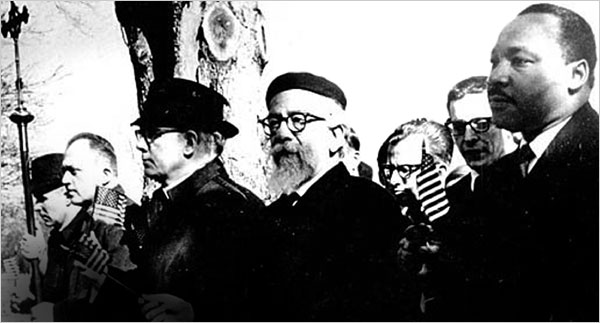
(It is worth noting at this point that this week, on the 18th of Tevet, January 10-11, we mark the 50th yahrzeit of Rabbi Heschel, whose work continues to serve as an incomparable inspiration to many of us.)

God wants you to be with the good guys. To recapture Gan Eden, the simplicity and natural state of the Garden of Eden at least once a week, with your community, with your family. To simplify your life, to set aside your wild nature for fruitful spiritual pursuits. To avoid the tools of construction and commerce and conquering. To connect with the people you love. To be a part of nature, rather than an actor upon it.

The struggle of the Israelites vs. the Egyptians ultimately yields to the revelation on Mt. Sinai, in which humanity is given the seventh day as a holy day of rest, as a day to cease from the domination of the world around us. Even for us today, thousands of years post-slavery in Egypt, the daily struggle of six days necessitates the day which Heschel calls a “palace in time,” which we build from our souls. 

If there is one thing I take away from the “Avatar cinematic universe” (as the kids say today), it is that we always have the potential to be the good guys, and setting aside the 25 hours of Shabbat to do so is a noble pursuit, and healthy for us as individuals and for our world as well.

~

Rabbi Seth Adelson

(Originally delivered at Congregation Beth Shalom, Pittsburgh, PA, Shabbat morning, 1/7/2023.)

* The letters of the Tetragrammaton, the four-letter name of God, YHWH (yod-heh-vav-heh) are all matres lectiones, consonants which often function as vowels in ancient Hebrew. Hence the name is entirely breath, suggesting that Yahweh is the spirit which flows through us all.

Categories
Sermons

Context Matters – Vayyeshev 5783

Perhaps you heard that the South African comedian Trevor Noah recently stepped down as host of The Daily Show, a satirical news program. On his last show, he delivered a kind of sermon regarding some of his lessons learned during his tenure as host, and it was mostly not funny, but delivered in a serious mode, which is unusual for a comedian. Comedians, of course, are good at pointing out the challenges that we all face, and doing it in a way that brings us joy, that enables us to laugh at ourselves.

In the course of this talk, he said something which, I think, is so important: “Never forget how much context matters.” He explained that we live in a world of limitless information, but we are suffering from a lack of context. We simply are not given the tools to understand our world and everything that we are seeing and experiencing.

All of this context-less information has made us extraordinarily susceptible to manipulation, and it does not bode well for the future of humanity. Video clips circulated online are cut or even altered to disguise what came before or after, just to show you the piece that will provoke you the most. The news that travels the fastest and the farthest is the one that makes you the most angry or the most aggrieved.

Throw in the fact that your computer and your smartphone not only know what you want to see, what will push your buttons, what will get you all anxious and upset, but are also effectively designed to keep putting material like that in front of you. And, given that most of us are looking at these screens all day long, we are primed for manipulation. And the algorithms for manipulation are getting smarter and smarter.

Here is the good news: you can combat this by seeking out the missing context. And, by the way, that is what Jews have always done. One might make the argument that the entirety of the rabbinic enterprise of the last 2,000 years or so is to provide context. We, the Jews, are historically talented at both text AND context. And the goal of seeking context is to be reflective, rather than reflexive, in how we approach life and all of its challenges. 

Let me explain: 

The Torah is a particularly difficult document to understand. To begin with, it was written in a language that nobody has spoken for thousands of years. It is also filled with contradictions, gaps, ambiguities, apparent grammatical errors, and obscure words which can only be understood by speakers of that language (i.e. nobody). (Worth noting here that Israelis, speakers of modern Hebrew, are just as befuddled by the Torah’s language as we are.)

And yet, the Torah is the foundational document of Judaism, the basis for much of our tradition. So the only way we can actually understand it is through context, and in particular, the context given by rabbinic tradition: the Talmud, midrashim, the commentaries of medieval and contemporary rabbis, from Rashi in the 11th century until today. 

What do these commentators do? They place the context alongside the text, to help us see how the terse words of the Torah make us better people. They interpret ancient verses, which we sometimes barely understand, to show us how they apply to us in our day, in our context. They give us perspective.

For example, Parashat Vayyeshev, from which we read this morning, tells the story of our hero Yosef, who, after being sold into slavery and brought to Egypt, ends up in the house of a wealthy man named Potiphar, whose wife takes more than a passing interest in their new, handsome slave. She attempts to seduce Yosef, and there is a moment of hesitation before he rebuffs her. The suggestion is that he is certainly tempted to take her up on her offer.

A midrash, however, tells us that as she takes hold of his clothing with lascivious intent (Bereshit / Genesis 39:12), and Yosef struggles with his conflicting fear and desire, he has a vision of his parents, watching through a window behind Potiphar’s wife. And his father Ya’aqov says to him, “Your brothers’ names will be inscribed on the ephod, the breastplate of the Kohen Gadol [the High Priest in the Temple in Jerusalem, which is at this point in the traditional chronology many centuries in the future]. Do you want your name to appear there with them, or not?” (Babylonian Talmud Sotah 36b) And that is the point when he runs from her.

The point of the midrash is that context matters, that our moment-to-moment decisions should be shaped not by immediacy, not by what is happening exactly right now, but by the past and the future. And of course, that is not always so simple. 

Many other moments in the Yosef narrative require context. Yosef does not see the larger context when he boasts to his brothers about the dreams in which they all bow down to him. The brothers are missing context when they throw him in a pit, and then sell him into slavery, and then lie to their father Ya’aqov about what happened.

All of these moments are, you might say, reflexive choices, made quickly and without considering the consequences. Reflexive, rather than reflective.

When we act impulsively, rather than taking time to reflect on the context, we cause damage and pain. When we respond in the anger of the moment rather than waiting, breathing deeply, and thinking carefully, we usually make things worse. When we pile onto the most hurtful, most anxiety-inducing news or online content with more frustration and more insults and more aggression, the lack of context usually leads everybody down the wrong path.

What makes the Yosef narrative work is learning the complete story. Although none of the characters involved could have known this, every choice along the way, good and bad, ultimately brought Benei Yisrael, the children of Israel / Ya’aqov, down into Egypt, where they would become slaves, and then ultimately become a free nation, destined to receive the Torah and to inherit their own land. And in the context of all of that, the series of reflexive moves is woven into a context which has shaped our people for thousands of years. So in this case, you might say it worked out well.

But we all know by now the corrosive effects of the social media platforms through which we all receive our information about the world. And we all know about the potential of these platforms, and to some extent even legitimate purveyors of news, to rile us up. We have seen their ability to enable the id, the unfiltered, most primitive piece of our psyche, to speak for us, and to easily spread hateful ideas of all sorts. 

I am grateful that the Biden administration gathered a group this past week to discuss strategies on anti-Semitism, chaired by the Second Gentleman, Doug Emhoff. But I am also not too optimistic that such discussions will yield anything productive. Hatred of Jews has been with us far too long, and I lament the fact that it will never go away.

However, what we all can do is to try to move society to a place that is more reflective, rather than reflexive. Labeling people as anti-Semites, or racists or trans-phobes or snowflakes or RINOs or whatever, diminishes the humanity of those with whom we disagree. 

Teaching history, however, and giving context and the opportunity for reflection is the way to go. Jon Stewart, who was Trevor Noah’s predecessor at The Daily Show, has said that hearing anti-Semitism spewed out loud is better, because then it is an opportunity for teaching and providing context, kind of like cleaning a wound by opening it. I am not entirely sure I agree with him, but certainly meeting people and talking with them in-person, especially people with whom you do not necessarily agree, is the way to build bridges, to change minds.

Another observation that Trevor Noah shared in his “sermon” was that “the world is a friendlier place than the Internet wants you to believe.” Perhaps if, when we are tempted to respond in a way that is unhelpful, we remember our parents, and we remember the lessons which they attempted to impart to us about being better people, then we might be more likely to see the humanity, or even the Divine spark, in those who say hateful things. And maybe we have a better chance of allowing that Divine spark to bring that person to a more reflective, more contextual place.

A final thought: One of the best ways to slow things down, to bring context to our lives, to help us become more reflective and less reflexive, is to take one day a week to separate ourselves from the outrage machines of Big Tech. If I had one wish for our society, Jews and non-Jews, it would be to shut down your digital devices for 25 hours every Shabbat, and spend time with your family, your friends, and your Qehilah Qedoshah, your sacred community. I do it; you can too.

Context matters.

חג אורים שמח / Ḥag Urim Sameaḥ! Happy Ḥanukkah.

~

Rabbi Seth Adelson

(Originally delivered at Congregation Beth Shalom, Pittsburgh, PA, Shabbat morning, 12/17/2022.)

Categories
Sermons

Seeking God in this Liminal Moment – Toledot 5783

It is a special pleasure to read Parashat Toledot on this day, when we have named two baby girls, cousins who will surely get along better than Ya’aqov and Esav.

There was a moment up front in what we read this morning where Rivqah, their mother, is suffering miserably as the two baby boys are wrestling within her. (I’m picturing them pulling classic entertainment wrestling moves: Esav is executing a “pile-driver” on his brother.)

The Torah reports that the experience is so miserable for her that she cries out to God (Bereshit / Genesis 25:22):

וַיִּתְרֹֽצְצ֤וּ הַבָּנִים֙ בְּקִרְבָּ֔הּ וַתֹּ֣אמֶר אִם־כֵּ֔ן לָ֥מָּה זֶּ֖ה אָנֹ֑כִי וַתֵּ֖לֶךְ לִדְרֹ֥שׁ אֶת־ה’׃

The boys struggled in her womb, and she said, “If so, why do I exist?” And she went to inquire of God.

The JPS translation of lidrosh in the above quote is “to inquire,” but the verb לִדְרֹשׁ “lidrosh” really means to seek: Rivqah went to seek God. 

This verb is most familiar to us in the context of interpreting words of Torah. You may be familiar with various forms of this verb: one gives a “derash,” a brief interpretation, or perhaps a lengthier “derashah,” a sermon. “Midrash” is a story which fills in the gaps of the Torah’s text, and of course a “beit midrash” is a house of study, wherein we seek the deeper meanings of our ancient texts, as we attempt to discern the wisdom therein.

Rivqah, in her misery, seeks God.

Right now, we are in a time of seeking, and in particular, we should be seeking God right now. I’ll come back to that.

I was away at the convention of the Rabbinical Assembly, the professional organization of Conservative Rabbis about three weeks ago, and I had the privilege of spending several sessions learning with Reverend Susan Beaumont, an ordained Baptist minister who works as a leadership consultant to houses of worship. Speaking to a room full of rabbis, she introduced concepts in a language that, at least at first, was effectively Greek to scholars of Hebrew and Aramaic.

The theme of her remarks was “Leading in a Liminal Season.” “Liminality” is the period of uncertainty in between; when the old paradigm is gone, and the new reality has not yet revealed itself. Right now, a few years of pandemic have in many ways altered, if not fundamentally changed, the landscape for many institutions, including houses of worship like this one. The challenge for all of us in this liminal season is how to move forward in this in-between period.

An appropriate parallel from Jewish life is the concept of “bein hashemashot,” the part of the day between sunset and dark, when you are not sure if it is still day or night has fallen. This is particularly important on Saturday nights, at the end of Shabbat. Is Shabbat over when the sun goes down? Or when you can see three stars? The answer, as you all know, is the latter, but there is a period of about 30-45 minutes of in-between, when it’s not clear if it’s still Shabbat. We wait until at least three stars are visible so we are absolutely sure. But there is, at least in theory, a period of discernment when we are waiting for those stars to appear, just to make sure we are safely into Sunday, before we recite havdalah, the prayer of separation from Shabbat.

You might make the case that pregnancy is also a liminal season, that Rivqah seeks God not only because the twins are struggling within her, but also that it is a time in which she has clearly left behind her life before motherhood, but has not yet entered the next phase of her life.

According to Rev. Beaumont, one of the keys to finding our way in a liminal season, in leading when we do not know what is coming next, is to seek to understand the soul of your congregation, and to tend that soul as we seek Divine guidance for the future.

And when she said that, the room full of 30 or so rabbis immediately thought, “What on Earth is she talking about?” Soul is a concept about which Christians talk a lot, but the idea is sort of mystifying for the Jews. She explained that a congregation’s “soul” exists outside of the individual members; it is a collective sense of who we are. Not culture, not rituals, not the organizational culture, not the collective voice of lay or clergy leadership, but the truest sense of self of the institution, that which is based in our relationship with the Qadosh Barukh Hu / the holy, blessed One. The soul of this congregation is, as she put it, “the source of the Divine calling and character, and the protector of institutional integrity.”

I’m pretty sure I have seen the soul of Congregation Beth Shalom on display from time to time. I know I felt it when, two months ago on Rosh HaShanah, I could hear the hundreds of people in the room singing “Berosh haShanah yikkatevun; uvyom tzom Kippur yeḥatemun” (On Rosh HaShanah God’s verdict is written, and on Yom Kippur it is sealed in the Book of Life), singing those words together for the first time in three years in such numbers. That was an incredibly soul-filled moment; it brought me to tears. I might have caught a glint of Beth Shalom’s soul last Saturday night as we honored all of our past presidents.

But I do not think I could describe the soul of Beth Shalom. When pressed further on how to seek and find the soul of our congregations, Rev. Beaumont explained that it is not so simple. She described sitting alone in the sanctuary of her own church for six months in silence, waiting for some kind of revelation, and it did not come to her. So this is not easy work, but it is essential for leading in a liminal time. It is our soul which will guide us into the future. 

“We cannot presume,” writes Rev. Beaumont, “to strengthen an organization, its culture, its processes, its structures, without engaging its soulfulness.”

Considering the state of our wider society, we need to seek God right now because there are just so many struggles, so many ways in which we are wrestling with each other. The recent mass shootings are only one particularly tragic sort of manifestation of this struggle; the eruptions of anti-Semitism in pop culture is another. I am sure you can think of many such ways in which American society is struggling with itself. Some of this is clearly due to the fact that we are in a liminal period, that we are seeking leadership and in need of discernment. The soul of America is hidden from view, and we do not know what is coming next.

The Torah, the rest of the Tanakh, the Talmud, and all of the greatest works of rabbinic literature always see God as an essential actor in the Jewish story, in collaboration with the Jewish soul. We have always sought God in times of crisis, in times of pain and of joy. 

תהלים קל, Psalm 130 is one of my favorite psalms. It is one of the standard offerings of Taḥanun, the brief prayers of supplication which we recite on many weekday mornings. It opens with a reminder that the world is filled with, and has always been filled with, to use the polite term, tzuris. (That’s the Yiddish pronunciation of the Hebrew tzarot, meaning trouble.) 

שִׁ֥יר הַֽמַּעֲל֑וֹת מִמַּעֲמַקִּ֖ים קְרָאתִ֣יךָ ה’׃ 

Out of the depths I call You, O LORD. (Psalm 130:1)

We call out to God every day, throughout our history. We are waiting for God’s presence, waiting for God to be revealed, because we know that we are in the ma’amaqim, the depths.*

But there is an even better line in the psalm, a little further down, v. 6:

נַפְשִׁ֥י לַאדֹנָ֑י מִשֹּׁמְרִ֥ים לַ֝בֹּ֗קֶר שֹׁמְרִ֥ים לַבֹּֽקֶר׃

Nafshi ladonai mishomerim laboqer shomerim laboqer.

I am more eager for the Lord than watchmen watch for the morning

What is curious about that verse is the repetition of shomerim laboqer. And I have seen some translations merely repeat the words, i.e. “I am more eager for the Lord than watchmen for the morning, watchmen for the morning.” But that is a poor translation. More accurately, the metaphor is the shomerim laboqer, the morning watchmen who are shomerim laboqer, watching, waiting eagerly for the morning.

What we hear in that verse is the painful waiting for God. The silence, punctuated by the ticking of a clock running on a geologic scale. Where is the Qadosh Barukh Hu? When will our redemption come?

When I hear that verse, I hear my Israeli son, serving guard duty, being a shomer, at his IDF base in the middle of the night, calling me out of sheer boredom, waiting, watching, waiting for morning, for the shift change, so he can go to sleep.

The metaphor speaks powerfully across the ages. We need redemption from all that ails us; to borrow from Psalm 121, we continue to lift up our eyes to the hills expectantly; from where will our help come? 

It is that yearning, the ancient Jewish desire for God’s presence in time of need, which helps us be better people, which will ultimately guide us through the liminality of this moment. We need the sense of Divine action in the world, even if we cannot easily perceive it. We need the sense that help is on the way, even as we struggle with one another, and we have to hold ourselves together in the meanwhile, to find our way through the darkness. We wait eagerly for the dawn, and as we continue searching for our soul, we can reassure ourselves that we are not alone. That it is going to be OK. 

It was Voltaire who said, “Si Dieu n’existait pas, il faudrait l’inventer.”

If God did not exist, it would have been necessary for us to invent God, so that we may seek God during liminal times. It is through seeking God, through the source of Divine calling to the soul, that we will find our way into the future.

~

Rabbi Seth Adelson

(Originally delivered at Congregation Beth Shalom, Pittsburgh, PA, Shabbat morning, 11/26/2022.)

* One of the most captivating features of medieval Ashkenazi synagogue architecture, visible (for example) at the Altneuschul in Prague, the oldest continuously-functioning synagogue in the world, is that the sheliaḥ tzibbur (prayer leader) stands in a depression in the floor, a few inches lower than the rest of the congregation. This reflects the fact that we are crying out to God mima’amaqim, out of the depths.