Categories
Sermons

To Build, and Not to Tear Down – Terumah 5784

I do not usually watch the Super Bowl, but I do enjoy checking out the ads after the fact. There were two ads this year which caught my eye. One, presented by a Christian organization, portrayed scenes of diverse people washing each other’s feet, a reference to an act of compassion performed by Jesus in the Christian scriptures. 

The other presented a former speechwriter for Dr. Martin Luther King talking about how all hatred thrives on silence, and connected that to the current rise in antisemitism. This ad, paid for by Robert Kraft’s Foundation to Combat Antisemitism, ended with interchanging hashtags #StandUpToJewishHate and #StandUpToAllHate.

Some news outlets were quick to point out that there was online backlash against both. Critics of the Christian ad were bothered that the money came from Evangelical organizations which are anti-abortion. The anti-antisemitism ad was criticized by some Jewish commentators for being too vague, while antisemitic extremists were apparently thrilled because the ad also at one point displayed the hashtag #Hitlerwasright.

We have become so accustomed to criticism from all sides, no matter how marginal it may be, that we often lose sight of the value of our larger principles. We forget that it is always easier to tear down than to build up. 

Our good friend and neighbor, Rev. Canon Natalie Hall of the Church of the Redeemer, was disenchanted by some of her Christian colleagues’ criticism of the very Christian message of compassion. In responding to some of this criticism, she wrote, “Despite many theological and political errors Evangelicals often espouse, I can’t look at a good message with disdain because the messengers might contaminate me with their culture-war cooties. We’re not enemies. It’s calmer over here. Want to join me?”

There is an essential moment in Parashat Terumah, from which we read today, when God calls for materials with which to build the mishkan, the portable sanctuary that the Israelites are to use for worship (Shemot / Exodus 25:2):

מֵאֵ֤ת כׇּל־אִישׁ֙ אֲשֶׁ֣ר יִדְּבֶ֣נּוּ לִבּ֔וֹ תִּקְח֖וּ אֶת־תְּרוּמָתִֽי׃

You shall accept gifts for Me from every person whose heart is so moved.

Maybe we should read this not as “every individual whose heart moves her/him,” but rather as “all of us, whose hearts are moving us.” That is, all of the Israelites’ hearts will be moved to bring these gifts with which to build the mishkan. And that is exactly what happens. There’s actually so much stuff that Moshe has to ask them all to stop.

We all want to get behind those causes which our hearts are moving us to support. We all want to help out in ways that are constructive.

A question that we might ask, therefore, in our current moment, is, “We are seeing vast rifts in our society right now over complicated issues. How might we be able to speak to one another across political lines, so that we might build, and not tear down?”

I have been thinking quite a bit about this question, particularly since October 7th. And many of us have been engaged in various ways with events here on the ground in Pittsburgh that are related to what is going on in Israel.

For example, there are members of our congregation who regularly attend the vigils held every Sunday to remember the hostages held in Gaza and advocate for bringing them home, and of course we have a visual reminder here on our bimah.

A few weeks back we hosted the United in Compassion event, at which about 75 people of different faiths and backgrounds and political persuasions shared stories which helped elevate our sense of compassion for one another. This was intentionally NOT focused on Israel or politics, but for some participants, it was of course difficult not to think about the war as we were talking.

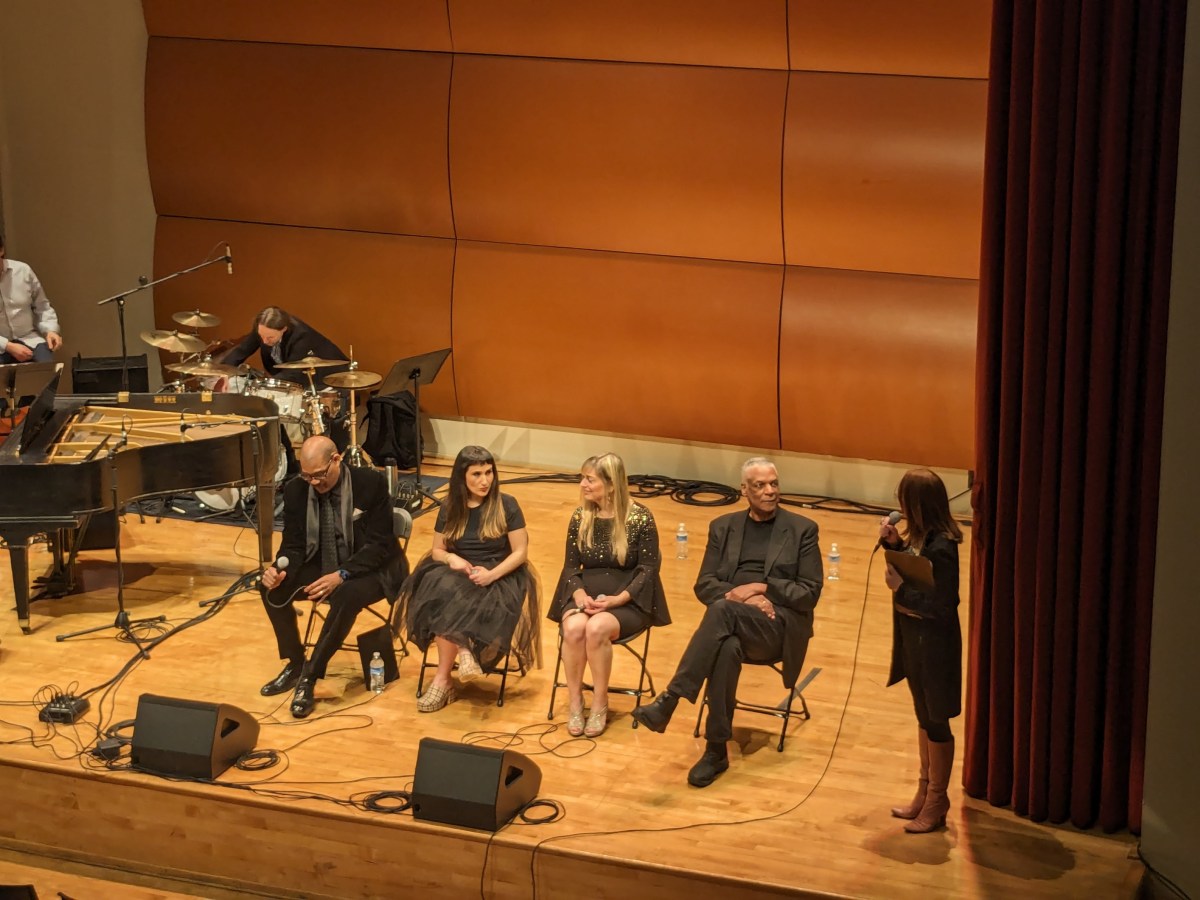
A different sort of event which I attended, however, was much more challenging, and much more difficult with respect to mustering compassion. It was a two-hour meeting of primarily clergy: three rabbis and four Christian ministers of different denominations, plus Laura Cherner of the Federation’s Jewish Communal Relations Council. This meeting was organized by Rabbi Ron Symons of the JCC, and the intent was to speak with each other about the situation in Israel and Gaza from our individual perspectives, and ideally to listen to one another and perhaps to find common ground. I agreed to participate, although I knew going in that the Christian participants were people with whom I would disagree vehemently.

And I am proud of myself for successfully listening and not letting my anger boil over as I heard them use the inaccurate and inflammatory language that so many pro-Palestinian activists hurl in public: apartheid, genocide, 75 years of occupation, ethnic cleansing, and so forth. My adrenaline pumped for the entire two hours as they urged an immediate ceasefire without regard to hostages or Hamas’ terrorist activities or the brutal sexual violence which they committed on as many as 1500 Israeli women. I clenched my teeth as they cited the Gazan children killed during this war, without acknowledging that about 40% of the widely quoted figure of Palestinian casualties are actually Hamas terrorists. I bristled at the notion, widely accepted in some quarters, that the Israeli treatment of Palestinians is just like the treatment of Black Americans at the hands of police.

And that was hard. To hear that sort of language coming from clergy, people who lead others in faith and compassion, was quite upsetting.

And then we agreed that we should meet again in a month, to keep talking.

And I have been asking myself, why? Why go back, and subject myself to two more hours of adrenaline and clenched teeth. I am not going to change the mind of anybody in that room. I am not going to impact American public opinion on this war, which is gradually shifting away from the Israeli point of view. I am not going to have any control over what is happening in Israel. I am not going to hasten Israeli elections to dump the current coalition for their tremendous failures in allowing all of this mess to happen in the first place. And I am certainly not going to be able to bring the relevant parties to the table to build a hopeful future for the region. 

So why go back? 

And you know the answer. In order to build, and not merely tear down, you have to be in conversation. You have to meet people face-to-face. You have to talk, even when it is painful and uncomfortable. Even when they are spouting misinformation. Even when their words might be effectively calling for the expulsion of your family from their home.

Merely criticizing and/or demonizing people on the other side will not accomplish anything. Rather, those of us whose hearts are so moved must bring gifts with which to build, and in particular, the gift of presence.

Educator and tour guide Avi Ben Hur spoke last week at the first of three lectures co-sponsored by Beth Shalom, on the current state of affairs in Israel. Among the things he said was that only 27% of Israelis still favor a two-state solution. (He did not mention, although I heard elsewhere, that 38% of Israelis want to re-occupy and re-settle Gaza, which is to me a detestable idea.) And likely even fewer Palestinians than Israelis are interested in a two-state solution.

Ben Hur painted a bleak portrait. How can you even talk about peace, about coexistence, about living side-by-side under our own vines and fig trees, when we are shooting at each other? One of the most well-known Israeli peace activists, Vivian Silver, was murdered by Hamas terrorists at Kibbutz Be’eri on October 7, her life’s work gone in a flash of gunpowder.

While I admire Rabbi Symons’ commitment to keeping us talking to each other, here in Pittsburgh, so far away, I am finding it hard to see anything hopeful.

Except right there in the Torah in Parashat Terumah, reminding us that those whose heart moves them can, in fact, make a difference. We may not be able to begin to build yet, but we can hope that some day, when all of our hearts are moved collectively, that time will come. And in the meantime, we have to keep showing up, and to keep talking.

As many of you know, my Lunch and Learn series this year has focused on playing Israeli pop songs from across the 20th century, as a lens through which to see the history of the State of Israel. One of the most influential pop performance groups of the ‘50s and ‘60s was an army band, one many at the time: Lehaqat haNaḥal, which drew musicians and performers from the Naḥal Brigade of the IDF. (Naḥal was conceived not only as an army unit but also a team to develop new agricultural settlements throughout Israel, playing an essential role in the building of the State. Some of the most well-known Israeli performers were alumni of Lehaqat haNaḥal, including Arik Einstein, Haim Topol, Yardena Arazi, and many, many others who have shaped Israeli pop culture.)

In 1963, Lehaqat haNaḥal sang a song of hope written by Naomi Shemer. That was a time when Israel’s very existence was tenuous, when there was a palpable fear that her enemies on all sides could crush the nascent state. And the song they sang was Maḥar (“Tomorrow”):

מחר אולי נפליגה בספינות
מחוף אילת עד חוף שנהב
ועל המשחתות הישנות
יטעינו תפוחי זהב

כל זה אינו משל ולא חלום
זה נכון כאור בצהריים
כל זה יבוא מחר אם לא היום
ואם לא מחר אז מחרתיים

מחר אולי בכל המשעולים
ארי בעדר צאן ינהג
מחר יכו באלף ענבלים
המון פעמונים של חג

…כל זה אינו משל ולא חלום

מחר יקומו אלף שיכונים
ושיר יעוף במרפסות
ושלל כלניות וצבעונים
יעלו מתוך ההריסות

…כל זה אינו משל ולא חלום

מחר כשהצבא יפשוט מדיו
ליבנו יעבור לדום
אחר כל איש יבנה בשתי ידיו
את מה שהוא חלם היום

…כל זה אינו משל ולא חלום

Tomorrow, perhaps we will sail in ships from the shores of Eilat to the Ivory Coast,
And the old destroyers will be loaded with oranges.

All of this is neither a parable nor a dream; it is as true as the light of the afternoon
All of this will come tomorrow if not today, and if not tomorrow, then the day after…

Tomorrow, when the army will take off its uniform, our hearts will turn to silence
Then each of us will build with our two hands that of which we dreamt today.

***
That dream of peace may seem as far away now as it was in 1963. But Israelis, and Jews all over the world, have never turned away from it. We have to maintain the generosity of spirit that has marked our willingness to contribute since Parashat Terumah. We must continue to bring those gifts, in particular the gift of presence, to keep talking, and seek not to tear down, but rather to build.

~

Rabbi Seth Adelson

(Originally delivered at Congregation Beth Shalom, Pittsburgh, PA, Shabbat morning, 2/17/2024.)

Categories
Festivals Sermons Yizkor

Allies in Faith – 8th Day Pesaḥ 5783 / Yizkor

Passover, like no other holiday, trades in memory, personal and national. Just about every seder* that I have ever attended relies on memories of past sedarim, of family gatherings, of special foods, some which we liked and some which we memorably did not; memories of your funny uncle who would take a sip out of Elijah’s cup when everybody was watching the door, of good times singing Eḥad Mi Yodea and Ḥad Gadya and Dayyenu, of the hunt for the afikoman and of course all the grandparents and aunts and uncles around the table, the people who are no longer with us. And certainly the remembrance that comes with Yizkor at the end of Pesaḥ puts a final flourish on the sense of personal memory that this holiday features.

And also perhaps like no other holiday, Pesaḥ trades on historical memories of our people. Yetzi’at Mitzrayim, the Exodus from Egypt, is not only the foundational moment of Benei Yisrael, the people of Israel, but is also an essential statement of who we are as a people. The family of Ya’aqov / Jacob descends into Egypt as a group of 70 people escaping famine, and emerges 430 years later as a great nation, ready to receive the Torah and inherit the Land of Israel which has been promised to them. 

But this family becomes a nation by experiencing slavery and subsequent redemption, ensuring from the outset that from generation to generation Jewish people would understand what it means to be a slave, to be oppressed and persecuted, to be subjugated by another and denied our own spiritual means. Pesaḥ is therefore emblematic of all the ways in which we continue to act on that arc of slavery and redemption, in which we seek to bring about redemption for ourselves and the world by highlighting the holiness of the others around us.

And we hear that story replayed over and over throughout Jewish history, with the Babylonian Exile and return in the 6th c. BCE; the Roman destruction and dispersion of the Jews from Israel in the 1st c. CE; the Inquisition, the pogroms, the Shoah / Holocaust, the establishment of the State of Israel in 1948. 

Persecution and redemption. Displacement, dispersion, and return. These are the major themes of Jewish existence going all the way back to slavery in Egypt. That is why the memories of our people speak so powerfully; that is why the Pesaḥ seder is still one of the most-practiced Jewish observances, because it is so deeply laden with history. The Pesaḥ memory machine, every spring, serves up its products along with the matzah and maror.

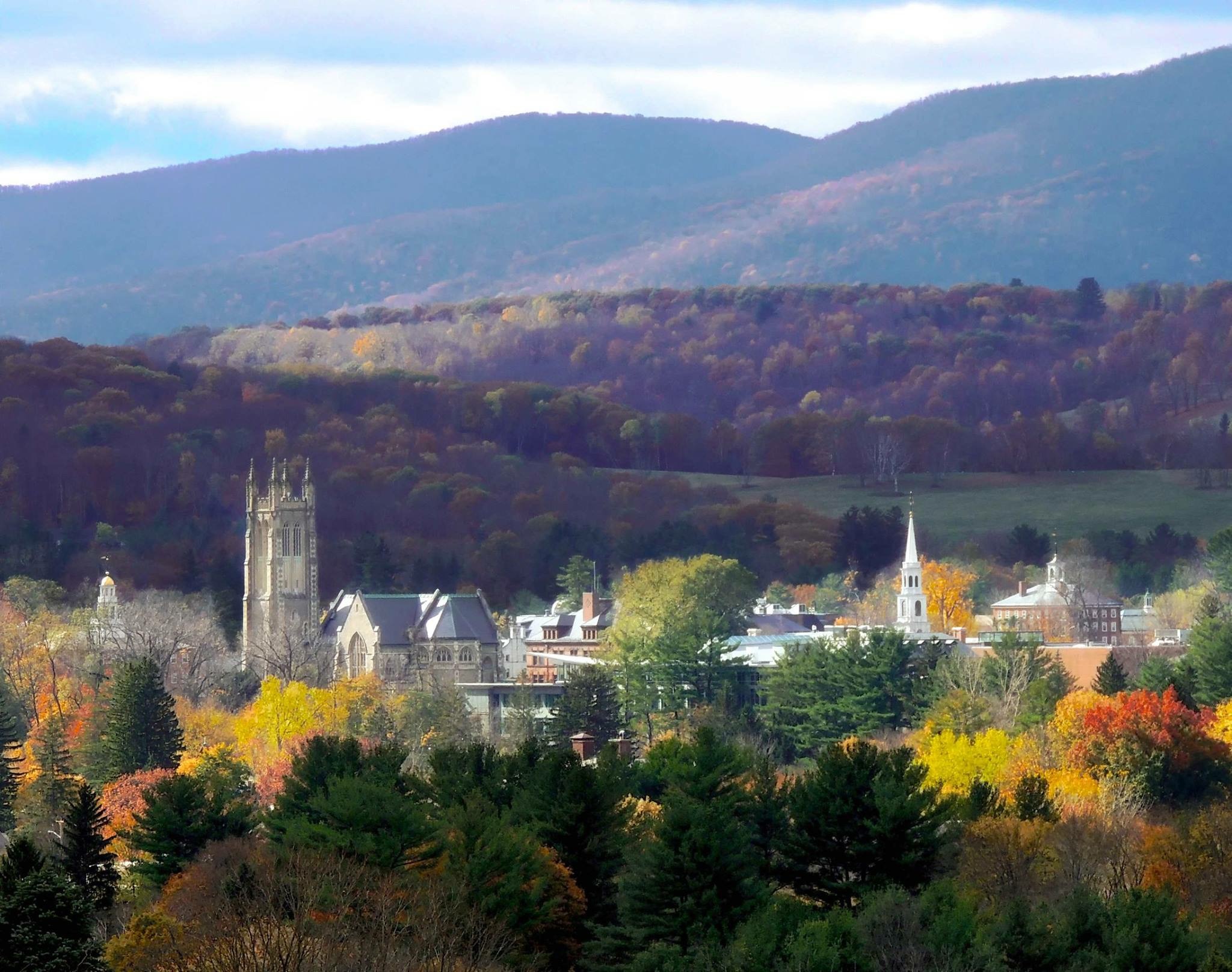
As you may know, I grew up in a fairly non-Jewish place, in the rustic and handsome Berkshire hills of Western Massachusetts. My parents had to work hard to ensure that my brother and sister and I had a strong connection to our tradition, our community, our customs and rituals, that we would be deeply connected to that memory machine. Our Conservative synagogue was 17 miles away, a 30-minute car ride. The nearest kosher meat market was in Albany, NY, an hour by car over a mountain. My grandparents and many close relatives with whom we spent some holidays were three hours away in Boston. There was no Jewish day school nearby. 

Williamstown, Massachusetts. Yes, I grew up there.

Virtually all of my closest school friends were Christian, and many were active in their churches. I was often, if you will, the token Jew: the only one bringing matzah sandwiches on Pesaḥ or missing school on Rosh HaShanah. I was always in some sense an outsider. I did not share my personal and national memories with my friends and neighbors.

But one of the things I have come to understand in recent years is that what unites people of faith is far greater than what divides us. We, the Jews, have the potential to be allies with other like-minded Christians, Muslims, Hindus, Sikhs, Jains, Buddhists, Bahai, Druze, and so forth.

Consider what we share:

  • Commitment to a framework of holy behavior which elevates and enriches our lives and the lives of the other people around us
  • Cultivation of the values of respect, gratitude, compassion, charity, community, education, and justice
  • Rituals which create meaning for our lives, including regular prayer, holidays, and lifecycle events: birth, coming-of-age, marriage, and death and mourning
  • Understanding that the role of Divinity in our lives provides a template for interacting with others
  • A textual basis for all of the above

Now, of course there is tremendous variation in style and language and the range of values that we hold dear, and of course theology. As just one small example, Judaism tends to emphasize action, Christianity belief. And of course we differ on matters of religious law, and how we read and interpret our shared texts, rituals and foods and customs and so forth. 

But think of all of the potential power contained within all of those which we do share, and how, if people of faith work in concert with one another, we can truly build a better society and a better world.

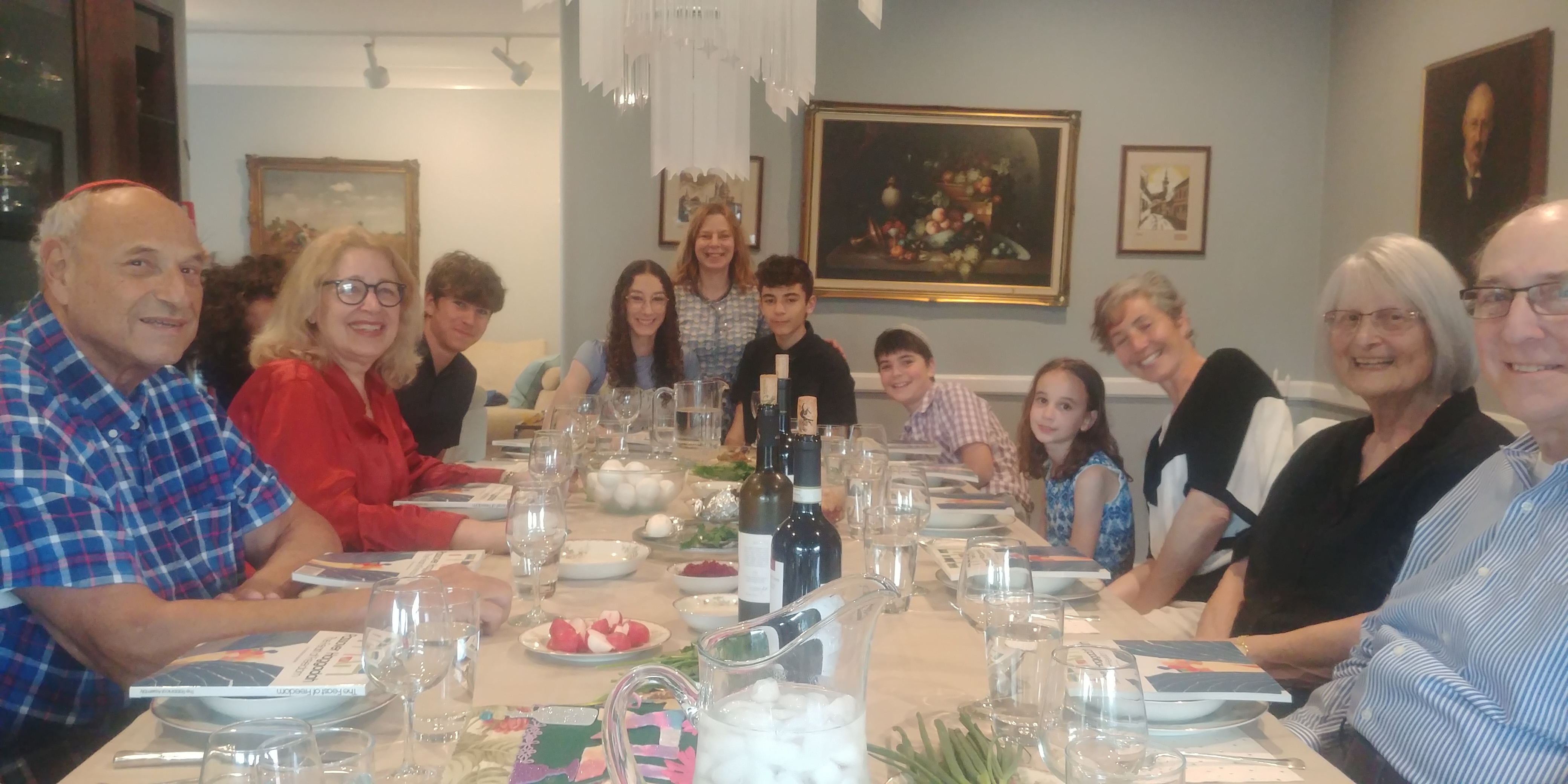
At the congregational seder last Thursday night here at Beth Shalom, among the 85 attendees were five Christian guests, young adult members of the East Liberty Presbyterian Church who had requested to attend. I was certain that they were quite overwhelmed by the scene. 

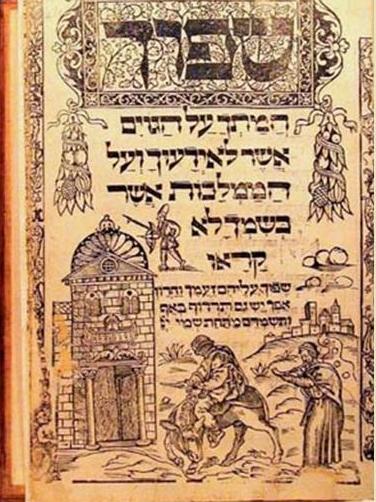
But I was really somewhat anxious, given these non-Jewish attendees, about one standard passage of the haggadah, which comes deep into the seder, right as we open the door (ostensibly to invite in Elijah the Prophet). We say, 

שְׁפֹךְ חֲמָתְךָ אֶל־הַגּוֹיִם אֲשֶׁר לֹא יְדָעוּךָ וְעַל־מַמְלָכוֹת אֲשֶׁר בְּשִׁמְךָ לֹא קָרָאוּ. כִּי אָכַל אֶת־יַעֲקֹב וְאֶת־נָוֵהוּ הֵשַׁמּוּ. שְׁפָךְ־עֲלֵיהֶם זַעֲמֶךָ וַחֲרוֹן אַפְּךָ יַשִּׂיגֵם. תִּרְדֹף בְּאַף וְתַשְׁמִידֵם מִתַּחַת שְׁמֵי ה

Pour your wrath upon the nations that do not know You and upon the kingdoms that do not call upon Your Name! Since they have consumed Ya’aqov and laid waste his habitation (Psalms 79:6-7). Pour out Your fury upon them and the fierceness of Your anger shall reach them (Psalms 69:25)! You shall pursue them with anger and eradicate them from under the skies of the Lord (Lamentations 3:66).

Now, it is likely that our ancestors added these verses in the Middle Ages to cry out to God for revenge against their non-Jewish tormentors. It was a statement of defiance in the face of powerlessness, delivered when the door was open to show the gentile neighbors that they were not doing anything nefarious. Our national memory of these times is, to put it mildly, not good.

Our ancestors probably could not have foreseen a day when people of different faiths could be allies against the forces of chaos. That idea was simply not a part of Jewish memory for many centuries.

But that is where we are right now, and that is what I said on Thursday night in the presence of our Presbyterian guests. We should not read these lines as a deliberate insult to non-Jews; we should instead absolutely read them as a statement against those who malign religious faith and attack worshippers in synagogues, churches, mosques, temples and gurdwaras and children in religious schools of any sort.

I do not think that I am the only one here who sees that the chaos grows as our society, as the people around us, grow more distant from religious tradition. Without a framework of spirituality, we create a world without rules, without principles, without dedication to the holiness of the other. Truth becomes relative; we worship the idols of politics and money and power. A world without religious tradition becomes one in which each individual is their own highest authority, where there are no guideposts and no guardrails. 

The power of allyship across religious lines is extraordinarily important today. United, we are a serious force within our society, and not for the purposes of indoctrinating others into our religion, but rather for improving the condition of all people.

I mentioned in this space on the first day of Pesaḥ that the “swatting” hoaxes of last week, which have lamentably continued, are creating fear in our communities. Last week it was Central Catholic; Monday night it was students at Pitt. Our friend Rev. Canon Natalie Hall’s children were in lockdown, subject to very real fear. 

We, the allies in faith, can push back against the forces of chaos, like those who are maliciously causing these security messes. We may not entirely win; chaos has always been with us. But we can do the best we can to build bridges, to heal wounds, to discuss our memories and our history and yes, even our theology and how we read the Torah differently. And that will, I am absolutely certain, go a long way toward helping to cure this fractured world.

When we meet together and learn together and break bread together as allies, we will be prepared to navigate together the many challenges which now plague our society and world. True people of faith know that we accomplish more when build bridges instead of walls, and we must add the sense of allyship to contemporary Jewish memory.

Our grandparents, our parents, the people whom we remember today, came with their families to this country to escape the persecutions of the Old World, to flee the rigid social lines of Europe, where they had always been outsiders. Here we are free not only to practice our traditions, not only to be considered as equals to our non-Jewish neighbors, but also to work together with partners whom our ancestors could never have imagined. 

In their memory, together, we can build a better world. Thank God.

And, if you want an opportunity to learn Tanakh (the Hebrew Bible) in an interfaith setting, please join us for A Conversation Between Christians & Jews Toward Friendship & Discovery. The first session is this coming Sunday, April 23, 2023, and it will be an engaging series focused on building and strengthening connections while studying our shared texts.

~

Rabbi Seth Adelson

(Originally delivered at Congregation Beth Shalom, Pittsburgh, PA, 8th Day of Pesaḥ, 4/13/2023.)

* The Passover seder (plural: sedarim) is a special dinner and storytelling ritual that is observed on the first two nights of Pesaḥ. It includes displaying and eating special foods and telling the story of the Israelites’ Exodus from Egypt.

Categories
Sermons

Faithful Allies – Aḥarei Mot 5782

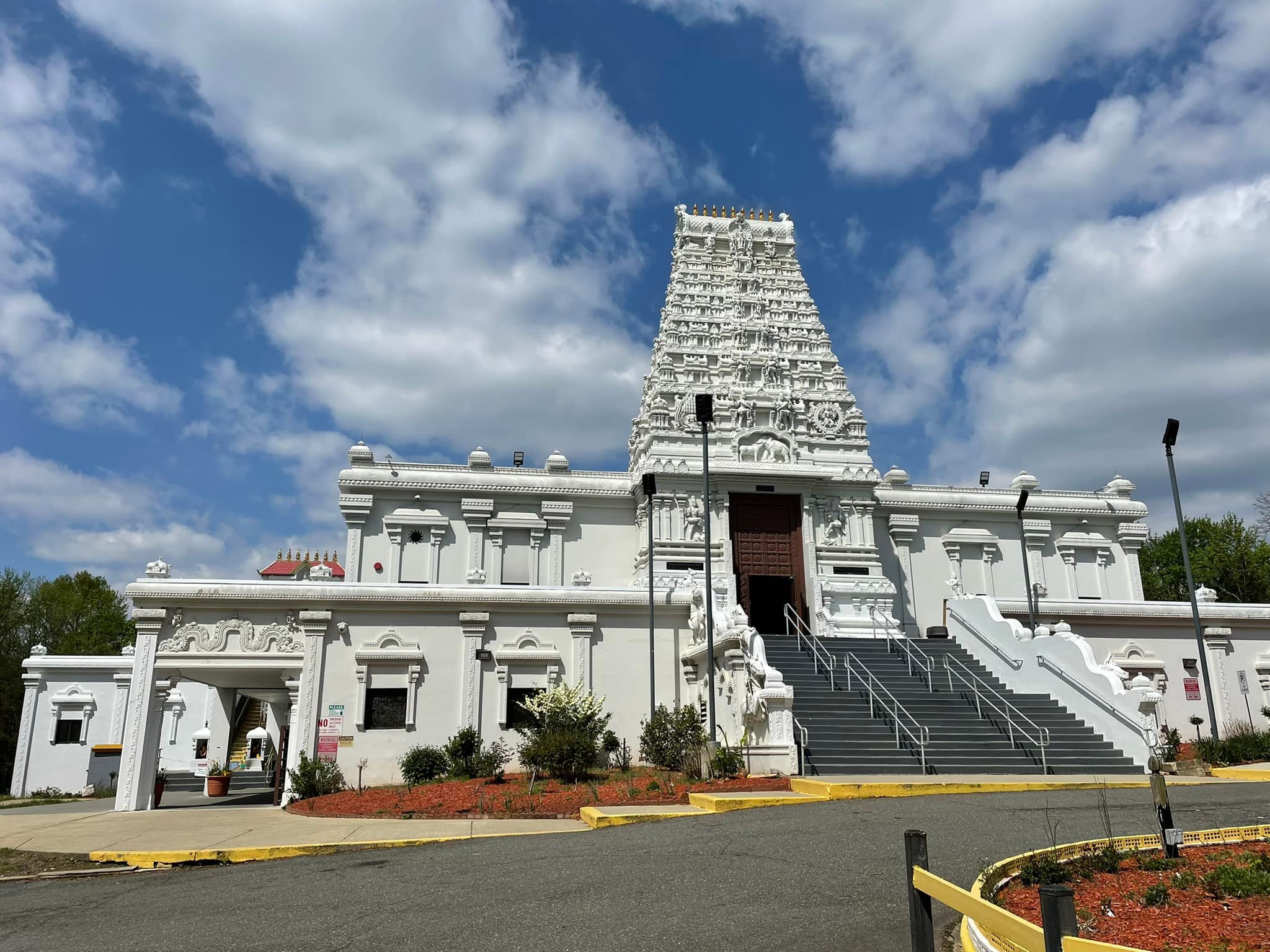
I went on a kind of pilgrimage this week. No, not a pilgrimage to Jerusalem, as our ancestors made at festival times in the ancient world, when the Temple was still standing. Rather, it was an interfaith trip to our nation’s capital to visit significant religious sites from several different groups. On the itinerary was the National Cathedral, the Latter-Day Saints (Mormon) Washington DC Temple, the Metropolitan African Methodist Episcopal (AME) Church, Washington Hebrew Congregation, the Basilica of the National Shrine of the Immaculate Conception, and the Sri Siva Vishnu Hindu Temple. (Lamentably, there was no mosque on the itinerary, perhaps because it is still Ramadan). 

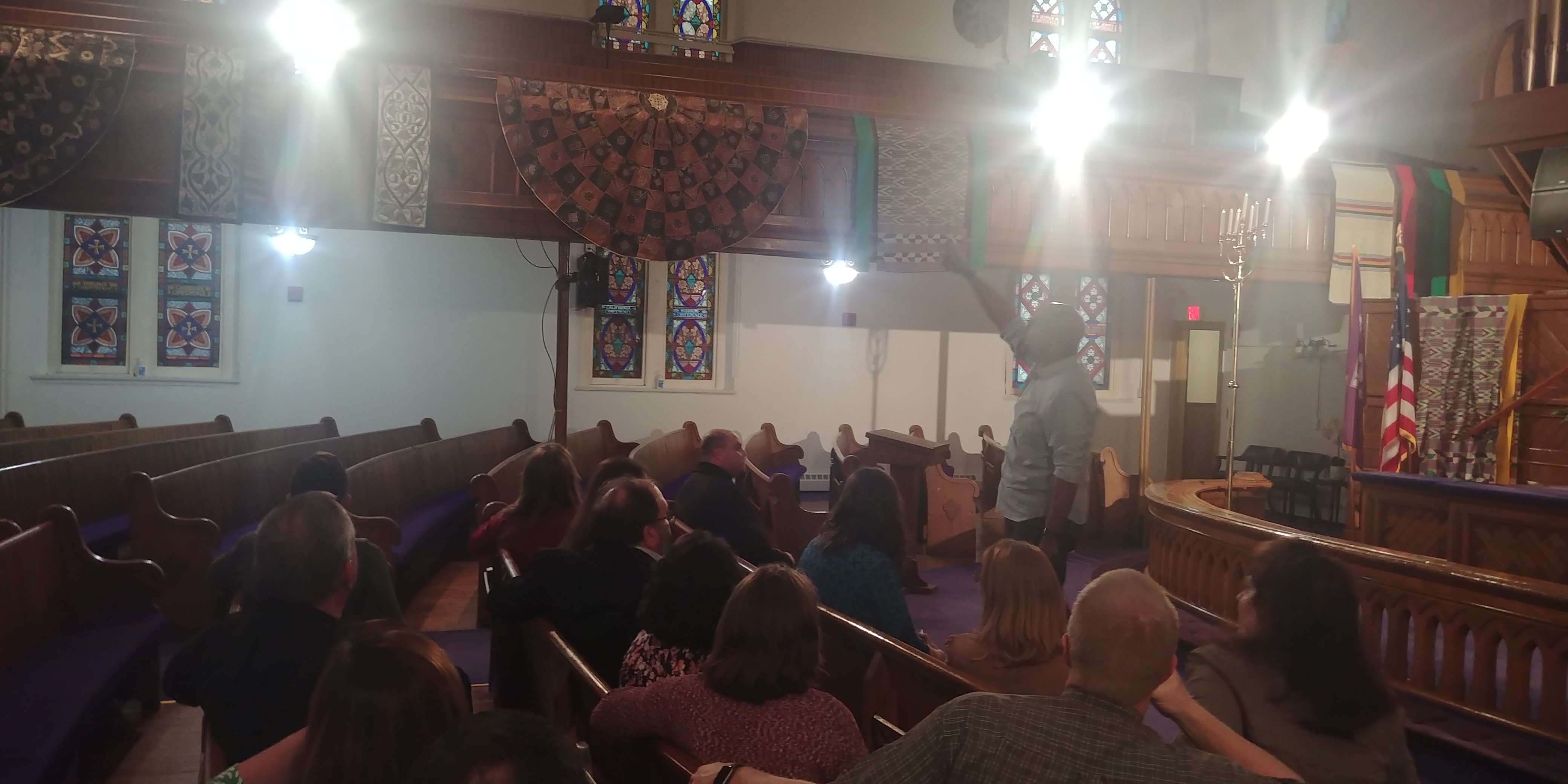
Inside the Metropolitan AME Church with Rev. William Lamar IV

Our group was mixed – Jewish and Christian clergy of various streams, and part of the experience was the inevitable discussions en route: learning about one another’s traditions, seeking common ground, discovering how we read, for example, the Torah differently. I learned, for example, that Catholics celebrate Shavu’ot, although they refer to it as Pentecost, and for them it is the beginning of the ministry of the Apostles. They actually see it as an analog to our celebration of Mattan Torah, the gift of Torah at Mt. Sinai. And, by the way, it’s exactly seven weeks after Easter!*

Speaking of the Torah, one of the essential pieces of Aḥarei Mot, from which we read today, is a description of the ancient Yom Kippur, when the Kohen Gadol / High Priest would confess the sins of the Israelites onto the “scapegoat” and send it off into the wilderness. 

What is interesting about this, both from a Jewish perspective and from an interfaith perspective is that, while everybody wants to be cleansed of their sins, no major religious tradition as far as I know reads that passage as a literal guide to atonement. We, the Jews, pray and fast and confess our sins in public and ask for forgiveness from each other and from God, and pledge to change our ways. Christians and Muslims and Hindus and so forth all have their own ways of seeking forgiveness from sin, and many of these traditions include some of the aspects of the Kohen Gadol’s Yom Kippur ritual, particularly confession.

But nobody does exactly what is found in the Torah. We rather look back through the unique lenses of each of our respective faiths to relate to what we read in Aḥarei Mot (Vayiqra / Leviticus 16-18) this week. In that sense, we share some sense of common heritage. On this trip, there were multiple times that everybody in the group looked to the Jews as the originators of some of their practices, not in the sense of, “You did it all wrong, and we have fixed it!” But rather with the thrust of, “Thank you for showing us the way.” And frankly, that was somewhat encouraging.

The shrine of Our Mother of Africa, at the Basilica of the National Shrine. That’s a diagram of a slave ship on the floor at the entrance

One of the things that I have come to understand in recent years is that people of faith share quite a bit across religious lines. While I think that many of us grew up with a certain amount of justifiable fear or discomfort around non-Jews, given the complicated and unpleasant history of our people, I feel today a kinship with my non-Jewish colleagues which reflects our shared goals: to encourage mutual respect, to understand that while our religious approaches differ and our interpretations of scripture disagree, our goals are often the same.

We share a common yearning, and a common enemy.

We yearn for God. Yes, each in our own individual way; for some that yearning does not reflect traditional God language. But, as with the words of the Psalmist (Ps. 42:2):

כְּאַיָּ֗ל תַּעֲרֹ֥ג עַל־אֲפִֽיקֵי־מָ֑יִם כֵּ֤ן נַפְשִׁ֨י תַעֲרֹ֖ג אֵלֶ֣יךָ אֱ-לֹהִֽים 

Like a deer crying for water, my soul cries for You, O God.

The 17th-century French mathematician and philosopher Blaise Pascal once described this human need as a “God-shaped vacuum in the human soul,” a place inside of us that cries out for the potential that God gives us: for human connection, for doing good works, for elevating the holiness between people. What has continued to cause people to gather in praise of God, as we are doing right now? What has sustained religious engagement into a modernity that refuses to create room for God? It’s not kiddush (collation), and it’s not swimming in the pool at the JCC.

It is that impulse for Divinity, the fundamental human need to seek out the Divine spark in ourselves and others. It is the desire to fill that God-shaped hole. And we do that by building houses of worship; by telling stories and interpreting Scripture and adhering to customs and law and pilgrimage festivals with no pilgrimage and immersion in baptismal fonts and miqva’ot (Jewish ritual baths) and all the things that we do to pursue the Godliness in ourselves and others.

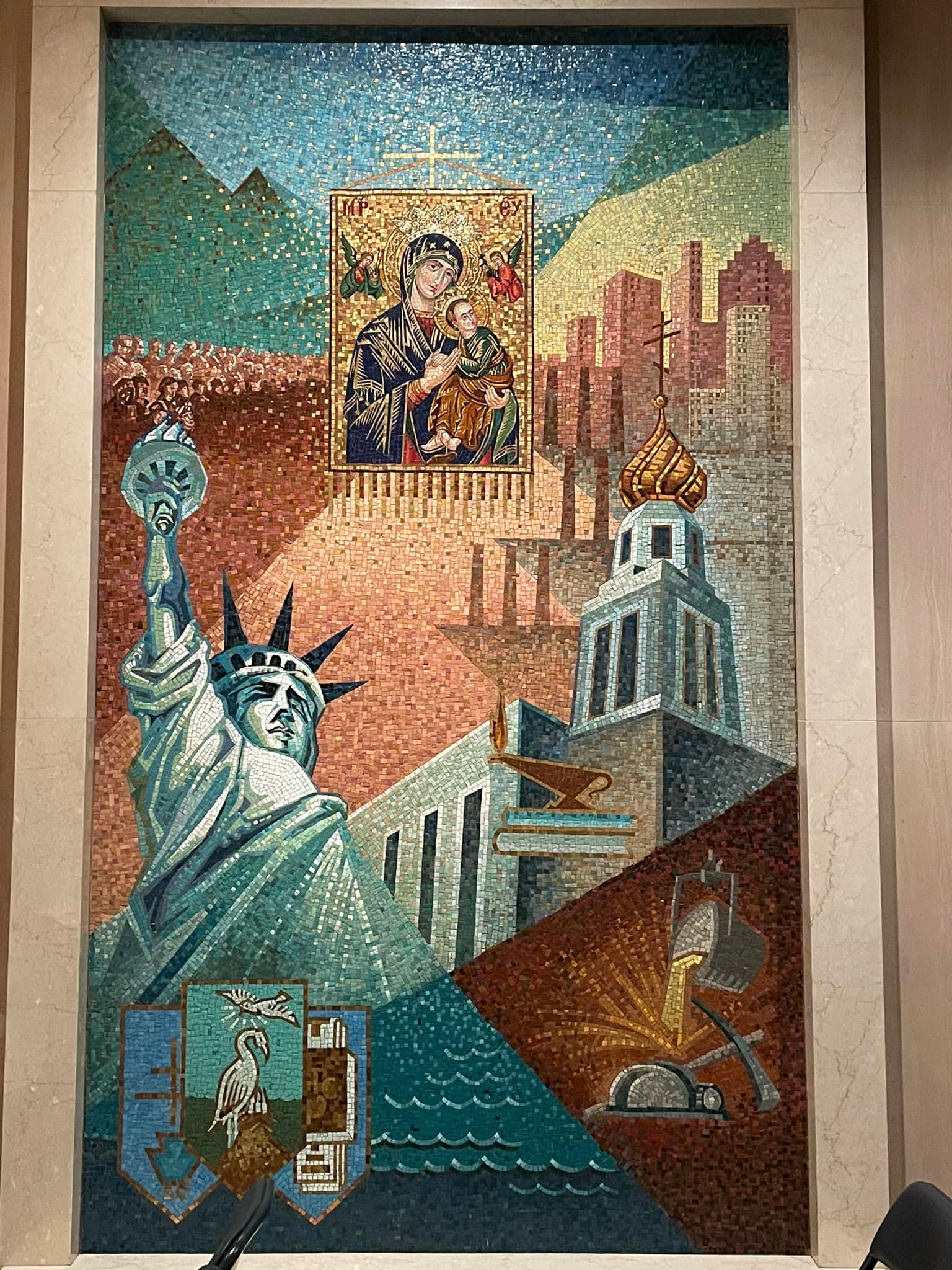
Mosaic at the Basilica in the chapel dedicated by Pittsburgh’s Byzantine Catholic community, showing the Pittsburgh skyline

And what is our  common enemy? It is indifference. It is the disinterested shrug that turns us back to the television, or the outrage machine on our smartphone screens, or intoxicants or shopping sprees or all the ways in which we divert ourselves and avoid facing the things we really need to face.

If we do not fill that vacuum with God, with the values that our tradition teaches us, we fill it with junk. We fill it with all of the myriad things which draw us away from holiness: leshon hara (the evil tongue) and idle pursuits rather than prayer and learning; fear and hatred of the other rather than love and connection and engagement; all of our numerous unhealthy addictions instead of the holy patterns in Jewish time.

Cantor Susan Bortnick at the Washington Hebrew Congregation

But you know better. You know that your religious framework gives you values which shape your life and your environs for the better: family; boundaries; conservation; gratitude; joy; understanding; community; support in times of grief; seeing multiple sides to every argument; respect for our fellow human beings; justice.

If only more people in the world understood the value in our traditions, in our holy books, in our framework. Maybe some of the turmoil in our world would be lessened somewhat. That is where my tefillah, my prayer is focused.

After dinner on Tuesday, when we had visited the LDS Temple, the synagogue, and the AME church, our friend and neighbor from Church of the Redeemer, Rev. Canon Natalie Hall, observed that in each of those places, our tour guides led with their most essential values. For the LDS folks, it was family. For the Jews, it was text, the holy words of our tradition. For the African Methodist Episcopal Church, it was justice.

If we were only to hold up those three things – family, text, justice – dayyenu! It would be enough. But of course that is not exactly how Judaism, or any faith tradition, works. We need to see, in some sense, the richness of our tradition through the lens of all that we do. We need to dig deeper, to climb higher, to keep reading and learning and discussing and arguing. We have to understand that, while we do not have a Kohen Gadol or a scapegoat or an altar on which to sacrifice to God, we do have the words of our tradition and our rituals and our law and our philosophy and the contemporary understandings that make these things meaningful to us today to guide us, in the words of Isaiah (42:21), יַגְדִּ֥יל תּוֹרָ֖ה וְיַאְדִּֽיר, to magnify and glorify God’s teaching.

Spending two days with colleagues from other traditions only reminded me that we are allies in faith, and that we all seek greater connection and a better world. And we can do that, folks. We carry ancient keys to the secrets for a healthier society. We only have to continue to teach them and live them. 

And, let’s face it: given the rising rates of anti-Semitic activity, it is good for us to be wary, and to decry anti-Jewish bias when we encounter it. But we must also seek partners across the aisle – in churches, mosques, and temples of all kinds – so that we might all seek forgiveness for our sins where appropriate; so that we might seek to understand each other and speak the same language, and so that we might be able to fill that God-shaped hole in the world.

Sri Siva Vishnu Temple

~

Rabbi Seth Adelson

(Originally delivered at Congregation Beth Shalom, Pittsburgh, PA, Shabbat morning, 4/30/2022.)

* Echoing the seven weeks of Sefirat ha’Omer, the counting of the sheaves of barley from the second day of Pesaḥ until Shavu’ot, as described in the Torah. Today, there are no sheaves of barley, but Jews still count the seven weeks.

Categories
Sermons

Welcoming Interfaith Families, Maintaining Tradition – Eqev 5781

I recently completed my fourteenth year as a rabbi, since I was ordained at the Conservative movement’s Jewish Theological Seminary in New York in 2007. As many of you know, I have been affiliated with the Conservative movement for my entire life. 

The Jewish Theological Seminary of America

But you may not know that in 1994, when I was finishing my Master’s degree in chemical engineering at Texas A&M University, I applied to the rabbinical school at the Reform movement’s Hebrew Union College, at the urging of the Reform rabbi at the Texas A&M Hillel. When HUC rejected me, Rabbi Tarlow was incensed, and he called the chair of the admissions committee to find out why. He was told that the committee felt that I had difficulty seeing multiple sides to an issue.

Now, it may be that what they saw about me during the interview was engineering clarity: trying to get to an answer as efficiently as possible. In any case, I must say that in retrospect I find it difficult to believe that I ever had such a difficulty, because nowadays I cannot help but see at least a couple of sides to any issue, perhaps to the detriment of that problem-solving clarity that I used to have.

As I grow older, and particularly in observing the deeply polarized society we have become, I must say that I wish that more of us had the humility to see multiple sides to every issue. I feel like the black-and-white oversimplification that is a feature of social media has brought us to this point, where acknowledging and engaging with multiple perspectives around complex issues is not merely frowned upon, but even derided.

Parashat Eqev, which we read from this morning, reminds us not only of the binary theology of Devarim / Deuteronomy – if you, the Israelites follow the mitzvot, you get the land of Israel, and if you do not, you will lose it – but also the need to be humble, because actually it’s not so simple. In particular (Devarim / Deut. 9:4):

אַל־תֹּאמַ֣ר בִּלְבָבְךָ֗ בַּהֲדֹ֣ף ה֩’ אֱ-לֹהֶ֨יךָ אֹתָ֥ם ׀ מִלְּפָנֶ֘יךָ֮ לֵאמֹר֒ בְּצִדְקָתִי֙ הֱבִיאַ֣נִי ה’ לָרֶ֖שֶׁת אֶת־הָאָ֣רֶץ הַזֹּ֑את וּבְרִשְׁעַת֙ הַגּוֹיִ֣ם הָאֵ֔לֶּה ה’ מוֹרִישָׁ֥ם מִפָּנֶֽיךָ׃

And when the LORD your God has thrust [your enemies] from your path, say not to yourselves, “The LORD has enabled us to possess this land because of our virtues”; it is rather because of the wickedness of those nations that the LORD is dispossessing them before you. 

The 15th-century Portuguese commentator, Don Yitzḥaq Abravanel, adds that people tend to attribute their successes to themselves. But the text here says, “Don’t think that you’re getting this land because you’re so perfect.” Rather, says God, I’m only giving this to you because you’re a wee bit better than the surrounding peoples. Don’t think you’re all that special. Be humble.

Humility is an essential Jewish value; it is one reason that our tradition reminds us regularly that we came from slavery, and that we should remember not to oppress the others around us. We have to remember our roots.

It is with this humility, and with an appreciation for multiple perspectives, that we should read the results of the recently-released demographic survey of Jewish Americans by the Pew Research Center. The report came out in May, just before a barrage of Hamas rockets from Gaza provoked an Israeli response that quickly dominated the news cycle, and so those of us who pay attention to the state of Jewish America were distracted by the news from Israel. You might have missed it.

There is a lot to process in this report, but I wanted to zoom in on one particular issue, and that is the state of the Jewish family. One of the findings is that the intermarriage rate among Jews has remained at a consistent rate; about 56% of respondents who are married report that their spouse is not Jewish. Of course that figure varies tremendously with age and affiliation; among Conservative-affiliated Jews, for example, 25% report a non-Jewish spouse, and among the category of people whom Pew describes as “Jews of no religion,” that is, people who were born Jewish but do not practice Judaism, the figure is 79%.

A few decades ago, these numbers would have seemed shocking. The Conservative movement’s reaction to interfaith marriage in the 1980s was to pretend it did not exist: no recognition, no aufruf, and of course no rabbi could preside over such a marriage. At the time, we were so proud as to think that this would lead to greater in-marriage. The approach backfired: many of those Jews who married others, whose rabbis turned them away, left the Conservative movement and did not look back.

We have, thankfully, reached a different place. While I still cannot solemnize a marriage of a Jewish person to one who is not, this is for purely halakhic reasons; we have not yet been able to come up with a halakhic basis on which to perform such a marriage. But of course we welcome these couples into our congregations; we have a number of members of Beth Shalom where one partner is not Jewish, and some of those Jewish-adjacent members of Beth Shalom are among our biggest fans, eager partners in helping to create a Jewish home and provide a Jewish education for their children. 

One of the items that the Pew study presents is that 28% of interfaith parents are raising their children as Jews (compared with 93% of families with two Jewish parents). Now that is not a particularly high number, but I’ll tell you this: if we reach out to those families, if we welcome them into our midst, then we have a much better chance that more of their children and grandchildren will be raised Jewish. 

In some cases, by the way, our embracing the supportive non-Jewish partner has led to that person becoming Jewish through conversion, a testament not only to the appeal and the richness of our tradition, but also to our being open and inviting them in.

Now the challenge here is that, on the one hand, we want those interfaith families to be part of our community. We do not want them to be turned away, such that they will never return. When I was preparing for the Honeymoon Israel trip I took with the Pittsburgh cohort a year and a half ago, I learned that one of the frequent narratives among disaffected Jews in interfaith relationships was about how some of them had been spurned by their communities, and the pain this caused. We do not want to be creating more hurt, and giving people more reasons not to come back to the synagogue.

Of course, the perspective with which I grew up, like most of us here, is that in-marriage is the most desirable outcome. In addition to the halakhic challenges to intermarriage, when two people share similar customs and values, it is a solid foundation on which to build a successful marriage. Also, of course, Jewish home life is centered around family participation, and of course it is ideal for both parents to be steeped in these practices and texts to pass them on to our children and grandchildren.

After so many decades of Jewish hand-wringing over intermarriage, not to mention the centuries of uncomfortable history, our expectation that in-marriage is ideal is so ingrained as to be unavoidable. There are those who say that this expectation implicitly places an interfaith couple in a secondary position, and that is something that we clearly do not want to do. However, I think it is also reasonable to promote in-marriage while welcoming our Jewish-adjacent partners, who have thrown in their lot with our people, who are supportive participants in our Jewish journey.

And, on the third hand, we love it when people who are not Jewish join the ranks of our people. So while I have occasionally crowed that I have created 50 or so new Jews since I’ve been in Pittsburgh, doing so also may seem judgmental to some of the non-Jewish partners in our midst. We must ensure that our message is that anybody who wants to join the Jewish people is welcome, and the doors are always open. But even for those who choose not to, we are still grateful that you are here with us.

So you can see that even discussing this is complicated. On one hand, as ambassadors for Judaism and Jewish life, we need to support our home team and our historical traditions; on the other, as diplomatic contemporary Jews who seek to keep as many of our folks connected, we also must maintain a big, non-judgmental tent. And, as Eqev teaches us, we have to be humble about it: we cannot possibly think that we know all the answers or will succeed in hitting the right notes based on our merits. We need to lean into that humility because we compete not only in the marketplace of ideas, but also in the ocean of disaffection and indifference. 

A curiously hopeful note gleaned from the Pew study, by the way, is that even among the folks who are described as “Jews of no religion,” a healthy fraction of those Jews are practicing some aspects of Jewish life: for example, 30% of them held or attended a Pesaḥ seder last year, 28% observed some kind of life-cycle ritual, and 1 in 5 fasted to some extent on Yom Kippur. I’m not sure why these behaviors place these folks in the “no religion” category, but such is the messy nature of statistics and categories. Nonetheless, it is another reminder that those open doors face multiple directions.

Fortunately for all of us in the Conservative movement, halakhah / Jewish law is not judgmental; we can still welcome all folks into our community, even as we stand by our halakhic principles in Jewish ritual. Just as there is a range of Jewish practices among our people, so too there is a diversity among Jewish families. And we embrace them all, even as we humbly maintain tradition.

~

Rabbi Seth Adelson

(Originally delivered at Congregation Beth Shalom, Pittsburgh, PA, Shabbat morning, 7/31/2021.)

Categories
Sermons

Building Bridges of Prayer – Bo 5781

The 46th president of the United States, just before he was sworn in on Wednesday, did something remarkable: he prayed. As his predecessor boarded Air Force One to head out of town, Joe Biden went to the Cathedral of St. Matthew the Apostle in Washington, presumably to daven (pray) the Catholic equivalent of shaharit / the morning service.

As you know, I am a big fan of prayer. I do it every day, and I am convinced that tefillah / prayer is good for you. It is the original Jewish form of mindfulness meditation. Tefillah centers me; in the morning it gets me ready to face the day; in the evening it is a gentle, reflective conclusion, an opportunity to check in with myself. 

I am convinced that if we all did just a little more prayer, if we all took reflective moments more frequently, our world would be a better, kinder, gentler, more united world. And of course that applies to all of us – not just the Jews, of course, or the Christians, but all of us, and even those who do not belong to a particular faith tradition. Prayer, whatever form it takes or whatever you call it, has the potential to bring us all together, to build bridges.

The television coverage that I saw on Wednesday morning did not actually show the president-elect in prayer, just the exterior of the church. Nonetheless, to see this very public, yet also very private moment of prayer brought tears to my eyes.

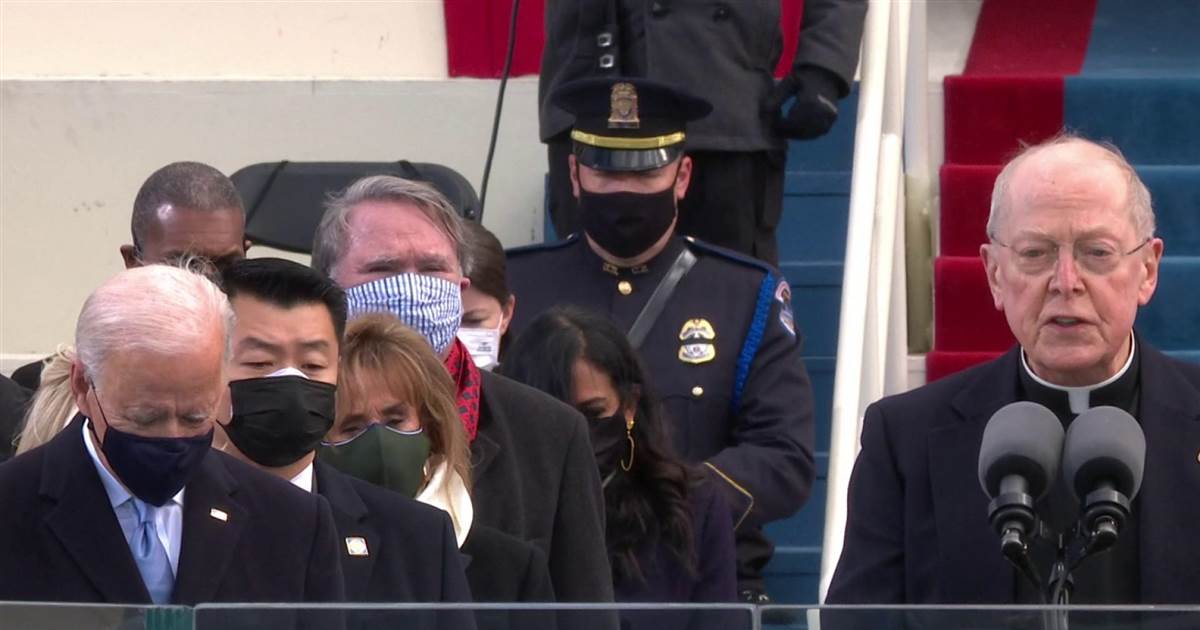
A little while later, Father Leo O’Donovan, a Catholic priest, gave the invocation before the swearing-in, and he said the following:

There is a power in each and every one of us that lives by turning to every other one of us, a thrust of the spirit to cherish and care and stand by others, and above all those most in need. It is called love, and its path is to give ever more of itself. Today, it is called American patriotism, born not of power and privilege but of care for the common good – “with malice toward none and with charity for all.”

In Father O’Donovan’s words, I hear the yearning to be once again “one nation, under God,” acknowledging the love and faith that should bind us together as a society in pursuit of the common good. 

And so we find ourselves this week in perhaps a more prayerful stance as a nation, and it is absolutely serendipitous that we read from Parashat Bo this morning, including arguably the most essential items in the story of yetzi’at Mitzrayim, the Exodus from Egypt.

One of the key features of the Exodus narrative is that the freedom, the redemption from slavery that Moshe and the Israelites seek includes as a fundamental principle the ability to worship the one true God. By definition, slavery (in Hebrew, עבדות avdut, from the shoresh עבד, to serve), precludes service to God. Integral to that freedom for the Israelites is the license to worship God, the autonomy to be a servant of faith rather than a servant of other people. 

Almost every time, when Moshe approaches Pharaoh to ask for freedom, he says something similar to what we find up front in Parashat Bo, Shemot / Exodus 10:7: שַׁלַּח֙ אֶת־הָ֣אֲנָשִׁ֔ים וְיַֽעַבְד֖וּ ה’ אֱ-לֹהֵיהֶ֑ם Shalah et ha-anashim veya’avdu et Adonai eloheihem. Let the people go to worship the Lord their God! 

Freedom, as the Torah sees it, includes that holy relationship with the Qadosh Barukh Hu.

And so too today: building a better future in our very divided country necessitates God’s presence in our lives, however we understand that presence.

Now, do not go reading this as a screed against atheists, or a repudiation of the separation of church and state. On the contrary: we need a greater sense of shared faith in this country, among the diverse people of this nation, because, as Father O’Donovan suggested, that will, through love, enable us to build a better nation, infused with a unified pursuit of the common good. As servants of God who see the Divine spark in each other, who see our shared humanity, we can and should work together to build bridges, to create a stronger, more resilient society and a healthier democracy. Even those who reject theology outright can, I hope, get on board with seeking the common good through shared love of humanity, of our fellow citizens.

And a key piece of this sense of shared love is interfaith cooperation.

You may know that I grew up in an area with relatively few Jews. Until I went to college, virtually all of my friends and neighbors and classmates were Christian, mainline Protestants and Catholics, and my family was among a handful of Jewish families in my home town. We all knew each other, and I think it is fair to say that, to some extent, we the Jews felt like outsiders. Not that our neighbors treated us badly or as enemies, but there was definitely a mutual awareness of our difference. Sometimes this awareness bred resentment, as, for example, when well-meaning Christian friends failed to understand that we did not celebrate Christmas. It was sometimes hard to see past this, given some of the history of Christian/Jewish relations. There was a time in my life when I would not have wanted to listen to the words of a Catholic priest giving an invocation at an official gathering.

My sense is that things are somewhat different today; the religious landscape in America has changed. Many of us now look at each other across religious divisions as allies. Yes, of course there are issues that divide us. But what we who are partners in faith share is much greater, and much more powerful.

Rabbi Jeremy Markiz and I were at a meeting on Thursday of the Priest-Rabbi dialogue, a discussion between local Catholic and Jewish clergy which meets from time to time to discuss interesting theological issues. At this meeting, we read a statement from 2002 produced by a group of influential North American Christian scholars attempting to reframe the historically fraught relationship between Jews and Christians. Among the principles expressed in this document were, “God’s covenant with the Jewish people endures forever,” and, “Ancient rivalries must not define Christian-Jewish relations today.”

Our discussion broke toward the points of disagreement among Christian theologians and within the Jewish world about some subtleties of our beliefs. But the greater message is well-taken: today we are allies in the struggle against disorder, disunity, and distrust. We are united in facing the challenges of poverty and racism, hunger and homelessness, mental health and addiction and isolation. 

I heard a podcast this week from the Pardes Institute of Jewish Studies in Jerusalem about Parashat Bo, taught by Pardes teacher Tovah Leah Nachmani, about emunah / faith. She pointed to a commentary by Ramban, aka Nachmanides, who lived in 13th-century Spain. In surveying Parashat Bo, Ramban points to the symbols of emunah found in this parashah: the annual observance of Pesah / Passover that we read this morning, and the wearing of tefillin (Ex. 13:16, the last line in the parashah). Ramban suggests that these symbols (the Hebrew term is ot, sign) of faith are meant to remind us of the role that God plays in our lives. There will not be an Exodus in every generation, says Ramban, but every year when we celebrate Pesah we remember that power. The tefillin that we put on every morning are an ot, a sign of the binding promise that God has made with us to help us live better lives through the framework of mitzvot.

Ms. Nachmani expands on Ramban’s line of thinking to include Shabbat and regular tefillah, such that we have daily, weekly, and annual signs before us: The weekly reminder of Shabbat, also described as an ot (beini uvein benei Yisrael, ot hi le’olam – Ex. 31:17) gives us a taste of the true peace that will someday come if we commit to the common good. 

Faith and freedom are intertwined; we must keep those symbols of faith in front of us; we must use them to remind ourselves to reach out to our neighbors in love. We must also remind ourselves that we have partners, who do not celebrate Pesah or wear tefillin, yet who also have faith; these signs of faith can also lead us to dream about what we can accomplish when we are all praying together.

We remembered this past week the strength of the Reverend Dr. Martin Luther King, what he accomplished, inspired by God and the words of the biblical prophets. Consider that Rabbi Abraham Joshua Heschel had the vision to reach out to and march with Dr. King as a partner in faith, at a time when many of us were not thinking far beyond our own community. 

Our future depends on building bridges of prayer and bridges of emunah / faith. Our Christian, Muslim, Hindu, Sikh, and Buddhist friends and neighbors are all interconnected with us; we may differ on how we approach or understand the Divine and the role that the holy relationship plays in our lives, but we mostly agree on the outcome: that we can build a better world through shared prayer, faith, and love.

~

Rabbi Seth Adelson

(Originally delivered at Congregation Beth Shalom, Pittsburgh, PA, Shabbat morning, 1/23/2021.)

Categories
Sermons

Welcoming Interfaith Families / Our Two Lives – Hayyei Sarah 5780

It seems that I’m giving an inadvertent sequel to the sermon that I gave last week.

And that is mostly because last Shabbat morning, I was reading the Federation’s new study on the experiences of interfaith families in the Pittsburgh Jewish community. I served on an advisory committee of clergy members and community leaders for the study, and also helped the researchers locate interfaith couples with whom they could speak to collect information about their experiences within the Jewish community. As you may know, we have members of this congregation where one or more family member is not Jewish according to halakhah / Jewish law, and of course we welcome those members just as we welcome Jewish members to our services, our programs and activities, and to participate in this community just as the Jewish members do, with a few exceptions related to ritual leadership.

Perhaps the most interesting part of the study are the quotes collected from these couples. Some of the material actually made me feel that Beth Shalom is doing a decent job, like the note that only five out of 17 non-Orthodox congregations’ websites actually contain language explicitly welcoming interfaith couples. Ours is one of them:

While Beth Shalom is a community rooted in the Jewish tradition, many of our members are part of families who celebrate other traditions, cultures, and religions. Rather than separate ourselves from other traditions, we embrace the diversity of our members and seek to welcome their friends and family into our community in as many ways as possible. This year, we have formed a committee to investigate how we can do this in a meaningful and respectful way.

So that’s a good thing, even if the committee was actually formed three years ago.

But something else in the study caught my eye, and it connects directly to the subject of last week’s sermon, that is, when I spoke about the challenge of being welcoming while preserving our standards of synagogue behavior:

At one service we went to, they just put a yarmulke on my kid’s head. And when I took it off there was judgment, and there were comments made, and I’ve really never felt comfortable in that setting since. And I haven’t really felt comfortable with that rabbi since then either. (Non-Jewish partner)

I read that, and I thought, well, that might have been me. And I really try very hard not to be judgy. I know that we live in an environment in which any kind of perceived slight is something that may drive people away from the synagogue in such a way that they will not come back. And yet, there was this quote from a non-Jewish partner, from a family that was clearly looking for community and connection.

And I’m picturing the situation: here comes the rabbi, with the best of intentions, and he slaps a kippah on a little boy’s head. And mom is not happy.

OK, so maybe that wasn’t me. I don’t know. I certainly hope it wasn’t.

Here’s the key: we have to find a way to make people feel welcome AND to uphold our standards.

****

Switching gears for a moment, a curious textual oddity happened in the first verse that we read this morning (Bereshit / Genesis 23:1):

וַיִּהְיוּ֙ חַיֵּ֣י שָׂרָ֔ה מֵאָ֥ה שָׁנָ֛ה וְעֶשְׂרִ֥ים שָׁנָ֖ה וְשֶׁ֣בַע שָׁנִ֑ים שְׁנֵ֖י חַיֵּ֥י שָׂרָֽה׃

Sarah’s lifetime—the span of Sarah’s life—came to one hundred and twenty-seven years.

If you’re listening closely, you’ll see that the word “shanah” or “shanim,” that is, “year” or “years” appears no less than 4 times in this verse. It is the fourth one, “shenei,” that is most curious. To understand it, you have to know that Hebrew has a grammatical phenomenon that sometimes changes the shapes of words.

The last three words, “shenei hayyei Sarah,” should be understood as “the years of Sarah’s life.” The word, “shenei” is called a construct form. It appears when two nouns are smushed together in such a way that indicates that the first belongs to the second. You know many constructs: Rosh Hashanah: the head of the year; Simhat Torah: celebration of the Torah; birkat hamazon: the berakhah of food (i.e. grace after meals). In our verse, the word “shenei” is the construct form of “shanim,” years. Actually, this is a dual construct: shenei hayyei Sarah is “the years of the life of Sarah.”

However, an alternate translation, nonsensical according to the context, is that “shenei” here means “two.” So you might translate shenei hayyei Sarah as “Sarah’s two lives.” A midrash in Bereshit Rabba (58:1), following this read, tells us the following:

 וַיִּהְיוּ חַיֵּי שָׂרָה, מַה צֹּרֶךְ לוֹמַר שְׁנֵי חַיֵּי שָׂרָה בָּאַחֲרוֹנָה, לוֹמַר לְךָ שֶׁחָבִיב חַיֵּיהֶם שֶׁל צַדִּיקִים לִפְנֵי הַמָּקוֹם בָּעוֹלָם הַזֶּה וְלָעוֹלָם הַבָּא

“Sarah’s lifetime.” What is the need for adding shenei hayyei Sarah, “the years of the life of Sarah” at the end of the verse? It tells you that the lives of the righteous are beloved by God, both in this world and in the world to come.

That is, Sarah’s two lives are the one in the here and now, and the one in the afterlife.

But another way we might read this is that Sarah had two lives in her 127 years: one as a partner to Avraham and a mother to Yitzhaq, and everything associated with those things – her life in relationship to those around her; and the second as the first of the imahot, the matriarchs of the Jewish story: the powerful, decisive leader who stood alongside and guided her husband through the challenges of life, who became a role model for her compassion, her strength, and her industriousness.

We too fulfill multiple roles. And I am thinking now of the way that most of us move seamlessly between our secular lives and our Jewish lives. Many of us are parents or grandparents who work in the wider (i.e. non-Jewish) world, proud citizens of this secular nation who are committed to democratic ideals and engaged with contemporary society.

And yet, many of us are also deeply committed to Jewish tradition – our Shabbat, our holidays, our lifecycle events, our Torah learning, our Jewish values. And it may in fact be that when we travel amongst non-Jews, we do not think about that Jewish life. Perhaps we just think of ourselves as Americans, or Pittsburghers. We do not feel our Jewishness in every interaction.

But just as Sarah was one person, so too are we. And what we might learn from this is that there should be no mehitzah, no divider between who we are as Jews and who we are in a secular context. We should make our daily choices based on Jewish values and guided by the Jewish calendar and halakhah / Jewish law. We should act on the principles of qehillah / communal interdependence, derekh eretz / respect for the other, hakarat hatov / gratitude for the good that we have, Talmud Torah / learning our texts, and so forth as we interact with everybody around us, in all the spheres of our lives.

This is what Judaism teaches us: fuse those two lives together. Make them one. You are not a Jew only on Shabbat morning! We smell fragrant spices at havdalah to bring the joy of Shabbat into the rest of the week; so too with the Torah of compassion, of responsibility, of tzedaqah, and so forth. We bring that Torah to the world as an essential part of who we are.

And the converse should also be true: just as we bring our Judaism proudly into the world, so too should we welcome those non-Jewish and Jewish-adjacent folks who come into our space, into our synagogues and homes. We should welcome them in with the same zeal with which we should carry our Torah out into the wider world.

Let’s face it folks: history has taught us, for thousands of years, to keep our Judaism to ourselves. The anti-Semitic blood libels, the pogroms, the medieval disputations between Jews and Christians in which the Jews could never really win, the second-class dhimmi status imposed on Jews in the Muslim world, and of course the attempted genocide at the hands of the Nazis taught us to keep quiet and keep our religion to ouselves.

But you know what? Today we can walk proudly through our streets with our Judaism clearly visible. I refuse to be terrorized by re-energized anti-Semites. And we must be proud to share that tradition with whoever enters a synagogue.

We don’t have to beat them over the head with it. We don’t have to put a kippah or a tallit on anyone who does not want one, or on any kid whose parent does not like it.

But we must, at the same time, invite them in. Perhaps the language should be simply, “Would you like a kippah?” Or, “Would you like a tallit?” Or, as I say to those without tefillin on weekday mornings, “Would you like a set of tefillin? I am happy to help you put them on.”

If the answer is no, then it’s no, and there is no need to press any further.

But in bringing together our Jewish and our secular selves, we ought to be sensitive to where people are, particularly those who are anxious about entering a Jewish space. We do not need to give anybody an excuse not to come back. Rather, we want them to leave thinking, “Wow. Those folks really love their tradition. And they invited me in.”

~

Rabbi Seth Adelson

(Originally delivered at Congregation Beth Shalom, Pittsburgh, PA, Shabbat morning, 11/23/2019.)

Categories
Sermons

Planting Seeds of Dialogue – Yitro 5779

Two decades ago, when I was living in Houston and working at my final job as a chemical engineer, I learned to meditate at a Buddhist temple. Conscious of my Judaism and wary of our tradition’s all-encompassing prohibition of everything to do with idolatry (we read a taste of that in the Ten Commandments today), I made sure that nothing that I was doing could be construed as violating that prohibition.

There was a Burmese monk who was something like the local rabbi, and he would give a little inspirational talk after the meditation hour. One day he told the story of how the Dalai Lama was speaking somewhere in California, and was asked by a member of the audience if he could tell them how to find the quickest path to enlightenment.

The Dalai Lama did not answer the question. He simply started crying.

There is no easy path to enlightenment. It takes work. Years of careful, thoughtful work.

But the wider lesson here is that very few significant things in life are achievable without careful planning and preparation. Consider the moment on Mt. Sinai that we read today, where God begins the revelatory process with Moshe / Moses: this was such a fundamental moment for our ancestors that it required extensive preparation – days of communal and individual purification, and let’s not forget the whole Exodus story which preceded it. Many things needed to be in place before the moment of contact between God and Israel.

I am concerned that our national state of anxiety, coupled with the new tools of social media, have created a climate in which everything happens in an uncontrolled frenzy. Consider the news story that unfolded over the past week about the apparent stand-off between a Native American drummer and a high-school kid by the Lincoln Memorial in Washington. An initial video, shared widely and rapidly via social media, seemed to show the teen and his posse mocking the drummer. When other footage surfaced, the picture seemed more complicated, involving an hour or more of prior invective from a couple of Black Hebrew Israelites, who are known to spew hatred at passersby in some cities. (I myself was verbally assaulted on multiple occasions by these guys on the streets of New York.)

standoff

Subsequent analyses of the situation only seemed to muddy the waters, to the point where it is difficult to say who was at fault, who was mocking whom, what the motives of the various parties were at the time. And then as the news cycle turned over and PR firms were hired, the scene became a kind of Rorschach test for the observer.

I concede that I do not know what exactly happened that day. But what concerns me is not only the scene of people from disparate ethnic groups clashing with each other, but also our rush to judgment; our willingness to assume that we knew what was going on from a few seconds of out-of-context video footage. It is almost as if we wanted to see conflict, to point fingers unambiguously. No chance of enlightenment here.

This is just one small example of the many ways in which we are losing patience for the careful, diligent work it takes to understand the other, to effect change, to exert leadership, to get to know somebody, to cooperate across racial or religious or ethnic lines. We have lost interest in intellectual rigor, in authority based in years of experience. And we are all just too darned busy to dig deeper, to create relationships, to foster real discussion.

The second-century CE collection of Jewish wisdom known as Pirqei Avot, verses of the ancestors, tells us the following (4:23):

רַבִּי שִׁמְעוֹן בֶּן אֶלְעָזָר אוֹמֵר, אַל תְּרַצֶּה אֶת חֲבֵרְךָ בִשְׁעַת כַּעֲסוֹ, וְאַל תְּנַחֲמֶנּוּ בְּשָׁעָה שֶׁמֵּתוֹ מֻטָּל לְפָנָיו

Rabbi Shimon ben Elazar says: Do not attempt to assuage the anger of your friend while he is angry; do not try to console her at the time when her deceased lies before her.

In other words, don’t try to tell anybody something that they are not ready to hear. Even words of comfort are alienating when the time is not right, when the other person is not able to listen. True communication happens only when both parties are prepared for it.

Last Sunday morning, we featured Beth Shalom member Zack Block in our Lox and Learning series. Zack is the Executive Director of Repair the World Pittsburgh, whose mission is to “make meaningful service a defining part of American Jewish life.” In short, what Repair the World does is to engage Jews in a range of volunteer activities with partner organizations.

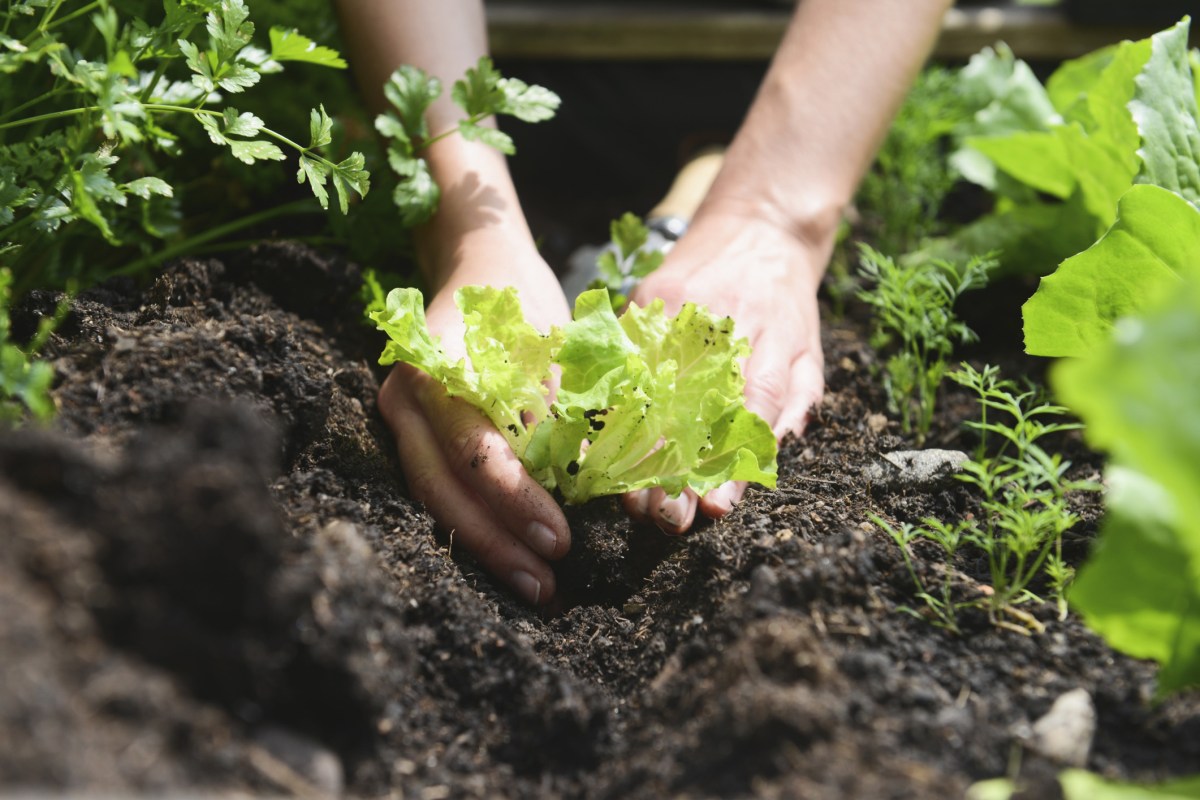
One of Repair the World’s activities is maintaining community gardens, and Zack used the example of gardening as a community-building activity. First, he said, you bring people together to plant seeds in pots indoors. You water the seedlings regularly. Some time later, you bring people together again to take the seedlings to the garden and plant them. There is watering and fertilizing and weeding and pruning and all sorts of ongoing maintenance. And then you bring people together again for harvesting, and bringing those fruits and vegetables to food pantries, or to bag them and make them available for nearby residents to take and use, or to host an exciting event with an up-and-coming local chef who can do something brilliant with string beans and eggplant.

seedling

It occurred to me that this is an excellent metaphor for dialogue across political, religious, ethnic, racial, or even gender-based lines. And, since this past Monday was Tu Bishvat, the 15th day of the Hebrew month of Shevat, which, according to the Talmud, is the new year for the trees, the plant metaphor works well in this season.

This is how diplomacy works: you plant “seeds”; you tend to them, and when the time is right, you “harvest” the solutions, the compromises, the social justice commitments, and then you pass the garden on to your successors.

Let’s acknowledge for a moment that we have guests in our Sanctuary today. Welcome, members of the Episcopal Diocese of Pittsburgh, and a special welcome to the Right Reverend Dorsey McConnell, Bishop of the Diocese. We will have a Q&A with Bishop McConnell and myself and Rabbi Markiz after qiddush (i.e. “collation”), and I hope you will join us for that. We are all in agreement that, particularly in the wake of October 27th, both here in Pittsburgh and across these United States, we are all in need of more communication with people outside of our own circles.

I sometimes feel that we are a nation in retreat: retreating to our own news bubbles, retreating to our comfy armchairs and our Netflix subscriptions, retreating to our own kind, or into ourselves. Where do we see examples of true dialogue in our society today?  Where there was once discussion we see diatribe; where there was once debate we see demagoguery. We are all just screaming to be heard, striving to collect the most “likes,” to achieve the most re-tweeted tweet, to post the most outrageous selfie.

I hope that today we will plant some seeds and mark the beginning of a conversation between our communities, a conversation that will ultimately yield fruit in making meaningful connections across a religious divide. And there are more gardens to plant, conversations to be had – many groups reached out to us following the Tree of Life massacre.

But it will take time. We need to talk. To break bread together. To make small-talk. Only after you have come into our space, and we have come into yours, and you have asked us questions, and we have asked you questions, can we really start to dig deeply and honestly into the difficult issues that we all face. One meeting is not enough.

Just as there is no speedy path to enlightenment, there is no quick way into meaningful dialogue. As with the rabbinic wisdom from Pirqei Avot I cited above, there is no shortcut to being able to enter the truly challenging, but essential, conversations; there is only the garden, in all its labor-intensive greenery.

A final note: the main event of Parashat Yitro (our Torah reading for today) occurred in the reading of the Aseret haDibberot, the Decalogue. But the name of the parashah comes from Moshe’s father-in-law, Yitro / Jethro, who is a Midianite kohen, that is, a non-Israelite priest. In the words of Rabbi Sharon Cohen-Anisfeld, president of Hebrew College in Boston:

Yitro embodies a quality of capaciousness – and indeed, his name itself comes from the Hebrew root yeter, or yoter. Abundance. More-than-enoughness. What Yitro embodies here is a quality of big-heartedness. There is more than enough room in his heart to truly rejoice in the blessings of another people.

Like Yitro, we should all have more than enough room in our hearts for our neighbors, for diplomacy, for reaching out and creating the depth of relationship required to achieve honest, heartfelt discussion. That is how we may achieve enlightenment.


~

Rabbi Seth Adelson

(Originally delivered at Congregation Beth Shalom, Shabbat morning, 1/26/2019.)


Categories
Sermons

Connection is the Goal; Openness is the Path – Naso / Pride Shabbat 5776

The bloodbath in Orlando has made this Shabbat particularly relevant.

I said something briefly about it on both days of Shavuot. After services on Monday morning, the second day, one person who had been in attendance, a man who has a long family association with this congregation, came forward to speak with me. He told me that as an American, a Jew, and a gay man, he was tremendously grateful for my having said a brief word during services, acknowledging the pain of loss, the grieving that we should all feel after such horrific news, about the pain it has caused to the LGBT community, and particularly the Latino component thereof.

In a different conversation that I had a few months back, a member of this congregation told me that her son, now a young adult, is gay, and that he never comes to Beth Shalom anymore when he is home. Why? Because, when he was a teenager, he heard other members of this congregation make disparaging remarks about gay people, and he no longer felt welcome here.

Ladies and gentlemen, hevreh (as they say in Israel), we are riding a wave of great change in our society not only with respect to gender issues, but also with many types of “otherness.” Millennials, that mystical category of young people, do not see lines that separate people the way that their parents and grandparents do. They think in universal terms.

Here is something that might be easy to say, but not quite as easy to make happen:

All are welcome here. Not only that, but all who want to be a part of our congregation must be not merely welcomed, but also included into the fabric of who we are, encouraged to connect with the Beth Shalom community. Not to do so, especially in the wake of last weekend’s shooting, is simply wrong.

PrideShabbat2016_logo

That’s not so easy. Traditionally speaking, Judaism, and particularly synagogues, are accustomed to drawing lines. Boundaries that divide us. Who’s in, who’s out, who is pious, who’s a sinner, who’s a big donor, who has a dues arrangement, who’s a member, who’s not, who is Jewish, who isn’t, etc. And it’s not just internal – one of the classic stories about synagogues is that even a Jew stranded alone on a desert island needs two: one he davens in, and the other one he wouldn’t go into if you paid him.

Synagogues like to think of themselves as places where halakhic distinctions are rigorously maintained. That is, the lines within our tradition, how we divide people, apply in ritual matters. Even in egalitarian congregations like this one, there are still lines.

And let’s be honest here: there are times when we need some lines. What allows Judaism to be effective in our lives is the boundaries it creates: boundaries between what is holy and what is not, between making the right interpersonal choice and the wrong one, between taking or not taking an opportunity for holiness. These are essential to allowing our ancient tradition to infuse our lives and provide guidance and personal benefit.

But we should work to eliminate lines between us as people. Anybody who wants to come pray with us, celebrate with us, grieve with us, learn with us, they are welcome! I don’t ask any questions about what you do when you leave the building, on Shabbat or any other day. All who come are included.

The key to the Jewish future is being open.

And not merely open; we have to almost drag people in off of the street. Nothing brings people in like personal invitation. And nothing shoos them away more quickly than being told that they are somehow deficient. And we all have the potential to be ambassadors for Judaism, and for Beth Shalom.

The Talmud (Yoma 35b) tells us a revealing story about Hillel the Elder. He would come to the beit midrash / house of study every day, spending half of his daily earnings on the entrance fee. One Friday in winter, he could not find work, and had no money in his pocket, so the guard at the entrance to beit midrash would not let him in. He still wanted to learn, so Hillel climbed up to the roof and sat on the skylight to listen to what was being taught.

As Shabbat fell, it began to snow. On Shabbat morning at dawn, those gathered in the beit midrash wondered what was blocking the light from above. They go up to the roof and find Hillel buried in the snow. They bring him inside, bathe him, anoint him, and warm him up by the fire (all things that would be traditionally forbidden on Shabbat). One teacher makes the observation, “This man deserves to have the Shabbat laws violated on his behalf.”

The message is not necessarily about money, but rather all the obstacles that might prevent somebody from accessing our tradition. We, those on the inside, have to work hard to make Judaism and the synagogue experience available to all who want to learn, pray, celebrate, and grieve. Sometimes, we have to move beyond our comfort zone, and even have to violate some of our core principles to do so.

Many of you know that I, as a Conservative rabbi, may not officiate at weddings if either the bride or groom is not Jewish. That is a policy that will not likely change soon.

But here’s the funny part: I will do everything in my (limited) range to welcome that couple into our congregation. I will be happy to meet with them before the wedding, and I will of course welcome them as members if they choose to join.

A couple of decades ago, when mixed marriages were becoming much more common, the Committee on Jewish Law and Standards (CJLS) of the Rabbinical Assembly laid down the law, or so they thought. They forbid acknowledging such a wedding, of course. They forbid an aufruf or congratulating the Jewish family or accepting donations for a non-Jewish child born to such a family. They forbid allowing an intermarried Jewish person to be called to the Torah.

Did these measures lower the rate of intermarriage? No. Do you think that any Jewish person considered, before getting into a relationship with a non-Jew, that his/her rabbi would not officiate at or attend their wedding, if they were to get married? Probably not.

All they did was to annoy the parties involved, and send them to Reform congregations, where they of course were welcomed, or out of the Jewish world entirely.

(The CJLS has come a long way; it has been nearly a decade since they voted to ordain openly-gay rabbis and allow rabbis to perform same-sex weddings; and in April of this year, they passed a teshuvahnullifying any provisions in Jewish civil law that are discriminatory against non-Jews.” So that is something.)

But if we really believe in what we do, in a Judaism that is traditional and still progressive, shouldn’t we want all of those families to be welcome here?

PrideShabbatBanner_2016_live

You should be pleased to know that among those who are completing my conversion course this summer, three of them are already married to Jews, and already have children. We’re going to get 7 new Jews out of just those three families.

The greater point here is that if we are open and inclusive, we will gain new members, new families. We will even make more Jews! We will be stronger as a community. We will teach and learn more, engage and raise our holiness quotient to new heights. We will thrive in our interconnectedness.

In the wake of a senseless tragedy that took the lives of so many in the name of hatred and intolerance, Beth Shalom and other faith communities should be standing up for compassion, for love, for tearing down walls, for eliminating not just the mehitzah of the traditional synagogue that separates women from men, but all the lines. We have to include those who are peering in from the skylight. We have to acknowledge the divinity in each of us.

The early 20th-century English novelist E. M. Forster, in his novel Howard’s End, pointed to the power of connection in a well-worn passage:

“Only connect!” he said. “Only connect the prose and the passion, and both will be exalted, and human love will be seen at its height. Live in fragments no longer. Only connect, and the beast and the monk, robbed of the isolation that is life to either, will die.”

20160620_095719_resized

The goal is connection; the path is openness. We have to be committed to both.

May the families of those who lost loved ones be comforted; we grieve with those who suffer from loss. May our openness and interconnectedness prevent such tragedy from striking ever again. Shabbat shalom.


~

Rabbi Seth Adelson

(Originally delivered at Congregation Beth Shalom, Shabbat morning, 6/18/2016.)