Categories
Sermons

Broad Justice – Ki Tissa / Shabbat Parah 5781

I have always thought of the molten calf episode in the middle of Parashat Ki Tissa as a kind of intruder in the middle of the description of the mishkan. We have, at the end of the book of Shemot / Exodus, a total of13 chapters, spread over five parashiyyot, of descriptions of the mishkan and all of its implements and principles and construction and initiation ceremony, all recounted in stunning, and some would say monotonous, detail. 

And then, right in the middle of that, there is this curious story about how the Israelites were anxious because Moshe had not yet come down from Mt. Sinai, and so they compel his brother Aharon, who will soon officially be the Kohen Gadol, the Big Kahuna, the High Priest, to fashion an idol of gold, a calf. And they bow down in a flagrant display of idolatry, and dance about and commit lewd acts.

And God and Moshe, meanwhile, when they discover all of this, are not happy indeed.

The people’s notion, as captured in their request to Aharon is, (Shemot / Exodus 32:1)

ק֣וּם ׀ עֲשֵׂה־לָ֣נוּ אֱ-לֹהִ֗ים אֲשֶׁ֤ר יֵֽלְכוּ֙ לְפָנֵ֔ינוּ

“Come, make us gods who shall go before us…”

They wanted not the one true God, of course, but gods, with a lower-case “g.” They want the thing that the Torah is primarily aligned against: idols. Empty gods. Falsehood.
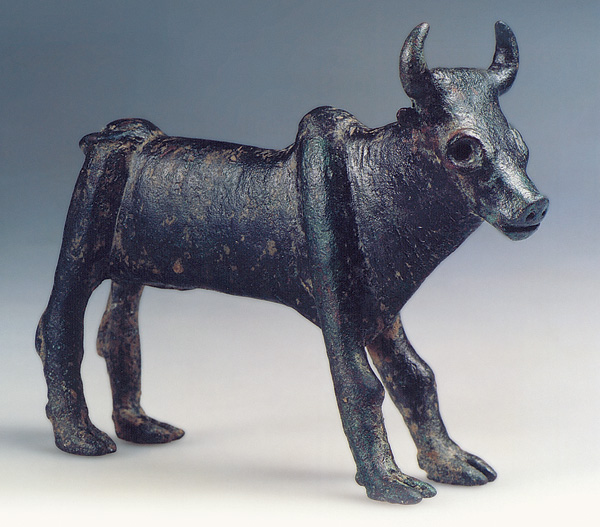
And then, to demonstrate the fact that they have not yet received the message about idolatry, when the calf and the altar is complete, not only do the people worship the offending idol, but they then eat and drink in celebration, and arise “letzaheq” (v. 6), a word translated by JPS as “to dance,” although Rashi tells us that this word implies the three biggest transgressions of the Torah: idolatry of course (they have already checked that box), murder, and sexual immorality.

How could this be the right god? How could the Israelites have wanted these gods to go before them?

It is clear that this passage is inserted into the seemingly-endless mishkan construction detail not only because the brief story refreshes the narrative after it had been bogged down in mundane descriptions of materials and planks and clasps, but also because it serves to reinforce the essential message of the mishkan, which is this: We are finished with all of that idolatry business, and the nasty stuff that comes along with it.
So what did the Israelites want? Was it murder and orgies and bowing down to idols? Or was it something else? Did they merely latch onto the wrong thing, i.e. idolatry, because it’s all they knew from Egypt? Did they command Aharon to make them an idol because they were trying to fill a spiritual void? They clearly lacked the maturity as a people to connect the dots between the laws already given (i.e. the first commandment, “I am the Lord your God who brought you out of the land of Egypt,… you shall have no other gods before me.”) and their new paradigm.

I spent the earlier part of this week “at” the convention of the Rabbinical Assembly, the international professional organization of Conservative rabbis. Of course it was online, as most things seem to be these days, and as I am sure you can imagine, this has its advantages and disadvantages. I find that it is easier to learn new material and pick up tips from my fellow rabbis when I am away from the everyday bustle of work and home. One advantage to a Zoom convention, of course, is that you do not have to pick yourself up off the couch to attend a session. 

One of the items in which I participated was a so-called “Professional Learning Community,” a discussion with fellow rabbis that took place over three days for a total of six hours, on the subject of racial justice. In particular, our goal was to share wisdom and suggestions as to how we as individual rabbis could address this program in our own communities, but also to create some guidelines for the Rabbinical Assembly regarding how we might move forward as an organization with respect to these issues. 

Why must the Rabbinical Assembly and Conservative synagogues address issues of race? I’m so glad you asked!

In this season in particular, in which we are preparing for Pesah, also known as Hag haHerut, the celebration of our freedom, we are obligated to remember that nobody is truly free when some are enslaved.

That is precisely why we say in Aramaic, as an introduction to telling the Exodus story at the seder, “Kol dikhfin yeitei veyeikhul / Kol ditzrikh yeitei veyifsah.” Let all who are hungry, come and eat / Let all who are in need come and celebrate Pesah, this festival of freedom. We know that, as much as we have strived in America to create a system that treats all citizens equitably, the reality is that outcomes here with respect to education, health care, housing, and so forth are clearly uneven. We remind ourselves at the seder that it is our obligation to welcome our neighbor in: the one who is hungry, the one who is in need of freedom, the one who is disenfranchised.

One of the points of concern that our rabbinic task force faced is the question that some of our congregants ask, and that you may be thinking right now. “OK, Rabbi, I understand the need to help those who have been hurt by racial prejudice, but what about anti-Semitism? Shouldn’t you be talking about that instead? Shouldn’t we be focused on the challenge presented by those who are prejudiced against Jews?”

Many of us are concerned about anti-Semitic activity right now, and here in Pittsburgh we understand that too painfully. And when we see splashed across our screens a “Camp Auschwitz” t-shirt and detestable symbols of anti-Jewish hatred that have proliferated in recent years across the American landscape, we should absolutely be concerned about that. Perhaps you might think that a focus on racism means that we are neglecting the struggle against anti-Semitism. 

But this is not our God’s broad path of justice. This is the narrow path of idolatry. We cannot be only concerned for ourselves (see, for example, Pirqei Avot 1:14); if we are, we run the risk of being at the end of the litany famously delivered by Pastor Martin Niemoller, a quote that is engraved in our consciousness as a cautionary tale about the Shoah: “First they came for the socialists, and I did not speak out, for I was not a socialist.” Etc.

Our God is not so narrowly focused. Rather, God’s commitment to justice is broad.

It is essential for us to understand that holding aloft the anti-Semitism banner, without also addressing the other victims of hatred in our midst, that is something like idolatry. It obscures the fact that God wants us to treat all people equitably. Likewise, to address only issues of racism and implicit bias in our society without including the anti-Semitism in our midst, is also akin to idolatry.

Our God, the God of justice, is the one true God that leads us to work for the equitable treatment of all. Not just the Jews, mind you, nor only the people of any other particular group. Kol dikhfin yeitei veyeikhul. Let all who are hungry come and eat; the word “kol” / all is clear. All. 

The Talmud reminds us that the first Beit HaMiqdash / Temple in Jerusalem was destroyed due to idolatry, murder, and sexual immorality, the same things that the Israelites indulged in during Parashat Ki Tissa, when they built a calf of gold and bowed down to it. The Talmud goes on to tell us that the second Beit HaMiqdash was destroyed due to sin’at hinnam, baseless hatred, of which all the types of hatred of the other are included. That sugya (Talmudic passage) wants us all to know that sin’at hinnam is on a par with the other three major prohibitions of Jewish life. Just as we cannot tolerate idolatry in our midst, so too must we not tolerate hate of any kind. Sin’at hinnam has no boundaries.

To that end, I wanted to make you all aware of the fact that we at Beth Shalom have been working quietly on these issues in our community for some time. Yes, many of our members are already involved in racial justice work as individuals, but you should also know that we have a racial justice task force, which came together over the summer, a small but dedicated group which has been gathering material to share with the entire congregation. 

Among our goals is to begin the conversation about racial issues within our congregation, so that we might be better prepared to act when our neighbors need our help in closing the gap of racial injustice. We need to be ready, because just as they came to our side in our time of need, so too should we be there for them. That is what allies in the struggle against sin’at hinnam do. We need to be a part of that conversation.

We must continue to defend ourselves against the scourge of anti-Semitism, but we must also understand that this ancient hatred is one piece of a much larger continuum of hatred. In so doing, we will all be united in the broad struggle for justice and freedom that our God, the one true God, has commanded us to pursue.

~

Rabbi Seth Adelson

(Originally delivered at Congregation Beth Shalom, Pittsburgh, PA, Shabbat morning, 3/6/2021.)

Categories
Sermons

Love, Theology, and Vaccinations – Terumah 5781

I was recently asked by a member of the congregation, with whom I was meeting via Zoom, “Rabbi Adelson, what’s your take on God?”

I glanced at the time in the lower right corner of my screen. We had 17 minutes until my next Zoom meeting, and we had not yet discussed the other items about which we were ostensibly meeting.

I apologized first by saying that we did not have time to properly cover the subject, but I stumbled through a clearly-unprepared elevator pitch which indirectly referenced Rabbi Mordecai Kaplan (“the process that makes for salvation”) and Martin Buber (the Unconditional Thou) and Rabbi Abraham Joshua Heschel (“radical amazement”). And then I suggested we discuss God again at a follow-up meeting.

Rabbi Mordecai Kaplan

Lurking in the background, of course, was the question of the pandemic, and the classic conundrum regarding theodicy, that is, explaining the theology of human suffering. If I really, truly, believe that God is there for us and is benevolent, how can we account for a pandemic that has caused us so much misery?

I must concede that I detest the sort of theology, and the kind of rabbi, that declares that human suffering is the result of our misbehavior. Yes, the Torah states that in many places; the second paragraph of the Shema is a prime example, when it effectively says, “If you do the mitzvot, you receive rain and healthy crops and fertility and you will eat and live well, and if you do not do the mitzvot, the skies will dry up and you will suffer.” That is not a theology that I can accept. And although it certainly has its adherents in Jewish thought, it also has many detractors.

Rather, I continually return to the idea that our deeds, guided by the framework of mitzvot which God has given us, help make this world a better place for ourselves and for others. We have the opportunity, every day and all day long, to improve ourselves and our world by acting on the Jewish imperative to follow this code of behavior. And it is in this way that God works through us to counter the forces of chaos and evil that bring us down.

I read a few days ago that, according to the National Center for Health Statistics, life expectancy for Americans decreased by about 2 years in 2020. That seems like a shockingly high decrease, but I suppose it is not surprising, given our circumstances.

And the question that we face every single day is, when will this end?

Let’s go ahead and throw God into this one: When will God end this?

And the answer is, when we humans fully understand that we are partners with God in this endeavor, in a loving, holy framework.

As that Kaplanite process that makes for salvation, God is there with us as we continue to seek and to deliver vaccines. God is with us as Buber’s Unconditional Thou when we mask up and stay away from each other to prevent further spread. God is with us when we are simply struck dumb with awe at our present circumstances, and perhaps our inability to discern God or grasp God’s presence in our lives at this time, as we peer heavenward and call out, in the words of Psalm 130, “MiMaamaqim” – from the depths.

As we all know, there is good news on the horizon. Different research groups around the world have produced vaccines that will come to our rescue. And yet, the horizon seems, for many of us, impossibly far away. Ad matai, we ask in the words of Psalm 94, which we recite every Wednesday, until when? For how much longer must we be distant from one another? 

One current line of thinking, promoted by Dr. Anthony Fauci, for one, is that we need to get to an 85% vaccination rate before herd immunity will be effective at preventing the spread of the disease. I heard that number, and I thought, “How on Earth are we going to get to 85%?” During an ordinary year, the rate of influenza vaccination is about 50% or less. (For example, here.) Perhaps we have a better shot at a higher rate due to our extraordinary situation – far more people are aware of the nature of the pandemic and the numbers of people who are dying from COVID-19 than might be paying attention to the flu from year to year. But 85%?

How are we going to cut through all that vaccine skepticism, and misinformation spread by social media, and reach all of those people who have been misled to believe that this is all one giant hoax, or that the vaccines contain microchips?

I think there is only one way to do so, and it is hinted at in Parashat Terumah, which we read today. Right up front, the parashah includes a curious commandment from God (Shemot / Exodus 25:2):

דַּבֵּר֙ אֶל־בְּנֵ֣י יִשְׂרָאֵ֔ל וְיִקְחוּ־לִ֖י תְּרוּמָ֑ה מֵאֵ֤ת כָּל־אִישׁ֙ אֲשֶׁ֣ר יִדְּבֶ֣נּוּ לִבּ֔וֹ תִּקְח֖וּ אֶת־תְּרוּמָתִֽי׃

Tell the Israelite people to bring Me gifts; you shall accept gifts for Me from every person whose heart so moves him.

What does the word “terumah” mean? Here, the translation is “gifts,” although that is a poor approximation. A better read is, “donation,” but the shoresh, the root of the word, is actually resh-vav-mem, meaning, to lift up. So these donations were actually a means of lifting up the donors.

And the latter half of the verse goes even further. It’s not just a donation, but a donation that relies upon the heart of the donor. Every Israelite “whose heart so moves,” shall donate. (Later in the Torah, in Parashat Vayaqhel, Moshe has to instruct the Israelites to STOP bringing more materials for the mishkan. Their generosity is overflowing!)

So why did I describe this as curious? God could have commanded the Israelites to bring the stuff for the mishkan, like a tax. God could have made it mandatory. But instead, God relied in this case on their generosity, of their willingness to be elevated through donation, to make this happen. Seems like an unreliable system, no?

And yet, it worked! The internal motivation succeeded, perhaps better than the external command.

There has been a flurry of articles lately about the challenge of combating falsehoods. Certainly part of the driving force behind the insurrection on January 6 was the power and reach of conspiracy theories that are spread mainly via social media. And many of us know people who have been taken in by this dangerous sewer of lies, people with whom we cannot even have a reasonable conversation, because they are not living in the same universe as we are. 

And from what I have read, it seems that the best antidote to a loved one who has succumbed to falsehood is not to try to prove them wrong, or to prove that QAnon is false or that certain public figures are not satanic pedophiles. Rather, the way to reach out to them is through love. To be there, to try to maintain a healthy relationship. If we break those relationships, the situation will only get worse. We cannot allow the mehitzah, the dividing barrier between people to continue to grow; that is a certain recipe for future disaster.

And so too with the vaccine. The only way that we will be able to get to 85% is to reach out to those whom we love, and remind them that we love them. Will there be some that still say no? Of course. But if we create this overflowing, overpowering fountain of love for one another, we might create a space in which all of our hearts are moved; we have a better chance than simply mandating.

Call me naive, but love is the only way to make this all happen. Perhaps this seems like a counter-intuitive strategy. But so too is God’s request for gifts for the mishkan.

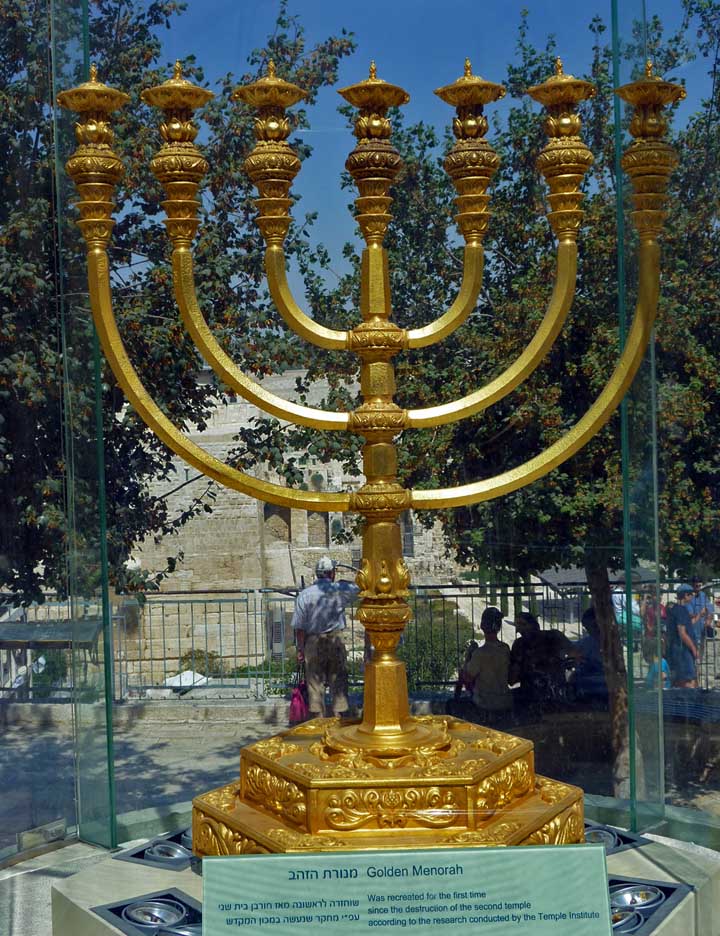
The mishkan / portable desert sanctuary

Remember that we are in a partnership with God here, and together, we might be able to move some hearts. We will have to rely on the generosity of the human spirit, in the context of the Godly relationship, for this to happen. Together, in this human-divine relationship, we can get there. We can achieve redemption; we can lift each other up through love. That is one lesson we might learn from Terumah.

~

Rabbi Seth Adelson

(Originally delivered at Congregation Beth Shalom, Pittsburgh, PA, Shabbat morning, 2/20/2021.)

Categories
Sermons

Watermelons and Seeds: Yitro 5781

A technique that my children learned in school about writing is the concept of “watermelon ideas” and “seed ideas.” (They did not teach me this when I was in elementary school.)

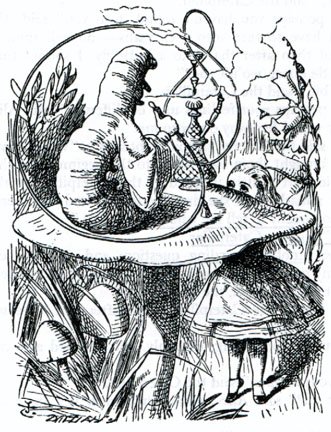
A “watermelon idea” is a big, general plot point without which the story will not make sense or hold together: “Alice takes a magical trip to Wonderland,” or “The rebels fight back against Darth Vader and the Empire.” Seed ideas are details that, if omitted, will not throw the whole story off: “While she is only a few inches tall, Alice receives advice from a curious caterpillar who is sitting on a mushroom and smoking a hookah,” or, “Luke learns Jedi techniques from a small, frog-like creature named Yoda.” Big concepts vs. small details. You can see why the watermelon and seeds analogy is useful and easy to understand.

The powerful moment that we read this morning in Parashat Yitro is the Sinai encounter between Israel and God. This is one big, huge watermelon sitting there in the middle of Shemot / Exodus.

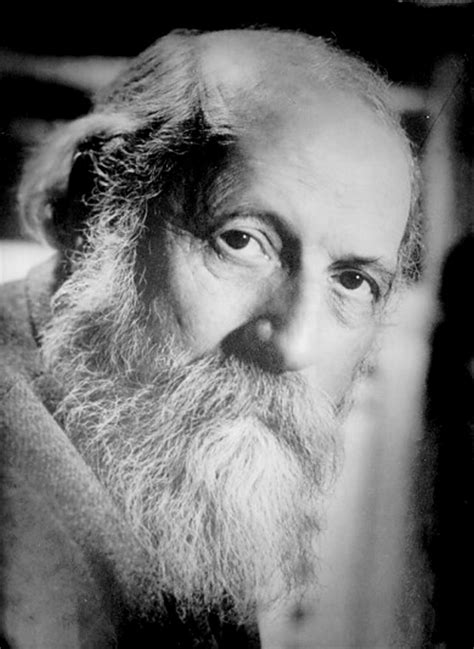
Dr. Martin Buber, one of the greatest modern Jewish philosophers, saw in the Sinai moment a Big Idea that was really just a bunch of little ideas. Akin to his understanding of God as being immediately present and unconditionally in touch with us at all times, the Mt. Sinai moment is an attempt to dramatize the infinitesimal communications with the Divine presence that we constantly have. In his monumental work, I and Thou, he wrote:

The mighty revelations to which the religions appeal are like in being with the quiet revelations that are to be found everywhere and at all times. The mighty revelations which stand at the beginning of great communities and at the turning-point of an age are nothing but the eternal revelation. But the revelation does not pour itself into the world through him who receives it as through a funnel; it comes to him and seizes his whole elemental being in all its particular nature, and fuses with it. 

Martin Buber

Buber’s point is that the Mt. Sinai moment is really NOT a watermelon, as the Torah describes; it is a myriad of seeds which are always with us.

Meanwhile, Buber’s colleague, Franz Rosenzweig, takes the Sinai moment in a different direction. “For Rosenzweig,” wrote my teacher Rabbi Neil Gillman, “The content of revelation is simply the fact of revelation, God’s entering into a unique relationship with Israel.” (Sacred Fragments, p. 23). In other words, this is a watermelon with no particular seeds, but its existence is essential to us.

Contemporary philosophy aside, our traditional understanding is that there are 613 seeds in this watermelon (not just the Top Ten identified in Yitro. There is a midrash that suggests that the fruit on the Tree of Knowledge of Good and Evil in the Garden of Eden was, of course, a pomegranate, since pomegranates have 613 seeds. I have never been able to actually confirm this figure, but it seems totally reasonable.)

And really, each of those mitzvot is only a starting point. But they have a shared intent: to lead us to a heightened awareness of each other, to highlight the holiness in all of our relationships, such that we are all pursuing the common good together

As you may know, that is how I understand the halakhic system. We fulfill the mitzvot of the Torah not just because it says so, but rather because that system creates a framework of holiness, through which we can improve our lives and the lives of those around us.

But let’s face it: the Torah is not just ONE watermelon. It’s lots of ‘em! And then there are other gourds: squash! Cucumbers! An occasional pumpkin!

OK, so at this point I have clearly beaten this metaphor to death. 

But the point is this: the Torah, meaning the Five Books of Moses, and Torah in its larger sense, that is, all of the teaching on the Jewish bookshelf, has its big ideas and its details. 

For example:

Watermelon: Zakhor et yom haShabbat lekaddesho. Remember the Sabbath day to sanctify it, as we read this morning. (Shemot / Exodus 20:8)

Seeds: (Well, really there are 39 sub-gourds for this one.) Do not kindle a fire on Shabbat; do have a joyous Shabbat meal with family

Watermelon: Ve-ahavta lereiakha kamokha. Love your neighbor as yourself. (Vayiqra / Leviticus 19:18)

Seeds: Give tzedaqah to charities that feed the hungry and house the homeless.

We could clearly play this game for a while. But I want to take this metaphor in a slightly different direction.

Watermelon: Al tifrosh min hatzibbur. Do not separate yourself from the community. (Pirqei Avot 2:5)

Seeds: You should belong to a synagogue and show up from time to time – not only to fulfill the mitzvah of prayer, but also to schmooze with friends, to welcome guests, to comfort the bereaved, and a whole bunch of other seeds.

And let’s face it: one of the biggest ideas of Jewish life is community. Qehillah. You may remember it as one of the three essential principles that I began my rabbinic journey with here at Beth Shalom five-and-a-half years ago. We are a communal people. Judaism is fundamentally a tradition that revolves around community. You cannot be Jewish alone. You might say that it is both an explicit message of the words of Torah, and an implicit message of the Sinai moment.

One of the biggest challenges that we have faced in this pandemic world is that we cannot gather. We cannot rub elbows over kiddush. We cannot meet new people while strolling through the halls of Beth Shalom, or waiting to pick up our kids after JJEP, or interacting with each other at a talk or a service or even at a shiv’ah house.

This is something that is really huge, that we are all missing right now. None of the various online platforms are satisfying substitutes for the chance encounters, the opportunities to make somebody else’s day with a well-chosen word, the simple pleasure of being around others, that make up the spectrum of human interaction. I feel this dissatisfaction on a daily basis. I feel this need. And I would not even really describe myself as a “people person.” (I’m more of an old-dusty-book person, truth be told.)

But I miss you. And I miss the yous, the yinz, whom I am not seeing, whom I do not even know. We have people every week who come to our online Shabbat services as visitors, and it kills me that I cannot personally greet you, shake your hand, engage with you briefly in meaningful conversation, give you a sense of what a convivial group of folks we are, and welcome you aboard our journey of learning and living Torah.

I miss the opportunities to raise the bar of holiness around me through the regular, personal interactions that make up our lives when we are not isolated from one another.

If the watermelon here is community, the seeds are the holy opportunities we have each day to make this world a better place through our own actions. And I am not speaking here specifically of tzedaqah, although of course that is important. I am, rather, talking about how we interact: about greeting others with a cheerful face (Pirqei Avot 1:15); about being ohev shalom verodef shalom, loving and pursuing peace (Pirqei Avot 1:12), about avoiding lashon hara, the evil tongue (Vayiqra / Leviticus 19:16-17).

Here’s a seed for you that could very easily be its own watermelon: Build a rail around your roof (Devarim / Deuteronomy 22:8). We are responsible for the safety of others. I was thinking of this on Thursday as I took a night-time stroll around the neighborhood. I try to get outside every day for a walk – it helps with my sanity as well as my physical health; sometimes I don’t get out until late. And I would estimate that about a third of the property owners in our shtetl of Squirrel Hill had shoveled their sidewalks after the snow that came earlier in the week. This is not only a city ordinance, but also a law from the Torah: we respect each other’s safety. We build railings on our roofs so people do not fall off; by interpolation, we shovel snow and make sure that our sidewalks are not icy, so people do not fall. But we also are careful with how we drive, and the products we sell, and of course the masks that we wear right now so as not to cause physical harm to others. All of these are variants on the “rail” seed: it is up to us as individuals to make sure that others are safe.

What is a community, if not a group of people who are committed to all of the little ways in which we respect, protect, and honor one another? 

Hevreh, while the vaccine roll-out has been off to a rocky start, I am hopeful that as the production ramps up, as new vaccines come available, as the county and the state figure out how to do this correctly, we will return to normal. We will be able to interact with one another once again; we will be able to go to the grocery store without feeling anxious; we will gather and sing and talk normally in this building and everywhere else.

And we will once again be able to act on all of those opportunities for elevating the holiness around us, to emphasize the seeds as we rebuild the sense of community.

~

Rabbi Seth Adelson

(Originally delivered at Congregation Beth Shalom, Pittsburgh, PA, 2/6/2021.)
Categories
Festivals High Holidays music Sermons

Sermon in Song: A Musical Journey Through Jewish Ritual Melodies – Shabbat Shirah 5781

Shabbat Shirah, the “Shabbat of Song,” is the day on which we chant Shirat HaYam (the Song of the Sea, which the Israelites chanted upon having crossed the Sea of Reeds on dry land, Shemot / Exodus 15:1-21) as well as Shirat Devorah (the song chanted by Devorah the Prophet following victory over the Canaanite commander Sisera, Shofetim / Judges 5:1-31). In honor of Shabbat Shirah 5781, I created this musical explanation of the nusah (prayer-chant melody), musical modes and motifs, and congregational melodies used in the synagogue and in home rituals throughout Jewish life.

Enjoy!

~

Rabbi Seth Adelson

(Originally chanted at Congregation Beth Shalom, Pittsburgh, PA, Shabbat morning, 1/30/2021.)

Categories
Sermons

Building Bridges of Prayer – Bo 5781

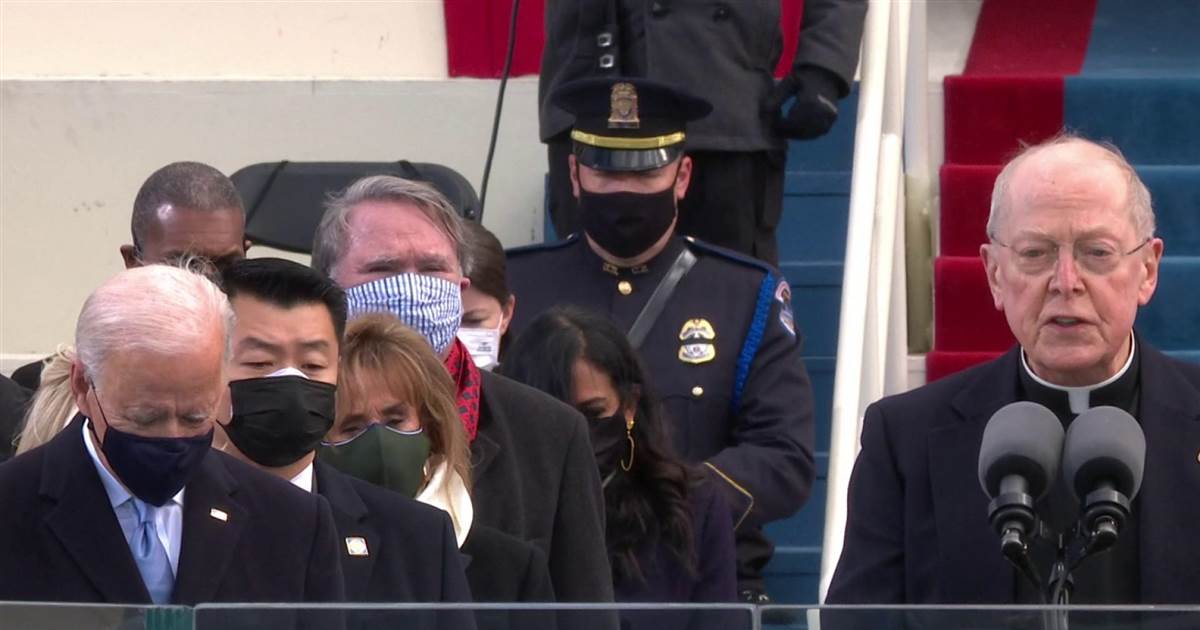
The 46th president of the United States, just before he was sworn in on Wednesday, did something remarkable: he prayed. As his predecessor boarded Air Force One to head out of town, Joe Biden went to the Cathedral of St. Matthew the Apostle in Washington, presumably to daven (pray) the Catholic equivalent of shaharit / the morning service.

As you know, I am a big fan of prayer. I do it every day, and I am convinced that tefillah / prayer is good for you. It is the original Jewish form of mindfulness meditation. Tefillah centers me; in the morning it gets me ready to face the day; in the evening it is a gentle, reflective conclusion, an opportunity to check in with myself. 

I am convinced that if we all did just a little more prayer, if we all took reflective moments more frequently, our world would be a better, kinder, gentler, more united world. And of course that applies to all of us – not just the Jews, of course, or the Christians, but all of us, and even those who do not belong to a particular faith tradition. Prayer, whatever form it takes or whatever you call it, has the potential to bring us all together, to build bridges.

The television coverage that I saw on Wednesday morning did not actually show the president-elect in prayer, just the exterior of the church. Nonetheless, to see this very public, yet also very private moment of prayer brought tears to my eyes.

A little while later, Father Leo O’Donovan, a Catholic priest, gave the invocation before the swearing-in, and he said the following:

There is a power in each and every one of us that lives by turning to every other one of us, a thrust of the spirit to cherish and care and stand by others, and above all those most in need. It is called love, and its path is to give ever more of itself. Today, it is called American patriotism, born not of power and privilege but of care for the common good – “with malice toward none and with charity for all.”

In Father O’Donovan’s words, I hear the yearning to be once again “one nation, under God,” acknowledging the love and faith that should bind us together as a society in pursuit of the common good. 

And so we find ourselves this week in perhaps a more prayerful stance as a nation, and it is absolutely serendipitous that we read from Parashat Bo this morning, including arguably the most essential items in the story of yetzi’at Mitzrayim, the Exodus from Egypt.

One of the key features of the Exodus narrative is that the freedom, the redemption from slavery that Moshe and the Israelites seek includes as a fundamental principle the ability to worship the one true God. By definition, slavery (in Hebrew, עבדות avdut, from the shoresh עבד, to serve), precludes service to God. Integral to that freedom for the Israelites is the license to worship God, the autonomy to be a servant of faith rather than a servant of other people. 

Almost every time, when Moshe approaches Pharaoh to ask for freedom, he says something similar to what we find up front in Parashat Bo, Shemot / Exodus 10:7: שַׁלַּח֙ אֶת־הָ֣אֲנָשִׁ֔ים וְיַֽעַבְד֖וּ ה’ אֱ-לֹהֵיהֶ֑ם Shalah et ha-anashim veya’avdu et Adonai eloheihem. Let the people go to worship the Lord their God! 

Freedom, as the Torah sees it, includes that holy relationship with the Qadosh Barukh Hu.

And so too today: building a better future in our very divided country necessitates God’s presence in our lives, however we understand that presence.

Now, do not go reading this as a screed against atheists, or a repudiation of the separation of church and state. On the contrary: we need a greater sense of shared faith in this country, among the diverse people of this nation, because, as Father O’Donovan suggested, that will, through love, enable us to build a better nation, infused with a unified pursuit of the common good. As servants of God who see the Divine spark in each other, who see our shared humanity, we can and should work together to build bridges, to create a stronger, more resilient society and a healthier democracy. Even those who reject theology outright can, I hope, get on board with seeking the common good through shared love of humanity, of our fellow citizens.

And a key piece of this sense of shared love is interfaith cooperation.

You may know that I grew up in an area with relatively few Jews. Until I went to college, virtually all of my friends and neighbors and classmates were Christian, mainline Protestants and Catholics, and my family was among a handful of Jewish families in my home town. We all knew each other, and I think it is fair to say that, to some extent, we the Jews felt like outsiders. Not that our neighbors treated us badly or as enemies, but there was definitely a mutual awareness of our difference. Sometimes this awareness bred resentment, as, for example, when well-meaning Christian friends failed to understand that we did not celebrate Christmas. It was sometimes hard to see past this, given some of the history of Christian/Jewish relations. There was a time in my life when I would not have wanted to listen to the words of a Catholic priest giving an invocation at an official gathering.

My sense is that things are somewhat different today; the religious landscape in America has changed. Many of us now look at each other across religious divisions as allies. Yes, of course there are issues that divide us. But what we who are partners in faith share is much greater, and much more powerful.

Rabbi Jeremy Markiz and I were at a meeting on Thursday of the Priest-Rabbi dialogue, a discussion between local Catholic and Jewish clergy which meets from time to time to discuss interesting theological issues. At this meeting, we read a statement from 2002 produced by a group of influential North American Christian scholars attempting to reframe the historically fraught relationship between Jews and Christians. Among the principles expressed in this document were, “God’s covenant with the Jewish people endures forever,” and, “Ancient rivalries must not define Christian-Jewish relations today.”

Our discussion broke toward the points of disagreement among Christian theologians and within the Jewish world about some subtleties of our beliefs. But the greater message is well-taken: today we are allies in the struggle against disorder, disunity, and distrust. We are united in facing the challenges of poverty and racism, hunger and homelessness, mental health and addiction and isolation. 

I heard a podcast this week from the Pardes Institute of Jewish Studies in Jerusalem about Parashat Bo, taught by Pardes teacher Tovah Leah Nachmani, about emunah / faith. She pointed to a commentary by Ramban, aka Nachmanides, who lived in 13th-century Spain. In surveying Parashat Bo, Ramban points to the symbols of emunah found in this parashah: the annual observance of Pesah / Passover that we read this morning, and the wearing of tefillin (Ex. 13:16, the last line in the parashah). Ramban suggests that these symbols (the Hebrew term is ot, sign) of faith are meant to remind us of the role that God plays in our lives. There will not be an Exodus in every generation, says Ramban, but every year when we celebrate Pesah we remember that power. The tefillin that we put on every morning are an ot, a sign of the binding promise that God has made with us to help us live better lives through the framework of mitzvot.

Ms. Nachmani expands on Ramban’s line of thinking to include Shabbat and regular tefillah, such that we have daily, weekly, and annual signs before us: The weekly reminder of Shabbat, also described as an ot (beini uvein benei Yisrael, ot hi le’olam – Ex. 31:17) gives us a taste of the true peace that will someday come if we commit to the common good. 

Faith and freedom are intertwined; we must keep those symbols of faith in front of us; we must use them to remind ourselves to reach out to our neighbors in love. We must also remind ourselves that we have partners, who do not celebrate Pesah or wear tefillin, yet who also have faith; these signs of faith can also lead us to dream about what we can accomplish when we are all praying together.

We remembered this past week the strength of the Reverend Dr. Martin Luther King, what he accomplished, inspired by God and the words of the biblical prophets. Consider that Rabbi Abraham Joshua Heschel had the vision to reach out to and march with Dr. King as a partner in faith, at a time when many of us were not thinking far beyond our own community. 

Our future depends on building bridges of prayer and bridges of emunah / faith. Our Christian, Muslim, Hindu, Sikh, and Buddhist friends and neighbors are all interconnected with us; we may differ on how we approach or understand the Divine and the role that the holy relationship plays in our lives, but we mostly agree on the outcome: that we can build a better world through shared prayer, faith, and love.

~

Rabbi Seth Adelson

(Originally delivered at Congregation Beth Shalom, Pittsburgh, PA, Shabbat morning, 1/23/2021.)

Categories
Sermons

One Nation, Under God? – Va-era 5781

I am a patriotic American. I was born and raised in this country, as were my parents and three of my grandparents. Members of my family have served in the armed forces, going back to the Spanish-American War. I am grateful for everything that the United States of America has given me, and I am particularly grateful that this nation has been a haven for my immigrant forebears, and a beacon of democracy and freedom throughout the world for nearly two-and-a-half centuries.

I celebrate our nation’s birthday on July 4th. I observe Thanksgiving religiously (well, a vegetarian Thanksgiving). I drive an American car. In elementary school, I pledged my allegiance every day to our flag and our republic, invoking “one nation, under God, indivisible, with liberty and justice for all.”

I am, as I am sure you are, deeply disturbed by the attempted insurrection ten days ago by a mob of fellow citizens, people motivated by hate and fueled by lies. As more information has filtered out to us about who was there and what they did, I am increasingly shocked and frightened. This attack does not seem to have been planned in any organized way, but many extremist groups, some of whom are openly racist and anti-Semitic, clearly encouraged their adherents to come to Washington with the intent to cause some kind of mayhem, certainly to halt the wheels of constitutional process, and perhaps even to murder our lawfully-elected representatives.

January 6, 2021

I am sure you have heard about preparations in state capitals around the country for violence in the coming days. The Pennsylvania capitol building will be closed for two days next week. Washington is boarded up, filled with National Guard troops, and the National Mall will be closed on Wednesday as the new administration begins.

I was grateful but discomforted by a security message sent out by the Jewish Federation of Greater Pittsburgh; while I am comforted to know that the Federation is thinking about our security, who would have imagined that the inauguration of a president would merit such a message about potential threats?

You might forgive me for wondering, “Where am I? Where are we? And how did we get here?”

***

Ladies and gentlemen, democracy has been good for the Jews. We do not have to dig too deeply into our history to see how other forms of government, including monarchy, feudalism, communism, and of course fascism have not been good for the Jews. The United States Constitution and its balance of powers has protected us and enabled us to thrive here in a way that had never happened before in our history. My great-grandparents all came here from Eastern Europe seeking a better life, in a place where they would not be constantly struggling against the native anti-Semitism built into the society of the Pale of Settlement from which they fled.

And they found it here, where the free exercise of religion is enshrined in that Constitution, where they could participate in the democratic process, where they could make a living and make a life without being limited by the system, where they were not immediately suspect because of their ethnic background.

Rabbinic text tells of a fraught relationship with government. If we look at Pirqei Avot, for example, a book of the Mishnah from the 2nd-century CE that documents early rabbinic wisdom, we find contradictory statements:

Pirqei Avot 2:3

הֱווּ זְהִירִין בָּרָשׁוּת, שֶׁאֵין מְקָרְבִין לוֹ לָאָדָם אֶלָּא לְצֹרֶךְ עַצְמָן. נִרְאִין כְּאוֹהֲבִין בִּשְׁעַת הֲנָאָתָן, וְאֵין עוֹמְדִין לוֹ לָאָדָם בִּשְׁעַת דָּחְקוֹ:

Be careful [in your dealings] with the ruling authorities for they do not befriend a person except for their own needs; they seem like friends when it is to their own interest, but they do not stand by a person in the hour of his distress.

And then, Pirqei Avot 3:2:

רַבִּי חֲנִינָא סְגַן הַכֹּהֲנִים אוֹמֵר, הֱוֵי מִתְפַּלֵּל בִּשְׁלוֹמָהּ שֶׁל מַלְכוּת, שֶׁאִלְמָלֵא מוֹרָאָהּ, אִישׁ אֶת רֵעֵהוּ חַיִּים בְּלָעוֹ.

Rabbi Hanina, the vice-Kohen Gadol said: pray for the welfare of the government, for were it not for the fear it inspires, every person would swallow his neighbor alive.

So on the one hand, the government is distrusted by some rabbis because politicians are self-serving, and will choose their needs over yours. But on the other hand, some understood the essential need for government, in that its primary role is to protect us from one another.

The early rabbis also instituted the principle of “dina demalkhuta dina” – the law of the land is the law, meaning that laws imposed by a secular government must be observed by Jews alongside our own halakhah / Jewish law. The word, “malkhuta” is Aramaic for “the kingdom,” because of course that was the sort of jurisdiction under which the Jews lived until the last few centuries. The implication is therefore that we are subjects of a flesh-and-blood king similar to the way we are subjects to malkhut shamayim, the kingdom of heaven. You may know that there is even a berakhah for seeing a human king:

בָּרוּךְ אַתָּה ה אֱ-לֹהֵינוּ מֶלֶךְ הָעוֹלָם, שֶׁנָתַן מִכְּבוֹדוֹ לְבָשָׂר וָדָם

Praised are you, Adonai our God, who rules the universe, who has given glory to flesh and blood.

And, to be sure, America, with no king and no kingdom, and with the principles of separation of church and state and the peaceful transfer of power, has been good for the Jews. Mostly.

And hence my great concern. Has this sense of security come to an end? Certainly, many of us have been asking this question since October 27th, 2018.

****

One nation under God. 

One of the highlights of Parashat Va-era is what is considered to be the textual basis for the four cups of wine during the Pesah seder, the following verses, up front in the parashah:

לָכֵ֞ן אֱמֹ֥ר לִבְנֵֽי־יִשְׂרָאֵ֘ל אֲנִ֣י ה֒ וְהוֹצֵאתִ֣י אֶתְכֶ֗ם מִתַּ֙חַת֙ סִבְלֹ֣ת מִצְרַ֔יִם וְהִצַּלְתִּ֥י אֶתְכֶ֖ם מֵעֲבֹדָתָ֑ם וְגָאַלְתִּ֤י אֶתְכֶם֙ בִּזְר֣וֹעַ נְטוּיָ֔ה וּבִשְׁפָטִ֖ים גְּדֹלִֽים׃ וְלָקַחְתִּ֨י אֶתְכֶ֥ם לִי֙ לְעָ֔ם וְהָיִ֥יתִי לָכֶ֖ם לֵֽא-לֹהִ֑ים וִֽידַעְתֶּ֗ם כִּ֣י אֲנִ֤י ה֙ אֱ-לֹ֣הֵיכֶ֔ם הַמּוֹצִ֣יא אֶתְכֶ֔ם מִתַּ֖חַת סִבְל֥וֹת מִצְרָֽיִם׃

Say, therefore, to the Israelite people: I am the LORD. I will free you from the labors of the Egyptians and deliver you from their bondage. I will redeem you with an outstretched arm and through extraordinary chastisements. And I will take you to be My people, and I will be your God. And you shall know that I, the LORD, am your God who freed you from the labors of the Egyptians.

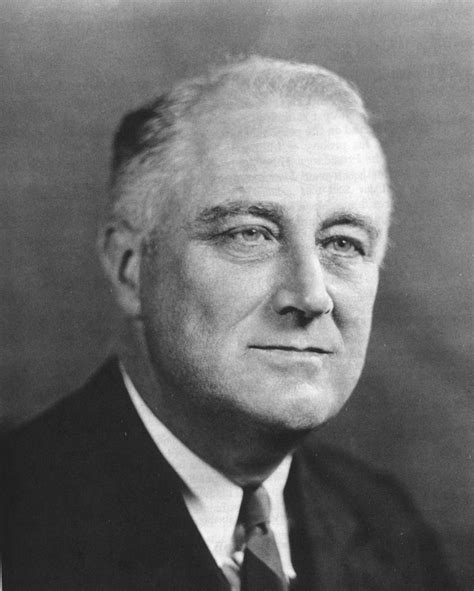
Those four promises of deliverance, often interpreted as physical, political, financial, and spiritual, have been compared to the Four Freedoms promised by President Franklin Delano Roosevelt in his State of the Union address in 1941. Describing them, he said:

The first is freedom of speech and expression–everywhere in the world.

The second is freedom of every person to worship God in his own way–everywhere in the world.

The third is freedom from want–which, translated into world terms, means economic understandings which will secure to every nation a healthy peacetime life for its inhabitants – everywhere in the world.

The fourth is freedom from fear — which, translated into world terms, means a world-wide reduction of armaments to such a point and in such a thorough fashion that no nation will be in a position to commit an act of physical aggression against any neighbor — anywhere in the world.

FDR

For American Jews, our parents and grandparents, listening to this on the radio, concerned for the welfare of their cousins in Europe at that moment, these promises must have seemed deeply reassuring. Maybe some of us actually connected Roosevelt’s words with principles in our own tradition.

Maybe some of us thought, at that time, that “one nation, under God, indivisible” was a principle that our nation’s leaders would always hold dear. Maybe we thought that this new home, far away from the ancient hatreds of the Old Country, would always protect us. Maybe, when we sat at our seder tables and invoked God’s promise, we saw ourselves as having come forth successfully from Egypt, and here we are in di Goldene Medine, the golden country of America, dining in comfort and enjoying our Four Freedoms, washing them down with Manischewitz? Maybe this is what it meant to be one nation, under God? 

Maybe. But today’s reality seems somewhat less promising.

Ladies and gentlemen, who is the patriot?

Is it the one carrying the banner of 1776, clinging to conspiracy theories and willing to support violent insurrection?

Or is the one who understands that vehement disagreement is a necessary piece of democracy, but racism and anti-Semitism are not?

To be one indivisible nation under God, we must as a nation fulfill the mitzvah found in Parashat Mishpatim (Ex. 23:7): Middevar sheqer tirhaq. Keep your distance from falsehood, as I said last week before the Prayer for Our Country.

Lies will unravel America. Living in a false reality will not solve any of the very real problems that we face, the ones that have been masked and/or magnified by the pandemic: addiction, hunger, homelessness, depression, sexual and domestic violence, homicide, and so forth. Placing our hopes in the falsehoods of QAnon or extremist news platforms will not cure all our ills. These challenges are not caused by immigrants, or socialists masquerading as moderate Democrats, or the Deep State.

On the contrary: government, good government that is focused on the needs of the people, that is dedicated to truth and justice, that guarantees our freedoms and keeps the peace, that governs with just, well-considered laws and is committed to public health, security at home and abroad – this is good for America, and good for the Jews.

Let us continue to pray for a peaceful transition, that those who engaged in violent insurrection are brought to justice, and that we may continue enjoying Roosevelt’s, and the Torah’s Four Freedoms.

~

Rabbi Seth Adelson

(Originally delivered at Congregation Beth Shalom, Pittsburgh, PA, Shabbat morning, 1/16/2021.)

Categories
Sermons

What Matters Most – Vayhi 5781

In the flurry of year-end stories (that is, the secular year; our year of 5781 began back in Tishrei, in the fall), a whimsical bit of news floated out of my radio a few days ago, about a curious clock tower in Scotland. The clock in the Balmoral Hotel in Edinburgh, which looms over the Waverley train station, traditionally runs three minutes fast, in an apparent effort to help people get to their trains on time. But every year, on December 31st, they set the clock back three minutes so that it will chime midnight at the appropriate time, and then set it forward again three minutes. 

The Balmoral Hotel, Edinburgh, Scotland

This year, the management decided not to set the clock back, so that it would chime three minutes early, thus making 2020 apparently three minutes shorter than a usual year. And, as we all know, the past year was hardly “usual.”

As silly as this story is, I must say that there is something heartening about it. It speaks about the optimism we have for the future. Three fewer minutes of 2020, three extra minutes appended to 2021. (Of course, for 5781, it’s a wash.) 

But given how precious our time is, how valuable the holy potential of every moment, those three minutes remind us, in some sense, to keep our wits about us as we remember what matters most: life.

Over my “stay-cation” during the last two weeks, I was able to tune into another Conservative synagogue’s streamed Shabbat services. I tried for a second one, but although I set up Zoom before Shabbat, somehow I got booted off after Kabbalat Shabbat, and so was not able to see Shabbat morning – perhaps you have experienced this yourself. (The Conservative movement’s teshuvah / rabbinic guidance on the use of online services during the pandemic actually mandates that one set up the computer before Shabbat and minimize touching it during Shabbat or Yom Tov, but of course that brings with it the inevitable technological pitfalls.)

But the services that I did see, from one of the largest Conservative synagogues in America, was a highly-polished production, with musicians and a choir and multiple camera shots and a director and technical staff and two rabbis and a cantor and a handful of pre-arranged visitors participating from home and the whole nine cubits. The number of households streaming peaked out at over 1,100.

My reaction to such a production was not necessarily to daven, but to sit back in awe of the level of logistical sophistication, and, of course, money, required to make that happen. And of course I could not help but to compare it to our own online services, which, by comparison, are still in the electronic Bronze Age.

But I must say that I’m happy with what we are doing, even though it’s not perfect, or even close to approximating what a synagogue service should feel like. And, by the way, the vast majority of respondents to our High Holiday survey also indicated that they were pleased with those services. Of course, I know that everybody right now is giving kaf zekhut, that is, tipping the scales in our favor given the circumstances (see Pirqei Avot 1:6). 

We all know that this is an insufficient substitute for actual synagogue services, and we all look forward to the time (bimherah beyameinu / speedily in our days) we will be able to gather again for tefillah / prayer, for kiddush, for schmoozing, for JJEP and meetings and social gatherings and Hod veHadar and learning together and yes, even shiv’ah and for all the communal things that we do.

But right now, we are all in exile. (Ironic, considering that most of us are spending a lot more time at home…)

The widely-anticipated post-holiday virus surge is about to take off; the vaccine distribution is plodding along, although I am very pleased to see that many of our members who work in the medical field have already received it, and there is light at the end of what looks like a very long tunnel. But we are not there yet, even though we can see the Promised Land from the depths of Egypt: Min hametzar qarati Yah; from the narrow place we continue to call out to God (Psalm 118:1).

Parashat Vayhi reminds us that Ya’aqov / Jacob ends his life in exile! So too Yosef. But they both live, and that is what matters most. The parashah opens with:

וַיְחִ֤י יַעֲקֹב֙ בְּאֶ֣רֶץ מִצְרַ֔יִם שְׁבַ֥ע עֶשְׂרֵ֖ה שָׁנָ֑ה

Vayhi Ya’aqov be-eretz mitzrayim sheva esreh shanah

Ya’aqov lived in Egypt for 17 years.

Vayhi Ya’aqov. Ya’aqov lived. The text does not say, Ya’aqov suffered, or Ya’aqov was miserable and depressed because he was in exile. It just says, he lived. OK, so perhaps he was grateful to be alive, having escaped the famine in Israel and having been ultimately rescued by his estranged son Yosef, whom he thought had been killed by a wild beast years before. Maybe he was not miserable and depressed because he was surrounded by his large and prolific family, and they lived freely and happily with the blessing of the good Pharaoh.

We do not know. But embedded in that word, vayhi, packed into a common grammatical form, is a suggestion of both past and future. Known to grammarians as the “vav consecutive,” it is a phenomenon of Biblical Hebrew that in many circumstances, the letter vav in front of a verb reverses the mood: perfect becomes imperfect; imperfect (as we have here) becomes perfect. 

(It is not entirely accurate to say that this is a question of past vs. future. While Biblical Hebrew does have past, present and future contexts, the verbs do not really have “tense” the way that Modern Hebrew does. But that’s a grammar lesson for another day.)

Vayhi Ya’aqov. Ya’aqov lived: The vav consecutive turns the imperfect, what has not yet been completed, into the perfect, what is complete. The imperfect form without the vav consecutive, yehi, should be literally understood as “he has not completed living.” With the vav in front of it, it reads, vayhi: he completed living. He lived. 

And yet, the incomplete is incorporated into the complete. He lived, and he will yet live. Embedded in the past is the future. A contradiction, perhaps.

Ya’aqov must have known that his future was found in his past. He was, after all, renamed Yisrael, the name later applied to the land promised to him and his parents and grandparents. He must have understood that, although he lived the end of his life and died in exile, that his children and grandchildren would return. He lived, and yet he will live.

And so too the contradiction in our current moment: Vaccines are being administered, and yet the virus is spiking. The end of the worldwide pandemic is near, but we must continue wearing masks and social distancing and refraining from gathering. Normal living is on the horizon, but the current anxiety is not yet abated.

We have lived, and we will live. And we will do the best we can under these circumstances. We will judge 2020 – ourselves, our friends and family, our institutions – with kaf zekhut, the benefit of the doubt. We will mourn those whom we have lost, and who we will lose, and those of us who are still safe and healthy will be grateful for our lives.

Exile will come to an end. We will come forth from Egypt. And we will continue to sanctify every moment, every three-minute increment of holiness. 

I am not one for secular New Years’ resolutions. We made our resolutions back at the beginning of Tishrei, the resolution to recommit to our tradition, to improve ourselves, our behavior, our relationships and our world through the framework of halakhah, the spiritual fulfillment of Torah. One of the names for Rosh Hashanah is Yom HaZikaron, the day of remembrance, because those are days on which we remember that the framework of Torah is our Etz Hayyim, the Tree that brings us life.

But if I were, I would resolve right now to keep living: to remember family and friends and to be in touch with them, to tell them how much you love and appreciate them. To savor every minute as best we can. To not succumb to the feelings of hopelessness or anxiety that many of us surely feel. To look to the future, even as we grieve for what, and who, we have lost. Here is an action item: make it a point to reach out to a distant friend every day. We are all in this together, and everybody is grateful for the call.

That is, perhaps what distinguishes our tradition from those cultures that celebrate the secular new year. A new year is not merely an excuse to party with abandon; it is an opportunity to look back and forward, to acknowledge and be grateful that we are still here, to remember that our history has its high and low points, and that the coming year will surely include both.

We the Jews have survived far greater challenges than this; we have been through exile and dispersion, persecution and genocide. We can surely manage a few more months of wearing masks and staying away from each other. And the way that we have always done that is to remember what matters most: life.

~

Rabbi Seth Adelson

(Originally delivered at Congregation Beth Shalom, Pittsburgh, PA, Shabbat morning, 1/2/2021.)

Categories
Sermons

No Easy Answers – Shabbat Hanukkah 5781

OK, so let’s face it: Hanukkah is a strange holiday. Yes, it is the best known and the most celebrated in the Jewish world. Yes, it is joyous and fun and a rollicking good time when it is cold and dark outside.

But Hanukkah is also a study in contrasts:

  • Is it about the victory of the Maccabees, a small, scrappy army of Judeans, over the Seleucid Empire? Is it about throwing off the yoke of a huge imperial power and denying their Hellenistic culture and influence, according to the story found in the non-canonical Books of the Maccabees? 
  • Or is it about the rededication of the Beit HaMiqdash, the Temple in Jerusalem and the small vial of oil that miraculously lasted for eight days, as mentioned centuries later in the Talmud? 
  • Is it actually a holiday of some stature, or a minor observance that arguably distracts from the really important holidays of the Jewish year, like Shavu’ot (one of the three pilgrimage festivals, which celebrates the receiving of the Torah at Mt. Sinai)? 
  • Is it merely a weak excuse for American Jews to placate their children by providing a Christmas-like experience, a feeble, consumerist attempt to make Judaism look appealing in a sea of tinsel and holly? 
  • Is it a reminder to illuminate the world with our values, the values of freedom and Torah, or a mere celebratory trifle, a lightweight among weightier Jewish holidays?

There is no reason, of course, why it cannot be all of these things.

Some of you tuned in last week to hear me speak about the messages delivered by angels to Ya’aqov, and in particular his receiving the new name of Yisrael. We are Yisrael, the ones who struggle with God and with people. I offered that, while it might be nice every now and then to get a direct message from God, brought to us by a mal’akh, an angel that is a designated Divine messenger, generally we do not receive heavenly messages.

On the contrary, we receive so many other types of messages that it is impossible to tell which ones may be Divine in origin and which are merely human. I can remember a handful of times in my life in which a voice in my head told me clearly to do something, and I cannot be entirely sure where it came from. 

But Judaism does, in some sense, rely on our tradition to give us signals from the Qadosh Barukh Hu. Dr. Louis Finkelstein z”l, Chancellor of the Jewish Theological Seminary, is known to have said, “When I pray, I speak to God. When I study, God speaks to me.” We understand that in order to hear God’s voice, to find those messages, we have to dig deep into the texts of Jewish life: Talmud, Torah commentaries, tefillah, and so forth. 

And even in the middle of all that text, all of that traditional beit-midrash-style give-and-take of argument and subtlety and nuance among the jumble of Hebrew and Aramaic, we still may not receive the message.

Because, you know what? There are no simple answers.

There are no simple answers to the hard questions, the questions to which we might actually need a Godly answer. There are no easy answers to the kinds of questions that Yisrael, those who struggle with God, might ask, questions like:

  • If God is all-powerful and God is all good, then why are we suffering from a worldwide pandemic, in which thousands of people around the world are dying every day? Why were the Nazis allowed to murder so many people? 
  • If God wants us to treat one another with respect, why is there racism found within the human heart? Why do some upright, honest people suffer, while some despicable people thrive?
  • Where did we come from?
  • Is God listening to us at all? Does God even have ears with which to listen?
  • What is Hanukkah REALLY all about? A miracle, a successful uprising, or defense of culture and tradition?

Sarah Hurwitz is a former speechwriter for Michelle Obama. Back in Tishrei of 5780 (that is, around Rosh Hashanah in 2019) she wrote an article for the Wall Street Journal about her own rediscovery of the complexity of Judaism as an adult, titled Religion for Adults Means Embracing Complexity

Ms. Hurwitz begins by explaining that, although she grew up going to synagogue and celebrated becoming a bat mitzvah, the words of prayer and our customs and songs and stories and texts were effectively meaningless to her, and so she rejected them. And although she came back for High Holidays year after year for decades, she would only resent the apparent simplicity of the message of those days: good deeds put you in the Book of Life; sin leads to the Book of Death, so you better repent.

And then, at age 36 (certainly a suitable age – double hai, twice the numerical value of the Hebrew word for “life” – for discovering Judaism), she decided to take an Introduction to Judaism class, and found what she had been missing in her Hebrew school education: complexity.

She points out that not only does the Untaneh Toqef prayer ask, מי יחיה ומי ימות, who shall live and who shall die, but also, מי ינוח ומי ינוע, who shall be calm and who shall be tormented, and מי יעני ומי יעשר, who shall be poor and who shall be rich, and of course that those descriptors can be understood as metaphor. She learned that this prayer draws heavily from the book of Iyyov / Job, which wrestles with theology until God comes along in a whirlwind and more or less asks Iyyov, who are you to challenge Me? What do you know of the complexity of My world? (Job 38).

Ms. Hurwitz realized that she had never understood this because, since she stopped her Jewish education at age twelve and never proceeded any further, she was never in a situation where she could actually wrestle with this complexity, with the richness of the Jewish bookshelf, and the powerful words of wisdom therein. We cannot really teach the many layers of meaning in Untaneh Toqef, or in the Amidah (the standing, silent prayer recited 3x/day), or even in something as simple as Modeh Ani (the first words that should leave our lips every morning, acknowledging gratitude for life), to children; ours is a tradition that was created, maintained, and carried by adult Jews for thousands of years. Different layers, different strands of our tradition are meant to speak to us at different stages of our lives. That is the glory of religion in general: it is neither pediatric nor geriatric; it is both, and everything in-between as well.

That is why, and I know you’ve heard me say this before, we read the Torah every year; the same Torah. That is why daily tefillah (prayer) is mostly the same each day and from week to week, because every time we turn back to these words, we unlock something new; we connect them to a new part of ourselves as we grow and change and mature. There is no end to the perspectives we gain each time we return.

Ms. Hurwitz writes,

If someone told us that they found their sixth-grade science or history classes to be dull and overly simplistic, and thus entirely stopped learning about those subjects, we would be appalled. But that is precisely what many of us do with religion, including plenty who continue to show up at our places of worship and go through the motions. We’ve rejected the kiddie stuff but never bothered to replace it with an adult version.

And that’s a real loss, because mature forms of religion don’t traffic in simplistic or implausible answers, but push us to ask the right questions. Not just “what does it mean to be happy or successful?” But “what does it mean to lead a truly ethical life? To be part of a community? To serve something greater than one’s self?”

And therein lies the challenge for us today, even as adults who appreciate and value our tradition. When the minhag / custom of today is to express yourself in 280 characters or less, or with a photo and a brief caption, how will we possibly capture that complexity? How will we relay the many layers, the multi-dimensional perspectives and thoughts and expressions of grief and joy and solitude and raucousness?

How do we pass on the value of Torah, in all its messy, organic glory and open-ended, occasionally inscrutable wisdom, when we boil a holiday experience down to lighting candles and eating fried foods? How do we teach the wonderfully esoteric items of Jewish culture, as distinct from ancient Greek culture, when we can barely get past sheheheyyanu?

What if, particularly during this COVID Hanukkah when we are all stuck inside with our families, we set aside a few minutes, over latkes, to discuss the possible parallels between the Maccabees’ world and our own? Can we acknowledge our assimilated, and yet connected way of living today? Can we face the thorny questions around Jewish identity in the context of secular America? Can we talk about the power and holiness in our ancient customs, our traditions, and how we need them to help make our lives better today?

We need to dig deeper, to ask more questions, to continue to struggle. We need to, as Ms. Hurwitz puts it, to do the seeking, the learning, and the grappling ourselves. The table is set before you, not just with latkes and sufganiyot (jelly dougnuts), or for that matter haroset and maror (symbolic foods of Passover) or apples and honey (Rosh Hashanah) or cheesecake (Shavu’ot), but with an impossibly rich range of appetizers, sumptuous main dishes, and multiple courses of wine. There are no easy answers, but within that smorgasbord of Jewish life and text there is much of value, and finding it is more than half the fun. It is all there. Now come and learn.

Shabbat shalom, and hag urim sameah (Happy Festival of Lights)!

~

Rabbi Seth Adelson

(Originally delivered at Congregation Beth Shalom, Pittsburgh, PA, Shabbat morning, the second day of Hanukkah, 12/12/2020.)

Categories
Sermons

Count Your Berakhot – Vayyetze 5781

On this Shabbat haHodayah, Shabbat of Thanksgiving, I’m going to state the obvious: many of us might feel right now that there is not a lot to be thankful for in the world. 

The virus has taken off for what appears to be a colossal third wave, which, our Coronavirus Task Force authorities tell me, will likely not peak until (get this!) February. Many people were unable to gather with friends and family for the traditional American turkey seder last week. Even the seasonal Black Friday tradition of waiting in long lines to buy the latest cool seasonal gift was disrupted by this tiny, not-quite-living yet deadly thing. Unemployment and economic devastation continue.

And yet, Jewish tradition mandates that we offer words of gratitude every single day. 

Modeh ani lefanekha, we say every morning: Grateful am I before You. We put the modeh, the gratitudinous verb first, because that should be the first thing out of our mouths every morning. And Modim Anahnu Lakh, “Grateful are we to You… Rock of our lives and Shield of our salvation… for the miracles you perform for us all day long.” We have already said that twice this morning and will do so two more times in a few minutes.

There is a principle out there in Jewish life that we should say 100 berakhot / blessings a day. It is actually not so hard to reach that number if you recite the words of shaharit, minhah, and ma’ariv; just the three recitations of the Shemoneh Esreh (the Amidah) in those daily services account for 3*19 = 57 berakhot alone.

That’s right: we count blessings. Count your berakhot, as the old saying goes. 

(I’m pretty sure that expression is a translation of a Medieval Hebrew slogan found on a fragment in the Cairo genizah adopted from a Babylonian Jewish Aramaic saying derived from ancient Akkadian texts, perhaps with a Sumerian origin.) (That’s a little humor for all you Biblical scholars out there.)

Count your blessings. Ironically, when we say that, we are implicitly remembering the curses! You count your blessings when you know that they are interspersed with misery and failure, because of course it is the misery and the failure that remind us how valuable, and how needed the blessings are.

In the beginning of Parashat Vayyetze, our hero Ya’aqov is fleeing from his brother Esav, from whom he has effectively stolen his father’s powerful blessing, the one reserved for the first-born child, which Ya’aqov is not. And he comes to rest for the night at a place called Luz, a place where he has a dream of mal’akhim – heavenly messengers – climbing up and down a ladder.

There is a midrash about the mysterious town of Luz, which pops up here and there in the Tanakh. The midrash says that Luz was a place that was only accessible by a secret cave entrance that the Mal’akh haMavet, the Angel of Death could not find, so people there lived forever. They only left when they were tired of living, and upon leaving the city walls, the Mal’akh haMavet would take them.

But of course, I think we can understand why living forever is not really a blessing. 

It must be something like hyperthymesia, of which I have spoken of before, which prevents the afflicted person from forgetting. He or she remembers every single thing: what you had for lunch on May 28th, 1997, what pair of socks you wore the next day, and the really, really embarrassingly stupid thing you said in public the day after that. The ability to forget is actually an under-appreciated blessing.

We count blessings that we see in opposition to, or delineating between the not-so-good parts of our lives. For example, being able to open our eyes in the morning, and to behold the morning light, those are berakhot / blessings that we actually recite every morning. During a pandemic, remembering these simple things every day can be truly powerful.

But that does not mean that we should ignore, or forget, the pain and suffering in the world or in our own lives. 

I recently came across a provocative piece in the online Jewish magazine Mosaic by Daniel Gordis, the Senior Vice President of Shalem College in Jerusalem. Dr. Gordis is a Conservative rabbi and the son of Rabbi Robert Gordis, one of the leading scholars of the Conservative movement in the middle of the 20th century.

The article is titled, “How America’s Idealism Drained Its Jews of Their Resilience.” Noting that while businesses in Israel that were bombed by terrorists during the Intifada re-opened within months, the Tree of Life building down the street remains damaged and empty, he uses this as evidence to deplore American non-Orthodox Jews for their effete non-resilience. 

Being on the ground here in Pittsburgh, I find Gordis’ argument distasteful. Never mind the faulty comparison between a for-profit business like a pizza shop and a synagogue, and the likelihood that he has no first-hand knowledge of the particularities of our situation here. Rather, this follows a pattern that Dr. Gordis has often taken: calling out of American Jews for their perceived weakness and lack of commitment, particularly in comparison to the vitality of Israel. 

Nonetheless, he makes a captivating point about one of my favorite moments of weekday services: tahanun.

Never heard of it? I understand. I did not know what tahanun is until I was in cantorial school, and that is mostly because, although my family and I were Shabbat-morning regulars, like many of you, we were rarely in synagogue for weekday services. But it was also because many Conservative synagogues (not Beth Shalom, BTW) and the Ramah camps stopped reciting tahanun in their weekday services in the middle of the 20th century. I presume that they did so as a time-saver, and also because, well, it’s sort of a let-down.

Tahanun, literally, “supplication,” etymologically related to the Hebrew word hen, meaning “grace,” is actually one of the four major modes of Jewish prayer, and usually refers to a selection of passages after the repetition of the Amidah that emphasize that we are sinful, and that we suffer due to our insufficient righteousness. It includes the lines that we all know as the dramatic, musical conclusion of “Avinu Malkeinu”: Have mercy on us, though we have no good deeds upon which to plead our case. In fact, tahanun reads something like a little slice of Yom Kippur, every weekday shaharit and minhah (morning and afternoon services).

And then there is this:

שׁוֹמֵר יִשְׂרָאֵל שְׁמוֹר שְׁאֵרִית יִשְׂרָאֵל וְאַל יֹאבַד יִשְׂרָאֵל הָאֹמְ֒רִים שְׁמַע יִשְׂרָאֵל

Guardian of Israel, guard the remnant of Israel, and let not the people of Israel perish, the ones who say, “Hear O Israel.”

We are She-erit Yisrael, the remnant of Israel. We have suffered, and we continue to pray, to recite the Shema, to unify God’s name, to recite three times the words of qedushah, of holiness – Qadosh, qadosh, qadosh Adonai tzeva-ot / Holy, holy, holy is the Lord of Hosts (Isaiah 6:3, used in the qedushah part of every Amidah.)

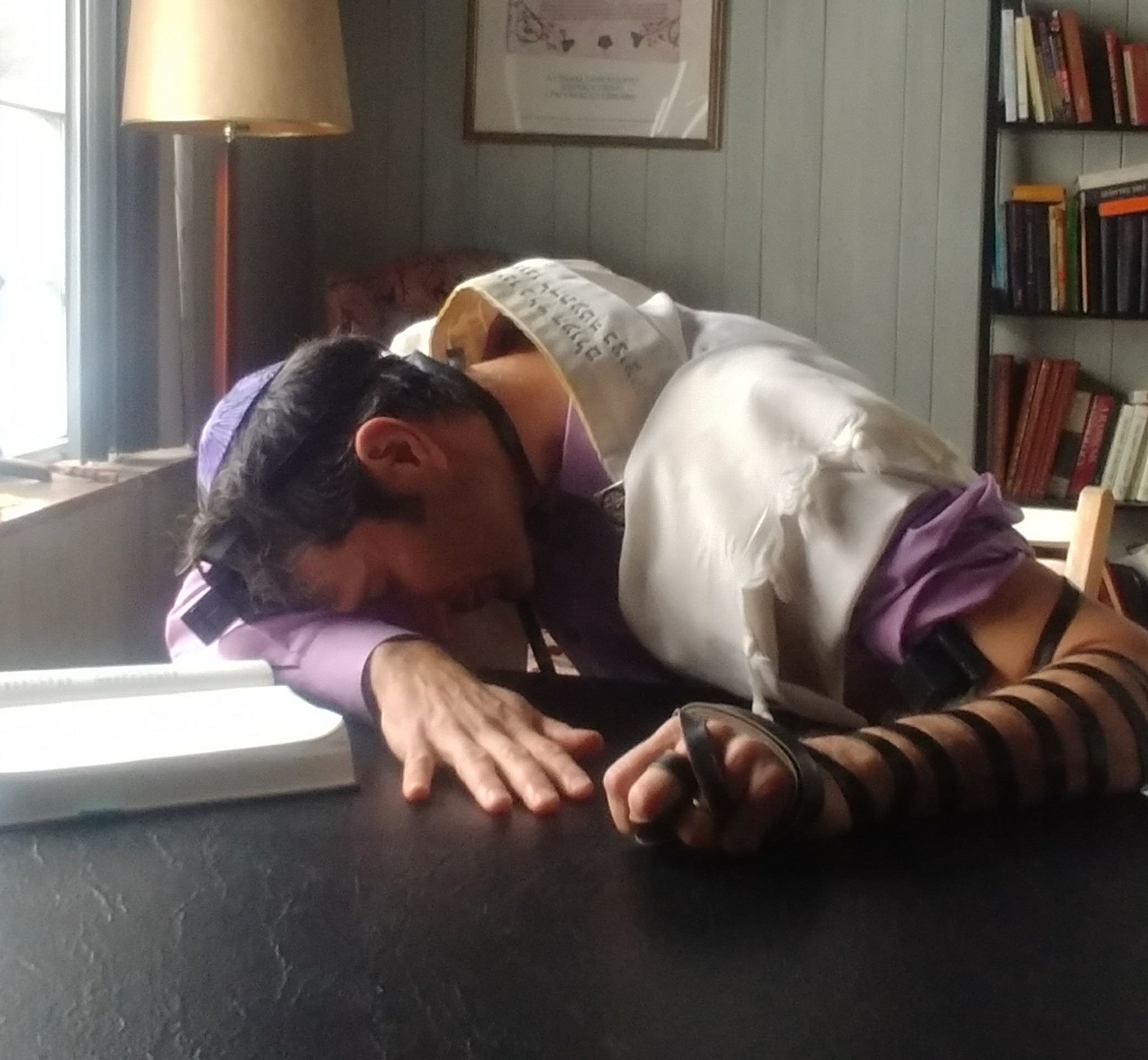
Furthermore, the recitation of tahanun is marked by an act called, “nefilat apayim” – literally, falling on one’s face. When we recite the first part, it is traditional to put one’s head down into the crook of the weak arm (unless you’re wearing tefillin, in which case it’s the other arm), and recite these words of supplication in a position that suggests groveling. We are not proud of having sinned, and suffering for them; we are, in fact, ashamed. 

Nefilat apayim / נפילת אפיים / “falling on one’s face” during tahanun

So what Dr. Gordis posits is that the omission of tahanun by 20th-century non-Orthodox Jews, a standard piece of liturgy for perhaps a millennium, is evidence of “feel-goodism” in Jewish life, that we have emasculated Judaism by emphasizing only the blessings and not the curses. American idealism, suggests Gordis, has led us to forget the sense of dislocation, the “brokenheartedness” endemic to Jewish life. By omitting tahanun, he claims that we are in danger of forgetting our history of oppression and loss and hence our source of resilience:  

Hardship is not a break in the structure of Jewish history; it is an enduring feature of Jewish history. That is why Jewish resilience — enduring and overcoming hardship — is so noteworthy, and why understanding it is so critical in our own uncertain times.

His point is a decent one. Even as we count our blessings, we cannot ignore the hardship. That is the message of tahanun: it is, to some extent, the misery and failure that have enabled us to survive as She-erit Yisrael, to stick together as a people in tough times, to maintain our traditions and hold up our Torah in the face of anti-Semitic oppression and genocide, to build a Jewish state after 2,000 years of exile and dispersion, and yes, to continue to thrive here in the New World. 

Those of you who have been to my Benei Mitzvah Family Workshop (mandatory for 6th graders and their parents) may remember that the 2013 Pew study of American Jews found that 73% said that “Remembering the Holocaust is an essential part of what being Jewish means to me.” Only 19% of American Jews said that about “Observing Jewish law.” I still find the juxtaposition of those numbers staggering; if we are only Jewish to remember what Hitler did to us, then what are we?

But: the destruction of the First and Second Temples, crushing of the Bar Kokhba rebellion, the Inquisition and expulsion from Spain, the blood libels and the pogroms and all of the ways that we have been persecuted and slaughtered and yes, the Shoah, they all remind us of how our ancestors grasped these words, these berakhot, and held aloft their Torah; these things have, somewhat ironically, kept this remnant together.

We need the berakhot. We count those blessings. But we cannot forget the pain and suffering either. It is the entirety of our history, and the entirety of our liturgy, that has kept us alive and sustained us and enabled us to reach this very moment.

And so too the future.

~

(Originally delivered at Congregation Beth Shalom, Pittsburgh, PA, Shabbat morning, 11/28/2020.)

Categories
Sermons

The Constant Gift of Life – Hayyei Sarah 5781

One of the ways in which I have coped with our pandemic separation is by cooking. This week I did something I had not done in a long time – at least a year. I made a butternut squash soup. It’s a great recipe that I discovered a few years back (of course, I use kosher vegetable stock instead of chicken stock): lots of butter, which makes it so rich, but also with fennel, which rounds out the flavor. It is, however, an extensive kitchen project, with lots of time peeling and chopping and sauteeing and simmering and pureeing. We ate it with Shabbat dinner last night. (Yes, in our house, Shabbat meals are often dairy.)

But, as we learn in Pirqei Avot, Im ein qemah, ein Torah; im ein Torah, ein qemah. If there’s no bread, there’s no Torah; if there’s no Torah, there’s no bread. You have to eat to learn, but you also have to learn to eat. Food and Torah are intimately tied together in our tradition.

In other news, you might say that I “hit for the cycle” this week. (Yes, I’m using a baseball metaphor, even though I think the season is over. Right?) I hit almost every lifecycle event this week.

Last Sunday, on the most beautiful November day of my lifetime, I officiated at the wedding of Abigail Blatt and Eric Yoffee. Eric is the son of our members Carol Beth and Mike Yoffee. It was held in the Yoffees’ back yard, with about minyan of attendees. 

Wednesday, longtime Beth Shalom Cantor Moshe Taube passed away, and we have been preparing for a memorial service for him, which will be held on Thursday evening (11/19).

Cantor Moshe Taube

Thursday, I made a new Jew! We brought Casey Weiss’s husband Doug Frisbee to the miqveh to complete his journey to Judaism. Casey is, of course, the daughter of our members Amy and Lou Weiss.

Friday, we welcomed Carson Weiss, the son of our members Emily and Aaron Weiss (no relation to the previous Weisses), into our people’s covenant with God through the ceremony of berit milah, ritual circumcision. Emily and Aaron were with me last January on the Honeymoon Israel trip, and we now see the fruits of our having welcomed them into this community.

Today, of course, we are celebrating Maddie Zabusky-Stockton’s stepping forward into direct relationship with the mitzvot of Jewish life, as we called her to the Torah as a bat mitzvah.

And also this week I spoke with potential new members, people observing yahrzeits, people recovering from COVID-19, other conversion students, and so forth. Plus I virtually attended the United Synagogue’s first conference about Jews and racism.

And all of this was with the pandemic in the background. All socially-distanced. All masked. All a little more anxious than it would have been under “normal” circumstances. 

And this is how our lives are right now.

A good news item this week was that at least one company that is working on a vaccine published results of a successful trial, indicating that their vaccine was 90% successful in preventing new infections of the coronavirus. Maybe the end of our current predicament is in sight. Let’s hope.

But even so, things are not looking so good, in a more immediate sense. Rates of infection are taking off, here in Allegheny County and all over the world. Hospital beds are filling up again. Ventilators and PPE may soon be in short supply. We may soon be back where we were in April.

Meanwhile, we have to do everything that we can to prevent the spread of this virus. We have to continue to be very careful about being masked when around others, and about maintaining our distance, and about minimizing our exposure. We must continue to be vigilant, particularly as Thanksgiving comes and then the December holidays, because the opportunities to spread the virus will certainly increase if people gather, even in small groups. Please remember the essential message of piqquah nefesh / the mitzvah of saving a life – preventing the spread will save lives, and that is one of our most essential mitzvot / holy opportunities as Jews.

Taking a step back to the Jewish bookshelf, right up front in Parashat Hayyei Sarah, Sarah dies. In the first two verses of Hayyei Sarah, the Torah takes note of the fact that her life, “Hayyei Sarah,” spans 127 years; then she dies, and Avraham mourns her and cries for her. The last word of that second verse, Bereshit / Genesis 23:2, is velivkotah, meaning, “and to cry for her.” In Torah scrolls and in some humashim, including Etz Hayyim, which some of us have, the “kaf” in that word is smaller than the other letters. It is a longstanding scribal tradition that dates back many centuries, maybe more than a thousand years.

The small kaf is a reminder that grief can make us feel small. In the Post-Gazette’s obituary for Cantor Taube, he was quoted as being so wrought with grief when the Nazis invaded Poland, that, in his words:

I could not sing between 1939 and 1945. I couldn’t sing because of the atrocities that happened. Singing is an expression of fulfillment, happiness, of worship. I did worship, but not with singing.

Although he survived the war, being number 22 on Schindler’s List, he carried that sense of having been made small by the Shoah for the rest of his life, and you could hear that in his music, in his voice. Indeed, the numbers of our people were made significantly smaller by the Nazis, and so too was our spirit as a people brought low.

We also lost this week Rabbi Lord Jonathan Sacks, the former Chief Rabbi of the United Kingdom, a universally-admired interpreter of Torah for our times. (BTW, there aren’t too many rabbis who get THAT title.)

Of course, there are also times when life makes us feel larger, like the bigger letters in the Torah: joy over happy lifecycle events – weddings and new baby rituals and benei mitzvah – these things can make us feel a little bigger.

But the vast majority of letters in the Torah are the same size. They have the same proportions. They do not stand out from one another.

And that is how our lives go. Sometimes the big letters; sometimes the small letters. But most of the Torah that we live is of average size. Thank God.

Yes, we suffer devastating losses; we grieve and mourn; sometimes we cannot sing. And yet we also find moments in which to celebrate and to mark the passage of time and the milestones in our lives in great happiness. We should never diminish the power of loss or of joy.

And yet we must go on about our lives. We must continue to get married and have children and celebrate benei mitzvah. Although we may feel small, we have to look not only for the big letters of Torah, but also all of those regular letters, the ones we usually hardly notice. With the recent string of births, I hope that we are seeing evidence of a COVID baby boom, which would certainly be a silver lining.

In reflecting on life, Rabbi Lord Jonathan Sacks wrote: 

“It is difficult to feel depressed when you remember fairly constantly that life is a gift. ”

Yes, life is a gift in the sense that we occasionally experience joy to counter our grief. But life is also a gift when you consider his use of the word “constantly” – while we walk this Earth, while we breathe, we experience the constant miracle of being alive. That is why, three times a day, every day, in the Amidah, on Yom Kippur and on Purim, whether we are in mourning or celebrating, we say words of gratitude, in the paragraph thematically dedicated to thanks:

נֽוֹדֶה לְּךָ וּנְסַפֵּר תְּהִלָּתֶֽךָ עַל־חַיֵּֽינוּ הַמְּ֒סוּרִים בְּיָדֶֽךָ וְעַל נִשְׁמוֹתֵֽינוּ הַפְּ֒קוּדוֹת לָךְ וְעַל נִסֶּֽיךָ שֶׁבְּכָל יוֹם עִמָּֽנוּ וְעַל נִפְלְ֒אוֹתֶֽיךָ וְטוֹבוֹתֶֽיךָ שֶׁבְּ֒כָל עֵת עֶֽרֶב וָבֹֽקֶר וְצָהֳרָֽיִם

We will give thanks to You and recount Your praise, for our lives which are committed into Your hand, and for our souls which are entrusted to You, and for Your miracles of every day with us, and for Your wonders and benefactions at all times— evening, morning and noon.

I am grateful to have met Cantor Moshe Taube and heard him sing and been inspired by his music; I am grateful to continue to learn from Rabbi Sacks, and we mourn for them. And I am also grateful to be here today for Maddie’s bat mitzvah, and to have celebrated this week a wedding and a berit milah and bringing on a new member of the tribe. But I am also grateful to have made (and ate) a tasty yet humble (okay… its hard to call it a humble soup when you use a full stick of butter…) squash soup.

Life, this miraculous gift, goes on. Be vigilant. Wear a mask. But look to the moments of ordinary-ness, of constancy, when all the letters are the same size, and we will make it through this together.

~

Rabbi Seth Adelson

(Originally delivered at Congregation Beth Shalom, Pittsburgh, PA, Shabbat morning, 11/14/2020.)