At least 700 Israelis are dead, over 2,000 wounded, and probably 150 taken as captives. 260 brutally murdered at a music festival. Rockets continue to fall; marauding terrorists continue to roam the country. The numbers are staggering and the entire series of events inconceivable.
We are a people in pain, in mourning, in anguish. Joyous festival days were taken from us. The peace of Shabbat and Yom Tov was shattered with heart-wrenching news. On Saturday morning, I found myself in tears during the joyous psalms of Hallel.
While we gathered for Simḥat Torah, the Rejoicing of Torah which concludes the festive season, Congregation Beth Shalom chose a more muted celebration of Torah. We did not dance, but carried the sifrei Torah around the room for seven perfunctory hakafot. At morning minyan on this otherwise-ordinary Monday, there was a heavy sense of grief.
In times of mourning, and also in times of joy, our words of daily prayer are the same. It is the constancy of our spiritual framework which carries us through good times and bad. The liturgy is the same from day to day; it is we who change. We bring our whole selves into tefillah, channeling whatever is in our hearts and minds, and allow the ancient words to lift us up and console us and challenge us and help us reflect.
Nonetheless, the words of certain prayers resonate with us more at certain times, and sometimes we need to supplement to speak to the moment. This morning, we added Psalm 121:
A song for ascents. I turn my eyes to the mountains; from where will my help come? My help comes from Adonai, Maker of heaven and earth. Adonai will not let your foot give way; your Guardian will not slumber; See, the Guardian of Israel neither slumbers nor sleeps! Adonai is your guardian, Adonai is your protection at your right hand. By day the sun will not strike you, nor the moon by night. Adonai will guard you from all harm; God will guard your life. Adonai will guard your going and coming now and forever.
As our hearts turn to Israel at this moment, we pray that our help from the Shomer Yisrael, the Guardian of Israel will come soon. May the hands of those who protect our sisters and brothers in the Holy Land be strengthened to expel the enemies in their midst.
We mourn grievously for those murdered by terrorist infiltrators, and we seek comfort for their families where little can be found.
We urge the Maker of Heaven and Earth to guide the hands of the medical professionals who are tending to the wounded.
We pray that those who are cowering in fear for their lives be safely liberated and regain a sense of security.
We implore the Kadosh Barukh Hu to impart wisdom and speed to the authorities, so that they might find their footing and restore balance and stability to the State of Israel and the Jewish people.
And we pray with utmost fervor that those who are captive are soon set free and returned safely to their homes.
Once upon a time, I was a big fan of science fiction. I loved the work of Arthur C. Clarke, and in particular 2001: A Space Odyssey, both the book and Stanley Kubrick’s fantastic 1968 film version. Clarke’s visions were often of future worlds where humans interacted with usually-benevolent alien powers. Humanity was not inclined to destroy itself; rather, humans found their way off of our home planet and out into the universe with gradual technological innovation, facilitated by alien assistance. Sure, in 2001 the computer HAL 9000 goes on a murderous rampage in an epic fail of artificial intelligence, but that is just a small hiccup on the way to the creation of the Star-Child by some vastly superior alien power to aid humanity.
I think that many of us are concerned that the future may not be as bright as science fiction writers like Clarke and others envisioned. In our current moment, it may seem as though Clarke misread the future by being hopelessly naive about our species. After all, many things have gone horribly wrong. Consider where we are today:
The very people who created artificial intelligence are warning that it may in fact be a real threat
We are being relentlessly tracked and mined for data by commercial and government interests
What is objectively true has become relative to your political perspective
Culture wars have pitted us against our neighbors on multiple fronts
Authoritarianism is also back with a vengeance while democracy is in decline
I could go on. Global warming. Opioid abuse. Homelessness. Loneliness. The list of society’s ills continues to grow.
One of my primary jobs as a rabbi is to try to keep us inspired and optimistic about the future. It’s not so easy in today’s environment.
But we Jews have an ancient secret that has enabled us to survive the worst of times for thousands of years. We have survived persecution and dispersion; we have survived exile and genocide; we have survived forced conversions, forced conscriptions, anti-Jewish legislation and regimes of all sorts. We survived the destruction of Jerusalem at the hands of the Babylonians 2600 years ago, and the Romans 2000 years ago. We survived accusations that the Jews caused the Black Death in the 14th century and we survived the Expulsion from Spain a century-and-a-half later. We survived the Holocaust. Even as we in Pittsburgh continue to mourn the 11 holy souls whom we lost on the 27th of October, 2018, we as a community survive and continue to thrive.
And what is that secret Jewish super-power? It is our holy framework, which has unfolded over the last 3,000 years through Torah and its ongoing interpretation. It is the story of our past, coupled with our willingness to continue to engage with it, to retell it, to cling to it, and to apply it to navigate the present. And it is our inclination to gather with other Jews, to be together in community for mutual support and meaningful engagement.
In short, it’s about us. Our story, our community, and our rituals, all intertwined.
One piece of ancient wisdom we learn in Pirqei Avot (4:21):
Rabbi Ya’aqov taught: this world is like a vestibule before the world to come; prepare yourself in the vestibule, so that you may enter the banquet hall.
If we are to enter the future in a way that is healthy and sustainable, we have to be ready for it. And the way that we the Jews can do so, for the benefit of the rest of the world, is to use the framework that we have received from our ancestors, because it has worked for thousands of years. It is our fervent desire, for our collective benefit, that humanity makes it to the banquet hall of the future.
Over these High Holidays, we will be talking about moving “Into the Future” from different angles. Today, it’s about us. Tomorrow, we will be discussing the future of Conservative Judaism. On the evening of Kol Nidrei, we will discuss our future vis-à-vis the State of Israel. And on the day of Yom Kippur, we will be speaking about retaining our humanity as artificial intelligence infuses itself into our lives.
***
In all of the challenges that we have faced at any point in time, the Jewish inclination has always been to look to the past. How did our ancestors survive? By re-reading the Torah, by arguing about it, by following its guidelines for behavior and emulating the better qualities of its major characters, and by applyingit to our lives wherever we have been and whatever we have faced.
And this formula still works today.
In his 2017 book Homo Deus, the Israeli history Yuval Noaḥ Harari explains what fundamentally differentiates humans from other animals. While there are many species, from ants to chimpanzees, that form social groups in which the individuals cooperate by playing distinct roles, only humans have the potential to act collectively in a way that can change our destiny. In other words, a bee hive is a kind of community, but bee colonies will always more or less be the same – the same structure, the same system of “governance,” with, as far as we know, no long-term sense of past or future.
But humanity is different, particularly due to our ability to gather around shared stories. And all the more so for us, the Jews. Our stories, our texts, our wisdom hold us together and help us move forward, with an eye to our past. Our strength as a people is on our collective bookshelf, and in our hearts and minds.
One essential lesson, fundamental to Jewish life, is the idea that we are all connected to one another. Two pieces of wisdom in particular say, in essence, that we have to think about “us” before we think about “me” or “you” or “them.”
We are all “arevim” – guarantors for one another. The word arevim comes from the Hebrew for “to mix.” We are all mixed up, or integrated with one another. And given the way we live today, not just with fellow Jews, but with our non-Jewish neighbors. We must all be responsible for one another.
Do not separate yourself from the community. We cannot all be individuals in complete isolation from one another. Our shared, just, sustainable future depends on our willingness to be in relationship, to acknowledge each other’s humanity. That is, we have to think about us as a collective with a shared destiny. And that is harder to do than it is to say, particularly given that the way our society is constructed today tends to isolate, rather than bring together.
And to universalize once again, the same is true for the entire world. It has become woefully easy to divorce yourself from the people around you. And this is not good for humanity.
Back in August, my son introduced me to a YouTube channel online produced by a “YouTuber” who goes by the name of Mrwhosetheboss. What he does is review hi-tech products, and we watched a review of a new gadget: Apple’s virtual-reality headset, which will be available early next year at the low, low, bargain-basement price of $3500.
After gushing about the revolutionary marvels of this gadget he makes a stunning confession:
There’s already very little separation between us and our technology. You only have to take your phone out of your pocket and your screen auto-turns-on and you’re blasted by notifications. When the device is on your face, there’s no escaping it, and that’s slightly worrying… But the key thing about this headset that I don’t think any future or vision of this headset can solve is the potential for isolation. I am so incredibly excited that this new era of tech is here, but I’ve never wanted, and NOT wanted, a product to exist at the same time as much as I do with this one, for the simple fact that I do think this is the start of the end for shared experiences.
That is not the future for me, in which we are all in our own sensory bubbles, where all of our communication with others and the outside world is through an intermediary, which controls every aspect of the experience. That seems to me a wee bit too close to TheMatrix, rather than Arthur C. Clarke.
Now, I need to state clearly: I am NOT anti-technology. In fact I believe technology will do wonderful things for us if we use it cautiously.
But here is the point: every one of us in this room has a wonderful tool at your disposal to build social capital and fight isolation: Judaism. Our faith is one of the best sources of social capital. This synagogue is an ancient technology that still does an amazing job at bringing people together as a force for good in the world.
Here is a four-point plan (out of many more possible Jewish points) to save our future:
Shabbat (or, setting aside sacred time)
Kashrut (or mindful consumption)
Shemirat halashon (or mindful speech)
Tefillah (or, meditative moments)
Each of these items are among the most important principles of Jewish life, located at the nexus of the personal and the communal. They unite the “me” with the “us.”
Shabbat/ Setting Aside Sacred Time
Many of us observe Shabbat in a traditional way in this congregation: we have luxurious family meals, often with guests, on Friday night and Saturday afternoon; we attend synagogue; we “unplug” for 25 hours from sunset on Friday till dark on Saturday night to devote time to family, friends, ritual and reflection.
In my own home, Shabbat is when the imperatives of our busy lives are placed on hold and we play games: Settlers of Catan, Wingspan, Rummikub, building with Legos. And of course, dining and napping as well.
But there are many more of us who do not unplug and reconnect on Shabbat. And even if you have some sense of what you might be missing by not observing Shabbat traditionally, I understand. It’s not so easy to close all your digital devices for that time, to disconnect, to not go shopping or watch YouTube. It’s not so easy even to plan Shabbat meals with family or friends.
But once you have truly tasted the traditional observance of Shabbat, where our range of activities is minimal and our relationship with the Earth and each other is more immediate and organic, you understand the value of setting aside sacred time.
And furthermore, when the news-and-outrage cycle goes non-stop, as Big Tech vies for your eyeballs and your money, shutting all of that down – even if just for 25 hours each week – is a mitzvah not just for you, but for the future of humanity.
Shabbat is good for your soul, but it also helps you connect with the people in your neighborhood, which is where we should all be at least once a week.
Shabbat / setting aside sacred time: it’s about us.
Kashrut/ Mindful Consumption
Sure, you might think that holy eating is just an annoyance, an obstacle to living a full gustatory life, unencumbered by antiquated rules. Come on, Rabbi, what’s wrong with shrimp? Didn’t God also create shellfish? And beef is beef, whether an old guy with a beard blessed it or not, right?
Ask any parent whether they can properly raise children without boundaries. Kashrut is just that: a daily reminder that we cannot merely take all we want when we want it. Kashrut is Jewish mindfulness, a structure to help us maintain a sense of holiness in this world. And if we embrace a mindful consumption practice, it leads to a sense of interconnectedness with each other and all of God’s creatures. If we were all to practice this mindful way of eating, we have the potential to spread that awareness of our consumption patterns far and wide.
Even during my years as a young adult when I was not going regularly to synagogue, I maintained my kashrut practice, because it reminded me on a daily basis of my connection to our people and our tradition. Paying careful attention to what we eat, where it came from, and how our consumption affects God’s Creation models behavior for the rest of the world to appreciate.
Kashrut / mindful consumption: It’s about us.
Shemirat haLashon/ Mindful speech
Our tongues need guards. We have to be ever-vigilant about the way we talk, and text, and tweet. With the dissolution of guardrails in speech, and with social media platforms which exercise little control over what is acceptable, we are in danger of creating a future in which words will be weaponized in unimaginable ways. It has never been so easy to destroy a person, an institution, an idea as it is today. If we are to maintain any sense of togetherness as a society, we have to be careful about what we say and how we say it.
But sanctified speech is that where we acknowledge the power of our words and their potential for danger. Too many today are focused on dividing people through speech; only through shemirat halashon may we succeed in bringing people together for a better humanity and a better future.
Mindful speech is about respecting the humanity in each person. Shemirat haLashon is about us.
Tefillah / Meditative Moments
There are many paths through Jewish life. But there is only one thing that gathers the Jews like no other, and that is being together in our house, the beit kenesset, the synagogue, the ancient and modern house of Jewish gathering.
Now, I know that tefillah is hard. It requires intent, concentration and practice, all things that can be challenging in a busy sanctuary during the High Holidays. And there is a high bar to entry. To fully participate, you have to be able to read Hebrew, or at least puzzle through transliterations. And there are tunes and choreography and ritual gear, which can be off-putting to the uninitiated.
But when we have prayerful moments together, when all the people in this room sing together, or meditate together, or even mumble together, it is breathtaking. And it is also be liberating – an upward spiral of energy that moves us as a community and ascends heavenward.
The Hebrew word, tefillah, does not mean, “to recite a jumble of ancient words in a language that nobody speaks.” It actually means “self-judgment.” When we stand together, ideally in silence, reciting the words of the Amidah, we create a strong sense of power in the room – hearts united in deep, meditative analysis of the self. If we allow ourselves to be swept up in the sense of tefillah as a community, it will help us all be better people, opening our hearts and bringing us together as a community. And this too has the potential to infuse the whole world with awareness and connection.
Tefillah / meditative moments: it’s about us.
***
OK, Rabbi, that all sounds great, but you have not convinced me. How exactly will this framework create a better future?
We have the power, when we think and act together, when we draw on our shared stories and ritual, to face all the challenges of our world in a way that will enable us to overcome. That is why the Jews are still here. We are a model for resilience, a model which can be shared with others.
My goal as your rabbi is, in facing the future, to recognize the awesome power of our Jewish framework, of your heritage, and to give it to the world. This world, God help us, needs to set aside sacred time, needs mindful consumption, mindful speech and meditative moments.
And indeed, the situation is urgent. We all have the potential to think, “Hey, I’m a good person. I am respectful of my neighbors. I make charitable donations. I replaced my incandescents with LEDs. I buy organic produce.” And hey, those things are great.
But we have to think wider and greater than that. We have to think not just about ourselves or our immediate relations, but rather how we can influence the world for the better. Our future as a species depends on you to consider how your personal observance of essential Jewish principles can bring us safely and sustainably into the future. And this may only be realized if we take up the reins of our own personal Jewish observance and demonstrate its value to the world.
So here is a suggestion: Take one element of Shabbat – a holy moment every Friday evening at sunset to light candles as a family, for example -and build on that. One element of kashrut. Come once more to synagogue for a service than you ordinarily would, to learn a new prayer, a new tune, a new idea from our rich textual tradition.
And as you come to appreciate these aspects of our tradition yourself, you must share them with your friends and neighbors. Our ancient secret can be universalized and presented to the world. Not that we should try to make non-Jews practice Judaism, but to understand the eternal value of these principles so the whole world can derive the benefits of the Jewish secret.
Do it for yourself, but all the more so, do it for us, so that we may all enter the banquet hall together. Into the future.
***
Next in the series:
Rosh HaShanah, Day 2: The Future of Conservative Judaism
Kol Nidrei: The Future of Israel
Yom Kippur: The Future Must Be Human
~
Rabbi Seth Adelson
(Originally delivered at Congregation Beth Shalom, Pittsburgh, PA, first day of Rosh Hashanah 5784, 9/16/2023.)
I was in church last Sunday afternoon. Admittedly, it was the first time I’d been to a church service in a while.
I participated in an interfaith prayer gathering in support of the people of Ukraine at St. Paul’s Cathedral, presided over by Bishop Zubik of the Pittsburgh Catholic Diocese. In attendance were people from across the religious spectrum of the region, including Muslim, Hindu, Jewish, and Christian spiritual leaders, as well as over 500 attendees. While some of the overtly Christian language was uncomfortable to me, the overarching message was a resonant one: we stand with the Ukrainian people. In addition to words of prayer and remarks by some of the clergy participants, including a very moving personal story from Father Ihor Hohosha of St. George Ukrainian Catholic Church, the service was occasionally punctuated by people calling out, “Slava Ukraini!” “Glory to Ukraine!”
A rabbi in church (courtesy of Cindy Goodman-Leib)
It was inspiring to see so many people together in one place – the first indoor gathering of that size that I have attended in two whole years, and all the more so to unite across theological lines in support of a cause.
One might criticize such a gathering by saying, “OK, that’s great. But what the Ukrainians need is actual, material support – arms, military personnel, humanitarian aid, and so forth. What good does having an interfaith prayer service do?”
Actually, ladies and gentlemen, prayer accomplishes a lot. And that’s why we are about to launch Beth Shalom’s #ComeBacktoShul campaign. I’ll come back to that in a few minutes.
What does tefillah / Jewish prayer accomplish? And why engage in it?
Here are the major communal and individual benefits:
Tefillah / prayer brings us physically together. As you know, you have to have a minyan, a quorum of 10 people for it to be a complete service. That means you have to show up, something which is hard enough today even without a worldwide pandemic. And, as we have all learned in abundance over the past two years, being in the same room with other people is much better than seeing your fellow participants on your screen.
Tefillah makes us feel like a community. אל תפרוש מן הציבור, “Do not separate yourself from the community,” says Pirqei Avot. When we have at least 10 people together in a room, we feel interconnected. We understand that we are parts of a greater whole. We build a qehillah qedoshah, a congregation founded in holiness.
Prayer sensitizes us to the needs of the other. If you are doing it right, engaging in tefillah reminds you that, in this solitary moment of ritual, we are connected to God, to each other, to our ancient tradition. It reminds us that connection requires being open to and aware of the people around us. There is a custom that many have of giving tzedaqah during the weekday morning service, because that is a moment in which we are most sensitized to the needy around us. (We cannot pass the tzedaqah box on Shabbat, because handling money is forbidden on Shabbat; nonetheless, even on Shabbat, tefillah should lead us to see the Divine spark in everybody.)
One of the first things that we say as part of the morning service is from Rabbi Isaac Luria, the 16th-century kabbalist (you can find this on p. 102 in Lev Shalem):
הריני מקבל עלי מצות הבורא: ואהבת לרעך כמוך
I hereby accept the obligation of fulfilling the Creator’s mitzvah: Love your neighbor as yourself.
We cannot even begin to daven without first acknowledging that we are in relationship with the people around us.
Tefillah is meditation. Jews are never silent, even when they pray. Our meditation is not like Eastern meditation; our mantra is in Hebrew, and has many more words. But if you are truly mindful about your prayer, if you are truly in the moment and successfully let go of the other things that are tugging at your attention during services, our prayer tradition functions the same way. That too is very hard. But if you commit yourself to doing it regularly, you will achieve the same thing that you might achieve in other kinds of meditation.
Tefillah teaches Torah. The highest ideal in Jewish life is learning; the most essential mitzvah out of all 613 is engaging with words of Torah. If you are paying attention, prayer is study, and study is prayer; they reinforce and build on each other.
Tefillah means “self-judgment.” If you are doing it properly, prayer is an opportunity to check in with yourself, to evaluate where you are, what you have done right and wrong, and to see if you can tip the scales in the right direction. As with all of the items above, tefillah is a tool for improving yourself and improving your community and your world. Rabbi Zalman Schachter-Shalomi taught that, as we open our mouths in prayer, we should start by saying, “Dear God, whatever jealousies and resentments I might harbor in my heart, please remove this judgment from me.” Self-judgment.
Yes, for Jewish prayer there is a high bar. Even if you cannot read Hebrew, you still have to be able to manage transliteration. And you have to know when to respond, and when to be silent, when to stand/sit, when to bow, and so forth. And to understand the meaning of the words – to be able to glean something from them, that takes real work. I had many semesters of liturgy and liturgical Hebrew in Cantorial School, and I still encounter words or idioms I do not understand.
But of course some of those things do not require a deep knowledge. The mere act of gathering as a community so that we can feel connected to one another is an outcome that we can all achieve, even if you don’t know the words, or when to bow.
And yet, every time we gather for a service, we raise the level of qedushah / holiness in ourselves, in our relationships, and in our community. And in doing so, all of the benefits I just mentioned help us work toward improving this world.
So even though Ukraine is very far away, our gathering to say words of prayer on behalf of the Ukrainian people will surely help, even though we might not see the results immediately. Every prayer helps a little bit.
Which brings us back to why we are here. Yes, we are here this morning to celebrate with a bar mitzvah as he is called to the Torah. Yes, we are here to be with each other, to have lunch together.
But more pointedly, we are here to pray. And we do that every day at Beth Shalom, twice a day, morning and evening.
And we need you to come back to pray with us. In person.
Thank God, our rates of transmission are as low now as they were last summer. Thank God, many of us now are boosted. We hope that soon young children will be able to be vaccinated as well. I am grateful, and I am sure that you are too.
I have heard recently from multiple members of Beth Shalom, in different ways and using different language, that right now, after two years of pandemic, they feel disconnected from our community. Well, folks, there is just one solution to that: #ComeBacktoShul.
We need you to be here. Physically. In-person. We need you to come back. We are waiting for you.
And we need you to bring a friend. Find the people whom you know have not returned, and invite them to come back as well. We will welcome everybody with group air hugs all around.
So here are a couple of practical considerations:
We are still wearing masks in the building, at least for a couple of more weeks. We want to be sure that everybody feels safe. It’s not going to be so easy for us to simply start to gather again. It still makes me a bit nervous to be around unmasked people right now. But that is a temporary thing. We’ll get used to it again.
We are serving food again, and I hope that we’ll be able to start up our weekday-morning breakfasts soon.
We will continue to make our services available via Zoom. However, within the coming months we will no longer be, as we have been for the past two years, in the mode of “she’at hadeḥaq,” which is rabbi-speak for “an urgent situation.” As the urgency of the moment recedes, we are going to return to the mode where a minyan is constituted only by people in the room, and we will not count Zoom participants toward that minyan. That will be a big change for our weekday minyanim, so you might want to consider helping us out morning and evening, so that we can continue to make a quorum. I anticipate that (if everything continues moving the right direction) this change will be coming around Pesaḥ.
The prophet Isaiah tells us that the Jewish center of worship is an ecumenical space, one that is for everybody. Isaiah says (56:7):
For My House shall be called a house of prayer for all peoples.
Rabbi David Qimḥi, a late 12th/early 13th c. French commentator, also known by his acronym רד”ק (Radaq), said this about this verse:
וגם אל הנכרי כל שכן לשבים לדת ישראל:
And if Isaiah’s words applies to non-Jews, all the more so to those who are returning to Jewish worship.
This house is open to you, and to everybody. Now is the time to return. We need you to join us in prayer. The world needs you; the people of Ukraine need you. #ComeBacktoShul.
[Hillel] used to say: If I am not for myself, who will be for me? But if I am only for myself, what am I?…
Pirqei Avot 1:15
I was extraordinarily shocked this week to hear reports of the testimony from whistleblower Frances Haugen, who worked at Facebook in their “civic integrity department,” about how Facebook’s leadership has been aware, from their own extensive research, of potentially toxic effects of its products on its users’ mental health. Despite this research, showing, among other things, that the use of Instagram (which is owned by Facebook) increases thoughts of suicide and eating disorders among teenage girls, Facebook has done effectively nothing to prevent these toxic effects.
But in particular, the thing that shocked me the most was that at Facebook meetings, CEO Mark Zuckerberg would often conclude by repeating the mantra, “Company over country.”
The accusation that weaves through Ms. Haugen’s testimony is that Facebook has, except in a few limited circumstances, consistently chosen to try to keep your attention focused on Facebook or Instagram or WhatsApp, because the more you keep your eyeballs on those products, the more money Facebook makes, regardless of the cost to our mental health.
We must ask ourselves, how many fewer people could have died of Covid-19 if no misinformation had been spread via Facebook and other social media platforms? How many fewer young women would be suffering from eating disorders or other emotional health issues without the influence of Instagram? How many of us would be spending better quality time with our children, if our noses were not permanently pointed at our screens? Would there have been a home-grown terrorist attack on the halls of Congress, the seat of American democracy, without these tools?
But the problem does not end with Facebook. The wider problem with the very idea of “company over country” is that it sounds like our social contract is broken, that the ties that bind us together as a nation are dangerously frayed; that we have lost the social capital in our society that holds us together, that we have forgotten that we are all in relationship with one another. It is easy for us to recall the first part of the mishnah from the great 1st-century sage Hillel, “Im ein ani li mi li?” If I am not for myself who am I? But perhaps it is more difficult to remember the second part: “Ukhsheani le’atzmi mah ani?” And if I am ONLY for myself, what am I?
And the challenge here is not limited to our social and emotional health. What about the warming climate? The microplastics in the ocean? The chemical contaminants that are now found in our drinking water, and throughout our ecosystem?
Humans are brilliant at manipulating our environment with our God-given intellect and abilities. We are always striving to create new technologies that help us do that even better and cheaper and easier. But we are very, very bad at anticipating negative long-term consequences of such manipulation. We all rush to embrace new technologies, because if something makes your life easier and better, why wouldn’t you?
But we rarely have the patience or the collective will to determine how these innovations will ultimately affect us over years of use and exposure, how they will affect our brains, our bodies and our environment. And when that change is incremental – rapid in terms of geologic time, but very slow in human years – it is even harder to see and respond to.
Ukhshe-ani le’atzmi mah ani? What am I? Who are we? And what are we destroying by being only for ourselves, and not looking out for others? By focusing on company over country, by looking out only for number one rather than considering the common good?
Parashat Noaḥ opens with a general observation about the state of the world, of the people of his generation (Bereshit / Genesis 6:11):
The earth became corrupt before God; the earth was filled with lawlessness.
“Vatishahet,” here translated as “became corrupt,” could be better understood as “destroyed.” The Earth was destroyed before God, in the passive (nif’al) voice. Medieval commentators want to make it clear to us that people did this, we were the destroyers. God’s Creation did not merely corrupt itself, as the passive voice suggests. Ibn Ezra, for example, writing in 12th-century Spain:
The meaning of לִפְנֵ֣י הָֽאֱ-לֹהִ֑ים before God is that the humans acted brazenly, like a servant, who in the presence of his master, disobeys him and thereby shows that he does not fear the master.
And this is in the wake of God’s imperative to humanity, which we read last week in Parashat Bereshit (2:15):
God took the man and placed him in the garden of Eden, to till it and tend it.
The first people had a mission: to take care of the world. And, only one parashah, a few chapters later, like deceptive servants with no respect for their Creator, they abused Creation for their own purposes.
So what does God do to remedy this unfortunate situation? A flood, to start again. To give (as our bar mitzvah said earlier) humanity a second chance.
Ladies and gentlemen, if we have no respect for what we have been given, if we have no fear or reverence for our Master and Creator, if we continue to take, to steal, to abuse, to manipulate, our future looks bleak indeed.
We are destroying. We are corrupting the Earth and ourselves once again. We have placed company over country, time and time again. And we cannot be sure that there will be a second chance this time.
So what are we going to do about it?
We could wait until the flooding is so bad that climate refugees are streaming into Pittsburgh. We could just wait for another mass shooting, streamed to Facebook Live. We could wait for the troops of chaos mustered by white supremacist groups to cause democracy to crumble. We could inspire even more young women to feel inadequate about themselves. We could install air conditioning in our sukkot, to keep ourselves from sweating as fall temperatures rise, and just let the challenges continue to mount.
There are naysayers in the world, and I am hearing their voices more frequently, who are saying that we are doomed. That we will never be able to prevent the corruption of all life that will lead to the ultimate cataclysm.
Noah, the Eve of the Deluge – 1848, John Linnell
But here is where I prefer to be an optimist. And here is the solution, ladies and gentlemen:
Prayer. Tefillah.
But not like you think. Not necessarily to move God to act to save humanity from itself. But rather, the human side of prayer, prayer which brings us together. Prayer that focuses us and galvanizes us to act. Prayer that serves as the fulcrum of the arm of intention.
Worldwide prayer. Prayer across communities. Prayer across continents and timezones. Praying together in multiple languages, in multiple religious contexts.
We have to say words of prayer together so that we can think together and act together and understand that we are all in this together.
And of course, some of you are thinking, “Oh, come on, Rabbi. Religion is going to solve this?”
Well, I have news for you: People of faith are great at one thing: Gathering. We gather for community, to harness intent and to tap into our spiritual well. It is through gathering with a holy purpose that we can arouse the worldwide will to take on the intransigence of governments and corporations, who actually have the power to save us from ourselves.
We have many microcosmic prayer groups scattered all over the world. But people of faith – people who understand the value of religious traditions and teachings and reverence for what God has given us – have much more strength if we are united, so that we can stand together against the corrupt, destructive path of “company over country.”
Google announced this week, perhaps inspired by Facebook’s missteps, that they will no longer place ads alongside climate change denial. Many of the world’s automakers have pledged to turn their fleets electric in the coming decade. Some governments are coming around to the need to rein in the “company over country” model. Those are all good pieces of news.
But what will really make sure that we understand that we will only solve these challenges together? It will only happen if we can lead the world to a better place through shared meditation, shared words of peace and reverence and contrition, gathering together, however that might happen, to respect the qedushah / holiness in one another, to break bread together and sensitize ourselves to the needs of the other, to see humanity over company and country, and to seek the common good over myopic selfishness.
Ukhsheani leatzmi, mah ani? If I am only for myself, what am I?
The 46th president of the United States, just before he was sworn in on Wednesday, did something remarkable: he prayed. As his predecessor boarded Air Force One to head out of town, Joe Biden went to the Cathedral of St. Matthew the Apostle in Washington, presumably to daven (pray) the Catholic equivalent of shaharit / the morning service.
As you know, I am a big fan of prayer. I do it every day, and I am convinced that tefillah / prayer is good for you. It is the original Jewish form of mindfulness meditation. Tefillah centers me; in the morning it gets me ready to face the day; in the evening it is a gentle, reflective conclusion, an opportunity to check in with myself.
I am convinced that if we all did just a little more prayer, if we all took reflective moments more frequently, our world would be a better, kinder, gentler, more united world. And of course that applies to all of us – not just the Jews, of course, or the Christians, but all of us, and even those who do not belong to a particular faith tradition. Prayer, whatever form it takes or whatever you call it, has the potential to bring us all together, to build bridges.
The television coverage that I saw on Wednesday morning did not actually show the president-elect in prayer, just the exterior of the church. Nonetheless, to see this very public, yet also very private moment of prayer brought tears to my eyes.
A little while later, Father Leo O’Donovan, a Catholic priest, gave the invocation before the swearing-in, and he said the following:
There is a power in each and every one of us that lives by turning to every other one of us, a thrust of the spirit to cherish and care and stand by others, and above all those most in need. It is called love, and its path is to give ever more of itself. Today, it is called American patriotism, born not of power and privilege but of care for the common good – “with malice toward none and with charity for all.”
In Father O’Donovan’s words, I hear the yearning to be once again “one nation, under God,” acknowledging the love and faith that should bind us together as a society in pursuit of the common good.
And so we find ourselves this week in perhaps a more prayerful stance as a nation, and it is absolutely serendipitous that we read from Parashat Bo this morning, including arguably the most essential items in the story of yetzi’at Mitzrayim, the Exodus from Egypt.
One of the key features of the Exodus narrative is that the freedom, the redemption from slavery that Moshe and the Israelites seek includes as a fundamental principle the ability to worship the one true God. By definition, slavery (in Hebrew, עבדות avdut, from the shoresh עבד, to serve), precludes service to God. Integral to that freedom for the Israelites is the license to worship God, the autonomy to be a servant of faith rather than a servant of other people.
Almost every time, when Moshe approaches Pharaoh to ask for freedom, he says something similar to what we find up front in Parashat Bo, Shemot / Exodus 10:7: שַׁלַּח֙ אֶת־הָ֣אֲנָשִׁ֔ים וְיַֽעַבְד֖וּ ה’ אֱ-לֹהֵיהֶ֑ם Shalah et ha-anashim veya’avdu et Adonai eloheihem. Let the people go to worship the Lord their God!
Freedom, as the Torah sees it, includes that holy relationship with the Qadosh Barukh Hu.
And so too today: building a better future in our very divided country necessitates God’s presence in our lives, however we understand that presence.
Now, do not go reading this as a screed against atheists, or a repudiation of the separation of church and state. On the contrary: we need a greater sense of shared faith in this country, among the diverse people of this nation, because, as Father O’Donovan suggested, that will, through love, enable us to build a better nation, infused with a unified pursuit of the common good. As servants of God who see the Divine spark in each other, who see our shared humanity, we can and should work together to build bridges, to create a stronger, more resilient society and a healthier democracy. Even those who reject theology outright can, I hope, get on board with seeking the common good through shared love of humanity, of our fellow citizens.
And a key piece of this sense of shared love is interfaith cooperation.
You may know that I grew up in an area with relatively few Jews. Until I went to college, virtually all of my friends and neighbors and classmates were Christian, mainline Protestants and Catholics, and my family was among a handful of Jewish families in my home town. We all knew each other, and I think it is fair to say that, to some extent, we the Jews felt like outsiders. Not that our neighbors treated us badly or as enemies, but there was definitely a mutual awareness of our difference. Sometimes this awareness bred resentment, as, for example, when well-meaning Christian friends failed to understand that we did not celebrate Christmas. It was sometimes hard to see past this, given some of the history of Christian/Jewish relations. There was a time in my life when I would not have wanted to listen to the words of a Catholic priest giving an invocation at an official gathering.
My sense is that things are somewhat different today; the religious landscape in America has changed. Many of us now look at each other across religious divisions as allies. Yes, of course there are issues that divide us. But what we who are partners in faith share is much greater, and much more powerful.
Rabbi Jeremy Markiz and I were at a meeting on Thursday of the Priest-Rabbi dialogue, a discussion between local Catholic and Jewish clergy which meets from time to time to discuss interesting theological issues. At this meeting, we read a statement from 2002 produced by a group of influential North American Christian scholars attempting to reframe the historically fraught relationship between Jews and Christians. Among the principles expressed in this document were, “God’s covenant with the Jewish people endures forever,” and, “Ancient rivalries must not define Christian-Jewish relations today.”
Our discussion broke toward the points of disagreement among Christian theologians and within the Jewish world about some subtleties of our beliefs. But the greater message is well-taken: today we are allies in the struggle against disorder, disunity, and distrust. We are united in facing the challenges of poverty and racism, hunger and homelessness, mental health and addiction and isolation.
I heard a podcast this week from the Pardes Institute of Jewish Studies in Jerusalem about Parashat Bo, taught by Pardes teacher Tovah Leah Nachmani, about emunah / faith. She pointed to a commentary by Ramban, aka Nachmanides, who lived in 13th-century Spain. In surveying Parashat Bo, Ramban points to the symbols of emunah found in this parashah: the annual observance of Pesah/ Passover that we read this morning, and the wearing of tefillin (Ex. 13:16, the last line in the parashah). Ramban suggests that these symbols (the Hebrew term is ot, sign) of faith are meant to remind us of the role that God plays in our lives. There will not be an Exodus in every generation, says Ramban, but every year when we celebrate Pesahwe remember that power. The tefillin that we put on every morning are an ot, a sign of the binding promise that God has made with us to help us live better lives through the framework of mitzvot.
Ms. Nachmani expands on Ramban’s line of thinking to include Shabbat and regular tefillah, such that we have daily, weekly, and annual signs before us: The weekly reminder of Shabbat, also described as an ot (beini uvein benei Yisrael, ot hi le’olam – Ex. 31:17) gives us a taste of the true peace that will someday come if we commit to the common good.
Faith and freedom are intertwined; we must keep those symbols of faith in front of us; we must use them to remind ourselves to reach out to our neighbors in love. We must also remind ourselves that we have partners, who do not celebrate Pesahor wear tefillin, yet who also have faith; these signs of faith can also lead us to dream about what we can accomplish when we are all praying together.
We remembered this past week the strength of the Reverend Dr. Martin Luther King, what he accomplished, inspired by God and the words of the biblical prophets. Consider that Rabbi Abraham Joshua Heschel had the vision to reach out to and march with Dr. King as a partner in faith, at a time when many of us were not thinking far beyond our own community.
Our future depends on building bridges of prayer and bridges of emunah / faith. Our Christian, Muslim, Hindu, Sikh, and Buddhist friends and neighbors are all interconnected with us; we may differ on how we approach or understand the Divine and the role that the holy relationship plays in our lives, but we mostly agree on the outcome: that we can build a better world through shared prayer, faith, and love.
You are walking through the world half asleep. It isn’t just that you don’t know who you are and that you don’t know how or why you got here. It’s worse than that; these questions never even arise. It is as if you are in a dream.
Then the walls of the great house that surrounds you crumble and fall. You tumble out onto a strange street, suddenly conscious of your estrangement and your homelessness.
A great horn sounds, calling you to remembrance, but all you can remember is how much you have forgotten. Every day for a month, you sit and try to remember who you are and where you are going. By the last week of this month, your need to know these things weighs upon you. Your prayers become urgent.
So begins my go-to book at this time of year, Rabbi Alan Lew’s This Is Real and You Are Completely Unprepared. The book is filled with stories that help illustrate the journey of this part of the Jewish year, the arc that begins with destruction, Tish’ah Be’Av, and spirals upward through rebuilding, coronation, repentance, and celebration.
Rabbi Lew’s essential message is this: if you pay attention, if you are in fact prepared, the holiday odyssey is so much more powerful. We have the opportunity before us to change our behavior for the better, and in doing so change the world for the better.
The key to this betterment is preparation. Being ready. God tells Moshe to be ready before he ascends Mt. Sinai to get the tablets. (Ex. 34:2):
Vehyeh nakhon laboqer, ve’alita vaboqer el har sinai. Be ready by morning, and in the morning you shall ascend Mt. Sinai.
Rosh Hashanah and Yom Kippur are something like Mt. Sinai. That is the gravity with which we should approach these days. And we have to be prepared, just like Moshe.
I know that the young woman whose bat mitzvah we celebrated today prepared extensively for this day; she read the entirety of today’s Torah reading. (Kol hakavod!)
What does it take to make a Jewish adult?
No bat mitzvah or bar mitzvah happens without extensive preparation. Learning to read from the Torah, learning to chant parts of the service, preparing a devar Torah to deliver to the congregation.
However, that is really only the icing on the cake, the finished product, as it were. In order to reach that point, a child must spend years learning Hebrew, learning about Jewish practices and customs and law and holidays and values and texts. A Jewish child learns from her or his parents, watching them engage with Jewish life, participating in preparing Shabbat and holiday meals, helping to put up a sukkah, searching for hametz, coming to synagogue with them, observing them acting on Jewish values of gratitude and humility and compassion. A Jewish child learns to question: Why do we do this? What does this mean? Why is this night different from all other nights? Didn’t we say, “Next year in Jerusalem” last year?
In all, 13 years of preparation, of investment of time and money and will, go into making a Jewish adult. And then she is not even really an adult yet. There are still more years of learning and growing to do. A lifetime, in fact; I’m still not sure if I have made it to adulthood.
It can be very easy, too easy to merely roll up to the High Holidays, to the Ten Days of Teshuvah, without preparing. Sure, you figure, we have a family meal, my suit is dry-cleaned, we have our High Holiday tickets, and so forth.
But those things are not so important. What is really important for Rosh Hashanah and Yom Kippur? Three simple things – items that you know because they are identified in what you might call the centerfold of RH and YK services: the Untaneh Toqef prayer, right after we ask the grave question of “Who will live and who will die in the coming year?”
Utshuvah, utfillah, utzdaqah ma’avirin et ro’a hagezerah But repentance, prayer, and charity remove the severity of the decree
And I think that this year, knowing that we will not all be gathered together with our collective energy in the same physical space, we need this preparation more than ever. More than any High Holiday cycle in your lifetime. We need it to ensure that this High Holiday season will have meaning. We need it because the world seems so off-kilter right now, and we are going to be really grateful for the spiritual framework of this time. So I give you these three things to think about in the two weeks you have left before Rosh Hashanah:
Teshuvah / Return or Repentance
Rambam, arguably (everything in Judaism is “arguably”) the greatest single interpreter of Jewish life. He writes the tractate Hilkhot Teshuvah (the laws of repentance) as a part of his halakhic compendium Mishneh Torah while serving as a court physician in Cairo in the 12th century. Among the ideas about teshuvah that he emphasizes is the idea that our lives are in the balance in this season. We must look back on our deeds of the past year, and consider that we have equal amounts of merits and transgressions; they balance each other out. And it is our task at this time to ensure that we are working a little harder than usual to make sure that we lean into the “merits,” to make sure that the balance tips the right way.
That is why, Rambam says, we begin sounding the shofar in the month of Elul. We do it every weekday morning at the end of our Shaharit service (if you need a little more shofar in your life right now, you can tune in on this Zoom link every weekday morning at about 8:10 to hear it). I’m also blowing it on the roof of Beth Shalom during ELC pickup.
The shofar’s call, says Rambam, cries, עוּרוּ יְשֵׁנִים מִשְּׁנַתְכֶם! Uru yeshenim mishenatkhem! Wake up from your slumber, you who sleep! The shofar reminds us that we have to be prepared; to stretch ourselves, to do better in this season.
Now is the time to reflect on your actions in the last year. To ask for forgiveness where necessary. To attempt to mend broken relationships. To work a little harder at living Jewishly, at pursuing Jewish values, at fulfilling mitzvot, the holy opportunities of Jewish life.
And that, of course, leads us to…
Tefillah / Prayer
Folks, I have to remind you all of something extraordinarily important about this season: even though we are meeting virtually, even though this may not feel like being in synagogue, it absolutely is. This is real prayer. I know, it’s not ideal, but it is what we have right now.
So make it real prayer. Daven. Shuckle. Meditate. Sing. Do it all in earnest this year. Even if you feel like you have never successfully prayed before. Now is the time. I am proud, and you should be too, that Beth Shalom’s services have remained uninterrupted since March. You can join us every day, so that you can be a little bit more prepared.
Tzedaqah / Charity
This past week there was a powerful article in the New York Times about how the pandemic recession has impacted families.
A government survey in late July revealed that nearly 30 million Americans claimed that they did not have enough to eat. Those households include one in three of those with children. A food bank in Memphis reported that they had served 18,000 families between March and August, ten times more than in the same period last year.
There is a need right now, more so than in recent memory. The virus has caused a tidal wave of unemployment, and people are hungry. Fortunately, there is a temporary halt on evictions, but with family budgets stretched thin, there are many who may not be able to buy food.
Give to charities now, particularly food banks. It’s good for those who need to eat, and it’s good for your soul as well.
This is really a simple formula: teshuvah, tefillah, tzedakah. But investing in those three things will help you be ready.
***
Bat mitzvah is not just about showing everybody that you can read Torah or lead services or give a credible devar Torah. It is about being ready, about paying attention, about acting on the holy imperatives of Jewish life. We celebrate with our bat mitzvah family today, but we also acknowledge that the task before us, in this season in which we really need some teshuvah / return, in which we crave normality, for a return to something resembling life as we used to know it, that task is harder than ever.
But you can make it happen. You just have to pay attention, listen to the sounding of the shofar waking us up from our slumber, seek forgiveness, pray, and commit some of your economic resources to the benefit of others if you can.
And then you’ll be ready. And God knows that we need to be prepared this year as we enter 5781.
One of the most challenging things for me right now, in this pandemic time, is the deep dissatisfaction I am feeling; I am living with a gnawing sense that whatever I do, it is not enough. Yes, to some extent I have that feeling in “normal” times as well – it’s a rabbinic affliction. But something about the isolation and limitations on human interaction in this time has vaulted that feeling of “It’s not enough” to the top of my list of regular anxieties.
My work, which, you may know, is mostly NOT leading services and giving sermons, but rather talking with people and teaching, is not particularly satisfying right now, because I know that no matter how much I do, no matter how well we at the synagogue plan for High Holidays or JJEP or benei mitzvah celebrations, no matter how many people I call, it will not be enough. And so too at home. No matter how much time I spend with my family, it is not enough. No matter how awesome it was to go tent camping out in the woods this summer, it is not enough.
A recent family dinner, cooked over a campfire in Laurel Hill State Park
And I am continually asking myself, “When this is all over, will I be able to look back and say, did I use this time as best as I could? Could I have done better? Could we have done better?”
As you know, we have been learning some great midrashim / rabbinic stories between minhah and ma’ariv on Shabbat afternoon, in a series I have titled, “My Favorite Midrash.” One that we covered recently, certainly a favorite midrash of mine, is about one of the more curious characters of rabbinic literature, a fellow who is known as “Honi haMe’aggel,” Honi the Circle-Maker. He is so called because of his unique talent of drawing circles in which rain falls. Seemingly unrelated to this remarkable gift, the following midrash is also told (Babylonian Talmud, Tractate Ta’anit 23a):
יומא חד הוה אזל באורחא חזייה לההוא גברא דהוה נטע חרובא אמר ליה האי עד כמה שנין טעין אמר ליה עד שבעין שנין אמר ליה פשיטא לך דחיית שבעין שנין אמר ליה האי [גברא] עלמא בחרובא אשכחתיה כי היכי דשתלי לי אבהתי שתלי נמי לבראי
One day, Honi was walking along the road when he saw a certain man planting a carob tree. Honi said to him: This tree, after how many years will it bear fruit? The man said to him: It will not produce fruit until seventy years have passed. Honi said to the tree-planter: Is it obvious to you that you will live seventy years, that you expect to benefit from this tree? He replied to Honi: I myself found a world full of carob trees. Just as my ancestors planted for me, I too am planting for my descendants.
Carob
The midrash does not tell us about how many carob trees the man found, nor how many he planted. He was probably not too concerned about whether or not he had planted enough trees; the larger point is that he made an effort to ensure that there would be some for his grandchildren.
While my first inclination is to read this story as referring to our responsibility to take care of God’s Creation, such that we can bequeath it in good condition to those who come after us, I think it is also possible to read this as a metaphor not only for our physical environment, but for our spiritual milieu as well.
The beginning of Parashat Re’eh is very concerned about the idea of the Land of Israel as the yerushah, the inheritance of the Israelites. Various forms of the Hebrew word “lareshet” / to inherit appear five times in the first two aliyot we read this morning. It is clear that the Torah wants us to see Israel as the reward; it is the gift for being party to the covenant, for fulfilling the mitzvot. It is what the Torah’s original audience needed to hear; that they would inherit this land as a sign of God’s love to them.
And so, as I am thinking about the emotional state of the world, the divisive nature of American politics right now, and the numbers of people we have lost unnecessarily to the pandemic, and the grief and pain that this loss as well as the economic devastation it has caused, I am left with the following question:
What do we want our children to inherit? What will their spiritual inheritance be?
Do we want them to inherit a polarized world, one in which people not only cannot see the other side of an argument, but openly denigrate those who hold opposing views? Do we want them to inherit a world in which coarse language is the norm, that prevarication goes unpunished, that advocacy for your team always wins out over thoughtful, considered positions? In which news is not fact, but merely spin? In which people on different sides of any particular issue cannot even speak to each other or break bread together, because they view the other as stupid or heartless?
I come back to the line at the end of today’s reading (Devarim / Deuteronomy 12:28):
Be careful to heed all these commandments that I enjoin upon you; thus it will go well with you and with your descendants after you forever, for you will be doing what is good and right in the sight of the LORD your God.
How do we plant the carob trees for our grandchildren? How do I use this pandemic time to create a foundation for a better world, so that my children’s spiritual inheritance will be tov veyashar, good and right?
Hevreh, the framework of mitzvot that God has given us is the formula by which we can live better. It was given to us a long time ago, and if more of us were to follow it, the world we will leave to our children will be a much better one. Here is, if you will, a simplified formula for success:
Keep Shabbat. Doing so encourages respect for yourself and those close to you. Keep your conversations and your activities local and low-key. Be with your nearby family and friends. Don’t spend money; avoid technology. Connect with the here and now, and leave behind the elsewhere and the later.
Keep kashrut (the Jewish dietary laws). It encourages respect for God’s Creation. The lines in what we can or cannot consume are there to remind us that there are limits to what is Divinely-acceptable behavior. Maintain the holiness in the natural world.
Pray daily. Connect with yourself; hold your mind and your heart in self-judgment, and leave room for doubt. You may not be right about every single thing. Introspection leads to intentionality, which leads to patience, planning, and presence of mind in all the spheres of life.
Observe Jewish holidays, and make sure you know why. Yom Kippur teaches us humility. Pesah teaches freedom for all. Hanukkah teaches enlightenment. Sukkot teaches simplicity. Simhat Torah celebrates learning. Purim celebrates standing up for what is right.
Learn Torah. The wisdom of the ancient Jewish bookshelf teaches us how to be human beings, not cogs in a machine. It sensitizes us to the needs of others, and forces us to consider how our behavior impacts this world.
It is a simple formula. But of course you are thinking, “Rabbi, I’ve been Jewish all my life and while I may do some of those things, it’s just too much for me to take on something that I’m just not used to doing.”
Let me tell you why you need to reach higher: because the world depends on your mitzvot. Because our heritage – the world our children inherit – depends on your willingness to think and behave for the benefit of the common good. And that is what every single one of those things is about.
What kind of world do you want our children to inherit? One in which everybody is looking out for themselves, seeking personal gratification at any cost? Or one in which we cooperate to solve the big problems, in which we acknowledge the humanity in each other and the Divinity of Creation, in which we seek the holiness that is waiting for us under the surface of every relationship?
The choice is yours. Reach higher. Think of those carob trees, bearing fruit 70 years hence.
And I know this is hard, but try not to worry too much about whether you have done enough. If you take on this formula of five things, I am certain that you will be able to look back and say, “Yes. That was good and right.”
Some of you know that I come from a family for whom musical theater is understood to be the height of artistic expression. (My wife is a former member of Actors Equity, having toured with Phantom of the Opera for 2.5 years.)
But even before I met her, I was always in love with the stage and musicals. You probably do not know this about me, but I can, in fact, sing every note and every lyric of Fiddler on the Roof. When I was 2 or 3, I had a well-worn vinyl copy of the Zero Mostel soundtrack that I used to play on my kiddie turntable. It was scratchy and skipped, but I was hooked.
Many of us have very nostalgic notions about Fiddler, as if it accurately captures a world that was. In fact, Fiddler, when it came out in the early ’60s, was already indulging in a romanticization of the shtetl.
You may recall that in Fiddler, Tevye’s daughters come to him, contrary to his expectations, to tell him who they are going to marry. They want to marry people they love.
“Love,” says Tevye. “It’s the new style.”
Because, at least according to Fiddler, that’s just not how they did it in the old world. Tevye then goes on to ask his wife, “Do you love me?”, a question that had apparently never been addressed in their household before.
A challenge that we face in contemporary Judaism is that most of us have come to believe that while Christianity teaches love, Judaism is about action and justice. That feeling has no place in the Jewish religious context.
That is frankly ridiculous.
Over these High Holidays, I will be speaking about love, because I think that the most important thing we can do right now, at this very moment, is to increase the love.
I have created a little mnemonic structure for the four sermons over these days; I hope you will all be here to hear the complete cycle:
אהבה אני המשפחה ביחד העולם
Ahavah(love) = Ani / I; Hamishpahah / the family; Beyahad / together (i.e. community); Ha’olam / the world.
That is today’s focus: the I. The Ani. And over the remainder of these High Holidays, we will expand outward from the Ani to love of family, love of community, and love of the world. (אהבה).
Before we talk about love of self, I need to explain why love is this year’s theme.
We are living in a time of great challenges to our society. I think that we are seeing a breakdown on multiple levels of inter-connectedness, of social capital, of ability to talk to each other. That has something to do with our retreat into our own individual electronic bubbles with the aid of social media, and a good deal to do with the political rifts that are quite evident today.
One of those factors is, frankly, selfishness. We are, for the most part, all looking out for ourselves. Not enough of us are concerned about the common good. In the last half-century, we have seen the rise of the “Me” generation, of “looking out for number one.” “Greed is good,” said Gordon Gekko.
Berkeley professor and former Secretary of Labor Robert Reich recently published a book about our current situation entitled, The Common Good. Reich presents many examples of how we have lost the sense of working toward the common good.
From a macro perspective, consider the following: Frank Abrams, the CEO of Standard Oil of New Jersey, said the following in 1951:
“The job of management is to maintain an equitable and working balance among the claims of the various directly affected interest groups… stockholders, employees, customers, and the public at large.” Reich claims that at one time, CEOs were “corporate statesmen” who felt responsible for the common good of the nation.
In contrast, consider Martin Shkreli, the young executive who arbitrarily raised the price of a necessary drug from $13 a pill to $750 overnight. Although widely execrated and eventually convicted on an unrelated charge, Shkreli was legally permitted to make this move, and those who needed the drug (and those of us who pay into the insurance system) suffered.
I am sure that we can think of many ways in which we have lost the sense of connection to and responsibility for each other. In many places in America, people do not even know their neighbors. (Here in Mr. Rogers’ Neighborhood, we are, of course, bucking the trend somewhat, although how close are we to those around us?)
How can we expect to thrive in such an environment, where we’re all looking out for number one, where we are all lone actors, independent and isolated? How can a sense of the common good even exist?
The antidote to this disconnection is to Increase the love. If there is one thing we need more of in this world, it’s love. If there is one thing that a synagogue, that Judaism should stand for, it’s love.
Now, you may not have heard that in Hebrew school. Judaism has often seemed cold: rabbinic tradition is fond of throwing up barriers, of drawing lines, of delineating clear boundaries. This is kosher; that is not. You can do this on Shabbat; you cannot do that. No emotion; just law.
When you dig a little deeper, however, you will see that ahavah / love is invoked over and over in our rituals, in our texts. In other words, Tevye was wrong! Love is not the new style. Love is actually the old style.
Just a few examples:
וְאָהַבְתָּ לְרֵעֲךָ כָּמוֹךָ
Ve’ahavta lereiakha kamokha.
Love your fellow person as yourself. (Vayiqra / Leviticus 19:18)
Rabbi Aqiva (Talmud Yerushalmi, Nedarim 30b) calls this a “kelal gadol baTorah” – literally, a great principle, that is, an essential, foundational idea upon which all of Torah is based. We will certainly be discussing this more over the next few days.
Rabbinic tradition actually thinks of Torah, in its greater sense, as the manifestation of God’s love for us. And, of course, when we recite the Shema itself, what is the first word of the second line?
Ve-ahavta et Adonai Elohekha bekhol levavekha, uvkhol nafshekha, uvkhol me’odekha.
You shall love the Lord your God with all your heart, with all your soul, and with all your might. (Devarim / Deuteronomy 6:5)
And some of us might speak of Ahavat Yisrael, love of fellow Jews, and Ahavat Torah, love of Torah, as being essential values.
But, pulling back the lens, love is what has to drive us, not only as Jews, but as members of a wider society that is really in crisis mode. Love is the basis of community; it causes us to work for the greater good; it enhances our lives and our relationships.
To understand the meaning of love in the Jewish way, we have to put the statement “Ve’ahavta lereiakha kamokha” in its proper context. That verse (Lev. 19:18) is found in a part of Vayiqra / Leviticus that focuses on the essential mitzvot between people. Among them we find the obligations to honor your parents (Vayiqra 19:3), to leave some of your produce to the needy (19:9-10), show deference to the elderly (19:32), treat the stranger among you with respect (19:33-34), use honest weights and measures in your business dealings (19:35), and so forth.
Love is essentially a matter of being in relationship with the people around you in a way that benefits the common good. The Torah does not care if you dislike the person with whom you have an exchange in the marketplace; you still have an obligation not to swindle him or her. The covenant of love requires us, on some level, to maintain a system of trust and responsibility with all people, even our enemies.
Our tradition wants – no, requires us to look beyond ourselves, wants us to reach out to others.
And you know what? You cannot love others until you love yourself. Ve-ahavta lereiakha kamokha. Love your neighbor as you love yourself, says the verse. Because love is an all-encompassing thing: it flows from God, with whom we are in relationship, and flows into all of our relationships, including that with ourselves.
But there is a tension here. Consider the following story from the Talmud (Bava Metzia 62a), a classic conundrum:
שנים שהיו מהלכין בדרך וביד אחד מהן קיתון של מים אם שותין שניהם מתים ואם שותה אחד מהן מגיע לישוב דרש בן פטורא מוטב שישתו שניהם וימותו ואל יראה אחד מהם במיתתו של חבירו עד שבא ר’ עקיבא ולימד וחי אחיך עמך חייך קודמים לחיי חבירך
If two people were walking on a desolate path and there was a jug of water in the possession of one of them, and the situation was such that if both drink from the jug, both will die, as there is not enough water, but if only one of them drinks, he will reach a settled area, there is a dispute as to the halakha. Ben Petura taught: It is preferable that both of them drink and die, and let neither one of them see the death of the other. This was the accepted opinion until Rabbi Aqiva came and taught that the verse states: “And your brother shall live with you,” indicating that your life takes precedence over the life of the other.
The Talmud is wrestling with the question of whether your love for your neighbor outweighs your love for yourself? Ben Petura says yes, and this love will lead you to die along with your buddy. But Rabbi Aqiva says no: your life takes precedence.
The reality, of course, is that we must balance these two inclinations. Virtually every situation involving other people dwells in the greys. The challenge therein is reflected in this well-known Hasidic story, from Rabbi Simhah Bunim of Przysucha, in central Poland. Rabbi Simhah Bunim carried two slips of paper, one in each pocket. On one was written, in Hebrew: Bishvili nivra ha-olam—“for my sake the world was created.” On the other he wrote: “Va-anokhi afar ve-efer”—“And I am but dust and ashes.” He would take out each slip of paper as necessary, as a reminder to himself.
We are all faced with the constant dilemma of, am I the most important thing in my world, or should I place others above me? The great sage Hillel said, Im ein ani li mi li? If I am not for myself, who am I? Ukhshe’ani le’atzmi mah ani? And if I am only for myself, what am I? (Pirqei Avot 1:13). Is the world created for my sake? Or am I but dust and ashes?
Maimonides actually draws circles to illustrate this point in his discussion of tzedaqah, the giving of charity. What does the word tzedaqah mean? Literally, it means “righteousness.” By taking care of those around us with material donations, we are acting righteously; we are acting out of love. You are at the center of every circle. You are the starting point for love of everybody else. You (singular) have to come first. We cannot love others until we love ourselves. If, as Rambam says, there are concentric circles of caring, where do they all start?
How do we love ourselves? Is it through…
Exercise
“Pampering”
Vacation
Buying stuff
Personal time / alone time
I would argue that, while most of these are good things, they are not necessarily self-love. All of these things, perhaps with the exception of alone time, are physical. And it makes sense that we would consider these things first: material things are always easier to understand, to grab hold of than spiritual things.
Rabbi Adin Steinsaltz tells the following tale: A fisherman caught a large pike, and said to himself, “This is wonderful! I’ll take it to the Baron; he loves pike.” The fish is thinking, “Oh, good! There is some hope for me yet.” The fisherman brings it to the Baron’s manor, to the kitchen. The cooks ooh and aah over the fish, chattering about how much the Baron loves pike. The fish is getting woozy, but this sounds hopeful.
So they summon the Baron to the kitchen, and upon seeing the large pike, he says, “Cut off the tail, cut off the head, and slit it this way.” With his last breath, the fish cries out in great despair, “Why did you lie? You don’t love pike, you love yourself!”
We are awash in stuff, and in ways to amuse and distract ourselves. What we really need to do is to nourish the spirit. And I have some good news for you: one of the ways to do this is to do what you are doing right now, that is setting aside time for matters of the spirit. Meditation. Reading inspirational material. Spending time pondering the grandeur of Creation. Introspection. Considering philosophy and ethics. Giving yourself space to grieve. Making a point to be grateful. I would hazard a guess that most of us are not doing enough of these things.
There are two major traditional Jewish ways of doing this: through tefillah, prayer, and limmud, learning our ancient Jewish texts.
Most of us think that tefillah / prayer is “talking to God.” I would argue that actually tefillah is primarily talking to yourself. Not that we hope God doesn’t hear, of course, but the actual Hebrew word, lehitpallel, means, “to judge oneself.” (BTW, it does not mean, “reciting obscure words in an ancient language that I don’t understand.”)
When we are doing tefillah (praying is really just an inadequate translation), we are actually standing in judgment of ourselves. If you’re doing it right, particularly on Rosh Hashanah and Yom Kippur, you should be taking stock of yourself, doing a personal inventory.
It is an opportunity to “check in” with ourselves, something that most of us rarely do. It is also a way of ensuring that every day, you take a moment to offer some words of gratitude: gratitude for what you have, gratitude for the fact that all (or most) of your body parts still function, gratitude that the Earth continues to bring forth food and rain and daily wonders.
And, by the way, nobody cares if you don’t know the Hebrew words, or when to bow, or cover your eyes. For sure God doesn’t care. Use the words that come to you. Or don’t use any words at all.
The other major vehicle in Jewish life is learning. Many of you have already learned something today about Judaism: that our tradition highlights love as an essential value.
But Judaism’s richness in learning is practically limitless. Many of you have heard me sing the praises of the Jewish bookshelf; its wisdom, once unlocked, can give you the tools not only to love yourself, but also to love your neighbor and the rest of the world. It is our tradition that reminds us to feed the hungry, to clothe the naked, to build peace in this world.
It is our tradition that reminds us to be responsible for the strangers among us. The Talmud says that this principle is invoked 36 times, i.e. double חי / hai. You should love the stranger in your midst enough for two lifetimes.
And it’s not just cracking open a volume of Talmud or a siddur / prayerbook that teaches us to love ourselves. It is also in regular Jewish practice.
Kashrut / dietary laws teach us about taking care that what goes into our mouths is as important as what comes out. Yom Kippur teaches us to be responsible for our behavior. Shabbat teaches us to set aside time to just be present.
(You know, one possible way of loving yourself might be to turn your smartphone off for the 25 hours of Shabbat. Might be worth trying – it’s not so hard. Trust me – I do it every week. And it’s great.)
How do we love ourselves? By finding balance between the material and the spiritual. By learning the value of reaching out to others. By scouring our internals to find the areas that need work. By making sure that we are self-aware enough to separate our needs from our wants and to make sure that our choices are our own and not those of others.
The Hebrew word for “I,” ani, begins with the same letter as “ahavah” / “love”, with the first letter of the Hebrew alphabet, the alef.
But there is something curious about that letter. Unlike any letter in English, the alef is silent. So the word ani starts from a place of silence, an infinitesimally small place. You might think of that place of silence as your very core, that place from which Maimonides’ concentric circles of caring emanate.
That silent alef embedded within each of us is the point from which all love emanates. In order to increase the love, we have to find that alef, to find the love within ourselves and embrace it.
A rabbi, a priest, an imam, and a Buddhist monk get into a pickup truck and drive to the football stadium to see the Big Game. The rabbi is driving. When they get there, they change from their “work” clothes into the colors of their favorite team, and join a couple of nuns already in the stands, who chide them for being late. The rabbi gestures to the others as if to blame them. Then their team scores! They all jump up and down and hoot and holler.
Some of you may know that this was actually an advertisement for a large Japanese auto manufacturer that ran during the Super Bowl two weeks ago. At the end, before flashing the company’s logo, the slogan, “We’re all one team” appears on-screen.
The ad had two major flaws: one was that, with the exception of the nuns that seem to have been thrown in at the last minute, all of the clergy were male. But even bigger than that, what rabbi drives a pickup truck?!
We’re all one team.
Except when we are not.
Rabbi Brad Hirschfield of CLAL, who spoke in Pittsburgh nine days ago to a room full of rabbis, priests, and ministers, invoked this ad and reminded us that, well, actually, we are not all one team.
It is fascinating to me that, in this time of great political, racial, and sometimes religious division in our nation, the Madison Avenue ad execs are trying to convince us that we are all one team. Because, at least with respect to the choices that we are making through the democratic process, we are not.
Consider another Super Bowl ad, ironically, for another automotive company that was heavily criticized for misappropriating the words of Dr. Martin Luther King. The people who made that ad were most likely trying to tap into a similar desire of the rabbi-priest-imam-monk ad, that is, our desire to find a rallying point, a connection across racial, ethnic, religious, and political divides in this very fractious moment. And that ad seems to have failed miserably.
The message that Rabbi Hirschfield left us with was, try to consider the other. Try to be a fan, and not a fanatic. We who stand for the rule of law, a shared vision for the betterment of society, and a moderate approach to religion in its integration with contemporary life are all playing the same game, even if we aren’t exactly on the same team; we all agree on the rules.
A little back-story here: I was going to take this sermon in a different direction. I had actually written the rest of this sermon on Tuesday, and it was about what Judaism offers, and why we should be playing on this team.
But then, on Wednesday, a troubled young man with an AR-15 semi-automatic assault rifle walked into a high school in Parkland, Florida, and began shooting.
We have all witnessed quite a bit of palpable anger, frustration, and grief in these last couple of days. The crying out: how could this have happened once again, and so soon? The throwing up of hands in the air in frustration: will nothing change? The traded accusations, the pointed fingers.
On my social media feed, the ire was directed at politicians, who offered their cliched “thoughts and prayers.” And rightly so. Cynically-offered thoughts and prayers, in place of actual promises of legislative solutions, are useless, and have clearly not brought about any change.
But prayer, if we are acting on it correctly, can in fact help. Our team, the team that actually offers real prayer as a kehillah kedoshah, a holy community, can bring about change. Let me explain how.
For thousands of years, Jews have gathered in synagogues large and small to act on the holy opportunities of prayer: chanting the words of our liturgy, hearing the Torah read, learning together, and so forth. Christians, Muslims, Hindus, Buddhists, and other religious groups also gather in their houses of worship for similar services. The content, style, language, features, and of course theology of all these services vary tremendously. But what do they have in common? They bring people together for holy purposes, for the purpose of finding (to use the Hebrew term) kedushah / of seeking holiness.
And when people gather in prayer, they have the potential to change the world.
The Jewish prayer experience is not meant to be passive. It’s not supposed to be about mumbling ancient words in a language we do not understand. It’s REALLY not supposed to be about waiting for the person up in front to mumble through a page of obscure Hebrew. Rather, it is about having an active mind, of being aware of yourself and your world, of opening up our hearts and minds to the reality of today. It’s about understanding the possibilities of a world that could be, a blueprint for a time without fear and hatred, violence and oppression.
Tefillah / prayer is about resonating with our ancient words. It is a subset of Talmud Torah, the holy opportunity to learn and discuss the words of our tradition. The Talmud asks (Kiddushin 40b):
וכבר היה רבי טרפון וזקנים מסובין בעלית בית נתזה בלוד
?נשאלה שאילה זו בפניהם תלמוד גדול או מעשה גדול
נענה רבי טרפון ואמר מעשה גדול
נענה ר”ע ואמר תלמוד גדול
נענו כולם ואמרו תלמוד גדול שהתלמוד מביא לידי מעשה
Rabbi Tarfon and the Elders were reclining in the loft of the house of Nitza in Lod, when this question was asked of them:
Is study greater or is action greater?
Rabbi Tarfon answered and said: Action is greater.
Rabbi Akiva answered and said: Study is greater.
Everyone answered and said: Study is greater, as study leads to action.
Tefillah, when performed with the proper intention as a form of study, leads to action. And particularly in a house of worship such as this; it turns the potential of people gathered for a holy task into action. It raises us up in kedushah / holiness so that we can go out together and make this world a better place.
And there are concrete examples of the way prayer has changed the world. Consider some of of our team’s greatest victories. Consider the American civil rights movement, led by Dr. Martin Luther King, Jr. and other clergy. Consider the movement led by Mahatma Mohandas K. Gandhi to free India from British rule. Consider Zionism, led by both secular and religious personalities who drew on the ancient yearning of the Jewish soul to return to Israel. We are living in a time in which gathering for prayer is still effective in bringing about major change.
Prayer / tefillah reminds us of the words of Deuteronomy (30:12),
It is not in the heavens, that you should say, “Who among us can go up to the heavens and get it for us and impart it to us, that we may observe it?”
It is not in the heavens. We write our prayers, we fill them with our emotions and ideas, and we are God’s hands. We are in charge of our destinies here on Earth.
We can change our world. We are not powerless.
Here is where we really ARE on the same team: we, the fans, not the fanatics, we do not want our children to walk into schools in fear. We cannot allow music lovers, or church goers, or people dancing in gay nightclubs to feel that they are not safe. We cannot justify the complacency of politicians in gerrymandered districts who have to answer to nobody but the powerful lobbies who give them money for their next campaign.
And here’s what our team can do: We can change the world. That’s what churches and synagogues and mosques and mandirs and all other houses of faith are for: to bring people together for a holy purpose. And what purpose could be more holy than saving lives?
One of the essential messages of the Purim story, if you look beyond the costumes and the graggers and the drinking and partying, is that Esther saved the Jews of Persia because she spoke up. She was not silent in the face of impending murder.
Now is not the time to be silent. Now IS the time for prayer. And to turn the potential from the prayers of everybody who is on our team, the prayerful team, into action.
A friend recently forwarded this quote, attributed to Mahatma Gandhi, about prayer. Gandhi came from a prayer tradition quite different from the Jewish one, and yet his words speak powerfully about our own experience with tefillah (prayer). I have appended comments, Rashi-style:
Prayer is not asking. It is a longing of the soul. It is daily admission of one’s weakness. It is better in prayer to have a heart without words than words without a heart.
“A longing of the soul”
We need to express that longing, to acknowledge the need to heal our spirits, to seek wholeness in a fragmented world.
The soul does not speak English or Hebrew or Aramaic. It speaks yearning. It speaks prayer wordlessly.
“Admission of one’s weakness”
We go through life trying to demonstrate to everybody else and to ourselves how strong we are, how resilient we are, how talented we are.
We do not willingly admit weakness.
It is only through prayerful moments that we allow ourselves to admit even privately that we are vulnerable, that we are broken, that we need more from God or from others or from the universe.
“Better to have a heart without words than words without a heart”
Tefillah / prayer is not intended to be an empty recitation of words in a language we do not understand.
Rather, the ancient yearnings of our ancestors, found on the pages of the siddur, transport our own longing; those words provide a conduit for the heart, a tap into the soul.
As we learn in Pirkei Avot (2:18), Al ta’as tefilatekha qeva, Do not make your prayer a prescribed routine, but a plea for mercy and grace before God. Your words of tefillah should not be fixed, but filled with kavvanah: intention, spontaneity, honesty to yourself.
So as we sing / chant / mumble / meditate on the words of our own tradition, as we let the longing of our souls flow, remember that the kavvanah, the heart behind the words, matters more than the words themselves.








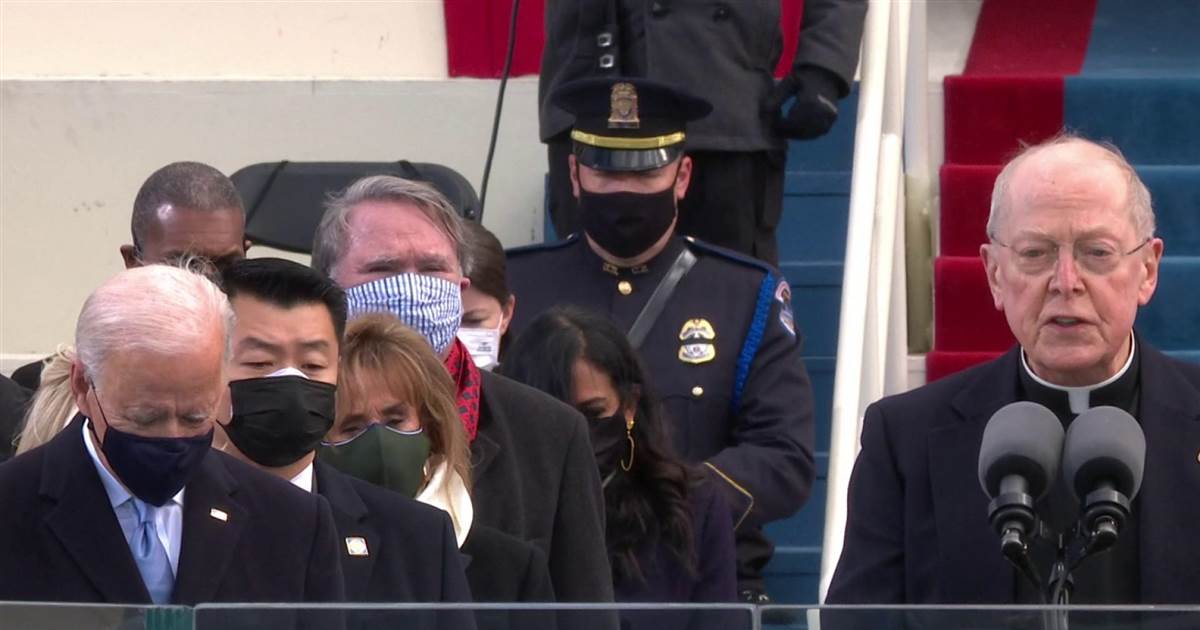



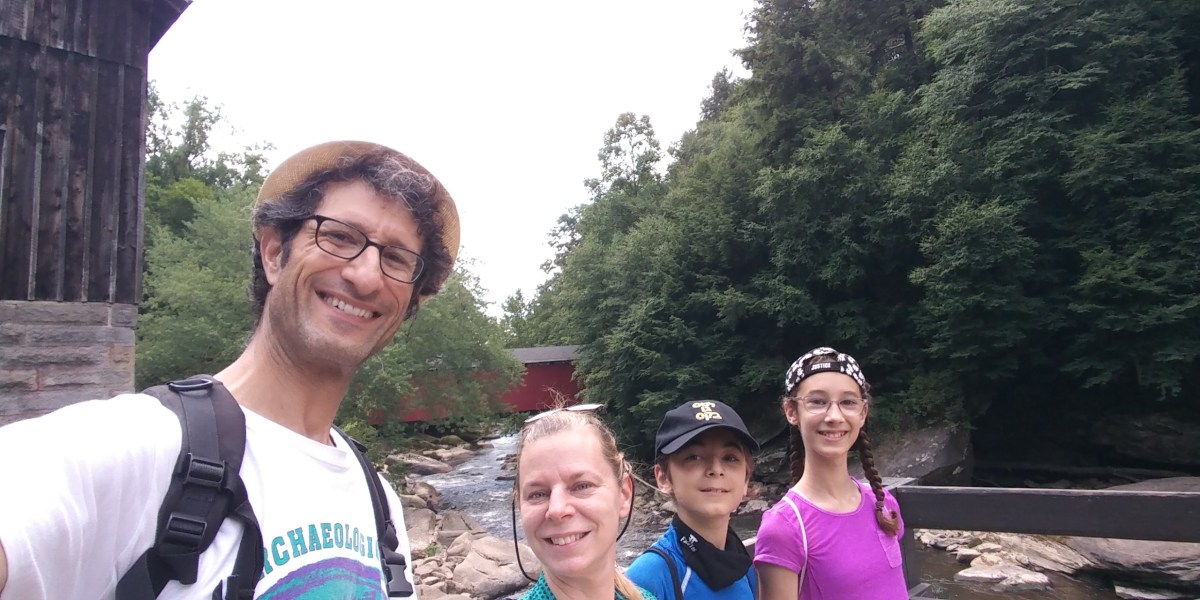
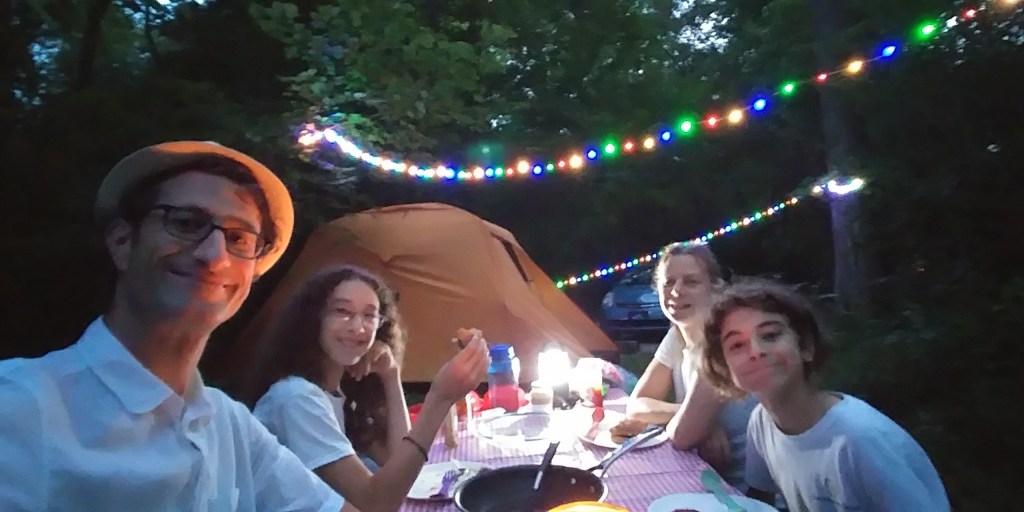




 The Modern Rabbi