Context matters. In fact, the way that we understand Judaism – our history, our rituals, and our textual heritage – here in the Conservative movement, is based upon this very principle. We never read our sacred texts or discuss Jewish law or ritual without context, both ancient and modern.
One simple example is the Amidah, the standing, silent prayer mandated by our tradition at least three times each day (four times on Shabbat!). You may know that there is no commandment in the Torah to recite the Amidah. However, when the Romans destroyed our Second Temple in Jerusalem in 70 CE, they put an end to the sacrifices, which ARE described in the Torah. Our rabbis decided that in this new context, daily recitation of the Amidah would take the place of those sacrifices.
And it requires even more context to understand why we invoke not only the Avot of our tradition, the Patriarchs, in the opening line of every Amidah, but also the Imahot, the Matriarchs as well. That is an innovation of the last few decades, an acknowledgment that we also look to the women of our ancient story as well for values and guidance. And it took the context of understanding women and men to be equals in Jewish life for this change to occur.
Our tradition has unfolded over thousands of years, and we always read our texts in the context in which they emerged, and our practices today must reflect our current situation.
Academics know that context matters. It is essential to understanding our world, our history, our cultures.
And yet.
There are some times when the invocation of “context” requires context. When presidents of three universities, when pressed on the question of whether protesters chanting certain anti-Israel and anti-Jewish slogans was permissible speech on campus, they deflected with, “It depends on the context.”
***
Ḥevreh, I must say that I’m just not shocked any more – not about the dramatic rise in anti-Semitic incidents in America, not about the insecurity Jewish students are feeling on campus, not about how many Jews feel that they have been abandoned by their political allies, not about how the American media covers the conflict in Israel.
I’m just not shocked any more.
But I am just a tiny bit surprised that the presidents of Harvard, MIT, and Penn publicly failed in unison to concede that language calling for the killing or displacement of Jews meets their campus standards for bullying or harassment.
The presidents, who responded with legalese when an honest, personal reckoning with the fact that people screaming “Intifada” are, in actuality, calling for the death of Jews. That is what that word meant when it was happening in Israel two decades ago.
And of course they issued apologies for their poor choice of words after the fact, and one of them is no longer a university president. But in the moment, when the spotlight was on them, they failed. When it really counted, they should have been there with the right answer, which is, “Calling for the killing of Jews is wrong under any circumstances. It does NOT depend on the context.”
And they totally, absolutely missed the point, which is that Jews all over America and the world, but most acutely on university campuses, are feeling the rise in anti-Semitism quite personally. The evident double standard here is that in recent years these campuses have gone far out of their way to accommodate the feelings and sensitivities to language of Black, Hispanic, Native, LGBTQ, Asian students and faculty in various ways. Even the slightest discomfort in this regard has caused university leaders to react vigorously and punitively.
But somehow, when it comes to Jews, our feelings do not matter. Anti-Semitism, in the minds of some, is just not enough of a thing. Jews are apparently too “privileged” for university administrators to bother with. When protesters call for “any means necessary,” which implicitly supports the brutalities of Hamas, is that not an actionable offense?
Even if, as a recent poll suggests, less than half of those marching for Palestine know which river and which sea they are referring to in one well-known chant, does the implied destruction of the State of Israel not threaten Jews?
Today in Parashat Miqqetz, we read a captivating moment: it occurs when Yosef’s brothers have come before him with their hands out, seeking food, and of course they do not know that they are standing before the brother they sought to kill many years earlier. And they are speaking to each other in Hebrew, and Yosef, who remembers the language of his youth, can understand them, but they are unaware.
We understood loud and clear what these representatives of the most prestigious universities in the United States were saying, and they had no idea. What they were saying, by referencing “context,” was, we are afraid.
We are afraid that if we admit on the record, before Congress, that “From the river to the sea,” or “Intifada” are anti-Jewish statements, that we will be called out by our allies. We are afraid, because while it is OK for Jews to be fearful, to cower in their dorm rooms, to be harassed on campus, it is definitely NOT OK for any member of any other persecuted group, and we definitely don’t want to anger any of those folks.
Ḥevreh, we, the Jews, cannot be afraid. We cannot allow ourselves to be bullied.
On the contrary, we have to hold our heads up high, to stand proudly with the people and the State of Israel, to stand with and for each other, and to keep doing what Jews have been doing for thousands of years – that is, carrying out the mitzvot / holy opportunities of Jewish life.
Some of you were here last week when Rabbi Mark Goodman taught a couple of Hasidic texts about the pit into which Yosef’s brothers had thrown him, back in Parashat Vayyeshev. One of those texts put forward a fascinating idea, one which we can absolutely draw on today. Rabbi Shemuel Bornsztain, the late 19th-early 20th centure Sochatchover Rebbe, wrote that it is our commitment as Jews to God’s covenant which maintains the presence of the Tzelem Elohim, the Divine Image, within us. When we fail at that covenant, the Tzelem Elohim disappears, and then we are on our own – that is, we are subject to the dangers of the world around us.
Framed more positively, our fulfillment of Jewish life – ritual, prayer, text learning, the mitzvot which highlight the holiness in our relationships – protects us and insulates us from danger. Our secret to survival is not the Anti-Defamation League, which is only 110 years old, although of course they do very important work. The reason we are still here is that we have maintained our spiritual heritage through millennia of persecution. When we merit the presence of the Tzelem Elohim, we have nothing to fear.
Something else happened nearly two weeks ago, which did not shock me, but certainly made me feel just a wee bit unnerved. Roughly 500 anti-Israel protesters showed up outside a kosher falafel restaurant in Philadelphia to charge the owner of the restaurant, our son of Pittsburgh, Michael Solomonov, with “genocide.” Will all those of us who are supportive of Israel soon be subjected to angry mobs?
Protestors in Philadelphia stand outside of a Jewish & Israeli owned falafel restaurant
I have heard from a friend who works for Hillel International, the center for Jewish life at colleges and universities, that the situation on American campuses for Jews is actually much worse than what you might hear on the news. It’s not necessarily the high-profile anti-Semitic incidents, like the one that happened at Cornell a month ago, but the subtler remarks, the low-level incidents, the constant barrage of anti-Israel language on social media and chanted on campus. It’s the pressure to concede to the pro-Palestinian narrative of Jews as oppressors, of the collective guilt of all Jews.
I am relieved to be able to say that we have not yet arrived at the equivalent of Kristallnacht, in November of 1938, when Nazi thugs across Germany destroyed synagogues and Jewish-owned businesses. Thank God.
But should we be concerned? Absolutely. Should we be reaching out to our elected officials? Yes, constantly.
And even more so, now is a crucial moment in Jewish life: a mandate to up our game. We need to double down on the formula which has held us together as a community in spite of the Romans, the Babylonians, Antiochus, King Ferdinand and Queen Isabella, and on and on. We must continue gathering in synagogues for prayer. And kindling lights. And teaching our children the words of our ancient tradition, and the contexts in which they emerged. And upholding all of the traditions which have maintained Tzelem Elohim – God’s image – within each of us.
Context matters, and in our current context, the spiritual framework which has guided and nourished and protected our people for the entirety of our history still works. And we need that framework today, more than ever.
Here is a piece of advice for the current moment: Do not take your mezuzot down from your doorposts.
Our patriarch Avraham, the first monotheist and the father of Judaism, Christianity, and Islam, is described in Parashat Vayyera as hospitable; he welcomed guests into his tent. A midrash suggests that this tent was open on four sides, which leads to a very, very important question: were there four mezuzot on the exterior doors of Abraham’s tent?
Now, you might say that question is clearly ridiculous. According to traditional chronology, Moshe receives the Torah on Mt. Sinai nearly 500 years after Avraham walked the Earth, so how could Avraham have known to put mezuzot on his doorposts? The commandment to inscribe the words of the Shema on our doors had not yet been given. But there is another tradition that tells us that the Avot, the patriarchs, and by extension the Imahot/matriarchs as well, kept the entire Torah, even before Mt. Sinai.
So of course Avraham had mezuzot on his tent doors!
I’ll come back to that.
Meanwhile, I’m getting asked quite frequently how I am doing, and in general, as is customary, I answer, “OK.” That is also how my son, who is still in the north of Israel at an artillery position, behind a large gun aimed at Hizbullah, answers when he is asked. I am grateful that he is not on the ground in Gaza, although you may know that we have multiple children of this congregation who are there right now, and we are praying for them all.
But I must say that I am not feeling too good about the world right now. In the coming week we will observe the 85th anniversary of Kristallnacht, the Night of Broken Glass, when Nazi-aligned thugs across Germany, Austria, and the Sudetenland destroyed 267 synagogues, 7,000 Jewish businesses, and murdered at least 91 Jews.
In the wake of Kristallnacht. Fasanenstrasse Synagogue, Berlin, 1938.
What we are seeing around the world right now – on European streets, on American college campuses, and even in our own neighborhood – is tremendously unsettling, even though, thank God, we are not yet seeing a reprise of 1938.
Nonetheless, in Paris, vandals are painting Jewish stars on Jewish-owned buildings. On TikTok, Jewish content creators have been subjected to an avalanche of hatred. At Tulane University, a student was punched in the face for standing with Israel.
I loved the four years I spent on the campus of Cornell University, studying chemical engineering, singing in an a capella group, and occasionally dining at what was at the time a brand-new kosher dining hall.
That kosher dining hall was deserted a week ago, its regular diners too scared to leave their dorm rooms, as threats to the physical safety of Jewish students at Cornell were posted online. Thank God, the police have found the alleged perpetrator. But for those students who felt that their lives were threatened, I do not see how there can be any real comfort right now.
Nor for the students at Columbia who held a press conference to plead for protection from the university from the constant harassment they face from anti-Israel activists. Nor is there comfort for the students at George Washington University, where the slogan, “Glory to the Martyrs” was projected on a building. To be clear, the “martyrs” being glorified here are Hamas terrorists who infiltrated Israel and executed barbarous atrocities too graphic to speak of in a house of worship.
Ladies and gentlemen, Hamas has successfully pulled the wool over the eyes of the world. In a sinister turn, the world’s attention has turned to the humanitarian catastrophe in Gaza, which is undeniably real, and truly awful. But let us be clear: this catastrophe was not created by Israel.
Billions of dollars in aid have been given to Gaza by international organizations. Did Hamas pour that money into infrastructure that would sustain its people? No. They built hundreds of miles of tunnels and more powerful rockets with which to carry out what they cynically call “resistance” to the “Israeli occupation.” They built their headquarters under the main hospital in Gaza City, rather than improving the capacity or care of that hospital.
And so there have been huge demonstrations on college campuses where students and faculty are actually praising Hamas! This past week, more than 100 Columbia professors signed a letter that sought to “recontextualize” the conflict, calling the brutal and horrific attack of October 7 a “military action,” and supporting those students who defend the actions of Hamas.
Here is a question that we might ponder: When Russia invaded Ukraine, at first in 2014 and then escalating in 2022, were there campus protests supporting Vladimir Putin, or “recontextualizing” the Russian invasion? I wonder why not?
The Syrian civil war has been going on now for 12 years, and the UN estimates that over 300,000 Syrians have been killed. Where are those marching for justice in Syria?
Even less well-known is the civil war in Yemen, which, by the way, apparently just declared war on Israel. Somewhere near 400,000 Yemeni civilians have been killed; 85,000 children have died of starvation since 2014. Where are the voices calling for humanitarian aid in Yemen? Where are the calls for “ceasefire now”?
You know where the world’s largest refugee camp is? Bangladesh, where over a million Rohingya Muslims have fled actual genocide at the hands of the military leadership of Myanmar. Where is the outrage? Where are the projections on campus buildings, the graffiti?
So what’s the difference between the action on the ground in Gaza and all of those other situations? Jews. The world simply cannot stand with the Jews.
And though there is always legitimacy, necessity even, to criticizing governments and policies, since Oct. 7, it is apparent that, lurking behind much of the current criticism is the sneaky specter of anti-Semitism. The ADL calculated that the number of anti-Semitic attacks over the first two weeks following Oct. 7 was up 388% from the same period last year. There is a little irony here: anti-Jewish attacks beget more anti-Jewish attacks.
There are even Jews who cannot stand with the Jews. Groups like Jewish Voice for Peace and IfNotNow, who think that they are supporting the Palestinian people by labeling the death of innocent civilians who are being used as human shields as a “genocide,” and by calling for a ceasefire. They are delusional; they are, in fact, supporting terrorists who seek only to destroy.
I know it is very tempting to say, just stop. The idea of a ceasefire is appealing. The problem with calling for “Ceasefire now,” is that a ceasefire benefits ONLY Hamas. Hilary Clinton – not exactly a military hawk – said exactly that this past week.
By the way, there was a ceasefire in place up until October 6th. Who broke it? And what happened? And if there is a ceasefire now, what will inevitably follow? Hamas will regroup, strengthen itself, acquire better rockets and training from Iran, and then attack Israeli civilians again. And again. And again. And the Palestinian people gain nothing – only more death and destruction and sorrow.
In 1946, Lutheran Pastor Martin Niemöller gave a confessional speech in Germany, in which he famously admitted his own guilt, and the guilt of all well-meaning people in Germany, for the murder of 6 million Jews. Although the original text was lost to history, it is often rendered this way:
First they came for the socialists, and I did not speak out— Because I was not a socialist.
Then they came for the trade unionists, and I did not speak out— Because I was not a trade unionist.
Then they came for the Jews, and I did not speak out— Because I was not a Jew.
Then they came for me—and there was no one left to speak for me.
Now is the time for those who care about all that is good and righteous and hopeful for the future to stand up and speak up for the safety of Jewish people, in Israel and around the world. Now is not the time for a ceasefire. Now is the time to do what should have been done long ago: to remove Hamas from power and to give the Palestinian people a government that will work for their benefit.
That is a wee bit too easy to say, I know. But remember also that I have a son who wears the uniform of the Israel Defense Forces, and is standing in the line of terrorist fire, and in some sense, all of us do so as well.
And if nobody else stands up for the Jews, we must stand up for ourselves – for our heritage, history, culture, wisdom, and tradition of discernment. Edmond Fleg was a French Jewish writer, who in 1927 wrote a short treatise called, “Pourquoi je suis Juif.” Why I am a Jew. In it, he said the following:
I am a Jew because the faith of Israel demands no abdication of the mind.
I am a Jew because the faith of Israel demands all the devotion of my soul.
I am a Jew because in all places where there are tears and suffering the Jew weeps…
I am a Jew because the promise of Israel is a universal promise.
I am a Jew because for Israel the world is not finished; men will complete it.
I am a Jew because for Israel man is not yet completed; men are completing him…
I am a Jew because in every age when the cry of despair is heard the Jew hopes.
In completing the world, in weeping and hoping, we must stand one and all with Israel as she engages – we hope, carefully and cautiously and with a minimum loss of life – to do the right thing for humanity.
And we must stand up for ourselves: being loudly and proudly Jewish. And maybe, just maybe, some of our friends and neighbors will stand with us.
So don’t take down your mezuzah. Because if there is one thing that people who hate Jews detest even more than Jewish people, it’s Jewish people who are not afraid to be Jewish.
And I have some good news! Our friend Rev. Canon Natalie Hall told me this week that she is embarking on a mezuzah project with her community, and we hope that it will spread even further. Given the attacks on Jews, the anti-Semitic graffiti, the fear in our very neighborhood, she is going to order a whole bunch of mezuzot boxes (not with scrolls inside) for our non-Jewish neighbors to put on their doors, so anybody seeking out a Jewish house to do harm will not know which ones are actually inhabited by Jews.
It’s a small gesture of solidarity, but I hope it will be tremendously meaningful.
Adonai oz le’amo yiten; adonai yevarekh et amo bashalom. May God grant strength to God’s people; may God bless God’s people with peace.
First, a brief review: our theme for this year is “Being There” – being physically connected, being here, being present in both mind and body, and in particular how we need this especially right now as the pandemic is winding down and many of us are reconnecting to Jewish life.
I spoke on the first day of Rosh Hashanah about having your own minyan, that is, joining a ḥavurah, which is a small-group program that we at Beth Shalom will be rolling out in the coming months, and we hope you will participate.
On the second day of Rosh Hashanah, I spoke about the fact that Jewish tradition expects you to Be There, to show up. This is a continuum, and the synagogue has always been the primary place of gathering for the Jewish people. We are here for you at the corner of Beacon and Shady all the time, all the days of your life, and the nights as well. Come be here with us.
Tonight the theme is qehillah qedoshah, sacred community. Most of us may not be familiar with this term, but it is the universal Hebrew designation for “congregation.” Not synagogue, mind you (that, of course, is beit kenesset, “house of gathering”), but congregation, which is more a statement about relationship than about a particular building or location. A synagogue is a place. Qehillah qedoshah refers to the people.
While most of us gathered here tonight are members of this qehillah qedoshah, this sacred community of Beit Shalom, we are also part of a sacred community which extends to all Jewish people around the world. You might call that Qehillah Qedoshah Am Yisrael. The Sacred Community of the People of Israel.
That sense of interconnection has been a part of the Jewish people as long as there have been Jews. Sure, we disagree with each other, and we certainly do not all see eye-to-eye about theology or halakhah / Jewish law or even who is a Jew. Our world-wide community is marked by a great palette of variation in practices and customs, foods and unique rituals, music, and stories. But we are all connected within this community of Jews around the world.
What does that mean, exactly? It means that when you meet another Jewish person from somewhere else, that you know that you share certain things: our Torah, our rituals, our Shabbat and holidays, our Jewish values, our mitzvot, our history. There are certain terms and ideas which transcend language and local culture.
Years ago, I was at a Shabbat morning service at the Dohány Street synagogue in Budapest, the largest synagogue building in Europe, and I somehow managed to get an honor: hagbahah, lifting the Torah. So I’m sitting in the front row, and there is an older Hungarian gentleman sitting next to me, and he attempts to greet me. Now, my wife, being the daughter of Hungarian Shoah survivors, speaks reasonably decent Hungarian, but I know a few key words and nothing more.
Dohany Synagogue, Budapest
It became immediately obvious to me and this older gentleman that we had no common language. But there we were, sitting in the front row in this 5,000-seat synagogue. And we shared that moment together, appreciating our mutual membership in the qehillah qedoshah, sacred community of our people.
Some of you know that Rabbi Shugerman and I participated in the Federation’s Mega Mission to Israel in June, along with about 240 other Pittsburghers, including about 25 who are members of Beth Shalom. Among the many things that we did was to visit the organizations and communities which our Federation supports, places like Beit Issie Shapiro in Ra’anana, which provides education and therapy services for people with disabilities of all ages, the United Hatzalah center in Jerusalem, where we dedicated a new motorcycle ambulance, and of course our partnership region in Karmiel and Misgav, all the way up north, where we not only celebrated with new teenage immigrants from the former Soviet Union, but also packed supplies for the hundreds of Ukrainian refugees that the region has taken in.
Most of the Beth Shalom contingent on the June 2022 Mega Mission to Israel
It is something we might occasionally miss, sitting here in Pittsburgh, far away from such communities: we are part of an extended qehillah qedoshah. Our sacred community reaches around the world.
Last year at this time, I gave an emotional appeal for the State of Israel, about our connections to the people and land of Israel through the lenses of tradition, of culture, and of the issues surrounding Jewish power. I spoke of the philosopher Aḥad HaAm’s concept of the merkaz ruḥani, of Israel as the “spiritual center” of the Jewish world.
This evening, I would like to remind us all about some fundamental truths about the State of Israel, things that we all should know. And I want you all to recall that Being There, that is, being a part of our qehillah qedoshah, our sacred community, includes feeling connected to and supporting our Israeli cousins. And all the more so right now, as American public opinion, and to some extent American Jews, are turning away from the State of Israel.
You may have seen the recent CNN Special Report on anti-Semitism in America, in which the CNN reporter Dana Bash, who is Jewish, covered several stories about the return of Jew hatred here.
One of the segments was about a painful incident which took place within the past year at the State University of New York at New Paltz. A Jewish student at New Paltz, Cassandra Blotner, was a founding member of a support group for survivors of sexual assault, called New Paltz Accountability, or NPA. Last December, she shared the following statement on her personal Instagram account, reposted from another Instagram user:
“Jews are an ethnic group who come from Israel. This is proven by genealogical, historical and archeological evidence. Israel is not a ‘colonial’ state and Israelis aren’t ‘settlers.’ You cannot colonize the land your ancestors are from.”
As a result, other members of the NPA group began to call for her removal from the group, because, in their opinion, anybody who is a Zionist is not welcome in the group, because Zionism is “racist” and “white supremacist” and that Zionists promote “genocide.” Members of the group accused her online of condoning oppression and violence against Palestinians, which she does not.
The NPA’s Instagram account featured a post stating that, “The origins of sexual violence are rooted in colonialism… Colonialism uses sexual violence as a tool to uphold white supremacy and conquer stolen land,” and that any justification of “the occupation of Palestine” is therefore effectively condoning rape.
Blotner and another member of the group, Ofek Preis, who is a Jewish Israeli, soon became victims of online harassment, including anonymous death threats. They filed a civil-rights complaint against SUNY New Paltz, claiming that the university failed to protect them from harassment and threats.
What is especially disturbing about this episode is that Ms. Blotner, a sexual-assault survivor who was seeking to help others like her by creating a support group, was further victimized by others who implied that her pro-Israel views were effectively causing sexual violence. If that is not an example of blaming the victim, I don’t know what is.
Along those lines, if you have not seen the new Ken Burns documentary, The US and the Holocaust, it is certainly worth the 6 hours or so of your time. The series deftly defuses the mistaken belief that the United States did not intervene to stop the Nazi horror because Americans were unaware of what was happening in Nazi-occupied Europe. This is a myth with which many of us were raised here in America.
On the contrary: Burns shows in abundance that the whole world knew, and even though President Franklin Delano Roosevelt personally felt that the US should intervene to save Jews, American public opinion was that our country should not open its doors to Jewish refugees. Sadly, this opinion was even espoused by some American Jews as well.
In one episode, the Holocaust historian Daniel Greene points out that a poll taken in 1938 showed that two-thirds of Americans believed that Jews in Nazi-controlled areas were either partially or completely responsible for their own persecution. Let that sink in for a moment.
Ḥevreh, I cannot stand before you and say with a straight face that all criticism of the State of Israel is rooted in anti-Semitism. I have lived in Israel, and my oldest son is currently serving in the Israel Defense Forces. There is plenty to criticize, with regard to the State’s historical treatment of Mizraḥi Jews, Jews from Arab countries, with regard to recent governments’ poor handling of issues surrounding freedom of Jewish practice for non-Orthodox Jews like us, and of course regarding aspects of the treatment of Palestinians in the territories. Israel is a real nation with real problems, governed by real people; she is also a thriving democracy, with a healthy free press. Citizens of China and Russia and Iran, and really much of the world would be envious of the robust debate and criticism of government policy found in Israel’s public discourse if they were aware of it.
But we as American Jews must also acknowledge that our Israeli cousins are part of our greater qehillah qedoshah, and in doing so we have to call out unfair criticism, particularly when it veers into anti-Semitic territory.
To that end, there are three things that you may hear some critics of Israel say which should make you very, very uncomfortable:
Calling Israel an “apartheid” state.
Labeling Israel a “colonial” enterprise, or a “settler-colonial” state.
Accusing Israel of genocide.
Apartheid
Apartheid, the Afrikaans word for “separateness,” was the legally-enshrined racial categorization system that functioned in South Africa for nearly five decades in the 20th century. Under apartheid, all citizens were categorized into four distinct races: White, Black, Indian, and Coloured, and laws about whom you could marry, where you could live and work, how you could vote and for whom, were all a part of that system. It was a system that was fundamentally unjust, denying non-white people many of the rights that we all agree should be universal.
The application of this term to Israel is not only inaccurate, it also diminishes the suffering of Black South Africans under apartheid, and demeans their struggle and loss of life in defeating that system. In Israel, there are Arab doctors and lawyers and professors and judges, and for the last year even an Israeli Arab party in the governing coalition. While Israeli Arabs certainly face discrimination and inequities, many also thrive within Israel and are loyal citizens.
It is certainly true that the Palestinian Arabs of the West Bank live in much worse circumstances, and the failures and intransigence among multiple parties involved in attempting to resolve these challenges continues to extend their predicament, including high unemployment and other serious social ills. And while Israel is certainly a part of this situation, it is not solely the fault of the Israeli government. And even in the Palestinian territories, applying the term “apartheid” is clearly only an attempt to unfairly characterize the situation to make Israel and Jews look bad.
Colonialism
It has become fashionable in some circles to refer to Israel as a “settler-colonial” state, meaning a place where a foreign power sent settlers to colonize the state and establish an outpost of that foreign power. All of the nations in North and South America, and many other places around the world, would fall into that category. But Israel does not, for a few reasons:
There has been a continuous Jewish presence in the land of Israel for at least 2500 years.
The Jews who left other countries in the waves of Zionist migration from the 1860s and onward were not sent by Russia or Poland or Germany or England or Yemen or Iran to establish outposts of those countries; on the contrary, those folks who relocated saw themselves as returning to the historical home of the Jewish people, and in many cases, were of course fleeing the native anti-Semitism in their former lands.
In doing so, they rejected the cultures of their former countries, reviving the Hebrew language, adopting Middle Eastern foods and cultural norms. No other settler movement has done so.
One can only conclude that the terms “colonial” or “settler-colonial,” when applied to Israel, are meant as a slur to delegitimize her, and deny that Jewish people have a right to live there.
There is no statute of limitations on ancestral land, and we, the Jewish people are entitled to the self-determination that all other nations enjoy.
3. Genocide
This is an especially flagrant distortion. We, the Jews, know what genocide is: we still have living witnesses among us to the Shoah.
General Dwight Eisenhower with American troops who liberated the concentration camp in Ohrdruf, Germany, April 12, 2945
Genocide, as attempted by the Ottoman Turks against the Armenians, by the Nazis, in Burma and Bosnia and Rwanda and Cambodia, is deliberate and systematic, and the intent is to destroy the targeted group.
After Israel withdrew from Gaza in 2005, the terrorist group Hamas took control of the territory. Whenever there is fighting between Israel and Hamas, and of course this has continued to happen from time-to-time due to Hamas’ continued attempts to kill Israeli civilians, the number of Palestinians killed is always dramatically higher than the number of Israelis. In May of 2021, in eleven days of Palestinian attacks on Israeli civilians, followed by Israeli reprisals to dismantle terrorist infrastructure, 14 Israelis died, and 256 Palestinians.
We should never dismiss the loss of any human life, and the pain of loss on both sides of the Gaza border is truly awful. But the asymmetric body count does not make Israel guilty of genocide. On the Israeli side, this is a fight for defensible borders, so that she can protect her people. But for Hamas, the stated goal is, in fact, Israel’s annihilation.
There are no roving Israeli killing gangs deliberately targeting Palestinians. There are no concentration camps, no transports to death camps, not even attempts to physically relocate the Palestinian population to Jordan or somewhere else.
The accusation of Israeli genocide is outrageously hyperbolic, and we should decry it as such.
***
OK, Rabbi. Even if those characterizations are inaccurate or unfair, why should we support the State of Israel if we have to constantly defend her actions? And why should we care, here in Diaspora? Should we not focus more energy on our spiritual needs here?
As tempting as it may be, we cannot look away. We cannot stand idly by while fellow members of our qehillah qedoshah, our sacred community, are slandered. It is up to us, the second-largest Jewish community in the world, to stand with Israel.
And I want to reinforce that that does not mean we cannot be critical. But we should do so in a way that does not amplify the voices of those who want to see Israel just go away. We cannot give ammunition to Israel’s enemies, and she has very real enemies, who are armed and dangerous and located very close by. On the contrary, the only way we are going to guarantee a sustainable future for all the people who live on that tiny strip of land, is to be in conversation with all those who are willing to work toward that future together. Coexistence is the only possible solution.
We cannot turn our backs. We cannot disengage. We cannot afford to do so.
On the contrary, we have to work harder to connect with and understand Israel and Israelis.
As for the question of, “Why should we care?” Two generations ago I would not have had any reason to even address the question. But given some of the statistics which I have shared with you in the past about American Jews’ gradual disengagement with Israel, I find myself making this case again and again: Israel is worth defending.
The idea of a Jewish homeland is worth defending, even for those of us who are perfectly happy living here in America. And Israel the country – with all her imperfections – is worth defending.
One of those reasons is that of which we should never lose sight: had Israel existed in the 1930s, it is quite likely that six million souls would not have succumbed to the brutality of the Nazis and their willing collaborators. The Burns documentary makes that abundantly clear, when he reminds us that at the Evian Conference in July, 1938, 32 nations in attendance from around the world all expressed sympathy for the plight of German and Austrian Jews seeking refuge, but only the Dominican Republic and Costa Rica agreed to raise their immigration quotas. Hitler saw that as a green light to dispose of his Jews any way he wanted to; nobody else wanted us.
God forbid we should need Israel for that purpose. But there is a better reason for us to remain firmly connected to Israel: and that is that she is, increasingly, a source of inspiration for contemporary Jews around the world, not only as a tech powerhouse or a proud center of secular Jewish culture, but she is also rethinking Judaism for modern Jews.
In recent years, new batei midrash / houses of study have popped up in Israel, created by and aimed at secular and non-Orthodox Jews, where Israelis from diverse backgrounds are learning Talmud and midrash and other Jewish text. New egalitarian and contemporary congregations have formed, headed by a generation of young, native rabbis, who are re-envisioning what it means to be Jewish. Modern Jewish identity is changing. Rabbi Rinat Safania Schwartz, who leads a congregation in Shoham, recently wrote the following:
I want everyone to feel that the very fact of being Jewish confers both the privilege and the responsibility to take personal and communal ownership of their Judaism – of our language, tradition, culture, literature, and all aspects of Jewish creativity. It’s critical that we move people away from relating to their Judaism as if it were in a museum. People must feel that they can “touch,” feel, renew, and create from within.
From “From the Fruit of the Land: Ten Israeli Spiritual Leaders Reflect on the Budding Opportunities for Israeli Judaism Today,” The Honey Foundation for Israel, 2022.
Rabbi Schwartz’s language is quite different than that of most Orthodox Israeli rabbis; she is not alone in finding new ways for Jewish Israelis to express their Judaism.
The members of our extended Qehillah Qedoshah in Israel will help us all build the new Judaism of the 21st century. It is Israel which will be the Diaspora’s partner in maintaining a healthy non-Orthodox Judaism for the future.
So what can you do?
Get to know our four shinshinim, young Israelis who are between high school and army service, who are with us in Pittsburgh for the year
Spend some time learning the history of how and why this patch of land passed from one empire to the next. Learn how the modern state of Israel came to be.
Become familiar with Israeli politics. This is an exciting time – the fifth round of parliamentary elections in three years, coming up in a few weeks.
Go there! We’ll have another congregational trip, probably in 2024
Send your kids to Israel! There are so many options now: Ramah, USY, HSI, Nativ, and of course Birthright.
It is up to us to recognize the bonds that tie each and every one of us people together around the world, and to acknowledge that Israel is the gravitational center of our peoplehood, Qehillah Qedoshah Am Yisrael.
Tomorrow, for our fourth and final installment in the Being There series, we will speak about ḥevruta, the essential Jewish concept of partnership.
~
Rabbi Seth Adelson
(Originally delivered at Congregation Beth Shalom, Pittsburgh, PA, evening of Yom Kippur, 10/4/2022.)
We passed an unfortunate milestone this week. Fifty years ago, on September 5th, 1972, a group of Palestinian terrorists called Black September, assisted by West German neo-Nazis, entered the Olympic Village in Munich and took 11 members of the Israeli Olympic team hostage. Two of the athletes were immediately murdered, and the other nine were killed when the West German police bungled their attempt to rescue the hostages. The Olympic games were suspended for a day and a half while the hostage situation was taking place, an unprecedented act. The murdered athletes included Shoah survivors, including one who had participated in the Warsaw Ghetto uprising, as well as immigrants to Israel from Russia, Belarus, Poland, Romania, Libya, and the United States.
A paradox of those Olympic games that summer is that Mark Spitz, a Jewish American from California, won 7 gold medals in swimming competitions. When the hostage situation unfolded, Spitz had already completed his events, and was immediately whisked back to America lest he be a target for kidnapping as well.
Mark Spitz
On the one hand, this victory for a Jewish American was something for us to celebrate: a Jewish athlete who had performed miraculously, honoring his country and his co-religionists, and only 27 years after the Nazi horror was vanquished in that land. On the other, the tragedy overshadowed everything else: Jewish blood flowed once again on ground that was long soaked with the same, at a location 10 miles south of Dachau. The peaceful, non-political nature of the Olympics was shattered by an act of political terrorism, carried out against representatives of the only Jewish state in the world, who were murdered because they were Jews.
We, the Jews, know and understand tragedy; our history is littered with the tales of anti-Semitic persecution, people who were tormented just because they were Jewish. The Munich Massacre was only one highly-visible instance of the ways in which our people have been victimized due to our otherness.
But of course, we also know that we have survived, and often thrived, and in some cases, as with Mark Spitz, have been wildly successful despite anti-Semitism.
And let’s face it: 50 years may seem like a long time to some of us – I was 2 years old at the time, and thankfully unaware of what had transpired – but really, half a century is next to nothing when considering thousands of years of Jewish history.
And right now, many of us are deeply concerned about anti-Semitism once again. Some of you may have seen the recent CNN special report about anti-Semitism, which, although curiously omitting outright mention of the Pittsburgh tragedy of 10/27, did shine some light on the current state of affairs, and of course it is not pretty.
We have a genuine reason to be concerned right now. The statistics of anti-Semitic hate crimes have risen dramatically in recent years, buoyed by the pandemic, the boost in white nationalist activity that occurred in tandem with the Trump administration, anti-Israel sentiments which often cross over into outright anti-Semitism, and all of this, of course, is aided and abetted by the fantastic new tools of social media.
But of course, there is only one response to Jew hatred, the same approach that our people have always taken, and that is this: be loudly and proudly Jewish.
Qal vaḥomer, all the more so now that anti-Jewish activity is on the rise. Now is the time to recommit to tradition, because if there is one thing that makes anti-Semites recoil, it is a Jew who is not afraid.
The principle of qal vaḥomer, by the way, plays a starring role in my favorite mitzvah, which appears in Parashat Ki Tetze. What’s my favorite mitzvah? So glad you asked! In Hebrew, it’s called shilluaḥ haqen, sending the mother bird from the nest (Devarim / Deuteronomy 22:6-7):
If, along the road, you chance upon a bird’s nest, in any tree or on the ground, with fledglings or eggs and the mother sitting over the fledglings or on the eggs, do not take the mother together with her young. Let the mother go, and take only the young, in order that you may fare well and have a long life.
That you may fare well, etc. If in the case of an easy command which involves no monetary loss, Scripture states “Do this in order that you may fare well and have a long life”, it follows, qal vaḥomer, all the more so, that this at least will be the reward for the fulfillment of mitzvot which are more difficult to observe.
That is, if you can fulfill the mitzvah of shilluaḥ haqen, which is not so hard (as long as you are looking for nestlings to eat) and the reward for this is long life, then qal vaḥomer, just think of the reward you will receive for fulfilling the more challenging mitzvot.
Likewise, in considering the ongoing scourge of anti-Semitism, we have to remember that we should celebrate our being Jewish when we mark our successes, when it is easy to celebrate and be proud and loud and open. Qal vaḥomer, all the more so when we are threatened, when it is hard to do so, we have to be even more loudly and proudly Jewish.
Because, let’s face it: anti-Semitism is not going away. We have lived with it for millennia. And we cannot act like ostriches and bury our heads in the sand and pretend it is not there. So of course we must do the best we can to protect ourselves, but more importantly, we have to try not to be afraid.
I have mentioned in this space before an art song by the early 20th-century composer Joel Engel, based on the story of Rabbi Levi Yitzḥaq of Berdichev’s fabled din toyre, or lawsuit, against God.
What Rabbi Levi Yitzḥaq of Berdichev says is, You, God, have given so much to so many: the mighty empires of this or that country, the powerful kings and great armies. But what have you given the Jews? Nothing but misery and suffering. All we have is Qaddish. All we have is a prayer for the dead. And yet, says R. Levi Yitzḥaq, in response to our God-given plight:
Lo ozuz mimkoymi! I will not move from my place! (Hebrew)
Khvel zikh fun ort nit rirn! I will not stir from my place! (Yiddish)
Un a sof zol dos zayn! There must be an end [to this suffering]
Un an ek zol dos nemen! It must all stop!
Yisgadal, veyiskadash, shemei rabba! May God’s great name be magnified and sanctified!
You might say that the legal strategy of R. Levi Yitzḥaq of Berdichev is defiance. Defiance of those who hate us and persecute us. That is our primary weapon of self-defense. We will not move an inch from the place of pride, from the place of leaning into Jewish tradition, to practicing our rituals and laws and studying and applying our holy ancient texts. That is what we have always done. We ain’t movin’. Qal vaḥomer in the face of anti-Semitism.
I am very proud of our community, right here in Pittsburgh, that even as we continue to grieve for the 11 members of our community who were murdered by a person motivated by anti-Semitic hatred nearly four years ago, that we have not backed down from our own commitment to our tradition. On the contrary, our community is thriving. Qal vaḥomer.
According to statements he has made in the past half-century, Mark Spitz never really saw himself as a Jewish standard-bearer. But the juxtaposition of his Olympic victories alongside the terrorist horror of Munich made him an obvious target of “qal vaḥomerism”. Just as Jewish pride flows from the thrill of victory, all the more so from the pain of tragedy.
Lo azuz mimmeqomi. I shall not move from this place.
A final note: Pittsburgh is hosting the second annual Eradicate Hate Global Summit from Sept. 19-21 at the Convention Center. Among the keynote speakers are Ambassador Deborah Lipstadt, United States Special Envoy To Monitor And Combat Antisemitism and Alice Wairimu Nderitu of Kenya, the United Nations Special Adviser on the Prevention of Genocide. I attended as many sessions as I could at last years’ summit, and I can assure you that it is worth your time as well. It’s open to the public.
In the opening moments of Parashat Ḥayyei Sarah, Avraham loses his wife Sarah, and he cries for her, mourns for her, eulogizes her, and buries her.
There is no question that Pittsburgh’s Jewish community is still in mourning, three years after the horror that was perpetrated in our neighborhood by a murderer motivated by “the Great Replacement Theory,” the detestable idea held by white nationalists that Jews are engineering the “replacement” of white people by importing dark-skinned immigrants from elsewhere.
Charlottesville, Virginia, August 2017, where marchers chanted, “Jews will not replace us.”
There is no question that the fabric of this community was irreparably torn on that day. You may know that it is customary when in mourning to wear a piece of torn clothing (we usually represent this with those ubiquitous black ribbons, although the real tradition is to actually tear your shirt). If it is a parent whom we have lost, that torn shirt may be sewn up, but may never be entirely repaired. So too will we as a community never be entirely repaired from that Shabbat morning, the 18th of Ḥeshvan*.
Even as we remember those whom we lost, even as we recall the last time we saw Cecil Rosenthal in the Beth Shalom office, patiently waiting for minḥah, or Dan Stein in the JCC locker room, we nonetheless also have to remember that life goes on. That is, of course, why we say the words of the Mourner’s Qaddish, which mentions not death but life, and the God-given framework of life which enables us to go from day to day, from week to week, from year to year. These ancient customs carry us from the depths of shiv’ah to the end of a year of mourning and onward, to the point where we can celebrate with a young couple who will soon be married, as we have done today.
Cecil Rosenthal
It is not coincidental that the American Jewish Committee released its third annual report on the state of anti-Semitism this past week. The survey is based on the perceptions and experiences of 1,433 American Jewish adults, and compares with attitudes about anti-Semitism within the general American public. Now it is worth highlighting that this survey is not based on incidents reported to law enforcement, but rather on the experiences of the respondents.
And, as you might expect, Jews not only perceive rising rates of anti-Semitism, but also that their perception of anti-Semitism is much higher than that of the general public.
We should all be concerned about anti-Jewish attitudes and perception, particularly in light of what happened here three years ago. But we should also put this in perspective: anti-Semitism is truly an ancient hatred. It has always and will always be around us. While the rate of anti-Jewish acts – from graffiti on Jewish buildings to desecrating Jewish cemeteries all the way up to physical attacks on Jewish people and institutions – may wax and wane, they have never gone away. And they never will. While we might have thought for some time that America is different, we now know that is not reality.
CEO and President of AJC David Harris released a statement regarding the report, in which he said the following:
Now is the time for American society to stand up and say “Enough is enough.” American Jews see antisemitism on the far right and the far left, among extremists acting in the name of Islam, and elsewhere throughout America. It is 2021, and a disturbing number of Jews in America are afraid of identifying openly as Jewish for fear of attack. Where is the outrage? Where is the recognition that antisemitism may begin with Jews but, ultimately, targets the fabric and fiber of any democratic society?
While I agree with Mr. Harris that anti-Semitism, like all forms of hate, is a pernicious phenomenon that eats away at all of us, I must say that I am done with being outraged. Yes, we should make people aware of anti-Semitism in all its forms. Yes, we should chastise public figures of all sorts who dip their toes into anti-Semitic waters. Yes, we should be vigilant in protecting ourselves from physical threats.
But outrage? There is enough outrage in our world. Our society has turned the outrage knob to eleven. Social media platforms, and to some extent more traditional media outlets are in fact outrage machines.
So rather than add to the outrage, I want to us to make sure that our response to rising anti-Semitism is an intentional one.
Consider the words of our neighbor and friend, Reverend Canon Natalie Hall, who is now the Interim Rector of the Church of the Redeemer on Forbes. Reverend Hall spoke at the memorial service hosted by the 10.27 Healing Partnership on Wednesday in Schenley Park, and she invoked the words of Psalm 23 to make a point which really resonated with me.
Rev. Canon Natalie Hall, Oct. 27, 2021. (Courtesy of the Pittsburgh Jewish Chronicle)
She noted that the tone of the psalm, which speaks of being sheltered and protected by God in the context of threatening evil, takes a surprise turn toward the end. The next to the last verse reads (Tehillim / Psalms 23:5):
You prepare a banquet for me in the presence of my enemies; my head is anointed with oil; my cup runs over.
Said Rev. Hall:
Enemies. What a startling turn. At the end of a walk with the Almighty, we’re invited to a table with those who differ from us. Adversaries. People who don’t know, understand, or even like one another. It’s here that we’re refreshed with overflowing cups. Why? Because God knows it’s hard to hate your neighbors when you share dinner.
In the closing picture painted by the psalm, we are dining “neged tzorerai,” sitting opposite those who despise us. It is a reminder that at the end of the day, we can be outraged about those that hate us; we can twist ourselves up in anguish and lament the state of the world and the hatred therein; we can write impassioned opinion pieces and write checks to AJC and ADL and decry the backward-thinking, knuckle-draggers who are the source of all of our tzuris*.
Or we can sit down to dinner, at the table that God has set, facing our enemies, and seek a different way.
The best response to anti-Semitism is not outrage – it is the same response that our people have had throughout our history. It is to mourn our dead. It is to grieve through the words of our ancient texts. It is of course to protect ourselves through physical and legal means. And it is to lean into the framework of our tradition: prayer, Shabbat, the 613 holy opportunities of Jewish life.
We remember, we mourn, we are vigilant, and then we go on about our lives, wounded as we are, knowing that there will always be people who hate us for no good reason.
Outrage is not helpful. Although it is a natural human reaction, it only leads to more outrage. And don’t you think there is enough of that going around already?
Laura Ellsworth, speaking at the recent Eradicate Hate Global Summit in Pittsburgh (about which I spoke last week), pointed out that no politicians were involved with planning the summit, and that was by design. Although a select few politicians addressed the conference, Laura affirmed to us that politicians do not necessarily have an interest in tamping down hate, because they capitalize on hate for their own purposes. And the same is surely true of outrage.
Being outraged at each other accomplishes nothing, and might even make the problem worse. Anger often yields more anger, which yields more hate.
But of course we cannot either slide into indifference, whether by our non-Jewish neighbors who fail to see anti-Semitism in their midst, or the indifference of Jews who would rather crawl under a rock and hope that the monster goes away. It will not.
Our goal, then, in this regard is to be intentional. To use the tools at our disposal to study, to prosecute, to legislate. We have to channel our energies into productive solutions. Those solutions will not be easy, but if we are sitting down at that table in the presence of our enemies, perhaps we can at least begin the conversation.
A final thought by way of Dr. Barry Kerzin, the personal physician to the Dalai Lama and the founder of the Altruism in Medicine Institute, which offers training in mindfulness and resilience for nurses in Pittsburgh and other locales.
Dr. Kerzin with the Dalai Lama
Dr. Kerzin spoke at the Eradicate Hate Summit as well, and he opened with a story about the survivors of the American bombing of Hiroshima and Nagasaki during World War II. For decades, the survivors were extraordinarily angry and filled with hate toward the Americans.
About fifteen years ago, Dr. Kerzin recounted, an extraordinary thing happened. Those survivors were able to turn their hate into love. They began advocating for worldwide denuclearization, and the anger fell away. It brought them new meaning for their lives, and their perspectives changed.
We will never cure the world of anti-Semitism, and I will certainly never excuse the actions of those who attack Jews for being Jewish. But Dr. Kerzin’s message is that it is possible to replace hate with love. And that requires that we do not turn away; rather, that we continue to mourn, that we hold fast as we walk through the valley of the shadow of death, and that we sit at the table that God has set for us, facing our enemies, and try to to replace outrage with love. It is only then that our metaphorical cups may be refreshed and overflowing.
* Jews commemorate a deceased loved one on the anniversary of that person’s death according to the Jewish calendar. This day is referred to as the yortzayt (more commonly spelled yahrzeit), Yiddish for “year-time.” October 27, 2018 was the 18th day of the Hebrew month Ḥeshvan, in the year 5779. Since the Jewish calendar is lunar, the two dates only coincide only about once per decade.
** That’s the Yiddish pronunciation of the Hebrew word tzarot, meaning “troubles.” It is apparently related to the word tzar or tzorer, “enemy” – that is, your tzar is the one who causes you tzuris. It is not related, as far as I know, to the title of the historical Russian king, the source of much tzuris for generations of Jews in Russian lands.
Traditional symbols on a seder plate for the Jewish festival of Passover.
I have always thought of the molten calf episode in the middle of Parashat Ki Tissa as a kind of intruder in the middle of the description of the mishkan. We have, at the end of the book of Shemot / Exodus, a total of13 chapters, spread over five parashiyyot, of descriptions of the mishkan and all of its implements and principles and construction and initiation ceremony, all recounted in stunning, and some would say monotonous, detail.
And then, right in the middle of that, there is this curious story about how the Israelites were anxious because Moshe had not yet come down from Mt. Sinai, and so they compel his brother Aharon, who will soon officially be the Kohen Gadol, the Big Kahuna, the High Priest, to fashion an idol of gold, a calf. And they bow down in a flagrant display of idolatry, and dance about and commit lewd acts.
And God and Moshe, meanwhile, when they discover all of this, are not happy indeed.
The people’s notion, as captured in their request to Aharon is, (Shemot / Exodus 32:1)
They wanted not the one true God, of course, but gods, with a lower-case “g.” They want the thing that the Torah is primarily aligned against: idols. Empty gods. Falsehood.
And then, to demonstrate the fact that they have not yet received the message about idolatry, when the calf and the altar is complete, not only do the people worship the offending idol, but they then eat and drink in celebration, and arise “letzaheq” (v. 6), a word translated by JPS as “to dance,” although Rashi tells us that this word implies the three biggest transgressions of the Torah: idolatry of course (they have already checked that box), murder, and sexual immorality.
How could this be the right god? How could the Israelites have wanted these gods to go before them?
It is clear that this passage is inserted into the seemingly-endless mishkan construction detail not only because the brief story refreshes the narrative after it had been bogged down in mundane descriptions of materials and planks and clasps, but also because it serves to reinforce the essential message of the mishkan, which is this: We are finished with all of that idolatry business, and the nasty stuff that comes along with it.
So what did the Israelites want? Was it murder and orgies and bowing down to idols? Or was it something else? Did they merely latch onto the wrong thing, i.e. idolatry, because it’s all they knew from Egypt? Did they command Aharon to make them an idol because they were trying to fill a spiritual void? They clearly lacked the maturity as a people to connect the dots between the laws already given (i.e. the first commandment, “I am the Lord your God who brought you out of the land of Egypt,… you shall have no other gods before me.”) and their new paradigm.
I spent the earlier part of this week “at” the convention of the Rabbinical Assembly, the international professional organization of Conservative rabbis. Of course it was online, as most things seem to be these days, and as I am sure you can imagine, this has its advantages and disadvantages. I find that it is easier to learn new material and pick up tips from my fellow rabbis when I am away from the everyday bustle of work and home. One advantage to a Zoom convention, of course, is that you do not have to pick yourself up off the couch to attend a session.
One of the items in which I participated was a so-called “Professional Learning Community,” a discussion with fellow rabbis that took place over three days for a total of six hours, on the subject of racial justice. In particular, our goal was to share wisdom and suggestions as to how we as individual rabbis could address this program in our own communities, but also to create some guidelines for the Rabbinical Assembly regarding how we might move forward as an organization with respect to these issues.
Why must the Rabbinical Assembly and Conservative synagogues address issues of race? I’m so glad you asked!
In this season in particular, in which we are preparing for Pesah, also known as Hag haHerut, the celebration of our freedom, we are obligated to remember that nobody is truly free when some are enslaved.
That is precisely why we say in Aramaic, as an introduction to telling the Exodus story at the seder, “Kol dikhfin yeitei veyeikhul / Kol ditzrikh yeitei veyifsah.” Let all who are hungry, come and eat / Let all who are in need come and celebrate Pesah, this festival of freedom. We know that, as much as we have strived in America to create a system that treats all citizens equitably, the reality is that outcomes here with respect to education, health care, housing, and so forth are clearly uneven. We remind ourselves at the seder that it is our obligation to welcome our neighbor in: the one who is hungry, the one who is in need of freedom, the one who is disenfranchised.
One of the points of concern that our rabbinic task force faced is the question that some of our congregants ask, and that you may be thinking right now. “OK, Rabbi, I understand the need to help those who have been hurt by racial prejudice, but what about anti-Semitism? Shouldn’t you be talking about that instead? Shouldn’t we be focused on the challenge presented by those who are prejudiced against Jews?”
Many of us are concerned about anti-Semitic activity right now, and here in Pittsburgh we understand that too painfully. And when we see splashed across our screens a “Camp Auschwitz” t-shirt and detestable symbols of anti-Jewish hatred that have proliferated in recent years across the American landscape, we should absolutely be concerned about that. Perhaps you might think that a focus on racism means that we are neglecting the struggle against anti-Semitism.
But this is not our God’s broad path of justice. This is the narrow path of idolatry. We cannot be only concerned for ourselves (see, for example, Pirqei Avot 1:14); if we are, we run the risk of being at the end of the litany famously delivered by Pastor Martin Niemoller, a quote that is engraved in our consciousness as a cautionary tale about the Shoah: “First they came for the socialists, and I did not speak out, for I was not a socialist.” Etc.
Our God is not so narrowly focused. Rather, God’s commitment to justice is broad.
It is essential for us to understand that holding aloft the anti-Semitism banner, without also addressing the other victims of hatred in our midst, that is something like idolatry. It obscures the fact that God wants us to treat all people equitably. Likewise, to address only issues of racism and implicit bias in our society without including the anti-Semitism in our midst, is also akin to idolatry.
Our God, the God of justice, is the one true God that leads us to work for the equitable treatment of all. Not just the Jews, mind you, nor only the people of any other particular group. Kol dikhfin yeitei veyeikhul. Let all who are hungry come and eat; the word “kol” / all is clear. All.
The Talmud reminds us that the first Beit HaMiqdash / Temple in Jerusalem was destroyed due to idolatry, murder, and sexual immorality, the same things that the Israelites indulged in during Parashat Ki Tissa, when they built a calf of gold and bowed down to it. The Talmud goes on to tell us that the second Beit HaMiqdash was destroyed due to sin’at hinnam, baseless hatred, of which all the types of hatred of the other are included. That sugya (Talmudic passage) wants us all to know that sin’at hinnam is on a par with the other three major prohibitions of Jewish life. Just as we cannot tolerate idolatry in our midst, so too must we not tolerate hate of any kind. Sin’at hinnam has no boundaries.
To that end, I wanted to make you all aware of the fact that we at Beth Shalom have been working quietly on these issues in our community for some time. Yes, many of our members are already involved in racial justice work as individuals, but you should also know that we have a racial justice task force, which came together over the summer, a small but dedicated group which has been gathering material to share with the entire congregation.
Among our goals is to begin the conversation about racial issues within our congregation, so that we might be better prepared to act when our neighbors need our help in closing the gap of racial injustice. We need to be ready, because just as they came to our side in our time of need, so too should we be there for them. That is what allies in the struggle against sin’at hinnam do. We need to be a part of that conversation.
We must continue to defend ourselves against the scourge of anti-Semitism, but we must also understand that this ancient hatred is one piece of a much larger continuum of hatred. In so doing, we will all be united in the broad struggle for justice and freedom that our God, the one true God, has commanded us to pursue.
I am a patriotic American. I was born and raised in this country, as were my parents and three of my grandparents. Members of my family have served in the armed forces, going back to the Spanish-American War. I am grateful for everything that the United States of America has given me, and I am particularly grateful that this nation has been a haven for my immigrant forebears, and a beacon of democracy and freedom throughout the world for nearly two-and-a-half centuries.
I celebrate our nation’s birthday on July 4th. I observe Thanksgiving religiously (well, a vegetarian Thanksgiving). I drive an American car. In elementary school, I pledged my allegiance every day to our flag and our republic, invoking “one nation, under God, indivisible, with liberty and justice for all.”
I am, as I am sure you are, deeply disturbed by the attempted insurrection ten days ago by a mob of fellow citizens, people motivated by hate and fueled by lies. As more information has filtered out to us about who was there and what they did, I am increasingly shocked and frightened. This attack does not seem to have been planned in any organized way, but many extremist groups, some of whom are openly racist and anti-Semitic, clearly encouraged their adherents to come to Washington with the intent to cause some kind of mayhem, certainly to halt the wheels of constitutional process, and perhaps even to murder our lawfully-elected representatives.
January 6, 2021
I am sure you have heard about preparations in state capitals around the country for violence in the coming days. The Pennsylvania capitol building will be closed for two days next week. Washington is boarded up, filled with National Guard troops, and the National Mall will be closed on Wednesday as the new administration begins.
I was grateful but discomforted by a security message sent out by the Jewish Federation of Greater Pittsburgh; while I am comforted to know that the Federation is thinking about our security, who would have imagined that the inauguration of a president would merit such a message about potential threats?
You might forgive me for wondering, “Where am I? Where are we? And how did we get here?”
***
Ladies and gentlemen, democracy has been good for the Jews. We do not have to dig too deeply into our history to see how other forms of government, including monarchy, feudalism, communism, and of course fascism have not been good for the Jews. The United States Constitution and its balance of powers has protected us and enabled us to thrive here in a way that had never happened before in our history. My great-grandparents all came here from Eastern Europe seeking a better life, in a place where they would not be constantly struggling against the native anti-Semitism built into the society of the Pale of Settlement from which they fled.
And they found it here, where the free exercise of religion is enshrined in that Constitution, where they could participate in the democratic process, where they could make a living and make a life without being limited by the system, where they were not immediately suspect because of their ethnic background.
Rabbinic text tells of a fraught relationship with government. If we look at Pirqei Avot, for example, a book of the Mishnah from the 2nd-century CE that documents early rabbinic wisdom, we find contradictory statements:
Be careful [in your dealings] with the ruling authorities for they do not befriend a person except for their own needs; they seem like friends when it is to their own interest, but they do not stand by a person in the hour of his distress.
Rabbi Hanina, the vice-Kohen Gadol said: pray for the welfare of the government, for were it not for the fear it inspires, every person would swallow his neighbor alive.
So on the one hand, the government is distrusted by some rabbis because politicians are self-serving, and will choose their needs over yours. But on the other hand, some understood the essential need for government, in that its primary role is to protect us from one another.
The early rabbis also instituted the principle of “dina demalkhuta dina” – the law of the land is the law, meaning that laws imposed by a secular government must be observed by Jews alongside our own halakhah / Jewish law. The word, “malkhuta” is Aramaic for “the kingdom,” because of course that was the sort of jurisdiction under which the Jews lived until the last few centuries. The implication is therefore that we are subjects of a flesh-and-blood king similar to the way we are subjects to malkhut shamayim, the kingdom of heaven. You may know that there is even a berakhah for seeing a human king:
בָּרוּךְ אַתָּה ה אֱ-לֹהֵינוּ מֶלֶךְ הָעוֹלָם, שֶׁנָתַן מִכְּבוֹדוֹ לְבָשָׂר וָדָם
Praised are you, Adonai our God, who rules the universe, who has given glory to flesh and blood.
And, to be sure, America, with no king and no kingdom, and with the principles of separation of church and state and the peaceful transfer of power, has been good for the Jews. Mostly.
And hence my great concern. Has this sense of security come to an end? Certainly, many of us have been asking this question since October 27th, 2018.
****
One nation under God.
One of the highlights of Parashat Va-era is what is considered to be the textual basis for the four cups of wine during the Pesah seder, the following verses, up front in the parashah:
Say, therefore, to the Israelite people: I am the LORD. I will free you from the labors of the Egyptians and deliver you from their bondage. I will redeem you with an outstretched arm and through extraordinary chastisements. And I will take you to be My people, and I will be your God. And you shall know that I, the LORD, am your God who freed you from the labors of the Egyptians.
Those four promises of deliverance, often interpreted as physical, political, financial, and spiritual, have been compared to the Four Freedoms promised by President Franklin Delano Roosevelt in his State of the Union address in 1941. Describing them, he said:
The first is freedom of speech and expression–everywhere in the world.
The second is freedom of every person to worship God in his own way–everywhere in the world.
The third is freedom from want–which, translated into world terms, means economic understandings which will secure to every nation a healthy peacetime life for its inhabitants – everywhere in the world.
The fourth is freedom from fear — which, translated into world terms, means a world-wide reduction of armaments to such a point and in such a thorough fashion that no nation will be in a position to commit an act of physical aggression against any neighbor — anywhere in the world.
FDR
For American Jews, our parents and grandparents, listening to this on the radio, concerned for the welfare of their cousins in Europe at that moment, these promises must have seemed deeply reassuring. Maybe some of us actually connected Roosevelt’s words with principles in our own tradition.
Maybe some of us thought, at that time, that “one nation, under God, indivisible” was a principle that our nation’s leaders would always hold dear. Maybe we thought that this new home, far away from the ancient hatreds of the Old Country, would always protect us. Maybe, when we sat at our seder tables and invoked God’s promise, we saw ourselves as having come forth successfully from Egypt, and here we are in di Goldene Medine, the golden country of America, dining in comfort and enjoying our Four Freedoms, washing them down with Manischewitz? Maybe this is what it meant to be one nation, under God?
Maybe. But today’s reality seems somewhat less promising.
Ladies and gentlemen, who is the patriot?
Is it the one carrying the banner of 1776, clinging to conspiracy theories and willing to support violent insurrection?
Or is the one who understands that vehement disagreement is a necessary piece of democracy, but racism and anti-Semitism are not?
To be one indivisible nation under God, we must as a nation fulfill the mitzvah found in Parashat Mishpatim (Ex. 23:7): Middevar sheqer tirhaq. Keep your distance from falsehood, as I said last week before the Prayer for Our Country.
Lies will unravel America. Living in a false reality will not solve any of the very real problems that we face, the ones that have been masked and/or magnified by the pandemic: addiction, hunger, homelessness, depression, sexual and domestic violence, homicide, and so forth. Placing our hopes in the falsehoods of QAnon or extremist news platforms will not cure all our ills. These challenges are not caused by immigrants, or socialists masquerading as moderate Democrats, or the Deep State.
On the contrary: government, good government that is focused on the needs of the people, that is dedicated to truth and justice, that guarantees our freedoms and keeps the peace, that governs with just, well-considered laws and is committed to public health, security at home and abroad – this is good for America, and good for the Jews.
Let us continue to pray for a peaceful transition, that those who engaged in violent insurrection are brought to justice, and that we may continue enjoying Roosevelt’s, and the Torah’s Four Freedoms.
Siddur Lev Shalem for Shabbat and Festivals, The Rabbinical Assembly, 2016, p. 177.
We recite this aloud at Congregation Beth Shalom every Shabbat morning, right after reading the Torah. In recent years, I have leaned into this prayer with increasing urgency. It is a long-standing tradition for Jewish services to include a prayer for the nation in which we live; right now, in 21st-century America, we need to do so more than ever.
We have witnessed horrible things in the past week: a Confederate flag carried through the halls of Congress; a “Camp Auschwitz Staff” t-shirt; a truck full of Molotov cocktails at the ready; a police officer beaten to death with a fire extinguisher. As more images continue to pour out, my shock only grows.
While trying to wrap my head around what happened at the United States Capitol on January 6, I continue to return to the fundamental importance of truth. One piece of wisdom from our tradition, found in the 2nd-century CE rabbinic collection known as Pirkei Avot (1:18), invokes what you might call the “Jewish holy trinity”: Emet, Din, Shalom – truth, justice, and peace are integrally intertwined. Without truth and justice, there can be no peace.
But to put a finer point on it, we need in particular to remember the mitzvah / holy obligation from the Torah (Shemot / Exodus 23:7):
Keep far from falsehood; do not bring death on those who are innocent and righteous, for I [God] will not acquit the wrongdoer.
While the context suggests not accepting the testimony of deceitful witnesses, so that innocent people will not be put to death, the text can and should also be translated as,
Do not lie, because lying will cause the death of innocent and righteous people, and God will never forgive us for that.
There is a reason why we still recall the national myth of George Washington, who could not tell a lie about chopping down the cherry tree, and we still refer to “Honest Abe” Lincoln. That is because the truth saves lives, and falsehood is murderous.
As we continue to pray for our country, remember that we the Jews in particular know the danger of falsehood. All anti-Semitism is rooted in falsehood: the medieval blood libel accusations, the 19th-century forgery of the Protocols of the Learned Elders of Zion, the lies that led to the murder of 6 million Jews in Europe a mere fourscore years ago, the lies that killed 11 Jewish worshippers at a synagogue in our neighborhood two years ago.
We cannot tolerate lying in our own sphere of influence, and we must not tolerate lying on a national or international scale.
Rather, we must stand up for truth. We must distance ourselves from falsehood, because, as we have witnessed this week, falsehood leads to bloodshed.
So I am going to keep leaning into this prayer, until such time as we can put the lies behind us and move forward together.
You may find this hard to believe, but I once saw the hip-hop group Public Enemy live in concert. It was 1991, and I happened to be visiting a friend at Yale when they played in New Haven. I knew very little about what we called “rap” in the 1980s, and although I had the sense that Public Enemy was somewhat controversial, I figured it might be a way to expand my musical horizons.
Public Enemy
I enjoyed the show, and I was blissfully unaware that some of the controversy surrounding the group was about somebody who was by then a former member, Professor Griff, whose real name is Richard Griffin. Griffin had been kicked out of the group in 1989 for making anti-Semitic statements in an interview with the Washington Times. Among the things he said were, ”The Jews are wicked. And we can prove this,” and that the Jews are responsible for ”the majority of wickedness that goes on across the globe.”
So when an interview of Richard Griffin surfaced two weeks ago, by celebrity Nick Cannon (who, I must admit, I had never heard of – perhaps you get a sense that pop culture is not really my bag?), in which Cannon indulged in some classic anti-Semitic accusations (e.g. that “Zionists” and “Rothschilds” hold lots of power), I was surprised to learn that apparently Griffin had not made amends for past transgressions. Cannon, who as a result of the interview lost his position as host of comedy improv show Wild ‘N Out, offered a pareve non-apology for his remarks.
Meanwhile, Philadelphia Eagles’ wide receiver DeSean Jackson recently posted an inflammatory statement on Instagram, incorrectly attributed to Adolf Hitler, about how the Jews “blackmail” and “extort” America, and their intent for “world domination.” Mr Jackson later apologized, and has been in dialogue with a 94-year-old Holocaust survivor in an attempt to learn. (I must say that I am indeed puzzled that a Black person could deliberately quote Hitler, whether the quote was real or not.)
But the upshot of these incidents is that my favorite Pittsburgh Steeler, offensive tackle Zach Banner (OK, so I had also not heard of Mr. Banner before last week) posted a moving video in response to Mr. Jackson, in which he drew on his experience as a Pittsburgh resident in the context of the Tree of Life shooting. In it, he stated:
…We need to understand Jewish people deal with the same amount of hate and similar hardships and hard times. I’m not trying to get emotional right now, but I want to preach to the black and brown community that we need to uplift them and put our arms around them. Just as much when we talk about Black Lives Matter and elevating ourselves, we can’t do that while stepping on the back of other people to elevate ourselves, and that’s very, very important to me, and it should be important to everyone. . . .
We can’t preach equality but in result flip the script and change the hierarchy, if that makes sense. Change your heart, put your arm around people, and let’s all uplift each other.
Steelers Offensive Tackle Zach Banner
Mr. Banner’s words speak for themselves; we must all be united in the struggle against hate.
In a similar vein, basketball great Kareem Abdul-Jabbar, now a columnist for the Hollywood Reporter, wrote a column asking, “Where is the outrage over anti-Semitism in sports and in Hollywood?” Mr. Abdul-Jabbar, noting the disturbing recent rise in anti-Jewish hate crimes in recent years, called out rapper Ice Cube, basketball player Stephen Jackson, and Chelsea Handler (who is, in fact, Jewish) for promoting anti-Semitic material, and drew a direct link from the spreading of such material via social media to the Tree of Life massacre.
With all of the concern right now in the world for how Black people have been treated by white America, something which I have spoken aboutrepeatedlyover the last several weeks, we cannot lose sight of the fact that anti-Semitism has a much longer history than European exploitation of African peoples. We cannot forget that anti-Semitism is pernicious and ever-present; it is, you might say, the “Ur-racism.” We cannot forget that anti-Jewish conspiracy theories still infuse much of the world. We cannot forget that these theories motivate actual killers, and we will not forget that one of those killers was driven by this nonsense to murder people that many of us actually knew personally, a half a mile away from where I stand.
So thank God for Black allies like Kareem Abdul-Jabbar and Zach Banner. Thank God that there are people who understand the power of language, the danger of ideas. Thank God that there are some who get that hatred of any group is all cut from the same cloth, that, as Rabbi Abraham Joshua Heschel put it in 1963 in his essay, “Religion and Race,” “What begins as inequality of some inevitably ends as inequality of all.”
Five days from now is Tish’ah BeAv, the saddest day of the Jewish year, the only full 25-hour fast aside from Yom Kippur. It is a day on which we recall all of the greatest tragedies of Jewish history: the destruction of the First and Second Temples, the Expulsion from Spain, the crushing of the Warsaw Ghetto Uprising, and so forth. It is a day for literally sitting on the floor and weeping, for not bathing or doing anything that brings enjoyment. It is the day of the Jewish calendar on which we recall our oppression and dispersion and persecution throughout our lengthy history.
Detail from the Arch of Titus, showing Romans carrying away holy objects from the Second Temple
But Tish’ah BeAv is not merely a day on which to be hungry, thirsty, and miserable. It is also a day on which doing so should make us reflect on our behavior, on our words, and our relationships, stirring our souls in the direction of action. We read Eikhah, the Book of Lamentations, to remind us of the destruction of Jerusalem; indeed, the very first verse, which portrays Jerusalem as a bereft widow, always fills me with woe:
Alas! Lonely sits the city once great with people! She that was great among nations is become like a widow; The princess among states has become a slave.
The Talmud teaches us (Babylonian Talmud, Tractate Yoma 9b) that the First Temple was destroyed by the Babylonians in 586 BCE due to the most serious transgressions according to Jewish law: murder, idolatry, and inappropriate sexual liaisons. But the Second Temple was destroyed by the Romans in 70 CE due to sin’at hinnam, causeless hatred among the Jews.
And, ladies and gentlemen, the world is still filled with causeless hatred. And one of the messages of Tish’ah BeAv is that we are responsible for eliminating it. We remember what and who we have lost; we acknowledge our suffering; and we rebuild as we head toward the coronation days of Rosh HaShanah.
And so I call on all of us to consider this Tish’ah BeAv not just a national day of mourning for the Jews, but a national day of mourning for all of us: for the 150,000 Americans who have succumbed to Covid-19, yes, but also for all of the forms of destruction wrought by sin’at hinnam, causeless hatred – from the destruction of Black Wall Street in Tulsa to the internment of American citizens of Japanese ancestry during World War II to the Shoah to the Tree of Life murders to the killing of George Floyd by a police officer. This Thursday is a day on which all of us should reach deep down inside ourselves to find and acknowledge the sin’at hinnam within each of us as individuals and as a society, and to pledge to stamp it out.
Antique illustration of people (veiled women, men and kids) praying at the Place of Weeping (part of the Western Wall, Wailing Wall or Kotel in the Old City of Jerusalem, Israel)
And that of course applies to the Jews as well as to everybody else; just as Messrs. Abdul-Jabbar and Banner have called out anti-Semitism promoted by Black people, so too must we the Jews call out racism and other forms of hatred in our own community when we see it.
At this particular moment in history, we have a lot for which to mourn, on this most mournful day of the Jewish calendar. But let us turn this mourning into a call to action, to improve ourselves and work harder to fix this broken world, to reach out to others in partnership and in the spirit of teaching and learning from one another, so that detestable ideas of any sort about other groups of people may be expunged from the collective human heart.
Two weeks ago, our congregation sent a delegation to Boston, to the convention of the United Synagogue, the umbrella organization of Conservative synagogues. Rabbi Markiz and I presented on all the wonderful, connective programming we are doing through Derekh, and we all learned a whole bunch of useful stuff for continuing to build our congregation and make it more sustainable.
Boston is the Old Country for me; it’s kind of like Vilna (the Yiddish name for the capital of Lithuania). While I did not grow up there, my parents did, and so did three of my grandparents. For them, Boston was the New World. For me, it feels like history.
On Tuesday morning, I took a taxi to Logan Airport, driven by a friendly man from Cape Verde, an island nation off the coast of West Africa. I could feel the lump of history in my throat. My maternal grandfather, Edward Bass, alav hashalom (may peace be upon him), drove a taxi in Boston in the middle of the 20th century, at one point owning his own taxi medallion. He used to hustle for fares, hanging around the airport to get well-heeled visitors into his cab. He was proud that he had driven celebrities – the singer Lena Horne was one that I recall.
And, as we traveled through the Ted Williams Tunnel, I reflected back on my family’s story as one tiny piece in the American Jewish experience, that of immigration and assimilation and trying to fit in, and the next chapter in the ongoing odyssey of the Jewish people.
My grandfather was poor. He was a foster child from age 3, grew up on a farm outside of Boston owned by a Jewish farmer, Mr. Slotnick, and never completed high school. Nonetheless, he provided for his family: my grandmother, an immigrant from what is today Ukraine, and three kids, the youngest of whom was my mother. My mother completed nursing school and married a tall, very smart young man whose father worked as a bottle-washer at the Hood dairy plant in Boston. That young man, my father, went on to get a doctorate in mathematics.
They all grew up in a Boston that was quite segregated, not only along racial lines, but along ethnic lines as well. People from different groups did not mix so much. Jews were accustomed to anti-Semitic attitudes and threats of violence, and thus kept to themselves. And in the mid-1960s, my father’s family ultimately left the neighborhood of Dorchester, where all their neighbors had been Jewish. They were pushed by the documented practice of redlining, through which banks and real estate agents encouraged white people to move out to the suburbs and penalized African-Americans by refusing them loans. They were concerned about how their neighborhood was changing, about the black folks who were moving in as the Jews left.
All the more so in those days, people were suspicious and fearful of those unlike themselves. And today we are all still feeling the reverberations of that unfortunate legacy. The question that we face now is, how might we overcome old mistrust? How might we as a society overcome that deep-seated fear of the other?
***
The attack in Jersey City last week, occurring at a cemetery and a kosher market, left four people dead, many families bereft, and a community in agony, the kind of agony that we know in Pittsburgh all too well. You may know that there has been a significant rise in anti-Semitic activity in the last few years, and we are feeling the pain. Coupled with two other incidents in LA, the last few weeks have been truly nerve-wracking.
Anti-Semitism, of course, is not new; it is truly ancient, and sits alongside the entire spectrum of fear and hatred. People distrust those whom we do not know – who have different rituals, who eat different foods, who speak a foreign language, who dress funny, who do not mix with everybody else.
And all the more so, this inclination to be wary of the other, when coupled with harmful stereotypes, occasionally leads to violence. What drove the Pittsburgh shooter to attack the three congregations at the corner of Shady and Wilkins, murdering 11 holy Jewish souls? He was convinced by white supremacists that Jews are actively working to replace white Americans with dark-skinned immigrants. Why did the attackers in Jersey City seek Jewish targets? It seems that they were motivated by the hatred of Jews espoused by some Black Hebrew Israelites, which the Southern Poverty Law Center describes as a “black supremacist” group.
(I must point out at this point that this group, which is, to my knowledge, in no way “Jewish,” is entirely unrelated to other black Jewish groups and individuals who are not supremacists. I myself have been warmly welcomed by their congregations: I once attended a very interesting Shabbat morning service at the Ethiopian Hebrew congregation in Harlem, and my congregation on Long Island had a relationship with the black synagogue in St. Albans, Queens.)
Ethiopian Jewish kessim at a festival in Jerusalem
Fear, and indeed hatred of the other, is something that humanity will always live with. And there is really only one solution, and it is not necessarily an easy one. And that is dialogue. We have to talk to one another. We have to sit together. We have to break bread together. We have to share stories. We have to establish depth of relationship in order to overcome mutual apprehension. To defuse the time-bomb of hatred, we must proactively seek to understand each other.
Now, before we go any further, I have to confess something:
This discussion makes me anxious, because I do not think that I am equipped with the tools for having the conversation. But I care, and I want to get it right. And I am trying to listen, and to learn.
Anti-Semitism is the type of hatred with which we are most familiar, and it is the one to which we as Jews are most attuned. And statistics have shown that anti-Semitic activity is double what it was in 2015, just a few years ago.
But let’s face it: Boston is still quite racially segregated. So too are Detroit, Baltimore, Cleveland, NYC, Washington, Houston, Chicago, and yes, Pittsburgh. And there is not only a physical segregation in our cities, but also a kind of segregation that exists in our hearts. And that segregation in all its manifestations – schools, neighborhoods, income gap, healthcare outcomes – is not just unhealthy; it is in fact dangerous. It continues to reinforce an incarceration rate that is more than five times higher for African-Americans than for caucasians. A recent study in Pittsburgh, which I mentioned on High Holidays, showed that the local black infant mortality rate puts our fair city in the 6th percentile among African-Americans in the whole country. And there are plenty of other horrifying statistics.
We need as a society to have dialogue between people of different groups. And that is not easy, and it’s not always comfortable. And frankly, most of us do not even know where to start. But here is the good news: we at Beth Shalom are trying to move the needle on this, and we have several initiatives already in progress.
And here is another piece of news: we have before us a “teachable moment.”
A few weeks back, at our Comedy Tonight fundraiser, a joke crossed a line that made many of us uncomfortable. In a bit about airports, the comedian mocked agents of the TSA, drawing on stereotypes of African American and Muslim employees. Elsewhere in his routine, he also made fun of old people and, of course, Jews, and particularly old Jews. It is to some extent the job of a comedian as an artist to hold up a mirror to ourselves, to make us consider our own absurdities. Comedy is a study in human failure.
But for us to truly be in dialogue, to be in the deep kind of dialogue that not only brings people together, but rather enables us to address honestly the challenges that we all face as a society, we all have to make sure that nobody is reinforcing harmful stereotypes of the other.
Now, if you were in attendance that night, and you enjoyed yourself, you might be wondering, “What was harmful about the routine? Maybe there was a tasteless joke we could have done without, but harmful?” Well as it turns out, yes. One study about humor and racism from 2011 demonstrated that,
…if you hold negative views against one of these groups, hearing disparaging jokes about them “releases” inhibitions you might have, and you feel it’s ok to discriminate against them.
Ladies and gentlemen, words matter. We chanted earlier this morning, “Barukh she-amar vehayah ha’olam.” Praised is the One who spoke, and the world came into being. We understand our world as having been created through words. And it can be destroyed through words as well.
When I was a student at Cornell, and the Black Students Union brought Louis Farrakhan to campus, I was out there protesting with Hillel. When local groups have presented one-sided, inaccurate portrayals of the situation between Israelis and Palestinians, we the Jews have called them out. And had we as a community heard that a Christian comedian performed a routine in a local church that denigrated Jews using well-worn stereotypes about us, I am sure that we would be up in arms. Even in the context of comedy, words matter.
This teachable moment does not take away from the wonderful spirit of the evening that we shared together as a community. But we must be in dialogue, and dialogue requires that our house is in order first. We must look inward first, before looking outward. So, understanding that while we as a community were not responsible for what came out of the comedian’s mouth that night, we must acknowledge that it happened in our house. To all who may have been insulted by his portrayal of African-Americans or Muslims, we as a community are deeply regretful.
And to all who are ready to reach out your hand in dialogue for the betterment of ourselves as individuals and for the greater good, we welcome your partnership.
And, for everybody among us who is interested in moving the dialogue forward, you should be aware of the following opportunities that Derekh is creating in our community:
We have a book group that is reading Dr. Ibram X. Kendi’s book, How To Be an Antiracist.
As part of our Beth Shalom Speaker Series, on March 25th we will be featuring Marra Gad, the Jewish and multi-racial author of The Color of Love
We have an ongoing partnership with the local Episcopalian community, which continues to bear fruit in dialogue.
We hosted both Richard Carrington and Rev. Tim Smith, who work in the front lines of the local African-American community.
A group of us went on a civil rights tour of the South last spring, and we will be doing it again in April – be on the lookout for more info.
And there are other dialogues and workshops that are flying below the radar right now, which we hope will continue and soon become more visible.
We are working toward making tzedek, that is, justice, an essential part of what we do at Beth Shalom.
My friends, I am going to close with the following thought:
Hanukkah, the Jewish festival of lights, begins tomorrow evening. Why is it called “Hanukkah”? That word literally means “dedication,” referring to the rededication of the Second Temple following its defilement at the hands of Hellenized Syrians in the second century BCE.
We cannot allow our Jewish spaces, or our lives, to be diminished by prejudice of any kind, and we should expect that of our neighbors as well. In this season, as we light those candles in the symbolic act of illuminating the dark corners of this world, we should rededicate ourselves to reaching out, to real dialogue, which leads to the holy work of tzedek. This is one way we may continue to be or lagoyim, a light unto the nations of this world.
Ve-ahavta lere’akhah kamokha (Vayiqra / Leviticus 19:18). Love your neighbor as yourself. And in order to love your neighbor, we must expand our sense of neighborhood.

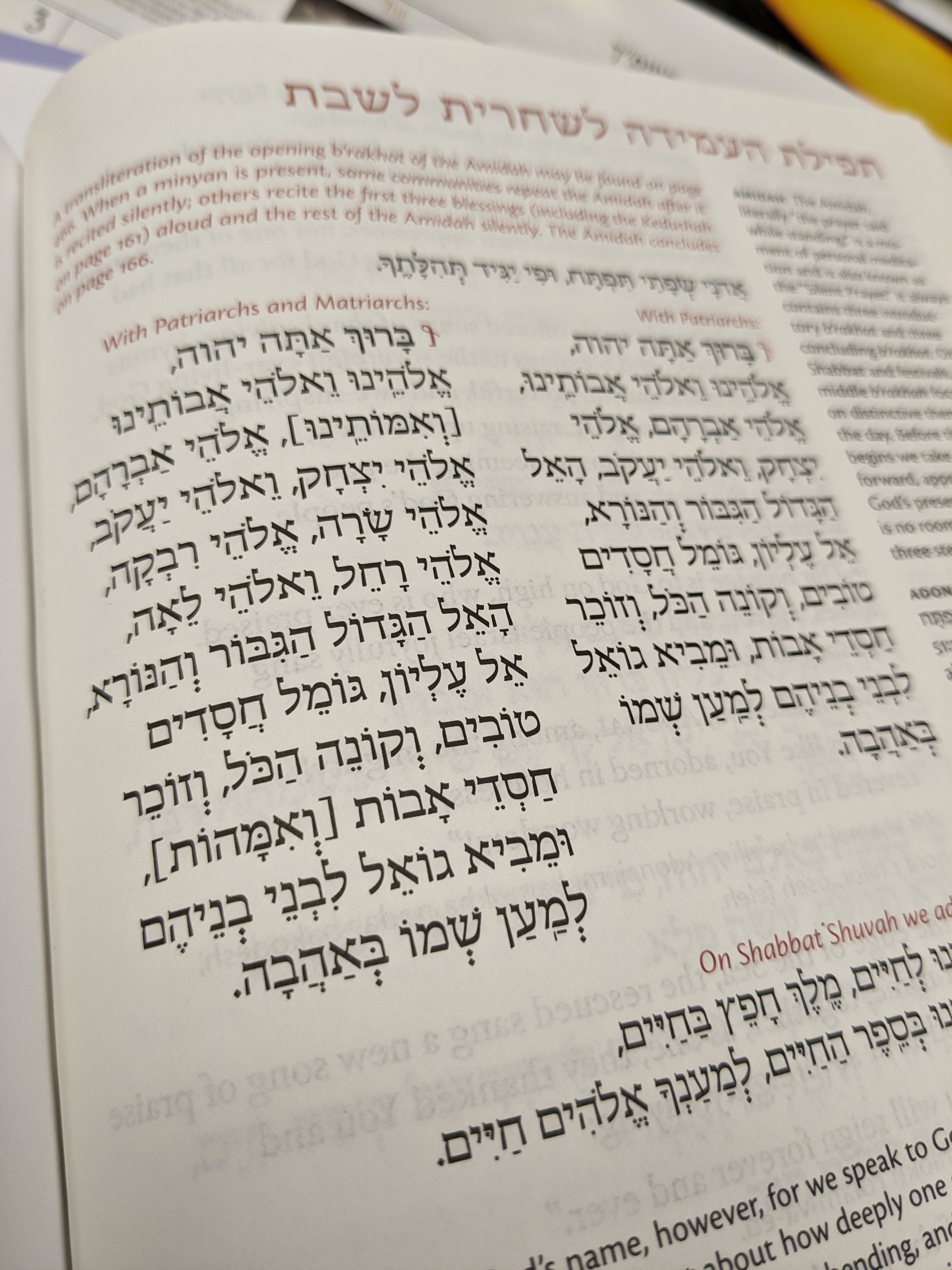
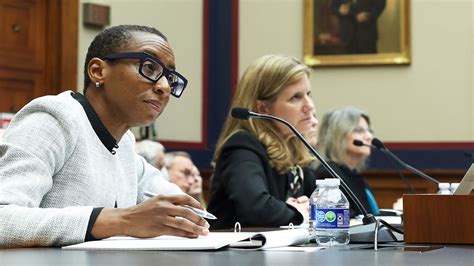


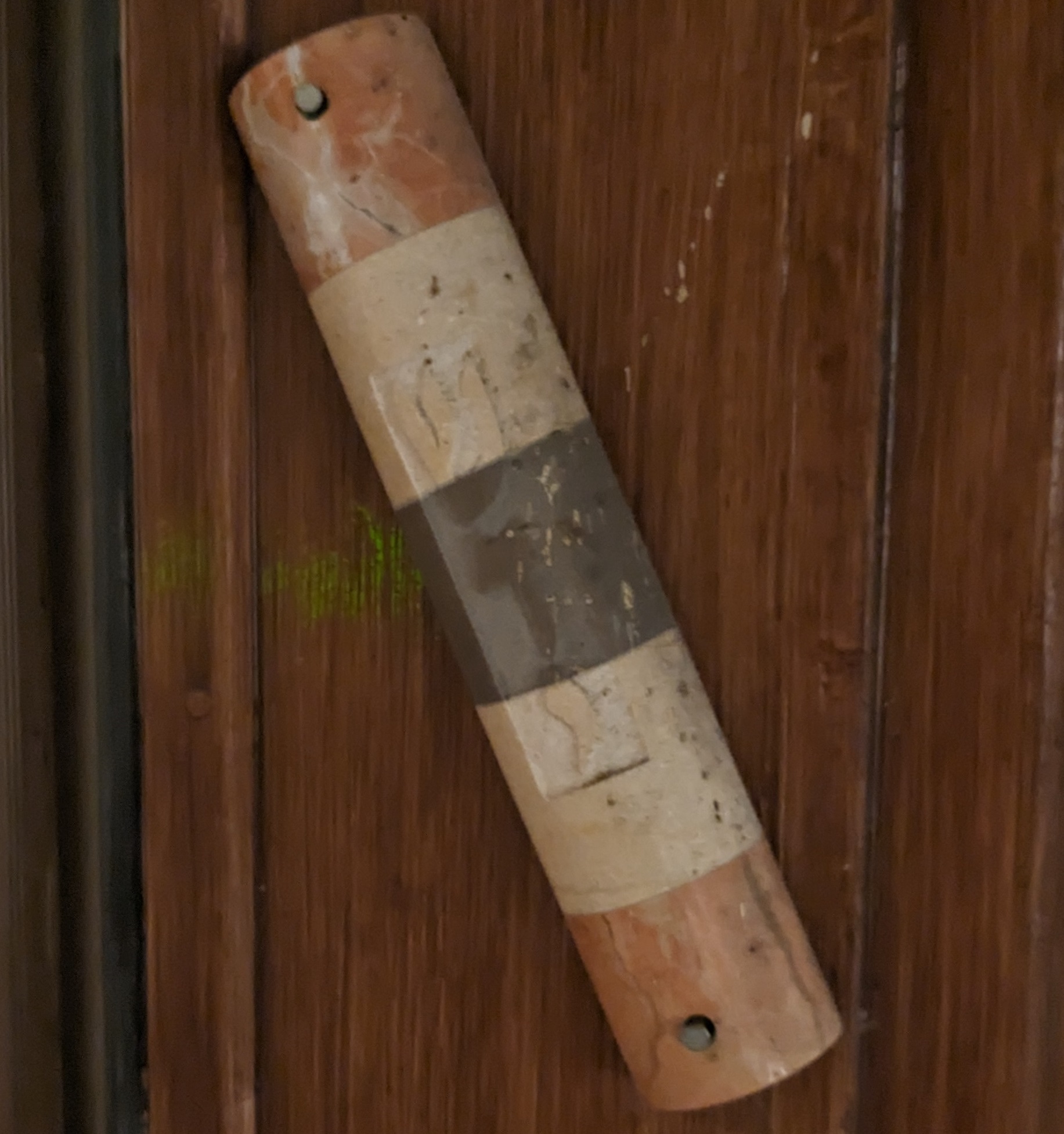


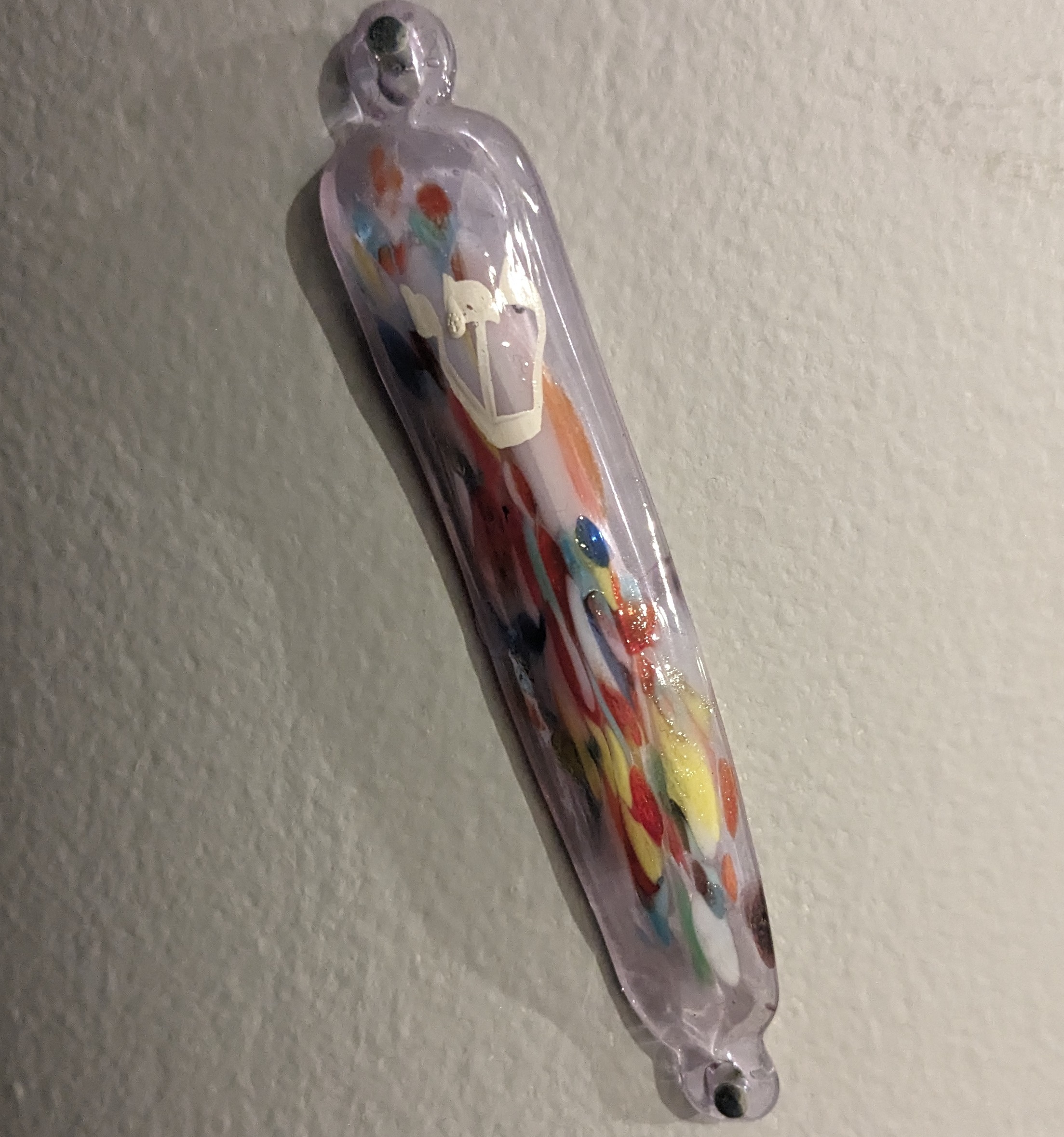
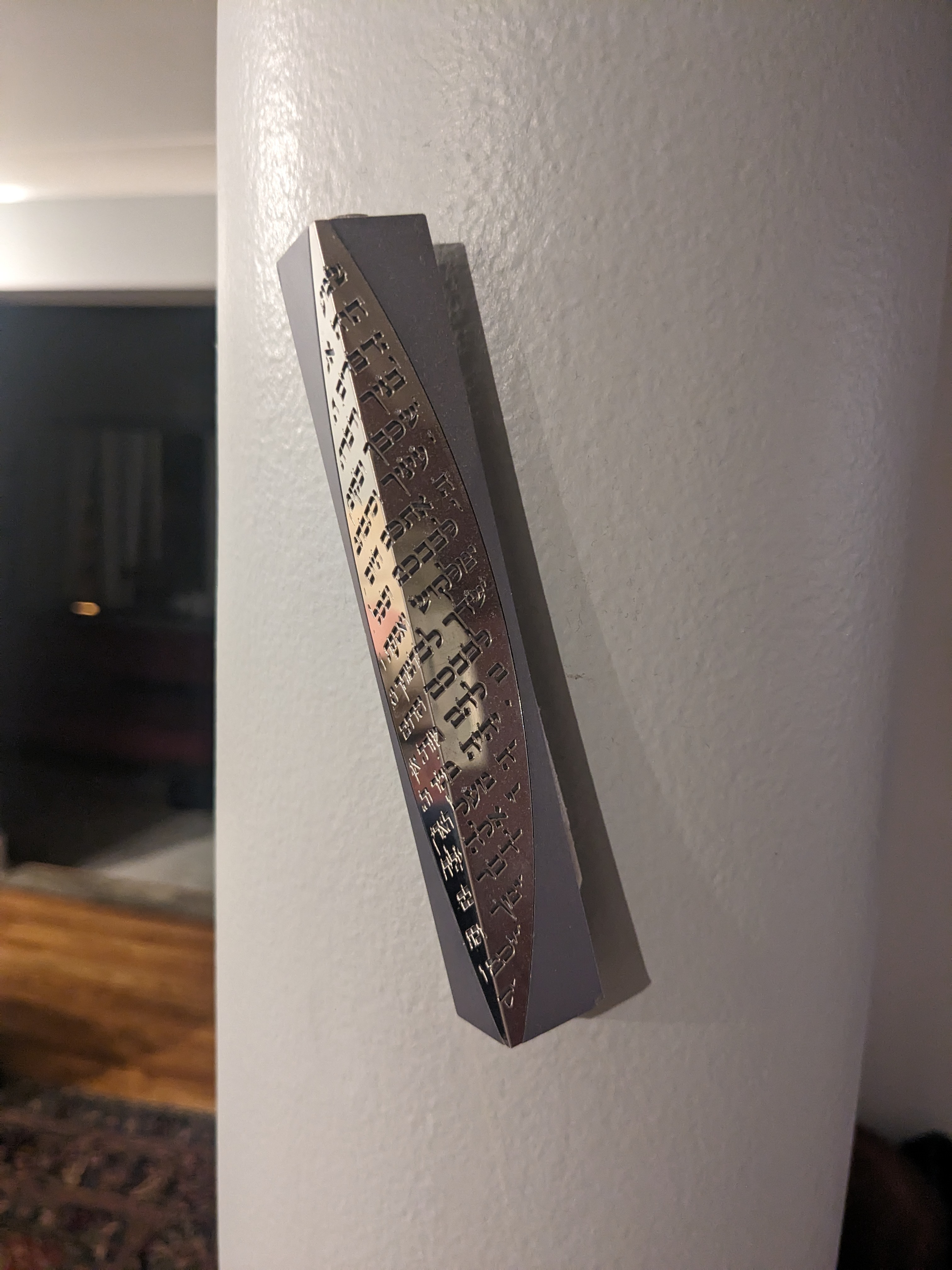


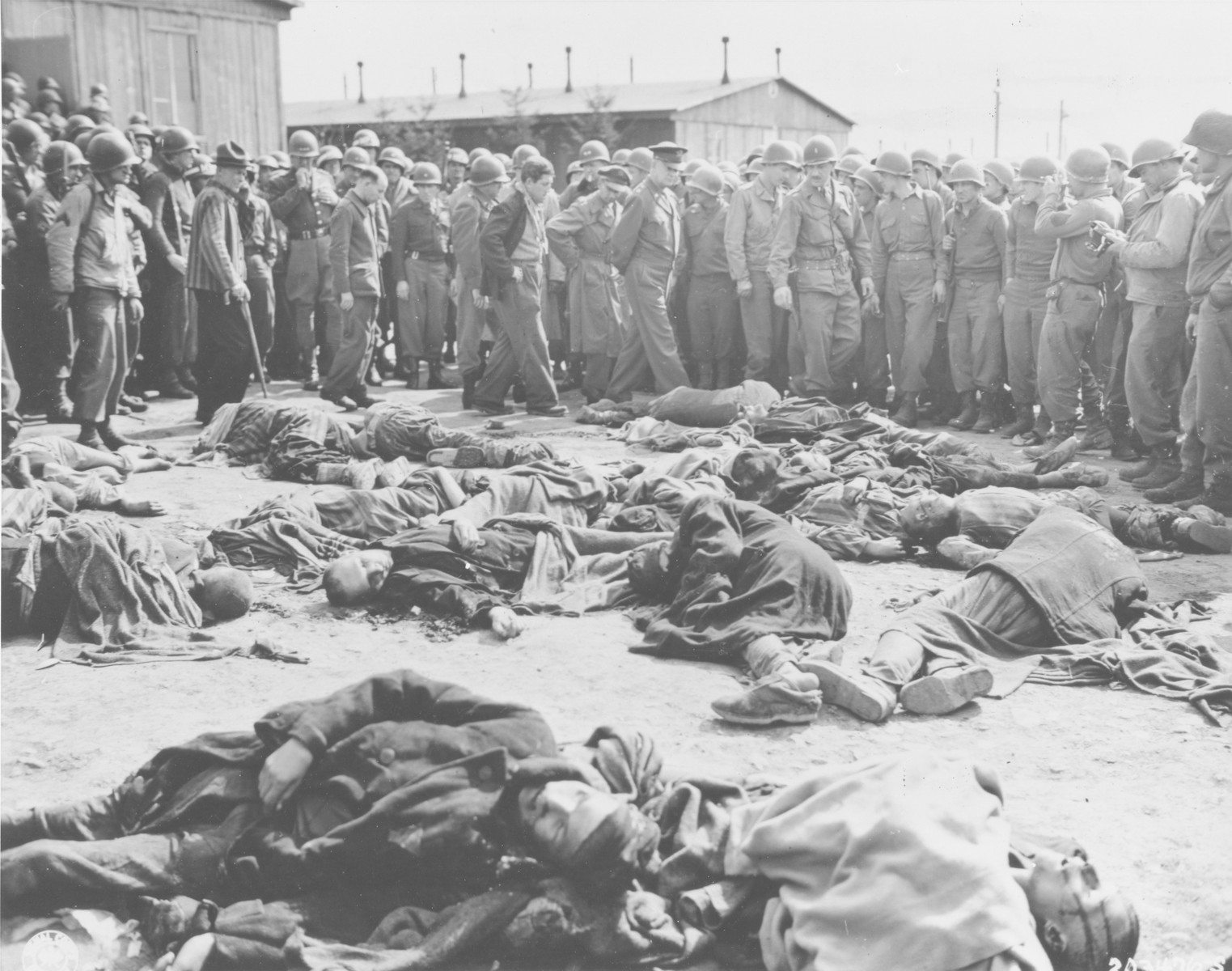



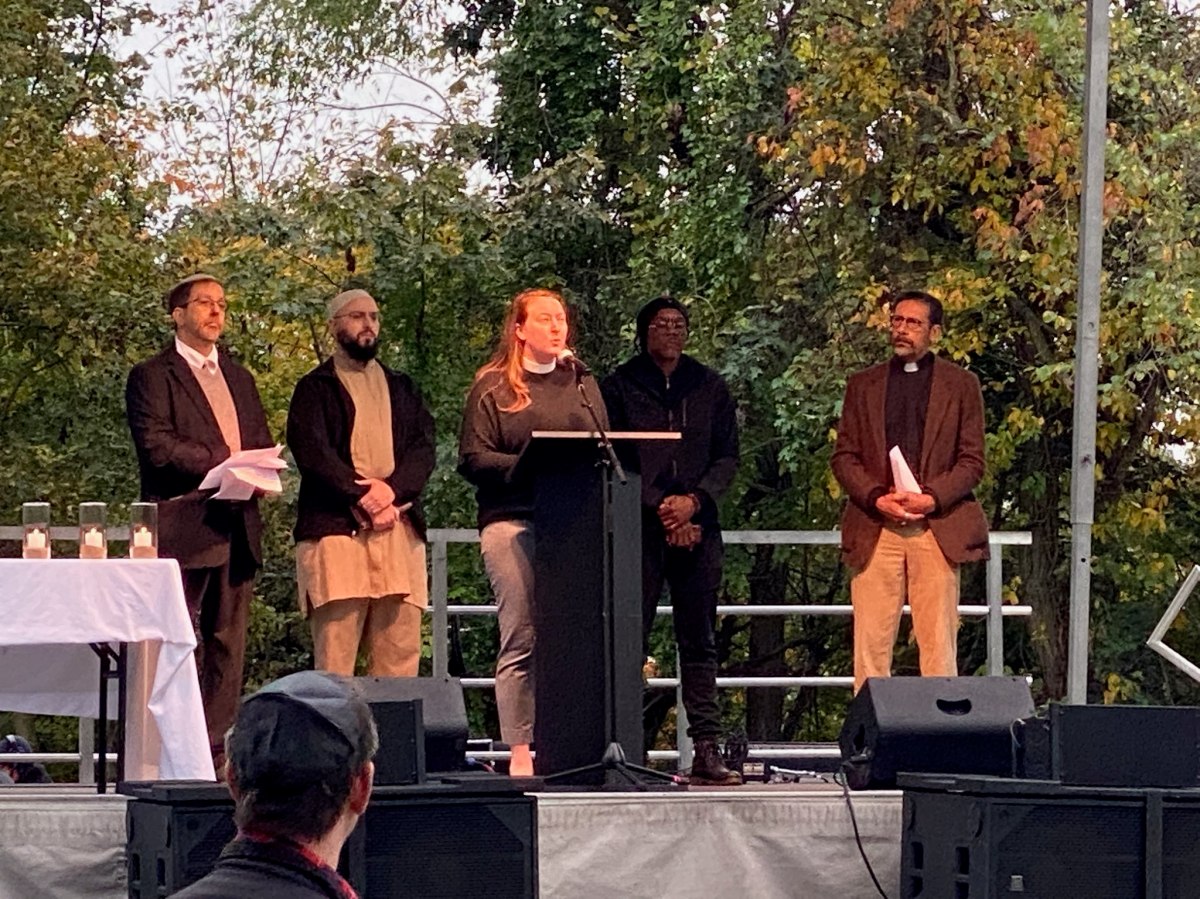
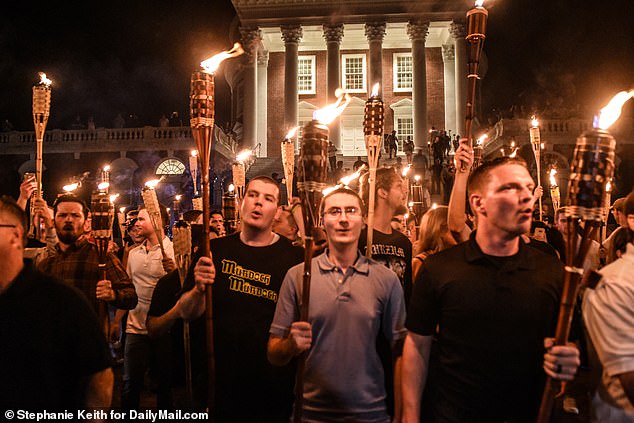
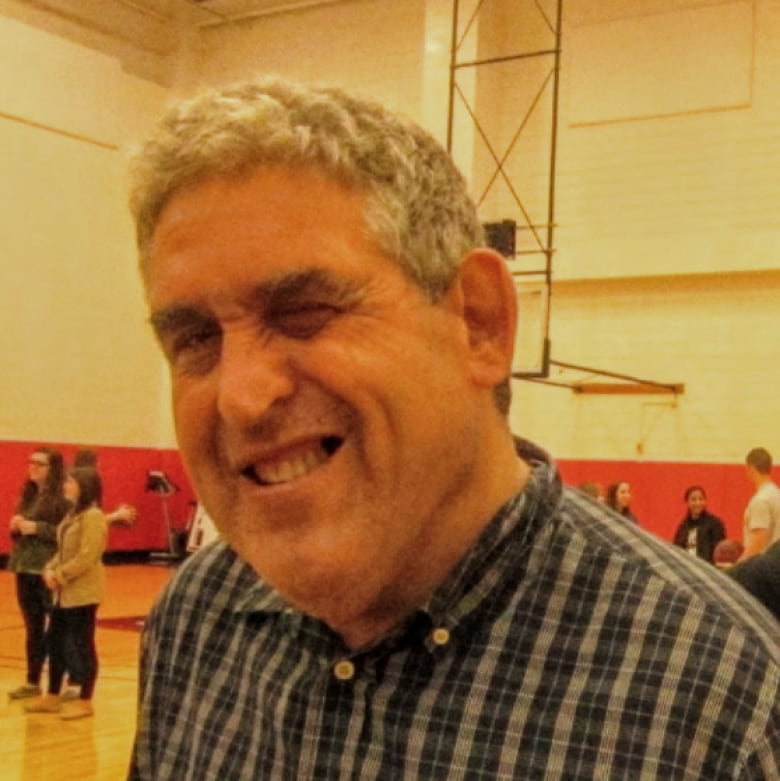


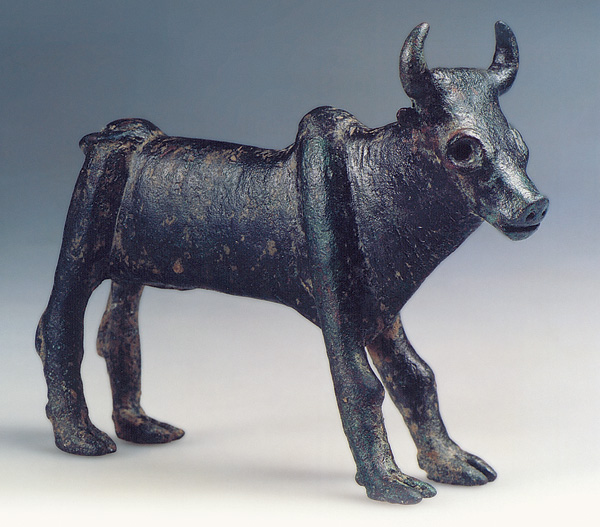
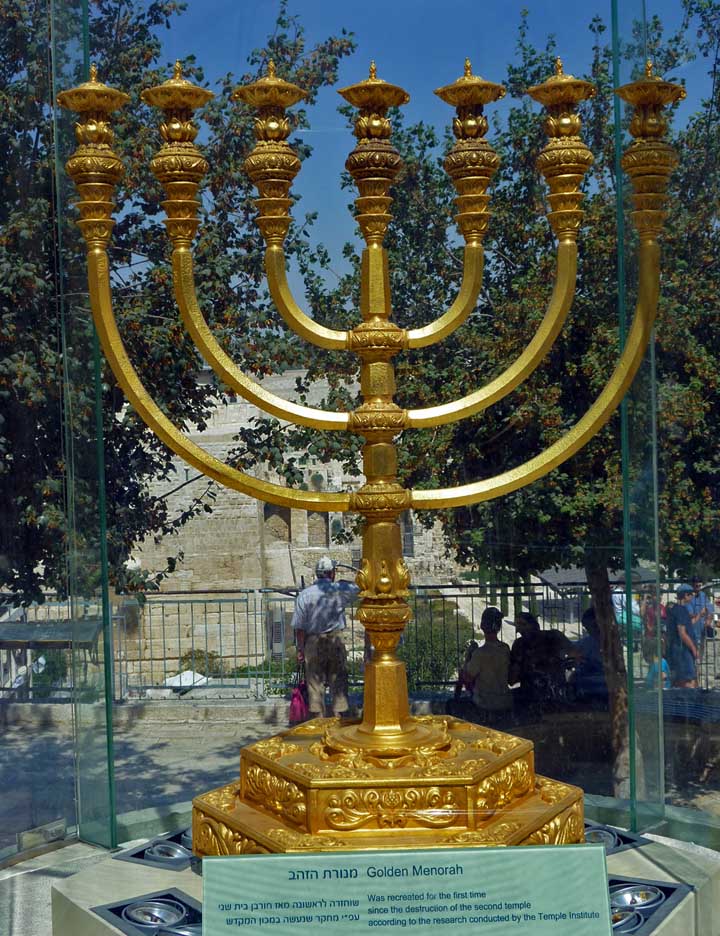

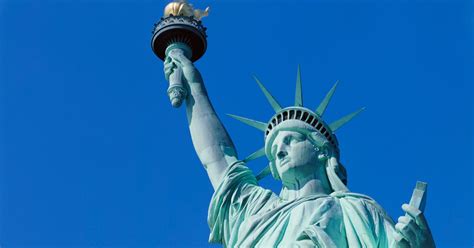

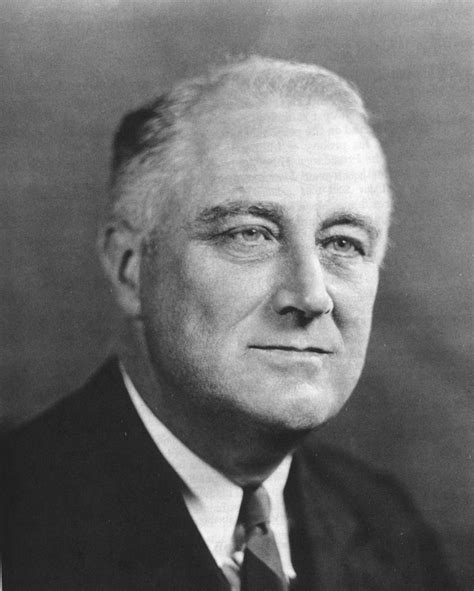




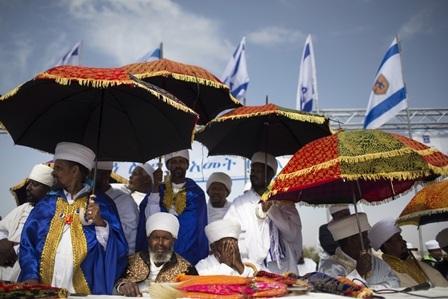


 The Modern Rabbi