Categories
Festivals Sermons Yizkor

We Are Never Finished – Shavu’ot 5783 / Yizkor

As I get older, I find myself more willing to accept a complicated truth about human life: you are never finished. No long-term project, no personal mission, no ideal to be implemented is ever really complete. We are all works-in-progress, and all of our human endeavors are forever in progress. 

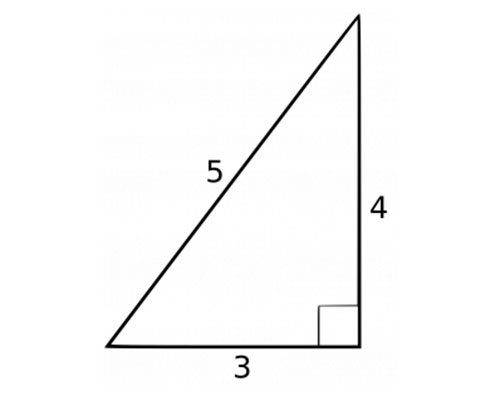
This is, I think, an essential piece of the human condition. Life is not a middle-school algebra problem, where there is always a simple answer awaiting the one who takes all the correct steps. Life is definitely not a series of 3-4-5 triangles. It is far more messy. We start new tasks or relationships with zeal and abandon them mid-stream. We change course. We fail at being the parent we hoped to be, or the spouse we thought we were, or the exemplary child we aspired to be.
Among the texts from the Jewish bookshelf to which I most frequently return is Pirqei Avot, the second-century collection of rabbinic wisdom which is included in the Mishnah, but which stands out among the other books in that six-order collection as being quite different from the rest. Almost all of the Mishnah is about laws: instructions to post-Temple Jews regarding how to live life and observe rabbinic Judaism now that there are no more sacrifices. When do we recite Shema in the evening? What types of activities are forbidden on Shabbat? May one eat an egg laid by a hen on a Yom Tov day?

But Pirqei Avot is about how to be a better person. It is about learning and teaching Torah, about being careful with your speech, and about the complexities surrounding judgment and governing. And at the end of the second chapter of Pirqei Avot comes the piece of wisdom to which I return more than anything else in our canon:

הוּא הָיָה אוֹמֵר, לֹא עָלֶיךָ הַמְּלָאכָה לִגְמֹר, וְלֹא אַתָּה בֶן חוֹרִין לִבָּטֵל מִמֶּנָּה 

Rabbi Tarfon used to say: It is not your obligation to finish the work, but neither are you at liberty to neglect it.

This piece of wisdom has guided me through many challenging times. I think of it when I am pulling weeds from my garden, when I am exercising, when I am facing a particularly daunting pastoral situation, when I grieve, when I start a new project, and pretty much every day, as I face the piles of work on my desk that never seem to resolve themselves. It speaks to the challenges facing the State of Israel, and the challenges facing our nation, and of course those facing Congregation Beth Shalom.

Whenever I need to be reminded that the only way to tackle a seemingly-insurmountable project is to take a little at a time and keep moving forward, I think of this mishnah. And it helps.

I thought of this eternally-useful gem a little more than two weeks ago when I first became aware of the death of Justin Ehrenwerth, a young man who I had only met briefly, but was the beloved son and brother and uncle of members of Beth Shalom.
Justin was only 44, and his life was cut short by mental illness. But in those 44 years, Justin accomplished more than most of us do in a lifetime. He studied at Colby College, Oxford University, and Penn Law. He worked for John Kerry’s campaign for president, and then for Barack Obama’s campaign, and then in the Obama administration. He established and ran the government agency responsible for cleaning up the Deepwater Horizon oil spill in the Gulf of Mexico. He became the president of The Water Institute, a New Orleans-based nonprofit dedicated to solving major environmental challenges. (Our member Jordan Fischbach, who was Beth Shalom’s Vice President for Synagogue Life until this past week, was one of Justin’s employees.) 

Justin was a national axe-throwing champion and a skilled harmonica player; a devoted son, brother, father and husband, and a loyal, dedicated friend who went out of his way to be there for others. Oh, and he also served on the Board of his synagogue in New Orleans.

Justin was also a person with plans. Jordan described him as being particularly mission-driven, which is something that many of us aspire to be, but (and I am speaking here for myself) actually is quite a challenging way to live. It requires discipline and energy that few of us are able to successfully muster. And all those who knew Justin recognized that energy; he was the kind of person who lit up a room when he entered. 

And this made his death all the more shocking. This young man, who had a lengthy resume of successes, who did so much good in this world and truly connected with so many people, was suffering quietly.

We laid Justin to rest last Wednesday at the Beth Shalom Cemetery, and during the hesped / eulogy, I said the following, based on a teaching I learned from my homiletics professor at the Jewish Theological Seminary, Rabbi Gerald Zelizer:

The tale of the Jewish people is filled with great figures who died before they completed the projects of their lives. Moshe Rabbeinu, Our Teacher Moses, was only able to view the Promised Land from across the Jordan River. King David set his heart on building the Beit HaMiqdash, the Temple in Jerusalem, but could not do so. Our matriarch Rachel died in childbirth while on the road to Ephrat; she neither reached her destination nor knew her son Benjamin. The Zionist visionary Theodor Herzl died in 1903 at age 44, when he had only just set in motion the forces which would yield a Jewish state 45 years later. 

The number of years is not necessarily the measure of success. The successful life is not necessarily the long life. The seeds that we plant which bear fruit long after we are gone are arguably the better measure.

Our ambitions, our mission, our goals, our hopes, what we strive to be, that is what determines the success or failure of our life, and not its length. How honestly, how nobly, how totally and completely one lives, these are the true measures of who a person is.

***

When we reflect on the lives of all those whom we remember today for Yizkor, we may wish to recall that the true measure of their lives was not a number of years. It cannot be surmised from the hyphen between the dates on their memorial stones. Rather, we might want to recall how they lived, what they lived for, who they loved, and the values they strived to impart through their actions. That was who they were; those were the things that they accomplished on this Earth. And we should all be grateful for that. Even though Moshe Rabbeinu does not make it to Israel, he is still Moshe Rabbeinu. Even though Herzl will forever lie in Jerusalem, in the modern capitol of a state which he imagined but never saw, he will always be the one who made it happen.
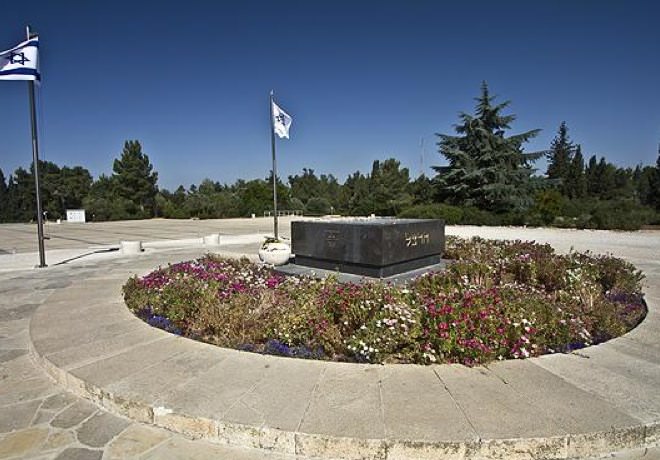
And furthermore, we should also cut ourselves some slack. No matter how mission-driven we may fashion ourselves, no matter what goals we achieve or dreams we realize, no matter how dramatically we fail, we might place some hope in the fact that those to whom we give love and life may in fact help complete our work on Earth after we are gone.

All the moreso: לא עליך המלאכה לגמור. It is not up to you to finish the task, because really, you cannot. That is the nature of humanity.

Our tradition acknowledges that. That is one reason that we read the Torah through every year, even though every time we get to the end we see that Moshe once again fails to enter the Promised Land. We knew that was coming. And yet, Joshua, his anointed successor, makes it.

We have to be willing to live with the fact that every conversation dangles, that every argument continues in some way, that our lives are like an ongoing road trip in which we never quite reach our destination, with side roads and dead ends and occasionally getting lost. 

So what can we do? We can reach out more fully and completely in love to those who need us. We can try our best to move the needle in some small corner of the world. We can aim to fulfill the mitzvot, knowing that we will occasionally miss the mark. And we can try to give to our children and grandchildren the opportunity to not finish the task as well, but also not to neglect it either.

~

Rabbi Seth Adelson

(Originally delivered at Congregation Beth Shalom, Pittsburgh, PA, second day of Shavu’ot 5783, 5/27/2023.)

Categories
Festivals Sermons Yizkor

Allies in Faith – 8th Day Pesaḥ 5783 / Yizkor

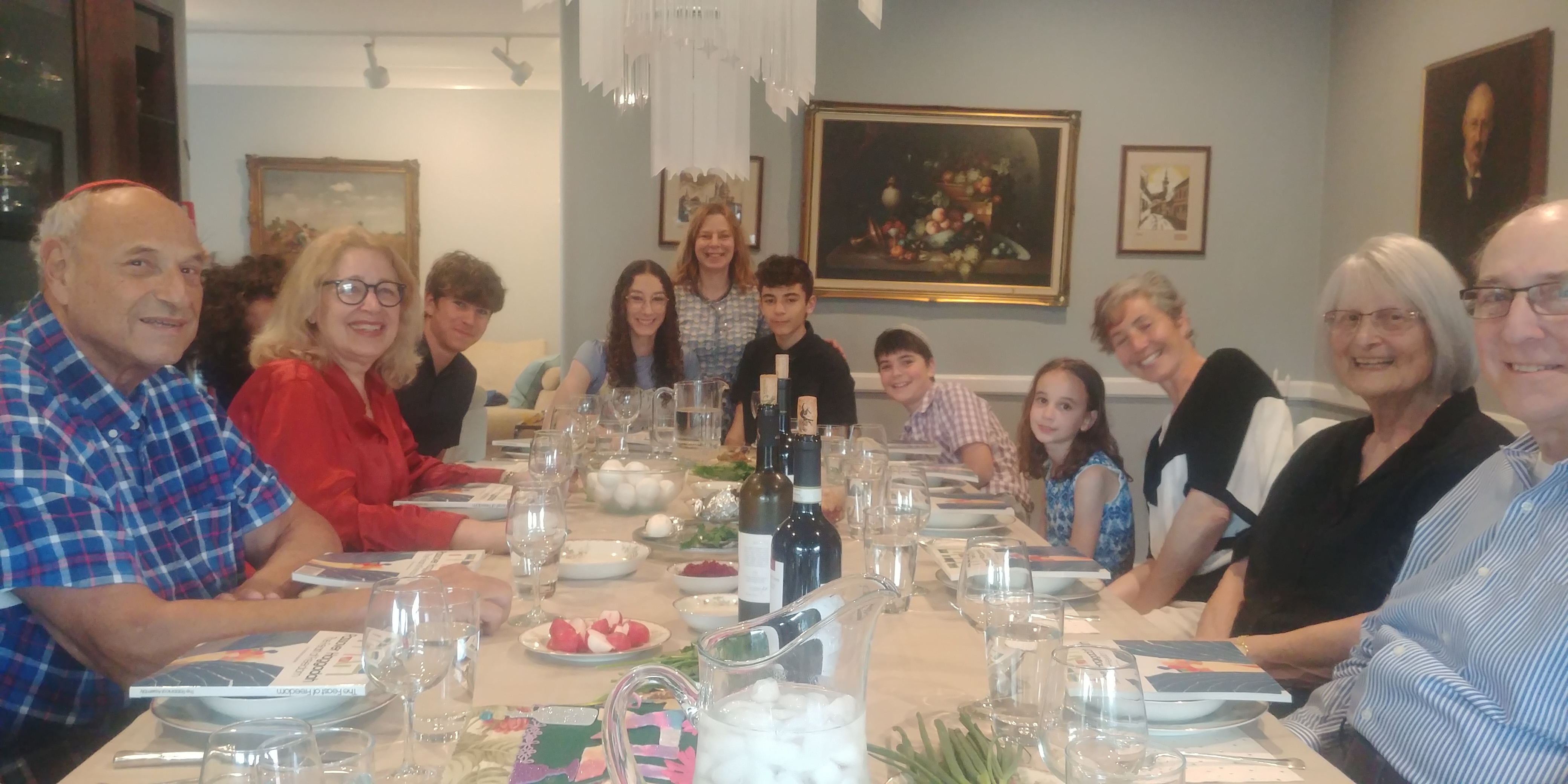
Passover, like no other holiday, trades in memory, personal and national. Just about every seder* that I have ever attended relies on memories of past sedarim, of family gatherings, of special foods, some which we liked and some which we memorably did not; memories of your funny uncle who would take a sip out of Elijah’s cup when everybody was watching the door, of good times singing Eḥad Mi Yodea and Ḥad Gadya and Dayyenu, of the hunt for the afikoman and of course all the grandparents and aunts and uncles around the table, the people who are no longer with us. And certainly the remembrance that comes with Yizkor at the end of Pesaḥ puts a final flourish on the sense of personal memory that this holiday features.

And also perhaps like no other holiday, Pesaḥ trades on historical memories of our people. Yetzi’at Mitzrayim, the Exodus from Egypt, is not only the foundational moment of Benei Yisrael, the people of Israel, but is also an essential statement of who we are as a people. The family of Ya’aqov / Jacob descends into Egypt as a group of 70 people escaping famine, and emerges 430 years later as a great nation, ready to receive the Torah and inherit the Land of Israel which has been promised to them. 

But this family becomes a nation by experiencing slavery and subsequent redemption, ensuring from the outset that from generation to generation Jewish people would understand what it means to be a slave, to be oppressed and persecuted, to be subjugated by another and denied our own spiritual means. Pesaḥ is therefore emblematic of all the ways in which we continue to act on that arc of slavery and redemption, in which we seek to bring about redemption for ourselves and the world by highlighting the holiness of the others around us.

And we hear that story replayed over and over throughout Jewish history, with the Babylonian Exile and return in the 6th c. BCE; the Roman destruction and dispersion of the Jews from Israel in the 1st c. CE; the Inquisition, the pogroms, the Shoah / Holocaust, the establishment of the State of Israel in 1948. 

Persecution and redemption. Displacement, dispersion, and return. These are the major themes of Jewish existence going all the way back to slavery in Egypt. That is why the memories of our people speak so powerfully; that is why the Pesaḥ seder is still one of the most-practiced Jewish observances, because it is so deeply laden with history. The Pesaḥ memory machine, every spring, serves up its products along with the matzah and maror.

As you may know, I grew up in a fairly non-Jewish place, in the rustic and handsome Berkshire hills of Western Massachusetts. My parents had to work hard to ensure that my brother and sister and I had a strong connection to our tradition, our community, our customs and rituals, that we would be deeply connected to that memory machine. Our Conservative synagogue was 17 miles away, a 30-minute car ride. The nearest kosher meat market was in Albany, NY, an hour by car over a mountain. My grandparents and many close relatives with whom we spent some holidays were three hours away in Boston. There was no Jewish day school nearby. 

Williamstown, Massachusetts. Yes, I grew up there.

Virtually all of my closest school friends were Christian, and many were active in their churches. I was often, if you will, the token Jew: the only one bringing matzah sandwiches on Pesaḥ or missing school on Rosh HaShanah. I was always in some sense an outsider. I did not share my personal and national memories with my friends and neighbors.

But one of the things I have come to understand in recent years is that what unites people of faith is far greater than what divides us. We, the Jews, have the potential to be allies with other like-minded Christians, Muslims, Hindus, Sikhs, Jains, Buddhists, Bahai, Druze, and so forth.

Consider what we share:

  • Commitment to a framework of holy behavior which elevates and enriches our lives and the lives of the other people around us
  • Cultivation of the values of respect, gratitude, compassion, charity, community, education, and justice
  • Rituals which create meaning for our lives, including regular prayer, holidays, and lifecycle events: birth, coming-of-age, marriage, and death and mourning
  • Understanding that the role of Divinity in our lives provides a template for interacting with others
  • A textual basis for all of the above

Now, of course there is tremendous variation in style and language and the range of values that we hold dear, and of course theology. As just one small example, Judaism tends to emphasize action, Christianity belief. And of course we differ on matters of religious law, and how we read and interpret our shared texts, rituals and foods and customs and so forth. 

But think of all of the potential power contained within all of those which we do share, and how, if people of faith work in concert with one another, we can truly build a better society and a better world.

At the congregational seder last Thursday night here at Beth Shalom, among the 85 attendees were five Christian guests, young adult members of the East Liberty Presbyterian Church who had requested to attend. I was certain that they were quite overwhelmed by the scene. 

But I was really somewhat anxious, given these non-Jewish attendees, about one standard passage of the haggadah, which comes deep into the seder, right as we open the door (ostensibly to invite in Elijah the Prophet). We say, 

שְׁפֹךְ חֲמָתְךָ אֶל־הַגּוֹיִם אֲשֶׁר לֹא יְדָעוּךָ וְעַל־מַמְלָכוֹת אֲשֶׁר בְּשִׁמְךָ לֹא קָרָאוּ. כִּי אָכַל אֶת־יַעֲקֹב וְאֶת־נָוֵהוּ הֵשַׁמּוּ. שְׁפָךְ־עֲלֵיהֶם זַעֲמֶךָ וַחֲרוֹן אַפְּךָ יַשִּׂיגֵם. תִּרְדֹף בְּאַף וְתַשְׁמִידֵם מִתַּחַת שְׁמֵי ה

Pour your wrath upon the nations that do not know You and upon the kingdoms that do not call upon Your Name! Since they have consumed Ya’aqov and laid waste his habitation (Psalms 79:6-7). Pour out Your fury upon them and the fierceness of Your anger shall reach them (Psalms 69:25)! You shall pursue them with anger and eradicate them from under the skies of the Lord (Lamentations 3:66).

Now, it is likely that our ancestors added these verses in the Middle Ages to cry out to God for revenge against their non-Jewish tormentors. It was a statement of defiance in the face of powerlessness, delivered when the door was open to show the gentile neighbors that they were not doing anything nefarious. Our national memory of these times is, to put it mildly, not good.

Our ancestors probably could not have foreseen a day when people of different faiths could be allies against the forces of chaos. That idea was simply not a part of Jewish memory for many centuries.

But that is where we are right now, and that is what I said on Thursday night in the presence of our Presbyterian guests. We should not read these lines as a deliberate insult to non-Jews; we should instead absolutely read them as a statement against those who malign religious faith and attack worshippers in synagogues, churches, mosques, temples and gurdwaras and children in religious schools of any sort.

I do not think that I am the only one here who sees that the chaos grows as our society, as the people around us, grow more distant from religious tradition. Without a framework of spirituality, we create a world without rules, without principles, without dedication to the holiness of the other. Truth becomes relative; we worship the idols of politics and money and power. A world without religious tradition becomes one in which each individual is their own highest authority, where there are no guideposts and no guardrails. 

The power of allyship across religious lines is extraordinarily important today. United, we are a serious force within our society, and not for the purposes of indoctrinating others into our religion, but rather for improving the condition of all people.

I mentioned in this space on the first day of Pesaḥ that the “swatting” hoaxes of last week, which have lamentably continued, are creating fear in our communities. Last week it was Central Catholic; Monday night it was students at Pitt. Our friend Rev. Canon Natalie Hall’s children were in lockdown, subject to very real fear. 

We, the allies in faith, can push back against the forces of chaos, like those who are maliciously causing these security messes. We may not entirely win; chaos has always been with us. But we can do the best we can to build bridges, to heal wounds, to discuss our memories and our history and yes, even our theology and how we read the Torah differently. And that will, I am absolutely certain, go a long way toward helping to cure this fractured world.

When we meet together and learn together and break bread together as allies, we will be prepared to navigate together the many challenges which now plague our society and world. True people of faith know that we accomplish more when build bridges instead of walls, and we must add the sense of allyship to contemporary Jewish memory.

Our grandparents, our parents, the people whom we remember today, came with their families to this country to escape the persecutions of the Old World, to flee the rigid social lines of Europe, where they had always been outsiders. Here we are free not only to practice our traditions, not only to be considered as equals to our non-Jewish neighbors, but also to work together with partners whom our ancestors could never have imagined. 

In their memory, together, we can build a better world. Thank God.

And, if you want an opportunity to learn Tanakh (the Hebrew Bible) in an interfaith setting, please join us for A Conversation Between Christians & Jews Toward Friendship & Discovery. The first session is this coming Sunday, April 23, 2023, and it will be an engaging series focused on building and strengthening connections while studying our shared texts.

~

Rabbi Seth Adelson

(Originally delivered at Congregation Beth Shalom, Pittsburgh, PA, 8th Day of Pesaḥ, 4/13/2023.)

* The Passover seder (plural: sedarim) is a special dinner and storytelling ritual that is observed on the first two nights of Pesaḥ. It includes displaying and eating special foods and telling the story of the Israelites’ Exodus from Egypt.

Categories
Festivals Sermons Yizkor

Remembering the Small Print – Shemini Atzeret / Yizkor 5783

One of the things that this season does to me is to remind me to read the small print in the siddur, to pay attention to details that my eye is trained to ignore during much of the year.

Since most siddurim / prayerbooks are used for a variety of days – weekdays, Shabbat, holidays – they are designed to reflect the changes in our daily tefillah routine. During the holiday month of Tishrei in particular, there are changes almost every day, which require you to pay careful attention to the smaller print. 

If one goal of the Tishrei holidays is to make us all pay more attention, then for sure these subtle changes in our daily prayer are helpful. Even the extra le’eila which we say from Rosh HaShanah to Yom Kippur manages to keep me just a wee bit more focused for some time.

And that, of course is a good thing: tefillah / prayer should never be by rote. As we read in Pirqei Avot (2:13):

רַבִּי שִׁמְעוֹן אוֹמֵר, הֱוֵי זָהִיר בִּקְרִיאַת שְׁמַע וּבַתְּפִלָּה. וּכְשֶׁאַתָּה מִתְפַּלֵּל, אַל תַּעַשׂ תְּפִלָּתְךָ קֶבַע, אֶלָּא רַחֲמִים וְתַחֲנוּנִים לִפְנֵי הַמָּקוֹם בָּרוּךְ הוּא

Rabbi Shim’on said: Be careful with the reading of Shema and the Amidah, And when you pray, do not make your prayer something automatic, but a plea for compassion before God.

In tefillah, as in life, it’s the details that are important. While it is easy to think that the essential part of tefillah is the recitation of the words, the mishnah suggests that we have to actually be paying attention. True tefillah requires pouring our souls into the pages of the siddur, such that the yearning for compassion, the honest gratitude, the heartfelt praise and requests which are the building blocks of tefillah come from an honest place and can actually be felt by the davener. 

It is not the outward symbolism which matters; not the broad strokes of being in shul (synagogue) and standing in silence and reciting the words; rather, it is the internal details. It is the richness of the ancient Hebrew idiom and how it lands on our souls which drive honest prayer. It is, in fact, the small print, laden with the special features of the season, which matters most.

And when we recall beloved family members and friends who are no longer with us, on days of reciting Yizkor prayers, the details of their lives are the most essential items. 

What makes a person special and unique? It is not their appearance, or what car they drive or the color of their kippah. It is the intangible details: their deeds, their sayings, their values, their relationships. 

You might have heard recently about so-called “click chemistry,” because three biochemists just received the Nobel Prize for their work in the area. Click chemistry is a relatively new chemical process which allows us to build new molecules with particularly desirable functionality using small, organic building blocks, somewhat akin to molecular Lego pieces. 

Without getting too technical, the research of these Nobel laureates has made it possible to reliably build new molecules from these building blocks in a way that is cost-effective and has a high rate of success. The process will supplant older, more cumbersome and expensive methods of synthesizing such molecules. This will enable chemists to easily produce and test a whole new range of pharmaceuticals, polymers, proteins and other organic compounds. It is truly a remarkable breakthrough.

Now, the chemical engineer in me is inspired by this new molecular technology.

But I also find the idea of being able to assemble easily new molecules from building blocks appeals to me from, shall we say, a more homiletical perspective. As people, we are more than the sum of our parts; and yet we are constructed from the very same types of molecules that can be easily assembled through click chemistry.

We are, of course, exceedingly complex creatures. We are shaped by all of the forces around us: the people we meet, the books we read, the experiences we share with others, the love we receive and give, and all of the other tiny ways we fill our days and our lives. And all of these things, all of these minuscule moments and interactions are sifted through our basic structure, coloring all of the intricate pieces of our personalities.

With human personalities, of course, it is the details that matter. Our external features are not so different from one another; our internals are much more complicated. We have different strengths and creativities, different talents and hobbies and favorite foods and leisure activities. We are drawn to a range of entertainments and political pursuits, tastes in clothes and art and philosophy. We each have individual ways in which we express ourselves and fashion our lives.

A lazy search of the Internet led to somebody else’s back-of-the-envelope calculation of how many molecules there are in the human body, and that answer is perhaps on the order of 1027, or a one followed by 27 zeroes.

Much of that is water, but a good chunk of them are organic molecules, of the sort that are put together with the basic building blocks, the simplest Legos, of life. 

But that is what makes us human: the great complexity of the chemical system of which we are made. Our memories, our knowledge, our experiences, remembered and forgotten, are all encoded into that organic soup of tiny, encrypted chunks of living matter. The variation of these codes, which make up our genetic material, yield people who may indeed look quite similar, but are vastly different in behavior and thought. 

A friend recently reminded me that the events from our past which we remember are not necessarily those things which others remember about us. That is, the picture of our lives is far more complex than what we see. This also suggests that all of those details, all of those interactions which we can recall are probably less than half of the story of our lives.

That is what makes those who were special to us so memorable; why they take up so much of our brain space and emotional energy: the great complexity of our parents and grandparents, the mysteries of our siblings, the tender mercies of our spouses. 

Tomorrow morning, we start reading Parashat Bereshit, the beginning of the Torah once again. We return to Creation ex nihilo, when God begins to speak, and the whole world comes into existence, from a point of light to the full flowering of Earthly bounty. You may recall that at the end of each day, the Torah tells us that God saw that what He had created was good.

It’s almost dismissive in its simplicity. Of course the creation of the sun and moon and stars was good. Naturally the flowering plants and trees and birds and bees and alligators and capybaras were good. But they were also incredibly complicated. 

The creation of humans, male and female, on the sixth day is described as tov me-od, very good, something which might make us raise our eyebrows, given what we know about humanity.

Life, Creation, cannot be merely good or bad, but rather full of contradiction and complexity and an unfathomable myriad of details. The Torah (or, one might say, the Priestly author to whom scholars attribute the first chapter of Bereshit) seems to fail here in its terseness. It merely gives a social-media “like” when an encyclopedic excursus is called for.

And as we turn now to the service of Hazkarat Neshamot, the recalling of the souls, I hope that we can endeavor to remember not just the broad strokes of their lives, but also the details, all the ways in which they were special. 

We should remember the parts of their personality that they gave us: the empathy he showed an elderly neighbor when inviting him for a meal, the pride she took in tending to her garden, the loyalty he had to his barber, her attention to detail, like ensuring the brass banister was always polished to a shine. 

We should remember the ways in which they provided for us: the household economy, the food, the gatherings, in setting a beautiful table for the celebrations / semaḥot he arranged, all of the schlepping she did from school to game to recital and on and on.

We should remember the things that they said when we need to be uplifted: the words of encouragement and inspiration, the moment of shared joy when you got that acceptance letter and the tears during your bad breakup, the hugs and the kisses and sometimes the little push out the door that we needed. 

We should remember the values they taught us, the Jewish rituals they loved, how he would make his special haroset recipe, how she loved to sing and tell stories and family lore. We should remember those times around the seder table, or in the kitchen, or in the Sukkah, or in the synagogue.

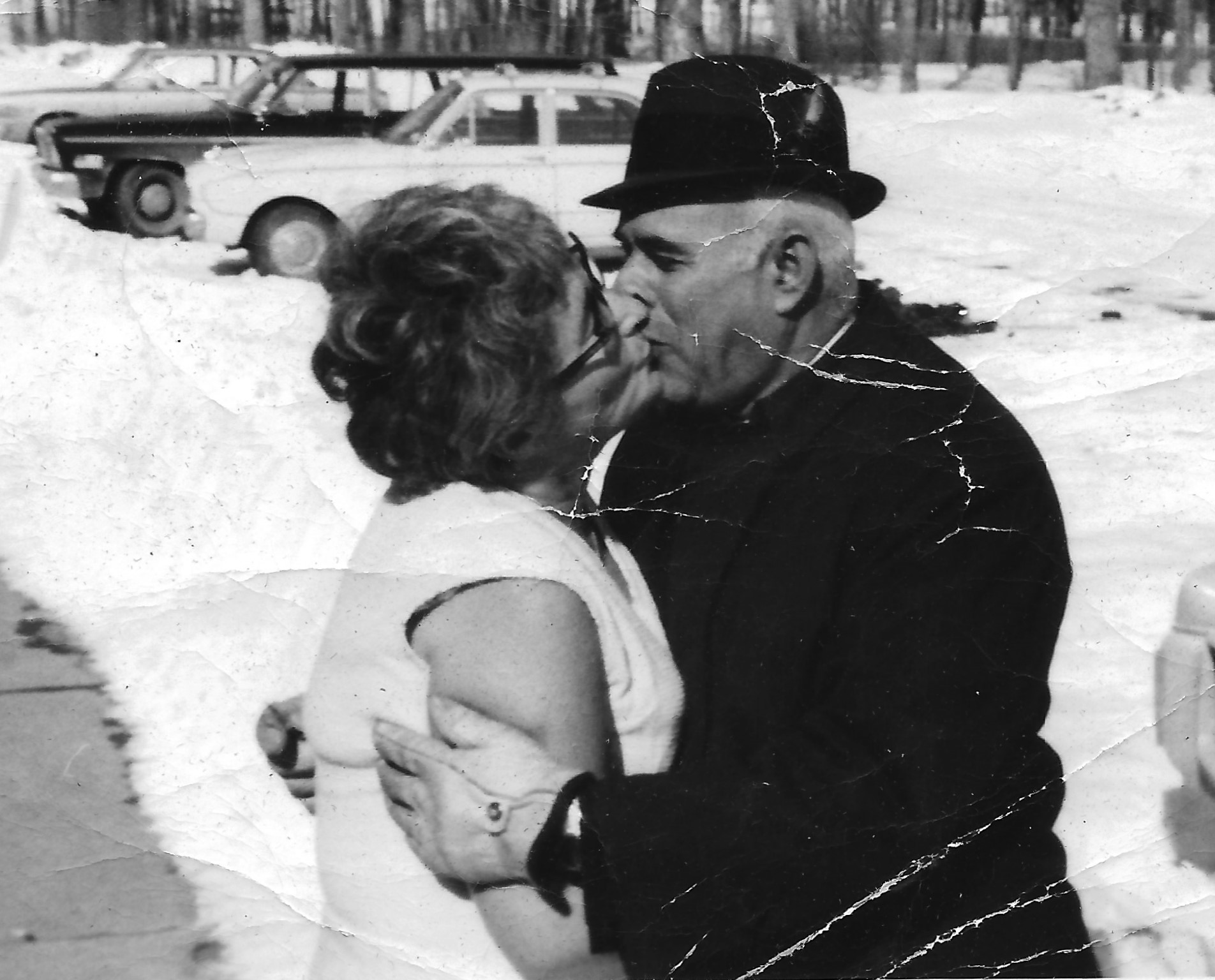
My grandparents, Rose and Ed Bass, zikhronam livrakhah

And we should remember that, as much as we recall of those who are no longer with us, there was ever so much more about them than we could possibly ever have known. All those many, many details encoded into who they were; all of the small-print details which made them special to others and to all those who knew them.

In broad strokes, we all had parents, and people whom we have loved but are no longer with us. But it is the details of who they were which made them special and unique. And those are the things which we should recall at this time.

~

Rabbi Seth Adelson

(Originally delivered at Congregation Beth Shalom, Pittsburgh, PA, morning of Shemini Atzeret, 10/17/2022.)

Categories
High Holidays Sermons Yizkor

Being There: Partnership or Death – Yom Kippur 5783 (plus Yizkor coda)

Once upon a time, in a distant empire, the royal fisherman was out on the lake and caught a huge fish. “This is wonderful!” he said aloud. “The Queen loves fish!” The fish thought, “OK, then! I’m going to get to see the Queen.” 

The fisherman took the fish to the kitchen of the castle, and presented it to the royal chef. “Ah, such a beautiful fish! Ze Queen, she loves fish. I will prepare zis fish in ze most perfect way.” The fish thought, “Ooh, I’m going to get special treatment! Maybe a massage…?” 

Before preparing the fish, the chef and the fisherman brought her to the Queen to show off such a perfect specimen of fish, arrayed on a gorgeous silver platter. The Queen beheld the fantastic fish, and her eyes widened. “Such a beautiful fish!” she said. “I love fish! I simply cannot wait to eat it! Go broil it immediately!”

At this point, the fish realized what was happening, jumped up and blurted out, “You don’t love fish! You love yourself!”

What does it mean to be in a loving relationship with the people around us? As we gradually emerge from the pandemic, many of us are still re-learning to be around people once again, to be in public spaces with lots of others, to feel like part of a community. Now is the time, as we have entered 5783, for us to reconsider how we can be better partners, spouses, community members, and citizens of the world. 

This is the fourth and final installment in the “Being There” series. We have up to this point discussed our avurah, program, which we will be rolling out in the coming months; we have discussed the beit kenesset, the synagogue, as a symbol of the continuum of Jewish life; we have considered our relationship with the qehillah qedoshah, the sacred community of Jews around the world, and particularly with those in Israel. 

Today, the theme is evruta / partnership. evruta usually refers to the traditional Jewish mode of study, native to the beit midrash / study hall, and also refers to the person you study with. Your study-buddy for Jewish text is your evruta.

A well-known slogan about learning in evruta comes from the Talmud, in one of the stories of Ḥoni the Circle-Maker, who is perhaps best known for his talent at being able to draw circles within which rain will fall. But he was also known in his beit midrash as the wisest person, who could answer any question.

The story (BT Ta’anit 23a), in brief, is that Ḥoni falls asleep for 70 years, and upon waking he goes to his beit midrash to learn some Torah. But now, since he has been gone for 70 years, nobody recognizes him, and they do not treat him with respect, so he dies. 

In responding to the story of his death, the sage Rava declares, “O evruta o mituta.” “Partnership or death.” If we do not commit to evruta, partnership, we might as well be dead. We need evruta. We need partners. We need to be in relationship with others.

There are two essential messages of the concept of ḥevruta:

  1. We all learn more effectively when we have a partner.
  2. I cannot learn and be completely satisfied with myself until I have also made sure that my evruta has learned as well. That is, we cannot move on until we both “get it.” So I am not in this just for myself – I am also doing it to help my colleague and friend. A good evruta feels something like mountain climbers tethered to one another, so both can reach the top of the mountain together.

Ultimately, to be in relationship with others means that we give out at least as much love as we receive. And I am not speaking only of romantic relationships, or friendships, or family bonds. Rather, we have to strive to understand that we are in relationship with everybody around us – neighbors, business partners, strangers on the street, even with our perceived enemies. 

What, after all, is society, if not simply a diverse, complex web of interpersonal relationships? Every group, every organization, every institution consists of people in relationship with one another.

Every other person around you is a potential ḥevruta. And Being There for those beyond our family and friends, for those whom we do not know, or come from a different culture, for people with whom we do not see eye-to-eye, for people with whom we might greatly disagree, is very difficult. Eizehu akham? Who is wise, asks Pirqei Avot (4:1)? Halomed mikol adam. The one who learns from every person. 

Each person with whom we interact is a potential partner. Each person has the potential to broaden our knowledge and our opinions to help us improve ourselves and our world. 

There is a wonderful tale in the Talmud about evruta. The story (BT Bava Metzia 84a) features the greatest evruta pair ever: Rabbi Yoḥanan and Resh Laqish, who lived in 3rd-century northern Israel. Rabbi Yoḥanan was one of the most highly-regarded scholars of his age, diligently studying from a very young age and ultimately opening a yeshivah / academy in Tiberias to which students flocked. Resh Laqish came from a more nefarious background: he was a former thief and gladiator. Rabbi Yoḥanan agrees to let Resh Laqish marry his daughter if Resh Laqish commits to studying Torah, which he does.

What makes their evruta so vaunted is that they came from such vastly different backgrounds and had such fundamentally divergent perspectives that they helped each other greatly in their learning. Rabbi Yoḥanan describes their learning relationship as follows:

בר לקישא כי הוה אמינא מילתא הוה מקשי לי עשרין וארבע קושייתא ומפריקנא ליה עשרין וארבעה פרוקי וממילא רווחא שמעתא 

In my discussions with Resh Laqish, when I would state a matter, he would raise twenty-four difficulties against me in an attempt to disprove my claim, and I would answer him with twenty-four answers, and the halakhah by itself would become broadened and clarified. 

In other words, when they studied together, Rabbi Yoḥanan would make some kind of pronouncement about the text, and Resh Laqish would push back with numerous ways in which Rabbi Yoḥanan might actually be wrong. Rabbi Yoḥanan knew that in order to actually understand the Torah, he needed a evruta who would widen his perspective, and thus better interpret what God expects of us. 

Learning Torah, just as with learning about life, requires that our perception be challenged, that we have others pushing back at us, respectfully, to show us a wider picture.

When Resh Laqish died, Rabbi Yoḥanan was bereft; his students suggested that he study with El’azar ben Pedat, but Rabbi Yoḥanan found that El’azar was simply a yes-man: he would always agree with R. Yoḥanan, and Yoḥanan found this useless and frustrating. He missed his evruta so much, that

הוה קא אזיל וקרע מאניה וקא בכי ואמר היכא את בר לקישא היכא את בר לקישא והוה קא צוח עד דשף דעתיה מיניה בעו רבנן רחמי עליה ונח נפשיה 

Rabbi Yoḥanan went around, tearing his clothing, weeping and saying: Where are you, son of Laqish? Where are you, son of Laqish? Rabbi Yoḥanan screamed until he went insane. The Rabbis prayed and requested for God to have mercy on him and take his soul, and Rabbi Yoḥanan died.

O evruta o mituta. Partnership or death.

It is through opposition that we learn. It is by being challenged in our views that we broaden our minds. It is by engaging with the other side with love and respect that we develop nuanced perception which enables us to moderate ourselves.

The principle of ḥevruta is a means to work through differences in order to reach a meaningful understanding of the other’s point of view. Being There, using the ḥevruta model therefore means seeing the humanity of your interlocutor so that you infuse the argument, and indeed the relationship, with respect.

Pulling back the lens, the only way humanity can function sustainably is if we understand that we have to find common ground with others, particularly our rivals in thought, in religious practice, in politics; that we are in relationship with them as well; that we cannot only love ourselves and those like us. We must broaden our perspectives, and for that we need evruta

I often feel, ladies and gentlemen, that we have reached a place in our society in which many of us are not listening to one another, in which virtually all of the messages we hear are from those like us, people with whom we find it easy to talk to and to agree. Our media environment has become fractured and even atomized, such that we tune into the outlets which tell the story the way we want to hear it. Our social media platforms enable us to be surrounded by voices that sound just like our own, and we pile on with likes and comments which reinforce our own views. 

We are all out for self-affirmation, for having our perceptions of the world constantly reinforced as the only possibly believable thing. Everybody else is crazy or dangerous. And everybody is angry; we all just want to tear down everything that does not fit our world view, to see only the broken tiles and not the larger mosaic.

The story of Rabbi Yoḥanan and Resh Laqish reminds us that a good evruta is also a bar plugta, a partner with whom you stand in opposition, and yet you both understand that you need each other. 

But many of us today are not seeing that need.

And in this environment, our institutions are losing out. Schools, houses of worship, social groups, families, professions, governments, and so forth – all are suffering from the sentiment that my opinion trumps yours, that my picture of the world is the only legitimate one. Libraries must kowtow to demands for books to be removed due to content which is objectionable to some; Zionists on college campuses are likened to Nazis. Politicians speak only to their base, and believe that they represent and must respond only to the people who voted for them.

We are quick to jump to conclusions and assume ill will; we are quick to be offended and not generous enough in spirit to give kaf zekhut, the benefit of the doubt.

And if I don’t like your position, I’ll berate you in public with a tweet or an Instagram post. That is much easier than calling you up and discussing our disagreement and seeking common ground, and it gets a whole lot more attention.

The author and scholar Yuval Levin, in his recent (2020) book, A Time to Build, describes the value of institutions, and how their declining influence is a great challenge to our society.

Institutions are by their nature formative. They structure our perceptions and our interactions, and as a result they structure us. They form our habits, our expectations, and ultimately our character. By giving shape to our experience of life in society, institutions give shape to our place in the world and to our understanding of its contours. They are at once constraining and enabling. They are the means by which we are socialized, and so they are crucial intermediaries between our inner lives and our social lives.

We need institutions, says Levin, even when they are somewhat flawed, because they shape us; they help us react to events in our world in a way that is healthy; they guide us in our interactions with others. But we are not using institutions the way we used to, allowing them to mold us into better people, according to Levin. Institutions, he says, have ceased to be formative, and have become performative. That is, we are using them as platforms through which we can advance ourselves, effectively through public performance, mostly via social media. 

Without the institution of democracy guiding us, how will we ensure that we have a truly representative government? Without the institutions of religion and medicine and law guiding us, how will we ensure that people will make good choices for themselves, for their families, for their neighborhoods? How will we prevent our society from breaking down into a murderous free-for-all?

Rabbi Jonathan Sacks once pointed out that the Hebrew word for responsibility, אחריות / aarayut, includes the word אחר / aḥer, other. For us to be responsible human beings, said Rabbi Sacks, we must incorporate the other.

Healthy institutions help create an environment in which the sense of aarayut helps to guide our discourse across ethnic or racial or religious or ideological lines, and also guides our public and private behavior. These are the spaces in which evruta flourishes, in which civility is fostered, in which true dialogue triumphs over mere shouting.

Yuval Levin’s solution to our society’s challenge in this regard is to recognize that our institutions need us to Be There.

What’s required of each of us is devotion to the work we do with others in the service of a common aspiration, and therefore devotion to the institutions we compose and inhabit. That kind of devotion calls for sacrifice and commitment. It calls on each of us to pledge ourselves to an institution we belong to unabashedly. To abandon ironic distance and dispassionate analysis and jump in.

Now, of course at this point I could make a plug for more and deeper involvement at Beth Shalom and Jewish life in general, but of course I already did that on the second day of Rosh HaShanah

So instead I will suggest the following: consider the ways in which you can bring the spirit of evruta to the world. Think about how you can be in relationship with others who are not like you, to broaden your perspective and theirs. Consider how your group of friends might engage with others for the benefit of everybody.

Your online social network is not your evruta. Your smartphone is not a bar plugta. Your aarayut, your responsibility to this world is to be in dialogue with real people, people who are not like you. You don’t need yes-men.

OK, Rabbi. So how about some specifics? How can I commit myself in 5783 to Being There for a better society and a better world? How can I act on the principle of evruta?

  • Bring your energy and your resources in a positive way to the institutions that shape your world. 
  • Join and financially support those organizations that reflect the values of a healthier society. 
  • Volunteer with organizations that provide social services. 
  • Get involved in the bodies of civic life: school boards, community organizations and partnerships, and make sure you do so while honoring the principles of evruta – of listening and helping your partners along, of being open to the possibility that you might be wrong, that there might be a better way.
  • Try to spend less time letting yourself be angered by all the dysfunction of this broken world, particularly as concentrated in toxic online spaces. 
  • Instead, focus on Being There for others, in person, whenever possible. Muster your love of people, and share it with them.

And, of course, come and daven and learn with us at Beth Shalom. By Being There for synagogue life, your involvement will pay off in many ways: in your personal spiritual satisfaction, but also in helping to foster an environment of evruta which permeates the entire world.

***

In August, the Presbyterian minister turned novelist Frederick Buechner died at age 96. In an appreciation of his life and work, New York Times Columnist David Brooks said the following:

“Buechner’s vocation was to show a way to experience the fullness of life. Of death, he wrote, “What’s lost is nothing to what’s found, and all the death that ever was, set next to life, would scarcely fill a cup.”

What we yearn for, when we remember those whom we have lost, is not the pain of their absence. It is rather who they were in life, what they meant to us, how they made us who we are. 

“What’s lost is nothing to what’s found, said Buechner. What we find in the context of death and mourning is the accumulation of a lifetime of memories, of moments when your parents were there for you, when your brother made you smile, when your sister offered comfort, when your spouse gave you a hug and made all of the day’s troubles go away.

The people who are now no longer with us, they are the ones who gave us their life. All of that life is now ours. We do not carry their death; we carry their life.

~

Rabbi Seth Adelson

(Originally delivered at Congregation Beth Shalom, Pittsburgh, PA, Yom Kippur 5783, 10/5/2022.)

Categories
Festivals Sermons Yizkor

Consider Your Mortality – Shavu’ot Day 2 / Yizkor 5782

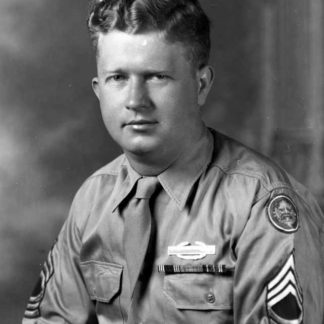
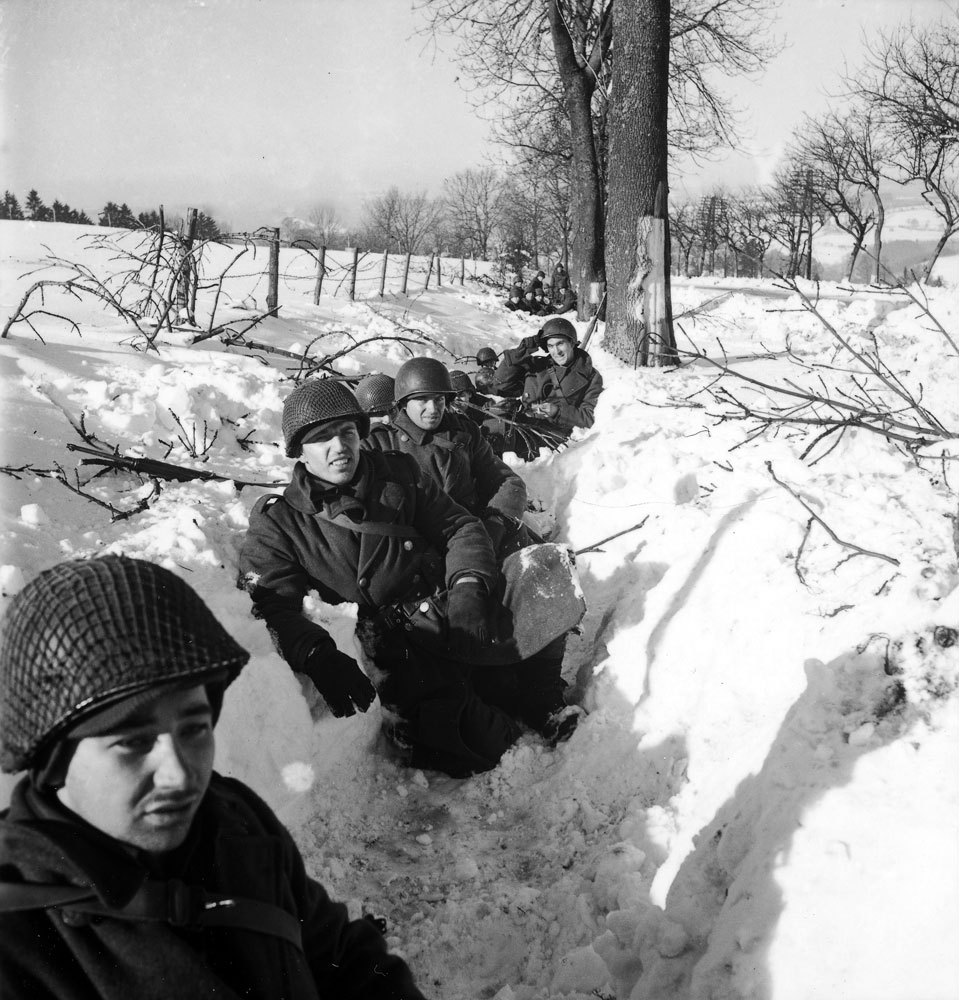
I heard a particularly inspiring story recently. It is the story of Master Sgt. Roddie Edmonds, from Knoxville, Tennessee, who enlisted in the United States Army in 1941 and was sent to serve in Europe in the 106th Infantry Division. During the Battle of the Bulge in December, 1944, Sgt. Edmonds was taken by the Nazis as a prisoner of war, along with over 1,200 other American soldiers. As it turns out, Edmonds was the senior non-commissioned officer in the group, and was therefore the leader of the prisoners. The Battle of the Bulge, for those who do not know, was the Nazis’ last major offensive, and from the American perspective was the largest single battle in WWII, yielding 89,000 casualties, including 19,000 deaths over a period of about 6 weeks.

American troops during the Battle of the Bulge

Late in January of 1945, when the Nazis saw that they were losing the battle, the prison camp commandant instructed Sgt. Edmonds to order all the Jewish American soldiers to appear outside their barracks the following morning. The next day, all 1,275 American prisoners of war in the camp assembled outside the barracks.

The commandant was furious, and held a gun to Sgt. Edmonds’ head, demanding that he identify the Jews. Now, Jewish soldiers had been warned that if they were taken prisoner, they would likely be separated from the non-Jews and sent to death camps or slave labor camps, so they should destroy their dog tags if captured. Edmonds, knowing that if he identified the Jews, he would be signing the death warrant of up to 300 American Jews, responded by saying, “We are all Jews here.”

The Nazi commandant pushed him again to reveal the Jews, claiming that they could not all be Jewish. But Sgt. Edmonds knew that the Geneva Convention required that he give only name, rank, and serial number; religion was not a piece of information he would volunteer. He responded by saying, “If you are going to shoot, you are going to have to shoot all of us because we know who you are and you’ll be tried for war crimes when we win this war.” 

Roddie Edmonds was a humble man; he never told his family this story, but made a brief mention of it in his own diary. After he died in 1985, his son, a Baptist minister, discovered the entry, and managed to get in touch with a few of the Jewish survivors of the POW camp to uncover the whole story.

In 2015, Edmonds was posthumously honored by Yad Vashem as the fifth American, and only American serviceperson to be dubbed one of the Righteous Among the Nations, the title bestowed on non-Jews who rose above the Nazi horror, putting their lives at risk to save members of our tribe.

Avenue of the Righteous Among the Nations, Yad Vashem, Jerusalem

If you imagine yourself in Edmonds’ place for a moment, you have to wonder: Could I have been so brave? Could I have done the same thing? Would I have dared the Nazis to kill me to save a few of my comrades?

In that moment, he must have contemplated his own death. He must have thought, “I am ready to die to protect my Jewish fellow soldiers, who have put their own lives on the line for our nation. I will take this Nazi bullet if I have to, in order to save their lives and my own dignity.”

And of course, Sgt. Edmonds made the honorable choice.

How many of us have thought about our own death? I certainly have. Not in a bad way, mind you, but more from the practical perspective. If, God forbid, I were to be taken from this world tomorrow, how would life change for my family? What would my funeral look like? What would be my legacy on this Earth? Will somebody post something on my Facebook profile explaining that I will no longer be responding to direct messages? Will Judy find a new home for all of my suits?

Will my children remember me by reciting Yizkor prayers on the second day of Shavu’ot?

Bhutan

There is a Bhutanese folk saying that in order to be a happy person, you must contemplate your own death five times a day.

In order to enjoy the present, we have to remember that life is a finite gift. We only have so many days on this Earth, and it is up to us to use them as best we can. We only have so many opportunities to connect with others, to share our love with family and friends, to do good works in our community and for the world.

We only have so many opportunities to save a life.

We have to remember that we are going to die, so that we can appreciate the precious few years we have been given.

In a few minutes, we will recite one of the key passages of the Yizkor service, Psalm 16:8-9 (p. 331 in Lev Shalem):

שִׁוִּ֬יתִי ה’ לְנֶגְדִּ֣י תָמִ֑יד כִּ֥י מִֽ֝ימִינִ֗י בַּל־אֶמּֽוֹט׃ לָכֵ֤ן ׀ שָׂמַ֣ח לִ֭בִּי וַיָּ֣גֶל כְּבוֹדִ֑י אַף־בְּ֝שָׂרִ֗י יִשְׁכֹּ֥ן לָבֶֽטַח׃ 

God is always before me, at my right hand lest I fall.

Therefore I am glad, made happy, though I know that my flesh will lie in the ground forever.

We tend to think of Yizkor, more properly called Hazkarat Neshamot, remembering the souls, as recollection of those who have passed. But it is just as much a recollection of our own souls; a reminder to those of us who are alive that we can be happy now despite our mortality. Just like the Bhutanese, who derive their daily happiness from contemplating death, we, the Jews, understand that life is meant to be enjoyed, and that joy is heightened by its natural limit.

The quote from Psalms compels us to consider our mortality in a healthy way. And as we remember our parents and grandparents, spouses and siblings and children and aunts and uncles and cousins and dear friends whom we have lost, we have to remember the ways in which they used their time not only to give us life, but to make our lives better, to make our world better.

There has been, of late, a lot of public death and mourning in the news; three major mass shootings in three weeks, and a great deal of soul-searching and of course posturing about how to respond.

If I had one wish for our society, it would be that we value our precious few moments of our collective life so much that we do everything in our power to prevent others from taking it away. I will know that God truly is at my right hand if, when we as a nation stumble, we remember that our first task on this Earth is to do no harm, and indeed to stop others from harming if we can. 

And perhaps if we remember God’s presence, if we can center the imperative of, “Va-anaḥnu kore’im umishtaḥavim umodim,” that we bow, bend our knees in solidarity, and give thanks before the King of Kings, or Ruler of Rulers, and we recall our essential duty to conserve the life we have been graciously loaned from on high, we might as a society be able to pull ourselves out of the depths.

As we turn now to the service of Hazkarat Neshamot, of recalling those souls, I call on you now to reflect not only on those who gave you life, on those whom we remember, but also to take this opportunity to reflect on our own mortality, to remember our holy imperatives given to us by God, to remember the heroism of those who have saved lives, and of course to consider how we might save even more. 

~

Rabbi Seth Adelson

(Originally delivered at Congregation Beth Shalom, Pittsburgh, PA, second day of Shavu’ot, 6/6/2022.)

Categories
Festivals Sermons Yizkor

We Live For Them – Yizkor / 8th Day Pesaḥ 5782

I saw a particularly moving video this week. It captured an installation by the artist Suzanne Brennan Firstenberg that appeared on the National Mall in Washington, DC last fall. It included 143 square sections of ground in which a total of 620,000 small white flags had been planted, one flag for each of the 620,000 Americans who had died of Covid-19 as of September, 2021. (You may be aware that we are now approaching 1 million official deaths, although the actual toll is surely higher.)

The video showed people strolling through this huge field of flags, writing names of loved ones they lost and messages about them on the flags, reflecting on the immensity of grief, hugging each other and crying and trying to make sense of it all. It was quite painful and very moving. (It might have been coincidental that the installation opened to the public two days after Yom Kippur, and remained open until just after Shemini Atzeret, two days of the Jewish calendar on which we remember those whom we have lost with prayers of Yizkor, prayers of remembrance for those who are no longer with us. But maybe it was not a coincidence.)

For a long time to come, we will be trying to wrap our heads around these two years of grief and pain and loss and anxiety and sickness and death. We will continue to feel the after-effects – the economic fallout, the political consequences, the social ills – perhaps for decades.

But those whom we have lost will always be remembered. We, the Jews, are good at memory. We are especially good at navigating the moments of grief that we face; through mourning and bringing comfort; through the framework of our tradition, our liturgy, our ancient texts. 

And we remember those who gave us life by completing their work on Earth, by honoring their best qualities, making them our own.

***

My grandfather, my mother’s father, grew up in poor circumstances. His father abandoned him and his brothers, and his mother was sickly and not capable of caring for them, so my grandfather was taken in by a foster family. He worked a couple of different jobs in his life: at various points he drove a taxi, worked as a salesman, and during the Depression he had a candy store, which he lost (according to my grandmother) because he would give away freebies to every soul who came in with a sob story.

Despite the hardships he faced, my grandfather was a sweet man who never let his circumstances bring him down. And my mother reminds me occasionally that he always complimented my grandmother after dinner. She had not always been a great cook, but no matter the quality of the meal, my grandfather, without fail, had words of praise for his wife. 

It’s a small thing: consistent gratitude. Everyday thankfulness. A simple, “That was wonderful, dear! Thank you.” My grandfather knew that, although he did not have a lot, he certainly appreciated what he did have.

And it is a lesson that I carry with me, even though my grandfather passed away 16 years ago, even though the last years of his life were marked by dementia, during which he did not even recognize his own family. I try to uphold that consistent sense of being grateful for what I have.

Back in January I was at a rabbinic retreat, and learned about a so-called “story cycle” in the Talmud (Moed Qatan 28a) about ancient rabbis trying to avoid the Mal’akh haMavet, the Angel of Death. A story cycle is a collection of related stories which are collected in one place in the Talmud. Sometimes they are the same story retold multiple times with different details and elaborations in each version; sometimes they are only loosely connected with a shared theme.

Most of us probably think of the Mal’akh haMavet in the context of the Passover story, which we all reviewed a week ago for the first nights of Pesaḥ: for the tenth and final plague to which the Egyptians are subjected, the Mal’akh haMavet passes over the homes of the Israelites, on the way to take the first-born children of the Egyptians, including that of the Pharaoh himself. (That is, of course, where we get the name “Passover.”)

But the Mal’akh haMavet is a familiar character in rabbinic literature, appearing in many places. And in this story cycle, it is clear that he has a certain code: he cannot take the souls of people who are engaged in righteous acts. So, for example, Rav Ḥisda is so pious that the words of Torah never depart from his lips; he is constantly studying and reviewing and repeating our ancient holy texts. And so when the Mal’akh haMavet comes to take him, he is foiled by the continuous flow of holy words from Rav Ḥisda’s mouth. So the Mal’akh haMavet sits down on a cedar bench nearby, and the bench cracks, making a loud noise. Rav Ḥisda is momentarily distracted, pauses in his recitation of holy words, and so the Mal’akh haMavet takes his soul.

Other stories on the page make it clear that all the ancient rabbis for whom the Mal’akh haMavet comes are trying to avoid death. And even though one, Rav Naḥman, concedes that death is painless, nonetheless Rav Naḥman also adds that the living world is better, because, in his words, in the world-to-come, 

אֲמַר לֵיהּ: מַאן חֲשִׁיב, מַאן סְפִין, מַאן רְקִיעַ

Rav Naḥman said to Rava, “[In the world-to-come], who is important? Who is honorable? Who is complete?”

Put another way, we are all equal in death, and the world of the dead is unremarkable. Life is where it’s happening; all of the good stuff is here on Earth, not in the afterworld.

Now that is interesting, because some religious traditions, and even some Jews, think that the afterlife is the goal. That better living in “Olam haBa,” the world-to-come, is our goal here on Earth. That the reason we keep the mitzvot, the 613 holy opportunities of Jewish life, is so that we can merit a place in Olam haBa.

So one implicit message of this passage is, “not so much.”

Truth is, normative Judaism does not have a lot to say about Olam haBa. Yes, it is certainly mentioned as a desirable destination. But let’s face it folks: the bottom line of Jewish living, of the mitzvot and our rituals and our dietary guidelines and our holidays and our prayer and our values is to ensure that we act as holy people, that we elevate the holiness in all our relationships right here on Earth, in the world of the living. We learn Torah and act on its imperatives for Olam haZeh: this world. Not for Olam haBa, the world-to-come.

To paraphrase Rav Naḥman, it is in this world that we can be important, honorable, and complete. In this world we can attain these things by valuing what is truly important, by maintaining the honor of others, by helping to complete God’s work here on Earth.

And how do we do that, exactly?

We do it by remembering.

We remember our story. We tell it over and over to our children, just as we all did one week ago at the Pesaḥ seder.

We remember our ancestors, Avraham and Sarah, Rivqah and Yitzḥaq, Raḥel and Ya’aqov and Leah, and Moshe Rabbeinu and Miriam haNevi’ah (the prophetess) and Eliyahu haNavi and on and on. We remember their values and deeds, and we act on them.

And we remember our parents and grandparents and spouses and aunts and uncles and cousins and children and teachers and friends and neighbors. We remember what they taught us. We remember what they valued. We even remember when they failed us, because we learned from those failures as well.

Rosie and Eddie, in an undated romantic moment

You know why life is better than death? Because we carry all of those things with us, and we can act on them. We take the wisdom of those who came before us to help improve ourselves, to intensify the holiness in our marriages, to teach our children to be better people, to do good works for others.

We, the living, remember those who came before us so that we can carry out the good deeds of the dead. We live to maintain their honor. We live to complete them. To express gratitude; to praise others; to be friendly and personable and affectionate; to pick up others when they fall, and occasionally to right their wrongs.

To be alive is to remember, and to act on what has been handed to us.

And so we remember, and we live for them.

~

Rabbi Seth Adelson

(Originally delivered at Congregation Beth Shalom, Pittsburgh, PA, Shabbat morning / eighth day of Pesaḥ, April 23, 2022.)

Categories
Festivals Sermons Yizkor

Make Our Garden Grow – Shemini Atzeret 5782 / Yizkor

As I have shared with you on multiple occasions, I am an optimist. And yet, these 18 months of pandemic have tested my optimism severely.

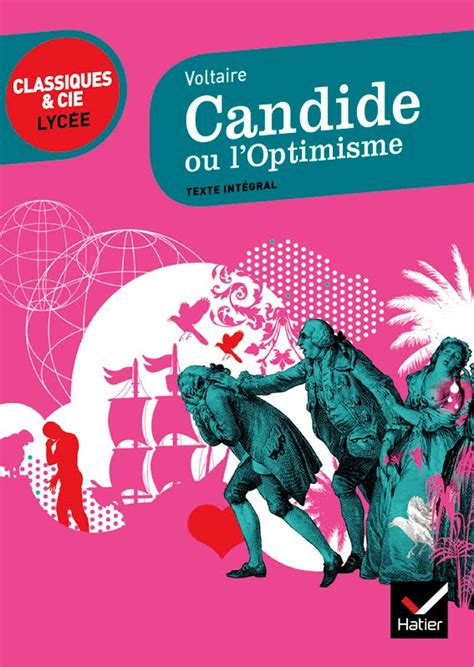
At one point during the last eighteen months of pandemic-induced isolation — it was sometime last winter, during the coldest, darkest, most isolated period — I found myself looking for a good recording online of a song that I had once sung for a concert with my synagogue choir at Congregation Brith Shalom in Houston when I lived there in the late 1990s. The song was “Make Our Garden Grow,” the finale of Leonard Bernstein’s operetta, Candide, which was based on the novel of French writer and philosopher, Francois-Marie Arouet, best known by his pen name, Voltaire. I probably spent 45 minutes listening to various versions.

And I found myself crying. 

Crying from the pain of isolation, from the gnawing feeling of all of the missed opportunities for teaching, for celebrating together, for being unable to gather our community in person for all the things that we do. I was crying for what seemed at the time a lost world. 

And the song is just so darned beautiful. If you are unfamiliar with Candide, you might want to check it out:

And you know how some songs are just so appealing, so powerful that they give you the shivers, or that they make you cry? Well, I’m a sucker for a gorgeous song.

But even more so, what got me more than Bernstein’s music (the sextet, choir, and orchestra) was Voltaire’s message. Candide, published in 1759, was primarily a rejection of the philosophy of optimism, and in particular the school of thinking headed by Gottfried Wilhelm Leibniz, the German Christian polymath of the late 17th / early 18th century. Leibniz believed that we are living in the best of all possible worlds that God could have created. Voltaire clearly abhorred this philosophy, and set out to lampoon Leibnizian optimism by making Candide and his teacher, Dr. Pangloss, seem like utter fools for believing in it. As the book draws to a close, they realize the error of their ways. And so the operetta concludes thus:

Let dreamers dream
What worlds they please
Those Edens can’t be found.
The sweetest flowers,
The fairest trees
Are grown in solid ground.

We’re neither pure, nor wise, nor good
We’ll do the best we know.
We’ll build our house and chop our wood
And make our garden grow.
And make our garden grow!

“Let dreamers dream what worlds they please / those Edens can’t be found.”

The lyrics, written by American poet Richard Wilbur, include what might be a hidden nod to a well-known midrash about Creation: that God created and destroyed many worlds before creating this one. That is, the creation of the world that is described in Bereshit in the story which we will read tomorrow morning as we start the cycle of Torah once again is only the last one in a whole line of less-than-perfect worlds. (I do not think that Wilbur was Jewish, although of course Bernstein was.) 

A few chapters later in Parashat Noaḥ, God acknowledges that life on Earth has become corrupt, and destroys virtually all living things in the flood. The implicit message of the midrash and the subsequent flood story is that, although many worlds came before and God settled on this one, the world that we are in is clearly NOT perfect. We cannot be living in the best of all possible worlds, but God had effectively given up on trying to create that world.

Dr. Pangloss, and hence Leibniz, were absolutely wrong, in Voltaire’s opinion. And so when Candide and his friends sing these words at the end, they are confessing to the failure of optimism. We do not live in the best of all possible worlds, but we have this world, and it is up to us to live and do the best we can, given that reality. We should, therefore, build our house and chop our wood and make our garden grow, and not be deluded into thinking too optimistically about our lives. Life is ultimately about the hard work of taking it day by day, of not necessarily expecting the best possible outcome, but rather accepting the routine ups-and-downs.

Voltaire’s language even echoes that of Bereshit / Genesis 2:15, which tells us that God put humans in the Garden of Eden le’ovdah ulshomerah, to till it and to tend it, or in Latin, ut operaretur.

“I know also,” said Candide, “that we must cultivate our garden.”

“You are right,” said Pangloss, “for when man was first placed in the Garden of Eden, he was put there ut operaretur eum, that he might cultivate it; which shows that man was not born to be idle.”

“Let us work,” said Martin, “without disputing; it is the only way to render life tolerable.”

This conclusion is not far from that of Qohelet / Ecclesiastes, which we read on Shabbat morning. And I suppose that is why it was so cathartic when I played and replayed Bernstein’s musical take on Voltaire’s rejection of optimism.

The holidays of Tishrei run through a whole palette of emotions: from the foreboding and triumphant grandeur of Rosh HaShanah, to the gravitas and genuflection of Yom Kippur, to the pure family-centric joy of Sukkot, to the statement of vulnerability as we beat willow branches on the floor Hoshana Rabba, to the wild dancing and singing with abandon of Simhat Torah. Oh yeah, and then there’s Shemini Atzeret, whatever THAT’S about.

Well, actually, although the origin of Shemini Atzeret is as the eighth day of Sukkot, it is probably most associated today as a day of Yizkor, a day of remembrance of those whom we have lost. This is, of course, a Yom Tov day, a day of happiness and family meals (although eating in the sukkah is considered optional today), but the inclusion of Yizkor guarantees that this is a day of reflection, of perspective.

For Shemini Atzeret and Simḥat Torah, at the very end of a long and grueling holiday run, I often find myself feeling a lingering sense of eternity, of looking at this snapshot of our lives as we begin 5782, and thinking, where was I last year, spiritually speaking, and what does this year hold for me? And it makes sense that on this day of reflection, we might flip back in our minds to both the good and the not-so-good times. 

That is why tomorrow, just before Musaf, when I chant the Ḥatzi Qaddish, I will use melodies from throughout the Jewish year in a relatively obscure, yet interesting cantorial tradition known in Yiddish as the Yahres Kaddish, the Kaddish of the full year. It is a reminder not only of these holidays, but the entire spiral of the Jewish year, as we continue onward and upward, around and around as we grow and mature and learn and fail and succeed.

These are days on which we remember not only grief and loss, but also joy and happiness and celebration. And we also remember to keep in perspective what enables us to keep going around in that upward spiral, that sense of taking each day as it comes, trying to do the right thing for ourselves and each other, working and learning and playing and spending time with friends and family. Good things will happen in the coming year: people will get married; babies will be born; children will graduate from high school; there will be moments of joy. And so too will beloved family members die, and get divorced, and projects will fail and people will have financial hardships, and there will be bored moments and suffering and of course more disease and corruption and malfeasance.

And all those things are features of the jumble of our lives. As Qohelet / Ecclesiastes (1:9) tells us, “Ein kol ḥadash taḥat hashamesh.” There is nothing new under the sun. Put another way, Pirqei Avot (5:22) says, “Hafokh ba vahafekh ba dekhola ba.” Turn it over and over, because everything is in it. “It” of course, is the Torah, but Torah is likewise a reflection of the complex tapestry of our lives.

On this day of Yizkor, this day of remembrance, let us not forget that those whom we remember in these moments, who gave us life and nurtured us and gifted us their talents and wisdom and yes, sometimes even their flaws, are still a part of the weave of that tapestry.

And as we conclude this holiday season, we also remember that, in the words of Candide, we’re neither pure, nor wise, nor good, but we will do the best we know. We will try to be satisfied with sacrificing the perfect for the sake of the good enough. And that is perhaps the most valuable message we might take away from right now, as we add another year, another layer.

~

Rabbi Seth Adelson

(Originally delivered at Congregation Beth Shalom, Pittsburgh, PA, Shemini Atzeret 5782, Tuesday morning, 9/28/2021.)

Categories
Festivals Sermons Yizkor

Once You Learn How to Die, You Learn How to Live – Shavuot / Yizkor 5781

Do we truly understand the value of life? The value of our lives? Do we really appreciate the gift we have been given, while we still have it?

One of the things that the pandemic has taught is just how frail we all are. Think about this for a moment: millions of people around the world taken too soon; young, healthy people suffering from virus effects long after regaining health, the so-called “Covid long-haulers;” the economic fallout – the jobs lost, the industries disrupted, the evictions and lives put on hold, and so forth. All of this due to a tiny piece of RNA wrapped in a protein shell. This microscopic thing, which can barely be called alive, has caused so much damage. It is hard to wrap your brain around. 

And the fallout that it has caused is primarily due to fear of death. We have spent 14 months staying away from people – from loved ones, from strangers in the supermarket, even passing people on sidewalks (I have found myself walking out into the road, perhaps unsafely so, many times) – out of respect, yes, but more essentially out of fear.

And with good reason, of course. 14 months later, nearly 600,000 of our fellow citizens are confirmed to have succumbed to that strand of RNA, and perhaps the figure is even closer to one million. Based on CDC statistics, this virus is about as deadly, per capita, as heart disease and cancer, and far more deadly than auto accidents and Americans with guns. Somehow, however, death seemed so much more close this year, so much more present. 

And we fear death.

A congregant who recently lost his grandfather (not due to COVID-19) asked me for suggestions on the topic of books that deal with death from a Jewish perspective. I came up with a few myself, but I also posed the question to fellow Conservative rabbis, and one suggested the 1997 memoir by Mitch Albom, Tuesdays With Morrie, a book that was on best-seller lists for four years. Probably some of you have read it. I never had, until I stumbled across a copy in one of the Beth Shalom libraries a few weeks back. I figured, maybe I should read this.

In case you do not know, the book is about Brandeis sociology professor Morrie Schwartz, with whom Albom had a close relationship while studying there as an undergraduate. Upon graduation, Albom wandered off into the world to seek his fortune, and did not stay in touch with Schwartz. Instead, he worked hard at building a career as a sports journalist, until one evening he was watching Nightline, and he saw his old professor and friend being interviewed by Ted Koppel (remember Ted Koppel?) about dying of a terminal disease. Morrie had ALS, and was at that point already unable to move his legs. Albom reconnected with him, and then went to visit him at his home outside of Boston over a series of 14 Tuesdays. During each of his visits, Morrie Schwartz unloaded wonderful bits of wisdom – about death, yes, but all the more so about life.

Although Albom is Jewish and so was Schwartz, the book is not really drawn from traditional Jewish ideas about death. While there is one brief moment in which Schwartz, a self-declared agnostic, looks heavenward and suggests that his life is in God’s hands (“I’m bargaining with Him up there now,” he says, p. 163), there is otherwise no reference to any of the things that Jews associate with death and mourning. Nonetheless, it is a very Jewish book, primarily because Morrie’s approach to dying of a terminal illness is to talk about it, to make Albom and the reader aware of their own mortality.

That is what we do. We are not only the people of the book; we are also the people of the schmooze. (Most of you know that I grew up in WASPy, stiff-upper-lip New England; I have never been much of a talker. Somehow, going to rabbinical school changed all that.)

You might make the case that Morrie’s essential argument is that we have no need to fear death, because we are all going to die. Death is an essential feature of life. During one of their early visits, Morrie offers one of his most impactful statements. “The truth is, Mitch, once you learn how to die, you learn how to live.” (p. 82) What he means by “learning how to die” is to be prepared for it, to be aware that it is coming. Once you have done that, you can appreciate life in a much more complete way.

I became aware just this weekend, through an article in the New York Times about a nun, that Catholics have a practice known as “memento mori,” Latin for “remembering death.” The idea is to “intentionally think about your own death every day, as a means of appreciating the present and focusing on the future.” Sister Theresa Alethia Noble of the Daughters of St. Paul convent in Boston has made it her mission to raise the profile of this somewhat obscure practice. Her argument is that we are too focused on the superficial and the inauthentic, the “bright and shiny” things that are constantly occupying space on our screens and in our consciousness.

The article notes that Buddhist mindfulness meditation tries to achieve the same thing, and Morrie Schwartz also invokes the Buddhists. 

But we, the Jews, have our own traditions that keep our mortality in front of us on a regular basis.

You may never have thought about this in these terms, but that is what we do every time we observe Yizkor, when we take a few moments to recall those whom we have lost. One of the traditional things we say during Yizkor are the words from Psalm 16: 

שִׁוִּ֬יתִי ה’ לְנֶגְדִּ֣י תָמִ֑יד כִּ֥י מִֽ֝ימִינִ֗י בַּל־אֶמּֽוֹט׃ לָכֵ֤ן ׀ שָׂמַ֣ח לִ֭בִּי וַיָּ֣גֶל כְּבוֹדִ֑י אַף־בְּ֝שָׂרִ֗י יִשְׁכֹּ֥ן לָבֶֽטַח׃  

Adonai is always before me, at my right hand, lest I fall. Therefore I am glad, made happy, though I know that my flesh will lie in the ground forever.

As ironic as this statement sounds – happiness and death in the same verse – it is absolutely the feeling one gets in reading Tuesdays with Morrie. Teacher and student are united in their joy of connecting and reconnecting, even though one will soon be gone. They enjoy food together; they exchange powerful hugs.

And every time we respond to one reciting the Mourner’s Qaddish, we are doing the same thing. The text of the Qaddish is not even about death, but even though it is an essential part of mourning, it promises life and joy in our praise of God. And every time we celebrate any life cycle event – berit milah, baby naming, bat/bar mitzvah, wedding, etc., we are reminded that life is a cycle – a cycle of joy and grief and loving and loss and thriving and languishing and beginning and ending. 

Why is a Jewish wedding ring a perfect, simple circle, with no stone? Because life is a circle, one in which we all experience all of those beginnings and endings every single day, as we wind our way around.

Elsewhere, Morrie adds, “The most important thing in life is to learn how to give out love, and to let it come in.” (p. 52) As we turn around and around, the way we make our lives full, the way we fill in that circle, is by giving out love, and maybe getting some of it back.

Death is always there. We hear it intoned in our rituals. We bring comfort to those who are approaching death, and when they are gone we are there for those who mourn. We know that we can be happy today, because we also know that there is an endpoint. And we will be remembered by those to whom we gave love.

Perhaps one of the most striking lessons that Morrie Schwartz offers, and one which living a life committed to Judaism also gives us, is the following:

“So many people walk around with a meaningless life. They seem half-asleep, even when they’re busy doing things they think are important. This is because they’re chasing the wrong things. The way you get meaning into your life is to devote yourself to loving others, devote yourself to your community around you, and devote yourself to creating something that gives you purpose and meaning.” (p. 43)

Jewish lifecycle events, Jewish holidays, Jewish ritual and song and story and text and halakhah and customs, are primarily focused on connecting us to each other and offering us meaning. While we know where we are headed, we understand that the most important thing that we can do before we get there is to connect, and to re-connect, and to love. That is our purpose; that is what gives our lives meaning.

As we emerge from this pandemic, let us not only remember those whom we have lost, but let us also recommit ourselves to living better, to finding meaning, to engaging with the words of our tradition, to loving more.

That is how we may truly appreciate the gift of life.

~

Rabbi Seth Adelson

(Originally delivered at Congregation Beth Shalom, Pittsburgh, PA, second day of Shavuot, 5/18/2021.)

Categories
Festivals Sermons Yizkor

The Original Non-Fungible Token – Eighth Day Pesaḥ / Yizkor 5781

You might have heard a curious news blip a few weeks back about an extraordinarily unusual art auction. The artwork, by the American artist known as Beeple, was a collage of 5,000 individual digital images, assembled over nearly 14 years. Beeple, whose birth name is Mike Winkelmann, made one image each day, beginning on May 1, 2007, and the collage, entitled “Everydays: The First 5,000 Days” sold for an astonishing $69.3 million, the third-highest price paid for the work of a living artist.

Now, what is most curious about this? That the purchaser has nothing to show for his $69.3 million other than a JPEG file, about 21,000 x 21,000 pixels, with a size of about 320 megabytes. No canvas, no paint, not even a carved, gilt frame. Theoretically, anybody with a computer could easily make and distribute innumerable copies of the file and share it online with a few clicks.

You heard that right: the owner paid nearly $70 million for a computer file.

So how is it that this work could be sold for such an exorbitant sum? Because it is a so-called “non-fungible token,” or NFT.

What’s a non-fungible token, you ask? You’re not alone. Saturday Night Live actually put together a musical skit about it last week, in which a befuddled Treasury Secretary Janet Yellen (played by Kate McKinnon) seems to be at a loss to explain it

As briefly and as simply as I can explain it, an NFT is any unique item of digital content – art, tweets, music, etc. – that can be verified as the original version through a series of secure, verifiable, time-stamped files that attest to its legitimacy. And why the need for this verifiability? So that the creator can sell the original digital content, and its ownership, or transfer of ownership, can therefore be proven. Many people can possess a digital copy, but there is only one non-fungible token of any digital content that exists anywhere, and the proof of that ownership is entrusted to thousands of computer servers, scattered around the world, so that the ownership can always be proven. (Some of you may have heard of Blockchain – NFTs use that technology.)

In short, this enables people to assign a dollar value to something that is effectively a set of ones and zeros that only computers can translate for us. Completely intangible. And the records that make it “real” are entrusted on a whole bunch of secure servers, ostensibly forever.

Other items that have sold as NFTs are the first tweet by Jack Dorsey, the founder of Twitter, for nearly $3 million, and a digital picture of a column by New York Times Technology columnist Kevin Roose, which netted $560,000, which is I presume far more than Mr. Roose earns in a year. (He donated the money to a charity.)

Now, why is this interesting, other than the absurd amounts of money involved?

First, because it means that art, and specifically ownership of art, has moved beyond the physical product into a kind of spiritual state. It effectively means that you can own an idea, and not just the Earthly manifestation of that idea. (I suppose that the concept is not too different from the principle of intellectual property, except that usually people want to own their intellectual property because it can be used to create physical things of value. That does not seem necessarily to be the situation here. Hence the novelty.)

But second, as curious as the principles behind non-fungible tokens may seem,  the concept suggests something very powerful: that intangible items are truly valuable. And, particularly relevant on a Yizkor day, that our relationships, our sets of memories of those whom we recall today, are something like NFTs in that they are unique, real, and non-fungible. But these relationships are much richer, and effectively priceless.

Let me explain:

When I was in graduate school at Texas A&M University, I recall a discussion with some fellow Jewish grad students over a Shabbat dinner at the Hillel building there. One of my colleagues opined that it was essential to publish academic papers, because it meant that when we were gone, there would be something tangible to show that we had made an impact on the world, in print and therefore “official.” (Since he was a grad student, I’m guessing that he was also trying to rationalize what he was doing in graduate school.)

You could extend this to any particular product: inventing a gadget, say, or building a house. When we create tangible things in this world, we can point to them and say, “Aha! I have left something for the world that will remain after my death.”

But I must say that I disagree with my grad school buddy. An object is just an object; it will eventually crumble and return to dust. A paper in a journal, no matter how essential it might seem right now, will ultimately become obsolete. Yes, it is true that we read words from the Torah today, a book that is still with us after over 3,000 years, but how many other books can you name that are that old? (The Torah is clearly exceptional, for several reasons.)

Rather, I am convinced that the greatest impact that we can have on the world is to place a little bit of the intangible pieces of ourselves – our wisdom, our love, our emotional support, our humor, our personality – into all the people we know. 

And, in fact, that is what every single person on this Earth fundamentally creates during our lifetimes: the intangible dust of relationships. Memories, sentiments, shared experiences, wisdom, cherished moments, expectations fulfilled, or not, and so forth. That is the content of our relationships, much more comprehensive than the pixels arranged on a screen by a digital artist. 

And, almost miraculously, we give out these bits of ourselves to others every time we interact, every time we speak, every moment we share with others. Taken together, all of those create a unique, non-fungible collection of us as individuals, a collection that will remain long after we have departed our physical bodies.

And, unlike an NFT, the content of these vouchsafed bits of ourselves is much more rich. My relationship with my wife, for example, is quite different than my relationship with my 6th-grade teacher, Mr. Welsh. OK, so Beeple spent 5,000 days creating the piece that sold for $69 million. But I have spent already more than 18,000 days on this planet, and within that over 300,000 waking hours, much of that time engaging with others in all the ways that people interact. And nobody can ever take that away from me. Or from you. Or from all the people we know.

The total value of the unique relational moments of my life, if it could be sold, would easily eclipse any NFT by an infinite number of orders of magnitude. 

And that is precisely the point. Our relationships are priceless, and they are forever. Even if one cannot recall a specific interaction, it leaves an emotional residue – cumulative and integrated into the totality of relationship. Even when all those who knew us personally are gone, the dust of our relationships continues to echo in all relationships, in all the collective facets of humanity. 

In a commentary on Shir HaShirim, Song of Songs, from which we read this morning, Rav Avraham Yitzḥaq Kook (1865-1935), the first Chief Rabbi of Mandate Palestine, teaches us that, “Each worldly song is linked to all other songs, and their totality expresses the supernal harmony of the divine whole.” That is, the songs of our individual lives are interconnected. The relational dust that we all leave is a part of the greater song of humanity.

That is, I think, the very meaning of the term “Tzeror haḥayyim,” the bond of life, which appears in the El Male Raḥamim memorial prayer, which we will recite in a few minutes. We are all tzerurim bitzror haḥayyim, bound up in the bond of life together, inextricably interconnected in all the relational material that we share and re-share.

On this day of hazkarat neshamot / remembrance of souls, we recall those whom we have lost by singing their songs, by recalling the holy moments we spent with them, by engaging with that relational residue. We understand that our lives were not only enriched, but in fact defined by those pieces of themselves that they placed in us. Those memories are unique, and together they define those whom we remember today.

We carry them with us. We attest to not only their existence, not only the non-fungibility of their lives, not only how very real they surely still are, but how those relationships shape our lives, our world, our outlook, and our ongoing relationships, which we continue to share with others.

And that, hevreh, is truly priceless.

~

Rabbi Seth Adelson

(Originally delivered at Congregation Beth Shalom, Pittsburgh, PA, Eighth Day of Pesaḥ, 4/4/2021.)

Categories
High Holidays Sermons Yizkor

Back to Basics: Our Story Will Save Us – Yom Kippur 5781 / Yizkor

בְּרֹאשׁ הַשָּׁנָה יִכָּתֵבוּן וּבְיוֹם צוֹם כִּפּוּר יֵחָתֵמוּן

Berosh hashanah yikatevun, uvyom tzom kippur yehatemun.

On Rosh Hashanah their decree is written, and on Yom Kippur it is sealed.

That is our traditional story surrounding Rosh Hashanah and Yom Kippur – the Book of Life. As our tefillot / prayers continue throughout the day, we will continue to invoke this story.

This is the fourth and final installment in the “Back to Basics” series, inspired by the limited nature of our lives due to the pandemic. On Day One of Rosh Hashanah, we covered halakhah (Jewish law), on Day Two we discussed minhag (Jewish custom), and last night we spoke about Jewish values. (You can also listen to these as podcasts.) The final installment is about the Jewish story. Halakhah, minhag, values, story. These are the basic elements of Jewish life.

You might have thought that this piece of the basics of Judaism would come first. After all, the first thing we learn about being Jewish is that our heritage comes with a story. We learn stories from the Torah in Hebrew school. We remember the Exodus from slavery in Egypt at the Pesah seder table. We light Hanukkah candles to remember that a small band of Jewish rebels fought off the idolatrous invaders and restored the Temple in Jerusalem, and so too do we have an obligation to enlighten the world. We get a day off every seven days because God rested after six days of Creation. Even those of us with zero formal Jewish education know the stories about the Garden of Eden, Joseph (thanks to Andrew Lloyd Webber), Moses (thanks to Hollywood). The Torah and pop culture are intertwined in ways we do not even notice.

On the other hand, story serves as a beginning, and also the end; I have heard that Jewish life is something like a Moebius strip – as you follow its path, you always return to where you started. In engaging with our tradition, we always return once again to our story, our history, our culture, and we are reminded that sharing our story with others will lead to a better world: Wouldn’t it be awesome if the whole world observed Shabbat? Wouldn’t it be absolutely amazing if everybody were to gather around a holiday table and say, “Let all who are hungry come and eat”? 

And let’s face it: story is the most interesting part. For most of us, that is.

I have a slight confession to make here, although many of you probably have noticed this already. I’m not really a story-telling rabbi. Some rabbis are more inclined to pepper their sermons with good stories that lead to a moral. I am more cut-and-dried, more inclined to lay down the brief, pithy Talmud Torah than long form stories. (If you were on our Zoom service on the second day of Rosh Hashanah, you may have noticed that I tried to tell a joke and totally bungled it.)

But I am very fond of the fact that, no matter how we break down theologically or sociologically or demographically, we, the Jews, are still united by our stories. Even though we approach many things differently, the Torah is the Torah; the Talmud is the Talmud, and disagreeing over the meaning of a phrase or the halakhic import of a certain read comes with the territory. As fractious as we are, we still share our stories.  

And you know what? As long as we continue to tell our stories, they will protect and save us, just as they always have.

Think about this: what is it that enabled Jewish people to survive the destruction of the First and Second Temples, the Inquisition, the Shoah? What enabled Jews to manage being alternately exiled and welcomed, dispersed and ghettoized, massacred and delegitimized? What empowered us to look past the anti-Semitism, century after century, land after land? What encouraged the Zionists to build a modern nation in an ancient land? What has enabled this very community to pick itself up from its grief and move forward, after 11 of our friends and neighbors were brutally murdered by a white supremacist with an assault rifle?

Not history. If it were up to mere history, the Jews would have disappeared thousands of years ago. Our history is littered with destruction, dispersion, forced conscription, pogroms, and disillusionment.

No, what gave us the strength to survive was that these stories fill our lives with meaning. We mustered the courage to press on by the promises given to Avraham and Sarah, Rivkah and Yitzhaq, Rahel and Ya’aqov and Leah and Yosef. We have continued to teach our stories to our children, so that, generation after generation, their eyes were lit with the richness of our wisdom, the power of our tales, the inspiring personalities of our bookshelf.

One of the more curious things that we do as Jews, on the festival of Sukkot, is to parade around the room holding aloft the four plant species identified in the Torah as the symbols of the season: willow, myrtle, palm, and citron, also known as the lulav and etrog. And what do we do whilst parading?

We say, “Save us.” “Hosha’na.” And we say that over and over and over, and in between chanting “hosha’na,” we add tiny story fragments, a couple of words each. They always go by so quickly, because the piyyutim are long, and late in the service so everybody’s hungry and wants to get to lunch. But they include reference after reference to the Torah and to midrashim. Just a few brief examples:

We chant this on the second day of Sukkot:

הוֹשַׁע נָא אֶֽבֶן שְׁתִיָּֽה, הוֹשַׁע נָא

Hosha’na even shetiyyah, hosha’na.

Save us, Foundation Stone, save us!

The Even Shetiyyah / Foundation Stone was the mythical piece of rock, located at the top of Mt. Moriyah, the Temple Mount in Jerusalem, from which, according to midrash, the world was created. It holds a special power that we continue to invoke to this day.

Here is another one: 

כְּהוֹשַֽׁעְתָּ טְבוּעִֽים בְּצֽוּל גְּזָרִֽים. יְקָֽרְךָֽ עִמָּֽם מַֽעֲבִירִֽים. כֵּן הוֹשַׁע נָא

Kehosha’ta tevu’im betzel gezarim, yeqarekha ‘imam ma’avirim, ken hosha’na.

As you rescued this people from drowning by splitting the deep sea, Your glory crossing with them, so save us!

This is a clear reference to the Israelites crossing the Sea of Reeds, accompanied by God, an example of how God has saved us in the past.

There are literally hundreds of these types of references, some more deeply coded than others, in endless liturgical poems used over the holidays, not just for Sukkot, but around every holiday.

The message is clear: our stories save us. When we are in trouble, when we need something to hold onto, we lean into the rich assortment of tales that have inspired us and given us a meaningful framework for thousands of years. 

Now, I know I have a few armchair skeptics out there in Zoom-Land right now (and you may actually be seated in armchairs!) who are thinking, or perhaps even remarking out loud, “Come on, Rabbi. The stories of the Torah are not true. They conflict with the scientific record. There’s no archaeological evidence of the Exodus, or that the Israelites were actually enslaved. Do you really think that Moshe took dictation from God on Mt. Sinai?!”

To you I say, “I’m happy you’re listening!” and then, “So what? That is not the point.” History and story are not the same thing. Scientific truth and the foundational stories of an ethnic or religious group are not in the same category; they answer different questions. Science tells us that the universe is 14 billion years old, following a Big Bang in which all matter was violently expelled from a single, infinitely dense point, and ultimately cooled to the point where atoms and molecules and (at least in the case of one particular planet) life formed through a series of fascinating phenomena. 

But science does not tell us that we need a day off every seven days, because God rested on the seventh day of Creation. And science does not provide us with the wisdom to raise our children to be human beings, or to seek the common good, or to behave with integrity, or to remember the needy, or to pursue justice. Science teaches us facts; our stories teach us not only how and why to be Jewish, but also how and why to aspire to be the best humans we can be.

Our story, the Jewish story, may not meet the standard of scientific fact, but they are ours. My teacher at the Jewish Theological Seminary, Rabbi Neil Gillman, taught me the value of what he referred to us as “myth.” Not myth in the sense of falsehood, but the series of stories that help us explain our world, the lens that helps us make sense of the information we take in. Every nation, every ethnicity has its own myths. 

That is why the contemporary tools of biblical criticism, which cast doubt on some of our stories, do not trouble me. No matter what scholars may say about our foundational myths, they continue to frame my life and yours in holiness.

Some of you may be aware that there is a new translation out of the memoirs of Glikl, a Jewish woman who lived in Germany in the 17th and 18th centuries. I’ve been captivated by her story for many reasons, among them the fact that stories of and by women are too few and far between on the Jewish bookshelf. Glikl was born in the 17th century to a wealthy family, and she is not only literate in the sense that she can write her own memoirs in Old Yiddish, but also she is Jewishly literate, peppering her language with quotes from the Torah and rabbinic text. She writes about her family’s ups and downs, about intrigue and marriage and of course anti-Semitism, which is very much a part of her world. 

One of the captivating aspects of her work is the way in which the Jewish story nourishes Glikl. 

Throughout the seven books of her memoirs, which cover 28 years from 1691 until 1719, she weaves Yiddish folktales, Talmudic stories, and personal anecdotes into the details of her family life. She unspools lengthy yarns to teach us a moral, like the value of patience, and then she tells the tale of how she and her mother both gave birth around the same time, and one night their babies were confused and the entire household was in an uproar. She expands the story from the Talmud about Alexander the Great’s search for the Garden of Eden, to teach us that we should be satisfied with what we have. And she urges us to settle our personal accounts during our lifetime, a notion particularly salient for these days of teshuvah, repentance. 

Glikl’s memoir is not only a fascinating slice of history, a particular moment captured in remarkable prose, but also a testament to the power of story. As we listen to her unspool her tales, we also see how the Jewish story supports and nourishes her and her family, how Jewish rituals and holidays, drawn of course from our story, are very much a part of her everyday existence.

Ladies and gentlemen, I know that right now, things might seem much worse than they have ever been. I know that these Ten Days of Teshuvah / repentance, starting with Rosh Hashanah and concluding today (at 7:47 PM) have been nerve-wracking for reasons I do not need to enumerate. But underlying the threat of chaos and anxiety about the future, I know that over the past week, in the back of my head, I have been praying for life. Zokhreinu lehayyim. Remember us for life, God. And even though the story of the Book of Life should also fill us with awe, I must say that it has been comforting to me to be able to share these melodies and stories, these High Holiday sounds and ideas, with all of you, even virtually, over these days. 

Our story, the Jewish story, offers us comfort and meaning and protection. It holds us together in a way that halakhah cannot. It continues to brighten the eyes of our children and inspire all those who listen of all ages. And our rituals and customs and values bring us back again and again to our story.

Yizkor Coda.

What do we do when we recall a loved one? We recall their story.

It has often been observed that the hyphen on a memorial stone or plaque stands for a whole lot. A short, straight line. But none of our stories are straight; they contain twists and turns and loops and dead-ends. And it is up to us, the living, to recall all of those twists and turns in the lives of those whom we remember.

In the context of this pandemic, we have lost 1,000,000 people worldwide, including over 200,000 here in the United States, including members of this community and even a past president of Beth Shalom. And millions of people have lost their jobs; many more are living with less. The spiritual and economic pain from which we are all suffering is immeasurable; the deep frustration at our elected officials, and our fellow citizens, for their various failures is palpable.

When all is said and done, many, many people around the world will have died alone; many will be buried in overwhelmed cemeteries without any kind of funeral or eulogy. Many will have left this world in a way that their story remains unfinished, or untold.

Back in August, the city of Detroit memorialized its coronavirus victims by putting up huge photos of them in a city park, so that people could drive through and see their faces. There were 900 portraits in the exhibition, accounting for more than half of the 1,500 city residents who had by then died of the virus.

The photographic memorial drive in Detroit

A face is not a story, but in its lines and contours you can perceive quite a bit about a person. It was a moving tribute; the very idea brings tears to my eyes.

Ladies and gentlemen, we will likely have many months to go of isolation, of sickness and death. But we also have the gift of memory – remembering those we have lost; remembering our lives before the pandemic, remembering that humans are awfully clever, and will ultimately turn this time of sadness into one of rejoicing.

Although Yom Kippur is a Yizkor day, a day on which we remember those whom we have lost, and a day of gravitas as we seek repentance, rabbinic tradition tells us it is also a day of rejoicing; rejoicing at the fact that we know that if we work hard at the former, we will achieve the latter.

It is memory which may bring us salvation. It is memory which will bring us joy.

~

Rabbi Seth Adelson

(Originally delivered at Congregation Beth Shalom, Pittsburgh, PA, morning service of Yom Kippur 5781, 9/28/2020.)