Categories
Sermons

What’s My Motivation? – Shemot 5784

Back in December, I attended the convention of the United Synagogue of Conservative Judaism in Baltimore. I am proud to say that Beth Shalom was well-represented: in total, we had about a dozen attendees, which is a fabulous turnout.

One of the sessions I attended featured a former teacher of mine from the Jewish Theological Seminary and a leading light of the Conservative movement, Rabbi Gordon Tucker. Rabbi Tucker’s talk was titled, “Does Religious Authority Speak to Us Any More?”, and he brought us textual sources about “commandedness,” that is, the knowledge that our tradition endows us with certain holy behavioral obligations.

Rabbi Gordon Tucker

Now, the irony here is that he was speaking to a room full of rabbis, and we toil in the trenches of commandedness every day. You may be aware that the Hebrew word for “commandment” is mitzvah, and although we often use that term in a slangy way to refer to a “good deed,” that is not an accurate translation of mitzvah. Rather a mitzvah is an action performed (or refrained from) according to our understanding of the Torah, as a part of our berit, our covenant with God. 

One challenge that we face today as a people is that of motivation. Some of you might have noticed that I tend to engage with questions like these: 

  • Why should we keep these mitzvot
  • What is the value in gathering with our fellow Jews in synagogue on Shabbat? 
  • I am not clearly seeing the benefits of this berit / covenant, nor the downside of letting it go, so why bother?

The question of whether or not religious authority speaks to us today is absolutely fundamental to my work as your rabbi, and how our community understands itself. The struggle within Judaism today highlights the tension between autonomy and what Immanuel Kant, the 18th-century German philosopher, calls “heteronomy” – the idea that we are subject to some kind of motivation and laws outside of ourselves, i.e. the framework of 613 mitzvot. As modern Jews, we feel this tension between what we choose to do – autonomy – and what we know our tradition mandates – heteronomy.

Kant

We began reading today from the book of Shemot / Exodus, and you might make the case that the foundational moment of the Jewish people as a people occurs in this book, and we will read it in a few weeks. It’s the scene where Moshe receives the Torah on Mt. Sinai, and this is the moment when the Jewish people willingly accept their heteronomy – the framework of berit and mitzvot – following their redemption from slavery. As the legal scholar Robert Cover put it in 1987 (“Obligation: A Jewish Jurisprudence of the Social Order,” Journal of Law and Religion 5:1 (1987) pp. 65-74.): 

The basic word of Judaism is obligation or mitzvah. It… is intrinsically bound up in a myth– the myth of Sinai. Just as the myth of social contract is essentially a myth of autonomy, so the myth of Sinai is essentially a myth of heteronomy… The experience at Sinai is not chosen. The event gives forth the words which are commandments.

Cover does not mean “myth” the way that we often understand it, as falsehood. Rather, he uses it the way that my teacher, Rabbi Neil Gillman, taught us to understand it: a set of stories which help us make sense of our world. So the Sinai myth is the one that sets up this principle that we are commanded, that we have mitzvot to which we are obligated. Commandedness is Judaism’s concrete foundation. 

Now let’s face it: speaking about “obligation” or “commandment” is difficult for us today. Our society is all about autonomy. We love choice! Some of you may recall that I have mentioned the drugstore toothpaste aisle in the past. Apparently we need 85 different types of toothpaste to choose from. But that’s trite. More importantly today, consider how we all consume news: we choose our news sources based on our approach to politics, and we all know how problematic this has become. Objective facts have become obviated by choice – we choose to understand what is going on in the world based on what we want to hear, based on our narratives. It’s all about me. It’s autonomy-squared. 

Nobody likes being told what to do, or what to think, or to be limited by somebody else’s idea of how you should shape your life.

But Judaism actually depends on feeling commanded. No matter where you are on the spectrum of practice, there has to be something there outside of you that leads you to, for example, light Hanukkah candles or Shabbat candles or fast on Yom Kippur or put on tefillin or avoid eating ametz on Pesa or sit here in synagogue listening to me. It cannot be purely social, because that is not enough of a basis on which to maintain our traditions and our communities. I suspect that if our tradition were solely based on autonomous choices, we would have faded into history with every other fashion trend. We need at least a modicum of heteronomy for the Jewish people to continue.

And from where I sit, surveying the patterns of Jewish observance today, and how that has changed in the context of the last 200 years or so, it is not too hard to see that autonomy is winning. Fewer of us are showing up to, or even joining synagogues. Fewer of us incorporate Jewish practices at home.

But the challenge that we face, as those who value autonomy, is that it is clearly getting more difficult to transmit our tradition to our children. When I was 12 years old, it was a synagogue requirement that I attend services every Shabbat morning, and my friends and I all did so. Such requirements have become more rare today, as parents and children juggle so many more options. If we were to impose such a requirement at Beth Shalom, I fear that we would lose many families, who know that they can go to another congregation with less stringent requirements for their children to be called to the Torah as benei mitzvah.

And yet, if we do not have any expectations at all – for education, for synagogue attendance, for holiday observances, for familiarity with our rituals and our texts – the Jewish landscape becomes merely a race to the bottom. “Being Jewish” becomes nothing more than just those two words, a meaningless identity.

When I was a rabbinical student at JTS, my teacher Rabbi Bill Lebeau gave me a journal article published in 1994 by economics professor Dr. Laurence Iannacone called, “Why Strict Churches Are Strong.” The article demonstrates, using data collected from a range of churches, that the greater the expectations of a faith group, the more successful the organization is with respect to commitment. That is, by setting the bar higher for religious behavior, by expecting more from your adherents, the more engaged they are, the more committed they are to the tradition, to the wisdom found therein, to the organization, to the community.

In other words, if Congregation Beth Shalom required that you attend services every Shabbat morning to be a member, or mandated regular kashrut checks of your kitchen, or even required every adult to wear a tallit in synagogue, yes, many folks would resign or be removed unceremoniously from the membership list for non-compliance. But the ones who remain would be much more highly engaged, and some who might be on the margins will work harder to meet the standard, creating a greater sense of community in our fulfillment of Jewish rituals.

Now, obviously, we are not going to do that, because we want to be a community that welcomes all who want to join, regardless of their personal observance of mitzvot. Part of the contract of choice to which we are all so committed as a society dictates that we cannot judge anybody about their choices. 

But all of these ideas lead me back to one simple suggestion, one that is ancient and comes from the Talmud (BT Pesaim 50b):

דְּאָמַר רַב יְהוּדָה אָמַר רַב: לְעוֹלָם יַעֲסוֹק אָדָם בְּתוֹרָה וּמִצְוֹת אַף עַל פִּי שֶׁלֹּא לִשְׁמָהּ, שֶׁמִּתּוֹךְ שֶׁלֹּא לִשְׁמָהּ בָּא לִשְׁמָה

Rav Yehuda said in the name of Rav: A person should always engage in Torah study and performance of mitzvot, even if he does so not for their own sake, because it is through the performance of mitzvot not for their own sake, one gains understanding and comes to perform them for their own sake.

In other words, you may not always understand why to do a Jewish thing or why it is at all meaningful, but if you do it with some regularity, you come to appreciate those mitzvot. They become part of you. You do them lishmah, for their own sake. While putting on tefillin on a weekday morning might feel strange and uncomfortable and might mess up your hair if you are unaccustomed to it, after doing it for a while, you come to understand the meaning and value of tefillin.

evreh, the reason that the Jews are still on Earth today, that you are all sitting in this sanctuary at this moment, is that we have continued to inculcate our children with our texts, our values, our traditions. We have passed that berit, that covenant of behavioral expectations, those mitzvot on from generation to generation by teaching and learning and most importantly, doing.

Has that process always worked? No. Are there always going to be people who make bad choices, regardless of what they learn in Hebrew school? Yes.

But we must continue to expect more, to reach higher. I have been telling you all for years now that I am a “fundamentalist,” by which I mean that the fundamental aspects of Judaism – gathering for tefillah / prayer in synagogues, learning the words of the Jewish bookshelf, setting aside Shabbat as a holy day, and so forth – are what we need to help make better people and a better world. 

And as a community, we must continue to uphold these standards, particularly in the contemporary way in which we do so here at Beth Shalom: in an egalitarian fashion which acknowledges the realities of the contemporary world. We cannot allow our standards to be abrogated because we perceive them to be too hard for people, or even because they may be occasionally off-putting. On the contrary, we should work harder as a community to raise the bar. 

So here is a challenge: allow yourself be commanded. Seek out the heteronomy, the external motivation for reaching higher. It’s good for you, and good for the world.

~

Rabbi Seth Adelson

(Originally delivered at Congregation Beth Shalom, Pittsburgh, PA, Shabbat morning, 1/6/2024.)
Categories
Sermons

Life, Death, and Justice – Beha’alotekha 5783

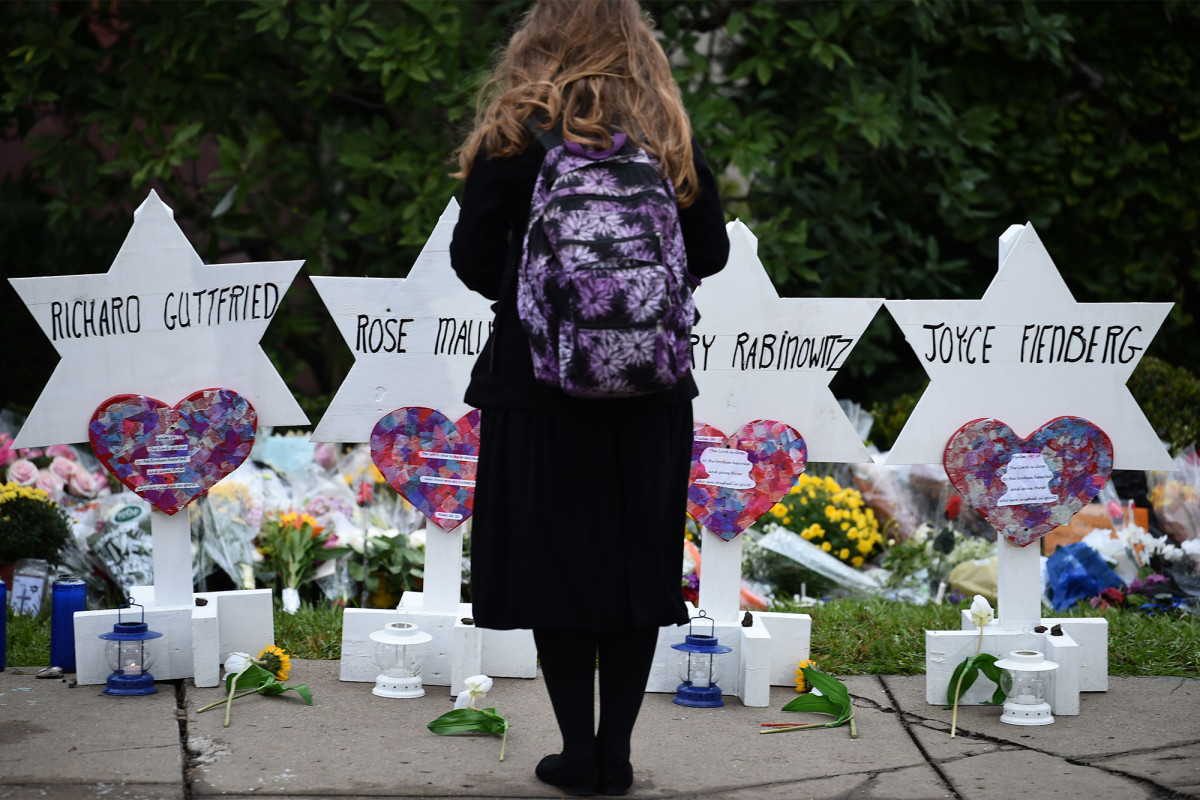
I received a call from a good friend last week: my colleague and former senior rabbi on Long Island, Rabbi Howard Stecker. He was wondering how our community was reacting to the trial in Pittsburgh of the 10/27/2018 Tree of Life attacker.

And the truth is, I was not sure how to answer. I have reached out to the members of Beth Shalom who have testified or will soon, and for them this is a particularly emotional time. I have discussed with a few folks who are certainly feeling the gravitas of this moment, including some who are taking the active decision not to read the news. There is at least one person in my orbit who is quite distraught, and has been so since the day of the attack.

But my sense is that our reaction is, on the whole, somewhat muted. Everybody knows it is going on, but at least as far as I can detect, we are, emotionally and spiritually, in a much better place than we were in the months following the shooting. Thank God.

I suspect that many of us have by now built up good defenses that enable us to feel and grieve the losses of that day, but not allow ourselves to slide back into the depths of the trauma of 4½ years ago. Contrary to expectations, extremist protesters supporting the defendant outside the courthouse have not materialized. And for that I am grateful.

I have been skimming reports in the Pittsburgh Post-Gazette without reading too closely. I did see the photo of the Siddur Sim Shalom for Shabbat and Festivals (the dark blue one) which Rabbi Jeff Myers took with him from the building; it has a bullet hole on the top. I hope that siddur ends up in the Rauh Archives, if not some other museum that is a testament to the survival of the Jewish people.

Rabbi Stecker asked me, as you might imagine, about the death penalty, about how folks in our community feel about it, and of course I told him that we are divided. We certainly have members of this community who are vociferously against, and some others who are decidedly for, and probably many of us who are uncertain exactly where we stand.

I have certainly thought, at many points in my life, that the death penalty is wrong, that the only figure in our world with the authority to issue and carry out execution, to actually end a human life, is God. I must concede, however, that this case gives me pause.

Now, you might think that the logical thing for a rabbi to do in this case is to go to the Jewish bookshelf for an answer. And the answer, as you may imagine, is not so simple. So I would like to add a brief caveat at this point:

My role as rabbi is not to tell you how to think. My role, rather, is to complicate the discourse by adding depth, to provide you with traditional tools from the Jewish bookshelf. A rabbi is a teacher of our religious tradition, and our sources demand that we consider challenging issues from multiple perspectives.

The Torah is clearly in favor of the death penalty. Not just in favor, but let’s put it this way: the phrase, “mot yumat,” “he shall be surely put to death” for some crime occurs at least 31 times in the Torah; it is mandated for such crimes as violating Shabbat (Ex. 31:15), adultery (Deut. 22:22), and of course first-degree murder (Ex. 21:12-13). There is also the famous case of the “ben sorer umoreh,” the wayward and defiant son, who is to be stoned to death by the men of the city (Deut. 21:18-21). For the record, we do NOT put anybody to death these days. (So our bar mitzvah boy and all of his friends can relax.)
One theory about these punishments is that the original meaning in many of these cases is not execution by human hand, but rather by God. See e.g. the explanation by Rabbi Ishmael, Babylonian Talmud Sanhedrin 84a, which indicates that in the case of a non-kohen who approaches the altar (Numbers 18:7), mot yumat; R. Ishmael asserts that this execution is “biydei shamayim,” by the hand of heaven.

But the ancient rabbis, who arrive on the scene many centuries after the Torah was completed, engage with the question of the death penalty in a more nuanced way than the Torah itself. On the one hand, they did not eliminate the death penalty, but on the other, their agenda is clearly to ensure that it is rarely, if ever, applied. The Talmud insists, in capital cases, on careful selection and questioning of witnesses, of requiring 23 judges instead of the usual three, and other ways to set the bar so high such that almost nobody would ever be executed.

And perhaps one of the best-known mishnayot on the subject, Makkot 1:10, says the following:

סַנְהֶדְרִין הַהוֹרֶגֶת אֶחָד בְּשָׁבוּעַ נִקְרֵאת חָבְלָנִית. רַבִּי אֶלְעָזָר בֶּן עֲזַרְיָה אוֹמֵר, אֶחָד לְשִׁבְעִים שָׁנָה. רַבִּי טַרְפוֹן וְרַבִּי עֲקִיבָא אוֹמְרִים, אִלּוּ הָיִינוּ בַסַּנְהֶדְרִין לֹא נֶהֱרַג אָדָם מֵעוֹלָם. רַבָּן שִׁמְעוֹן בֶּן גַּמְלִיאֵל אוֹמֵר, אַף הֵן מַרְבִּין שׁוֹפְכֵי דָמִים בְּיִשְׂרָאֵל

A Sanhedrin that executes a transgressor once in seven years is characterized as a destructive tribunal. Rabbi Elazar ben Azarya says: This applies to a Sanhedrin that executes a transgressor once in seventy years. Rabbi Tarfon and Rabbi Aqiva say: If we had been members of the Sanhedrin, no person would have ever been executed. Rabban Shim’on ben Gamliel says: In adopting that approach, they too would increase the number of murderers among the Jewish people.

In other words, the Sanhedrin should be guided by the principle that it should carry out the death penalty exceedingly rarely, and the opinion of Rabbi Tarfon and Rabbi Aqiva, who would rather not execute anybody, is countered by Rabban Shim’on ben Gamliel, who suggests that the death penalty should remain as an option because it is a deterrent.

And, consistent with the mishnah, an Israeli court has only handed down the death penalty exactly once in its 75 years of existence. A tribunal in Jerusalem convicted and sentenced to death Adolf Eichmann, the architect of the Nazi “final solution,” in 1962. 

Regarding the trial in our midst, Rabbi Danny Schiff wrote the following, which appeared in the Chronicle on May 10:

The classic ethos of Judaism would not contend that there should be zero executions in America. But it would also posit that the number of executions should not be far distant from zero. Eschewing absolutist positions, Judaism advocates a path that is capable of confronting the worst evil imaginable but does not hold that every heinous crime fits that description.

We must ask ourselves: Given that Judaism wants the death penalty to be rare, does this case rise to the level in which the death penalty is warranted?

There is some small part of me that wants to say, absolutely yes. Yes to Eichmann. Yes to Osama bin Laden. Yes to this person who was so filled with hatred for us, for our people.

And that voice is hard to hear over the din of other voices, which remind me of the Sanhedrin, of Rabbi Akiva and Rabbi Tarfon, or of my own personal feeling that maybe even this one is also biydei shamayim, in the hands of heaven. But I also know that in cases like this, we, the Jews, must defer to the law of the land. As my colleague, Rabbi Abigail Sosland, writes in her essay, Crime and Punishment (in The Observant Life, ed. Martin S. Cohen, p. 467):

The concept of dina demalkhuta dina [“the law of the land is the law”] cannot be ignored and the requirements to convict or acquit need not – and, in the secular justice system should not – come directly from the rabbinic sources, but from the secular law of the land. Still, the values of Jewish tradition, the level of deliberation with which the rabbinic courts were to handle death penalty cases, and their sense of grave responsibility should still inform our participation in such matters.

So how do I feel? I am praying right now that the jury considers the evidence thoroughly, that the attorneys make their cases thoughtfully and honestly, that the witnesses report details faithfully for the record, that the judge ensures that justice is carried out appropriately, that nobody will have any basis on which to say that the defendant did not get a fair trial.

And I am also praying that I will never be faced with the question of life and death in a way that is so completely real.

But perhaps most importantly, I want us all to remember that the focus of Judaism is life. That we are gathered here today to celebrate Shabbat, which is a reminder of the creation of life; that we called a young man to the Torah today, marking a new stage in his life; that we celebrated a bride and groom who will be married tomorrow, in a fundamental affirmation of life. 

That when we say recite the words of Qaddish, in remembrance of those whom we have lost, and in particular in remembrance of those who were so brutally taken from us just down the street 4½ years ago, we recall that those words too are not about death but also an affirmation of life, that we must carry and uphold their names and their spirits as we continue to embrace life.

~

Rabbi Seth Adelson

(Originally delivered at Congregation Beth Shalom, Pittsburgh, PA, Shabbat morning, 6/10/2023.)

Categories
Sermons

AI Will Never Be Human – Bemidbar 5783

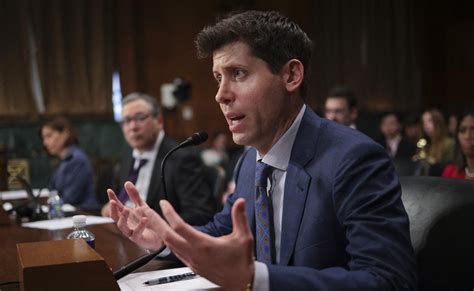
There has been much concern lately about artificial intelligence. You may have heard that last week a Senate subcommittee hosted the CEO of OpenAI, the creators of ChatGPT, Sam Altman. In his testimony, Altman (who is, BTW, a nice Jewish boy from St. Louis) actually asked the Senate to regulate AI. Many tech companies have zealously fought against regulation, so to hear Mr. Altman express concern about the potential dangers of AI and to seek regulatory controls may have been a relief for some. 

But the complicated part, and perhaps Mr. Altman is gambling on this, is that (a) Congress moves much more slowly than the rate at which widespread use of AI is unfolding, and (b) it is not immediately clear how exactly to regulate it. The devil (not that we Jews believe in such a thing) is in the details.

Nonetheless, this is clearly something to which Jews, as people whose tradition teaches us to be responsible for humanity and our world, should be paying attention.

Speaking of details, Parashat Bemidbar opens with a commandment to count people, to take a census of the Israelites while they are encamped in the wilderness, for the purposes of determining the fighting strength of their army. Much of the parashah is dedicated to these numbers.

This report of numbers by tribe might appear as a dull, bureaucratic endeavor which obscures the personhood of all of those counted, not to mention the women and people under the age of 20 who are not even counted. The first three chapters of Bemidbar come off looking something like the tape from an adding machine – lots of numbers and then a bottom line, which in this case is 603,550. (The extrapolated estimate of the entire population who left Egypt is therefore about two million, which seems like an impossibly high number. But far be it from me to say that something in the Torah is not true…) 

But here’s something that you might miss if you are not looking closely. The Hebrew instruction to perform this census is phrased thus (Bemidbar / Numbers 1:2):

שְׂא֗וּ אֶת־רֹאשׁ֙ כׇּל־עֲדַ֣ת בְּנֵֽי־יִשְׂרָאֵ֔ל

Se-u et rosh kol adat benei Yisra-el

Now, your translation of this verse in the Etz Hayyim ḥumash says, “Take a census of the whole Israelite company.” But the Hebrew speaks idiomatically. A more literal translation is “Lift up the head of the entire group of Israelites.” The suggestion of “lifting up the head” sounds much more personal: Do not merely count heads; lift them up. Take each individual’s face into account. Acknowledge each member of the group as a human being, and as part of the greater whole. As if to drive the point home, the passages about counting are followed by the  the birkat kohanim, the Priestly Blessing of Bemidbar / Numbers 6:24-26, which occurs in Parashat Naso (which we won’t get to until the week after Shavu’ot). The third verse is as follows:

יִשָּׂ֨א ה’ ׀ פָּנָיו֙ אֵלֶ֔יךָ וְיָשֵׂ֥ם לְךָ֖ שָׁלֽוֹם׃

Yisa Adonai panav elekha veyasem lekha shalom.
May God lift up God’s face to you and grant you peace.

It’s the same verb: נשא / to lift up. 

When it comes to counting people, the details matter. It’s not just a strip of adding tape. Every one of us counts. Every one of us must be acknowledged and lifted up.

A brief report caught my eye this week, regarding the state of religion in America. An organization called the Public Religion Research Institute (PRRI) published the results of a recent survey of Americans’ attachment to religion. And, as you might expect, the percentage of us for whom religion is important is going down, and the number of unaffiliated folks continues to rise. 

And the Jews, of course, are the same as everybody else, only more so. 

Now, you certainly have all heard me make the case for the value of Judaism, if not religious practice in general, and I don’t need to do that right now. (But just wait until Rosh HaShanah!). Some of the statistics in this report show that people who attend religious services at least a few times a year tend to be more engaged in civic and political activities, particularly those things where people gather and work together. And I think we all know from anecdotal evidence that religious practice actually induces pro-social behavior in many of us.

So all the more so: religion brings people together, and is good for us as individuals and for society. It lifts us up, and helps us to see each other’s faces and acknowledge our shared humanity. And every one of us counts.

Nowadays, we have many fancy adding machines which help us through our lives: silicon slaves which do our bidding, and can help us achieve things which our ancestors could not even have imagined. 

The Israeli historian and social philosopher Yuval Noah Harari opens his book Homo Deus with an explanation for why people no longer need religion: because we have effectively vanquished plague, famine, and war. Yes, we have just been through a minor plague, and war is clearly still around, but the numbers of people who perish due to these things is far fewer than did so in previous centuries. Harari argues that our ability to live and thrive and not be so concerned on a daily basis for matters of life and death have obviated the need for religion, and for God. And indeed, when we have created tools such as artificial intelligence which may seem to have personality, perhaps we have achieved the status of Homo Deus, of God-like people. 

Sam Altman, in his testimony on Capitol Hill, pointed to the fact that when Photoshop was first introduced, it fooled some people initially, but we quickly learned to distinguish between an actual photo and something which had been altered. That sort of technology will of course continue to improve, and I am certain that it is only a matter of time before our adding machines will be able to deceive us in ways we would never have considered before.

And so too with language models like ChatGPT. They may ultimately sound human. But I do not believe that they will ever replace actual humans. And they will certainly never possess the Divine spark that is at the core of each of us.

ChatGPT will never be able to make a minyan. AI will never be able to give a proper hug to comfort those who mourn. It will never be able to get up and dance with joy as we name a new baby or celebrate a couple who is about to be married. It will not seek atonement on Yom Kippur, or sing moving melodies that turn the heart to God, or pray silently or yearn for God’s presence as we welcome Shabbat with Yedid Nefesh. A computer will never understand the value of Shabbat, or the conscious choice to take the holy opportunities of Jewish life, which give our lives framework and meaning.

Rabbi Danny Schiff, toward the end of his book, Judaism in a Digital Age, which we will be discussing after qiddush, addresses the question of whether the future necessitates a human presence. He writes,

Judaism’s answer to this question is yes. No matter how animated, intelligent, responsive, or reliable our AI creations might become, AI will never attain the combination of qualities that will merit the status of being “created in the image” [betzelem Elohim, a reference to Bereshit / Genesis 1:28]… The gulf between achieving convincing human-like qualities and being human is almost certainly unbridgeable. Jews are mandated to expand the Divine image in the world, not to lessen it. That goal demands the preservation of humanity. Judaism provides no license to contemplate an alternative… The irreplaceable human perspective and the poetry inherent within the grandeur and the struggle of human existence are exquisite… Each human life contains the potential for untold significance, and that will remain true even if AI comes to be viewed as functionally superior.

Put more bluntly, our devices may count us. But no computer will ever lift up our heads and appreciate the fullness of our humanity, of who we are as individuals and as the significant constituent parts of a human collective. 

And furthermore, no amount of technological modification of the human body or mind will make us God-like. God is far too elusive to enable that. Contrary to what Yuval Harari says, the need for religion – for Judaism – will never go away. We will always need to yearn together, to mourn together, to gather for prayer and celebration and comfort. We will always need a transcendent framework which brings us back to the spark of Divinity; no microchip will ever be able to recreate that.

ChatGPT, Google Bard, or whatever else comes after them will surely know Torah. They will be able to recite gemara with ease and probably teach and interpret for knowledgeable Jewish people. But they will hardly be able to convincingly sing ‘Etz ḥayyim hi lamaḥaziqim bah” / The Torah is a tree of life for those who grasp it.

Our strength comes from grasping the words of Torah. And we let that go at our peril. So we just might have to keep holding onto and holding up our tradition, paying attention to the details, and lifting our heads together for the sake of humanity.

~

Rabbi Seth Adelson

(Originally delivered at Congregation Beth Shalom, Pittsburgh, PA, Shabbat morning, 5/20/2023.)

Categories
Sermons

Context Matters – Vayyeshev 5783

Perhaps you heard that the South African comedian Trevor Noah recently stepped down as host of The Daily Show, a satirical news program. On his last show, he delivered a kind of sermon regarding some of his lessons learned during his tenure as host, and it was mostly not funny, but delivered in a serious mode, which is unusual for a comedian. Comedians, of course, are good at pointing out the challenges that we all face, and doing it in a way that brings us joy, that enables us to laugh at ourselves.

In the course of this talk, he said something which, I think, is so important: “Never forget how much context matters.” He explained that we live in a world of limitless information, but we are suffering from a lack of context. We simply are not given the tools to understand our world and everything that we are seeing and experiencing.

All of this context-less information has made us extraordinarily susceptible to manipulation, and it does not bode well for the future of humanity. Video clips circulated online are cut or even altered to disguise what came before or after, just to show you the piece that will provoke you the most. The news that travels the fastest and the farthest is the one that makes you the most angry or the most aggrieved.

Throw in the fact that your computer and your smartphone not only know what you want to see, what will push your buttons, what will get you all anxious and upset, but are also effectively designed to keep putting material like that in front of you. And, given that most of us are looking at these screens all day long, we are primed for manipulation. And the algorithms for manipulation are getting smarter and smarter.

Here is the good news: you can combat this by seeking out the missing context. And, by the way, that is what Jews have always done. One might make the argument that the entirety of the rabbinic enterprise of the last 2,000 years or so is to provide context. We, the Jews, are historically talented at both text AND context. And the goal of seeking context is to be reflective, rather than reflexive, in how we approach life and all of its challenges. 

Let me explain: 

The Torah is a particularly difficult document to understand. To begin with, it was written in a language that nobody has spoken for thousands of years. It is also filled with contradictions, gaps, ambiguities, apparent grammatical errors, and obscure words which can only be understood by speakers of that language (i.e. nobody). (Worth noting here that Israelis, speakers of modern Hebrew, are just as befuddled by the Torah’s language as we are.)

And yet, the Torah is the foundational document of Judaism, the basis for much of our tradition. So the only way we can actually understand it is through context, and in particular, the context given by rabbinic tradition: the Talmud, midrashim, the commentaries of medieval and contemporary rabbis, from Rashi in the 11th century until today. 

What do these commentators do? They place the context alongside the text, to help us see how the terse words of the Torah make us better people. They interpret ancient verses, which we sometimes barely understand, to show us how they apply to us in our day, in our context. They give us perspective.

For example, Parashat Vayyeshev, from which we read this morning, tells the story of our hero Yosef, who, after being sold into slavery and brought to Egypt, ends up in the house of a wealthy man named Potiphar, whose wife takes more than a passing interest in their new, handsome slave. She attempts to seduce Yosef, and there is a moment of hesitation before he rebuffs her. The suggestion is that he is certainly tempted to take her up on her offer.

A midrash, however, tells us that as she takes hold of his clothing with lascivious intent (Bereshit / Genesis 39:12), and Yosef struggles with his conflicting fear and desire, he has a vision of his parents, watching through a window behind Potiphar’s wife. And his father Ya’aqov says to him, “Your brothers’ names will be inscribed on the ephod, the breastplate of the Kohen Gadol [the High Priest in the Temple in Jerusalem, which is at this point in the traditional chronology many centuries in the future]. Do you want your name to appear there with them, or not?” (Babylonian Talmud Sotah 36b) And that is the point when he runs from her.

The point of the midrash is that context matters, that our moment-to-moment decisions should be shaped not by immediacy, not by what is happening exactly right now, but by the past and the future. And of course, that is not always so simple. 

Many other moments in the Yosef narrative require context. Yosef does not see the larger context when he boasts to his brothers about the dreams in which they all bow down to him. The brothers are missing context when they throw him in a pit, and then sell him into slavery, and then lie to their father Ya’aqov about what happened.

All of these moments are, you might say, reflexive choices, made quickly and without considering the consequences. Reflexive, rather than reflective.

When we act impulsively, rather than taking time to reflect on the context, we cause damage and pain. When we respond in the anger of the moment rather than waiting, breathing deeply, and thinking carefully, we usually make things worse. When we pile onto the most hurtful, most anxiety-inducing news or online content with more frustration and more insults and more aggression, the lack of context usually leads everybody down the wrong path.

What makes the Yosef narrative work is learning the complete story. Although none of the characters involved could have known this, every choice along the way, good and bad, ultimately brought Benei Yisrael, the children of Israel / Ya’aqov, down into Egypt, where they would become slaves, and then ultimately become a free nation, destined to receive the Torah and to inherit their own land. And in the context of all of that, the series of reflexive moves is woven into a context which has shaped our people for thousands of years. So in this case, you might say it worked out well.

But we all know by now the corrosive effects of the social media platforms through which we all receive our information about the world. And we all know about the potential of these platforms, and to some extent even legitimate purveyors of news, to rile us up. We have seen their ability to enable the id, the unfiltered, most primitive piece of our psyche, to speak for us, and to easily spread hateful ideas of all sorts. 

I am grateful that the Biden administration gathered a group this past week to discuss strategies on anti-Semitism, chaired by the Second Gentleman, Doug Emhoff. But I am also not too optimistic that such discussions will yield anything productive. Hatred of Jews has been with us far too long, and I lament the fact that it will never go away.

However, what we all can do is to try to move society to a place that is more reflective, rather than reflexive. Labeling people as anti-Semites, or racists or trans-phobes or snowflakes or RINOs or whatever, diminishes the humanity of those with whom we disagree. 

Teaching history, however, and giving context and the opportunity for reflection is the way to go. Jon Stewart, who was Trevor Noah’s predecessor at The Daily Show, has said that hearing anti-Semitism spewed out loud is better, because then it is an opportunity for teaching and providing context, kind of like cleaning a wound by opening it. I am not entirely sure I agree with him, but certainly meeting people and talking with them in-person, especially people with whom you do not necessarily agree, is the way to build bridges, to change minds.

Another observation that Trevor Noah shared in his “sermon” was that “the world is a friendlier place than the Internet wants you to believe.” Perhaps if, when we are tempted to respond in a way that is unhelpful, we remember our parents, and we remember the lessons which they attempted to impart to us about being better people, then we might be more likely to see the humanity, or even the Divine spark, in those who say hateful things. And maybe we have a better chance of allowing that Divine spark to bring that person to a more reflective, more contextual place.

A final thought: One of the best ways to slow things down, to bring context to our lives, to help us become more reflective and less reflexive, is to take one day a week to separate ourselves from the outrage machines of Big Tech. If I had one wish for our society, Jews and non-Jews, it would be to shut down your digital devices for 25 hours every Shabbat, and spend time with your family, your friends, and your Qehilah Qedoshah, your sacred community. I do it; you can too.

Context matters.

חג אורים שמח / Ḥag Urim Sameaḥ! Happy Ḥanukkah.

~

Rabbi Seth Adelson

(Originally delivered at Congregation Beth Shalom, Pittsburgh, PA, Shabbat morning, 12/17/2022.)

Categories
Sermons

How to be Holy in Three Easy Steps – Qedoshim 5782

Some of you have surely heard me say that Qedoshim is truly my favorite parashah (e.g. here). That is not merely because, 39 years ago, I was called to the Torah for the first time as a bar mitzvah, one who has inherited the 613 mitzvot / holy opportunities of Jewish life, to read from this part of the Torah. Rather it is because, and I did not really get this 39 years ago, it contains the most essential line in the Tanakh, the Hebrew bible. I would not even dare to fantasize about correcting the great 1st-century BCE sage Hillel. However, if I were in his shoes 2,000 years ago, when he was asked by a potential convert to teach the whole Torah while standing on one leg (as in the famous midrash), I would have said (Vayiqra / Leviticus 19:2): 

קְדֹשִׁ֣ים תִּהְי֑וּ כִּ֣י קָד֔וֹשׁ אֲנִ֖י ה’ אֱ-לֹהֵיכֶֽם׃

You shall be holy, for I the Lord your God am holy.

That is how chapter 19 of Vayiqra / Leviticus opens. Now, it is worth pointing out, as one of my teachers from the Jewish Theological Seminary, Dr. Raymond Scheindlin put it: 

But the chapter doesn’t begin “Be moral, for I the Lord your God am moral” or “Be righteous, for I the Lord your God am righteous.” It begins “Be holy, for I the Lord your God am holy.”

Being holy is not necessarily being moral or righteous or socially conscious or politically engaged, although it may include all of those things. Being holy transcends the day-to-day mundane affairs which fill our lives. It is a much higher template for living. And Chapter 19 of Vayiqra / Leviticus, much of which we read today, teaches us how to be holy in three easy steps! I’ll tell you what they are in a moment, but first let me make the case for why you might want to pursue a holy life.

First, let’s face it: we are living in challenging times. (The working title for my book, by the way, is Torah for Tough Times.) Consider the great sense of isolation many people feel today, climate change, a yawning chasm between political factions in this nation which even cleaves families in two, the ongoing scourge of opioid abuse, rising rates of anti-Semitic activity, and throw in two years of pandemic and a senseless war in Eastern Europe, and a leaked document from the Supreme Court threatening abortion rights, just to name a few of the things that are raising our collective blood pressure.

Second, consider the fact that the spiritual framework which nourished our ancestors has gone away. Our forebears faced the challenges in their own lives by leaning into their Jewish practice. What do you lean into? Facebook? Instagram? No solace to be found there, I assure you.

Third, consider how your time has been stolen from you. Not only because the average American adult spends three hours a day staring at a smartphone screen, and the average teen seven hours, but also because work has invaded all the corners of our lives, and the endless options available to us for all kinds of wonderful activities push the possibility for holy, reflective moments off our radar.

Finally, consider how we prize our independence over all else, and how that has gone a long way toward creating a society in which we are all looking out for Number One. I sometimes feel that we have lost the sense of collective, that we can actually accomplish more when we work together to build a better society. Rebuilding that interconnected sense begins with doing things together across racial, ethnic, religious, and social lines – breaking bread, stepping forward to volunteer together, even just speaking with people who are unlike you.

Why should you want to be holy? Because a holy life is one which will make your life better as an individual and will make your neighborhood and your world better for all of us.

So, straight outta Vayiqra chapter 19, here is an easy three-step guide to living a holy life:

  1. Set aside sacred time.

19:30: אֶת־שַׁבְּתֹתַ֣י תִּשְׁמֹ֔רוּ וּמִקְדָּשִׁ֖י תִּירָ֑אוּ. Keep my holy Sabbaths and venerate my holy sanctuary, says God. 

We should read this expansively: by keeping Shabbat and venerating the miqdash, usually understood to be the ancient Temple in Jerusalem, we should understand that we must carve out holy moments in our lives. Now, let’s face it: it’s not so easy to set aside the holy time of Shabbat and holidays to be together with your family and your people and to gather in sacred fellowship with other Jews in our sacred spaces. Our time and by extension, our attention, are precious commodities in high demand; our lives are impossibly crowded with stuff, aided and abetted by the landscape of the Information Age.

Ladies and gentlemen, I shut down all my wired and wireless connections from sundown on Friday evening until dark on Saturday night. I do not spend money. I do not travel anywhere that I cannot get to on foot. I spend quality time with family – meals and games and lounging around, and I most assuredly get more and better sleep in those 25 hours than during the rest of the week.

And you can do that too. Really, you need it. You need the separation from the cut-and-thrust of daily interaction, from the likes and the retweets and your to-do list and schedules and commerce. You will make your life more holy and your weekday more productive if you shut down and spend quality time for those 25 hours as well. 

Rabbi Abraham Joshua Heschel famously called Shabbat “a palace in time.” It is there for you to enter and to enjoy, and to raise the bar of holiness in your life. This is how we sanctify time rather than idolize things, and that is Step 1.

  1. Remember the other.

There are so many mitzvot here in chapter 19 that speak to this idea. Just a few:

19:18 וְאָֽהַבְתָּ֥ לְרֵעֲךָ֖ כָּמ֑וֹךָ Love your neighbor as yourself.

19:16 לֹ֥א תַעֲמֹ֖ד עַל־דַּ֣ם רֵעֶ֑ךָ Do not stand idly by the blood of your neighbor.

19:14 לֹא־תְקַלֵּ֣ל חֵרֵ֔שׁ וְלִפְנֵ֣י עִוֵּ֔ר לֹ֥א תִתֵּ֖ן מִכְשֹׁ֑ל Do not curse the deaf, or put an obstacle before the blind.

The essence of living a holy life is to remember that you are not an independent operator, that you function in cooperation with all the others around you, and that each of us contains a spark of the Divine. We honor and elevate that spark when we remember to love our neighbor, when we respect each and every person around us by listening, by trying to appreciate their position, and by greeting everybody with a cheerful countenance. We create a better environment for all when we seek to understand rather than simply dismiss, or God forbid insult, those with whom we disagree. And we bring honor back onto ourselves when we model that behavior for our children and our friends as well as the folks with whom we do not get along.

The Torah wants us to see the humanity, the Divine spark of the other, and seek to connect. It is up to us to raise the bar of holiness in all the ways we interact with the folks around us. Remember the other; that is step 2.

  1. Give.

Arguably the most essential mitzvot in Jewish life, the ones which the Talmud tells us explicitly that you must instruct one who joins our faith to know, are those that require us to set aside some of the produce from our fields to give to those in need. Four of them appear in this Holiness code (19:9-10):

וּֽבְקֻצְרְכֶם֙ אֶת־קְצִ֣יר אַרְצְכֶ֔ם לֹ֧א תְכַלֶּ֛ה פְּאַ֥ת שָׂדְךָ֖ לִקְצֹ֑ר וְלֶ֥קֶט קְצִֽירְךָ֖ לֹ֥א תְלַקֵּֽט׃ וְכַרְמְךָ֙ לֹ֣א תְעוֹלֵ֔ל וּפֶ֥רֶט כַּרְמְךָ֖ לֹ֣א תְלַקֵּ֑ט לֶֽעָנִ֤י וְלַגֵּר֙ תַּעֲזֹ֣ב אֹתָ֔ם אֲנִ֖י ה’ אֱ-לֹהֵיכֶֽם׃

When you reap the harvest of your land, you shall not reap all the way to the edges of your field, or gather the gleanings of your harvest. You shall not pick your vineyard bare, or gather the fallen fruit of your vineyard; you shall leave them for the poor and the stranger. 

Of course, who in Squirrel Hill has a field, or harvests in this way? It is, rather, up to us to apply the spirit of these laws to how we live today, to remember that when we have plenty, we have to remember those who do not, and to give. 

But not only our money. What is our most precious commodity? Our time. Giving generously of your time fulfills these mitzvot as well. Find a charity that needs you; I’m happy to find you some volunteer work here at Beth Shalom. Spending time with others while you perform a mitzvah, in both the halakhic and the idiomatic sense, is a great way to be holy. Give; that is step 3.

***

This is the formula for holiness. It ain’t rocket science, as they say, but it is essential to living a complete life, and for using the traditional Jewish framework to improve yourself and your world. 

  • Set aside sacred time. 
  • Remember the other. 
  • Give. 

Three simple steps for living a holy life, and God knows this world could benefit from a whole lot more qedushah, more holiness. Please come talk to me if you need help in doing so; I would be honored to help you along your journey.

~

Rabbi Seth Adelson

(Originally delivered at Congregation Beth Shalom, Pittsburgh, PA, Shabbat morning, 5/7/2022.)

Categories
Sermons

We Need God Right Now – Ki Tetze 5781

Is there any good news in the world?

As I have watched events unfold over the summer – the heartbreaking return of the Taliban, the dramatic spread of the Delta variant, the wrangling over schools and vaccination and masking and the general Covid anxiety which has returned with great aplomb – I must say that I am having a hard time keeping my usually-reliable optimism in front of me. While the early part of the summer made it seem as though everything was moving the right way, those doors seem to have closed, and everything seems suddenly more stressful.

Is anyone else feeling that? Or is it just because I’m preparing for the High Holidays, which is, for rabbis, something like training for a marathon?

When you think about it, Elul is a pretty good month for anxiety. We are supposed to be taking stock of our lives, preparing for Rosh HaShanah and Yom Kippur and the odyssey of teshuvah, of doing the hard work of repentance. We should be a little stressed. Facing our own misdeeds and failures is not meant to be a pleasant experience.

This season is also a time of returning to God, or at least that is how it is framed in our liturgy. We open Rosh HaShanah by saying,  שָׁל֨וֹם ׀ שָׁל֜וֹם לָרָח֧וֹק וְלַקָּר֛וֹב אָמַ֥ר ה / Shalom, shalom, laraḥoq velaqarov, amar Adonai – Peace, peace to those who are near, and to those who are far, says God. We welcome those who feel close to God and to our tradition, as well as those who are returning from having been far off. And just before Kol Nidrei on Yom Kippur, we give ourselves permission to pray amongst the avaryanim, the sinners, that is, those of us who have not been here for a while.

So of course it makes sense for us to be thinking about theology at this time. What do we mean when we invoke the term, “God”? What, or who, is God? How does God function? What is God’s name? Is God with us? Is God controlling anything? Is God actually working in humanity’s interest, or has God quietly exited through the back door? Has God created us or have we created God?

It is with that backdrop that I read with interest a pitch for God by New York Times columnist Ross Douthat. Mr. Douthat is a thoughtful political conservative and a faithful adherent of Roman Catholicism, and, as with many people of faith today, he is engaged in the project of promoting religious involvement.

Douthat’s essential argument is one that I have made myself, even from this very pulpit, and it is more or less this: Although scientific achievements have raised challenges to certain features of religion and perhaps to God’s very existence, the basic underpinnings to religious ideas that inspired our ancestors still apply. In other words, although some today might argue that a scientific perspective negates the Torah’s telling of how we came to be, there are many questions that science cannot answer, and it is within that sphere of uncertainty where religious ideas can still flourish and sustain us. And no matter to how many questions scientific inquiry DOES find successful answers, I am certain that there will always be a place for religious inspiration.

Put yet another way, it is perfectly reasonable, for example, to accept that the universe is 14 billion years old rather than 5782, that it was not created ex nihilo in six days, and yet still believe that the essential mitzvot and values of the Torah and rabbinic literature and all the human intellectual creativity that our tradition has yielded are still binding upon us. It is still possible, if we allow ourselves, to accept that our Torah scroll flows originally from God, even though it clearly exhibits the features of a human work. 

I think it is worth remembering on this subject that science and religion offer answers to different questions. Science is trying to answer the question of, “How are we here?”, while religion tackles the “Why?” Science is the realm of cold, hard facts. Torah and all that flows from it is the realm of our spirit and of our origin story as a people. These are not mutually exclusive, but rather different lenses, both of which enable us to put our lives in perspective.

Mr. Douthat anticipates in his introductory remarks that the response to his piece will be something along the lines of, “I am down with the ethical teachings of religion, but I just cannot accept the idea of a personified God, as described in the Bible and in religious prayers.” And, true to form, the readership of the New York Times, at least on-line, responded predictably, with thousands of people “liking” comments that were more or less to that effect, if not openly hostile to the idea of religion.

There is no question that humans have committed all manner of transgressions in the name of religion throughout the ages; I am sure you can think of some contemporary examples, not limited to the extremism of the Taliban. And of course, we the Jews have had a complicated history in our interactions with other religions, from the dhimmi status forced upon our ancestors who lived in Muslim lands, to the slaughter wrought by the Crusades, to the dramatic failure of the Catholic church to attempt to save the Jews of Europe during the Shoah.

And yet, religion and religious involvement have also done so much good for humanity, from the constant reminder of our obligation to see the holiness in others, to feed the hungry and clothe the naked and house the homeless, to the inspiration that God’s presence in our lives has offered in challenging times, in times of grief and times of joy. People motivated by those obligations have created hospitals and schools and charities that care for the needy and the wretched, filling the gaps between commercial interest and insufficient government programs. 

What are the mitzvot / holy opportunities of Jewish life for? They are there to provide a framework for holy living, for ensuring that we treat each other with respect, that we treat ourselves with respect and God’s Creation with care and responsibility. They are there to provide shape to our days and our years, to mark the holy moments and bring comfort when we mourn and to give us the words, in God’s own language, to help us express our innermost concerns and desires. When we need to cry out, we have those words; when we need to dance and sing with abandon, we have that language and music and movement. 

Unlike secular law, Jewish law aims to be not only a moral compass, but also a practical guide for maintaining the holiness in our relationships with all those around us, a framework for holy living. No matter how arcane the mitzvah, there is always a fundamental reason behind it which makes our performance of the mitzvah a practical one.

While Ross Douthat sees understanding and relating to God as an essential part of that equation, I must say that I am more laissez-faire when it comes to God. Like Martin Buber, I cannot put any kind of condition on God that diminishes the foundational presence that God plays in our lives, immediately and constantly there and yet completely impossible to define or be limited by the boundaries of human understanding.

Martin Buber, 1878-1965

We should not be so arrogant as to suppose that our brains can actually interpret and quantify the way that God works through us and around us. Rather, we might want to simply respond by throwing up our arms and acknowledging Rabbi Abraham Joshua Heschel’s “radical amazement” in response to God.

And let’s face it: however we might understand God, right now we need God in our lives more than ever. If not the personal, savior God to which some religious folks appeal, at least the process God, the one who works around and through us to make for good in this world, to help us in our moment of need. When I say, three times per weekday in the Amidah, “Refa-enu Adonai venerafe,” Heal us, Adonai, and we shall be healed, I may not necessarily expect God to personally heal those who are suffering, one patient at a time. Rather, I invoke the God-enabled framework by which we as humans, using the Divine gifts we have received, the intellect and technology at our disposal, do the best we can to heal this world. 

Kabul Airport

When I say, at the end of every Amidah, “Oseh shalom bimromav,” May the One who makes peace in the heavens bring some peace down to all of us, I am hoping that, in partnership with God, we as humans find a way to lay down our swords and shields and to study war no more. God is on our team in both the healing of the world and the pursuit of peace.

And so here is the good news that we can take with us back into the anxiety-inducing, post-Shabbat world: This take on God cuts across all religious, political, social, ethnic, and international lines. We need God right now, perhaps more than ever; let’s stand together and bring those Divine values to all of us down here on Earth. And let us say, Amen.

~

Rabbi Seth Adelson

(Originally delivered at Congregation Beth Shalom, Pittsburgh, PA, Shabbat morning, 8/21/2021.)

Categories
Sermons

Walking Wholeheartedly, or, the Danger of Winning at All Costs – Shofetim 5781

As you surely know by now, I am not a big sports fan, and the Olympics draw my attention only as much as the spirit of friendly international competition appeals to my love of humanity. The story of the Italian and Qatari high-jumpers agreeing to share the gold medal was heartwarming; Simone Biles’ pulling herself out of some of her events was at turns disappointing and inspiring. In the latter case, and particularly in light of Naomi Osaka’s removal of herself from the French Open earlier this summer due to her own exhaustion, Biles’ predicament brought to light something which we often do not see in these competitions: that even people who display seemingly super-human abilities are still real people with real emotions and physical limitations, who sometimes need to protect themselves.

Last week, the New York Times published an opinion piece by former professional skier Zoe Ruhl entitled, “Our Culture of Winning at All Costs Is Broken. It Almost Broke Me.” Ms. Ruhl, now a medical student, was a member of the United States World Cup Telemark ski team, and at age 16 won a World Cup race. She documents how world-class skiing caused her physical and emotional pain, and that the coaches, doctors, and organizations pushed her to push herself harder, and to push all other concerns – school, health, family, life – out of the way in order to win. 

She quit skiing competitively when she was a freshman at Williams College (located in my home town, of course, which is conveniently located near some very good skiing), citing the costs to her body and mind. She describes her departure as follows:

I learned that the dates for nationals were during a school week and would force me to miss classes. I reached out to the heads of the U.S. Telemark Ski Association and appealed to them. I told them I couldn’t miss more school. The association’s board of directors unanimously denied me a waiver.

Here’s how I heard the board’s response: You either care about this sport or you don’t. It felt to me like a choice between giving up my life and health for skiing or quitting. So I made the choice: I was out. I chose to violate my contract. I chose to give up my spot on the team. But really, I chose myself. I chose my future and my well-being.

Though she enjoyed the competition and of course appreciated winning, Ms. Ruhl realized that the cost to herself – her emotional state, her physical health, even her future – was too high. Winning at all costs was not a good strategy. So she gave it up.

Many of us were surprised and perhaps disappointed when Simone Biles temporarily pulled out of Olympic events. The news of Naomi Osaka’s departure following a win at the French Open, because she was threatened with fines and expulsion after refusing to do a press conference, was also shocking. But these women all made the right choices for themselves. They were honest about their limits; they acknowledged that winning at all costs would not be healthy for them in the long run.

Today in Parashat Shofetim, we encountered the following verse, really quite striking in its simplicity of language as well as its spiritual import (Devarim / Deuteronomy 18:13):

תָּמִ֣ים תִּֽהְיֶ֔ה עִ֖ם ה’ אֱ-לֹהֶֽיךָ׃

You must be perfect with the LORD your God.

What does it mean to be תָּמִ֣ים / tamim / “perfect” with God? I’m so glad you asked!

Judging from its context, adjacent to commandments to avoid fortune-tellers, Rashi, the 11th-century French commentator, glosses this with a midrashic interpretation from Sifrei Devarim:

תמים תהיה עם ה’ אלהיך. הִתְהַלֵּךְ עִמּוֹ בִתְמִימוּת, וּתְצַפֶּה לוֹ, וְלֹא תַחֲקֹר אַחַר הָעֲתִידוֹת, אֶלָּא כָּל מַה שֶּׁיָּבֹא עָלֶיךָ קַבֵּל בִּתְמִימוּת וְאָז תִּהְיֶה עִמּוֹ וּלְחֶלְקוֹ:

You must be perfect: walk before God whole-heartedly, put your hope in God and do not attempt to investigate the future, but whatever it may be that comes upon you, accept it whole-heartedly, and then you shall be with God and become God’s portion.

Rashi suggests that we should go about our lives in humility, understanding that whatever life throws at us, we should try to live with it. It is only in this completely upright approach to life that we can share in the portion of holiness allotted to us.*

Being wholehearted is not about being physically perfect or emotionally flawless, but rather that we can acknowledge and accept our flaws, to take the curveballs as they are launched at us, and handle our lives in a way that reflects who we really are, not the theoretically perfect version of ourselves.

We cannot hold ourselves to some ridiculous high standard of perfection, even those of us who are positively God-like in our abilities. No matter how talented, or athletic, or brilliant we may be, we are still human. To aspire to anything more than that is not just unhealthy, it is foolhardy. It is something akin to the Migdal Bavel, the Tower of Babel, back in Parashat Noah. We cannot aspire to be God-like; the results would be disastrous.

So kol hakavod to Simone Biles, and Naomi Osaka, and Zoe Ruhl, for knowing their limits, for understanding that ultimately their emotional and physical health was more important than winning. The whole-hearted approach to life is to not to push yourself to be something you are not, but rather to push yourself to be exactly who you are at all times.

And this is an especially important thing to remember a few weeks before Rosh HaShanah, as we begin to take inventory in ourselves in preparation for the odyssey of the Aseret Yemei Teshuvah, the ten days of repentance. 

Reb Zusya of Anapol, who lived in 18th century Ukraine, is perhaps best known for saying, “When I get to olam haba, the world to come, the Qadosh Barukh Hu will not ask me, “Why were you not more like Moshe, or more like Avraham,’ but rather, ‘Why were you not more like Zusya?”

And, lest you think that this principle applies only to world-class athletes, let us also remember that the curse of winning at all costs has infected our world in many areas: in politics, at work, in our families and communities.

In politics, winning at all costs can lead to the collapse of democracy; we have seen it in other nations, and we are seeing hints of it here in America as well.

At work and in business, winning at all costs leads to toxic environments and unethical decisions.

In family life, winning at all costs causes emotional rifts that sometimes result in estrangement from those who love us.

In communal life, winning at all costs creates an environment in which dissent is not tolerated, and organizations descend into chaotic infighting.

I’m sure that many of us could think of specific examples in which we as individuals have been hurt by others who pursue winning to the detriment of the people around them.

I noticed this week on Facebook a former ELC parent lamenting the fact that she could not find a recreational sports option for her 10-year-old. She said the following:

This is what I’m finding as I try to find healthy, ongoing rec sports for kids… you can’t casually join a [swim team], it has to be intense training, with parent involvement, fundraising … and often a major commitment at $300-600 a month. My kids aren’t going to be Olympic athletes or necessarily even high school or college athletes yet it feels like there is only the option to invest and train as if that’s the goal? We need more balanced sport-for-healthy-lifestyle instead of just competition and success.

If we are teaching children that young that training to win, at great expense and with great expectations is the only option, what message is that sending? 

One of the most beloved teachers on my bookshelf is Theodor Geisel, best known as Dr. Seuss. I’ll never forget that, on my last day of undergraduate education, my chemical engineering professor read one of his books to our graduating class, Oh, The Places You’ll Go! In that book are the following lines:

Wherever you fly, you’ll be best of the best. Wherever you go, you will top all the rest.

Except when you don’t. Because, sometimes, you won’t.

Im yotz’im magi’im limqomot niflai’m! – Oh, The Places You’ll Go

We are all so fond of winning that we just cannot bear losing. We award trophies and dessert to all our kids, even as we attempt to teach them about good sportsmanship, so that their feelings will not be hurt if they lose. But perhaps we are doing more damage than good. We need to learn to accept loss, to accept the curveballs that are thrown at us. Because, as you all know, there are lots and lots of them over the course of our lives, and being a good sport – living and interacting graciously – is so much more valuable than merely winning. Loss is a humbling motivator for improving ourselves, for improving our world.

We are whole-hearted, tamim, when we find the balance, the grace, the healthy serenity between winning and losing, between pride and humility, between shameless self-advocacy and exposing our vulnerability. 

As we journey through Elul, we should take our hearts in our hands, our whole hearts, and approach teshuvah with the sense of, I am not whole, but I can be once again. It is in this way that we improve ourselves, that we see ourselves as who we are, flaws and all, in order to build on what we have. 

~

Rabbi Seth Adelson

(Originally delivered at Congregation Beth Shalom, Shabbat morning, 8/14/2021.)

* Rashi’s logic seems somewhat opaque here, and his application of the midrash is admittedly murky. Given the context, I think that he is suggesting that if we manage to walk through life wholeheartedly, we will not need to consult mediums and soothsayers to tell us the future, since we will be “God’s portion,” i.e. God will be on our side, and hence no need for those other characters, upon whom the Torah frowns. But the greater point is not merely about fortune-tellers, but about our general approach to life.

Categories
Sermons

No Easy Answers – Shabbat Hanukkah 5781

OK, so let’s face it: Hanukkah is a strange holiday. Yes, it is the best known and the most celebrated in the Jewish world. Yes, it is joyous and fun and a rollicking good time when it is cold and dark outside.

But Hanukkah is also a study in contrasts:

  • Is it about the victory of the Maccabees, a small, scrappy army of Judeans, over the Seleucid Empire? Is it about throwing off the yoke of a huge imperial power and denying their Hellenistic culture and influence, according to the story found in the non-canonical Books of the Maccabees? 
  • Or is it about the rededication of the Beit HaMiqdash, the Temple in Jerusalem and the small vial of oil that miraculously lasted for eight days, as mentioned centuries later in the Talmud? 
  • Is it actually a holiday of some stature, or a minor observance that arguably distracts from the really important holidays of the Jewish year, like Shavu’ot (one of the three pilgrimage festivals, which celebrates the receiving of the Torah at Mt. Sinai)? 
  • Is it merely a weak excuse for American Jews to placate their children by providing a Christmas-like experience, a feeble, consumerist attempt to make Judaism look appealing in a sea of tinsel and holly? 
  • Is it a reminder to illuminate the world with our values, the values of freedom and Torah, or a mere celebratory trifle, a lightweight among weightier Jewish holidays?

There is no reason, of course, why it cannot be all of these things.

Some of you tuned in last week to hear me speak about the messages delivered by angels to Ya’aqov, and in particular his receiving the new name of Yisrael. We are Yisrael, the ones who struggle with God and with people. I offered that, while it might be nice every now and then to get a direct message from God, brought to us by a mal’akh, an angel that is a designated Divine messenger, generally we do not receive heavenly messages.

On the contrary, we receive so many other types of messages that it is impossible to tell which ones may be Divine in origin and which are merely human. I can remember a handful of times in my life in which a voice in my head told me clearly to do something, and I cannot be entirely sure where it came from. 

But Judaism does, in some sense, rely on our tradition to give us signals from the Qadosh Barukh Hu. Dr. Louis Finkelstein z”l, Chancellor of the Jewish Theological Seminary, is known to have said, “When I pray, I speak to God. When I study, God speaks to me.” We understand that in order to hear God’s voice, to find those messages, we have to dig deep into the texts of Jewish life: Talmud, Torah commentaries, tefillah, and so forth. 

And even in the middle of all that text, all of that traditional beit-midrash-style give-and-take of argument and subtlety and nuance among the jumble of Hebrew and Aramaic, we still may not receive the message.

Because, you know what? There are no simple answers.

There are no simple answers to the hard questions, the questions to which we might actually need a Godly answer. There are no easy answers to the kinds of questions that Yisrael, those who struggle with God, might ask, questions like:

  • If God is all-powerful and God is all good, then why are we suffering from a worldwide pandemic, in which thousands of people around the world are dying every day? Why were the Nazis allowed to murder so many people? 
  • If God wants us to treat one another with respect, why is there racism found within the human heart? Why do some upright, honest people suffer, while some despicable people thrive?
  • Where did we come from?
  • Is God listening to us at all? Does God even have ears with which to listen?
  • What is Hanukkah REALLY all about? A miracle, a successful uprising, or defense of culture and tradition?

Sarah Hurwitz is a former speechwriter for Michelle Obama. Back in Tishrei of 5780 (that is, around Rosh Hashanah in 2019) she wrote an article for the Wall Street Journal about her own rediscovery of the complexity of Judaism as an adult, titled Religion for Adults Means Embracing Complexity

Ms. Hurwitz begins by explaining that, although she grew up going to synagogue and celebrated becoming a bat mitzvah, the words of prayer and our customs and songs and stories and texts were effectively meaningless to her, and so she rejected them. And although she came back for High Holidays year after year for decades, she would only resent the apparent simplicity of the message of those days: good deeds put you in the Book of Life; sin leads to the Book of Death, so you better repent.

And then, at age 36 (certainly a suitable age – double hai, twice the numerical value of the Hebrew word for “life” – for discovering Judaism), she decided to take an Introduction to Judaism class, and found what she had been missing in her Hebrew school education: complexity.

She points out that not only does the Untaneh Toqef prayer ask, מי יחיה ומי ימות, who shall live and who shall die, but also, מי ינוח ומי ינוע, who shall be calm and who shall be tormented, and מי יעני ומי יעשר, who shall be poor and who shall be rich, and of course that those descriptors can be understood as metaphor. She learned that this prayer draws heavily from the book of Iyyov / Job, which wrestles with theology until God comes along in a whirlwind and more or less asks Iyyov, who are you to challenge Me? What do you know of the complexity of My world? (Job 38).

Ms. Hurwitz realized that she had never understood this because, since she stopped her Jewish education at age twelve and never proceeded any further, she was never in a situation where she could actually wrestle with this complexity, with the richness of the Jewish bookshelf, and the powerful words of wisdom therein. We cannot really teach the many layers of meaning in Untaneh Toqef, or in the Amidah (the standing, silent prayer recited 3x/day), or even in something as simple as Modeh Ani (the first words that should leave our lips every morning, acknowledging gratitude for life), to children; ours is a tradition that was created, maintained, and carried by adult Jews for thousands of years. Different layers, different strands of our tradition are meant to speak to us at different stages of our lives. That is the glory of religion in general: it is neither pediatric nor geriatric; it is both, and everything in-between as well.

That is why, and I know you’ve heard me say this before, we read the Torah every year; the same Torah. That is why daily tefillah (prayer) is mostly the same each day and from week to week, because every time we turn back to these words, we unlock something new; we connect them to a new part of ourselves as we grow and change and mature. There is no end to the perspectives we gain each time we return.

Ms. Hurwitz writes,

If someone told us that they found their sixth-grade science or history classes to be dull and overly simplistic, and thus entirely stopped learning about those subjects, we would be appalled. But that is precisely what many of us do with religion, including plenty who continue to show up at our places of worship and go through the motions. We’ve rejected the kiddie stuff but never bothered to replace it with an adult version.

And that’s a real loss, because mature forms of religion don’t traffic in simplistic or implausible answers, but push us to ask the right questions. Not just “what does it mean to be happy or successful?” But “what does it mean to lead a truly ethical life? To be part of a community? To serve something greater than one’s self?”

And therein lies the challenge for us today, even as adults who appreciate and value our tradition. When the minhag / custom of today is to express yourself in 280 characters or less, or with a photo and a brief caption, how will we possibly capture that complexity? How will we relay the many layers, the multi-dimensional perspectives and thoughts and expressions of grief and joy and solitude and raucousness?

How do we pass on the value of Torah, in all its messy, organic glory and open-ended, occasionally inscrutable wisdom, when we boil a holiday experience down to lighting candles and eating fried foods? How do we teach the wonderfully esoteric items of Jewish culture, as distinct from ancient Greek culture, when we can barely get past sheheheyyanu?

What if, particularly during this COVID Hanukkah when we are all stuck inside with our families, we set aside a few minutes, over latkes, to discuss the possible parallels between the Maccabees’ world and our own? Can we acknowledge our assimilated, and yet connected way of living today? Can we face the thorny questions around Jewish identity in the context of secular America? Can we talk about the power and holiness in our ancient customs, our traditions, and how we need them to help make our lives better today?

We need to dig deeper, to ask more questions, to continue to struggle. We need to, as Ms. Hurwitz puts it, to do the seeking, the learning, and the grappling ourselves. The table is set before you, not just with latkes and sufganiyot (jelly dougnuts), or for that matter haroset and maror (symbolic foods of Passover) or apples and honey (Rosh Hashanah) or cheesecake (Shavu’ot), but with an impossibly rich range of appetizers, sumptuous main dishes, and multiple courses of wine. There are no easy answers, but within that smorgasbord of Jewish life and text there is much of value, and finding it is more than half the fun. It is all there. Now come and learn.

Shabbat shalom, and hag urim sameah (Happy Festival of Lights)!

~

Rabbi Seth Adelson

(Originally delivered at Congregation Beth Shalom, Pittsburgh, PA, Shabbat morning, the second day of Hanukkah, 12/12/2020.)

Categories
Sermons

We Are Not Originalists – Bereshit 5781

I have always been a fan of the original Star Trek series, and not just because the two leads, Captain Kirk and Spock, were played by Jewish actors. As you may recall, the show began each episode with what used to be considered a grammatical faux pas, boldly splitting an infinitive: “To boldly go where no man has gone before.” 

And so too does the Torah open with a grammatical “oopsie.” The very first words of the Torah are (Gen. 1:1)

בְּרֵאשִׁ֖ית בָּרָ֣א אֱלֹהִ֑ים אֵ֥ת הַשָּׁמַ֖יִם וְאֵ֥ת הָאָֽרֶץ׃

Bereshit bara Elohim et hashamayim ve-et ha-aretz

Most of us, when we hear these words, we think, “In the beginning, God created the heavens and the Earth.”

But that is not actually what the text says. Actually, we cannot really understand this line, because it is clearly missing at least one word. That is because the word “bereshit” does not mean “In the beginning,” but rather, “In the beginning of…” If you were to translate directly, the verse as it appears in the Torah reads, “In the beginning of…, God created the heavens and the Earth.” 

Now, that sounds a little funny, right? Well, it sounded funny to Rashi, too, in 11th-century France. And so Rashi proposed that the text could possibly be read as

בְּרֵאשִׁית בְּרִיאַת שָׁמַיִם וָאָרֶץ

Bereshit beri-at shamayim va-aretz

“In the beginning of creating heavens and Earth, …”

or,

בָּרִאשׁוֹנָה בָּרָא אֶת הַשָּׁמַיִם וְאֵ֥ת הָאָֽרֶץ

Barishonah bara et hashamayim ve-et ha-aretz

“At first, [God] created the heavens and the Earth.”

But of course, that is not what we have. Every single Torah scroll in the world opens with what cannot be described as anything other than a grammatical error. A typo. (Except, of course, that Torah scrolls are never typed.)

Rashi himself, in surveying this problem, says, אֵין הַמִּקְרָא הַזֶּה אוֹמֵר אֶלָּא דָּרְשֵׁנִי! “This passage only tells us, ‘Interpret me!’” And he offers two plausible suggestions. Of course, it is completely possible that neither of these may be the original intent of the text. 

And what might we learn from this? Two possibilities, in my mind:

  1. We should never be so sure of ourselves or our opinions. We might be wrong! Always an excellent lesson.
  2. The plurality of voices in interpreting Torah, both ancient and contemporary, heighten our relationship with the text. 

****

If you were paying attention this past week to events on the national stage, you probably heard the term “originalism” thrown around a lot. Originalism is an idea held by some interpreters of constitutional law that the United States Constitution should be interpreted and applied as it was intended when it was written in 1787.

In terms of Jewish life and Jewish law, we are not and cannot be originalists. That ship sailed about 2,000 years ago. If we take the Torah as our analog to the Constitution, let’s say, and the rabbinic interpretation of the Torah – the Talmud, midrash, the Shulhan Arukh, etc. – as the way we understand how the Torah applies to us today, then we are definitely not originalists. 

For example, the Torah says that the primary means of worship is by sacrificing some of our livestock and our produce by Kohanim (priests) on an altar. Do we do that? No. Rather, we have prayer, an idea more or less created by the rabbis, because the altar in Jerusalem was destroyed by the Romans two millennia ago. Our tefillah / prayer, is actually a substitute offering, in place of the agricultural sacrifices that our ancestors gave. Although the original intent of the Torah is for us to sacrifice, changes in our circumstances have made it impossible to fulfill that, so we do something else.

The Torah says that we should not do melakhah / work on the Shabbat, but does not define the word melakhah. In this case, we do not even know what the intent of the text is. How do we know, for example, that spending money on Shabbat is prohibited, but peeling an orange is not? That is because the rabbis defined 39 categories of work, ל”ט אבות מלאכה, and created a system by which those categories could be managed and expanded to suit any new type of technology that came along.

The Torah, by the way, does not even mention one of the most popular holidays of the Jewish year: Hanukkah. Hanukkah does not even appear in the entirety of the Tanakh, the Hebrew Bible. It is, rather, also a rabbinic innovation.

And I could go on. We do not practice the ancient Israelite religion described in the Torah. We practice a rabbinic Judaism that is flexible, that is constantly reinterpreted for the moment and the place in which we live.

And that is true of all movements within Judaism. We may disagree on the interpretation, but none of us are originalists. And that, by the way, is exactly the reason that we the Jews are still here, despite the Romans’ best efforts to destroy us. Had we been limited to the Judaism extant in 70 CE, as originalists, we would have disappeared as soon as Titus’s legions razed the Beit HaMiqdash, the Temple in Jerusalem.

And sure, the rabbis of the Talmud argued that their innovations came from Mt. Sinai, nearly a millennium-and-a-half prior, and that they were originally intended in the unadorned Torah text even though you cannot find them there. This explanation is an attempt to legitimize rabbinic Judaism, which is, after all, what we call “Judaism” today. We are rabbinic Jews, but you cannot really find most of our practices today in the words of the Torah as they appear in the scroll.

This highlights, by the way, one of the primary distinguishing features between Orthodoxy and Conservative Judaism. We understand that the rabbinic interpretation of the Torah came much later, and although Divinely inspired, it was not the way the Torah was read prior to the destruction of the Temple. It is this subsequent interpretation that allows us to incorporate new ideas and more flexibility into our understanding of the Torah, and really to helping frame our lives in meaning. Consider, for example, contemporary understandings of God which do not reflect the Torah’s traditional views, or the full equality between men and women in our worship spaces, which we base on the reinterpretation of traditional sources.

Now, there is a certain strain of originalism that I learned while studying at the Jewish Theological Seminary, where I was ordained as a rabbi and invested as a cantor. That type of originalism is found primarily in the Department of Bible and Ancient Semitic Languages, wherein the scholarly study of Scripture devotes most of its energy into trying to determine exactly what the Torah meant when it was written. To do so, scholars in the field of Biblical studies use the tools of archaeology and literary analysis and comparison to literature contemporary to its time and so forth. Modern Jews sometimes also use these tools to interpret Torah as well; they are welcome addition to the שבעים פנים לתורה, shiv’im panim laTorah, the 70 faces of Torah.

So, turning back to Bereshit, we know what the author meant, right? In this case, yes, and that understanding is not likely to change. The originalists in all of us are struggling right now: on the one hand, we know what the Torah implied, even if that is not what it says. On the other hand, there is something that looks conspicuously, to us at least, like a flaw! 

Or perhaps what looks like a typo is just an opening into a richer, more varied palette of understanding?

Right up front, from the very beginning, the Torah gives us insight into an absolutely human trait: the potential to screw up. We should never be so sure of ourselves that we think we are immune to being wrong. 

And that leads us to the second lesson: in the completely human realm of interpreting the text, we can guard against our own hubris by using every tool at our disposal to try to understand it. We may not know the original meaning of this or of many other parts of the Torah; we may not know what God’s intent was in gifting these words to humanity. But we do know that we are obligated to draw on our own intellect, on the range of human creativity and potential, to continue to seek answers. In some sense, it is that absolute unknowability, the obligation to pursue answers while acknowledging that not a single one of them may actually be “right,” which helps us maintain our own humility.

However the Torah came down to us, whether in a moment of fiery dictation on Mt. Sinai or through the hands of many ancient, anonymous scholars channeling Divine wisdom, it is our ongoing willingness to plumb its depths that will continue to fill our lives with meaning and a sense of purpose, and keep us away from the arrogance that comes with declaring our own correctness.

We are not originalists, and we are definitely not perfect. But we are committed to serious and varied inquiry into the Jewish bookshelf, to all the words and ideas which flow from the Torah, even as we acknowledge that we do not have all the answers. And we continue to draw on all of those ideas in seeking meaning for today, for how we live and how we can live better.

Shabbat Shalom! Live long and prosper.

~

Rabbi Seth Adelson

(Originally delivered at Congregation Beth Shalom, Pittsburgh, PA, Shabbat morning, 10/17/2020.)

Categories
Festivals Sermons

Making Peace Between People: An Essential Jewish Goal – Shemini Atzeret 5781

A few weeks back, New York Times columnist Farhad Manjoo wrote a compelling piece titled, Go Live in Another Decade. I Recommend It, about comparing our current moment to the past. In trying to understand how we got here, to this moment of deep division, of people marching in the streets for racial justice and militia groups brandishing rifles and plotting the kidnapping of a governor, of casting doubt on the reliability of our election process and the politicization of public health, Mr. Manjoo chronicles his deep dive into the chaos of the 1960s. He discovered the wealth of video available on YouTube of news coverage and pop culture from the second half of the 20th century, and zooms in on one speech given by President Lyndon Johnson, his first address of Congress five days after the assassination of JFK and his having been sworn in as president aboard Air Force One in Dallas.

If you listen to the speech, you can feel the heaviness in the room as the Congress applauds the new president, who concedes his reluctance at having to take on the duties of the highest office in the land at such a soul-crushing moment. Johnson speaks of unity in the task of righting wrongs, in improving the lot of people around the world and at home, at facing the challenges of racism, of “poverty, misery, disease, and ignorance.” He reinforces the idea that the “strong can be just in the use of strength, and the just can be strong in the defense of justice.” 

And, pointing to the divisiveness of that decade, President Johnson says the following:

The time has come for Americans of all races and creeds and political beliefs to understand and to respect one another. So let us put an end to the teaching and the preaching of hate and evil and violence. Let us turn away from the fanatics of the far left and the far right, from the apostles of bitterness and bigotry, from those defied of law and those who pour venom into our nation’s bloodstream.

I profoundly hope that the tragedy and the torment of these terrible days will bind us together in new fellowship, making us one people in our hour of sorrow.

It brought tears to my eyes.

A question that we must ask ourselves at this moment, as Jewish Americans, is, “What is our role in seeking the unity that we need right now?” 

As you might expect, I find those answers in the framework of Jewish tradition, starting with a quote from the Talmud (BT Kiddushin 39b):

אלו דברים שאדם אוכל פירותיהן בעולם הזה והקרן קיימת לו לעולם הבא אלו הן כבוד אב ואם וגמילות חסדים והכנסת אורחים והבאת שלום בין אדם לחבירו ותלמוד תורה כנגד כולם

These are the matters that a person engages in and enjoys their benefits in this world, and the principal reward remains for the World-to-Come, and they are: Honoring one’s father and mother, acts of loving-kindness, hospitality toward guests, and bringing peace between one person and another; and Torah study is equal to all of them.

Yes, you have heard me say that last one many times as a foundational statement of Jewish life, that Torah study is equal to the weight of all other mitzvot combined.

But go back one, to “hava-at shalom bein adam lehavero.” Making peace between one person and another. Quite high up on this list of essential mitzvot is the obligation to repair relationships, to bring people together, to heal interpersonal wounds. Ladies and gentlemen, we are all failing at this task. 

In 1963, President Johnson was speaking to a nation doubled over in pain, not only from the assassination of JFK, but also from protests over racial injustice, Cold War fears of communism spreading abroad and possibly infiltrating at home, American military involvement in distant lands, and of course political division.

Ladies and gentlemen, it is OK to disagree. It is not OK to denigrate people on the other side. It is worth remembering that, while there are certainly bad actors in this world, there are always going to be honest people, good, well-intentioned people, people of faith, with whom you will disagree vehemently. And their opinion, no matter how offensive or ridiculous or oppositional to everything that you believe, if it is based on reasonable, factual assumptions and honest assessment of the situation, is just as valid as yours.

Political division is creating personal rifts between people. I know of people in the same family who cannot even speak to each other and friendships that have been broken as a result.

And, lest you think that electing one person over another in a few weeks will change that, please allow me to burst your bubble. We are going to have to work very hard if we are going to find our way out of this morass. It is not as simple as casting a ballot, or posting a meme on Facebook, or putting a sign in your front yard.

I would rather refocus our energies on fulfilling the spirit of Exodus 23:5:

כִּֽי־תִרְאֶ֞ה חֲמ֣וֹר שֹׂנַאֲךָ֗ רֹבֵץ֙ תַּ֣חַת מַשָּׂא֔וֹ וְחָדַלְתָּ֖ מֵעֲזֹ֣ב ל֑וֹ עָזֹ֥ב תַּעֲזֹ֖ב עִמּֽוֹ׃ 

If you see the donkey of your enemy lying under its burden, and you might be inclined not to help him, you must make every effort to help him.

Should you help your enemy if he votes for a different party than you? Of course. But what if there is a Confederate flag flying in his front yard? What if he was recently released from prison after serving time for a murder or rape conviction? What if he is the head of the local chapter of the Boycott, Divestment, Sanctions movement against Israel?

Not so easy, right?

I would love to hear a leader stand up in front of the American people and speak about love, about loving your neighbor, about working together, even when we disagree, to solve the big challenges we know we all face: the challenges of education, of health care, of unemployment, of mass incarceration, of the ongoing scourge of mass shootings, of the abuse of opioids, of the challenges posed by a warming climate.

I would be happy to see our leaders choosing country over party, understanding that it’s not all about winning, and that they are elected not to throw mud at the other guy, but rather to reach out across the aisle in partnership.

I would be overjoyed to see our journalists and media outlets help us all to understand that the truth cannot be reduced to a soundbite or a tweet, that patience and intellectual engagement are necessary to help find the solutions to the challenges we face.

Tomorrow, hevreh, is Simhat Torah, the day on which we complete the cycle of reading the Torah and go back to the beginning again. And in rejoicing with the Torah (which we will of course be doing, albeit a little subdued from our ordinary celebration; we will just have to remember to dance and sing twice as hard and twice as loud in 5782), we remember that Torah is long form. 

Yes, if you unroll a sefer Torah, you’ll see that it does not even reach half the circumference of the Beth Shalom Ballroom. But all the “Torah” in the more general sense, all of the Torah that flows from it, fills not a room or a building, but our entire lives. It is a lifetime’s worth of learning, of reflecting, of growth and change and reading again and revisiting and re-interpreting. Learning that Torah never ends, just as our own individual pursuits of self-discovery and self-improvement never end.

Torah is long form. We cannot ignore or erase the verses we do not like, but we must contend with them on the page. 

And the same is true for being a good citizen, for making a functioning democracy, for building a just society, as our tradition commands us; we work together, even with those with whom we disagree, to improve our world, to solve the big challenges. Total ideological purity is not a reasonable goal.

There is another tradition that we will perform tomorrow, one that may be familiar to some of you. The Hatzi Kaddish before Musaf on Simhat Torah is often sung to a series of holiday melodies from throughout the Jewish year – tunes from Hanukkah and Purim, the Three Festivals, Rosh Hashanah and Yom Kippur, and even Tish’ah BeAv. It is referred to as the “Yahres Kaddish,” the Kaddish of the whole year. 

It is a musically frivolous moment, coming at the end of a raucous service at the end of a long holiday season. But there is also a reflective quality to it – a reminder that this is the end of the holiday season, as we enter Marheshvan, the bitter month of Heshvan in which there are no joyous days, 

and we look back to the year that has passed, 

and we look forward to the one that we have just begun, 

and we consider our joy and our grief and our pleading to be sealed in the Book of Life and our remembrance of those who have passed, 

and we sense the cool wind of fall and smell the fallen leaves, 

and we remember that we are frail, that we are older, that we have suffered loss even as we move from strength to strength.

And we remember that one of our fundamental duties, as we look to the next holiday and begin the cycle anew, drawing on our memories and what we have learned and our apprehension of what is to come, and the inexorable march of time, is the obligation to make peace between people. That is an essential role that we the Jews aspire to fulfill on this Earth. 

President Johnson’s words were prophetic. As we mourn the 213,000+ fellow citizens who have died needlessly, and we remember all those for whom we grieve today during the Yizkor service, I too hope “that the tragedy and the torment of these terrible days will bind us together in new fellowship, making us one people in our hour of sorrow.” 

Amen.

~

Rabbi Seth Adelson

(Originally delivered at Congregation Beth Shalom, Pittsburgh, PA, morning of Shemini Atzeret 5781, 10/10/2020.)