Categories
High Holidays Sermons

Into the Future, Part II: Why Conservative Judaism – Rosh Hashanah 5784, Day 2

I have been a Conservative rabbi now for sixteen years, and sixteen is a great number for those who love math: it’s two to the fourth power, the base for the hexadecimal system, a favorite of computer programmers. Also, in gematria, the system of interpreting Hebrew letters through their numerical values, sixteen represents one half of the the four-letter name of God (the Tetragrammaton), which is so holy, even only the half of it, that when we represent numbers in Hebrew we don’t use the letters “yod-vav” (10+6) to represent sixteen, but rather “tet-zayin,” which is 9+7. It’s a different path to the same thing, but remarkable nonetheless. So sixteen is considered a powerful and resonant number in Jewish life.

But more importantly, I am also a lifelong Conservative Jew, and I was committed to the principles of our movement long before I could even identify and explain them. 

[Read the first in the Into the Future series: It’s About Us]

Growing up in Western Massachusetts, in a fairly rural area, our Conservative synagogue felt like an extension of our living room, even though we lived 20 miles away, which for most of us seems quite far. But we knew about the Conservative teshuvah / rabbinic opinion permitting driving to synagogue if you lived too far to walk, and that was very important to us. We were a regular Shabbat-morning family, and the friendly mix of people and melodies and easygoing, egalitarian approach to halakhah was just right for us. 

My childhood synagogue: Congregation Knesset Israel, Pittsfield, Massachusetts

Some of you may have noticed that back in August, the Pittsburgh Jewish Chronicle hosted a poll on their website about identification with movements. It was heartening to see that 30% of respondents indicated that they identify with the Conservative movement. Now, of course that’s a totally non-scientific poll, drawing on presumably a more highly-engaged segment of the Jewish community. Nonetheless, that figure is about twice the national average of identification found in recent demographic studies. So there are still plenty of people in our neighborhood who are drawn to what we do and continue to see Beth Shalom as a source of inspiration and holiness.

And with good reason. I will totally concede my bias here, but I believe firmly that what we do in the Conservative movement still holds great appeal for many Jews, and if we could be better at explaining ourselves, many more would see that our approach to Judaism is the key to the Jewish future.

Conservative Judaism’s strength lies in its ability to hold on to our tradition but adapt to a changing world. This feature will be essential in the future, as we face rapid change.

And that is why the future of the Conservative movement is so important. And that is why we need you to be not just participants, not just members of Beth Shalom, but active ambassadors for what we do.

So what is it we do? What are the positively-articulated principles that make us not simply “not Reform and not Orthodox”? Or, as the old, totally inappropriate joke goes, not just the “hazy” between the “lazy” and “crazy.”

What makes this shul different from all other shuls? 

We surveyed 100 congregants, and the top seven answers are on the board. (OK, so I didn’t have the budget for a board.)

  1. We are halakhic. First and foremost, we accept halakhah, Jewish law, as framing our rituals and our behavior. But we also understand that halakhic framework as being subject to minimal (i.e. “conservative”) change to reflect contemporary values. This means that our path to spiritual fulfillment reflects considered and often lenient approaches to matters within Jewish law. In doing so, we aim to ensure that our rituals and our liturgy reflect where we are today.
  2. We are egalitarian. All adults, including those who have been traditionally excluded from some of our essential mitzvot, are counted equally as full participants in Jewish life. For example, we call young women to the Torah as a bat mitzvah at age 13, just like the boys. This is for many of us a fundamental value, and I know from many conversations with members over the years that it is a defining characteristic that has brought many of us here.
  3. We are scientific. Our current body of knowledge guides our understanding of the origins of the world, and Torah, and the unfolding of our tradition over the last few thousand years. That is, while we acknowledge the Divine origin of Judaism, we also accept the undeniable evidence of the human hand in crafting and interpreting our ancient holy texts. Where science and the Torah disagree, we acknowledge that having multiple stories upon which we can draw for inspiration is in fact a strength.
  4. We are open to modern understandings of God. We need not be limited to seeing God only as the all-powerful yet vengeful character in the Torah who sits on a throne and metes out reward and punishment. Now, that is a conception from which we may like to draw, particularly on High Holidays, but there are many wonderful modern theologians – Rabbi Abraham Joshua Heschel, Martin Buber, Rabbi Mordecai Kaplan, Rabbi Neil Gillman – who have given us the gift of contemporary theology, enabling each of us to wrestle with God personally in a meaningful way.
  5. We maintain a traditional communal standard. While we acknowledge that there is a wide range of personal observance choices within our community, Beth Shalom is a building in which we keep kosher, we observe Shabbat in a traditional way, and we uphold our traditions and rituals mostly as we have inherited them.
  6. We believe in Am Yisrael, Jewish peoplehood, while grappling in an honest way with current realities of American Jewry, which reflect the wider palette of Americans: non-traditional families and not exclusively Ashkenazic ancestry for everyone within our view, while of course maintaining a halakhic standard regarding who is a Jew.
  7. We remain firmly committed to the idea and the people of the State of Israel. Like any other people, Jews have the right to self-determination in their own land. While Jews living in the Diaspora are proud and loyal citizens of their lands, the Diaspora must also be connected and invested in Israel to ensure her survival as the spiritual center of the Jewish world. And of course we are committed to our family and friends who live there, while also acknowledging the very real challenges that the State faces in managing its own future. (I will be speaking about this at length at our Kol Nidrei service.)

Those are the top of my list of our most important principles; I am sure that some of you might value another principle that is missing here, but that’s the nature of our tradition! 

Each of those principles which I just outlined is at least a sermon unto itself.

But we do not have time for that, so instead I am going to share a piece of Torah as a sort of capstone to these seven principles, and I hope you will take this to heart as you step forward to be an ambassador for Conservative Judaism and for Beth Shalom. It’s from the first chapter of Pirqei Avot, the 2nd-century collection of rabbinic wisdom featured in the Mishnah:

Pirqei Avot 1:12

הִלֵּל וְשַׁמַּאי קִבְּלוּ מֵהֶם. הִלֵּל אוֹמֵר, הֱוֵי מִתַּלְמִידָיו שֶׁל אַהֲרֹן, אוֹהֵב שָׁלוֹם וְרוֹדֵף שָׁלוֹם, אוֹהֵב אֶת הַבְּרִיּוֹת וּמְקָרְבָן לַתּוֹרָה

Hillel and Shammai received the oral tradition from their teachers. Hillel used to say: be like the disciples of Aaron, loving peace and pursuing peace, loving all people and drawing them close to the Torah.

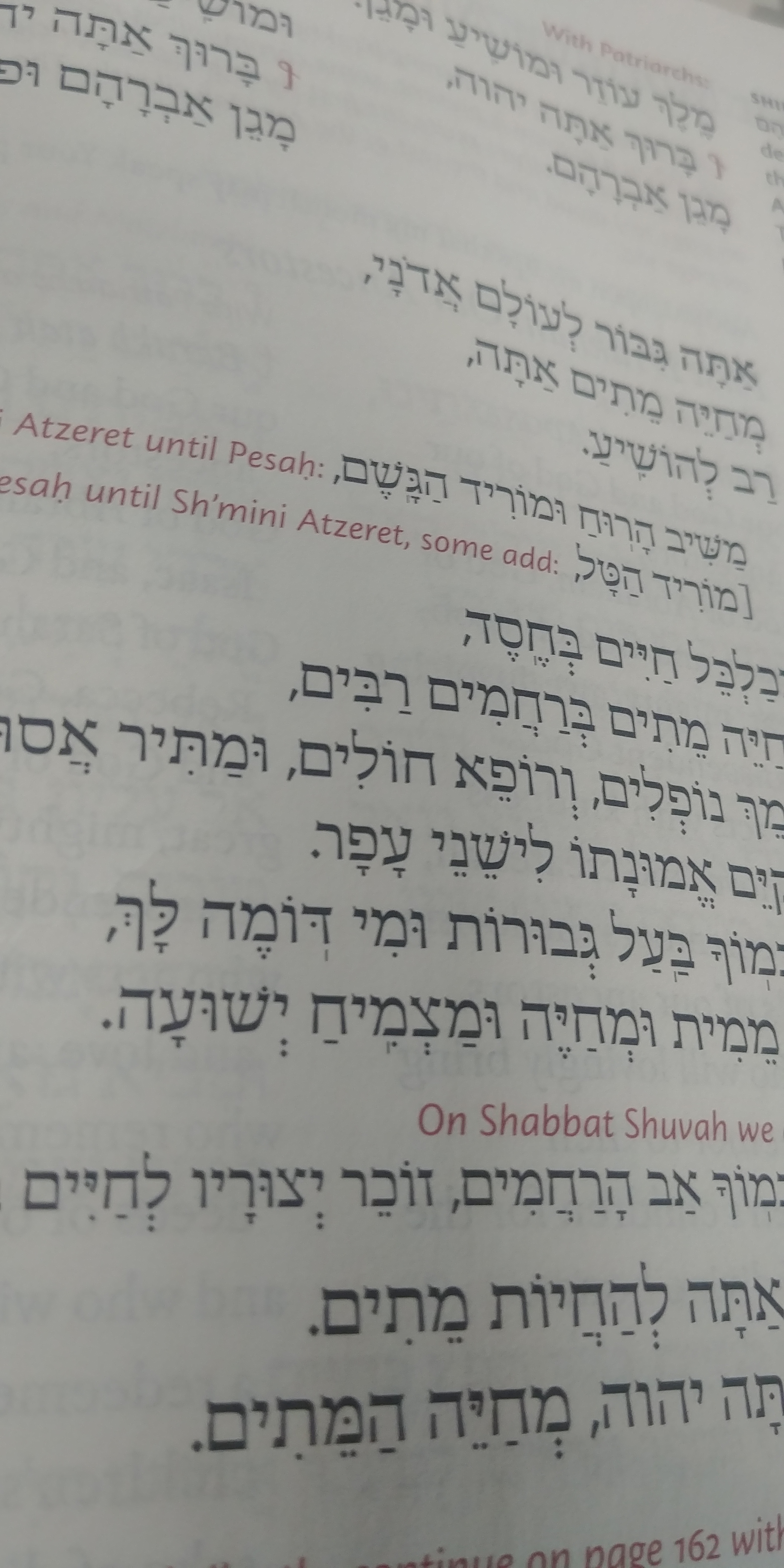
This passage is notable not only because of its essential message, but also because it replaces a passage found in most Orthodox siddurim. And the fact that the Conservative movement substituted this passage about loving and pursuing peace is quite telling indeed. 

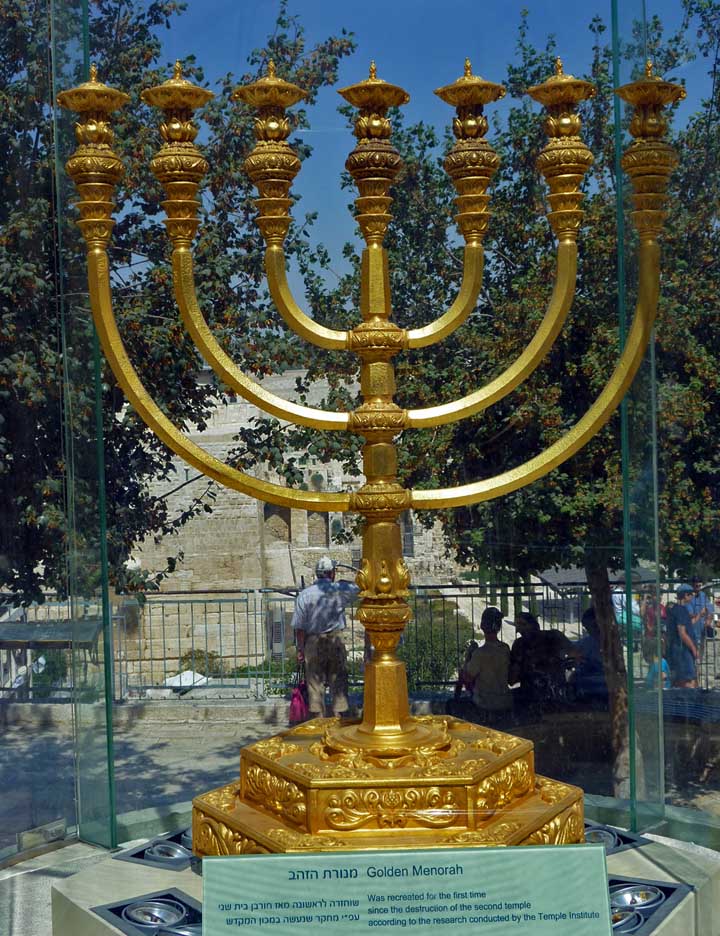
You see, the way most Orthodox services unfold in the morning is that they read a series of texts about animal sacrifices in the ancient Temple in Jerusalem, which of course was destroyed by the Romans in the year 70 CE. And then they say, “May the Temple in Jerusalem be rebuilt speedily in our days.” 

Model of the Second Temple in Jerusalem at the Israel Museum

So at some point in the 20th century the Conservative movement decided that well, we’re just not so excited about rebuilding the Beit haMiqdash and restoring the process of sacrificing animals that ended nearly 2,000 years ago. We have prayer, which is, ultimately, a better way of reaching God.

So we took out many of those references to animal sacrifice, and substituted language which suits our values. The suggestion is that we start each day not with an imperative to rebuild the Temple, but rather to reach out to one another with the goal of peace: peace between individuals, peace between nations, and all of that undergirded with words of Torah. We respond to God’s loving gift of Torah with love; and we act on that love to pursue peace in our world.

Because what should Torah do, when applied properly? It should bring people together. It should tear down walls and cause us to make peace with one another. Torah is the source of shalom, and acting on Torah with love for our fellow Jews and our fellow people of all walks of life is the way we create a holier future.

And there is a certain irony in that passage, because Hillel and Shammai were rivals in Jewish thought. Hillel generally took lenient positions in halakhah, and Shammai took the stringent position. They disagreed on virtually every place where it was possible to disagree. And yet in doing so, they sought peace. In fact, the Talmud teaches us (BT Yevamot 13b) that despite their disagreements, the scholars in each of the opposing schools still married each others’ daughters. That is, they continued to live together and raise families together despite fundamental disagreement. 

The Conservative movement seeks the path of love and peace by acknowledging that we live in a world that is quite different from the one in which the Talmud, and all the more so, the Torah were written. We see that in order to follow the path of love and peace, we have to live in this world, and not isolate ourselves. And we must also still remain in community with those with whom we disagree, to the right and to the left.

We are the vibrant center that can hold the Jewish world together. Our current climate is one which breeds division of all sorts; as the movement which occupies the center of Jewish life, all over the world, it is within our purview to reach out to find common ground.

We offer what is for many still a viable spiritual home: adherence to tradition, with a willingness to consider how the world has changed and how our tradition should change with it. Hence counting all adults as equal in Jewish law. Hence treating a marriage between two Jewish men or two Jewish women as being equivalent to that between a man and a woman. Hence understanding that taking lenient positions, like Hillel himself, strengthens our connection to our tradition and widens our tent, creating more peace.

Some of you know that our local Federation scholar, Rabbi Danny Schiff, published a book within the past year called, Judaism in a Digital Age, in which he declared that the moment for movements within Judaism has passed. Rabbi Schiff and I had a very spirited public disputation about the Jewish future here at Beth Shalom last winter. I’m a movement guy, by which I mean that I believe that institutions such as the United Synagogue of Conservative Judaism still hold a good deal of value as a “brand” within the Jewish world. And I am proud that we are affiliated with the movement. 

Beth Shalom has emerged from the pandemic not just unscathed, but also with a path forward for sustainability, including the $1 million matching grant for redevelopment from the State of Pennsylvania. 

We have successfully launched the Ḥavurah program, which connects members of our congregation in small groups for social activities, and I am certain it will help build more connections in our community, to make Beth Shalom more highly integrated. (By the way, if you missed joining, it’s not too late! Be in touch with our Executive Director, Robert Gleiberman, and we’ll connect you with other Beth Shalom members like you.)

All of that is wonderful, but it is not enough. The future of Beth Shalom, and the Conservative movement, depends on you. It depends on your willingness to commit yourself not only to belonging, but also to showing up. To take advantage of everything that we do here, and to take it home and make it a part of who you are and how you live.

Now of course, stepping up your involvement may seem daunting. Where do you start? How about coming to see me to talk about how to engage more in Jewish life and your community. I am happy to help you craft a path to enriching your Jewish involvement so that you and your family may benefit more handsomely from everything that Jewish living offers.

And trust me on this: your investment of time and energy and resources into Beth Shalom will be worth it. In being more deeply connected to our tradition and to each other, you will gain a sense of kedushah / holiness, of groundedness which will carry you confidently into the future.

So what will make the future of Beth Shalom and the Conservative movement brighter? Of course there are the essential principles I outlined above, which we must continue to uphold and value – I take those things as a baseline. But here are some other things we will be addressing, moving forward:

  1. Complete egalitarianism with respect to ritual practice. As with all transitions within institutions, change is slow. So while many women in our congregation have embraced the mitzvah of wearing a tallit during morning services, and a small number fulfill the mitzvah of tefillin, we still have a long way to go to ensure that all feel welcome and indeed obligated to participate fully in the time-bound mitzvot which have traditionally only been incumbent upon men. This is an active conversation at the Religious Services Committee.
  2. Telling our story. We need to be able to positively articulate why we do what we do. That is precisely why I gave you the list of seven essential principles today. Having that language available will make you a better ambassador for Beth Shalom, which will lead to a more sustainable future for this congregation. Feel free to cut and paste from above! You need to know this, and you need to be able to share it with others. Our story, our values, our principles, have real value that we must continue to broadcast to the world.

    We also have to tell and retell our story as a congregation, particularly as we enter the upcoming capital campaign. Our future will depend on our being able to describe where we have been and where we are going, and we hope to engage all of you with that as we move forward.
  3. Increased interconnectedness. The Ḥavurot are just one means. The more you come to Beth Shalom – for services, for programs, for lifecycle events – the more that you will feel ownership and connected to others. Just about everything we do includes food and schmoozing opportunities – there is a reason for that! We want you to feel like you are an essential part of this community, that this is your shul, that I am your rabbi.

We have the ability, as the ideological center of the Jewish world, to hold us all together. We are a model for living together even in the face of disagreement,  for peace and love in Torah. And the world needs that now, more than ever.

So go out there and be an ambassador. That will ensure a healthy future for the Conservative movement, and for the rest of the Jewish world as well.

And here is one way you can do so: Rabbi Shugerman and I and a few other lay leaders and staff will be headed to the USCJ Biennial convention (which, for unexplained reasons, they are calling a “Convening” this year) in Baltimore from Dec. 3-5. It will require an investment of time and money, but every time we send a delegation to this convention, we come back with new ideas which help us be a better congregation. If you’re thinking about it, come talk to me. We would love to have you join us.

A final note from the Mishnah I quoted above. The text reads:

אוהב שלום ורודף שלום

Ohev shalom verodef shalom. Loving peace and pursuing peace. Those are two different things! It’s not enough merely to love peace; you have to go out there and make it happen. Likewise for the future of Beth Shalom: it will not be enough for us merely to appreciate Conservative Judaism. Rather, we have to continue to practice it, support it, and spread the word.  

Shanah tovah!

Next in the series:

Kol Nidrei: The Future of Israel

Yom Kippur: The Future Must Be Human
Categories
High Holidays Sermons

Into the Future, Part I: It’s About Us – Rosh Hashanah 5784, Day 1

Once upon a time, I was a big fan of science fiction. I loved the work of Arthur C. Clarke, and in particular 2001: A Space Odyssey, both the book and Stanley Kubrick’s fantastic 1968 film version. Clarke’s visions were often of future worlds where humans interacted with usually-benevolent alien powers. Humanity was not inclined to destroy itself; rather, humans found their way off of our home planet and out into the universe with gradual technological innovation, facilitated by alien assistance. Sure, in 2001 the computer HAL 9000 goes on a murderous rampage in an epic fail of artificial intelligence, but that is just a small hiccup on the way to the creation of the Star-Child by some vastly superior alien power to aid humanity.

I think that many of us are concerned that the future may not be as bright as science fiction writers like Clarke and others envisioned. In our current moment, it may seem as though Clarke misread the future by being hopelessly naive about our species. After all, many things have gone horribly wrong. Consider where we are today:

  • The very people who created artificial intelligence are warning that it may in fact be a real threat
  • We are being relentlessly tracked and mined for data by commercial and government interests
  • What is objectively true has become relative to your political perspective
  • Culture wars have pitted us against our neighbors on multiple fronts
  • Anxiety and depression are on the rise
  • Anti-Semitic activity has increased dramatically
  • Authoritarianism is also back with a vengeance while democracy is in decline

I could go on. Global warming. Opioid abuse. Homelessness. Loneliness. The list of society’s ills continues to grow.

One of my primary jobs as a rabbi is to try to keep us inspired and optimistic about the future. It’s not so easy in today’s environment.

But we Jews have an ancient secret that has enabled us to survive the worst of times for thousands of years. We have survived persecution and dispersion; we have survived exile and genocide; we have survived forced conversions, forced conscriptions, anti-Jewish legislation and regimes of all sorts. We survived the destruction of Jerusalem at the hands of the Babylonians 2600 years ago, and the Romans 2000 years ago. We survived accusations that the Jews caused the Black Death in the 14th century and we survived the Expulsion from Spain a century-and-a-half later. We survived the Holocaust. Even as we in Pittsburgh continue to mourn the 11 holy souls whom we lost on the 27th of October, 2018, we as a community survive and continue to thrive.

And what is that secret Jewish super-power? It is our holy framework, which has unfolded over the last 3,000 years through Torah and its ongoing interpretation. It is the story of our past, coupled with our willingness to continue to engage with it, to retell it, to cling to it, and to apply it to navigate the present. And it is our inclination to gather with other Jews, to be together in community for mutual support and meaningful engagement.

In short, it’s about us. Our story, our community, and our rituals, all intertwined.

One piece of ancient wisdom we learn in Pirqei Avot (4:21):

רַבִּי יַעֲקֹב אוֹמֵר, הָעוֹלָם הַזֶּה דּוֹמֶה לִפְרוֹזְדוֹר בִּפְנֵי הָעוֹלָם הַבָּא. הַתְקֵן עַצְמְךָ בַפְּרוֹזְדוֹר, כְּדֵי שֶׁתִּכָּנֵס לַטְּרַקְלִין:

Rabbi Ya’aqov taught: this world is like a vestibule before the world to come; prepare yourself in the vestibule, so that you may enter the banquet hall.

If we are to enter the future in a way that is healthy and sustainable, we have to be ready for it. And the way that we the Jews can do so, for the benefit of the rest of the world, is to use the framework that we have received from our ancestors, because it has worked for thousands of years. It is our fervent desire, for our collective benefit, that humanity makes it to the banquet hall of the future.

Over these High Holidays, we will be talking about moving “Into the Future” from different angles. Today, it’s about us. Tomorrow, we will be discussing the future of Conservative Judaism. On the evening of Kol Nidrei, we will discuss our future vis-à-vis the State of Israel. And on the day of Yom Kippur, we will be speaking about retaining our humanity as artificial intelligence infuses itself into our lives.

***

In all of the challenges that we have faced at any point in time, the Jewish inclination has always been to look to the past. How did our ancestors survive? By re-reading the Torah, by arguing about it, by following its guidelines for behavior and emulating the better qualities of its major characters, and by applying it to our lives wherever we have been and whatever we have faced.  

And this formula still works today. 

In his 2017 book Homo Deus, the Israeli history Yuval Noaḥ Harari explains what fundamentally differentiates humans from other animals. While there are many species, from ants to chimpanzees, that form social groups in which the individuals cooperate by playing distinct roles, only humans have the potential to act collectively in a way that can change our destiny. In other words, a bee hive is a kind of community, but bee colonies will always more or less be the same – the same structure, the same system of “governance,” with, as far as we know, no long-term sense of past or future.

But humanity is different, particularly due to our ability to gather around shared stories. And all the more so for us, the Jews. Our stories, our texts, our wisdom hold us together and help us move forward, with an eye to our past. Our strength as a people is on our collective bookshelf, and in our hearts and minds. 

One essential lesson, fundamental to Jewish life, is the idea that we are all connected to one another. Two pieces of wisdom in particular say, in essence, that we have to think about “us” before we think about “me” or “you” or “them.” 

  1. Kol Yisrael arevim zeh bazeh (Midrash Sifra on Vayiqra / Leviticus 26:37)

We are all “arevim” – guarantors for one another. The word arevim comes from the Hebrew for “to mix.” We are all mixed up, or integrated with one another. And given the way we live today, not just with fellow Jews, but with our non-Jewish neighbors. We must all be responsible for one another.

  1. Al tifrosh min hatzibbur (Pirqei Avot 2:4)

Do not separate yourself from the community. We cannot all be individuals in complete isolation from one another. Our shared, just, sustainable future depends on our willingness to be in relationship, to acknowledge each other’s humanity. That is, we have to think about us as a collective with a shared destiny. And that is harder to do than it is to say, particularly given that the way our society is constructed today tends to isolate, rather than bring together.

And to universalize once again, the same is true for the entire world. It has become woefully easy to divorce yourself from the people around you. And this is not good for humanity.

Back in August, my son introduced me to a YouTube channel online produced by a “YouTuber” who goes by the name of Mrwhosetheboss. What he does is review hi-tech products, and we watched a review of a new gadget: Apple’s virtual-reality headset, which will be available early next year at the low, low, bargain-basement price of $3500.

After gushing about the revolutionary marvels of this gadget he makes a stunning confession: 

There’s already very little separation between us and our technology. You only have to take your phone out of your pocket and your screen auto-turns-on and you’re blasted by notifications. When the device is on your face, there’s no escaping it, and that’s slightly worrying… But the key thing about this headset that I don’t think any future or vision of this headset can solve is the potential for isolation. I am so incredibly excited that this new era of tech is here, but I’ve never wanted, and NOT wanted, a product to exist at the same time as much as I do with this one, for the simple fact that I do think this is the start of the end for shared experiences.

That is not the future for me, in which we are all in our own sensory bubbles, where all of our communication with others and the outside world is through an intermediary, which controls every aspect of the experience. That seems to me a wee bit too close to The Matrix, rather than Arthur C. Clarke.

Now, I need to state clearly:  I am NOT anti-technology. In fact I believe technology will do wonderful things for us if we use it cautiously. 

But here is the point: every one of us in this room has a wonderful tool at your disposal to build social capital and fight isolation: Judaism. Our faith is one of the best sources of social capital. This synagogue is an ancient technology that still does an amazing job at bringing people together as a force for good in the world. 

Here is a four-point plan (out of many more possible Jewish points) to save our future:

  1. Shabbat (or, setting aside sacred time)
  2. Kashrut (or mindful consumption)
  3. Shemirat halashon (or mindful speech)
  4. Tefillah (or, meditative moments)

Each of these items are among the most important principles of Jewish life, located at the nexus of the personal and the communal. They unite the “me” with the “us.”

Shabbat / Setting Aside Sacred Time

Many of us observe Shabbat in a traditional way in this congregation: we have luxurious family meals, often with guests, on Friday night and Saturday afternoon; we attend synagogue; we “unplug” for 25 hours from sunset on Friday till dark on Saturday night to devote time to family, friends, ritual and reflection.

In my own home, Shabbat is when the imperatives of our busy lives are placed on hold and we play games: Settlers of Catan, Wingspan, Rummikub, building with Legos. And of course, dining and napping as well.

But there are many more of us who do not unplug and reconnect on Shabbat. And even if you have some sense of what you might be missing by not observing Shabbat traditionally, I understand. It’s not so easy to close all your digital devices for that time, to disconnect, to not go shopping or watch YouTube. It’s not so easy even to plan Shabbat meals with family or friends.

But once you have truly tasted the traditional observance of Shabbat, where our range of activities is minimal and our relationship with the Earth and each other is more immediate and organic, you understand the value of setting aside sacred time.

And furthermore, when the news-and-outrage cycle goes non-stop, as Big Tech vies for your eyeballs and your money, shutting all of that down – even if just for 25 hours each week – is a mitzvah not just for you, but for the future of humanity.

Shabbat is good for your soul, but it also helps you connect with the people in your neighborhood, which is where we should all be at least once a week.

Shabbat / setting aside sacred time: it’s about us.

Kashrut / Mindful Consumption

Sure, you might think that holy eating is just an annoyance, an obstacle to living a full gustatory life, unencumbered by antiquated rules. Come on, Rabbi, what’s wrong with shrimp? Didn’t God also create shellfish? And beef is beef, whether an old guy with a beard blessed it or not, right?

Ask any parent whether they can properly raise children without boundaries. Kashrut is just that: a daily reminder that we cannot merely take all we want when we want it. Kashrut is Jewish mindfulness, a structure to help us maintain a sense of holiness in this world. And if we embrace a mindful consumption practice, it leads to a sense of interconnectedness with each other and all of God’s creatures. If we were all to practice this mindful way of eating, we have the potential to spread that awareness of our consumption patterns far and wide.

Even during my years as a young adult when I was not going regularly to synagogue, I maintained my kashrut practice, because it reminded me on a daily basis of my connection to our people and our tradition. Paying careful attention to what we eat, where it came from, and how our consumption affects God’s Creation models behavior for the rest of the world to appreciate.

Kashrut / mindful consumption: It’s about us.

Shemirat haLashon / Mindful speech

Our tongues need guards. We have to be ever-vigilant about the way we talk, and text, and tweet. With the dissolution of guardrails in speech, and with social media platforms which exercise little control over what is acceptable, we are in danger of creating a future in which words will be weaponized in unimaginable ways. It has never been so easy to destroy a person, an institution, an idea as it is today. If we are to maintain any sense of togetherness as a society, we have to be careful about what we say and how we say it. 

But sanctified speech is that where we acknowledge the power of our words and their potential for danger. Too many today are focused on dividing people through speech; only through shemirat halashon may we succeed in bringing people together for a better humanity and a better future.

Mindful speech is about respecting the humanity in each person.  Shemirat haLashon is about us.

Tefillah / Meditative Moments

There are many paths through Jewish life. But there is only one thing that gathers the Jews like no other, and that is being together in our house, the beit kenesset, the synagogue, the ancient and modern house of Jewish gathering.

Now, I know that tefillah is hard. It requires intent, concentration and practice, all things that can be challenging in a busy sanctuary during the High Holidays. And there is a high bar to entry. To fully participate, you have to be able to read Hebrew, or at least puzzle through transliterations. And there are tunes and choreography and ritual gear, which can be off-putting to the uninitiated.

But when we have prayerful moments together, when all the people in this room sing together, or meditate together, or even mumble together, it is breathtaking. And it is also be liberating – an upward spiral of energy that moves us as a community and ascends heavenward.

The Hebrew word, tefillah, does not mean, “to recite a jumble of ancient words in a language that nobody speaks.” It actually means “self-judgment.” When we stand together, ideally in silence, reciting the words of the Amidah, we create a strong sense of power in the room – hearts united in deep, meditative analysis of the self. If we allow ourselves to be swept up in the sense of tefillah as a community, it will help us all be better people, opening our hearts and bringing us together as a community. And this too has the potential to infuse the whole world with awareness and connection.

Tefillah / meditative moments: it’s about us.

***

OK, Rabbi, that all sounds great, but you have not convinced me. How exactly will this framework create a better future?

We have the power, when we think and act together, when we draw on our shared stories and ritual, to face all the challenges of our world in a way that will enable us to overcome. That is why the Jews are still here. We are a model for resilience, a model which can be shared with others.

My goal as your rabbi is, in facing the future, to recognize the awesome power of our Jewish framework, of your heritage, and to give it to the world. This world, God help us, needs to set aside sacred time, needs mindful consumption, mindful speech and meditative moments.

And indeed, the situation is urgent. We all have the potential to think, “Hey, I’m a good person. I am respectful of my neighbors. I make charitable donations. I replaced my incandescents with LEDs. I buy organic produce.” And hey, those things are great. 

But we have to think wider and greater than that. We have to think not just about ourselves or our immediate relations, but rather how we can influence the world for the better. Our future as a species depends on you to consider how your personal observance of essential Jewish principles can bring us safely and sustainably into the future. And this may only be realized if we take up the reins of our own personal Jewish observance and demonstrate its value to the world.

So here is a suggestion: Take one element of Shabbat – a holy moment every Friday evening at sunset to light candles as a family, for example -and build on that. One element of kashrut. Come once more to synagogue for a service than you ordinarily would, to learn a new prayer, a new tune, a new idea from our rich textual tradition.

And as you come to appreciate these aspects of our tradition yourself, you must share them with your friends and neighbors. Our ancient secret can be universalized and presented to the world. Not that we should try to make non-Jews practice Judaism, but to understand the eternal value of these principles so the whole world can derive the benefits of the Jewish secret. 

Do it for yourself, but all the more so, do it for us, so that we may all enter the banquet hall together. Into the future.

***

Next in the series:

Rosh HaShanah, Day 2: The Future of Conservative Judaism

Kol Nidrei: The Future of Israel

Yom Kippur: The Future Must Be Human

~

Rabbi Seth Adelson

(Originally delivered at Congregation Beth Shalom, Pittsburgh, PA, first day of Rosh Hashanah 5784, 9/16/2023.)

Categories
Festivals Sermons Yizkor

We Are Never Finished – Shavu’ot 5783 / Yizkor

As I get older, I find myself more willing to accept a complicated truth about human life: you are never finished. No long-term project, no personal mission, no ideal to be implemented is ever really complete. We are all works-in-progress, and all of our human endeavors are forever in progress. 

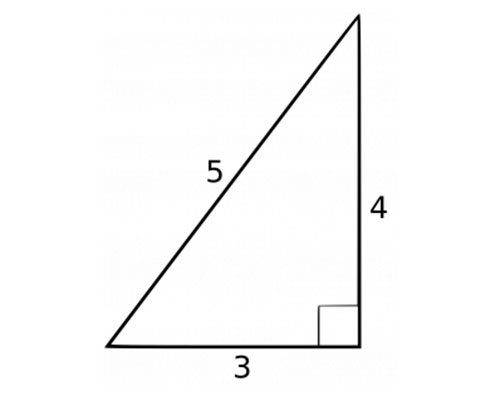
This is, I think, an essential piece of the human condition. Life is not a middle-school algebra problem, where there is always a simple answer awaiting the one who takes all the correct steps. Life is definitely not a series of 3-4-5 triangles. It is far more messy. We start new tasks or relationships with zeal and abandon them mid-stream. We change course. We fail at being the parent we hoped to be, or the spouse we thought we were, or the exemplary child we aspired to be.

Among the texts from the Jewish bookshelf to which I most frequently return is Pirqei Avot, the second-century collection of rabbinic wisdom which is included in the Mishnah, but which stands out among the other books in that six-order collection as being quite different from the rest. Almost all of the Mishnah is about laws: instructions to post-Temple Jews regarding how to live life and observe rabbinic Judaism now that there are no more sacrifices. When do we recite Shema in the evening? What types of activities are forbidden on Shabbat? May one eat an egg laid by a hen on a Yom Tov day?

But Pirqei Avot is about how to be a better person. It is about learning and teaching Torah, about being careful with your speech, and about the complexities surrounding judgment and governing. And at the end of the second chapter of Pirqei Avot comes the piece of wisdom to which I return more than anything else in our canon:

הוּא הָיָה אוֹמֵר, לֹא עָלֶיךָ הַמְּלָאכָה לִגְמֹר, וְלֹא אַתָּה בֶן חוֹרִין לִבָּטֵל מִמֶּנָּה 

Rabbi Tarfon used to say: It is not your obligation to finish the work, but neither are you at liberty to neglect it.

This piece of wisdom has guided me through many challenging times. I think of it when I am pulling weeds from my garden, when I am exercising, when I am facing a particularly daunting pastoral situation, when I grieve, when I start a new project, and pretty much every day, as I face the piles of work on my desk that never seem to resolve themselves. It speaks to the challenges facing the State of Israel, and the challenges facing our nation, and of course those facing Congregation Beth Shalom.

Whenever I need to be reminded that the only way to tackle a seemingly-insurmountable project is to take a little at a time and keep moving forward, I think of this mishnah. And it helps.

I thought of this eternally-useful gem a little more than two weeks ago when I first became aware of the death of Justin Ehrenwerth, a young man who I had only met briefly, but was the beloved son and brother and uncle of members of Beth Shalom.

Justin was only 44, and his life was cut short by mental illness. But in those 44 years, Justin accomplished more than most of us do in a lifetime. He studied at Colby College, Oxford University, and Penn Law. He worked for John Kerry’s campaign for president, and then for Barack Obama’s campaign, and then in the Obama administration. He established and ran the government agency responsible for cleaning up the Deepwater Horizon oil spill in the Gulf of Mexico. He became the president of The Water Institute, a New Orleans-based nonprofit dedicated to solving major environmental challenges. (Our member Jordan Fischbach, who was Beth Shalom’s Vice President for Synagogue Life until this past week, was one of Justin’s employees.) 

Justin was a national axe-throwing champion and a skilled harmonica player; a devoted son, brother, father and husband, and a loyal, dedicated friend who went out of his way to be there for others. Oh, and he also served on the Board of his synagogue in New Orleans.

Justin was also a person with plans. Jordan described him as being particularly mission-driven, which is something that many of us aspire to be, but (and I am speaking here for myself) actually is quite a challenging way to live. It requires discipline and energy that few of us are able to successfully muster. And all those who knew Justin recognized that energy; he was the kind of person who lit up a room when he entered. 

And this made his death all the more shocking. This young man, who had a lengthy resume of successes, who did so much good in this world and truly connected with so many people, was suffering quietly.

We laid Justin to rest last Wednesday at the Beth Shalom Cemetery, and during the hesped / eulogy, I said the following, based on a teaching I learned from my homiletics professor at the Jewish Theological Seminary, Rabbi Gerald Zelizer:

The tale of the Jewish people is filled with great figures who died before they completed the projects of their lives. Moshe Rabbeinu, Our Teacher Moses, was only able to view the Promised Land from across the Jordan River. King David set his heart on building the Beit HaMiqdash, the Temple in Jerusalem, but could not do so. Our matriarch Rachel died in childbirth while on the road to Ephrat; she neither reached her destination nor knew her son Benjamin. The Zionist visionary Theodor Herzl died in 1903 at age 44, when he had only just set in motion the forces which would yield a Jewish state 45 years later. 

The number of years is not necessarily the measure of success. The successful life is not necessarily the long life. The seeds that we plant which bear fruit long after we are gone are arguably the better measure.

Our ambitions, our mission, our goals, our hopes, what we strive to be, that is what determines the success or failure of our life, and not its length. How honestly, how nobly, how totally and completely one lives, these are the true measures of who a person is.

***

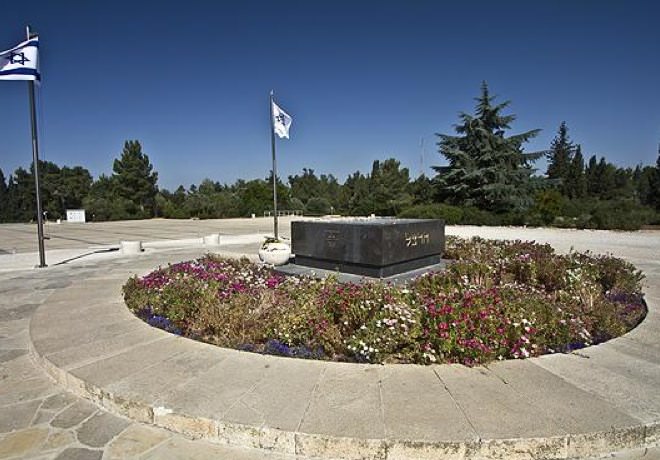
When we reflect on the lives of all those whom we remember today for Yizkor, we may wish to recall that the true measure of their lives was not a number of years. It cannot be surmised from the hyphen between the dates on their memorial stones. Rather, we might want to recall how they lived, what they lived for, who they loved, and the values they strived to impart through their actions. That was who they were; those were the things that they accomplished on this Earth. And we should all be grateful for that. Even though Moshe Rabbeinu does not make it to Israel, he is still Moshe Rabbeinu. Even though Herzl will forever lie in Jerusalem, in the modern capitol of a state which he imagined but never saw, he will always be the one who made it happen.

And furthermore, we should also cut ourselves some slack. No matter how mission-driven we may fashion ourselves, no matter what goals we achieve or dreams we realize, no matter how dramatically we fail, we might place some hope in the fact that those to whom we give love and life may in fact help complete our work on Earth after we are gone.

All the moreso: לא עליך המלאכה לגמור. It is not up to you to finish the task, because really, you cannot. That is the nature of humanity.

Our tradition acknowledges that. That is one reason that we read the Torah through every year, even though every time we get to the end we see that Moshe once again fails to enter the Promised Land. We knew that was coming. And yet, Joshua, his anointed successor, makes it.

We have to be willing to live with the fact that every conversation dangles, that every argument continues in some way, that our lives are like an ongoing road trip in which we never quite reach our destination, with side roads and dead ends and occasionally getting lost. 

So what can we do? We can reach out more fully and completely in love to those who need us. We can try our best to move the needle in some small corner of the world. We can aim to fulfill the mitzvot, knowing that we will occasionally miss the mark. And we can try to give to our children and grandchildren the opportunity to not finish the task as well, but also not to neglect it either.

~

Rabbi Seth Adelson

(Originally delivered at Congregation Beth Shalom, Pittsburgh, PA, second day of Shavu’ot 5783, 5/27/2023.)

Categories
Sermons

The Most Beloved Employee of Beth Shalom, Bar None – Ki Tissa 5783

This is the most ironic period of the Jewish year, from a gastronomic perspective. In order to fulfill the Purim day mitzvah of mishloaḥ manot, sending packages of food and treats to one another, as described in chapter 9 of the book of Esther*, many of us pack extensive and sometimes quite fancy bags full of stuff – candy, chips, fruits, nuts, and of course hamantaschen – and distribute them far and wide. And, of course, we get similar packages from others. It’s a lovely, friendly, neighborly project that has a downside: then you have piles of snack food sitting around the house.

Now, as happens every single year, Pesaḥ is exactly one month after Purim. Prior to Pesaḥ, of course, your house should be free of ḥametz, five species of grains identified in the Talmud. The most essential halakhah surrounding Pesaḥ is that from the morning of the day prior to the first seder, it is forbidden by Jews to eat, possess, benefit from and even see ḥametz. So all products containing even the tiniest amount of exposure to wheat, barley, oats, spelt, and rye, which is basically everything you received in those mishloaḥ manot bags, must be eaten (or regifted, although none of your friends are going to want their mishloaḥ manot stuff to come back to them, so to do that you’re going to have to pawn it off on your non-Jewish neighbors).

As I sat at my kitchen table last Thursday evening typing out this sermon, surveying the array of Purim goodies calling out to be consumed, I hatched a great theory about the origin of hamantaschen. Some Jew at some point in the Middle Ages, on the week before Purim realized, “Hey, I have lots of flour that I’m going to have to use up before Pesaḥ. I should make a bunch of cookies for Purim and give them to all my neighbors! Then the ḥametz will be their problem!” It was such a great idea that all the neighbors did it the following year, thus neutralizing the original intent. But a fabulous Ashkenazi custom was born.

It is clearly NOT ironic, however, that foodstuffs and eating are an essential part of Jewish holiday practices, be it Adar or Nissan or Tishrei or whatever. On the contrary, it is hard-wired into the Jewish year. We are the people for whom what you put into your mouth is as important as what comes out of it as words of prayer. 

And it is also therefore not ironic that, as we honor Michelle Vines today, we must acknowledge that she has been the most important member of the staff here for many, many years. I will say a lot more on that in a few minutes, but first a word of Torah, brought to you courtesy of Parashat Ki Tissa, which we read today.

The subject of eating comes up at least six times in Parashat Ki Tissa

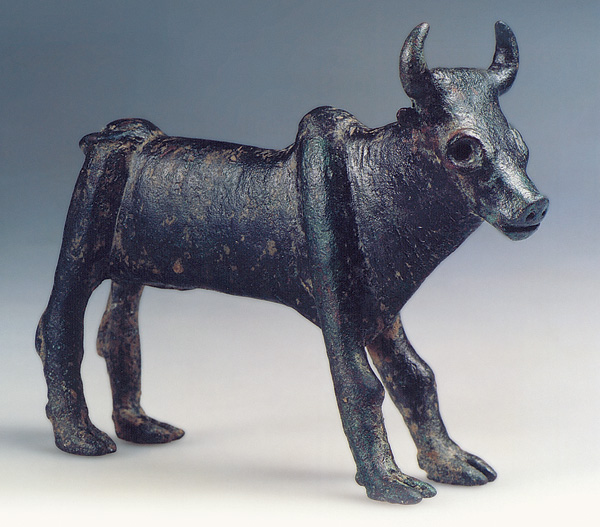
  • The Israelites’ first act after making the Molten Calf is to declare a festival, and so they offer sacrifices and then they sit down to eat and drink and perform all sorts of horrible acts (Ex. 32:6). 
  • Later on, when Moshe goes up Mt. Sinai a second time, God lays down the law about idolatry and intermarrying with the Canaanites, because it will lead to eating from their unholy, idolatrous sacrifices (34:15).
  •  Immediately after, there is a reminder of Ḥag haMatzot, the feast of Unleavened Bread which we associate with Pesaḥ, when we are obligated to eat matzah (34:18). 
  • In the same holiday passage, we also find a commandment to bring as a sacrifice the biqqurei admatekha, the first fruits of your land, which we associate with Shavu’ot, and in the same verse, the prohibition on boiling a calf in its mother’s milk, a commandment which yielded a whole bunch of practical laws which are in play to this very day (34:26). 
  • And near the conclusion of Ki Tissa we learn that in the 40 days and nights that Moshe was up on Mt. Sinai, לֶ֚חֶם לֹ֣א אָכַ֔ל וּמַ֖יִם לֹ֣א שָׁתָ֑ה, “he ate no bread and drank no water” (34:28). (He must have been quite hungry when he returned.)

You might even say that the latter half of the book of Shemot / Exodus, following the Israelites’ having escaped from Pharaoh’s army at the Sea of Reeds, is food obsessed. No sooner have they chanted Shirat haYam, the Song of the Sea, that they are desperate for water (Ex. 15:24). And then they are pining for the “fleshpots of Egypt” (16:3). And then there are the manna and the quail. And so on.

When we comb through the text for this dietary thread, we see it everywhere. Why does the Torah go out of its way to tell us who is eating and drinking and why, what they are permitted and what they receive, what is forbidden and what is associated with idolatry or with proper festivals? Do those food references further the narrative? 

The theme of food in the Torah reinforces the principle, which we all know, that eating is essential to what we do. Taken together, the episodes of eating and drinking remind us that this most mundane feature of our lives, the physical source of our energy and our spirit, cannot be overlooked. Our holidays surround food; our joy and our grief are expressed over platefuls of cookies and platters of smoked fish. Food is ritual. Food is an opportunity each day to frame an ordinary act in holiness with berakhot before and after. Food is the source of our strength, and our meals punctuate our lives. And, as you may know, it is food that enables us to perform the most fundamental mitzvah of Jewish life: learning Torah. As we learn in Pirqei Avot (3:17):

אִם אֵין קֶמַח, אֵין תּוֹרָה. אִם אֵין תּוֹרָה, אֵין קֶמַח

Im ein qemaḥ, ein Torah. Im ein Torah, ein qemaḥ.
Where there is no flour, there is no Torah; where there is no Torah, there is no flour.

The Maharal of Prague, a 16th-century rabbi, notes that the Mishnah here uses the term qema, flour, rather than leem, bread. Flour is a fine powder, he says, while bread has other characteristics: it can be rough and thick; flour thereby relates to the fine qualities of the soul, while bread, in its thick roughness, does not. Also, flour is a fundamental need, like Torah. If you have no bread, but you have a reserve of flour, you can make bread. If you have no flour in the jar, once you finish your bread, you are out of luck. Torah is the very source of our spiritual sustenance; when we have no Torah, we have nothing left. 

But whether we are speaking of bread or flour or pareve cookies, food, like Torah, is essential to our lives. The Jewish army of God marches on its stomach. And we should remember this all the more so on this day when we are honoring Michelle in her retirement.

Now, this may surprise some of you, but Michelle is not Jewish. Yes, it is true that she knows as much about kashrut (Jewish dietary laws) as any rabbi in the neighborhood, and can almost cite chapter and verse of the Shulḥan Arukh, the 16th-century codification of Jewish law, in the original Hebrew regarding certain Jewish dietary practices. And not only that, she also knows which customs are in play in which communities – which hekhshers (kosher certification marks) are acceptable in which synagogues, who among us allows broccoli and asparagus, etc. And she has an encyclopedic knowledge, acquired over many years of dealing with benei mitzvah, weddings, beritot milah (ritual circumcisions), shiv’ah (mourning rituals), and every other lifecycle and communal event, of every aspect of every party. She has managed the most complex of build-outs for celebrations in the Ballroom; she has poured at least 8 million shot glasses of grape juice for Shabbat kiddush; she has been spotted at every type of affair imaginable, always with a friendly smile and a nod, always with a calm, reassuring attitude of understanding. Members of this congregation and throughout the community know that we can not only trust Michelle, but that she has long been the one to rely on. She is, and has been for half a century, the most-beloved Beth Shalom employee, bar none.

And we are extraordinarily grateful for her half-century of service to Beth Shalom and to the wider Jewish community. We want you to know, Michelle, that in addition to honoring you this morning, the Congregation Beth Shalom and other synagogue friends are also providing a special gift for you, and we hope you will use it to take a nice, comfortable vacation.

Michelle has helped carry us through all sorts of moments, the joyous and the painful, the holy and the mundane. She has been there for all of us; holding us all up. She has been maintaining that figurative flour jar of spiritual sustenance as we have drawn from it, for many years.

And we are so grateful. Kol hakavod! All the glory is yours. 

When you see Michelle at kiddush today, please don’t ask her if we are out of egg salad. Instead, please just thank her for her many years of service, and wish her good luck.

~

Rabbi Seth Adelson

(Originally delivered at Congregation Beth Shalom, Pittsburgh, PA, Shabbat morning, 3/11/2023.)

* Esther 9:22

כַּיָּמִ֗ים אֲשֶׁר־נָ֨חוּ בָהֶ֤ם הַיְּהוּדִים֙ מֵאֹ֣יְבֵיהֶ֔ם וְהַחֹ֗דֶשׁ אֲשֶׁר֩ נֶהְפַּ֨ךְ לָהֶ֤ם מִיָּגוֹן֙ לְשִׂמְחָ֔ה וּמֵאֵ֖בֶל לְי֣וֹם ט֑וֹב לַעֲשׂ֣וֹת אוֹתָ֗ם יְמֵי֙ מִשְׁתֶּ֣ה וְשִׂמְחָ֔ה וּמִשְׁלֹ֤חַ מָנוֹת֙ אִ֣ישׁ לְרֵעֵ֔הוּ וּמַתָּנ֖וֹת לָֽאֶבְיֹנִֽים׃

[The 14th and 15th of Adar were] the days on which the Jews enjoyed relief from their foes and the same month which had been transformed for them from one of grief and mourning to one of festive joy. They were to observe them as days of feasting and merrymaking, and as an occasion for sending gifts to one another and presents to the poor.

Categories
Sermons

Creating Gan Eden – Bereshit 5783

We are back at the beginning again.

Some of you know that I love Parashat Bereshit, because it opens up all of the big questions. Where did we come from? Why are we here? Who is this God character, and where did he/she/it come from? How did all of Creation come into being? Why is humanity so complex? 

Not that the Torah alone is equipped to answer such questions, of course, particularly for modern people. On the contrary: Bereshit offers partial answers to some of these questions, but leaves others more or less untouched, and some of those answers are not particularly helpful, given what we know today through scientific inquiry. As is usually the case when we dig into a meaty piece of ancient text, we might come away from the opening chapters of Genesis with even more questions. And particularly for contemporary people of faith, since science addresses the question of “how,” but often leaves off the answer to “why.” That is one reason that we absolutely need Torah.

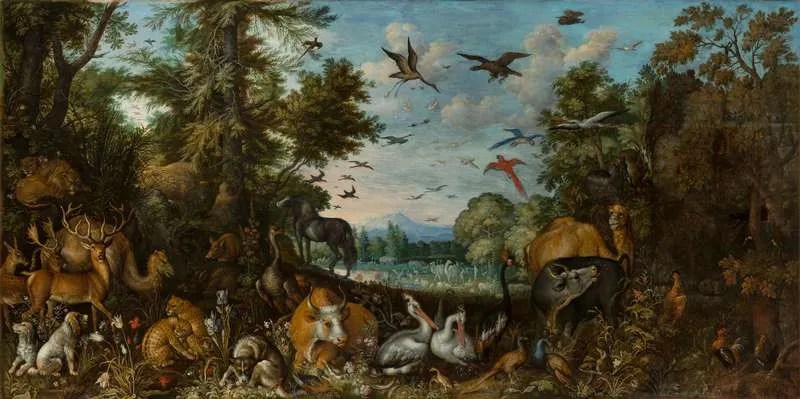
It makes sense that the Torah starts in Gan Eden / the Garden of Eden; we want our beginnings to be pure. In Hebrew, the term “Gan Eden” is used to mean “paradise,”* but that English term brings with it associations that are not really found in the Torah’s text or Jewish interpretations. Gan Eden is not a place of the so-called “afterlife;” it is rather, you might say, a sort of womb for Creation, a protected, natural space in which God could raise the newly-created plants, animals, and humans. Gan Eden was God’s nursery: fresh and flowering and nurturing.

Our popular conceptions about Gan Eden comes to us from Christianity: that the first humans created there were without sin and immortal, and upon having eaten the apple, experienced a kind of spiritual fall, which made them fundamentally sinful and mortal.

But we, the Jews, read the story in a very different way. Humans were created to be mortal. And, by the way, the Torah never mentions an apple; the fruit is a non-specific fruit, although some Jewish sources suppose that it was a fig or a pomegranate.

More importantly, we do not have the concept of Original Sin, or the Fall. On the contrary, humans were created with the ability to transgress. And of course, they mess up very soon. 

There is a wonderful midrash about the creation of human beings. Prior to doing so, God wisely consults with the angels to see how they feel about this new creature, which will be something like them, and they were not in agreement about humans. (As told in Louis Ginzberg’s Legends of the Jews, JPS 2003, vol. 1, p. 51):

The Angel of Love favored the creation of humans, because they would be affectionate and loving; but the Angel of Truth opposed it, because humans would be full of lies. And while the Angel of Justice favored it, because humans would practice justice, the Angel of Peace opposed it, because humans would be quarrelsome. 

To invalidate his protest, God cast the Angel of Truth down from heaven to Earth, and when the others cried out against such contemptuous treatment of their companion, God said, “Truth will spring back out of the Earth.”

After consulting with the angels, God’s response was effectively, “Thanks for your opinion. And don’t you worry about that Truth business: it will be with us for sure.” So God creates humans, and places them in this lovely Garden, knowing that they will fail. And they will lie. And they will soon be lying and killing and doing all sorts of mischief.

But God also knows that humans have the great potential to do good, to carry out justice, to love, to till and to tend the Earth respectfully. God knows that humanity is a mixed bag, and that, although people will be a source of much pain and grief, they will also pursue and hold up truth. We are not fundamentally sinful, nor can we possibly be exclusively good. Rather, we are somewhere in-between. We are exactly as God the Engineer designed us.

Gan Eden, in Jewish tradition, is not paradise. It is a point of departure, not a future destination. The beginning, not the end.

Nonetheless, the fantastical idea of achieving paradise meanders through human existence. Many cultures have such a concept in their mythologies. We do, however. have the concept of “Olam HaBa,” the world-to-come, and there are some Jews in the world who work hard at performing mitzvot, fulfilling the opportunities for holiness in Jewish law, so they can attain a place in Olam HaBa

Opinions found on the Jewish bookshelf on what Olam HaBa is vary tremendously, from visions of a pleasurable place (like Gan Eden), to denial that there is anything at all after we die. One such vision (Babylonian Talmud Berakhot 17a) sees no Earthly pleasures in Olam HaBa, but rather merely sitting, with crowns on our heads, in the splendor of the presence of God, which will vastly exceed any kind of physical enjoyment. 

I have always subscribed to the idea that we perform mitzvot not for any future reward, but because that reward comes back to us in the present. And I have some good support here: there is a concept in Jewish life of Torah lishmah, learning Torah for its own sake. That is, we do not study our ancient texts and apply them to our lives so that we can get into Olam HaBa, but we do so because it is the right thing to do. The reward is the performance of the mitzvah itself. We read, for example, in Pirqei Avot, the second-century collection of Jewish wisdom(1:3):

אַנְטִיגְנוֹס אִישׁ סוֹכוֹ קִבֵּל מִשִּׁמְעוֹן הַצַּדִּיק. הוּא הָיָה אוֹמֵר, אַל תִּהְיוּ כַעֲבָדִים הַמְשַׁמְּשִׁין אֶת הָרַב עַל מְנָת לְקַבֵּל פְּרָס, אֶלָּא הֱווּ כַעֲבָדִים הַמְשַׁמְּשִׁין אֶת הָרַב שֶׁלֹּא עַל מְנָת לְקַבֵּל פְּרָס, וִיהִי מוֹרָא שָׁמַיִם עֲלֵיכֶם

Antigonos of Sokho, received [Torah] from Shim’on the Righteous. He would say, “Do not be as servants who are serving the master in order to receive a reward; rather be as servants who are serving the master not in order to receive a reward; and may the fear of Heaven be upon you.”

Antigonos was onto something here, a more robust strategy for life. Since we cannot know what awaits us after we die, do good for the sake of doing good now and reap the rewards now. If it helps us in the Olam HaBa, harei zeh meshuba! All the better.

Maimonides, writing in the 12th century, extends Antigonos of Sokho’s words:

The Sages meant to tell us by this that one should believe in truth for truth’s sake. And this is the sense they wish to convey by their expression, oved me-ahavah, “serving from motives of love.” (from Rambam’s Introduction to Pereq eleq)

We should “serve” our Master (i.e. God) and “fear Heaven” by speaking truth (remember Truth?) and pursuing justice and living according to the mitzvot not because we hope to get there after we die and hang around wearing crowns in God’s court, but rather because we do so out of an act of love for other people and the world. That is its own reward. Torah lishmah, Torah for its own sake, is what we reap, and it is right here, right now.

Gan Eden, ladies and gentlemen, is not some mystical future destination for which we should strive. Neither is it an abstraction. It is, rather, what we can create for ourselves here on Earth, in the present moment. 

We all have the potential to build Gan Eden, a place that is protective and nurturing, a place that is safe and innocent, green and pleasant and refreshing. All we have to do is make it happen by fulfilling the holy opportunities which have been given to us.

We create Gan Eden when we keep the Shabbat. Shabbat is a taste of the refreshment of Gan Eden, but only if you do it right – when you set aside your mundane stressors and focus on being there, being present with your family and friends, on gratitude and all that emanates from it, on the qedushah / holiness all around us.

We create Gan Eden when we reach out to others, when we work toward the common good, when we fulfill the mitzvot bein adam leavero, those mitzvot that maintain the qedushah between people: when we treat others with kindness, when we clothe the naked and comfort the mourner and feed the hungry.

We create Gan Eden when we gather in prayer, when we gather in joy and grief, when we fulfill the rituals of Jewish life which color our days with meaning.

One of Crosby, Stills, Nash and Young’s most well-known songs is an ode to Woodstock, from their phenomenal 1970 album Deja Vu, although the song was written by Joni Mitchell (who was actually not at Woodstock because she had a gig on the Dick Cavett Show):

We are stardust
We are golden 
We are billion-year-old carbon
And we’ve got to get ourselves back to the Garden.

But Joni got it wrong. We cannot get back to the Garden. There is no going back.

But we can make it here. All we have to do is act on the truth that is our spiritual heritage.

~

Rabbi Seth Adelson

(Originally delivered at Congregation Beth Shalom, Pittsburgh, PA, Shabbat morning, 10/22/2022.)

* Interesting etymological note: the Hebrew עֵדֶן / ‘eden means refreshment or pleasure, so Gan Eden might be literally translated as “garden of pleasure.” The word “paradise” seems to have arrived in the English language via Latin and Greek from the ancient Persian word pairidaeza, meaning a garden enclosure.

Categories
Festivals Sermons Yizkor

Remembering the Small Print – Shemini Atzeret / Yizkor 5783

One of the things that this season does to me is to remind me to read the small print in the siddur, to pay attention to details that my eye is trained to ignore during much of the year.

Since most siddurim / prayerbooks are used for a variety of days – weekdays, Shabbat, holidays – they are designed to reflect the changes in our daily tefillah routine. During the holiday month of Tishrei in particular, there are changes almost every day, which require you to pay careful attention to the smaller print. 

If one goal of the Tishrei holidays is to make us all pay more attention, then for sure these subtle changes in our daily prayer are helpful. Even the extra le’eila which we say from Rosh HaShanah to Yom Kippur manages to keep me just a wee bit more focused for some time.

And that, of course is a good thing: tefillah / prayer should never be by rote. As we read in Pirqei Avot (2:13):

רַבִּי שִׁמְעוֹן אוֹמֵר, הֱוֵי זָהִיר בִּקְרִיאַת שְׁמַע וּבַתְּפִלָּה. וּכְשֶׁאַתָּה מִתְפַּלֵּל, אַל תַּעַשׂ תְּפִלָּתְךָ קֶבַע, אֶלָּא רַחֲמִים וְתַחֲנוּנִים לִפְנֵי הַמָּקוֹם בָּרוּךְ הוּא

Rabbi Shim’on said: Be careful with the reading of Shema and the Amidah, And when you pray, do not make your prayer something automatic, but a plea for compassion before God.

In tefillah, as in life, it’s the details that are important. While it is easy to think that the essential part of tefillah is the recitation of the words, the mishnah suggests that we have to actually be paying attention. True tefillah requires pouring our souls into the pages of the siddur, such that the yearning for compassion, the honest gratitude, the heartfelt praise and requests which are the building blocks of tefillah come from an honest place and can actually be felt by the davener. 

It is not the outward symbolism which matters; not the broad strokes of being in shul (synagogue) and standing in silence and reciting the words; rather, it is the internal details. It is the richness of the ancient Hebrew idiom and how it lands on our souls which drive honest prayer. It is, in fact, the small print, laden with the special features of the season, which matters most.

And when we recall beloved family members and friends who are no longer with us, on days of reciting Yizkor prayers, the details of their lives are the most essential items. 

What makes a person special and unique? It is not their appearance, or what car they drive or the color of their kippah. It is the intangible details: their deeds, their sayings, their values, their relationships. 

You might have heard recently about so-called “click chemistry,” because three biochemists just received the Nobel Prize for their work in the area. Click chemistry is a relatively new chemical process which allows us to build new molecules with particularly desirable functionality using small, organic building blocks, somewhat akin to molecular Lego pieces. 

Without getting too technical, the research of these Nobel laureates has made it possible to reliably build new molecules from these building blocks in a way that is cost-effective and has a high rate of success. The process will supplant older, more cumbersome and expensive methods of synthesizing such molecules. This will enable chemists to easily produce and test a whole new range of pharmaceuticals, polymers, proteins and other organic compounds. It is truly a remarkable breakthrough.

Now, the chemical engineer in me is inspired by this new molecular technology.

But I also find the idea of being able to assemble easily new molecules from building blocks appeals to me from, shall we say, a more homiletical perspective. As people, we are more than the sum of our parts; and yet we are constructed from the very same types of molecules that can be easily assembled through click chemistry.

We are, of course, exceedingly complex creatures. We are shaped by all of the forces around us: the people we meet, the books we read, the experiences we share with others, the love we receive and give, and all of the other tiny ways we fill our days and our lives. And all of these things, all of these minuscule moments and interactions are sifted through our basic structure, coloring all of the intricate pieces of our personalities.

With human personalities, of course, it is the details that matter. Our external features are not so different from one another; our internals are much more complicated. We have different strengths and creativities, different talents and hobbies and favorite foods and leisure activities. We are drawn to a range of entertainments and political pursuits, tastes in clothes and art and philosophy. We each have individual ways in which we express ourselves and fashion our lives.

A lazy search of the Internet led to somebody else’s back-of-the-envelope calculation of how many molecules there are in the human body, and that answer is perhaps on the order of 1027, or a one followed by 27 zeroes.

Much of that is water, but a good chunk of them are organic molecules, of the sort that are put together with the basic building blocks, the simplest Legos, of life. 

But that is what makes us human: the great complexity of the chemical system of which we are made. Our memories, our knowledge, our experiences, remembered and forgotten, are all encoded into that organic soup of tiny, encrypted chunks of living matter. The variation of these codes, which make up our genetic material, yield people who may indeed look quite similar, but are vastly different in behavior and thought. 

A friend recently reminded me that the events from our past which we remember are not necessarily those things which others remember about us. That is, the picture of our lives is far more complex than what we see. This also suggests that all of those details, all of those interactions which we can recall are probably less than half of the story of our lives.

That is what makes those who were special to us so memorable; why they take up so much of our brain space and emotional energy: the great complexity of our parents and grandparents, the mysteries of our siblings, the tender mercies of our spouses. 

Tomorrow morning, we start reading Parashat Bereshit, the beginning of the Torah once again. We return to Creation ex nihilo, when God begins to speak, and the whole world comes into existence, from a point of light to the full flowering of Earthly bounty. You may recall that at the end of each day, the Torah tells us that God saw that what He had created was good.

It’s almost dismissive in its simplicity. Of course the creation of the sun and moon and stars was good. Naturally the flowering plants and trees and birds and bees and alligators and capybaras were good. But they were also incredibly complicated. 

The creation of humans, male and female, on the sixth day is described as tov me-od, very good, something which might make us raise our eyebrows, given what we know about humanity.

Life, Creation, cannot be merely good or bad, but rather full of contradiction and complexity and an unfathomable myriad of details. The Torah (or, one might say, the Priestly author to whom scholars attribute the first chapter of Bereshit) seems to fail here in its terseness. It merely gives a social-media “like” when an encyclopedic excursus is called for.

And as we turn now to the service of Hazkarat Neshamot, the recalling of the souls, I hope that we can endeavor to remember not just the broad strokes of their lives, but also the details, all the ways in which they were special. 

We should remember the parts of their personality that they gave us: the empathy he showed an elderly neighbor when inviting him for a meal, the pride she took in tending to her garden, the loyalty he had to his barber, her attention to detail, like ensuring the brass banister was always polished to a shine. 

We should remember the ways in which they provided for us: the household economy, the food, the gatherings, in setting a beautiful table for the celebrations / semaḥot he arranged, all of the schlepping she did from school to game to recital and on and on.

We should remember the things that they said when we need to be uplifted: the words of encouragement and inspiration, the moment of shared joy when you got that acceptance letter and the tears during your bad breakup, the hugs and the kisses and sometimes the little push out the door that we needed. 

We should remember the values they taught us, the Jewish rituals they loved, how he would make his special haroset recipe, how she loved to sing and tell stories and family lore. We should remember those times around the seder table, or in the kitchen, or in the Sukkah, or in the synagogue.

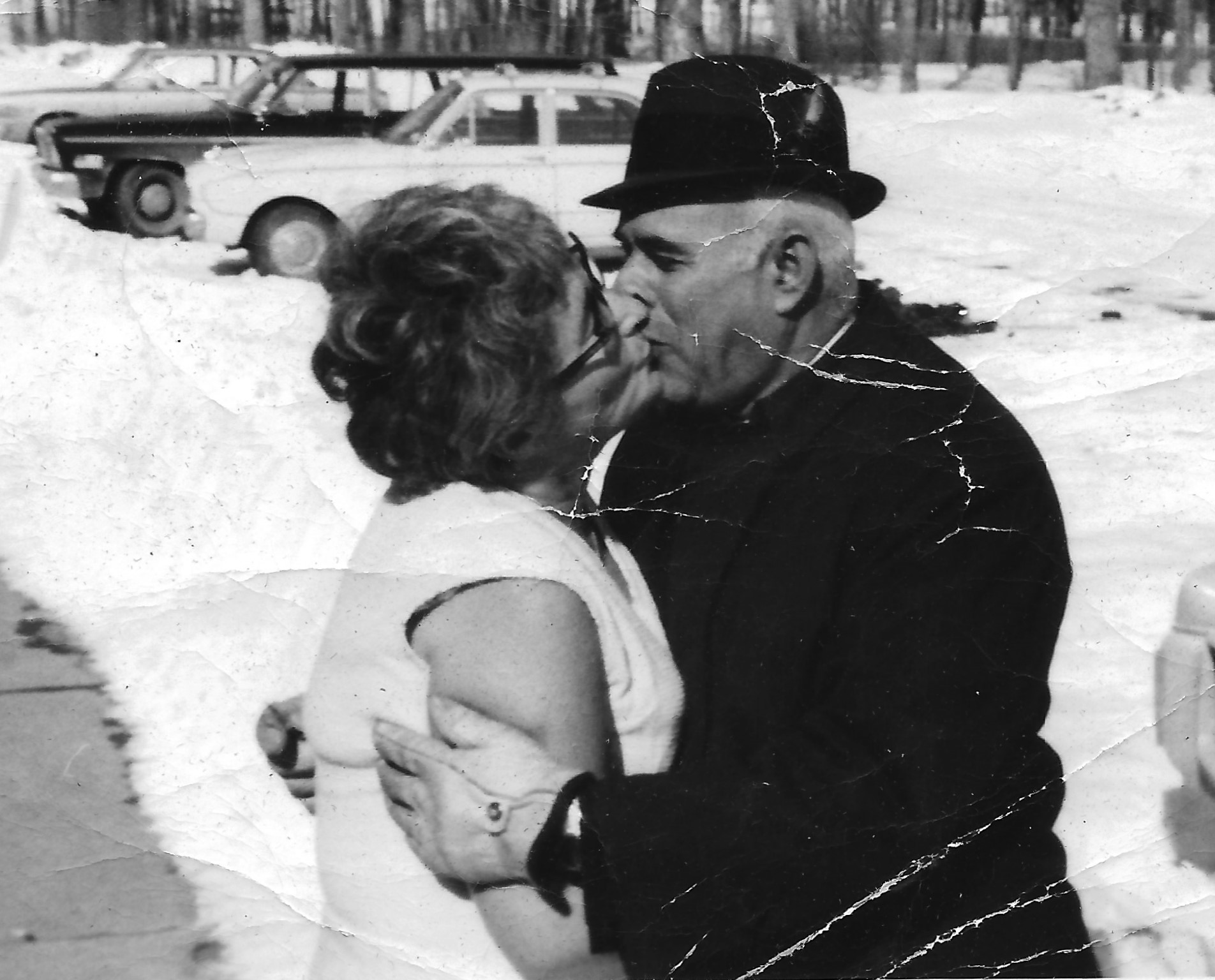
My grandparents, Rose and Ed Bass, zikhronam livrakhah

And we should remember that, as much as we recall of those who are no longer with us, there was ever so much more about them than we could possibly ever have known. All those many, many details encoded into who they were; all of the small-print details which made them special to others and to all those who knew them.

In broad strokes, we all had parents, and people whom we have loved but are no longer with us. But it is the details of who they were which made them special and unique. And those are the things which we should recall at this time.

~

Rabbi Seth Adelson

(Originally delivered at Congregation Beth Shalom, Pittsburgh, PA, morning of Shemini Atzeret, 10/17/2022.)

Categories
Sermons

On Being a Patriotic Jewish American – Mattot / Mas’ei 5782

Judy and I were at the Jersey Shore for a few days this week. The kids are safely ensconced at Camp Ramah in Canada, so we have had some time to ourselves, which is nice, but of course it reminds us of how much we love and appreciate and miss our children! 

One evening, we had a very patriotic experience. I find that as I get older, these things are much more moving than they were when I was younger. Nowadays, I tear up when veterans are honored for their service to our country, or at any ceremony for those who “paid the ultimate price” to defend our freedom. I have performed many funerals, but generally the only moment I lose control of my own emotions is when, at the funeral of a veteran of the armed forces, the honor guard removes the flag from the casket, folds it, and presents it to a member of the family. 

So we had taken a bike ride late in the afternoon to Sunset Beach, a lovely point with a nice view to the west of Delaware Bay. Unbeknownst to us, the tradition at Sunset Beach in the summer months is that, every day, they fly a different American flag, which had been draped on the casket of an armed-forces veteran during his/her funeral. As the day draws to a close, they lower the flag. So we stuck around for the ceremony.

Lowering the flag at Sunset Beach, NJ

When the time came, we sang “God Bless America,” and “The Star-Spangled Banner,” and then as “Taps” was played, the flag was lowered and folded, and returned to the family of the deceased veteran.

And, sure enough, the tears came. 

This does not happen to me on Independence Day, or on Memorial Day, or when we sing the National Anthem before a ball game, although a room full of Jews singing Hatikvah always gets me right here. But I think that ceremonies that are deeply personal, that tell one person’s story of dedication and service, are in some ways much more powerful than the general, national stories and commemorations.

And yet, the idea of peoplehood is extraordinarily important to me. I am proud, as I know you are as well, to be a member of the Jewish people; I am strongly connected to our history and traditions, and of course to other Jews, even those with whom I disagree deeply about how we interpret our text and our rituals. 

And of course, the vast majority of Jews throughout history have lived under non-Jewish rule. We have been mobile people, often against our will, often fleeing persecution, for thousands of years. A week from tonight we will observe Tish’ah BeAv, on which we commemorate oppression and destruction at the hands of ancient, medieval, and modern empires. And the Torah foreshadows this mobile history in Parashat Mas’ei, from which we read this morning. “Elleh mas’ei benei Yisrael,” it begins. “These are journeys of the Israelites, who started out from the land of Egypt, troop by troop, in the charge of Moses and Aaron.” (Bemidbar / Numbers 33:1). In fact, the book of Bemidbar begins by counting the people, and concludes with recounting the journey; the suggestion is that our peoplehood and our journeys are deeply intertwined. Our ability to journey is predicated upon our peoplehood.

And our ability to live among and subject to others who are not Jews is also made possible by our connection to one another. How did we survive 2,000 years of dispersion and exile? By sticking together. By reading and re-reading and re-interpreting our holy, ancient texts. By maintaining our traditions, distinct from the majority culture around us.

And yet, I am also a proud American, in many ways fully integrated into our society, celebrating American values and lamenting American woes. I am grateful to this nation, which provided a haven to my great-grandparents, which does not restrict our ability to practice freely our customs and traditions, which guarantees me many rights which my ancestors did not have.

The challenges of living as a distinct people and in the context of a wider, non-Jewish nation were well-known to the rabbis of the Talmud. They were, after all, living under Roman rule in ancient Palestine as the Mishnah was written and compiled (1st c. CE), and the Babylonian Gemara was completed under Persian rule in the yeshivot of Babylon (modern-day Iraq). Talmudic statements about the relationship between the Jews and the non-Jewish leadership of their jurisdiction are mixed. Consider, for example, conflicting statements in Pirqei Avot:

Avot 3:2

רַבִּי חֲנִינָא סְגַן הַכֹּהֲנִים אוֹמֵר, הֱוֵי מִתְפַּלֵּל בִּשְׁלוֹמָהּ שֶׁל מַלְכוּת, שֶׁאִלְמָלֵא מוֹרָאָהּ, אִישׁ אֶת רֵעֵהוּ חַיִּים בְּלָעוֹ

Rabbi Ḥanina, the vice-high priest said: pray for the welfare of the government, for were it not for the fear it inspires, every man would swallow his neighbor alive.

Avot 2:3

הֱווּ זְהִירִין בָּרָשׁוּת, שֶׁאֵין מְקָרְבִין לוֹ לָאָדָם אֶלָּא לְצֹרֶךְ עַצְמָן. נִרְאִין כְּאוֹהֲבִין בִּשְׁעַת הֲנָאָתָן, וְאֵין עוֹמְדִין לוֹ לָאָדָם בִּשְׁעַת דָּחְקוֹ

Be careful [in your dealings] with the ruling authorities for they do not befriend a person except for their own needs; they seem like friends when it is to their own interest, but they do not stand by a man in the hour of his distress.

Not exactly a comforting vision of government, right? There is a strong sense of suspicion of the non-Jewish authorities in rabbinic literature, perhaps largely because the Romans had destroyed the Temple and forbidden Jews from living in Jerusalem, but also because the rabbis of this period knew that in order to keep Judaism alive, they would have to prevent the Jews from pursuing the practices of the non-Jews around them. And so the rabbis inveighed against idolatry, of course, but also the bathhouses and the circuses and the other aspects of Greco-Roman culture. They forbid the consumption of foods and wine produced by non-Jews, because sharing these things would lead to fraternization, which would lead to intermarriage.

Perhaps the best-known and most essential statement of the relationship of Judaism and Jewish law to the non-Jewish authorities is the principle, cited four times in the Talmud, of dina demalkuta dina, or “the law of the land is the law.” The idea is that, even though Jews are subject to Jewish law, the non-Jewish law of the land applies in some cases as an extension of halakhah. So if the government requires you to pay taxes, for example, that would be effectively sanctioned by Jewish law as well.

And it makes a certain amount of sense. Had our ancestors not observed the laws of the lands in which they lived, they would surely not have been welcomed (not that they were honestly welcome in many places in which they had lived, of course, but all the more so). We have always had to see ourselves, at least minimally, and often uncomfortably, as subject to the laws and customs around us, even as we practice our own set of laws and customs. And that implies not only the innocuous things like getting a marriage license, for example, but also the more serious things, like serving your country in the armed forces and potentially giving your life in doing so.

One of the people at the flag ceremony in New Jersey was wearing a hat with a political statement on it with which I find myself severely at odds. He was standing with the family of the deceased veteran whose flag was being lowered, so I presume he was a relative. I found myself singing the National Anthem along with him, hands on our hearts, and respectfully observing together as the flag was folded. I am grateful that this man and I each have the ability to believe freely, to express our opinions freely, to practice our religion freely, and to vote freely, even though I am fairly certain that we do not see eye-to-eye on too many things. And I am, of course, deeply concerned that our tendency today to revile one another across the political aisle might eventually lead to curtailing those freedoms.

Which of course brings me to the final Jewish principle which we should consider in our context as Jewish Americans, and that is derekh eretz.

Derekh eretz, which has often been translated as, “respect,” is actually a wide-ranging term in rabbinic literature that might be better defined as, “the way things are done,” although literally, of course, it means, “the way of the land.” That is, derekh eretz is a set of societal norms that are connected to the land which we all share, and not limited to a specific sub-culture or ethnicity or religion. We are connected to the others around us, who may not share our Torah or our language or holidays or rituals, with some basic elements of human decency. 

“This land is your land / this land is my land,” sang Woody Guthrie*. We share the land through derekh eretz, and the way that we keep the land for us, for all Americans, is that we treat each other with respect and dignity and equality. We learn that from our tradition, and I hope that we can continue to spread that word, so that all might hear it.

Woody Guthrie

Although our journeys as a Jewish people will likely never be complete, we continue to, in some sense, be a part of the land wherever we reside. I hope that we all remember that during those moving, patriotic moments, whether personal or national.

~

Rabbi Seth Adelson

(Originally delivered at Congregation Beth Shalom, Pittsburgh, PA, Shabbat morning, 7/30/22.)

* I read online (FWIW) that Guthrie wrote this song, arguably his best-known, in reaction to Irving Berlin’s “God Bless America.”

Categories
Sermons

#ComeBacktoShul – Vayiqra 5782

I was in church last Sunday afternoon. Admittedly, it was the first time I’d been to a church service in a while. 

I participated in an interfaith prayer gathering in support of the people of Ukraine at St. Paul’s Cathedral, presided over by Bishop Zubik of the Pittsburgh Catholic Diocese. In attendance were people from across the religious spectrum of the region, including Muslim, Hindu, Jewish, and Christian spiritual leaders, as well as over 500 attendees. While some of the overtly Christian language was uncomfortable to me, the overarching message was a resonant one: we stand with the Ukrainian people. In addition to words of prayer and remarks by some of the clergy participants, including a very moving personal story from Father Ihor Hohosha of St. George Ukrainian Catholic Church, the service was occasionally punctuated by people calling out, “Slava Ukraini!” “Glory to Ukraine!”

It was inspiring to see so many people together in one place – the first indoor gathering of that size that I have attended in two whole years, and all the more so to unite across theological lines in support of a cause.

One might criticize such a gathering by saying, “OK, that’s great. But what the Ukrainians need is actual, material support – arms, military personnel, humanitarian aid, and so forth. What good does having an interfaith prayer service do?”

Actually, ladies and gentlemen, prayer accomplishes a lot. And that’s why we are about to launch Beth Shalom’s #ComeBacktoShul campaign. I’ll come back to that in a few minutes.

What does tefillah / Jewish prayer accomplish? And why engage in it?

Here are the major communal and individual benefits:

  1. Tefillah / prayer brings us physically together. As you know, you have to have a minyan, a quorum of 10 people for it to be a complete service. That means you have to show up, something which is hard enough today even without a worldwide pandemic. And, as we have all learned in abundance over the past two years, being in the same room with other people is much better than seeing your fellow participants on your screen.
  2. Tefillah makes us feel like a community. אל תפרוש מן הציבור, “Do not separate yourself from the community,” says Pirqei Avot. When we have at least 10 people together in a room, we feel interconnected. We understand that we are parts of a greater whole. We build a qehillah qedoshah, a congregation founded in holiness.
  3. Prayer sensitizes us to the needs of the other. If you are doing it right, engaging in tefillah reminds you that, in this solitary moment of ritual, we are connected to God, to each other, to our ancient tradition. It reminds us that connection requires being open to and aware of the people around us. There is a custom that many have of giving tzedaqah during the weekday morning service, because that is a moment in which we are most sensitized to the needy around us. (We cannot pass the tzedaqah box on Shabbat, because handling money is forbidden on Shabbat; nonetheless, even on Shabbat, tefillah should lead us to see the Divine spark in everybody.)

    One of the first things that we say as part of the morning service is from Rabbi Isaac Luria, the 16th-century kabbalist (you can find this on p. 102 in Lev Shalem):

הריני מקבל עלי מצות הבורא: ואהבת לרעך כמוך

I hereby accept the obligation of fulfilling the Creator’s mitzvah: Love your neighbor as yourself. 

We cannot even begin to daven without first acknowledging that we are in relationship with the people around us.

  1. Tefillah is meditation. Jews are never silent, even when they pray. Our meditation is not like Eastern meditation; our mantra is in Hebrew, and has many more words. But if you are truly mindful about your prayer, if you are truly in the moment and successfully let go of the other things that are tugging at your attention during services, our prayer tradition functions the same way. That too is very hard. But if you commit yourself to doing it regularly, you will achieve the same thing that you might achieve in other kinds of meditation. 
  2. Tefillah teaches Torah. The highest ideal in Jewish life is learning; the most essential mitzvah out of all 613 is engaging with words of Torah. If you are paying attention, prayer is study, and study is prayer; they reinforce and build on each other. 
  3. Tefillah means “self-judgment.” If you are doing it properly, prayer is an opportunity to check in with yourself, to evaluate where you are, what you have done right and wrong, and to see if you can tip the scales in the right direction. As with all of the items above, tefillah is a tool for improving yourself and improving your community and your world. Rabbi Zalman Schachter-Shalomi taught that, as we open our mouths in prayer, we should start by saying, “Dear God, whatever jealousies and resentments I might harbor in my heart, please remove this judgment from me.” Self-judgment.

Yes, for Jewish prayer there is a high bar. Even if you cannot read Hebrew, you still have to be able to manage transliteration. And you have to know when to respond, and when to be silent, when to stand/sit, when to bow, and so forth. And to understand the meaning of the words – to be able to glean something from them, that takes real work. I had many semesters of liturgy and liturgical Hebrew in Cantorial School, and I still encounter words or idioms I do not understand. 

But of course some of those things do not require a deep knowledge. The mere act of gathering as a community so that we can feel connected to one another is an outcome that we can all achieve, even if you don’t know the words, or when to bow.

And yet, every time we gather for a service, we raise the level of qedushah / holiness in ourselves, in our relationships, and in our community. And in doing so, all of the benefits I just mentioned help us work toward improving this world.

So even though Ukraine is very far away, our gathering to say words of prayer on behalf of the Ukrainian people will surely help, even though we might not see the results immediately. Every prayer helps a little bit.

Which brings us back to why we are here. Yes, we are here this morning to celebrate with a bar mitzvah as he is called to the Torah. Yes, we are here to be with each other, to have lunch together. 

But more pointedly, we are here to pray. And we do that every day at Beth Shalom, twice a day, morning and evening.

And we need you to come back to pray with us. In person.

Thank God, our rates of transmission are as low now as they were last summer. Thank God, many of us now are boosted. We hope that soon young children will be able to be vaccinated as well. I am grateful, and I am sure that you are too.

I have heard recently from multiple members of Beth Shalom, in different ways and using different language, that right now, after two years of pandemic, they feel disconnected from our community. Well, folks, there is just one solution to that: #ComeBacktoShul. 

We need you to be here. Physically. In-person. We need you to come back. We are waiting for you.

And we need you to bring a friend. Find the people whom you know have not returned, and invite them to come back as well. We will welcome everybody with group air hugs all around.

So here are a couple of practical considerations:

  1. We are still wearing masks in the building, at least for a couple of more weeks. We want to be sure that everybody feels safe. It’s not going to be so easy for us to simply start to gather again. It still makes me a bit nervous to be around unmasked people right now. But that is a temporary thing. We’ll get used to it again.
  2. We are serving food again, and I hope that we’ll be able to start up our weekday-morning breakfasts soon.
  3. We will continue to make our services available via Zoom. However, within the coming months we will no longer be, as we have been for the past two years, in the mode of “she’at hadeḥaq,” which is rabbi-speak for “an urgent situation.” As the urgency of the moment recedes, we are going to return to the mode where a minyan is constituted only by people in the room, and we will not count Zoom participants toward that minyan. That will be a big change for our weekday minyanim, so you might want to consider helping us out morning and evening, so that we can continue to make a quorum. I anticipate that (if everything continues moving the right direction) this change will be coming around Pesaḥ.

The prophet Isaiah tells us that the Jewish center of worship is an ecumenical space, one that is for everybody. Isaiah says (56:7):

 כִּ֣י בֵיתִ֔י בֵּית־תְּפִלָּ֥ה יִקָּרֵ֖א לְכָל־הָעַמִּֽים׃

For My House shall be called a house of prayer for all peoples.

Rabbi David Qimḥi, a late 12th/early 13th c. French commentator, also known by his acronym רד”ק (Radaq), said this about this verse:

וגם אל הנכרי כל שכן לשבים לדת ישראל:

And if Isaiah’s words applies to non-Jews, all the more so to those who are returning to Jewish worship.

This house is open to you, and to everybody. Now is the time to return. We need you to join us in prayer. The world needs you; the people of Ukraine need you. #ComeBacktoShul. 

~

Rabbi Seth Adelson

(Originally delivered at Congregation Beth Shalom, Shabbat morning, 3/12/2022.)

Categories
Sermons

You Be the [Bad] Judge – Vayḥi 5782

Do you feel that you are a good judge of people? Personality, potential effectiveness at work, ability to get along with other folks, and so forth?

I do not have much confidence in my own ability to judge people, and I have been thinking about this lately, mostly in the abstract, because of our search for an Assistant Rabbi.

I tend to see the good in everybody, and I assume the best of intentions even when evidence is clearly to the contrary. It might be because I grew up in a small town in rural New England, where we just sort of assumed that the people around us were all good and well-intentioned. Or maybe it’s just my personality – I am a naturally trusting person. Or perhaps I should thank my parents for raising me to be non-judgmental.

Fortunately, seeing the good in everybody, and a willingness to overlook deficiencies in others comports well with rabbinic wisdom on the subject. In Pirqei Avot, for example, a second-century CE collection of rabbinic wisdom, we read the following:

1:6

יְהוֹשֻׁעַ בֶּן פְּרַחְיָה אוֹמֵר, … הֱוֵי דָן אֶת כָּל הָאָדָם לְכַף זְכוּת

Yehoshua ben Peraḥiah taught:.. When you judge others, tip the balance in their favor.

2:5

הִלֵּל אוֹמֵר, … אַל תָּדִין אֶת חֲבֵרְךָ עַד שֶׁתַּגִּיעַ לִמְקוֹמוֹ

Hillel taught: … Do not judge another until you stand in her/his situation.

When we are assessing the character or choices of others, it is upon us to do so generously, to understand that we might only see a part of the story, that we might misinterpret their motivations, and that we should therefore put a finger on the scale in their favor. The rabbinic shorthand invoked by Pirqei Avot is “kaf zekhut” – literally the pan of a metaphorical scale containing one’s merits, as opposed to the one containing the liabilities, when those characteristics are being evaluated. It is our obligation to incline toward kaf zekhut where possible.

Humans are complicated; even those who are generally good-natured can make mistakes, or can be swayed by the forces and situations around them. We all have the potential to make the wrong choices, and sometimes we do, but those errors in judgment do not necessarily crowd out one’s overall good intentions.

And, of course one of the other features of rabbinic Judaism is that our tradition provides us avenues for self-improvement: teshuvah, of course, repentance, but also guides for living such as the framework of mitzvot and the ethical considerations that come with them. Our tradition, and our people, are naturally self-reflective, perhaps in a way that does not comport with contemporary society and the current rapid pace of life, and the reduction of human communications to two-dimensional, 280-character  pronouncements.

The complexity of humanity, it seems, is getting harder for us to wrap our brains around, when our only choices are to “like” or “not like” something. You have to be for or against, yes or no, vaccinated or unvaccinated, etc.

But we are not binary creatures, limited to ones and zeroes. And that is surely true of the Avot and Imahot, the patriarchs and matriarchs of the dysfunctional family featured in the book of Bereshit / Genesis. 

Parashat Vayḥi, which concluded that book this morning, includes the captivating scene just prior to Ya’aqov’s death, when he poetically addresses his 12 sons. Most are pleasant words, blessing-like descriptors, which bode well for the tribes they represent.

But given the idea of kaf zekhut, of judging others with a generous eye,  there is one passage that has long captured my attention, when Ya’aqov actually distances himself, on his deathbed, from Shim’on and Levi. (You may recall that I am descended from the tribe of Levi, and so Ya’aqov’s words sting with an ancient, generational pain.)

שִׁמְע֥וֹן וְלֵוִ֖י אַחִ֑ים כְּלֵ֥י חָמָ֖ס מְכֵרֹתֵיהֶֽם׃
בְּסֹדָם֙ אַל־תָּבֹ֣א נַפְשִׁ֔י בִּקְהָלָ֖ם אַל־תֵּחַ֣ד כְּבֹדִ֑י כִּ֤י בְאַפָּם֙ הָ֣רְגוּ אִ֔ישׁ וּבִרְצֹנָ֖ם עִקְּרוּ־שֽׁוֹר׃
אָר֤וּר אַפָּם֙ כִּ֣י עָ֔ז וְעֶבְרָתָ֖ם כִּ֣י קָשָׁ֑תָה אֲחַלְּקֵ֣ם בְּיַעֲקֹ֔ב וַאֲפִיצֵ֖ם בְּיִשְׂרָאֵֽל׃

Simeon and Levi are a pair;
Their weapons are tools of lawlessness.
Let not my person be included in their council,
Let not my being be counted in their assembly.
For when angry they slay men,
And when pleased they maim oxen.
Cursed be their anger so fierce,
And their wrath so relentless.
I will divide them in Jacob,
Scatter them in Israel.

This is, really, a shocking passage. These are Ya’aqov’s final words to two of his sons. Where is the kaf zekhut? What on Earth could Shim’on and Levi have done that warranted such harsh words from their father? 

Well, it ain’t pretty. They slaughtered the family of Hamor and his son Shekhem, members of the Hivite tribe (one of several Canaanite tribes).

In brief, Shekhem took Ya’aqov’s daughter Dinah* by force. When he subsequently asks for her hand in marriage, Ya’aqov and family insist that Hamor agrees to circumcise all of the adult males in their clan. On the third day following the circumcision, when the men are all in pain, in come Shim’on and Levi to kill them all, claiming that they are defending the honor of their sister. It is a brutal, shocking story on all fronts, and their actions are difficult to defend. (Bereshit chapter 34, Parashat Vayyishlaḥ)

Did you miss that one in Hebrew school? Yeah, I thought so. It doesn’t make for good family discussions in the car ride home.

Was Ya’aqov justified in cursing two of his sons? Was it the right thing to effectively estrange himself from them, saying, “Let not my being be counted in their assembly”? Could he not have allowed for the possibility that they have done teshuvah, that they have repented? To me this is quite jarring. It seems exactly the opposite of the principle of kaf zekhut. Could he not, on his deathbed, have found at least something positive to say?

So he must have had a reason for doing so, and also for promising that these two tribes (and particularly the Levites) would be spread among the other tribes. In later centuries, the tribe of Levi had no tribal land of their own, but as religious functionaries lived throughout the region, so at least this aspect of the backstory checks out.

The 15th-century Spanish commentator Yitzḥaq ben Moshe Arama (who, by the way, fled the Inquisition in 1492 and died two years later in Naples) teaches us that 

Ya’aqov here utters a truth which Aristotle has publicized in his Ethics. Anger and temper, though undesirable qualities, may sometimes prove useful in arousing heroism in people. Soldiers in battle are spurred to bravery and courage by anger and indignation… [Ya’aqov believed that] it was advisable that the qualities of anger and passion that had been concentrated in Shim’on and Levi should be dispersed among all the tribes of Israel… A little spread everywhere would prove useful, but if concentrated in one place, would be dangerous.

Arama’s theory is that too much anger is extreme, but a little bit is helpful. It seems as though Ya’aqov, in acknowledging the complexity of human personalities and emotion, is distancing himself from two of his sons as a protective measure. He wants their characteristic anger distributed throughout the Israelite nation, dilute enough to be safe, but nonetheless available when warranted.

How might we interpret this for us today?

Each of us reflect, in some sense, the range of personality that Ya’aqov sees in his sons. We are sometimes happy, sometimes angry, sometimes down, sometimes yearnful, and so forth. None of us are entirely angry, or entirely happy, or 100% of any particular aspect of humanity.

In assessing others with kaf zekhut, giving the benefit of the doubt, we should do our best to remember that sometimes we are ruled by our emotions, and hope that the Shim’ons and the Levis within us are kept at bay, and that we see instead the lion of Judah, the fair judgment of Dan, the richness of Asher, the natural beauty of Naftali.

So, whether you are inclined to see the good or the bad in people, it is worth remembering that all of us are blessed with a rich variety of traits, not easily separated from one another, or discerned at first glance. When we are judging others, we should keep this in mind while trying to view the entire picture. That is what Ya’aqov teaches us with his final words. 

~

Rabbi Seth Adelson

(Originally delivered at Congregation Beth Shalom, Pittsburgh, PA, Shabbat morning, 12/17/2021.)

* Despite her hardship, long-suffering Dinah does not get a deathbed blessing from her father. *sigh*

Categories
Sermons

Broad Justice – Ki Tissa / Shabbat Parah 5781

I have always thought of the molten calf episode in the middle of Parashat Ki Tissa as a kind of intruder in the middle of the description of the mishkan. We have, at the end of the book of Shemot / Exodus, a total of13 chapters, spread over five parashiyyot, of descriptions of the mishkan and all of its implements and principles and construction and initiation ceremony, all recounted in stunning, and some would say monotonous, detail. 

And then, right in the middle of that, there is this curious story about how the Israelites were anxious because Moshe had not yet come down from Mt. Sinai, and so they compel his brother Aharon, who will soon officially be the Kohen Gadol, the Big Kahuna, the High Priest, to fashion an idol of gold, a calf. And they bow down in a flagrant display of idolatry, and dance about and commit lewd acts.

And God and Moshe, meanwhile, when they discover all of this, are not happy indeed.

The people’s notion, as captured in their request to Aharon is, (Shemot / Exodus 32:1)

ק֣וּם ׀ עֲשֵׂה־לָ֣נוּ אֱ-לֹהִ֗ים אֲשֶׁ֤ר יֵֽלְכוּ֙ לְפָנֵ֔ינוּ

“Come, make us gods who shall go before us…”

They wanted not the one true God, of course, but gods, with a lower-case “g.” They want the thing that the Torah is primarily aligned against: idols. Empty gods. Falsehood.

And then, to demonstrate the fact that they have not yet received the message about idolatry, when the calf and the altar is complete, not only do the people worship the offending idol, but they then eat and drink in celebration, and arise “letzaheq” (v. 6), a word translated by JPS as “to dance,” although Rashi tells us that this word implies the three biggest transgressions of the Torah: idolatry of course (they have already checked that box), murder, and sexual immorality.

How could this be the right god? How could the Israelites have wanted these gods to go before them?

It is clear that this passage is inserted into the seemingly-endless mishkan construction detail not only because the brief story refreshes the narrative after it had been bogged down in mundane descriptions of materials and planks and clasps, but also because it serves to reinforce the essential message of the mishkan, which is this: We are finished with all of that idolatry business, and the nasty stuff that comes along with it.

So what did the Israelites want? Was it murder and orgies and bowing down to idols? Or was it something else? Did they merely latch onto the wrong thing, i.e. idolatry, because it’s all they knew from Egypt? Did they command Aharon to make them an idol because they were trying to fill a spiritual void? They clearly lacked the maturity as a people to connect the dots between the laws already given (i.e. the first commandment, “I am the Lord your God who brought you out of the land of Egypt,… you shall have no other gods before me.”) and their new paradigm.

I spent the earlier part of this week “at” the convention of the Rabbinical Assembly, the international professional organization of Conservative rabbis. Of course it was online, as most things seem to be these days, and as I am sure you can imagine, this has its advantages and disadvantages. I find that it is easier to learn new material and pick up tips from my fellow rabbis when I am away from the everyday bustle of work and home. One advantage to a Zoom convention, of course, is that you do not have to pick yourself up off the couch to attend a session. 

One of the items in which I participated was a so-called “Professional Learning Community,” a discussion with fellow rabbis that took place over three days for a total of six hours, on the subject of racial justice. In particular, our goal was to share wisdom and suggestions as to how we as individual rabbis could address this program in our own communities, but also to create some guidelines for the Rabbinical Assembly regarding how we might move forward as an organization with respect to these issues. 

Why must the Rabbinical Assembly and Conservative synagogues address issues of race? I’m so glad you asked!

In this season in particular, in which we are preparing for Pesah, also known as Hag haHerut, the celebration of our freedom, we are obligated to remember that nobody is truly free when some are enslaved.

That is precisely why we say in Aramaic, as an introduction to telling the Exodus story at the seder, “Kol dikhfin yeitei veyeikhul / Kol ditzrikh yeitei veyifsah.” Let all who are hungry, come and eat / Let all who are in need come and celebrate Pesah, this festival of freedom. We know that, as much as we have strived in America to create a system that treats all citizens equitably, the reality is that outcomes here with respect to education, health care, housing, and so forth are clearly uneven. We remind ourselves at the seder that it is our obligation to welcome our neighbor in: the one who is hungry, the one who is in need of freedom, the one who is disenfranchised.

One of the points of concern that our rabbinic task force faced is the question that some of our congregants ask, and that you may be thinking right now. “OK, Rabbi, I understand the need to help those who have been hurt by racial prejudice, but what about anti-Semitism? Shouldn’t you be talking about that instead? Shouldn’t we be focused on the challenge presented by those who are prejudiced against Jews?”

Many of us are concerned about anti-Semitic activity right now, and here in Pittsburgh we understand that too painfully. And when we see splashed across our screens a “Camp Auschwitz” t-shirt and detestable symbols of anti-Jewish hatred that have proliferated in recent years across the American landscape, we should absolutely be concerned about that. Perhaps you might think that a focus on racism means that we are neglecting the struggle against anti-Semitism. 

But this is not our God’s broad path of justice. This is the narrow path of idolatry. We cannot be only concerned for ourselves (see, for example, Pirqei Avot 1:14); if we are, we run the risk of being at the end of the litany famously delivered by Pastor Martin Niemoller, a quote that is engraved in our consciousness as a cautionary tale about the Shoah: “First they came for the socialists, and I did not speak out, for I was not a socialist.” Etc.

Our God is not so narrowly focused. Rather, God’s commitment to justice is broad.

It is essential for us to understand that holding aloft the anti-Semitism banner, without also addressing the other victims of hatred in our midst, that is something like idolatry. It obscures the fact that God wants us to treat all people equitably. Likewise, to address only issues of racism and implicit bias in our society without including the anti-Semitism in our midst, is also akin to idolatry.

Our God, the God of justice, is the one true God that leads us to work for the equitable treatment of all. Not just the Jews, mind you, nor only the people of any other particular group. Kol dikhfin yeitei veyeikhul. Let all who are hungry come and eat; the word “kol” / all is clear. All. 

The Talmud reminds us that the first Beit HaMiqdash / Temple in Jerusalem was destroyed due to idolatry, murder, and sexual immorality, the same things that the Israelites indulged in during Parashat Ki Tissa, when they built a calf of gold and bowed down to it. The Talmud goes on to tell us that the second Beit HaMiqdash was destroyed due to sin’at hinnam, baseless hatred, of which all the types of hatred of the other are included. That sugya (Talmudic passage) wants us all to know that sin’at hinnam is on a par with the other three major prohibitions of Jewish life. Just as we cannot tolerate idolatry in our midst, so too must we not tolerate hate of any kind. Sin’at hinnam has no boundaries.

To that end, I wanted to make you all aware of the fact that we at Beth Shalom have been working quietly on these issues in our community for some time. Yes, many of our members are already involved in racial justice work as individuals, but you should also know that we have a racial justice task force, which came together over the summer, a small but dedicated group which has been gathering material to share with the entire congregation. 

Among our goals is to begin the conversation about racial issues within our congregation, so that we might be better prepared to act when our neighbors need our help in closing the gap of racial injustice. We need to be ready, because just as they came to our side in our time of need, so too should we be there for them. That is what allies in the struggle against sin’at hinnam do. We need to be a part of that conversation.

We must continue to defend ourselves against the scourge of anti-Semitism, but we must also understand that this ancient hatred is one piece of a much larger continuum of hatred. In so doing, we will all be united in the broad struggle for justice and freedom that our God, the one true God, has commanded us to pursue.

~

Rabbi Seth Adelson

(Originally delivered at Congregation Beth Shalom, Pittsburgh, PA, Shabbat morning, 3/6/2021.)