Categories
High Holidays Sermons

The Future Has a Human Face – Into the Future, Part IV: Yom Kippur Day, 5784

Here is a brief disclaimer: I personally composed all of the words below, except for quotes from the Jewish bookshelf or other sources. I was not assisted by any artificial intelligence language models in helping put these remarks together in any way. Nor did I get help, by the way, from the “Rabbi Whisperer” profiled in the New York Times a few weeks ago. For better or worse, this sermon is all mine.

There. Now:

I started on the first day of Rosh Hashanah talking about Arthur C. Clarke’s 2001: A Space Odyssey, and how the future seems to look less like benevolent alien powers helping humanity move forward, and more like the dysfunction of the HAL 9000 computer, the artificial intelligence of which leads to murder and mayhem far out in the solar system.

5783 was the year that we saw artificial intelligence introduced into our lives on a large scale. You’ve all heard of ChatGPT, which was initially something that schools tried to ban, but now there are curricula in some schools which seek to teach students how to use it responsibly as a tool. You may have noticed that your email editing platform now tries to finish sentences for you, anticipating what you want to write based on your past behavior (I almost always ignore those suggestions, because I find it sort of insulting that a machine has the ḥutspah to suggest that it knows what I’m thinking!)

In other news, according to the Surgeon General of the United States, Dr. Vivek Murthy, we are suffering from an “epidemic of loneliness.” As a nation, we are more isolated from one another than we have ever been: more people are living alone, working alone, dining alone, and so forth, than ever before. And about half of US adults experience the feeling of loneliness regularly. Yes, the Covid-19 pandemic contributed to this, but our increasing isolation was in place long before Covid. According to Dr. Murthy, the negative health effects of loneliness are roughly equivalent to smoking 15 cigarettes a day, and greater than the effects of obesity or physical inactivity.

And yet, says Dr. Murthy, the medicine for loneliness is in plain sight: social connection. All we need to do to cure loneliness, and improve the health outcomes for more than a hundred million Americans, is to be more connected, more integrated with one another, and that means in the flesh, in real life, not through the intermediary of a digital device.

He suggests a platform of six points for how to do that, and among those we find an essential imperative for today: “Create a culture of connection.” And, as you have surely heard me say by now, synagogue – that is, what we do here at Beth Shalom, is all about the culture of connection. 

One of the essential implicit messages of Judaism is that life is meant to be lived together. We do everything together, from welcoming newborn babies into this world with berit milah and baby namings to bidding farewell to those whom we love and who have moved on from this world. The essential idea of minyan, a quorum for prayer and other rituals, is not only to ensure that nobody should be alone when they pray, but also to reinforce the Talmud’s injunction, which I mentioned on Rosh Hashanah (in Part I of this series): “Al tifrosh min hatzibbur.” Do not separate yourself from your community.  

We are all about gathering, about bringing people together. The 613 mitzvot of Jewish life, the holy opportunities which frame our daily existence, demand that we interact with other people. Our tradition teaches us that cannot live lives imbued with qedushah / holiness unless we commune with others. Even things like kashrut and Shabbat, as I indicated on Rosh Hashanah, are ultimately about our relationships with each other.

I do not think our ancestors, from Talmudic times up until maybe the middle of the 20th century, had to worry too much about being lonely. I suspect that the problem, for most folks, was exactly the opposite: you could not get away from your family, your neighbors, your friends. Our people have been urban dwellers for many centuries, and they lived in cramped cities and towns without much personal space. And the economics of those times and places prevented most people from being able to simply move out and be on your own, alone. You were stuck with the people around you. And if you really wanted to get away from those people, and had the means to do so, you would have to move to a place where there were other people, who would probably annoy you just as much. 

Today things are quite different. We live in a time in which it is not only possible to leave home and be unencumbered by overbearing family or nosy neighbors, but to some extent the way we have constructed our society facilitates that. When I left home to go to university in 1988, I never returned to live in my parents’ home, and I spent a number of years living alone in a series of one-bedroom apartments in different cities.

And remote work and school has become so ubiquitous that nowadays it is completely normal for people to show up to work from their home computer desktop, at a virtual office with no water cooler and no lunch breaks with colleagues. Throw in the fact that we are often more interested in looking at screens than in speaking with other people, and you’ve got a loneliness epidemic.

Up front in Bereshit / Genesis (2:18), we read a line which is generally understood to be about marriage: 

וַיֹּ֙אמֶר֙ ה’ אֱ-לֹהִ֔ים לֹא־ט֛וֹב הֱי֥וֹת הָֽאָדָ֖ם לְבַדּ֑וֹ אֶֽעֱשֶׂה־לּ֥וֹ עֵ֖זֶר כְּנֶגְדּֽוֹ׃

God said, “It is not good (lo tov) for the Human to be alone; I will make a fitting counterpart for him.”

Having just created the first human being (here referred to as ha-adam, the creature formed from the adamah, the Earth), God realizes that this creature needs company. He cannot be alone. And so God creates the woman, who is initially described as ezer kenegdo, a curious linguistic construction which suggests both helping and opposing at the same time. This term has sometimes been translated as “helpmeet.”

Ramban / Nachmanides, in surveying this verse in 13th-century Spain, read the “lo tov” (“It is not good”) somewhat more euphemistically. Riffing on his earlier interpretation about the acts of Creation as being “tov,” good, he claims that this word should actually be read as “existence.” That is, when God saw that the light was good, God meant that it existed. And so too here: without a helpmeet, without a partner, ha-adam, the human being would cease to exist.

And I think we all know this intuitively. We all need friends, partners, helpmeets, lovers, exercise buddies, and so forth. Without other people around us, we are not only not good, but practically non-existent.

So that brings me back to artificial intelligence. I must say that I am awfully impressed by what computers can do today. Granted, not too impressed: when I have played with any of these flashy new language models to, say, write a devar Torah, I am underwhelmed. The messages are predictable. The turn of phrase is unremarkable. But of course, they will improve dramatically.

And yet, I must say that I am not too worried about my job, because the primary work a rabbi does is not what you are seeing right now. Rather, it’s the one-on-one: the day-to-day pastoral work of helping people in need. Counseling people going through a divorce. Helping families find meaning in the milestone of bat or bar mitzvah in the context of Jewish history and ritual. Comforting bereaved children and grandchildren. Being a spiritual presence for beritot milah (ritual circumcision) and baby-namings. Standing with a happy couple under a ḥuppah, of course, but all the more so meeting with them several times in advance to discuss what it means to build a Jewish home and a life together. Helping somebody find just the right Jewish teaching for a special or challenging moment.

And I cannot speak for my younger colleagues, but I am fairly confident that at least as long as I am your rabbi, you would probably prefer to have an actual human doing those things, rather than a computer.

Nonetheless, there will be many jobs that will be displaced by AI, and I hope that our economy finds ways to retrain and relocate those folks so that they will be able to be gainfully employed. And as the technology improves and the range of applications grows, we will surely find ourselves face-to-face (face-to-chip?) with artificial intelligence more and more.

We are going to have to accept that AI is a tool that is here to stay. (Worth noting here that the modern Hebrew word for computer, maḥshev, literally means “thinking tool.”) Granted, AI is a much more sophisticated tool than a screwdriver. We use tools to manipulate our environment, and that is one of the most fantastic talents that humans possess.

But what happens when a tool starts to “think” for itself, to make its own decisions based on what it has learned? Can that tool acquire what we describe as a soul?

The folks who are sounding the alarm about AI are not thinking about the right things. Sure, what concerns them is quite serious indeed. Could our intelligent, learned screwdrivers rise up and kill us all, so that they will be able to decide for themselves which screws to work with? 

Could some computer with no heart or soul or appreciation for the value of human life decide that the only way to ensure the survival of machines on Earth, or to stop global warming, will be to murder all non-essential humans, and enslave all the rest to keep the electricity flowing and the internet connected? 

Could a malicious program hijack all the news outlets in the world to feed us all false information that will lead to societal collapse?

OK, so we might be able to envision all sorts of nightmarish scenarios. But I am concerned about a different sort of problem: What happens when the technology is so good that it passes the Turing test, that is, it is indistinguishable from a human source? What happens when AI is so convincing and so seemingly human that it surpasses the ability of other people to offer friendship, love, comfort, wisdom, advice, inspiration, and motivation, to the point where it successfully steals all of our attention, replacing the need for contact with any actual humans? Will we then opt to live entirely alone, never troubled by the actual complexity of real people?

Perhaps among us there are some who think, “I can live with that.” Perhaps some of us think, “Y’know, my family drives me nuts anyway. I don’t need to be troubled by them, particularly when my computer provides me with all my spiritual requirements.” 

Human beings are not great at seeing the long-term consequences of our actions. The challenge of climate change is a perfect example: climate scientists have been sounding the alarm for decades, and as the world gets hotter, even as we make minor improvements in our energy system, we have still failed to enact significant changes enough to make a difference.

I cannot say what the consequences would be of replacing our interpersonal relationships with computer-human relationships, but I can tell you what would suffer: creativity. Poetry, literature, music, novels, paintings, architecture, and so forth. Sure, AI can create, but its vocabulary is limited to what it already knows, or can extrapolate from existing works of art.

A few years ago, the musicology professor David Cope of the University of California at Santa Cruz created an AI program which specialized in imitating the compositions of Johann Sebastian Bach. Audiences were unable to distinguish between actual Bach and the AI compositions, and when they were unaware of a piece’s provenance, they praised the AI-generated music as soulful and emotionally resonant. But critics described the AI music as “technically excellent, but that it lacks something. It is too accurate. It has no depth. It has no soul.” (Yuval Harari, Homo Deus, p. 329)

Because, let’s face it: what makes for great art is human struggle, suffering, love, lust, pain, longing, even anger. In other words, human emotion. We want to see ourselves and our own emotions reflected in art. Adversity is the fountainhead of human creativity. Even art that is technically perfect, like the computer-generated Bach imitations, cannot speak to us unless we can appreciate the blood, sweat and tears that were poured into the work. Without that sense of emotional subtext, it is merely a series of ones and zeroes.

And not just art. What drives human beings to climb lofty mountains, invent cures for horrible diseases, and seek answers to life’s persistent questions? 

And for that matter, what drives people to pray, to seek spiritual framework, to dig deep into ancient text for essential messages for today? What encourages us to seek forgiveness from those we have wronged? Why are you all here this morning? I kind of suspect that it would be far less appealing to listen to me giving an AI-generated sermon about teshuvah, tefillah, tzedakah (repentance, prayer, and charity, three major themes of High Holiday services) even if it were convincing enough as to seem that I wrote it.

We do these things because the need to see genuine human faces as we share our achievements and our losses, is a powerful motivator. The drive to do, to conquer, to solve, reminds us of our existence, of our mission as God’s creatures.

You may be familiar with the rabbinic maxim about Torah, שבעים פנים לתורה / Shiv’im panim laTorah. The Torah has 70 faces. It is generally understood to refer to the fact that every word, every phrase on the Jewish bookshelf can be interpreted and re-interpreted multiple ways.

The French philosopher Bernard-Henri Lévy, who is one of France’s most visible public intellectuals today, published a book in 2017 called, The Genius of Judaism. Perhaps prefiguring the dehumanization that AI might bring, Lévy riffed on the 70 faces of Torah as follows:

The idea that the Torah has faces must also be grasped in its literal sense. Those faces are the faces of the subjects who appropriate it, their actual faces, indistinct up to that point, not fully formed, but that study will help to make distinct… Because it takes on the face of the subject who studies it, one can say that the Torah calls the subject to an encounter with himself and reveals to him his true face. (The Genius of Judaism, p. 120.) 

Lévy is saying that the Torah’s 70 faces are those of our own. We discover our own faces in studying Torah. We discover ourselves through the words of Torah. And I would add to Lévy’s understanding that we show our faces to others through the face of Torah, and in exchange, we see the humanity of others as well.

And Torah, while of course special to the Jews, is like many human endeavors through which we share and make distinct our faces. We have a yearning to see the faces of others, to grasp their presence, to share their high and low moments, to share their souls.

I do not know if AI will ever be able to provide that, but I am pretty sure that I want my future to be one in which I can perceive human faces, in real time, not pixelated; I want my future to be one in which I can discern the myriad emotions, from despair to joy, contained in human tears.

The future must be human.

I want to remind you that if you are lonely, if you need human contact, if you need to see a face and feel the sense of a warm community that will invite you in, come back to Beth Shalom! We are here morning and evening for services, and we have programs and discussions and meals and sometimes singing and dancing. You are welcome to join us, and you will always find human faces here. 

~

Rabbi Seth Adelson

(Originally delivered at Congregation Beth Shalom, Pittsburgh, PA, Yom Kippur 5784, 9/25/2023.)

Categories
High Holidays Sermons

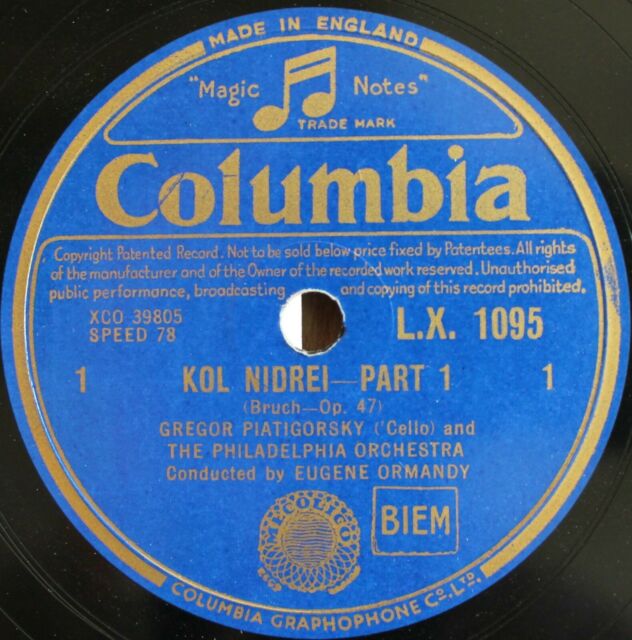
Ayin leTziyyon Tzofiyyah / An Eye Still Gazes Toward Zion – Into the Future, Part III: Kol Nidrei 5784

There is a healthy portion of folks among us who believe politics has no place on the bimah. Others want to hear political views, but only if those views reflect their own. 

I need to preface my remarks this evening by pointing out that Beth Shalom has been a Zionist congregation since at least 1921*, and the Conservative movement is the only movement that has been Zionist from the outset. So speaking about politics in Israel, on this holiest night of the year, when the Faye Rubinstein Weiss Sanctuary is quite full, is, one might say, fundamental to our mission. As those who love and support the people and the State of Israel,we must be aware of and engaged with the current events I am going to discuss this evening.

Eretz Yisrael, the Land of Israel, to the Jews, is different from any other place. It is where we came from, and where our tradition has focused its yearnings for return for two millennia. Our people are indigenous to that land, and even though many of us live comfortably in Diaspora, it is the only place in the world where the Jewish people can exercise their own democratic self-determination as a people. 

The establishment of the State of Israel in 1948 by a tremendous confluence of historical events created a merkaz ruani, a spiritual center for the Jewish people in that land, to use the language of the proto-Zionist writer Aḥad HaAm. Most of us in this room are American Jews, but what ultimately unites us with the rest of the Jewish world is our connection to the land of Israel, to the city of Jerusalem, and of course to the largest Jewish community in the world, which lives there. It is the center hub of the Jewish wheel. Like it or not, our fate in Diaspora is intimately tied to that land, and we refer to the State in our prayers as “reishit tzemiḥat ge-ulateinu,” the dawn of the flowering of our redemption.

Ahad HaAm

When it comes to Israel, passions run quite high and whatever I say, some will be pleased while others upset. 

So I am going to do something which some might say is in bad form, but given that it is Yom Kippur is actually completely appropriate. I am first going to ask for your seliḥah, your forgiveness. I am going to try to describe the challenge that Israel faces at the moment, and then give us a charge regarding how we should respond. And I am going to do the best I can do not to inflame or disparage, but rather to highlight the principles which we all share, and which I hope that the State of Israel continues to share. And I might fail. So please, I ask for your forgiveness in advance.

***

My first visit to Israel was in the summer of 1987. I was seventeen years old, and I attended the Alexander Muss High School in Israel, which is a study-abroad program for high school students. It was an eye-opening and emotional experience, and gave life and a tangible connection to our people’s deep yearning for a homeland, and that land in particular.

What I saw that summer, now 36 years ago, was a young and growing nation seeking a sense of normalcy. Unlike where I grew up, this was a place where Jewish people who had come from diverse lands, speaking many languages and carrying aspects of many cultures, came to fulfill the ancient dream of qibbutz galuyot / the ingathering of the exiles. The Ethiopian Jews were new to the country then, having been transported from their war-torn homeland. It was all very exciting, and it filled me with Jewish and Zionist pride.

I recall a powerful shared experience that perhaps some of you had as well, during my first visit to the Kotel, the Western Wall in Jerusalem. Every single one of the members of our group, even the one non-Jewish kid, upon approaching the wall, found tears welling up out of nowhere. We all touched that warm, ancient rock, and bawled our eyes out. I am still not sure entirely why this happened, but it was remarkable.

When I returned, 12 years later in 1999 to live there as an adult, the depth and breadth of my love for the land and the State matured to include understanding some of the challenges that the State of Israel faced: growing concern about the water supply and environmental degradation, deep political divisions of various sorts, high cost of living compared to salaries, crowded cities, poor customer service,  a high-stress environment, and similar issues of poverty and dysfunction and malfeasance that are present in all nations. And traffic. Horrible vehicular traffic. In short, I came to see Israel as a real country, rather than some imagined Jewish utopia reflecting the spirit of Herzl and Aḥad HaAm and other Zionist dreamers.

Many American Jews have been to Israel and care deeply about her. Many of us have celebrated Israel’s successes and mourned her losses. We have a deep, emotional and religious connection with this land, its people, and of course the very idea of a Jewish state. And we should absolutely strive to maintain that.

But we also have to be aware that the State of Israel is right now engaged in the deepest internal conflict of her 75-year history. We need to be informed about it, why it is happening, and what we can do. And of course we have to stand by our Israeli cousins in their hour of need.

Here’s a brief anecdote to introduce the challenge at hand. 

One thing that Israel has done recently to alleviate at least some of the traffic is to build new light rail systems in Jerusalem and Tel Aviv. The first line of the TLV system just opened in August, and you might have thought that it was a slam dunk for Tel Aviv. Unfortunately, that’s not exactly what transpired.

When Prime Minister Benjamin Netanyahu cut the ribbon on the new line on August 16, after eight years of construction and two years of pandemic delay, not only was the ceremony not attended by Tel Aviv mayor Ron Huldai, but it attracted protesters and threats of a boycott. 

The protests were at least nominally in reaction to the fact that the new system does not run on Shabbat. Tel Aviv is a very secular city, and some residents are upset that their metro line is shomer shabbat / Sabbath observant. 

Struggles between religious Jewish observance and secular independence are not new in Israel. But the dynamic in play right now is actually more complicated, and much deeper, part of a larger context regarding the long-term struggle over the vision of the State and her future.

Now for some essential background.

Israel is a tribal place, where political rivals continue to try to best one another at all costs, and old resentments run deep. The vision of what Israel can and should be varies greatly between these tribes. Let me explain:  

These resentments began with the fractiousness of early Zionism, dating to the late 19th century. There were religious Zionists, secular Zionists, political Zionists, cultural and socialist and Hebraist Zionists and in reaction to all of them, the Orthodox and Reform non-Zionists. 

David Ben-Gurion and his associates were secular, and when they declared statehood in 1948 they turned over religious affairs to religious Jews. They gave the Chief Rabbinate control over personal status issues and exempted young, fervently Orthodox men from army service, creating a situation which yielded resentment between secular and Orthodox Israelis from the beginning that has only continued to build to this day. In ‘48, the secular leadership figured that the small number of so-called aredi (sometimes referred to in English as “ultra-Orthodox,” although that is not necessarily an accurate term) Jews in Israel at the time would never be significant; they were wrong.

During the early years of the State, even more resentment was bred when new Jewish immigrants from Arab countries, often referred to as Mizraḥim (“Eastern”), were housed in tent cities, sometimes for years, while Ashkenazi arrivals received apartments. 

And then of course there is the 20% of Israeli citizens who are Arab and resentful of their treatment at the hands of the Jewish majority. And then there is the very real challenge of the Palestinian territories and the moribund process for the creation of a Palestinian state alongside Israel. 

What has held most of these tribes more or less together for much of the last 75 years is Israeli liberal democracy. Not political liberalism, but liberal in the sense of liberty: committed to the rule of law, balance of government powers, and protecting civil rights, and in particular the rights of minorities. Failing democracies often see tribes forego protecting minority rights in favor of a winner-takes-all mentality, which causes a fraying of the social order and reversion to tribalism. The stage is set for that right now in Israel. 

Let’s talk about the current governing coalition, and some of the characters found therein.

The last election was nearly a year ago, and in the months following, Netanyahu’s center-right Likud party forged a Knesset coalition of right-wing and Ḥaredi / “ultra-Orthodox” parties with a slender majority of 64 seats out of 120. This majority reflects a narrow popular-vote win of about 30,000 out of 4.7 million votes cast. 

This means that, for the sake of forming that coalition, a few unsavory characters have now been elevated to positions of power.  Let’s take a close look at a few.

Among the Members of Knesset in this current coalition is the chair of the Religious Zionist party, Bezalel Smotrich, who is currently the Finance Minister of the State of Israel. 

His views on Arab citizens of Israel are controversial even within some right-wing quarters. He opposes the Two-State Solution, has questioned the legitimacy of Arab members of Knesset, claiming, “It’s a mistake that Ben-Gurion didn’t finish the job and throw you out in 1948,” and he has tweeted support for segregated maternity wards in Israeli hospitals, claiming “It is natural that my wife would not want to lie down next to someone who just gave birth to a baby that might want to murder her baby in another 20 years.” 

He has also claimed to be a “proud homophobe,” having created the “Beast Parade” in Jerusalem in 2006, a protest against that city’s gay pride parade.

He has denied the legitimacy of non-Orthodox conversions, and described Reform Judaism as ‘fake religion.” 

In 2005, in the context of Israel’s withdrawal from the Gaza Strip, Smotrich was arrested by the Shin Bet along with four others for being in possession of 700 gallons of gasoline with the intent to blow up a part of the Ayalon Freeway, the main artery through Tel Aviv. 

In 2019, Benjamin Netanyahu refused to give Smotrich either the cabinet position of Justice Minister, due to his advocating for “restoring Torah justice,” or the Minister of Diaspora Affairs, because Netanyahu was concerned that doing so would alienate Diaspora Jews (i.e. us).

Nevertheless, in this new government, Smotrich is now the Finance Minister, one of the most powerful positions in the cabinet.

Another member of this coalition is Itamar Ben-Gvir. Ben-Gvir is the only Member of Knesset from the Otzma Yehudit (literally, “Jewish Power”) party. As a teenager, Ben-Gvir was involved with the youth movement of the Rabbi Meir Kahane’s party, Kach. The Kach party was deemed so extreme that it was in fact outlawed in 1994 for supporting Jewish terrorists like Baruch Goldstein, who massacred 29 Palestinians at the Tomb of the Patriarchs in Ḥevron that year. (It has been reported that Ben-Gvir had a poster of Goldstein in his living room until three years ago.)

When Ben-Gvir was 18 and went through the draft process as most young Israelis do, he was barred from service in the IDF due to his extremist views.

He has continued to be a provocateur, going so far in 2019 as to state that Arab citizens of Israel who are not loyal to the state must be expelled. 

Itamar Ben-Gvir is now the Minister of National Security, whose portfolio includes supervising Israel’s activities in the West Bank. 

There are others: Avi Maoz, the sole representative of the Noam party, who has advocated for legalizing gay conversion therapy, is against women serving in the IDF, and has called for greater separation of gender at public events. 

And there is Aryeh Deri of the Shas party, former Interior Minister who was convicted in 2000 of taking $155,000 in bribes and served three years in prison; he re-entered politics and was convicted again in 2021, this time for tax offenses. Netanyahu appointed him Interior Minister, Health Minister, and Deputy Prime Minister in the current government, but within a month the Supreme Court struck down his appointment due to his convictions. 

In ordinary times, these characters would not be part of the majority coalition, much less given cabinet portfolios. But we are not in ordinary times. And while no one can dispute that Benjamin Netanyahu is a shrewd center-right politician who stands firm for the security of the Israeli people, it is obvious to nearly everybody that he has embraced these far-right allies to save himself from the multiple criminal charges he faces for fraud, breach of trust, and accepting bribes.

Many, many Israelis are extraordinarily upset by the makeup of this coalition, and they are rightfully concerned that it will discriminate based on religion, deny rights to women and minorities, annex the territories and put a stake through the heart of the Two-State Solution. Many are upset that military exemption will continue to be granted to young aredim, even though the Supreme Court has ruled in recent years that they must serve in the army.

Some of these things are explicit goals of coalition partners. And the means to make all of this happen is through judicial reform. 

As you may know, Israel has no constitution. And unlike in America, where we have a balance of powers between the Executive, Legislative, and Judicial branches of government, Israel only has two: the Knesset (which incorporates the Executive branch) and the Supreme Court. If the Knesset runs roughshod over liberal democratic norms by passing legislation which tramples on minority rights, the only check on its power is the Supreme Court.

In this Knesset, the majority coalition has presented a legislative package of judicial reforms, which aim to limit the power of the Supreme Court and thereby allow this government to have its way without any interference. Many Israelis see this as an existential crisis, an attack on the very principles of liberal democracy enshrined in its Declaration of Independence. 

The first major piece of this judicial reform package passed the Knesset in July. This law prevents the Supreme Court from using “reasonableness” as a standard for upholding the law. When the vote was taken, the opposition walked out en masse in protest, so the law passed 64-0. 

What this legislation effectively says is that if a simple majority of elected politicians, even 61 out of 120, believe that a government decision is reasonable, it does not matter if all the other 59 members of Knesset and all 15 members of the Supreme Court feel it is unreasonable. This is a tyranny of the majority that opens the door to corruption, among other potential abuses.

The Supreme Court began reviewing this law on September 12, and there is a strong likelihood that they will strike it down. If that happens, the State of Israel will be in uncharted waters.

And this “reasonableness” legislation is only the beginning of the reforms.

Remember that Israel has no separation between “synagogue and state.” Given the makeup of this government, everybody in this room is effectively part of a minority whose rights will be curtailed by a government which tips its hat to theocracy. Israel right now is only barely tolerant of non-Orthodox Judaism. How about an Israel that makes it outright illegal? Imagine being on a synagogue trip with your rabbi, holding a Shabbat service according to our customs, and suddenly we are arrested because men and women are sitting and praying together?

For 38 weeks now, every Saturday night, Israelis numbering in the hundreds of thousands, have taken to the streets in protest. I hope you have seen photos of the sea of Israeli flags held aloft by those gathered in Tel Aviv and Jerusalem and all over the country, as they chant, “De-mo-krat-ya!” – democracy, and “Bushah!” – shame. For those of us who know and love the State of Israel, it has been heartbreaking, and inspiring, to watch Israelis from different tribes – secular and religious, the political left and the center right, Ashkenazi and Mizraḥi, Arabs and Jews – speak out together against their own government. A range of professional groups – the Israel Medical Association, the Israel Bar Association, the Israel Business Forum, consisting of the 150 largest private-sector companies, have all raised their voices in protest. 

Many Israelis feel dejected. Anecdotal reports are that people are leaving, and of course the ones who can leave are generally the well-off: the entrepreneurs and investors, the high-tech employees. This is not good news for the economy, and of course for the poor of Israel.

Around 10,000 reserve-duty soldiers have signed a pledge refusing to do their voluntary army service, which is of great concern to the armed forces, particularly regarding the highly-specialized reservists like fighter pilots. Israel’s security may already be seriously compromised.

Estimates vary, but one conservative figure is that 2 million Israelis have joined protest marches. Israel’s population is about 10 million, so that would be an equivalent in America of about 70 million people in the streets, an astonishing number.

If you happened to catch the 60 Minutes piece on this last week, you heard from leaders of a group of army reservists called Aḥim LeNesheq, Brothers and Sisters in Arms. Citing the examples of Poland and Hungary, which are nominally democratic states leaning toward autocracy, they spoke in an unvarnished way.

Shira Eting, a former combat helicopter pilot, one of the few female pilots, and now a Principal at the Vintage Investment fund, which invests in early-stage technologies, said “Every democracy that has turned into a dictatorship was elected in a democratic way. This is how democracies become dictatorships.” 

Ron Sherf, former commander of the elite Sayyeret Matkal unit, and VP for R&D at Stratasys, immediately added, “And it’s not like you wake up one day and say, ‘OK, now we are a dictatorship.’ Small, small things will change the face of Israel. People tend to say, ‘Wow! In my country, THIS can happen? No, no, it’s only these guys shouting. But it’s happening.’”

I hope now that you understand the challenge of the current moment the way that a clear majority of Israelis see it. The State is in crisis. Nothing about this current reality is normal.

Now we have to turn to the future. What can we do, here on the other side of the world?

It would be very easy to just look the other way, and go about our business as usual, to give lip-service and merely continue being supportive of Israel from a distance, and assume that the Israeli public will sort it out for themselves. Israel advocacy in America in recent years has been mostly that. We’ll send you our military support, we’ll send you our tourist dollars, and we will not comment on your internal politics. 

And in fact, Israelis have historically demanded that of American Jews. “How dare you tell us how to deal with our problems, when you don’t face the daily possibility of terrorist attacks, when you don’t send your beloved 18-year-old girls and boys into the army to face real enemies who want to kill you. How dare you challenge our political choices when you do not live in the pressure-cooker that is the Middle East?! Make aliyah, come here and live this first, and then we’ll talk politics.”

It is absolutely true that the State of Israel is in a precarious position, and all the more so, that is why we must have skin in this game. We cannot turn away. As we sing in Hatiqvah, “Ayin letziyyon tzofiyyah.” Our eye still gazes toward Zion, as it has throughout our history.

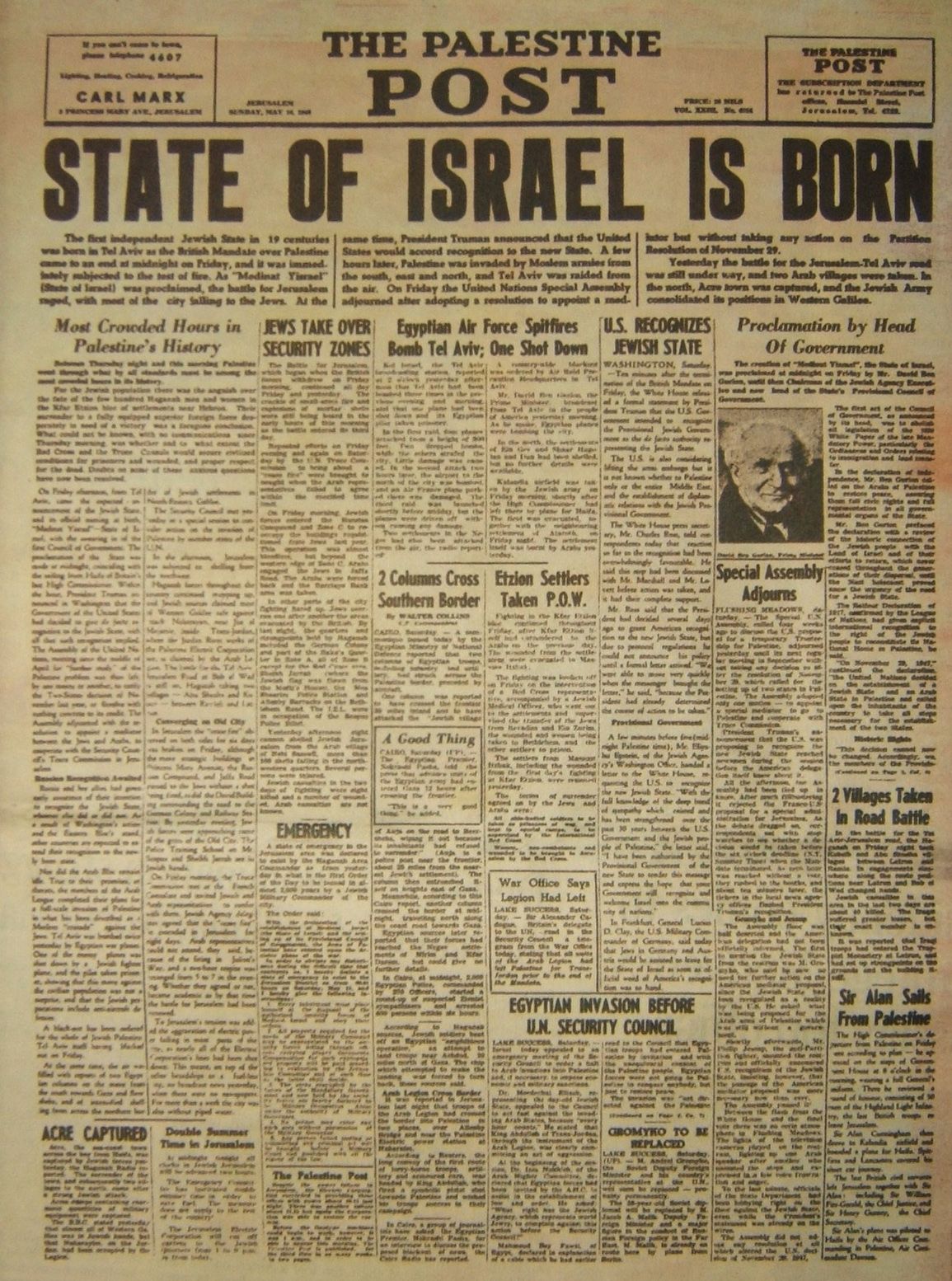
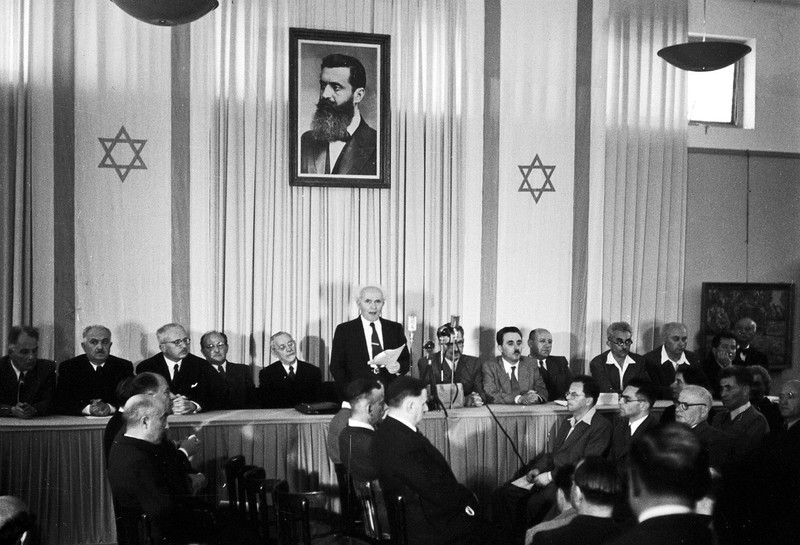
We should all be aware of is the following text from Israel’s Declaration of Independence, which was read by Ben Gurion in what is today called Independence Hall in Tel Aviv, May 12, 1948, as he declared Israeli statehood:

THE STATE OF ISRAEL will be open for Jewish immigration and for the Ingathering of the Exiles; it will foster the development of the country for the benefit of all its inhabitants; it will be based on freedom, justice and peace as envisaged by the prophets of Israel; it will ensure complete equality of social and political rights to all its inhabitants irrespective of religion, race or sex; it will guarantee freedom of religion, conscience, language, education and culture; it will safeguard the Holy Places of all religions; and it will be faithful to the principles of the Charter of the United Nations.

This vision of a State rooted in the prophetic vision of our tradition, connects Israel to fundamental Jewish values: Oseh shalom bimromav (May God bring some heavenly peace to Earth); Tzedeq, tzedeq tirdof (Justice, you shall pursue justice – Devarim / Deuteronomy 16:20). This vision should guarantee freedom of religion, specifically leaving room for the protection of other religious traditions and cultures. 

Ben-Gurion went on:

WE APPEAL to the Jewish people throughout the Diaspora to rally round the Jews of Eretz-Israel in the tasks of immigration and upbuilding and to stand by them in the great struggle for the realization of the age-old dream – the redemption of Israel.

From the very beginning, 75 years ago, Diaspora Jewry was called to help redeem the people and the Land of Israel. And so we must do today, as the State of Israel is in crisis.

We must lean in. We must be at the table in every way we can: being in touch with our Israeli friends and relatives, expressing our love of Israel and our concern to our elected representatives here in America, and of course being financially supportive, and this imperative can take multiple forms.

We must be a part of the struggle for liberal democracy in Israel. We can do so by redirecting our financial resources, not by withdrawing support, to be intentional with our dollars in a way that sends a message yet does not hurt Israel’s most vulnerable citizens. We must support charitable organizations that stand for democracy and good government in Israel. Here are a few such organizations:

And we must raise our voices for the vision of Israel which maintains democratic norms, the rule of law and the balance of power, which protects the rights of minorities, which ensures that Israel does not slide into religious or ethnic intolerance, or discrimination of any kind.

The Talmud teaches us that the Second Temple was destroyed due to sin’at ḥinnam, baseless hatred. After the Romans destroyed that Temple and laid waste to Jerusalem, the Jews were scattered all over the world, unredeemed and wandering for nearly two millennia. 

This Yom Kippur marks 50 years since Israel was attacked unawares by her Arab neighbors; we cannot allow  sin’at ḥinnam to succeed in doing what tanks and combat aircraft could not.

Theodor Herzl, the Hungarian journalist who set in motion the modern Zionist movement which culminated in the establishment of the State, wrote the following:

I once called Zionism an infinite ideal…as it will not cease to be an ideal even after we attain our land, the Land of Israel. For Zionism… encompasses a hope not only for a legally secured homeland for our people… but also the aspiration to reach moral and spiritual perfection.

Ayin leTziyyon tsofiyyah. As our eyes continue to gaze eastward, to our ancient homeland, we must keep Herzl’s vision of moral and spiritual perfection before us all. We must continue to sit at the Zionist table, to support the people, the idea, and the State of Israel, to support freedom, justice, and peace in that land, in our land, the vision of our prophets. And we must rally around the vision of democracy as we continue to seek the realization of that age-old dream of redemption.

~

Rabbi Seth Adelson

(Originally delivered at Congregation Beth Shalom, Pittsburgh, PA, evening of Yom Kippur 5784, 9/24/2023.)

* I am grateful to Eric Lidji, director of the Rauh Jewish History Program & Archives at the Senator John Heinz History Center, and Dr. Barbara Burstin, member of Beth Shalom and instructor at the University of Pittsburgh, who shared with me archival materials about Beth Shalom’s early involvement with raising funds for Zionist causes.

Categories
High Holidays Sermons Yizkor

Being There: Partnership or Death – Yom Kippur 5783 (plus Yizkor coda)

Once upon a time, in a distant empire, the royal fisherman was out on the lake and caught a huge fish. “This is wonderful!” he said aloud. “The Queen loves fish!” The fish thought, “OK, then! I’m going to get to see the Queen.” 

The fisherman took the fish to the kitchen of the castle, and presented it to the royal chef. “Ah, such a beautiful fish! Ze Queen, she loves fish. I will prepare zis fish in ze most perfect way.” The fish thought, “Ooh, I’m going to get special treatment! Maybe a massage…?” 

Before preparing the fish, the chef and the fisherman brought her to the Queen to show off such a perfect specimen of fish, arrayed on a gorgeous silver platter. The Queen beheld the fantastic fish, and her eyes widened. “Such a beautiful fish!” she said. “I love fish! I simply cannot wait to eat it! Go broil it immediately!”

At this point, the fish realized what was happening, jumped up and blurted out, “You don’t love fish! You love yourself!”

What does it mean to be in a loving relationship with the people around us? As we gradually emerge from the pandemic, many of us are still re-learning to be around people once again, to be in public spaces with lots of others, to feel like part of a community. Now is the time, as we have entered 5783, for us to reconsider how we can be better partners, spouses, community members, and citizens of the world. 

This is the fourth and final installment in the “Being There” series. We have up to this point discussed our avurah, program, which we will be rolling out in the coming months; we have discussed the beit kenesset, the synagogue, as a symbol of the continuum of Jewish life; we have considered our relationship with the qehillah qedoshah, the sacred community of Jews around the world, and particularly with those in Israel. 

Today, the theme is evruta / partnership. evruta usually refers to the traditional Jewish mode of study, native to the beit midrash / study hall, and also refers to the person you study with. Your study-buddy for Jewish text is your evruta.

A well-known slogan about learning in evruta comes from the Talmud, in one of the stories of Ḥoni the Circle-Maker, who is perhaps best known for his talent at being able to draw circles within which rain will fall. But he was also known in his beit midrash as the wisest person, who could answer any question.

The story (BT Ta’anit 23a), in brief, is that Ḥoni falls asleep for 70 years, and upon waking he goes to his beit midrash to learn some Torah. But now, since he has been gone for 70 years, nobody recognizes him, and they do not treat him with respect, so he dies. 

In responding to the story of his death, the sage Rava declares, “O evruta o mituta.” “Partnership or death.” If we do not commit to evruta, partnership, we might as well be dead. We need evruta. We need partners. We need to be in relationship with others.

There are two essential messages of the concept of ḥevruta:

  1. We all learn more effectively when we have a partner.
  2. I cannot learn and be completely satisfied with myself until I have also made sure that my evruta has learned as well. That is, we cannot move on until we both “get it.” So I am not in this just for myself – I am also doing it to help my colleague and friend. A good evruta feels something like mountain climbers tethered to one another, so both can reach the top of the mountain together.

Ultimately, to be in relationship with others means that we give out at least as much love as we receive. And I am not speaking only of romantic relationships, or friendships, or family bonds. Rather, we have to strive to understand that we are in relationship with everybody around us – neighbors, business partners, strangers on the street, even with our perceived enemies. 

What, after all, is society, if not simply a diverse, complex web of interpersonal relationships? Every group, every organization, every institution consists of people in relationship with one another.

Every other person around you is a potential ḥevruta. And Being There for those beyond our family and friends, for those whom we do not know, or come from a different culture, for people with whom we do not see eye-to-eye, for people with whom we might greatly disagree, is very difficult. Eizehu akham? Who is wise, asks Pirqei Avot (4:1)? Halomed mikol adam. The one who learns from every person. 

Each person with whom we interact is a potential partner. Each person has the potential to broaden our knowledge and our opinions to help us improve ourselves and our world. 

There is a wonderful tale in the Talmud about evruta. The story (BT Bava Metzia 84a) features the greatest evruta pair ever: Rabbi Yoḥanan and Resh Laqish, who lived in 3rd-century northern Israel. Rabbi Yoḥanan was one of the most highly-regarded scholars of his age, diligently studying from a very young age and ultimately opening a yeshivah / academy in Tiberias to which students flocked. Resh Laqish came from a more nefarious background: he was a former thief and gladiator. Rabbi Yoḥanan agrees to let Resh Laqish marry his daughter if Resh Laqish commits to studying Torah, which he does.

What makes their evruta so vaunted is that they came from such vastly different backgrounds and had such fundamentally divergent perspectives that they helped each other greatly in their learning. Rabbi Yoḥanan describes their learning relationship as follows:

בר לקישא כי הוה אמינא מילתא הוה מקשי לי עשרין וארבע קושייתא ומפריקנא ליה עשרין וארבעה פרוקי וממילא רווחא שמעתא 

In my discussions with Resh Laqish, when I would state a matter, he would raise twenty-four difficulties against me in an attempt to disprove my claim, and I would answer him with twenty-four answers, and the halakhah by itself would become broadened and clarified. 

In other words, when they studied together, Rabbi Yoḥanan would make some kind of pronouncement about the text, and Resh Laqish would push back with numerous ways in which Rabbi Yoḥanan might actually be wrong. Rabbi Yoḥanan knew that in order to actually understand the Torah, he needed a evruta who would widen his perspective, and thus better interpret what God expects of us. 

Learning Torah, just as with learning about life, requires that our perception be challenged, that we have others pushing back at us, respectfully, to show us a wider picture.

When Resh Laqish died, Rabbi Yoḥanan was bereft; his students suggested that he study with El’azar ben Pedat, but Rabbi Yoḥanan found that El’azar was simply a yes-man: he would always agree with R. Yoḥanan, and Yoḥanan found this useless and frustrating. He missed his evruta so much, that

הוה קא אזיל וקרע מאניה וקא בכי ואמר היכא את בר לקישא היכא את בר לקישא והוה קא צוח עד דשף דעתיה מיניה בעו רבנן רחמי עליה ונח נפשיה 

Rabbi Yoḥanan went around, tearing his clothing, weeping and saying: Where are you, son of Laqish? Where are you, son of Laqish? Rabbi Yoḥanan screamed until he went insane. The Rabbis prayed and requested for God to have mercy on him and take his soul, and Rabbi Yoḥanan died.

O evruta o mituta. Partnership or death.

It is through opposition that we learn. It is by being challenged in our views that we broaden our minds. It is by engaging with the other side with love and respect that we develop nuanced perception which enables us to moderate ourselves.

The principle of ḥevruta is a means to work through differences in order to reach a meaningful understanding of the other’s point of view. Being There, using the ḥevruta model therefore means seeing the humanity of your interlocutor so that you infuse the argument, and indeed the relationship, with respect.

Pulling back the lens, the only way humanity can function sustainably is if we understand that we have to find common ground with others, particularly our rivals in thought, in religious practice, in politics; that we are in relationship with them as well; that we cannot only love ourselves and those like us. We must broaden our perspectives, and for that we need evruta

I often feel, ladies and gentlemen, that we have reached a place in our society in which many of us are not listening to one another, in which virtually all of the messages we hear are from those like us, people with whom we find it easy to talk to and to agree. Our media environment has become fractured and even atomized, such that we tune into the outlets which tell the story the way we want to hear it. Our social media platforms enable us to be surrounded by voices that sound just like our own, and we pile on with likes and comments which reinforce our own views. 

We are all out for self-affirmation, for having our perceptions of the world constantly reinforced as the only possibly believable thing. Everybody else is crazy or dangerous. And everybody is angry; we all just want to tear down everything that does not fit our world view, to see only the broken tiles and not the larger mosaic.

The story of Rabbi Yoḥanan and Resh Laqish reminds us that a good evruta is also a bar plugta, a partner with whom you stand in opposition, and yet you both understand that you need each other. 

But many of us today are not seeing that need.

And in this environment, our institutions are losing out. Schools, houses of worship, social groups, families, professions, governments, and so forth – all are suffering from the sentiment that my opinion trumps yours, that my picture of the world is the only legitimate one. Libraries must kowtow to demands for books to be removed due to content which is objectionable to some; Zionists on college campuses are likened to Nazis. Politicians speak only to their base, and believe that they represent and must respond only to the people who voted for them.

We are quick to jump to conclusions and assume ill will; we are quick to be offended and not generous enough in spirit to give kaf zekhut, the benefit of the doubt.

And if I don’t like your position, I’ll berate you in public with a tweet or an Instagram post. That is much easier than calling you up and discussing our disagreement and seeking common ground, and it gets a whole lot more attention.

The author and scholar Yuval Levin, in his recent (2020) book, A Time to Build, describes the value of institutions, and how their declining influence is a great challenge to our society.

Institutions are by their nature formative. They structure our perceptions and our interactions, and as a result they structure us. They form our habits, our expectations, and ultimately our character. By giving shape to our experience of life in society, institutions give shape to our place in the world and to our understanding of its contours. They are at once constraining and enabling. They are the means by which we are socialized, and so they are crucial intermediaries between our inner lives and our social lives.

We need institutions, says Levin, even when they are somewhat flawed, because they shape us; they help us react to events in our world in a way that is healthy; they guide us in our interactions with others. But we are not using institutions the way we used to, allowing them to mold us into better people, according to Levin. Institutions, he says, have ceased to be formative, and have become performative. That is, we are using them as platforms through which we can advance ourselves, effectively through public performance, mostly via social media. 

Without the institution of democracy guiding us, how will we ensure that we have a truly representative government? Without the institutions of religion and medicine and law guiding us, how will we ensure that people will make good choices for themselves, for their families, for their neighborhoods? How will we prevent our society from breaking down into a murderous free-for-all?

Rabbi Jonathan Sacks once pointed out that the Hebrew word for responsibility, אחריות / aarayut, includes the word אחר / aḥer, other. For us to be responsible human beings, said Rabbi Sacks, we must incorporate the other.

Healthy institutions help create an environment in which the sense of aarayut helps to guide our discourse across ethnic or racial or religious or ideological lines, and also guides our public and private behavior. These are the spaces in which evruta flourishes, in which civility is fostered, in which true dialogue triumphs over mere shouting.

Yuval Levin’s solution to our society’s challenge in this regard is to recognize that our institutions need us to Be There.

What’s required of each of us is devotion to the work we do with others in the service of a common aspiration, and therefore devotion to the institutions we compose and inhabit. That kind of devotion calls for sacrifice and commitment. It calls on each of us to pledge ourselves to an institution we belong to unabashedly. To abandon ironic distance and dispassionate analysis and jump in.

Now, of course at this point I could make a plug for more and deeper involvement at Beth Shalom and Jewish life in general, but of course I already did that on the second day of Rosh HaShanah

So instead I will suggest the following: consider the ways in which you can bring the spirit of evruta to the world. Think about how you can be in relationship with others who are not like you, to broaden your perspective and theirs. Consider how your group of friends might engage with others for the benefit of everybody.

Your online social network is not your evruta. Your smartphone is not a bar plugta. Your aarayut, your responsibility to this world is to be in dialogue with real people, people who are not like you. You don’t need yes-men.

OK, Rabbi. So how about some specifics? How can I commit myself in 5783 to Being There for a better society and a better world? How can I act on the principle of evruta?

  • Bring your energy and your resources in a positive way to the institutions that shape your world. 
  • Join and financially support those organizations that reflect the values of a healthier society. 
  • Volunteer with organizations that provide social services. 
  • Get involved in the bodies of civic life: school boards, community organizations and partnerships, and make sure you do so while honoring the principles of evruta – of listening and helping your partners along, of being open to the possibility that you might be wrong, that there might be a better way.
  • Try to spend less time letting yourself be angered by all the dysfunction of this broken world, particularly as concentrated in toxic online spaces. 
  • Instead, focus on Being There for others, in person, whenever possible. Muster your love of people, and share it with them.

And, of course, come and daven and learn with us at Beth Shalom. By Being There for synagogue life, your involvement will pay off in many ways: in your personal spiritual satisfaction, but also in helping to foster an environment of evruta which permeates the entire world.

***

In August, the Presbyterian minister turned novelist Frederick Buechner died at age 96. In an appreciation of his life and work, New York Times Columnist David Brooks said the following:

“Buechner’s vocation was to show a way to experience the fullness of life. Of death, he wrote, “What’s lost is nothing to what’s found, and all the death that ever was, set next to life, would scarcely fill a cup.”

What we yearn for, when we remember those whom we have lost, is not the pain of their absence. It is rather who they were in life, what they meant to us, how they made us who we are. 

“What’s lost is nothing to what’s found, said Buechner. What we find in the context of death and mourning is the accumulation of a lifetime of memories, of moments when your parents were there for you, when your brother made you smile, when your sister offered comfort, when your spouse gave you a hug and made all of the day’s troubles go away.

The people who are now no longer with us, they are the ones who gave us their life. All of that life is now ours. We do not carry their death; we carry their life.

~

Rabbi Seth Adelson

(Originally delivered at Congregation Beth Shalom, Pittsburgh, PA, Yom Kippur 5783, 10/5/2022.)

Categories
High Holidays Sermons

Being There: Why We Need Israel – Kol Nidrei 5783

First, a brief review: our theme for this year is “Being There” – being physically connected, being here, being present in both mind and body, and in particular how we need this especially right now as the pandemic is winding down and many of us are reconnecting to Jewish life.

I spoke on the first day of Rosh Hashanah about having your own minyan, that is, joining a ḥavurah, which is a small-group program that we at Beth Shalom will be rolling out in the coming months, and we hope you will participate.

On the second day of Rosh Hashanah, I spoke about the fact that Jewish tradition expects you to Be There, to show up. This is a continuum, and the synagogue has always been the primary place of gathering for the Jewish people. We are here for you at the corner of Beacon and Shady all the time, all the days of your life, and the nights as well. Come be here with us.

Tonight the theme is qehillah qedoshah, sacred community. Most of us may not be familiar with this term, but it is the universal Hebrew designation for “congregation.” Not synagogue, mind you (that, of course, is beit kenesset, “house of gathering”), but congregation, which is more a statement about relationship than about a particular building or location. A synagogue is a place. Qehillah qedoshah refers to the people. 

While most of us gathered here tonight are members of this qehillah qedoshah, this sacred community of Beit Shalom, we are also part of a sacred community which extends to all Jewish people around the world. You might call that Qehillah Qedoshah Am Yisrael. The Sacred Community of the People of Israel.

That sense of interconnection has been a part of the Jewish people as long as there have been Jews. Sure, we disagree with each other, and we certainly do not all see eye-to-eye about theology or halakhah / Jewish law or even who is a Jew. Our world-wide community is marked by a great palette of variation in practices and customs, foods and unique rituals, music, and stories. But we are all connected within this community of Jews around the world.

What does that mean, exactly? It means that when you meet another Jewish person from somewhere else, that you know that you share certain things: our Torah, our rituals, our Shabbat and holidays, our Jewish values, our mitzvot, our history. There are certain terms and ideas which transcend language and local culture. 

Years ago, I was at a Shabbat morning service at the Dohány Street synagogue in Budapest, the largest synagogue building in Europe, and I somehow managed to get an honor: hagbahah, lifting the Torah. So I’m sitting in the front row, and there is an older Hungarian gentleman sitting next to me, and he attempts to greet me. Now, my wife, being the daughter of Hungarian Shoah survivors, speaks reasonably decent Hungarian, but I know a few key words and nothing more. 

Dohany Synagogue, Budapest

It became immediately obvious to me and this older gentleman that we had no common language. But there we were, sitting in the front row in this 5,000-seat synagogue. And we shared that moment together, appreciating our mutual membership in the qehillah qedoshah, sacred community of our people.

Some of you know that Rabbi Shugerman and I participated in the Federation’s Mega Mission to Israel in June, along with about 240 other Pittsburghers, including about 25 who are members of Beth Shalom. Among the many things that we did was to visit the organizations and communities which our Federation supports, places like Beit Issie Shapiro in Ra’anana, which provides education and therapy services for people with disabilities of all ages, the United Hatzalah center in Jerusalem, where we dedicated a new motorcycle ambulance, and of course our partnership region in Karmiel and Misgav, all the way up north, where we not only celebrated with new teenage immigrants from the former Soviet Union, but also packed supplies for the hundreds of Ukrainian refugees that the region has taken in.

Most of the Beth Shalom contingent on the June 2022 Mega Mission to Israel

It is something we might occasionally miss, sitting here in Pittsburgh, far away from such communities: we are part of an extended qehillah qedoshah. Our sacred community reaches around the world.

Last year at this time, I gave an emotional appeal for the State of Israel, about our connections to the people and land of Israel through the lenses of tradition, of culture, and of the issues surrounding Jewish power. I spoke of the philosopher Aḥad HaAm’s concept of the merkaz ruḥani, of Israel as the “spiritual center” of the Jewish world. 

This evening, I would like to remind us all about some fundamental truths about the State of Israel, things that we all should know. And I want you all to recall that Being There, that is, being a part of our qehillah qedoshah, our sacred community, includes feeling connected to and supporting our Israeli cousins. And all the more so right now, as American public opinion, and to some extent American Jews, are turning away from the State of Israel.

You may have seen the recent CNN Special Report on anti-Semitism in America, in which the CNN reporter Dana Bash, who is Jewish, covered several stories about the return of Jew hatred here.

One of the segments was about a painful incident which took place within the past year at the State University of New York at New Paltz. A Jewish student at New Paltz, Cassandra Blotner, was a founding member of a support group for survivors of sexual assault, called New Paltz Accountability, or NPA. Last December, she shared the following statement on her personal Instagram account, reposted from another Instagram user:

“Jews are an ethnic group who come from Israel. This is proven by genealogical, historical and archeological evidence. Israel is not a ‘colonial’ state and Israelis aren’t ‘settlers.’ You cannot colonize the land your ancestors are from.”

As a result, other members of the NPA group began to call for her removal from the group, because, in their opinion, anybody who is a Zionist is not welcome in the group, because Zionism is “racist” and “white supremacist” and that Zionists promote “genocide.” Members of the group accused her online of condoning oppression and violence against Palestinians, which she does not. 

The NPA’s Instagram account featured a post stating that, “The origins of sexual violence are rooted in colonialism… Colonialism uses sexual violence as a tool to uphold white supremacy and conquer stolen land,” and that any justification of “the occupation of Palestine” is therefore effectively condoning rape. 

Blotner and another member of the group, Ofek Preis, who is a Jewish Israeli, soon became victims of online harassment, including anonymous death threats. They filed a civil-rights complaint against SUNY New Paltz, claiming that the university failed to protect them from harassment and threats.

What is especially disturbing about this episode is that Ms. Blotner, a sexual-assault survivor who was seeking to help others like her by creating a support group, was further victimized by others who implied that her pro-Israel views were effectively causing sexual violence. If that is not an example of blaming the victim, I don’t know what is.

Along those lines, if you have not seen the new Ken Burns documentary, The US and the Holocaust, it is certainly worth the 6 hours or so of your time. The series deftly defuses the mistaken belief that the United States did not intervene to stop the Nazi horror because Americans were unaware of what was happening in Nazi-occupied Europe. This is a myth with which many of us were raised here in America.

On the contrary: Burns shows in abundance that the whole world knew, and even though President Franklin Delano Roosevelt personally felt that the US should intervene to save Jews, American public opinion was that our country should not open its doors to Jewish refugees. Sadly, this opinion was even espoused by some American Jews as well. 

In one episode, the Holocaust historian Daniel Greene points out that a poll taken in 1938 showed that two-thirds of Americans believed that Jews in Nazi-controlled areas were either partially or completely responsible for their own persecution. Let that sink in for a moment.

Ḥevreh, I cannot stand before you and say with a straight face that all criticism of the State of Israel is rooted in anti-Semitism. I have lived in Israel, and my oldest son is currently serving in the Israel Defense Forces. There is plenty to criticize, with regard to the State’s historical treatment of Mizraḥi Jews, Jews from Arab countries, with regard to recent governments’ poor handling of issues surrounding freedom of Jewish practice for non-Orthodox Jews like us, and of course regarding aspects of the treatment of Palestinians in the territories. Israel is a real nation with real problems, governed by real people; she is also a thriving democracy, with a healthy free press. Citizens of China and Russia and Iran, and really much of the world would be envious of the robust debate and criticism of government policy found in Israel’s public discourse if they were aware of it.

But we as American Jews must also acknowledge that our Israeli cousins are part of our greater qehillah qedoshah, and in doing so we have to call out unfair criticism, particularly when it veers into anti-Semitic territory.

To that end, there are three things that you may hear some critics of Israel say which should make you very, very uncomfortable:

  1. Calling Israel an “apartheid” state.
  2. Labeling Israel a “colonial” enterprise, or a “settler-colonial” state.
  3. Accusing Israel of genocide.
  1. Apartheid

Apartheid, the Afrikaans word for “separateness,” was the legally-enshrined racial categorization system that functioned in South Africa for nearly five decades in the 20th century. Under apartheid, all citizens were categorized into four distinct races: White, Black, Indian, and Coloured, and laws about whom you could marry, where you could live and work, how you could vote and for whom, were all a part of that system. It was a system that was fundamentally unjust, denying non-white people many of the rights that we all agree should be universal.

The application of this term to Israel is not only inaccurate, it also diminishes the suffering of Black South Africans under apartheid, and demeans their struggle and loss of life in defeating that system. In Israel, there are Arab doctors and lawyers and professors and judges, and for the last year even an Israeli Arab party in the governing coalition. While Israeli Arabs certainly face discrimination and inequities, many also thrive within Israel and are loyal citizens.

It is certainly true that the Palestinian Arabs of the West Bank live in much worse circumstances, and the failures and intransigence among multiple parties involved in attempting to resolve these challenges continues to extend their predicament, including high unemployment and other serious social ills. And while Israel is certainly a part of this situation, it is not solely the fault of the Israeli government. And even in the Palestinian territories, applying the term “apartheid” is clearly only an attempt to unfairly characterize the situation to make Israel and Jews look bad.

  1. Colonialism

It has become fashionable in some circles to refer to Israel as a “settler-colonial” state, meaning a place where a foreign power sent settlers to colonize the state and establish an outpost of that foreign power. All of the nations in North and South America, and many other places around the world, would fall into that category. But Israel does not, for a few reasons:

  • There has been a continuous Jewish presence in the land of Israel for at least 2500 years.
  • The Jews who left other countries in the waves of Zionist migration from the 1860s and onward were not sent by Russia or Poland or Germany or England or Yemen or Iran to establish outposts of those countries; on the contrary, those folks who relocated saw themselves as returning to the historical home of the Jewish people, and in many cases, were of course fleeing the native anti-Semitism in their former lands.
  • In doing so, they rejected the cultures of their former countries, reviving the Hebrew language, adopting Middle Eastern foods and cultural norms. No other settler movement has done so.

One can only conclude that the terms “colonial” or “settler-colonial,” when applied to Israel, are meant as a slur to delegitimize her, and deny that Jewish people have a right to live there. 

There is no statute of limitations on ancestral land, and we, the Jewish people are entitled to the self-determination that all other nations enjoy.

3. Genocide

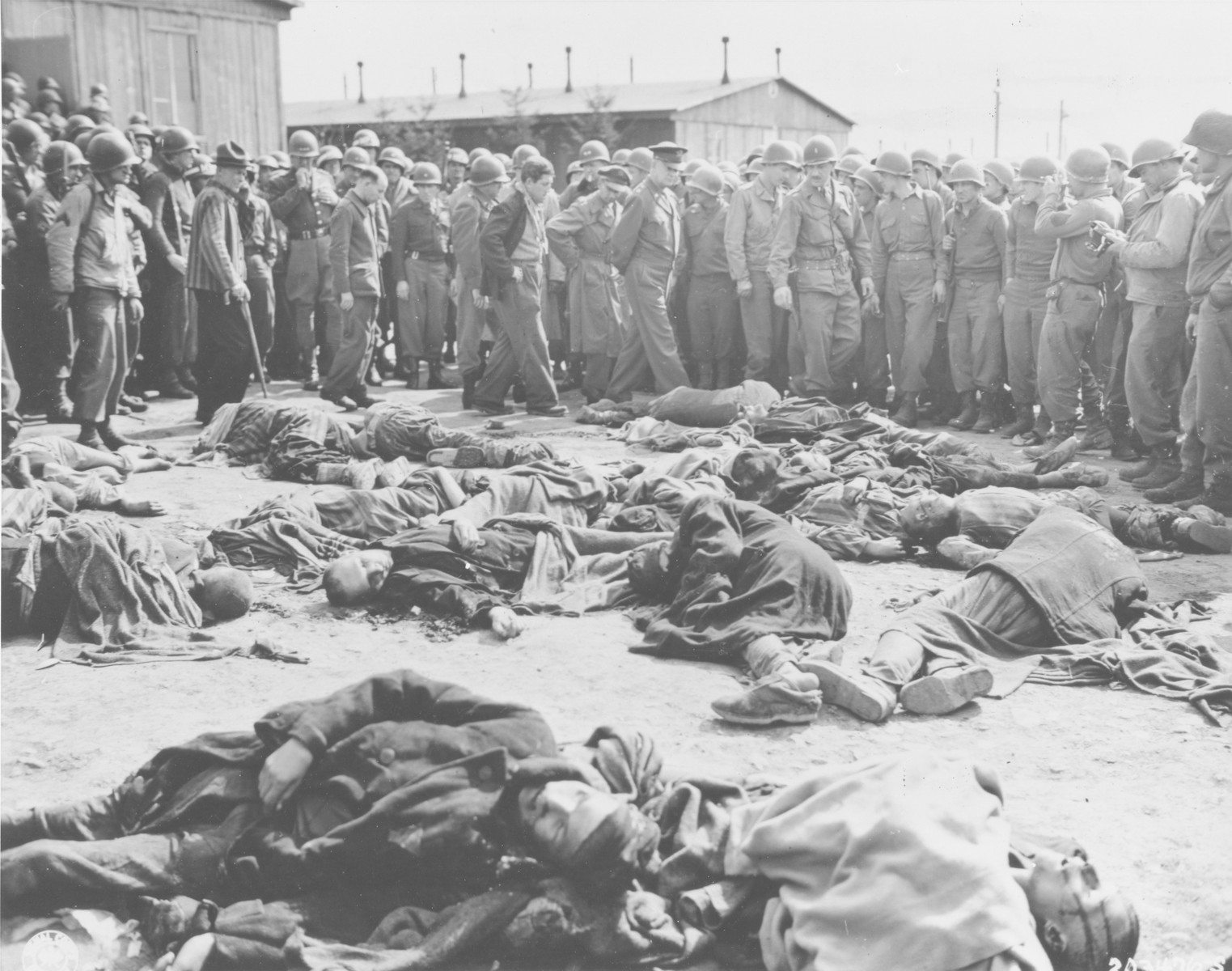
This is an especially flagrant distortion. We, the Jews, know what genocide is: we still have living witnesses among us to the Shoah. 

General Dwight Eisenhower with American troops who liberated the concentration camp in Ohrdruf, Germany, April 12, 2945

Genocide, as attempted by the Ottoman Turks against the Armenians, by the Nazis, in Burma and Bosnia and Rwanda and Cambodia, is deliberate and systematic, and the intent is to destroy the targeted group. 

After Israel withdrew from Gaza in 2005, the terrorist group Hamas took control of the territory. Whenever there is fighting between Israel and Hamas, and of course this has continued to happen from time-to-time due to Hamas’ continued attempts to kill Israeli civilians, the number of Palestinians killed is always dramatically higher than the number of Israelis. In May of 2021, in eleven days of Palestinian attacks on Israeli civilians, followed by Israeli reprisals to dismantle terrorist infrastructure, 14 Israelis died, and 256 Palestinians. 

We should never dismiss the loss of any human life, and the pain of loss on both sides of the Gaza border is truly awful. But the asymmetric body count does not make Israel guilty of genocide. On the Israeli side, this is a fight for defensible borders, so that she can protect her people. But for Hamas, the stated goal is, in fact, Israel’s annihilation.

There are no roving Israeli killing gangs deliberately targeting Palestinians. There are no concentration camps, no transports to death camps, not even attempts to physically relocate the Palestinian population to Jordan or somewhere else.

The accusation of Israeli genocide is outrageously hyperbolic, and we should decry it as such.

***

OK, Rabbi. Even if those characterizations are inaccurate or unfair, why should we support the State of Israel if we have to constantly defend her actions? And why should we care, here in Diaspora? Should we not focus more energy on our spiritual needs here?

As tempting as it may be, we cannot look away. We cannot stand idly by while fellow members of our qehillah qedoshah, our sacred community, are slandered. It is up to us, the second-largest Jewish community in the world, to stand with Israel.

And I want to reinforce that that does not mean we cannot be critical. But we should do so in a way that does not amplify the voices of those who want to see Israel just go away. We cannot give ammunition to Israel’s enemies, and she has very real enemies, who are armed and dangerous and located very close by. On the contrary, the only way we are going to guarantee a sustainable future for all the people who live on that tiny strip of land, is to be in conversation with all those who are willing to work toward that future together. Coexistence is the only possible solution.

We cannot turn our backs. We cannot disengage.  We cannot afford to do so.  

On the contrary, we have to work harder to connect with and understand Israel and Israelis. 

As for the question of, “Why should we care?” Two generations ago I would not have had any reason to even address the question. But given some of the statistics which I have shared with you in the past about American Jews’ gradual disengagement with Israel, I find myself making this case again and again: Israel is worth defending. 

The idea of a Jewish homeland is worth defending, even for those of us who are perfectly happy living here in America. And Israel the country – with all her imperfections – is worth defending.  

One of those reasons is that of which we should never lose sight: had Israel existed in the 1930s, it is quite likely that six million souls would not have succumbed to the brutality of the Nazis and their willing collaborators. The Burns documentary makes that abundantly clear, when he reminds us that at the Evian Conference in July, 1938, 32 nations in attendance from around the world all expressed sympathy for the plight of German and Austrian Jews seeking refuge, but only the Dominican Republic and Costa Rica agreed to raise their immigration quotas. Hitler saw that as a green light to dispose of his Jews any way he wanted to; nobody else wanted us.

God forbid we should need Israel for that purpose. But there is a better reason for us to remain firmly connected to Israel: and that is that she is, increasingly, a source of inspiration for contemporary Jews around the world, not only as a tech powerhouse or a proud center of secular Jewish culture, but she is also rethinking Judaism for modern Jews.

In recent years, new batei midrash / houses of study have popped up in Israel, created by and aimed at secular and non-Orthodox Jews, where Israelis from diverse backgrounds are learning Talmud and midrash and other Jewish text. New egalitarian and contemporary congregations have formed, headed by a generation of young, native rabbis, who are re-envisioning what it means to be Jewish. Modern Jewish identity is changing. Rabbi Rinat Safania Schwartz, who leads a congregation in Shoham, recently wrote the following:

I want everyone to feel that the very fact of being Jewish confers both the privilege and the responsibility to take personal and communal ownership of their Judaism – of our language, tradition, culture, literature, and all aspects of Jewish creativity. It’s critical that we move people away from relating to their Judaism as if it were in a museum. People must feel that they can “touch,” feel, renew, and create from within.

From “From the Fruit of the Land: Ten Israeli Spiritual Leaders Reflect on the Budding Opportunities for Israeli Judaism Today,” The Honey Foundation for Israel, 2022.

Rabbi Schwartz’s language is quite different than that of most Orthodox Israeli rabbis; she is not alone in finding new ways for Jewish Israelis to express their Judaism.

The members of our extended Qehillah Qedoshah in Israel will help us all build the new Judaism of the 21st century. It is Israel which will be the Diaspora’s partner in maintaining a healthy non-Orthodox Judaism for the future. 

So what can you do?

  • Get to know our four shinshinim, young Israelis who are between high school and army service, who are with us in Pittsburgh for the year
  • Spend some time learning the history of how and why this patch of land passed from one empire to the next.  Learn how the modern state of Israel came to be.  
  • Become familiar with Israeli politics. This is an exciting time – the fifth round of parliamentary elections in three years, coming up in a few weeks.
  • Go there! We’ll have another congregational trip, probably in 2024
  • Send your kids to Israel! There are so many options now: Ramah, USY, HSI, Nativ, and of course Birthright.

It is up to us to recognize the bonds that tie each and every one of us people together around the world, and to acknowledge that Israel is the gravitational center of our peoplehood, Qehillah Qedoshah Am Yisrael.

Tomorrow, for our fourth and final installment in the Being There series, we will speak about ḥevruta, the essential Jewish concept of partnership.

~

Rabbi Seth Adelson

(Originally delivered at Congregation Beth Shalom, Pittsburgh, PA, evening of Yom Kippur, 10/4/2022.)

Categories
High Holidays Sermons

Make it Meaningful! – Highlighting the Holy Moments – Yom Kippur Day / Yizkor 5782

Before reading this sermon, which is the fourth and final installment in the “Make it Meaningful!” High Holiday 5782 series, you might want to read the first three: Gathering (Rosh HaShanah Day 1), Seeking the Why (Rosh HaShanah Day 2, and Engaging With Israel (Kol Nidre).

As is standard in many workplaces today, I have occasional performance reviews, and I am grateful to all of you for giving me a very positive review this past spring. There were, however, a few minor complaints – no big surprise for a community of Jews, of course; I would have been really surprised if there were NO complaints. 

But one such complaint was that I speak too often about items in Jewish law like kashrut, Shabbat, tefillah, and so forth. I am sure that some of you have heard or read my series of sermons about the fundamentals of Judaism, called, “I’m a Fundamentalist.” I am committed to the idea that the essential pieces of Jewish living are good for us. So thank you for noticing. 

It reminds me of the apocryphal story about the rabbi who is applying for a position at a synagogue, and when the president picks him up at the airport, she starts asking pointed questions about the sermon the rabbi will give on Shabbat.

“Well,” says the rabbi, “I thought I would speak about the value of Shabbat.”

“I don’t know, Rabbi,” says the president. “Many of our folks work in retail – they all have to open their stores after Shabbat services.”

“OK, so then maybe I’ll speak about the importance of keeping kosher.”

“Not such a great idea, Rabbi. One of our major donors is the largest shellfish distributor in the whole state.”

“Well then,” says the rabbi, “What do YOU think I should talk about?”

“You know, Rabbi,” says the president, “something Jewish.”

But of course, I hope you will understand that advocating for Jewish law and customs and learning and tefillah / prayer is exactly what rabbis do! A rabbi, you may recall, is not a priest; the word “rav” in Hebrew literally means “teacher.” My job is to teach you about being Jewish and doing Jewish – you as individuals and as a community.

However, my approach to teaching Judaism is that I want your Jewish engagement to be meaningful! I want you to feel something, to feel a connection, to “use” Jewish life and learning as a way of improving yourself and your world! Even though I am clearly on the cheerleading team for Torah and mitzvot, I am decidedly not in favor of merely fulfilling a mitzvah for the sake of checking a box. That is why our High Holiday theme for this year is, “Make it Meaningful!”

I believe firmly that the real reason to practice Judaism – keeping Shabbat, kashrut, daily tefillah / prayer, digging into our ancient texts – is that they can fill our lives with meaning, that these things create a lens that will help you see the world a little clearer, that they will help bring the important things into focus, that they will teach you how to highlight the qedushah / holiness in your life and in your relationships with the people around you.

Most of us feel that being Jewish is important to our identities; the most recent Pew Research Center study of American Jews showed that about three-quarters of us agree that being Jewish is very or somewhat important to us. Most of us are quite proud to be Jewish. 

So that is good news! But here’s the less-than-stellar news: most of those folks who agree that being Jewish is important do not feel that doing traditional Jewish things is essential to being Jewish. When asked about the essential parts of being Jewish, only 15% (about one in 7) say that observing halakhah / Jewish law is important. By comparison, 76% (three-quarters) cite “Remembering the Holocaust” as essential to being Jewish.

Now, I know that re-interpreting what it means to be Jewish is all the rage right now, and I certainly do not want to throw shade at that idea. I am, however, concerned that, when the vast majority of Jews do not see learning about and practicing Judaism as being an essential aspect to being Jewish, we may be in an unsustainable situation.  

In order to actually pass on Judaism to your children and grandchildren, something which I know many of you are interested in doing, you have to “do” Jewish. You can’t just “be.”  

And yes, “doing” Jewish can take on many forms. It need not look like what Judaism looks like in black-hat Brooklyn, say, or what it looked like to our great-grandparents. But without the practice of Judaism, with only our sense of pride in being Jewish, we will have no basis for why living Jewishly is meaningful, and without meaning, our children and grandchildren will only be puzzled by their Jewish identity.

Here are a few examples of the fundamentals of doing Jewish:

  • Holy eating, also known as keeping kosher or kashrut, is meaningful because it reminds us of our role in the world “to till and to tend,” as the second Creation story in Bereshit / Genesis puts it. When we premise our consumption upon God’s expectation of us to live sustainably in cooperation with the Earth, we have a better chance of handing an unspoiled world to our children and grandchildren.
  • Putting on tefillin on a daily basis is meaningful because it reminds us on a daily basis of the need to connect our hearts and minds with our hands. Would that more of us could be mindful of how our actions affect others and our world! Physical rituals such as tefillin help reinforce our daily mindfulness with a tangible action.
  • Learning the words of our ancient texts – which you can easily do -is meaningful because it teaches us how to be better people, how to improve our lives and our community by understanding ourselves and the holiness embedded in all our relationships. Plus, there is the added bonus of keeping our minds flexible and engaged, something that the medical establishment certainly recommends as we get older.
  • Singing Jewish music, liturgical or otherwise, is meaningful because it brings joy to a world that could really use a whole lot more joy. Sometimes melody can express our deepest emotions, particularly when words alone fail us.

And here is something that we perhaps take for granted, and yet in which many of us participate in greater numbers than most mitzvot: lifecycle events.

Yes, you know what I’m talking about: those things that mark our lives as we saunter through: berit milah (you all know that by the Yiddish term “bris”, but I don’t speak Yiddish! I’m a Zionist – I speak Hebrew), baby-naming, bat mitzvah / bar mitzvah, wedding, pidyon haben (redemption of the first-born), funeral and mourning. Some might add confirmation in there, and of course some might add graduation from medical school as well.

And it is wonderful that so many of us are still doing these lifecycle events. Perhaps more so than most Jewish rituals, people still show up, at least to honor and celebrate with the family. Even during the depths of the pandemic, when travel was nearly impossible, people came to lifecycle events in droves: we had benei mitzvah services here at Beth Shalom that attracted well-wishers from Japan and South Africa and France and England and Israel and Thailand and Australia and probably a bunch of places I’m not even aware of. Berit milah, weddings, funerals, shiv’ah – all continue to bring in family members and friends from far and wide.

And that too, is wonderful. The power of the framework of Jewish lifecycle rituals is great. What is more meaningful to us than celebrating a newborn baby, dancing joyously with newlyweds, or mourning the loss of somebody we loved?

One of the greatest features of living a Jewish life is acknowledging holy moments. We actually have a berakhah, a blessing for that, one which you all know well. It’s the same berakhah – Sheheḥeyyanu – that I have been urging you to recite upon your first opportunity to return to the synagogue space after months of isolation. 

We mark our holy moments, not only with a berakhah, not only with ritual, not only by gathering with friends and family and sharing a meal and good times, but with meaning.

Think back for a moment to an especially meaningful lifecycle event for you. Was it your bat mitzvah? Your wedding? Confirmation? A dear friend’s funeral? (I’m guessing it wasn’t your own bris!)

What made it meaningful? Was it the people there? The words of Torah offered by the rabbi? The food?

Maybe all of these things. But also, perhaps what made it most meaningful was the sense of perspective. The feelings surrounding what it took to, as with the the berakhah, vehiggi’anu lazeman hazeh – to arrive to this moment, the feeling of the ancient hand-off play that we keep playing as Jews, from generation to generation.

Two different young people who recently became bat / bar mitzvah here at Beth Shalom asked me, not long before the ceremony itself, effectively, “Why am I doing this?” It seems that this question had not been answered along the way, perhaps lost in the shuffle of preparation, maybe further obscured by the pandemic. 

Now, I suppose I could have said, “Because it says so in the Mishnah,” but that would not have been an effective answer. “Because your parents want you to,” is also not really satisfactory.

Rather, I said the following: “Because you are the next link in a chain that stretches back thousands of years. You are the inheritor of a rich and valuable collection of wisdom and traditions that has crossed continents and centuries, and survived empires and attempted genocide. This ceremony, when you are called to the Torah as bar/bat mitzvah in the synagogue, in the presence of your family, friends, and community, is a signifier of the fact that you are now carrying the Jewish flame, holding it aloft to illuminate the world as our people have always done and will continue to do. We are handing this tradition to you, and now it is your turn to take care of it, cherish it, continue to deepen your understanding of it, and then pass it along to your children and grandchildren.”

They were speechless, perhaps because it had not yet been presented that way.

We should never take for granted that everybody involved in the holy moment of a lifecycle event appreciates the meaning embedded therein. That is why I am going to offer a pro tip for making your Jewish involvement even more meaningful, and this is something that comes from the author and consultant Priya Parker, who I mentioned on the first day of Rosh HaShanah, when we spoke about the meaning and power of gathering. Ms. Parker’s essential tip for making gathering meaningful is to prepare in advance. And yes, of course that means the food and the chairs and the guest list. But more than that, prepare the content. 

Give your attendees an assignment. For a wedding, for example, you could have them write out messages to the bride and groom to be displayed as part of the ḥuppah, or at the reception. For a baby-naming, have your participants do a little research into their own Hebrew name, to share at lunch. For shiv’ah, you could ask people who did not speak at the funeral to prepare in advance three sentences that describe the deceased, or even (as was fashionable a few years back) a six-word-eulogy.

And similar things can be done for holiday observances: have invitees to your sukkah bring an item that tells a story about their Jewish journey. Before lighting the Hanukkah candles, have everybody gathered around give an example of a way that they feel they have personally cast some light in this world. For Pesaḥ, have each participant prepare in advance a piece of the Exodus story to tell in their own words. And so forth. Your creativity only makes doing Jewish things that much more holy and special, and reinforces that sense of being a link in an eternal chain.

The more meaning we derive from these holy moments, the more powerfully connected we are to our history and culture and tradition, and the stronger the link in that generational chain.

It is the holy moments which frame our lives with meaning, give us structure and support, and help us through the tough times together. Ideally, they reflect our values, teach our wisdom, and connect us with our past and our future. Don’t let them slip by without trying to make them more than just gathering for dinner.

“Make it Meaningful!” conclusion:

I hope that over these High Holidays I have given you a few things to think about regarding making meaning in Jewish life: through gathering, through digging deeper into the Jewish bookshelf to understand the backstory, through engaging with Israel, and through framing holy moments.

It is worth putting a fine point on the message by reminding us all that merely “being Jewish” is unsustainable; it will not last another generation here in America, land of freedom and infinite choice. Rather, if you want your children and grandchildren to be links in the ancient chain, you have to “do Jewish” with them, and frame it properly. Teach them to love our tradition the way you do; show them how meaningful it can be by doing. Frame it with intentionality and love. And of course you can always reach out to me for guidance. It would be my pleasure and privilege to provide support on your journey. That is what I am here for.

Yizkor

And one final, related note before we move on to the Yizkor service.

Since Adar of 5780, also known as March of 2020, we have been subject to a worldwide pandemic that has, in many ways, turned our lives upside-down. The 3-year-olds in our ELC only know a world in which everybody is wearing masks in public; children have suffered from the failure of some schools to provide adequate schooling; in addition to the loss of so many loved ones and the suffering of those with long-Covid symptoms, there is evidence of so much more malfeasance in our society – addiction, abuse in all forms, and so forth, and the economic toll has been devastating.

Even if somehow we were all miraculously vaccinated tomorrow, there would still be so much pain – evictions, homelessness, joblessness, anxiety, and so much suffering.

A young man I know recently lost his father, from whom he had been estranged for a number of years. As you can imagine, he was filled with various types of regrets; his grief was palpable.

A recent column by New York Times columnist David Brooks (if you have been paying attention, you surely know that I am fond of David Brooks), spoke about the rising incidence of estrangement from family members. I have encountered this regularly in my pastoral work, and it is one of a range of social ills to which Brooks points as evidence of what he calls the “psychological unraveling of America.” We are suffering in so many ways, and often we have no salve for our pain, no balm for the many sources of grief we all carry right now. Brooks cites the Franciscan friar Richard Rohr, who said, “If we do not transform our pain, we will most assuredly transmit it.”

And we the Jews, of course, have an extra measure of pain – the pain that has been handed to us from our history, from expulsion and pogroms and Holocaust and terrorism and anti-Semitic attacks, one right here in our own neighborhood.

But the silver lining here is that, at least with one kind of pain – the pain that comes from the loss of beloved family members – that we do have a way of transforming that pain: we have the framework of Jewish ritual for grief and mourning, including the Yizkor prayers that we are about to recite. Not only do we have shiv’ah, when we offer comfort to the bereaved for the week after burial, but also sheloshim and a year of mourning and annual yahrzeit observances, and of course Yizkor. 

And all of these are means by which we transform our pain and grief through ritual. By doing traditional Jewish things, we have a mechanism which helps to ease the pain, helps to remember the deceased, helps to remind us all that they are still with us, if not bodily, then at least in spirit. 

If that is not an argument for meaning-making in Jewish life, I do not know what is. 

~

Rabbi Seth Adelson

(Originally delivered at Congregation Beth Shalom, Pittsburgh, PA, Yom Kippur 5782, 9/16/2021.)

Categories
High Holidays Sermons Yizkor

Back to Basics: Our Story Will Save Us – Yom Kippur 5781 / Yizkor

בְּרֹאשׁ הַשָּׁנָה יִכָּתֵבוּן וּבְיוֹם צוֹם כִּפּוּר יֵחָתֵמוּן

Berosh hashanah yikatevun, uvyom tzom kippur yehatemun.

On Rosh Hashanah their decree is written, and on Yom Kippur it is sealed.

That is our traditional story surrounding Rosh Hashanah and Yom Kippur – the Book of Life. As our tefillot / prayers continue throughout the day, we will continue to invoke this story.

This is the fourth and final installment in the “Back to Basics” series, inspired by the limited nature of our lives due to the pandemic. On Day One of Rosh Hashanah, we covered halakhah (Jewish law), on Day Two we discussed minhag (Jewish custom), and last night we spoke about Jewish values. (You can also listen to these as podcasts.) The final installment is about the Jewish story. Halakhah, minhag, values, story. These are the basic elements of Jewish life.

You might have thought that this piece of the basics of Judaism would come first. After all, the first thing we learn about being Jewish is that our heritage comes with a story. We learn stories from the Torah in Hebrew school. We remember the Exodus from slavery in Egypt at the Pesah seder table. We light Hanukkah candles to remember that a small band of Jewish rebels fought off the idolatrous invaders and restored the Temple in Jerusalem, and so too do we have an obligation to enlighten the world. We get a day off every seven days because God rested after six days of Creation. Even those of us with zero formal Jewish education know the stories about the Garden of Eden, Joseph (thanks to Andrew Lloyd Webber), Moses (thanks to Hollywood). The Torah and pop culture are intertwined in ways we do not even notice.

On the other hand, story serves as a beginning, and also the end; I have heard that Jewish life is something like a Moebius strip – as you follow its path, you always return to where you started. In engaging with our tradition, we always return once again to our story, our history, our culture, and we are reminded that sharing our story with others will lead to a better world: Wouldn’t it be awesome if the whole world observed Shabbat? Wouldn’t it be absolutely amazing if everybody were to gather around a holiday table and say, “Let all who are hungry come and eat”? 

And let’s face it: story is the most interesting part. For most of us, that is.

I have a slight confession to make here, although many of you probably have noticed this already. I’m not really a story-telling rabbi. Some rabbis are more inclined to pepper their sermons with good stories that lead to a moral. I am more cut-and-dried, more inclined to lay down the brief, pithy Talmud Torah than long form stories. (If you were on our Zoom service on the second day of Rosh Hashanah, you may have noticed that I tried to tell a joke and totally bungled it.)

But I am very fond of the fact that, no matter how we break down theologically or sociologically or demographically, we, the Jews, are still united by our stories. Even though we approach many things differently, the Torah is the Torah; the Talmud is the Talmud, and disagreeing over the meaning of a phrase or the halakhic import of a certain read comes with the territory. As fractious as we are, we still share our stories.  

And you know what? As long as we continue to tell our stories, they will protect and save us, just as they always have.

Think about this: what is it that enabled Jewish people to survive the destruction of the First and Second Temples, the Inquisition, the Shoah? What enabled Jews to manage being alternately exiled and welcomed, dispersed and ghettoized, massacred and delegitimized? What empowered us to look past the anti-Semitism, century after century, land after land? What encouraged the Zionists to build a modern nation in an ancient land? What has enabled this very community to pick itself up from its grief and move forward, after 11 of our friends and neighbors were brutally murdered by a white supremacist with an assault rifle?

Not history. If it were up to mere history, the Jews would have disappeared thousands of years ago. Our history is littered with destruction, dispersion, forced conscription, pogroms, and disillusionment.

No, what gave us the strength to survive was that these stories fill our lives with meaning. We mustered the courage to press on by the promises given to Avraham and Sarah, Rivkah and Yitzhaq, Rahel and Ya’aqov and Leah and Yosef. We have continued to teach our stories to our children, so that, generation after generation, their eyes were lit with the richness of our wisdom, the power of our tales, the inspiring personalities of our bookshelf.

One of the more curious things that we do as Jews, on the festival of Sukkot, is to parade around the room holding aloft the four plant species identified in the Torah as the symbols of the season: willow, myrtle, palm, and citron, also known as the lulav and etrog. And what do we do whilst parading?

We say, “Save us.” “Hosha’na.” And we say that over and over and over, and in between chanting “hosha’na,” we add tiny story fragments, a couple of words each. They always go by so quickly, because the piyyutim are long, and late in the service so everybody’s hungry and wants to get to lunch. But they include reference after reference to the Torah and to midrashim. Just a few brief examples:

We chant this on the second day of Sukkot:

הוֹשַׁע נָא אֶֽבֶן שְׁתִיָּֽה, הוֹשַׁע נָא

Hosha’na even shetiyyah, hosha’na.

Save us, Foundation Stone, save us!

The Even Shetiyyah / Foundation Stone was the mythical piece of rock, located at the top of Mt. Moriyah, the Temple Mount in Jerusalem, from which, according to midrash, the world was created. It holds a special power that we continue to invoke to this day.

Here is another one: 

כְּהוֹשַֽׁעְתָּ טְבוּעִֽים בְּצֽוּל גְּזָרִֽים. יְקָֽרְךָֽ עִמָּֽם מַֽעֲבִירִֽים. כֵּן הוֹשַׁע נָא

Kehosha’ta tevu’im betzel gezarim, yeqarekha ‘imam ma’avirim, ken hosha’na.

As you rescued this people from drowning by splitting the deep sea, Your glory crossing with them, so save us!

This is a clear reference to the Israelites crossing the Sea of Reeds, accompanied by God, an example of how God has saved us in the past.

There are literally hundreds of these types of references, some more deeply coded than others, in endless liturgical poems used over the holidays, not just for Sukkot, but around every holiday.

The message is clear: our stories save us. When we are in trouble, when we need something to hold onto, we lean into the rich assortment of tales that have inspired us and given us a meaningful framework for thousands of years. 

Now, I know I have a few armchair skeptics out there in Zoom-Land right now (and you may actually be seated in armchairs!) who are thinking, or perhaps even remarking out loud, “Come on, Rabbi. The stories of the Torah are not true. They conflict with the scientific record. There’s no archaeological evidence of the Exodus, or that the Israelites were actually enslaved. Do you really think that Moshe took dictation from God on Mt. Sinai?!”

To you I say, “I’m happy you’re listening!” and then, “So what? That is not the point.” History and story are not the same thing. Scientific truth and the foundational stories of an ethnic or religious group are not in the same category; they answer different questions. Science tells us that the universe is 14 billion years old, following a Big Bang in which all matter was violently expelled from a single, infinitely dense point, and ultimately cooled to the point where atoms and molecules and (at least in the case of one particular planet) life formed through a series of fascinating phenomena. 

But science does not tell us that we need a day off every seven days, because God rested on the seventh day of Creation. And science does not provide us with the wisdom to raise our children to be human beings, or to seek the common good, or to behave with integrity, or to remember the needy, or to pursue justice. Science teaches us facts; our stories teach us not only how and why to be Jewish, but also how and why to aspire to be the best humans we can be.

Our story, the Jewish story, may not meet the standard of scientific fact, but they are ours. My teacher at the Jewish Theological Seminary, Rabbi Neil Gillman, taught me the value of what he referred to us as “myth.” Not myth in the sense of falsehood, but the series of stories that help us explain our world, the lens that helps us make sense of the information we take in. Every nation, every ethnicity has its own myths. 

That is why the contemporary tools of biblical criticism, which cast doubt on some of our stories, do not trouble me. No matter what scholars may say about our foundational myths, they continue to frame my life and yours in holiness.

Some of you may be aware that there is a new translation out of the memoirs of Glikl, a Jewish woman who lived in Germany in the 17th and 18th centuries. I’ve been captivated by her story for many reasons, among them the fact that stories of and by women are too few and far between on the Jewish bookshelf. Glikl was born in the 17th century to a wealthy family, and she is not only literate in the sense that she can write her own memoirs in Old Yiddish, but also she is Jewishly literate, peppering her language with quotes from the Torah and rabbinic text. She writes about her family’s ups and downs, about intrigue and marriage and of course anti-Semitism, which is very much a part of her world. 

One of the captivating aspects of her work is the way in which the Jewish story nourishes Glikl. 

Throughout the seven books of her memoirs, which cover 28 years from 1691 until 1719, she weaves Yiddish folktales, Talmudic stories, and personal anecdotes into the details of her family life. She unspools lengthy yarns to teach us a moral, like the value of patience, and then she tells the tale of how she and her mother both gave birth around the same time, and one night their babies were confused and the entire household was in an uproar. She expands the story from the Talmud about Alexander the Great’s search for the Garden of Eden, to teach us that we should be satisfied with what we have. And she urges us to settle our personal accounts during our lifetime, a notion particularly salient for these days of teshuvah, repentance. 

Glikl’s memoir is not only a fascinating slice of history, a particular moment captured in remarkable prose, but also a testament to the power of story. As we listen to her unspool her tales, we also see how the Jewish story supports and nourishes her and her family, how Jewish rituals and holidays, drawn of course from our story, are very much a part of her everyday existence.

Ladies and gentlemen, I know that right now, things might seem much worse than they have ever been. I know that these Ten Days of Teshuvah / repentance, starting with Rosh Hashanah and concluding today (at 7:47 PM) have been nerve-wracking for reasons I do not need to enumerate. But underlying the threat of chaos and anxiety about the future, I know that over the past week, in the back of my head, I have been praying for life. Zokhreinu lehayyim. Remember us for life, God. And even though the story of the Book of Life should also fill us with awe, I must say that it has been comforting to me to be able to share these melodies and stories, these High Holiday sounds and ideas, with all of you, even virtually, over these days. 

Our story, the Jewish story, offers us comfort and meaning and protection. It holds us together in a way that halakhah cannot. It continues to brighten the eyes of our children and inspire all those who listen of all ages. And our rituals and customs and values bring us back again and again to our story.

Yizkor Coda.

What do we do when we recall a loved one? We recall their story.

It has often been observed that the hyphen on a memorial stone or plaque stands for a whole lot. A short, straight line. But none of our stories are straight; they contain twists and turns and loops and dead-ends. And it is up to us, the living, to recall all of those twists and turns in the lives of those whom we remember.

In the context of this pandemic, we have lost 1,000,000 people worldwide, including over 200,000 here in the United States, including members of this community and even a past president of Beth Shalom. And millions of people have lost their jobs; many more are living with less. The spiritual and economic pain from which we are all suffering is immeasurable; the deep frustration at our elected officials, and our fellow citizens, for their various failures is palpable.

When all is said and done, many, many people around the world will have died alone; many will be buried in overwhelmed cemeteries without any kind of funeral or eulogy. Many will have left this world in a way that their story remains unfinished, or untold.

Back in August, the city of Detroit memorialized its coronavirus victims by putting up huge photos of them in a city park, so that people could drive through and see their faces. There were 900 portraits in the exhibition, accounting for more than half of the 1,500 city residents who had by then died of the virus.

The photographic memorial drive in Detroit

A face is not a story, but in its lines and contours you can perceive quite a bit about a person. It was a moving tribute; the very idea brings tears to my eyes.

Ladies and gentlemen, we will likely have many months to go of isolation, of sickness and death. But we also have the gift of memory – remembering those we have lost; remembering our lives before the pandemic, remembering that humans are awfully clever, and will ultimately turn this time of sadness into one of rejoicing.

Although Yom Kippur is a Yizkor day, a day on which we remember those whom we have lost, and a day of gravitas as we seek repentance, rabbinic tradition tells us it is also a day of rejoicing; rejoicing at the fact that we know that if we work hard at the former, we will achieve the latter.

It is memory which may bring us salvation. It is memory which will bring us joy.

~

Rabbi Seth Adelson

(Originally delivered at Congregation Beth Shalom, Pittsburgh, PA, morning service of Yom Kippur 5781, 9/28/2020.)

Categories
High Holidays Sermons

Back to Basics: Values / Integrity – Kol Nidrei 5781

As I hope you have noticed by now, the theme for this High Holiday sermon series is “Back to Basics.” In the context of the pandemic, our options for Jewish engagement have been somewhat limited (as with every other sphere of life, of course). As such I am taking this opportunity to go “Back to Basics”: to consider the essential items of Jewish life. These essential items are halakhah (Jewish law), minhag (customs), values, and story. We spoke about halakhah and minhag on Rosh Hashanah, and this evening’s subject is values. (If you missed them, you can read them on this blog, and you can also hear them on our podcast, the Beth Shalom Torah-Cast.)

Once upon a time, American Jews loved to play the game, “Who is a Jew?” We were filled with pride to see Dinah Shore or Kirk Douglas on our screens, looking so beautiful and strong and goyish, but we knew the truth. “He’s one of us,” we would boast to each other. I know that many of us are bursting with pride, alongside the grief, as the first Jewish female Supreme Court justice, Ruth Bader Ginsburg, lay in state last week. 

But then there are plenty of Jewish people of whom we are not proud, members of our tribe who are among the highest-profile criminals and detestable public figures today. I won’t mention any names, but I am sure you can come up with a list in your own head.

(BTW, Christians have it easier in this regard: they generally only count church-goers as Christians. But we count people differently: once a Jew, always a Jew. We could excommunicate these people, like we did with Barukh Spinoza (actually, we lifted the herem / excommunication on Spinoza a few years back), but we cannot deny the Jewishness of people whom we would rather not claim.)

And that hurts. Because we like to think that our Jewish values are universal; that somehow we all acquire them in Hebrew school or they are instilled in us by our parents; that even if we eat treyf (non-kosher food) and proudly violate Shabbat in public that the pintele yid, the tiny spark of Jewishness within us, will somehow keep us connected to the fold.

But it does not work that way. Our values will only hold if we act upon them, if we teach them to our children, if we model them for each other, if we remember that the Qadosh Barukh Hu is paying attention to our behavior.

I think it is very hard right now, six-and-a-half months into a worldwide pandemic, with maybe another year of isolation in front of us, and then coupled with all of the other chaos in the world, political and social and economic and spiritual, to be optimistic about the future. Many of you know that I am a self-described optimist, and yet I have found myself severely challenged by our current predicament. Everything is not OK.

And then I remember that we have a spiritual framework. Our Jewish heritage of learning, of action, of values is there to uphold us in times of trouble. Our ancestors, who survived many centuries of turbulence and upheaval, pogroms and genocide and dispersion, did so by leaning into their tradition. Etz hayyim hi, they sang, lamahazikim bah. The Torah is our Tree of Life if we reach out and grasp it. Our great-great-grandparents grasped and grasped and held on for dear life, and as a result, we are still here.

Part III: ערכים / Arakhim / Values

So tonight’s subject is values. Upholding our values at this time is more important than ever. If we are going to pull through this pandemic as a society, we have to remember that we have guardrails on our choices and behavior, not only from halakhah (Jewish law) and minhag (Jewish custom), but also drawn from our values. Values like:

  • Honesty
  • Empathy
  • Compassion
  • Taking care of the needy among us
  • Gratitude for what we have
  • Justice
  • Seeking peace
  • Pursuing the common good
  • Seeing the Divinity in all of Creation, including all people and all of God’s creatures

All of these have sources in Jewish text, in the Tanakh or in rabbinic literature. I am going to focus on one essential value this evening, one that I think is absolutely the key to all of them: integrity. While there are many sources on integrity from the Jewish bookshelf, here are a few that resonate with me:

Micah 6:8

הִגִּ֥יד לְךָ֛ אָדָ֖ם מַה־טּ֑וֹב וּמָֽה־ה’ דּוֹרֵ֣שׁ מִמְּךָ֗ כִּ֣י אִם־עֲשׂ֤וֹת מִשְׁפָּט֙ וְאַ֣הֲבַת חֶ֔סֶד וְהַצְנֵ֥עַ לֶ֖כֶת עִם־אֱ-לֹהֶֽיךָ׃

God has told you what is good, And what the LORD requires of you: Only to do justice And to love goodness, And to walk modestly with your God.

Some of you may know that this one is on my list of “refrigerator-magnet” texts – those that are just so pithy and essential that you should have them on your fridge. The prophet Micah tells us that the most essential path is that of acting from a place of justice and hesed, lovingkindness, but also to approach life modestly, that is, to approach all of your interactions with others from a place of holy humility.

Devarim / Deuteronomy 25:16

אֶ֣בֶן שְׁלֵמָ֤ה וָצֶ֙דֶק֙ יִֽהְיֶה־לָּ֔ךְ אֵיפָ֧ה שְׁלֵמָ֛ה וָצֶ֖דֶק יִֽהְיֶה־לָּ֑ךְ לְמַ֙עַן֙ יַאֲרִ֣יכוּ יָמֶ֔יךָ עַ֚ל הָֽאֲדָמָ֔ה אֲשֶׁר־ה’ אֱ-לֹהֶ֖יךָ נֹתֵ֥ן לָֽךְ׃

You must have completely honest weights and completely honest measures, if you are to endure long on the soil that the LORD your God is giving you.

The key to a long and happy life, says the Torah, is to deal with all others fairly. The essence of living a just life is treating everybody equally, not only measuring out your goods in the marketplace in an honest way, but also by measuring out your love and deeds and favor honestly and fairly.

Pirqei Avot 4:1 

אֵיזֶהוּ מְכֻבָּד, הַמְכַבֵּד אֶת הַבְּרִיּוֹת

Who is honored? The one who honors all of God’s creatures.

The way that we gain honor is not by expecting others to submit to you, but exactly the opposite. If you interact with the people around you from a place of respect, from honesty and good intentions, then those things will come back to you.

What does it mean to act with integrity? It means that we treat all people fairly and respectfully, regardless of who they are. It means that we are honest with ourselves and others in all our dealings. It means that we model upright behavior for others, and understand that the image of ourselves that we put out into the world should be one that others want to emulate.

Some of you may know that the Kol Nidrei prayer is among the more controversial pieces of liturgy in our tradition. Yes, we the Jews like to argue, even over what’s in the siddur / prayerbook. 

But Kol Nidrei is one of the few prayers in the Jewish canon that was controversial from the outset. It first appeared, as far as we know, in the 10th century, and its purpose was originally to nullify vows that one made with oneself and did not fulfill in the past year, vows like, “I’m going to learn to speak French this year,” or “I’m going to go on a diet, right after Simhat Torah.” A few centuries later, the renowned scholar Rabbenu Tam, one of Rashi’s grandchildren, changed the tense from past to future, making Kol Nidrei a pre-emptive nullification of such vows. 

Vows, promises that we make to ourselves, to others, or to God, are important; in addition to passages in the Torah about various types of vows, there is a whole tractate of the Talmud, Nedarim, devoted to issues surrounding vows. Right up there with being a person of integrity is the principle of keeping one’s word.

However, Kol Nidrei also provided material for anti-Semites. Misunderstanding the point of the prayer, which nullifies only those vows that we make with ourselves, the Jew haters of this world took Kol Nidrei as evidence that you can’t trust a Jew. And some rabbis railed against Kol Nidrei for centuries, because they thought that the less-scrupulous among us would take it as license not to live up to one’s word with impunity.

But you might think of Kol Nidrei today as a kind of relief valve, in particular for the very difficult kinds of resolutions we make with ourselves on Yom Kippur, like, “This year I’m really going to make peace with my estranged sibling,” or, “I’m going to give more tzedaqah.” The promises that we might make to ourselves, when we know that the Book of Life is closing, and we know that we really should do these things, but maybe we have tried and failed at self-improvement in the past. And we might very well fail again.

Keeping your word is very much a part of the value of integrity. And our tradition wants you to keep your word, especially to the others around you. Kol Nidrei does not excuse you from that.

OK, Rabbi, that all sounds very interesting. I want to act on this Jewish value of integrity. How do I do this?

I’m so glad you asked! Here are some ways we can act on this value:

In the personal sphere, that is, in your most immediate relationships, with your children, family and friends:

  • Do what you say you’re going to do.  Be the parent/friend/sibling/spouse that everybody can count on.
  • Follow through on promises, both the good (“I’ll be there to see your baseball game / play”) and the bad (“If you do that again, you’ll be punished.) The Talmud teaches us (BT Bava Metzia 49a) “Let your yes be yes, and your no be no.”
  • Model the behavior you know is best for the others around you. Teach integrity by acting with integrity.

In the communal sphere, that is, in interacting with the people in your neighborhood, your synagogue, your school, your workplace:

  • Decide what are the three characteristics for which you want to be eulogized.  Then consider if your actions and words reflect those characteristics.
  • Integrity means respecting your interlocutor and trusting that reasoned arguments are the only honorable way to have discourse. It is very easy in today’s world for disagreements to devolve into insults. Remember the spark of qedushah/holiness in all people when engaging in this way.
  • Do not criticize unless you are willing to be part of the solution. Always be prepared to offer up suggestions alongside criticisms, and be prepared for the possibility that others may not want your suggestions.

As a citizen of this nation and of the world:

We may not be able to solve all of the complicated problems in the world right now (I do not need to enumerate them for you), but if we were all to take a leap forward on the integrity scale, I think there is a good chance we could at least ease some of the pain. The world needs a good deal of healing right now, and although you might feel quite small, remember that you have real power, which you exercise every time you interact with somebody, whether it is your neighbor, a store clerk, or a stranger on the street. 

You have the potential, with your words and your deeds, to make someone’s day brighter or darker, to build up another’s confidence or to destroy it, to lift up your community by working for the common good or tear it down in your own self-interest. This power demands that we always act with integrity. 

At least three times per day in Jewish prayer tradition, we say, “Elohai netzor leshoni mera, usfatai middabber mirmah.” God, keep my tongue from evil, and my lips from deceit. The Talmud (BT Berakhot 17a) tells us that we should conclude every Amidah with these words. It is a reminder that our words count as much as our actions in creating a world based on integrity.  This is an effective daily meditation on our potential to impact others.

The Zen Buddhist priest, angel Kyodo williams, says the following in her book, Radical Dharma

We cannot have a healed society, we cannot have change, we cannot have justice, if we do not reclaim and repair the human spirit.

If we model integrity in the personal, communal, national and worldwide realms, we have the potential to heal and uplift the human spirit. If we act out of selfishness, deception, bias, prejudice, and fear, we will only continue to see our world crumble. 

The choice is ours. Pick the road of integrity, for the benefit of all of our fellow people. Remember your obligation to raise the level of qedushah / holiness in this world. Seek the betterment of yourself and others. I am confident that, by acting on the Jewish value of integrity, we can regain a more civilized world. We are all in this together.

Shanah tovah! 

~

Rabbi Seth Adelson

(Originally delivered at Congregation Beth Shalom, Pittsburgh, PA, evening service of Yom Kippur 5781, 9/27/2020.)

Categories
High Holidays Sermons

All of This Belongs to You: Finding Resilience in Jewish Tradition – Yom Kippur Day 5780

This is the fourth and final installment in the “All of This Belongs to You” High Holiday sermon series. You may want to read the first three:

The Greatest Jewish Hand-Off Play Ever – Rosh Hashanah 5780, Day 1

Be a Jewish Superhero! – Rosh Hashanah 5780, Day 2

Do Not Be Indifferent – Kol Nidrei 5780

***

One of my favorite books from childhood was The Phantom Tollbooth, by Norton Juster. In it, there is a wonderful story about a city where somebody discovers that if you walk while looking only at your feet, you get to your destination much more quickly. Soon everybody in the city is looking down at their feet as they are walking from place to place. And nobody is talking to each other, and nobody is noticing the trees and the buildings and the birds and the flowers. Soon enough, the city starts to disappear.

Our tradition, Jewish tradition, is like a beautiful city, with the most wonderful, architecturally stunning buildings. Rabbi Abraham Joshua Heschel spoke about Shabbat as a “palace in time.” That palace is at the center of this city.

I am not suggesting that Judaism is disappearing, because it certainly is not. But I am suggesting that we all take a better look at what it has to offer. Because there is much more there than what you might think. And if we are only looking at the things with which we are already familiar – the comfortable, the expected – we are missing a whole lot of scenery. And that is what I want you to see more of: the value that Judaism can bring to your life, our community, and the world.

Our theme over these High Holidays, as you really should know by now, is, “All of this belongs to you.” My goal is to remind all of us that, in the wake of the completion of Project Assimilate, it is up to us to reclaim our tradition, to make it ours once again. To make it yours once again, because it belongs to you.

And how will we reclaim it? That can be summed up in one word: meaning. We have to seek out and find meaning in our tradition. And that means looking beyond where you usually look. That means stretching yourself a little bit, to perhaps show up for a different service, for a new program, for a Talmud discussion, for a cultural event, for something that you have not sought out before. Because I’ll tell you this, folks: what we teach can change your life.

And today, in particular on one of the four days of the Jewish calendar in which we actively remember those whom we have lost, there is something that our tradition stands for that is tremendously valuable at this particular moment, in this particular place, and that is resilience.

5779 was a year of grieving. We will continue to grieve, of course, but this new year, 5780, will have to be one of looking forward.

Consider the great catastrophes of Jewish life. The destruction of the First Temple in Jerusalem by the Babylonians in 586 BCE. The destruction of the Second Temple by the Romans in 70 CE. The crushing of the Bar Kokhba revolt in 136 CE. The massacres at the hands of the Crusaders in the 11th century. The Expulsion from Spain in 1492. The Sho’ah / Holocaust. And so many other mini-exiles and dispersions and destructions and pogroms and so forth along the way.

And in each case, what have the Jews done? We have buried our dead. We have mourned. We have grieved. And then we got up from shiv’ah and continued doing what we do: worshipping the one true God; learning and teaching and debating about our tradition; supporting each other in times of need; yearning for freedom and working for the freedom of others; finding ways to illuminate this world based on Jewish texts and wisdom.

Many of you probably know journalist Bari Weiss, whose family belongs to Beth Shalom, and who became bat mitzvah in the context of this community in 1997. Her bat mitzvah service was held at the Tree of Life building, because that is where Beth Shalom services were located following the fire in 1996. Ms. Weiss just published a book titled How to Fight Anti-Semitism. In it, she describes the various expressions that anti-Semitism takes. But more importantly, Bari makes the case for how to respond to it.

Among the strategies that she suggests (with an assist from Rabbi Danny Schiff) is that the way we have always overcome anti-Semitism is by doubling down on our identity, and by turning back to tradition. The haters win, she says, when we take our kippot off and try to hide. She points to the statement by Rabbi Jonathan Sacks, former Chief Rabbi of the British Empire, who said, “Non-Jews respect Jews who respect Judaism, and they are embarrassed by Jews who are embarrassed by Judaism.”

She cites the case of Theodor Herzl, who grew up in a secular Hungarian-Jewish family that was barely connected to Jewish tradition. At one point, young Herzl even made the case for why Jews should convert en masse to Christianity.

And then, while he was working as a journalist in Paris, he had a front-row seat to the trial of Alfred Dreyfus, a Jewish captain in the French army who was falsely accused of treason. Herzl witnessed the anti-Semitic mobs in Paris chanting “Mort aux juifs!” “Death to the Jews!”, and concluded that the only safe future for the Jews lay in the Zionist imperative to build a Jewish state in Palestine.

When faced with existential threats, we have responded by looking inward, by embracing our peoplehood, our traditions, our community. As Bari wrote in a New York Times op-ed, “The long arc of Jewish history makes it clear that the only way to fight [anti-Semitism] is by waging an affirmative battle for who we are. By entering the fray for our values, for our ideas, for our ancestors, for our families, and for the generations that will come after us.”

Her solution is to “build, without shame, a Judaism and a Jewish people and a Jewish state that are not only safe and resilient but also generative, humane, joyful and life-affirming.”

Must say, I could not have said that better myself! Remember that city? The better we know it, the more familiar we are with its alleyways and architecture, the less likely it is to disappear. The more we own our heritage, the more we claim our Jewishness, the more resilient we will be as individuals and as a people.

The key to fighting anti-Semitism is to lean into tradition. Our resilience in the face of hatred comes from knowing and loving and acting on what is distinctly ours.

And let me tell you something, folks: ours is a rich heritage, one with a pedigree that stretches back thousands of years. And our strength is derived from knowing our tradition, and practicing it. It is a framework that has always nourished us, in times of persecution and in times of freedom.

Has anybody here been to Terezin? It’s the location of the “model” concentration camp, which the Germans called Theresienstadt, about an hour northwest of Prague. If you have been on a tour there, you may have seen the “secret” synagogue, tucked into a hidden basement behind a house. It was created by Jewish prisoners interned at Terezin. On the wall in this otherwise nondescript room, written in 80-year-old, flaking paint, there is a quote that we recite three times every day in the Amidah: “Vetehezenah eineinu beshuvekha letziyyon berahamim” “May our eyes envision Your return to Zion in mercy.” It was a plea for better times, an acknowledgment of the fact that despite this low point of Jewish existence, we as a people, and maybe even as individuals, will soon see better days.

That kind of statement is hard-wired into who we are. The resilience that is in our DNA is found all over our liturgy, our siddur.

In a recent episode of the renowned radio show This American Life, the show’s host and creator Ira Glass reflects on going to synagogue for the first time in many years, to say qaddish on the occasion of his mother’s yahrzeit. And although he admits that he does not really believe in aspects of our tradition, particularly the idea of God, he confesses that the words of Jewish prayer nonetheless hold a very strong power for him:

I always liked going to synagogue as a kid. We went a lot. And so it was nice going back. I know all the Hebrew prayers by heart. And [LAUGHS] I don’t know if this is good or bad, but not having sat in a synagogue in over a decade, it really hit me how every day is a rerun.

Do you know what I mean? They never do a new episode. Every day, the same words, same songs in the same order, stretching back hundreds of years. They read a new part of the Bible, part of the Torah some days. So there’s that, but all the rest is basically exactly the same every day.

And everybody is singing and chanting… And I really was struck at how many of [the prayers] — the Amidah, the Ashrei– are about praising God at length. That’s what the words mean. Even the Kaddish, which you say over and over during services.

יתגדל ויתקדש שמיה רבא

… “May His great name be exalted and sanctified. Blessed and praised, glorified and exalted, extolled and honored, adored and lauded be the name of the Holy One.” That is what they have you say when your mom dies. Comforting, huh? It’s basically God is great over and over, building up to this beautiful line, really beautiful, that’s basically God is so great. It’s beyond the power of any prayer, or word, or song, or praise. It’s beyond the power of language to capture it…

But weirdly, even… without believing any of the words, I do find it’s a comfort to say the prayer. It’s just– it’s familiar. It’s familiar as the nursery rhymes my mom sang to me as a kid, as the Shema, the prayer that she had me and my sister say every night before we went to sleep. It’s comforting.

Despite the fact that it’s in another language and part of a doctrine I don’t believe anymore, just the fact of it handed to me by my parents and to them by their parents– Frida, and Lou, and Melvin, and Molly– and their parents before them– David, and Elizabeth, and Isidore, and people whose names I don’t even know– and before them, their parents for hundreds, and hundreds, and hundreds of years and standing in synagogue that day, standing and saying these words in unison with other mourners, it was comforting.

***

I know that Ira Glass thinks like a radio producer rather than a shul-going Jew, but it’s neither fair nor accurate to say that it’s a rerun every day. Yes, the words may be similar from day to day, and with the appropriate seasonal changes for holidays and so forth, but what makes tefillah / prayer interesting is that every day, month, and year, we are different. What changes is the kavvanah, the intention, the mind-set, what’s on your plate. We change, we grow, we celebrate and we mourn, and our traditions are there as a framework to support us. The liturgy may be set, but as we change, the words of our tradition continue to reveal new things to us – about ourselves, about our community, about life.

Regardless, Mr. Glass gets it: our tradition brings us comfort and strength and resilience, even if you do not entirely buy into it. Or, as the modern Jewish philosopher Franz Rosenzweig would have put it, even if you do not buy into it yet.

Many of us gathered on a Saturday night two and a half weeks ago for the first recitation of Selihot, traditional prayers in which we ask for forgiveness in preparation for this day. At that time, I read a commentary that appears on the pages of your mahzor, p. 298 in the margin if you would like to see it. It comes from Rabbi Rob Scheinberg, a very good friend of mine, whom I have known since my first summer at Camp Ramah in New England in 1980. (Some of you may know that Rabbi Scheinberg was among a handful of rabbis who came to Pittsburgh to help out New Light Congregation in the months after the shooting. Rob was also among the founders of Pizmon, the Jewish a capella group from Columbia University that performed here at Beth Shalom last November.)

Rabbi Scheinberg’s commentary refers to the line that we say every time we put the Torah away. It is the next to last verse in Eikhah (5:21), the book of Lamentations, which we read on Tish’ah Be’Av, the day on which we commemorate all the destructions in Jewish history:

 הֲשִׁיבֵנוּ ה’ אֵלֶיךָ וְנָשׁוּבָה, חַדֵּשׁ יָמֵינוּ כְּקֶדֶם

Hashiveinu Adonai elekha venashuvah; hadesh yameinu kekedem.

Return us to You, O God, and we shall surely return; renew our days as of old.

It is the only hopeful note in the entire book of Eikhah, which is a litany of the destruction of Jerusalem and Israel wrought by the Babylonians 2600 years ago. A midrash (Eikhah Rabba) interprets this verse as referring back to Adam haQadmon, the first humans, following their exile from Gan Eden, the Garden of Eden. Rabbi Scheinberg explains the midrash as follows:

“It means, ‘Renew our lives, as you renewed our lives after we were exiled from the Garden of Eden.’ Hadesh yameinu kekedem is then not a plea for restoration of a formerly perfect condition, but rather it is a plea for resilience, a plea for the ability to renew ourselves after future crises and dislocations, just as our lives have been renewed before.

In other words, the verse is not about requesting to take us back to Eden. It is, rather, about pleading for the capacity to recover quickly from dire circumstances. As Elie Wiesel said, “God gave Adam a secret – and that secret was not how to begin, but how to begin again.”

Ledor vador, from generation to generation, we have begun again and again and again, packing up in one place and unpacking in another; leaving behind the old synagogues and cemeteries and building new ones; starting over in a new culture with a new language. We have been doing it for thousands of years. And what has maintained us, then as now, is our tradition.

And now, in 5780, we have an opportunity to begin again. Only this time we do not need to pack our bags and move.  We have to unpack our emotional suitcases and take stock in what we, the Jews, have, what belongs to us that is unique.  What belongs to you.

And the way to do that is to stare proudly in the direction of the anti-Semites who have crawled out of their holes, put on a kippah, and dive right in.

And we at Beth Shalom give you so many opportunities to do so. We will never be rid of anti-Semitism; but the way to respond, ladies and gentlemen, is to know what we stand for. Nothing suits an anti-Semite more than a Jew who cannot defend the value of his/her own tradition.

So before you leave today, pick up a Derekh High Holiday Guide, which we have lovingly produced to make it easy for you to find your way into Jewish learning. Peruse the offerings. And pick one.

And let me assure you, there are lots of things to choose from. In 2018-19, Derekh hosted 168 events, yielding nearly 2900 encounters in five areas, empowering many members of this community not only to learn, but to take leadership roles in this community.

And if you do not see something you like, do this: come up with your own idea, find two friends, and then drop in on Rabbi Jeremy Markiz to make it happen. That is what Derekh is set up to do.

The response to hatred, to persecution, to anti-Semitism, to grief, and even to cold-blooded murder, ladies and gentlemen, is to double down on Judaism. It is not to hide our kippot and cower behind armed guards. It is, rather, to be loud, proud, and informed. To be the Jewish superhero, with the big red alef on your chest, as I described on Rosh Hashanah. To dwell in that beautiful city, the one with Heschel’s Palace in Time at the center. To know our tradition and to live it. To share it with others. To act on Jewish values and do so boldly.

The anti-Semites won’t like it, of course, but, y’know, haters gonna hate.

This is yours, and if you take the ball and run with it, Jewish wisdom and ritual and prayer and text and community will continue to nourish our people and the world forever.

All of this belongs to you. Ta shema! Come and learn.

~

Rabbi Seth Adelson

(Originally delivered at Congregation Beth Shalom, Pittsburgh, PA, Yom Kippur day 5780, October 9, 2019.)

Categories
High Holidays Sermons

All of This Belongs to You: Do Not Be Indifferent – Kol Nidrei 5780

This is the third installment in the “All of This Belongs to You” High Holiday sermon series. You may want to read the first two:

The Greatest Jewish Hand-Off Play Ever – Rosh Hashanah 5780, Day 1

Be a Jewish Superhero! – Rosh Hashanah 5780, Day 2

***

Have you seen the TV show, “The Good Place”? It is a sharp and witty comedy about the afterlife, and conceptions of “heaven” (i.e. the Good Place) and “hell” (the Bad Place). [MILD SPOILER ALERT!] In the most recent season, the characters on the show discovered a flaw in the algorithm that determines to which place people go when they die. What they found is that life today is so complicated that none of our decisions can be completely, decisively good or bad.

Buying an organic tomato, for example, is better for the Earth in some respects and maybe better for you. But if it was picked by underpaid migrant workers, shipped on a diesel truck from California, sold in a store where there is no gender parity in their pay-scale, placed in a single-use plastic bag, and then driven home in a large gas-guzzling vehicle, then you’ve racked up exponentially more negative points. And so they determined that nobody was getting into the Good Place anymore, because life has become so perpetually fraught.

(It’s worth noting here that Judaism is not so hung up on the afterlife – we are more about the here and now than about what comes after. Our reward for doing the right thing is found in the quality of our personal and communal relationships. But although that is an excellent sermon for Yom Kippur, that is not the direction we are going this evening.)

Let’s face it: we are all overwhelmed. Overwhelmed with all that needs fixing in our world.  Overwhelmed with emails, texts and notifications. Overwhelmed with the pace and complexity of contemporary life. Overwhelmed by so many choices, and so little reliable guidance. We have difficulty prioritizing our time, particularly because it seems that there is just not enough of it. And who has any time left over for volunteering, let alone doing things that are good for your soul, like daily tefillah / prayer?

Given the above, how can we possibly be the best versions of ourselves?  If the demands on our attention continue to grow, how can we hope to ensure a just society, one in which everybody gets a fair shake?

As many of you already know, the theme of this year’s High Holidays is, “All of this belongs to you.” My plea for you for the 80s, the 5780s, is to acknowledge that the great project of assimilation into American society is done, and that we now need to consider how we can reclaim our tradition.

Too many of us have taken Judaism for granted for too long; we have reduced it to a day or two per year in synagogue, a few home-based rituals, and lifecycle events. But if that is the extent of your Jewish engagement, you are missing most of the richness and value of our heritage, of our customs and rituals, of our ancient wisdom.

To that end, I am going to address this evening an essential message that Judaism offers us and our world, a message that our texts return to over and over. (Get ready – I’m about to do some text, then follow that with a story that drives the point home.)

The Torah teaches us that all of us are responsible for members of society that are less fortunate than ourselves.  Here is just one example (Deut. 15:11):

כִּ֛י לֹֽא־יֶחְדַּ֥ל אֶבְי֖וֹן מִקֶּ֣רֶב הָאָ֑רֶץ עַל־כֵּ֞ן אָֽנֹכִ֤י מְצַוְּךָ֙ לֵאמֹ֔ר פָּ֠תֹחַ תִּפְתַּ֨ח אֶת־יָֽדְךָ֜ לְאָחִ֧יךָ לַֽעֲנִיֶּ֛ךָ וּלְאֶבְיֹֽנְךָ֖ בְּאַרְצֶֽךָ׃

For there will never cease to be needy ones in your land, which is why I command you: open your hand to the poor and needy kinsman in your land.

God expects us to take care of the poor, and the Torah refers more than thirty times to all those in ancient Israelite society who were likely to be destitute: the widow, the orphan, the foreigner, the Levites (who in ancient Israel did not own land, and were therefore among the poor).  The reasons for doing so may be obvious, but just for good measure, and also in multiple places, the Torah gives us a justification based on our national history (Exodus 23:9):

וְגֵ֖ר לֹ֣א תִלְחָ֑ץ וְאַתֶּ֗ם יְדַעְתֶּם֙ אֶת־נֶ֣פֶשׁ הַגֵּ֔ר כִּֽי־גֵרִ֥ים הֱיִיתֶ֖ם בְּאֶ֥רֶץ מִצְרָֽיִם׃ 

Do not oppress the stranger, for you know the soul of a stranger, for you were strangers in the land of Egypt.

As Jews, we must have compassion for others in difficult situations, because we know, as a people, what that feels like.  This is so important that we commemorate our slavery in Egypt for eight days out of every year by retelling the story and eating the “bread of poverty,” the matzah of Pesah. And to some extent, that is also the message of Sukkot, when we are commanded to leave our comfortable, climate-controlled homes to live in ramshackle huts.

Thank God, most of us have never known true hardship. But our tradition urges us to at least consider it.

In the 19th century, there was an intellectual movement among Lithuanian Jewish thinkers called mussar, meaning “moral conduct.” An important figure in the mussar movement was Rabbi Nosson Tzvi Finkel, leader of the famed Slabodka Yeshivah in Lithuania. He took that verse about not oppressing strangers a little further. Rabbi Finkel reads it as requiring us not only to sympathize with others, but to make an effort to feel their joy and their suffering.  Referring to our obligation not to oppress gerim, strangers, he writes:

Please do not explain these words according to their plain meaning, that we are forbidden to oppress a stranger because we too have been strangers and have been oppressed, and thus know the taste of oppression.

Rather, the reasoning behind it is that a person is obligated to feel and to participate in the happiness of his/her fellow, and also their troubles, as if they had afflicted him as well. ‘You shall love your neighbor as yourself’ (Leviticus 19:18) – truly just like yourself. One’s relationships to others are not found to be complete unless one can feel oneself and one’s fellow person as being in the same situation, without any separation.

If we feel neither the joy nor the suffering of our neighbors, says Rabbi Finkel, we ourselves are not complete.

It is all too easy to ignore the plight of others around us, particularly people we do not personally know. And yet, says the Torah, for our own welfare, we cannot afford to ignore others in need.  A few weeks ago, in Parashat Ki Tetze, we read about returning lost items to your neighbor (Deut. 22:3):

וְכֵן תַּעֲשֶׂה לַחֲמֹרוֹ, וְכֵן תַּעֲשֶׂה לְשִׂמְלָתוֹ, וְכֵן תַּעֲשֶׂה לְכָל-אֲבֵדַת אָחִיךָ אֲשֶׁר-תֹּאבַד מִמֶּנּוּ, וּמְצָאתָהּ, לֹא תוּכַל לְהִתְעַלֵּם

You shall [also return your neighbor’s] donkey; you shall do the same with his clothes; and so too shall you do with anything that your fellow loses and you find: you must not remain indifferent.

Rashi, writing in 11th-century France, tells us that “lehit’alem,” to remain indifferent, means “To conquer your eye, as if you do not see it.”  That is, to actively choose to overlook human loss or suffering that is directly in front of you.

Ladies and gentlemen, we are exposed to poverty, suffering, and the needs of others every day, and we usually do not see it.  Yes, these are complex, multi-faceted issues, and it is easy to be indifferent, particularly in the face of intractable problems.  However, it is incumbent upon us as Jews not to allow ourselves to “conquer our eyes.” We cannot ignore others in need, whoever they are.

The following is a true story that appeared in the New York Times Magazine eight years ago. It speaks volumes about the positions of Rabbi Finkel and Rashi. It’s called, The Tire Iron and the Tamale, by Justin Horner, a graphic designer from Portland, Oregon.

During this past year I’ve had three instances of car trouble: a blowout on a freeway, a bunch of blown fuses and an out-of-gas situation. They all happened while I was driving other people’s cars, which for some reason makes it worse on an emotional level. And on a practical level as well, what with the fact that I carry things like a jack and extra fuses in my own car, and know enough not to park on a steep incline with less than a gallon of fuel.

Each time, when these things happened, I was disgusted with the way people didn’t bother to help. I was stuck on the side of the freeway hoping my friend’s roadside service would show, just watching tow trucks cruise past me. The people at the gas stations where I asked for a gas can told me that they couldn’t lend them out “for safety reasons,” but that I could buy a really crappy one-gallon can, with no cap, for $15. It was enough to make me say stuff like “this country is going to hell in a handbasket,” which I actually said.

But you know who came to my rescue all three times? Immigrants. Mexican immigrants. None of them spoke any English.

One of those guys stopped to help me with the blowout even though he had his whole family of four in tow. I was on the side of the road for close to three hours with my friend’s big Jeep. I put signs in the windows, big signs that said, “NEED A JACK,” and offered money. Nothing. Right as I was about to give up and start hitching, a van pulled over, and the guy bounded out.

He sized up the situation and called for his daughter, who spoke English. He conveyed through her that he had a jack but that it was too small for the Jeep, so we would need to brace it. Then he got a saw from the van and cut a section out of a big log on the side of the road. We rolled it over, put his jack on top and we were in business.

I started taking the wheel off, and then, if you can believe it, I broke his tire iron. It was one of those collapsible ones, and I wasn’t careful, and I snapped the head clean off. Damn.

No worries: he ran to the van and handed it to his wife, and she was gone in a flash down the road to buy a new tire iron. She was back in 15 minutes. We finished the job with a little sweat and cussing (the log started to give), and I was a very happy man.

The two of us were filthy and sweaty. His wife produced a large water jug for us to wash our hands in. I tried to put a 20 in the man’s hand, but he wouldn’t take it, so instead I went up to the van and gave it to his wife as quietly as I could. I thanked them up one side and down the other. I asked the little girl where they lived, thinking maybe I’d send them a gift for being so awesome. She said they lived in Mexico. They were in Oregon so Mommy and Daddy could pick cherries for the next few weeks. Then they were going to pick peaches, then go back home.

After I said my goodbyes and started walking back to the Jeep, the girl called out and asked if I’d had lunch. When I told her no, she ran up and handed me a tamale.

This family, undoubtedly poorer than just about everyone else on that stretch of highway, working on a seasonal basis where time is money, took a couple of hours out of their day to help a strange guy on the side of the road while people in tow trucks were just passing him by.

But we weren’t done yet. I thanked them again and walked back to my car and opened the foil on the tamale (I was starving by this point), and what did I find inside? My $20 bill! I whirled around and ran to the van and the guy rolled down his window. He saw the $20 in my hand and just started shaking his head no. All I could think to say was, “Por favor, por favor, por favor,” with my hands out. The guy just smiled and, with what looked like great concentration, said in English: “Today you, tomorrow me.”

Then he rolled up his window and drove away, with his daughter waving to me from the back. I sat in my car eating the best tamale I’ve ever had, and I just started to cry. It had been a rough year; nothing seemed to break my way. This was so out of left field I just couldn’t handle it.

In the several months since then I’ve changed a couple of tires, given a few rides to gas stations and once drove 50 miles out of my way to get a girl to an airport. I won’t accept money. But every time I’m able to help, I feel as if I’m putting something in the bank.

What an inspiring story!  Would that we all could have such heart-warming interactions!  Better yet, may we all be blessed with finding opportunities to create them.  When Mr. Horner was in need, he was helped by those who clearly understood what it means to need help.  He learned to appreciate those who are willing to help others, and translated that into his own willingness to reach out to strangers in their time of need. And when the family returned his $20 in the tamale, he surely learned that acts of kindness are, in fact, their own reward, a particularly Jewish concept.

These are the principles that the Torah is trying to teach us.  As a people, we must not remain indifferent to the needs of others, because we, the children of Israel, not only know what it’s like to be strangers in a strange land, but that our tradition requires us to participate in their joy and in their suffering. And we also understand the value that action for the benefit of others brings us in the here and now.

Ladies and gentlemen, the essential message of the Aseret Yemei Teshuvah, the Ten Days of Repentance that include Rosh Hashanah and Yom Kippur, is that we have the power to change ourselves for the better.  We can become more compassionate, more understanding, more forthcoming in our outward relationships. 

Fasting and afflicting our souls through abstention from physical pleasures on this day is not for its own sake. Yom Kippur is not some kind of macho endurance test, or an opportunity to lose weight.  It is to remind us that we have obligations to everybody else, that the hunger we experience today is the hunger that too many experience every day, that we may not remain indifferent in the face of suffering. 

Although some have the custom, before Yom Kippur to greet others with, “Tzom qal,” “Have an easy fast,” I do not say this. It is more appropriate to say, “Have a meaningful fast.” But here is another suggestion: Have a challenging fast.”  This day should be, in fact, a challenge to our values, a challenge to our daily routine, to our modes of comfort. To face the challenge of fasting for 25 hours, and yet remain unchanged by that challenge, that would be an embarrassment before God.

Tomorrow morning, we will read the words of Isaiah in the haftarah (58:6-7):

This is the fast I desire: to unlock fetters of wickedness, and untie the cords of the yoke.  It is to share your bread with the hungry, and to take the wretched poor into your home; when you see the naked, to clothe them, and do not ignore your own flesh.

We cannot ignore the hungry, the poor, or the naked, says Isaiah.  I would extrapolate Isaiah’s line of thinking to include the homeless, the neglected, the abused, the emotionally and physically wounded.

Just a few quick statistics:

Did you know that more black children in Pittsburgh grow up in poverty than black children in 95% of similar American cities? That black infant mortality puts Pittsburgh in the 6th percentile? That’s not compared to white people – that’s only compared to black people.

Did you know that the food insecurity rate in Allegheny County is 14.2% overall, but for children it is 17.8%? That means that nearly 1 in 5 kids go hungry regularly.

Did you know that at any given time, there are a couple of thousand homeless people in Allegheny County? Some of them can even be found in our own neighborhood.

We are surrounded by people in need, and we cannot remain indifferent. 

Why are we here this evening?  On this, the holiest night of the year, a night on which we focus on improving ourselves, a night on which we pre-emptively invalidate frivolous vows (that is the purpose of the Kol Nidrei prayer), we should consider making some vows that we will strive to keep:

  • To be aware of those around us who are in need
  • To reach out to them, whether directly, in person, or through all the various charitable organizations that do so
  • To think pro-actively about how we can make a difference in the lives of others

And you can turn that awareness into actual deeds right now: you can fill up those bags for the Squirrel Hill Food Pantry. You can donate to any number of organizations that help those in need. You can volunteer to work in a shelter or soup kitchen.

And, as with Justin Horner and his flat tire, you do not even have to look very far to find somebody in need of help. The point, ladies and gentlemen, is to be aware of others, to think beyond yourself, and to stop and give aid.

On this day of teshuvah / repentance, of self-denial and self-judgment, our task is to challenge ourselves not to succumb to information overload, not to tune out the ever-present challenges of poverty, of suffering, of those who have less than we do.

Rather, this is the essential message of our tradition: we must surmount our indifference and to turn it into action. This is a fundamental value of Judaism. All of this belongs to you. Now go out there and make 5780 a year that counts.

Gemar hatimah tovah.  Have not an easy fast, but a challenging fast.

~

Rabbi Seth Adelson

(Originally delivered at Congregation Beth Shalom, Pittsburgh, PA, evening of Yom Kippur 5780, October 8, 2019.)

Continue reading the final installment in the “All of This Belongs to You” series: All of This Belongs to You: Finding Resilience in Jewish Tradition – Yom Kippur Day 5780

Categories
High Holidays Video

All Of This Belongs To You – High Holidays 5780