Categories
High Holidays Sermons

Into the Future, Part II: Why Conservative Judaism – Rosh Hashanah 5784, Day 2

I have been a Conservative rabbi now for sixteen years, and sixteen is a great number for those who love math: it’s two to the fourth power, the base for the hexadecimal system, a favorite of computer programmers. Also, in gematria, the system of interpreting Hebrew letters through their numerical values, sixteen represents one half of the the four-letter name of God (the Tetragrammaton), which is so holy, even only the half of it, that when we represent numbers in Hebrew we don’t use the letters “yod-vav” (10+6) to represent sixteen, but rather “tet-zayin,” which is 9+7. It’s a different path to the same thing, but remarkable nonetheless. So sixteen is considered a powerful and resonant number in Jewish life.

But more importantly, I am also a lifelong Conservative Jew, and I was committed to the principles of our movement long before I could even identify and explain them. 

[Read the first in the Into the Future series: It’s About Us]

Growing up in Western Massachusetts, in a fairly rural area, our Conservative synagogue felt like an extension of our living room, even though we lived 20 miles away, which for most of us seems quite far. But we knew about the Conservative teshuvah / rabbinic opinion permitting driving to synagogue if you lived too far to walk, and that was very important to us. We were a regular Shabbat-morning family, and the friendly mix of people and melodies and easygoing, egalitarian approach to halakhah was just right for us. 

My childhood synagogue: Congregation Knesset Israel, Pittsfield, Massachusetts

Some of you may have noticed that back in August, the Pittsburgh Jewish Chronicle hosted a poll on their website about identification with movements. It was heartening to see that 30% of respondents indicated that they identify with the Conservative movement. Now, of course that’s a totally non-scientific poll, drawing on presumably a more highly-engaged segment of the Jewish community. Nonetheless, that figure is about twice the national average of identification found in recent demographic studies. So there are still plenty of people in our neighborhood who are drawn to what we do and continue to see Beth Shalom as a source of inspiration and holiness.

And with good reason. I will totally concede my bias here, but I believe firmly that what we do in the Conservative movement still holds great appeal for many Jews, and if we could be better at explaining ourselves, many more would see that our approach to Judaism is the key to the Jewish future.

Conservative Judaism’s strength lies in its ability to hold on to our tradition but adapt to a changing world. This feature will be essential in the future, as we face rapid change.

And that is why the future of the Conservative movement is so important. And that is why we need you to be not just participants, not just members of Beth Shalom, but active ambassadors for what we do.

So what is it we do? What are the positively-articulated principles that make us not simply “not Reform and not Orthodox”? Or, as the old, totally inappropriate joke goes, not just the “hazy” between the “lazy” and “crazy.”

What makes this shul different from all other shuls? 

We surveyed 100 congregants, and the top seven answers are on the board. (OK, so I didn’t have the budget for a board.)

  1. We are halakhic. First and foremost, we accept halakhah, Jewish law, as framing our rituals and our behavior. But we also understand that halakhic framework as being subject to minimal (i.e. “conservative”) change to reflect contemporary values. This means that our path to spiritual fulfillment reflects considered and often lenient approaches to matters within Jewish law. In doing so, we aim to ensure that our rituals and our liturgy reflect where we are today.
  2. We are egalitarian. All adults, including those who have been traditionally excluded from some of our essential mitzvot, are counted equally as full participants in Jewish life. For example, we call young women to the Torah as a bat mitzvah at age 13, just like the boys. This is for many of us a fundamental value, and I know from many conversations with members over the years that it is a defining characteristic that has brought many of us here.
  3. We are scientific. Our current body of knowledge guides our understanding of the origins of the world, and Torah, and the unfolding of our tradition over the last few thousand years. That is, while we acknowledge the Divine origin of Judaism, we also accept the undeniable evidence of the human hand in crafting and interpreting our ancient holy texts. Where science and the Torah disagree, we acknowledge that having multiple stories upon which we can draw for inspiration is in fact a strength.
  4. We are open to modern understandings of God. We need not be limited to seeing God only as the all-powerful yet vengeful character in the Torah who sits on a throne and metes out reward and punishment. Now, that is a conception from which we may like to draw, particularly on High Holidays, but there are many wonderful modern theologians – Rabbi Abraham Joshua Heschel, Martin Buber, Rabbi Mordecai Kaplan, Rabbi Neil Gillman – who have given us the gift of contemporary theology, enabling each of us to wrestle with God personally in a meaningful way.
  5. We maintain a traditional communal standard. While we acknowledge that there is a wide range of personal observance choices within our community, Beth Shalom is a building in which we keep kosher, we observe Shabbat in a traditional way, and we uphold our traditions and rituals mostly as we have inherited them.
  6. We believe in Am Yisrael, Jewish peoplehood, while grappling in an honest way with current realities of American Jewry, which reflect the wider palette of Americans: non-traditional families and not exclusively Ashkenazic ancestry for everyone within our view, while of course maintaining a halakhic standard regarding who is a Jew.
  7. We remain firmly committed to the idea and the people of the State of Israel. Like any other people, Jews have the right to self-determination in their own land. While Jews living in the Diaspora are proud and loyal citizens of their lands, the Diaspora must also be connected and invested in Israel to ensure her survival as the spiritual center of the Jewish world. And of course we are committed to our family and friends who live there, while also acknowledging the very real challenges that the State faces in managing its own future. (I will be speaking about this at length at our Kol Nidrei service.)

Those are the top of my list of our most important principles; I am sure that some of you might value another principle that is missing here, but that’s the nature of our tradition! 

Each of those principles which I just outlined is at least a sermon unto itself.

But we do not have time for that, so instead I am going to share a piece of Torah as a sort of capstone to these seven principles, and I hope you will take this to heart as you step forward to be an ambassador for Conservative Judaism and for Beth Shalom. It’s from the first chapter of Pirqei Avot, the 2nd-century collection of rabbinic wisdom featured in the Mishnah:

Pirqei Avot 1:12

הִלֵּל וְשַׁמַּאי קִבְּלוּ מֵהֶם. הִלֵּל אוֹמֵר, הֱוֵי מִתַּלְמִידָיו שֶׁל אַהֲרֹן, אוֹהֵב שָׁלוֹם וְרוֹדֵף שָׁלוֹם, אוֹהֵב אֶת הַבְּרִיּוֹת וּמְקָרְבָן לַתּוֹרָה

Hillel and Shammai received the oral tradition from their teachers. Hillel used to say: be like the disciples of Aaron, loving peace and pursuing peace, loving all people and drawing them close to the Torah.

This passage is notable not only because of its essential message, but also because it replaces a passage found in most Orthodox siddurim. And the fact that the Conservative movement substituted this passage about loving and pursuing peace is quite telling indeed. 

You see, the way most Orthodox services unfold in the morning is that they read a series of texts about animal sacrifices in the ancient Temple in Jerusalem, which of course was destroyed by the Romans in the year 70 CE. And then they say, “May the Temple in Jerusalem be rebuilt speedily in our days.” 

Model of the Second Temple in Jerusalem at the Israel Museum

So at some point in the 20th century the Conservative movement decided that well, we’re just not so excited about rebuilding the Beit haMiqdash and restoring the process of sacrificing animals that ended nearly 2,000 years ago. We have prayer, which is, ultimately, a better way of reaching God.

So we took out many of those references to animal sacrifice, and substituted language which suits our values. The suggestion is that we start each day not with an imperative to rebuild the Temple, but rather to reach out to one another with the goal of peace: peace between individuals, peace between nations, and all of that undergirded with words of Torah. We respond to God’s loving gift of Torah with love; and we act on that love to pursue peace in our world.

Because what should Torah do, when applied properly? It should bring people together. It should tear down walls and cause us to make peace with one another. Torah is the source of shalom, and acting on Torah with love for our fellow Jews and our fellow people of all walks of life is the way we create a holier future.

And there is a certain irony in that passage, because Hillel and Shammai were rivals in Jewish thought. Hillel generally took lenient positions in halakhah, and Shammai took the stringent position. They disagreed on virtually every place where it was possible to disagree. And yet in doing so, they sought peace. In fact, the Talmud teaches us (BT Yevamot 13b) that despite their disagreements, the scholars in each of the opposing schools still married each others’ daughters. That is, they continued to live together and raise families together despite fundamental disagreement. 

The Conservative movement seeks the path of love and peace by acknowledging that we live in a world that is quite different from the one in which the Talmud, and all the more so, the Torah were written. We see that in order to follow the path of love and peace, we have to live in this world, and not isolate ourselves. And we must also still remain in community with those with whom we disagree, to the right and to the left.

We are the vibrant center that can hold the Jewish world together. Our current climate is one which breeds division of all sorts; as the movement which occupies the center of Jewish life, all over the world, it is within our purview to reach out to find common ground.

We offer what is for many still a viable spiritual home: adherence to tradition, with a willingness to consider how the world has changed and how our tradition should change with it. Hence counting all adults as equal in Jewish law. Hence treating a marriage between two Jewish men or two Jewish women as being equivalent to that between a man and a woman. Hence understanding that taking lenient positions, like Hillel himself, strengthens our connection to our tradition and widens our tent, creating more peace.

Some of you know that our local Federation scholar, Rabbi Danny Schiff, published a book within the past year called, Judaism in a Digital Age, in which he declared that the moment for movements within Judaism has passed. Rabbi Schiff and I had a very spirited public disputation about the Jewish future here at Beth Shalom last winter. I’m a movement guy, by which I mean that I believe that institutions such as the United Synagogue of Conservative Judaism still hold a good deal of value as a “brand” within the Jewish world. And I am proud that we are affiliated with the movement. 

Beth Shalom has emerged from the pandemic not just unscathed, but also with a path forward for sustainability, including the $1 million matching grant for redevelopment from the State of Pennsylvania. 

We have successfully launched the Ḥavurah program, which connects members of our congregation in small groups for social activities, and I am certain it will help build more connections in our community, to make Beth Shalom more highly integrated. (By the way, if you missed joining, it’s not too late! Be in touch with our Executive Director, Robert Gleiberman, and we’ll connect you with other Beth Shalom members like you.)

All of that is wonderful, but it is not enough. The future of Beth Shalom, and the Conservative movement, depends on you. It depends on your willingness to commit yourself not only to belonging, but also to showing up. To take advantage of everything that we do here, and to take it home and make it a part of who you are and how you live.

Now of course, stepping up your involvement may seem daunting. Where do you start? How about coming to see me to talk about how to engage more in Jewish life and your community. I am happy to help you craft a path to enriching your Jewish involvement so that you and your family may benefit more handsomely from everything that Jewish living offers.

And trust me on this: your investment of time and energy and resources into Beth Shalom will be worth it. In being more deeply connected to our tradition and to each other, you will gain a sense of kedushah / holiness, of groundedness which will carry you confidently into the future.

So what will make the future of Beth Shalom and the Conservative movement brighter? Of course there are the essential principles I outlined above, which we must continue to uphold and value – I take those things as a baseline. But here are some other things we will be addressing, moving forward:

  1. Complete egalitarianism with respect to ritual practice. As with all transitions within institutions, change is slow. So while many women in our congregation have embraced the mitzvah of wearing a tallit during morning services, and a small number fulfill the mitzvah of tefillin, we still have a long way to go to ensure that all feel welcome and indeed obligated to participate fully in the time-bound mitzvot which have traditionally only been incumbent upon men. This is an active conversation at the Religious Services Committee.
  2. Telling our story. We need to be able to positively articulate why we do what we do. That is precisely why I gave you the list of seven essential principles today. Having that language available will make you a better ambassador for Beth Shalom, which will lead to a more sustainable future for this congregation. Feel free to cut and paste from above! You need to know this, and you need to be able to share it with others. Our story, our values, our principles, have real value that we must continue to broadcast to the world.

    We also have to tell and retell our story as a congregation, particularly as we enter the upcoming capital campaign. Our future will depend on our being able to describe where we have been and where we are going, and we hope to engage all of you with that as we move forward.
  3. Increased interconnectedness. The Ḥavurot are just one means. The more you come to Beth Shalom – for services, for programs, for lifecycle events – the more that you will feel ownership and connected to others. Just about everything we do includes food and schmoozing opportunities – there is a reason for that! We want you to feel like you are an essential part of this community, that this is your shul, that I am your rabbi.

We have the ability, as the ideological center of the Jewish world, to hold us all together. We are a model for living together even in the face of disagreement,  for peace and love in Torah. And the world needs that now, more than ever.

So go out there and be an ambassador. That will ensure a healthy future for the Conservative movement, and for the rest of the Jewish world as well.

And here is one way you can do so: Rabbi Shugerman and I and a few other lay leaders and staff will be headed to the USCJ Biennial convention (which, for unexplained reasons, they are calling a “Convening” this year) in Baltimore from Dec. 3-5. It will require an investment of time and money, but every time we send a delegation to this convention, we come back with new ideas which help us be a better congregation. If you’re thinking about it, come talk to me. We would love to have you join us.

A final note from the Mishnah I quoted above. The text reads:

אוהב שלום ורודף שלום

Ohev shalom verodef shalom. Loving peace and pursuing peace. Those are two different things! It’s not enough merely to love peace; you have to go out there and make it happen. Likewise for the future of Beth Shalom: it will not be enough for us merely to appreciate Conservative Judaism. Rather, we have to continue to practice it, support it, and spread the word.  

Shanah tovah!

Next in the series:

Kol Nidrei: The Future of Israel

Yom Kippur: The Future Must Be Human
Categories
Sermons

Life, Death, and Justice – Beha’alotekha 5783

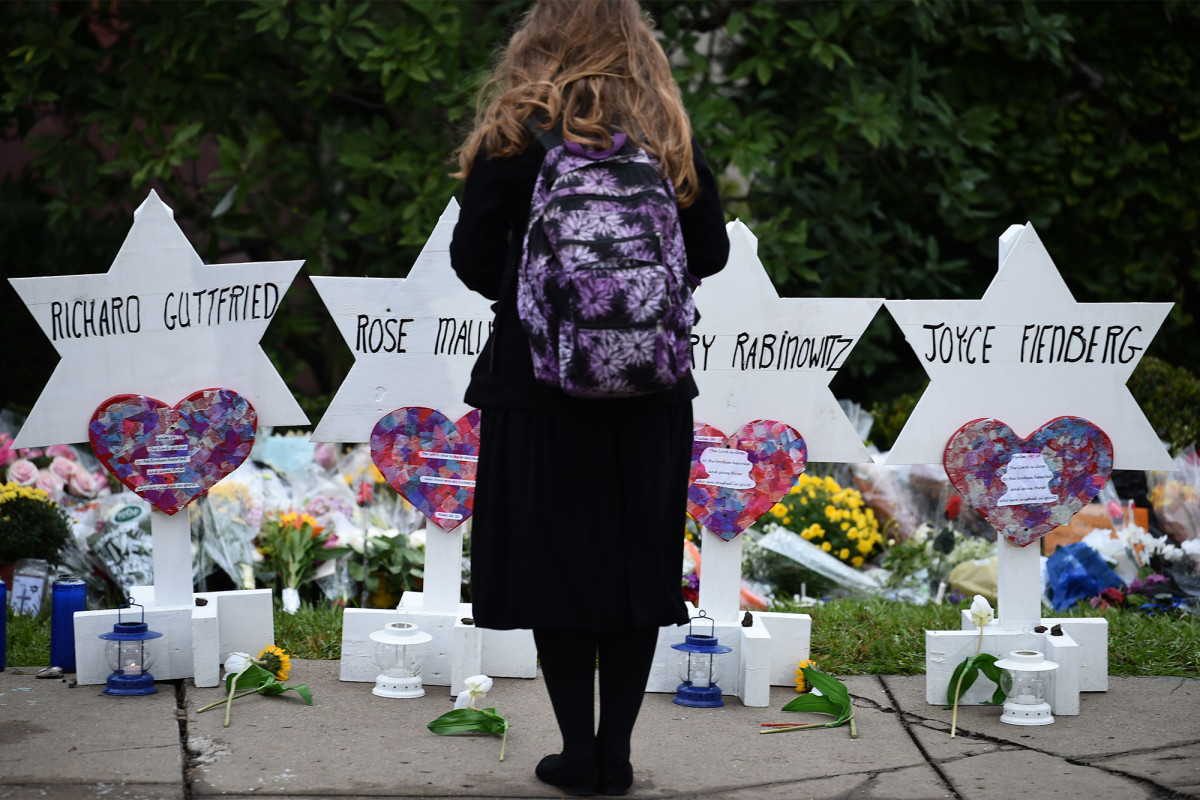
I received a call from a good friend last week: my colleague and former senior rabbi on Long Island, Rabbi Howard Stecker. He was wondering how our community was reacting to the trial in Pittsburgh of the 10/27/2018 Tree of Life attacker.

And the truth is, I was not sure how to answer. I have reached out to the members of Beth Shalom who have testified or will soon, and for them this is a particularly emotional time. I have discussed with a few folks who are certainly feeling the gravitas of this moment, including some who are taking the active decision not to read the news. There is at least one person in my orbit who is quite distraught, and has been so since the day of the attack.

But my sense is that our reaction is, on the whole, somewhat muted. Everybody knows it is going on, but at least as far as I can detect, we are, emotionally and spiritually, in a much better place than we were in the months following the shooting. Thank God.

I suspect that many of us have by now built up good defenses that enable us to feel and grieve the losses of that day, but not allow ourselves to slide back into the depths of the trauma of 4½ years ago. Contrary to expectations, extremist protesters supporting the defendant outside the courthouse have not materialized. And for that I am grateful.

I have been skimming reports in the Pittsburgh Post-Gazette without reading too closely. I did see the photo of the Siddur Sim Shalom for Shabbat and Festivals (the dark blue one) which Rabbi Jeff Myers took with him from the building; it has a bullet hole on the top. I hope that siddur ends up in the Rauh Archives, if not some other museum that is a testament to the survival of the Jewish people.

Rabbi Stecker asked me, as you might imagine, about the death penalty, about how folks in our community feel about it, and of course I told him that we are divided. We certainly have members of this community who are vociferously against, and some others who are decidedly for, and probably many of us who are uncertain exactly where we stand.

I have certainly thought, at many points in my life, that the death penalty is wrong, that the only figure in our world with the authority to issue and carry out execution, to actually end a human life, is God. I must concede, however, that this case gives me pause.

Now, you might think that the logical thing for a rabbi to do in this case is to go to the Jewish bookshelf for an answer. And the answer, as you may imagine, is not so simple. So I would like to add a brief caveat at this point:

My role as rabbi is not to tell you how to think. My role, rather, is to complicate the discourse by adding depth, to provide you with traditional tools from the Jewish bookshelf. A rabbi is a teacher of our religious tradition, and our sources demand that we consider challenging issues from multiple perspectives.

The Torah is clearly in favor of the death penalty. Not just in favor, but let’s put it this way: the phrase, “mot yumat,” “he shall be surely put to death” for some crime occurs at least 31 times in the Torah; it is mandated for such crimes as violating Shabbat (Ex. 31:15), adultery (Deut. 22:22), and of course first-degree murder (Ex. 21:12-13). There is also the famous case of the “ben sorer umoreh,” the wayward and defiant son, who is to be stoned to death by the men of the city (Deut. 21:18-21). For the record, we do NOT put anybody to death these days. (So our bar mitzvah boy and all of his friends can relax.)

One theory about these punishments is that the original meaning in many of these cases is not execution by human hand, but rather by God. See e.g. the explanation by Rabbi Ishmael, Babylonian Talmud Sanhedrin 84a, which indicates that in the case of a non-kohen who approaches the altar (Numbers 18:7), mot yumat; R. Ishmael asserts that this execution is “biydei shamayim,” by the hand of heaven.

But the ancient rabbis, who arrive on the scene many centuries after the Torah was completed, engage with the question of the death penalty in a more nuanced way than the Torah itself. On the one hand, they did not eliminate the death penalty, but on the other, their agenda is clearly to ensure that it is rarely, if ever, applied. The Talmud insists, in capital cases, on careful selection and questioning of witnesses, of requiring 23 judges instead of the usual three, and other ways to set the bar so high such that almost nobody would ever be executed.

And perhaps one of the best-known mishnayot on the subject, Makkot 1:10, says the following:

סַנְהֶדְרִין הַהוֹרֶגֶת אֶחָד בְּשָׁבוּעַ נִקְרֵאת חָבְלָנִית. רַבִּי אֶלְעָזָר בֶּן עֲזַרְיָה אוֹמֵר, אֶחָד לְשִׁבְעִים שָׁנָה. רַבִּי טַרְפוֹן וְרַבִּי עֲקִיבָא אוֹמְרִים, אִלּוּ הָיִינוּ בַסַּנְהֶדְרִין לֹא נֶהֱרַג אָדָם מֵעוֹלָם. רַבָּן שִׁמְעוֹן בֶּן גַּמְלִיאֵל אוֹמֵר, אַף הֵן מַרְבִּין שׁוֹפְכֵי דָמִים בְּיִשְׂרָאֵל

A Sanhedrin that executes a transgressor once in seven years is characterized as a destructive tribunal. Rabbi Elazar ben Azarya says: This applies to a Sanhedrin that executes a transgressor once in seventy years. Rabbi Tarfon and Rabbi Aqiva say: If we had been members of the Sanhedrin, no person would have ever been executed. Rabban Shim’on ben Gamliel says: In adopting that approach, they too would increase the number of murderers among the Jewish people.

In other words, the Sanhedrin should be guided by the principle that it should carry out the death penalty exceedingly rarely, and the opinion of Rabbi Tarfon and Rabbi Aqiva, who would rather not execute anybody, is countered by Rabban Shim’on ben Gamliel, who suggests that the death penalty should remain as an option because it is a deterrent.

And, consistent with the mishnah, an Israeli court has only handed down the death penalty exactly once in its 75 years of existence. A tribunal in Jerusalem convicted and sentenced to death Adolf Eichmann, the architect of the Nazi “final solution,” in 1962. 

Regarding the trial in our midst, Rabbi Danny Schiff wrote the following, which appeared in the Chronicle on May 10:

The classic ethos of Judaism would not contend that there should be zero executions in America. But it would also posit that the number of executions should not be far distant from zero. Eschewing absolutist positions, Judaism advocates a path that is capable of confronting the worst evil imaginable but does not hold that every heinous crime fits that description.

We must ask ourselves: Given that Judaism wants the death penalty to be rare, does this case rise to the level in which the death penalty is warranted?

There is some small part of me that wants to say, absolutely yes. Yes to Eichmann. Yes to Osama bin Laden. Yes to this person who was so filled with hatred for us, for our people.

And that voice is hard to hear over the din of other voices, which remind me of the Sanhedrin, of Rabbi Akiva and Rabbi Tarfon, or of my own personal feeling that maybe even this one is also biydei shamayim, in the hands of heaven. But I also know that in cases like this, we, the Jews, must defer to the law of the land. As my colleague, Rabbi Abigail Sosland, writes in her essay, Crime and Punishment (in The Observant Life, ed. Martin S. Cohen, p. 467):

The concept of dina demalkhuta dina [“the law of the land is the law”] cannot be ignored and the requirements to convict or acquit need not – and, in the secular justice system should not – come directly from the rabbinic sources, but from the secular law of the land. Still, the values of Jewish tradition, the level of deliberation with which the rabbinic courts were to handle death penalty cases, and their sense of grave responsibility should still inform our participation in such matters.

So how do I feel? I am praying right now that the jury considers the evidence thoroughly, that the attorneys make their cases thoughtfully and honestly, that the witnesses report details faithfully for the record, that the judge ensures that justice is carried out appropriately, that nobody will have any basis on which to say that the defendant did not get a fair trial.

And I am also praying that I will never be faced with the question of life and death in a way that is so completely real.

But perhaps most importantly, I want us all to remember that the focus of Judaism is life. That we are gathered here today to celebrate Shabbat, which is a reminder of the creation of life; that we called a young man to the Torah today, marking a new stage in his life; that we celebrated a bride and groom who will be married tomorrow, in a fundamental affirmation of life. 

That when we say recite the words of Qaddish, in remembrance of those whom we have lost, and in particular in remembrance of those who were so brutally taken from us just down the street 4½ years ago, we recall that those words too are not about death but also an affirmation of life, that we must carry and uphold their names and their spirits as we continue to embrace life.

~

Rabbi Seth Adelson

(Originally delivered at Congregation Beth Shalom, Pittsburgh, PA, Shabbat morning, 6/10/2023.)

Categories
Sermons

AI Will Never Be Human – Bemidbar 5783

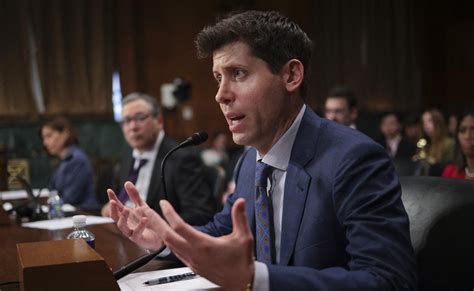
There has been much concern lately about artificial intelligence. You may have heard that last week a Senate subcommittee hosted the CEO of OpenAI, the creators of ChatGPT, Sam Altman. In his testimony, Altman (who is, BTW, a nice Jewish boy from St. Louis) actually asked the Senate to regulate AI. Many tech companies have zealously fought against regulation, so to hear Mr. Altman express concern about the potential dangers of AI and to seek regulatory controls may have been a relief for some. 

But the complicated part, and perhaps Mr. Altman is gambling on this, is that (a) Congress moves much more slowly than the rate at which widespread use of AI is unfolding, and (b) it is not immediately clear how exactly to regulate it. The devil (not that we Jews believe in such a thing) is in the details.

Nonetheless, this is clearly something to which Jews, as people whose tradition teaches us to be responsible for humanity and our world, should be paying attention.

Speaking of details, Parashat Bemidbar opens with a commandment to count people, to take a census of the Israelites while they are encamped in the wilderness, for the purposes of determining the fighting strength of their army. Much of the parashah is dedicated to these numbers.

This report of numbers by tribe might appear as a dull, bureaucratic endeavor which obscures the personhood of all of those counted, not to mention the women and people under the age of 20 who are not even counted. The first three chapters of Bemidbar come off looking something like the tape from an adding machine – lots of numbers and then a bottom line, which in this case is 603,550. (The extrapolated estimate of the entire population who left Egypt is therefore about two million, which seems like an impossibly high number. But far be it from me to say that something in the Torah is not true…) 

But here’s something that you might miss if you are not looking closely. The Hebrew instruction to perform this census is phrased thus (Bemidbar / Numbers 1:2):

שְׂא֗וּ אֶת־רֹאשׁ֙ כׇּל־עֲדַ֣ת בְּנֵֽי־יִשְׂרָאֵ֔ל

Se-u et rosh kol adat benei Yisra-el

Now, your translation of this verse in the Etz Hayyim ḥumash says, “Take a census of the whole Israelite company.” But the Hebrew speaks idiomatically. A more literal translation is “Lift up the head of the entire group of Israelites.” The suggestion of “lifting up the head” sounds much more personal: Do not merely count heads; lift them up. Take each individual’s face into account. Acknowledge each member of the group as a human being, and as part of the greater whole. As if to drive the point home, the passages about counting are followed by the  the birkat kohanim, the Priestly Blessing of Bemidbar / Numbers 6:24-26, which occurs in Parashat Naso (which we won’t get to until the week after Shavu’ot). The third verse is as follows:

יִשָּׂ֨א ה’ ׀ פָּנָיו֙ אֵלֶ֔יךָ וְיָשֵׂ֥ם לְךָ֖ שָׁלֽוֹם׃

Yisa Adonai panav elekha veyasem lekha shalom.
May God lift up God’s face to you and grant you peace.

It’s the same verb: נשא / to lift up. 

When it comes to counting people, the details matter. It’s not just a strip of adding tape. Every one of us counts. Every one of us must be acknowledged and lifted up.

A brief report caught my eye this week, regarding the state of religion in America. An organization called the Public Religion Research Institute (PRRI) published the results of a recent survey of Americans’ attachment to religion. And, as you might expect, the percentage of us for whom religion is important is going down, and the number of unaffiliated folks continues to rise. 

And the Jews, of course, are the same as everybody else, only more so. 

Now, you certainly have all heard me make the case for the value of Judaism, if not religious practice in general, and I don’t need to do that right now. (But just wait until Rosh HaShanah!). Some of the statistics in this report show that people who attend religious services at least a few times a year tend to be more engaged in civic and political activities, particularly those things where people gather and work together. And I think we all know from anecdotal evidence that religious practice actually induces pro-social behavior in many of us.

So all the more so: religion brings people together, and is good for us as individuals and for society. It lifts us up, and helps us to see each other’s faces and acknowledge our shared humanity. And every one of us counts.

Nowadays, we have many fancy adding machines which help us through our lives: silicon slaves which do our bidding, and can help us achieve things which our ancestors could not even have imagined. 

The Israeli historian and social philosopher Yuval Noah Harari opens his book Homo Deus with an explanation for why people no longer need religion: because we have effectively vanquished plague, famine, and war. Yes, we have just been through a minor plague, and war is clearly still around, but the numbers of people who perish due to these things is far fewer than did so in previous centuries. Harari argues that our ability to live and thrive and not be so concerned on a daily basis for matters of life and death have obviated the need for religion, and for God. And indeed, when we have created tools such as artificial intelligence which may seem to have personality, perhaps we have achieved the status of Homo Deus, of God-like people. 

Sam Altman, in his testimony on Capitol Hill, pointed to the fact that when Photoshop was first introduced, it fooled some people initially, but we quickly learned to distinguish between an actual photo and something which had been altered. That sort of technology will of course continue to improve, and I am certain that it is only a matter of time before our adding machines will be able to deceive us in ways we would never have considered before.

And so too with language models like ChatGPT. They may ultimately sound human. But I do not believe that they will ever replace actual humans. And they will certainly never possess the Divine spark that is at the core of each of us.

ChatGPT will never be able to make a minyan. AI will never be able to give a proper hug to comfort those who mourn. It will never be able to get up and dance with joy as we name a new baby or celebrate a couple who is about to be married. It will not seek atonement on Yom Kippur, or sing moving melodies that turn the heart to God, or pray silently or yearn for God’s presence as we welcome Shabbat with Yedid Nefesh. A computer will never understand the value of Shabbat, or the conscious choice to take the holy opportunities of Jewish life, which give our lives framework and meaning.

Rabbi Danny Schiff, toward the end of his book, Judaism in a Digital Age, which we will be discussing after qiddush, addresses the question of whether the future necessitates a human presence. He writes,

Judaism’s answer to this question is yes. No matter how animated, intelligent, responsive, or reliable our AI creations might become, AI will never attain the combination of qualities that will merit the status of being “created in the image” [betzelem Elohim, a reference to Bereshit / Genesis 1:28]… The gulf between achieving convincing human-like qualities and being human is almost certainly unbridgeable. Jews are mandated to expand the Divine image in the world, not to lessen it. That goal demands the preservation of humanity. Judaism provides no license to contemplate an alternative… The irreplaceable human perspective and the poetry inherent within the grandeur and the struggle of human existence are exquisite… Each human life contains the potential for untold significance, and that will remain true even if AI comes to be viewed as functionally superior.

Put more bluntly, our devices may count us. But no computer will ever lift up our heads and appreciate the fullness of our humanity, of who we are as individuals and as the significant constituent parts of a human collective. 

And furthermore, no amount of technological modification of the human body or mind will make us God-like. God is far too elusive to enable that. Contrary to what Yuval Harari says, the need for religion – for Judaism – will never go away. We will always need to yearn together, to mourn together, to gather for prayer and celebration and comfort. We will always need a transcendent framework which brings us back to the spark of Divinity; no microchip will ever be able to recreate that.

ChatGPT, Google Bard, or whatever else comes after them will surely know Torah. They will be able to recite gemara with ease and probably teach and interpret for knowledgeable Jewish people. But they will hardly be able to convincingly sing ‘Etz ḥayyim hi lamaḥaziqim bah” / The Torah is a tree of life for those who grasp it.

Our strength comes from grasping the words of Torah. And we let that go at our peril. So we just might have to keep holding onto and holding up our tradition, paying attention to the details, and lifting our heads together for the sake of humanity.

~

Rabbi Seth Adelson

(Originally delivered at Congregation Beth Shalom, Pittsburgh, PA, Shabbat morning, 5/20/2023.)

Categories
Sermons

The Future – Tetzaveh 5783

When I consider where we are as a society and where we might be headed, the words of Leonard Cohen, from the title track of his fantastic 1992 album, “The Future,” continue to ring in my ears:

Things are gonna slide
Slide in all directions
Won’t be nothing you can measure anymore
The blizzard, the blizzard of the world
Has crossed the threshold
And it’s overturned
The order of the soul

We, the Jews, are excellent at history. Regarding the future, not so much. 

Just consider what will be happening, Jewishly speaking, for the next few weeks: 

  • On Shabbat we remember Creation. 
  • On this Shabbat Zakhor, we remember Amaleq
  • On Purim, Monday evening and Tuesday, we remember how Esther saved the Jews of Persia. 
  • On Pesaḥ, we remember how we came from slavery to freedom. 

And so on. We are excellent at history.

But where in Jewish life do we remember the future? The most enduring symbol of the Jewish future to be that one that is right behind me, above the ark. Parashat Tetzaveh opens (Shemot / Exodus 27:20) with the mitzvah of kindling the Ner Tamid, the eternal light, which symbolizes the continuity of our connection with God and Torah from all the way back to Exodus. It is tamid – always burning, always reminding us of our past and the eternity of the future before us, always serving as a beacon to call us back to our tradition.

We frequently invoke yetzi-at Mitzrayim, the Exodus from Egypt, in our liturgy. We do so because it serves as a template for our future redemption, the redemption of Olam HaBa, the World to Come. But admittedly, the Olam HaBa model is somewhat inchoate, and frankly, we are in disagreement as to what the real goal in Jewish life is. There are certainly some who understand our performance of mitzvot on this Earth to bring the mashiaḥ, the anointed, supposed descendant of King David, and lead us to Olam HaBa. There are others who see our mitzvot as serving their purpose in the here and now; that is, we fulfill them because it is the right thing to do in the moment, and their reward is intrinsic. (I am in this latter camp.)

But in general, except for mashiaḥ-based ideology, which is somewhat murky and controversial, we do not really speak too much about the future. We are simply not wired that way. Judaism is fundamentally focused on the present.

Which is why Rabbi Danny Schiff’s new book, Judaism in a Digital Age, is so striking. Well-researched and thoughtfully presented, the book addresses not only the future from a Jewish perspective (and in particular, the future of the modern non-Orthodox movements), but also the future from a general point of view, the future of all humanity. And let me say this: the view is mostly pretty bleak.

He opens with a biting critique of the Conservative and Reform movements, explaining in excruciating detail about why movements which emerged “when horses were the dominant means of transportation” are not only no longer relevant, but also destined for continued decline as they confront the “hyper-emancipated” world of the digital age. 

He moves on to take a snapshot of society as it is today, how “modernity” ended in 1990 with the widespread availability of the Internet, and all of the ways that immediate access to information through digital means has changed how we live and think and socialize. He revels in the current thinking by notable futurist authors, including the very real threat to society posed by artificial intelligence, and dangles before the reader the promise of immortality based on so-called “transhumanist” ideas about the blending of technology and the human body, which may ultimately serve to destroy any traditional concept of corporeal human life as we now know it.

And here and there he asks the hard questions about Judaism’s confrontation with post-modernity. What value will there be to having rabbis and teachers when all information is available to us without the intermediaries? How can halakhic principles regarding privacy or leshon hara remain in play when all of the details of every person’s life is available to anybody else through a search engine? How can we confront the challenges posed by rising rates of isolation and economic inequality, the availability of pornography, or the endless amplification of self-importance which social media platforms encourage?

Whatever happens in the future, we will certainly respond by (a) failing to consider adequately the full consequences of new technologies, and (b) managing to eke out a new way of living despite dramatically changed circumstances. Rabbi Schiff cites David Zvi Kalman, a fellow at the Shalom Hartman Institute, regarding the way we passively accept potentially harmful innovations:

There’s a new technology in town. A few years ago it seemed like a pipe dream, but it’s now arrived on the commercial market in a big way. Large corporations are lining up to use it even as watchdogs point out serious potential for abuse. Reporters look into it, agree that there is a problem, and pen dozens of articles fretting about the downsides, demanding regulation and responsible use. The public grows concerned, and then they grow resigned. Meanwhile, the technology is adopted. Sometimes it is well regulated, more often it is not. There are a few horror stories. We learn to live with it. We move on. This is the ethical life cycle of modern technology, and its major problem is that it doesn’t know how to distinguish between technologies that complicate morality and those that destroy it – this is, it lacks the ability to say no, absolutely not.

We are seeing this tale play out over and over; consider facial-recognition technology, which is now widespread. Our response, according to Rabbi Schiff, must be to accept that the world has changed, and respond within the new paradigm:

Viewed from a Jewish perspective, the digital age is no longer about adapting Jews and Judaism to a slowly opening world of belonging and enlightenment; it is about asking how human beings should optimally function within the cacaphonous tumult of an accelerating epoch of hyper-emancipation, hyper-connectivity, and hyper-individualism.

And this is where I believe that the modern movements have the greatest potential. We are particularly well-positioned to engage with the Jewish future, perhaps in ways that more traditional forms of Orthodoxy cannot.

So first of all, I want to reassure you all that reports of the Conservative movement’s death are highly exaggerated. People have been declaring us dead for years, but I do not think that you have to look around too much here at Beth Shalom to see that this is a thriving, multi-generational community that rejoices and grieves together, that cherishes life and celebrates Jewish living and constantly engages with Jewish text and ritual. And while our membership decreased slightly during the pandemic, we are gaining members once again, continuing to buck the national synagogue trend. 

I am grateful for our excellent and committed staff. Our lay leadership is in fine shape, and we are preparing for a capital campaign so we can make much-needed repairs to our building. חזק חזק ונתחזק / Ḥazaq, ḥazaq, venitḥazzeq. Be strong, be strong, and we will be strengthen one another.

And even Rabbi Schiff concedes that if there is a new model for how to be Jewish, we have not yet found it. So meanwhile, while we are waiting for that new paradigm to emerge, we are going to continue to do our traditional-yet-contemporary thing. We will continue to pray together, to learn together, and to offer imaginative new programming through Derekh and otherwise.

Now onto the thorny questions about the future: 

  • Will we all soon be immortal cyborgs? 
  • Will the chips planted in our brains which connect us all to the shared data storage of all of human history extinguish our individual personalities? 
  • Will the AI machines we have created overthrow us or imprison us or simply exterminate us all when they realize that we are weaker and far less efficient than they are? 
  • What will happen to Judaism in a future in which God seems powerless compared to the technology we have created?

Jews have lived through many centuries of change, of social upheaval, of wars and genocides and life-changing innovations. We have made the transition from hand-copied documents to printed books to instantly-searchable gemara on smartphones. And yet, here we are, still reading Torah from a scroll produced essentially the same way for thousands of years, still basking in the glow of a Ner Tamid that – OK, so this one is electric, not an olive-oil lamp – but it is still shining as a beacon, here on Beacon Street.

We have navigated a changing world, and we will continue to do so. We will determine whether halakhah permits us to eat cultured meat that was never actually attached to any animal. We will find a way to grapple with the potential immortality awaiting us in the near future; as Rabbi Schiff points out, our sources do speak here and there about immortality. We will manage to make minyanim a few times a day, even when our physical presence and our consciousness are not in the same place. We will ask the hard questions and answer them within the Jewish system, just as Jews have always done.

Rabbi Schiff lands in a somewhat reassuring place. Regarding the AI-infused future, he says, “No matter how animated, intelligent, responsive, or reliable our AI creations might become, AI will never attain the combination of qualities that will merit the status of being ‘created in the image’ [of God].

We can do this. We in the Conservative movement are especially well-placed to do this. We have been addressing cultural, societal, and technological change for a while, and we will help us all make this transition to whatever awaits us. I’m counting on that Ner Tamid to continue shining, to continue reminding us of the turbulence of our past, the constancy of our present, and the brightness of our future. Our unofficial historical slogan has been, “Tradition and change,” and I expect that we will continue to balance the two successfully.

In the Talmud (BT Avodah Zarah 2a), Rabbi Yehoshua ben Levi said, “All the good deeds Israel does in this world will bear testimony in Olam HaBa.” Perhaps Olam HaBa will not look quite like what R. Yehoshua ben Levi envisioned, seventeen centuries ago. But whatever form it takes, Jews will be there, still meditating over our words yomam valaila, day and night, and looking to the Ner Tamid as a reminder of past and future.

~

Rabbi Seth Adelson

(Originally delivered at Congregation Beth Shalom, Pittsburgh, PA, Shabbat morning, 3/4/2023.)