Categories
Sermons

Jewish Unity, Past and Present – Yitro 5784

The Jews are a notoriously fractious people, and the Torah makes clear that this was the case from our very inception. When did the Jews start complaining? Right after they escaped from Pharaoh’s army, having crossed the Sea of Reeds on dry land, no longer slaves but as free people, last week in Parashat Beshalla. They are already grumbling about why they followed Moshe and Aharon out into the desert (Shemot / Exodus 16:3). 

וַיֹּאמְר֨וּ אֲלֵהֶ֜ם בְּנֵ֣י יִשְׂרָאֵ֗ל מִֽי־יִתֵּ֨ן מוּתֵ֤נוּ בְיַד־ה֙’ בְּאֶ֣רֶץ מִצְרַ֔יִם בְּשִׁבְתֵּ֙נוּ֙ עַל־סִ֣יר הַבָּשָׂ֔ר בְּאׇכְלֵ֥נוּ לֶ֖חֶם לָשֹׂ֑בַע כִּֽי־הוֹצֵאתֶ֤ם אֹתָ֙נוּ֙ אֶל־הַמִּדְבָּ֣ר הַזֶּ֔ה לְהָמִ֛ית אֶת־כׇּל־הַקָּהָ֥ל הַזֶּ֖ה בָּרָעָֽב׃  

“If only we had died by the hand of God in the land of Egypt, when we sat by the fleshpots, when we ate our fill of bread! For you have brought us out into this wilderness to starve this whole congregation to death.”

One might make the case that the only time that the Israelites, or the Jewish people, spoke in one voice is the moment that we read today in Parashat Yitro (Shemot 19:8): 

וַיַּעֲנ֨וּ כׇל־הָעָ֤ם יַחְדָּו֙ וַיֹּ֣אמְר֔וּ כֹּ֛ל אֲשֶׁר־דִּבֶּ֥ר ה’ נַעֲשֶׂ֑ה

All those assembled answered as one, saying, “All that God has spoken we will do!” 
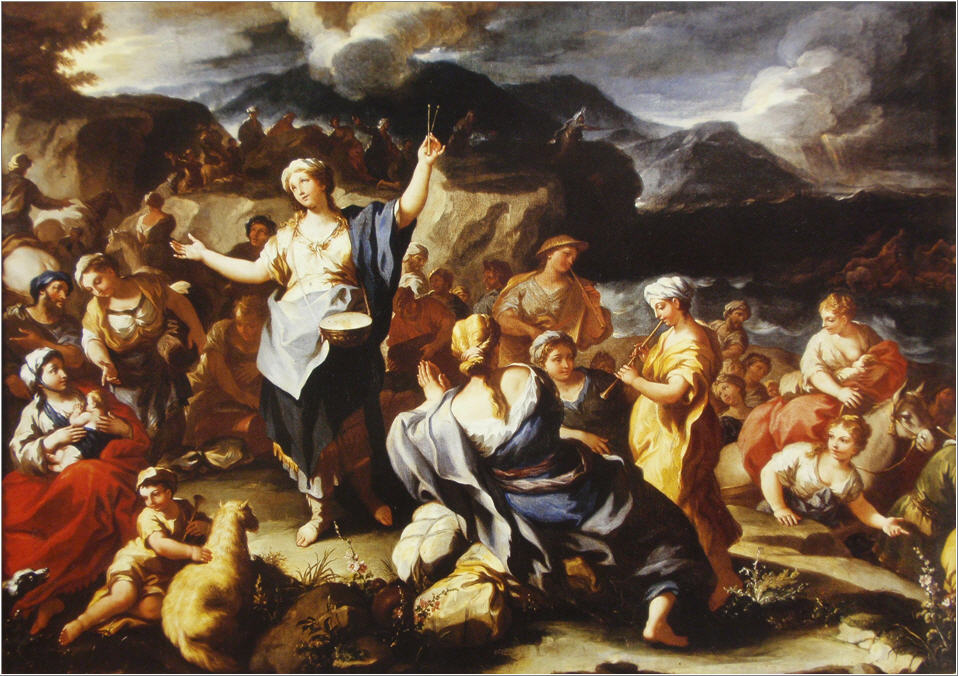
The Israelites accept the Sinai covenant, even before they have heard the words of Aseret HaDibberot / the “Ten Commandments,” יַחְדָּו֙, as one, in one voice. That has never happened since. I have even made the argument in this space that our inclination to disagree with each other, particularly over the meaning of our ancient texts, is the reason that we are still here. The Romans did us a favor, nearly two millennia ago, by destroying the Beit haMiqdash / Temple in Jerusalem and forcing us to make our tradition portable and democratic, rather than centralized and hierarchical. Hence the disagreement.

Detail from the Arch of TItus, showing Romans carrying Temple implements from Jerusalem

A curious thing happened after October 7th: suddenly, it seemed that the whole Jewish world was united against Hamas. And how could we not be? The Jewish people were attacked, brutally; an area within Israel’s boundaries was occupied by terrorists. More Jewish people were killed that day than on any day since World War II. As horrific as the details and magnitude of what happened are, I fear we will not grasp the full scope of the horror for years.

For a moment or two, we spoke with one voice. The sovereign, democratic State of Israel must defend itself against terrorism. Full stop. The unity in Israel and with Diaspora Jews was unbelievable. When I was in Israel in November, the statement of this unity which I saw and heard everywhere – on billboards, as the lead-in to radio advertisements, projected onto the sides of buildings – was יחד ננצח. Together, we will win.

When Israel called up its reserve soldiers, 150% of those called showed up for duty – something which never happens. Israelis who were trekking through Thailand and Bolivia got on the first plane home. Jews all over the world, including some in Pittsburgh, rounded up needed supplies to send to Israel. Perhaps most remarkably, many Ḥaredim (I’ve heard as many as 4,000) signed up to serve in the IDF, something which they have historically not done in great numbers.

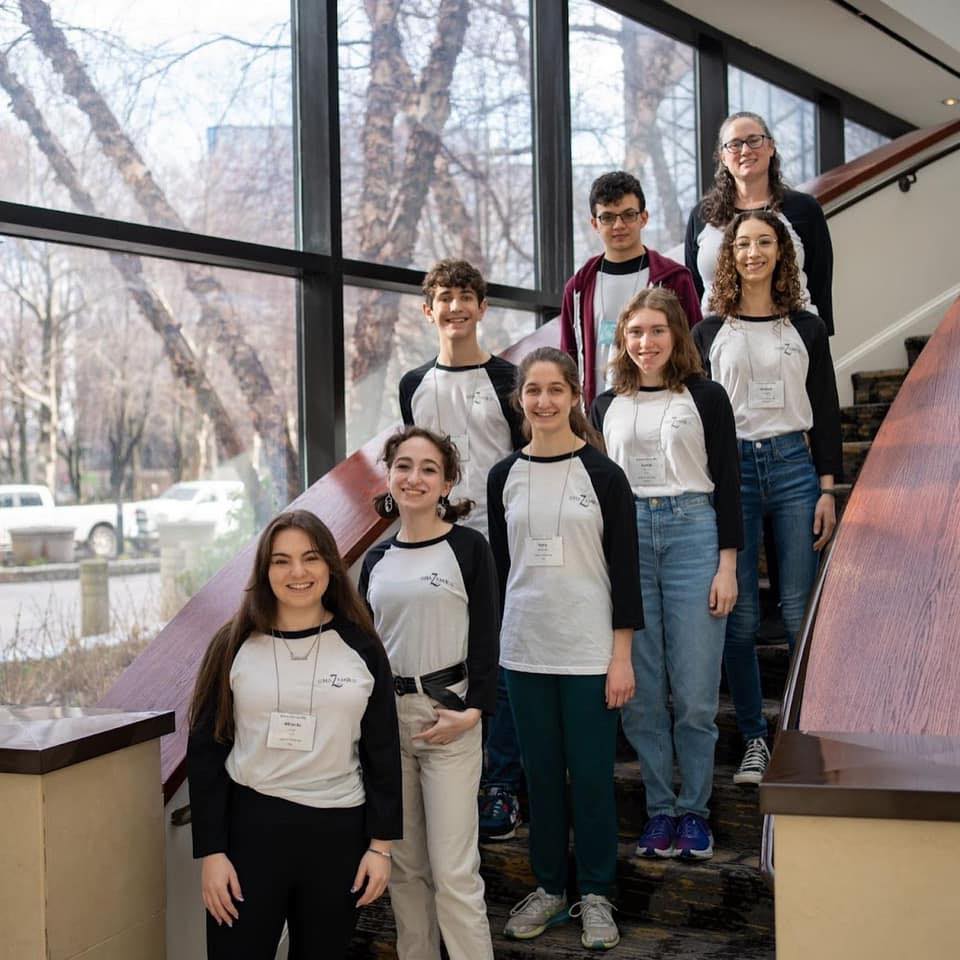
In January, I spent two days with HaZamir, the International Youth Teen Choir, in New Jersey. The HaZamir environment is one of the last places in the (non-Orthodox) Jewish world that is still unquestionably, proudly, unapologetically Zionist. And that is a particularly satisfying feeling for me, because it features Jewish teens singing Hebrew choral music, which I love.

But of course, four months into this war, we are now seeing cracks in the Jewish unity which followed October 7th. In Israel, frustration over the fact that there are still 100+ hostages is boiling over, and anger at Prime Minister Benjamin Netanyahu, which seems to now be carrying over from the pro-democracy protests of last year, is palpable. 

We are still seeing plenty of anti-Israel activism around the world. South Africa’s charging Israel with genocide in the UN’s highest court is a prime example. And of course there are Jewish groups (Jewish Voice for Peace, IfNotNow) who are calling for an unconditional ceasefire, something which merely hands Hamas both victory and opportunity to re-arm.

I think it is difficult to argue with the fact that Hamas has succeeded in its diabolical plot far beyond its own expectations. Not only did they excel at murder and hostage-taking, but also, knowing that Israel’s response would be devastating and deadly for the people of Gaza, in soon turning world public opinion, including that of some Jews, against Israel. 

evreh, it is absolutely abhorrent that somewhere around 26,000 Gazans have died in this war. And yes, that number is courtesy of Hamas, but there is no disputing that thousands of civilians have died in a war due to Hamas’ cynical use of their people as human shields. There is no question that we should be seeking a peaceful solution to find a way to preserve human life throughout the region. But in light of what happened at the International Court of Justice a week ago, we should remember a few important things:

  1. That figure of 26,000 includes about 10,000 Hamas fighters. I rarely see an American news outlet even mention that. Furthermore, Hamas likely overestimates the number of children who have been killed.
  2. Remember that Hamas is still firing rockets into Israel, and of course returning fire on advancing Israeli troops, and all of this fighting is taking place in one of the most densely-populated places in the world.
  3. The current tumult about UNRWA, the UN organization which provides humanitarian aid, running schools and hospitals in Gaza and elsewhere, is not surprising to anybody who has been paying attention. The fact that UNRWA employees are not only giving cover and aid to Hamas, and indeed even participated in the attack of October 7th, is deeply problematic.
  4. Netanyahu’s approval rating in Israel right now is somewhere around 26%. If elections were held tomorrow, Likud would lose dramatically. He and his far-right allies are now leaning into their base to try to drum up support for horrible ideas, like re-occupying Gaza, or worse. We should look past this inflammatory rhetoric to the day when he is no longer in power, and that day should be coming soon.

When Theodor Herzl wrote, in his 1902 book Altneuland (“Old-new land”), Im tirtzu, ein zo agadah (“If you will it, it is no dream”), he was, in fact, creating a new idea in Jewish life: that people did not have to wait for God to make the first move in establishing a home for the Jewish people. Decades before the rise of Nazism, Herzl knew that the safety and security of Jews in the Diaspora would wax and wane but never be completely stable, and that the only realistic solution for the Jewish future would be self-determination in the land from which we came.

Herzl could not have predicted the challenge of Hamas, although he was certainly aware that the Zionist idea would not be universally accepted, even by Jews, from the outset. 

However, I must say that even though I have thrown my lot with the Diaspora (at least for now), Herzl was right. America, as wonderful as it has been for the Jews, will never be entirely safe. We in Pittsburgh know this all too well. And all the more so many of the other places where Jews have lived. 

The Israeli singer Gali Atari made famous the song lyric, “Ein li eretz aeret.” I have no other land. And as much as we would like to think that we have succeeded here and elsewhere, I still believe in Herzl’s dream: “Lihyot am ḥofshi be-artzeinu.” To be a free people in our land.

And I must add that while I am a loyal American, grateful to this nation for the safe haven it offered my great-grandparents more than a century ago, I am feeling a lot less safe in this country than I used to. And there are plenty of Jews around the world who live in places that are far less safe and stable.

I do not imagine that we will see the unity of October 8th again any time soon. But I think it is essential for us to hold onto certain principles as we move forward:

The hostages must come home before there will be any ceasefire agreement.

Likewise, Hamas must surrender. The ongoing existence of this terror group is a demonstrable threat to the safety of Israeli citizens as well as Palestinians, and to some extent Jewish people the world over.

The people of Israel need our support. We may not achieve full and complete unity, but we must stand with the nearly 10 million people of that nation, Jews and non-Jews, in their quest to remain a safe, democratic haven in a decidedly non-democratic region.

This war is deeply painful for millions of people across the region, and that pain has, to some extent, impacted Jewish unity. The opening line of Beshalla (Shemot/Exodus 13:17) last week actually spoke to the challenge of war. Instead of sending the Israelites out of Egypt the easy way,  to return to Israel on the seaside route, which would have taken just a few weeks, the Torah reports that God sent them the long way, the 40-years-in-the-desert route, because God was concerned that when they saw war (e.g. with the Amalekites, the Philistines, the Canaanites, etc.), they would have a change of heart and return back to Egypt.

In the context of war, it is easy to say, “Let’s go back to Egypt,” Although we all know that would be much, much worse. We should rather recommit to Israel, to commit to the longer, harder journey, if not to the unity we once had.

~

Rabbi Seth Adelson

(Originally delivered at Congregation Beth Shalom, Pittsburgh, PA, Shabbat morning, 2/3/2024.)
Categories
Sermons

Time to Gather Again – Shabbat HaGadol 5782

You may know that back in the Old Country, rabbis would only give sermons twice a year: on Shabbat Shuvah, between Rosh Hashanah and Yom Kippur, and on Shabbat haGadol, right before Pesaḥ. (You know who likes to cite this fact frequently? Cantors, who are always hopeful that the rabbi will talk less.)

I think the reason, historically, was that those were times in which the rabbis felt the need to remind their congregations of the important halakhic details surrounding Yom Kippur and Pesaḥ, so they lectured them on the intricacies of fasting and repenting, on ḥametz and matzah and purifying our homes and our lives, and so forth.

So one reason this day is called Shabbat haGadol, which you might translate as “the Big Shabbat,” is that services historically took longer, since the rabbi would be talking extensively about kashering your pots and pans, burning and selling ḥametz, and so forth.

On this Big Shabbat, as we emerge cautiously after two years of pandemic, we have to remember to think big, that is, to think in terms of community, rather than as individuals.

My daughter, who was called to the Torah as a bat mitzvah here in the depths of the pandemic in August 2020 with a few more than a minyan of close relatives in the room, recently told me something that was particularly striking. She sings with the Pittsburgh chapter of HaZamir: The International Jewish Teen Choir. If you are not familiar with HaZamir, you should know that there are 25 chapters in cities across the United States, and eight chapters in Israel, and every spring they gather in New York to perform together – hundreds of American and Israeli teens on stage at Lincoln Center. It is powerful and moving; many young members of Beth Shalom have sung with HaZamir over the years.

HaZamir performing in Pittsburgh at Temple Sinai, 2019

But that concert is only the part that is visible to the public. On the day before the concert, that is, on Shabbat, the participants organize and attend their own services. Now, imagine if you will that you have a population of 400 Jewishly-knowledgeable high school students, who are all talented singers, and you ask them to create Shabbat services? The result, which I have not personally experienced, but my daughter did two weeks ago, is something wonderful. She described it as restoring her faith in the idea of Am Yisrael Ḥai: The people of Israel lives!

https://www.facebook.com/watch/?v=979326796024987

I was kind of struck dumb by this remark. All of the investment in her Jewish upbringing – the day school tuition, the bat mitzvah prep, the summers at Camp Ramah, USY conventions, Shabbat and Yom Tov services here at Beth Shalom week after week – and the thing that gives her hope for the Jewish future is an annual Jewish choir convention in New York. I frankly did NOT see that coming.

But it speaks to the idea of thinking big. That is, thinking about community. What made that Shabbat work was the instant-community feel of it: a whole bunch of teens brought together for a particular purpose, thinking not only of themselves, but rather of the entire gathering, of the whole group together.

And you know what? We can think big right here in Pittsburgh. We do not have to head out to Lincoln Center to find community.

On the contrary: we have it right here. And this is not an instant community; it is fashioned from a group of people who have been convening under the banner of Congregation Beth Shalom for more than a century. 

But there is an urgency right now to our being able to think big.

While it is true that the pandemic is not over, we are thankfully in a lull in terms of new infections and hospitalizations. We are now mask-optional here in the building, except for our youngest congregants (with the innovation this week of a mask-required section here in the Sanctuary). 

And looming larger in our midst is the challenge right now of returning to one of the basic principles in Jewish life, that our tefillot, our religious services, take place in person. That is, they require physical proximity, in order to constitute a minyan, a prayer quorum of 10 Jewish people. 

Before I get to how we get there, just a quick review of how we got here.

As you may know, 9 or fewer people praying together are considered individuals, and there are certain parts of the service which may not be performed unless there are at least 10 people present. Those items include reading Torah, reciting the Barekhu, the repetition of the Amidah including the Qedushah, and any form of the Qaddish, including Mourners’ Qaddish. Prior to March 15, 2020, we held fast to the halakhic principle that those people must be in the room.

As the world was shutting down 25 long months ago, we moved our services almost entirely on-line. The Conservative movement’s Committee on Jewish Law and Standards issued a teshuvah, a rabbinic response to a halakhic quandary, that in certain circumstances people who are not in the same building but within sight and hearing of the service may be counted in the minyan.

Our new electronic tools have made this possible from a much greater distance than the ancient rabbis of the Talmud could have possibly envisioned. In his teshuvah, my colleague Rabbi Joshua Heller suggested that we apply a hora’at sha’ah, a temporary measure that would apply in this she’at hadeḥaq, this urgent situation brought on by the social distancing requirements of the pandemic. This enabled us to constitute a minyan via Zoom, when we were not in each other’s physical presence, but rather in “virtual” presence, and therefore able to complete our daily tefillot in the usual way.

Prior to two years ago, the Conservative movement did NOT allow this, and we at Beth Shalom would not have accepted a laptop and screens sitting in the middle of the Samuel and Minnie Hyman Sanctuary. But considering the she’at hadeḥaq, this urgent situation, we changed one of the fundamental principles of Jewish life. And for many of us, this was an essential lifeline for the last two years. Many of us were stuck at home for much of that time, with few opportunities to connect with others. Indeed, weekday service attendance over the last two years has actually been higher at times than pre-pandemic, and we have never failed to make a minyan

But, ḥevreh, it is now time to return to where we were before the pandemic. And now is the time to think big: to think beyond ourselves as individuals. To consider the greater needs of this community.

What is the most important part of tefillah, of prayer? Is it fulfilling the mitzvah, the holy opportunity that our people have been practicing for thousands of years? Is it reciting the Shema and the Amidah, the two fundamental building blocks of Jewish services? Is it hearing the Torah read and interpreting it? Is it enabling folks to recite Mourners’ Qaddish?

While all of those things are essential to Jewish life and the keys to our ongoing existence and flourishing, the most important aspect to tefillah is the gathering. It is the banter before, the schmoozing after, the human contact that takes place as we come from our separate directions to form a minyan, interact, even if only briefly, and go our separate ways again.

We need to be around each other, in person. We need to see each other’s faces, to hear each other’s voices in their full, resonant glory, uncompressed by Internet transmission technology. We need to be present for one another, in moments of grief and celebration, pain and joy.

And that is why our Religious Services Committee has set a date: Monday, May 2, three weeks from now. On that morning, we will start serving breakfast after morning minyan once again, as we always used to do (thanks to Dee Selekman and her team of assistants), and both morning and night we will expect that the minyan will have to be 10 people, in person, in the room.

Yes, I know that means you have to leave your home and #ComeBacktoShul in order for us to make a minyan. Yes, we will continue to offer our services via Zoom, but that some of our regular Zoom participants who are in other states and even in other countries will not count toward the minyan. Yes, there are people for whom it is still not safe to come into the building, and that is surely a consideration. 

But we have to think big. We have to think not just about ourselves as individuals, but the greater good as a qehillah qedoshah, a community founded in holiness. And this principle is one which we should not relinquish. 

Congregation Beth Shalom

You may know that there are already synagogues which have entered the so-called “metaverse.” While I admire their willingness to be ahead of the curve, I must emphasize that a synagogue is a fundamentally local institution. I am fairly confident that whatever Mark Zuckerberg creates and however impressive the technology, we are going to need in-person interaction unmediated by Reb Zuckerberg and his platforms. We need to be together.

On this Shabbat haGadol, this Big Shabbat, it is time for us to acknowledge the urgency of restoring this crucial aspect of Jewish life.

And let’s face it: there may be some nights we won’t make a minyan. We have the GroupMe app to help summon others if necessary. But here is where you come in: help us out. Pick one night a week, or one night a month, to help us support one another by being in minyan, in communal relationship together. Think big! Show up.

חג שמח! Ḥag Samea! May we all have a joyous Passover festival, marked by gathering and community and good discussions around the seder table.