Categories
Festivals Sermons Yizkor

Allies in Faith – 8th Day Pesaḥ 5783 / Yizkor

Passover, like no other holiday, trades in memory, personal and national. Just about every seder* that I have ever attended relies on memories of past sedarim, of family gatherings, of special foods, some which we liked and some which we memorably did not; memories of your funny uncle who would take a sip out of Elijah’s cup when everybody was watching the door, of good times singing Eḥad Mi Yodea and Ḥad Gadya and Dayyenu, of the hunt for the afikoman and of course all the grandparents and aunts and uncles around the table, the people who are no longer with us. And certainly the remembrance that comes with Yizkor at the end of Pesaḥ puts a final flourish on the sense of personal memory that this holiday features.
And also perhaps like no other holiday, Pesaḥ trades on historical memories of our people. Yetzi’at Mitzrayim, the Exodus from Egypt, is not only the foundational moment of Benei Yisrael, the people of Israel, but is also an essential statement of who we are as a people. The family of Ya’aqov / Jacob descends into Egypt as a group of 70 people escaping famine, and emerges 430 years later as a great nation, ready to receive the Torah and inherit the Land of Israel which has been promised to them. 

But this family becomes a nation by experiencing slavery and subsequent redemption, ensuring from the outset that from generation to generation Jewish people would understand what it means to be a slave, to be oppressed and persecuted, to be subjugated by another and denied our own spiritual means. Pesaḥ is therefore emblematic of all the ways in which we continue to act on that arc of slavery and redemption, in which we seek to bring about redemption for ourselves and the world by highlighting the holiness of the others around us.

And we hear that story replayed over and over throughout Jewish history, with the Babylonian Exile and return in the 6th c. BCE; the Roman destruction and dispersion of the Jews from Israel in the 1st c. CE; the Inquisition, the pogroms, the Shoah / Holocaust, the establishment of the State of Israel in 1948. 

Persecution and redemption. Displacement, dispersion, and return. These are the major themes of Jewish existence going all the way back to slavery in Egypt. That is why the memories of our people speak so powerfully; that is why the Pesaḥ seder is still one of the most-practiced Jewish observances, because it is so deeply laden with history. The Pesaḥ memory machine, every spring, serves up its products along with the matzah and maror.

As you may know, I grew up in a fairly non-Jewish place, in the rustic and handsome Berkshire hills of Western Massachusetts. My parents had to work hard to ensure that my brother and sister and I had a strong connection to our tradition, our community, our customs and rituals, that we would be deeply connected to that memory machine. Our Conservative synagogue was 17 miles away, a 30-minute car ride. The nearest kosher meat market was in Albany, NY, an hour by car over a mountain. My grandparents and many close relatives with whom we spent some holidays were three hours away in Boston. There was no Jewish day school nearby. 
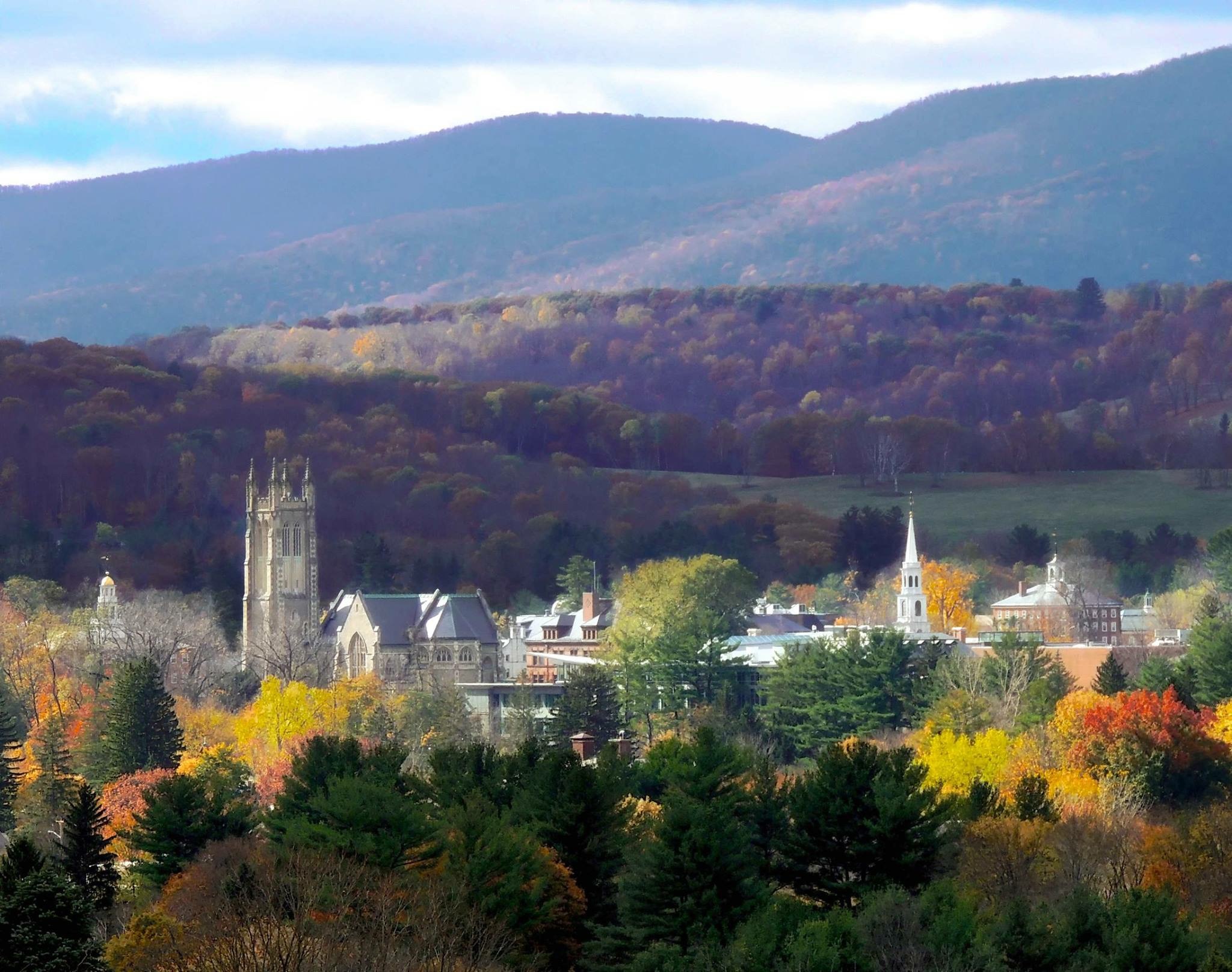
Williamstown, Massachusetts. Yes, I grew up there.

Virtually all of my closest school friends were Christian, and many were active in their churches. I was often, if you will, the token Jew: the only one bringing matzah sandwiches on Pesaḥ or missing school on Rosh HaShanah. I was always in some sense an outsider. I did not share my personal and national memories with my friends and neighbors.

But one of the things I have come to understand in recent years is that what unites people of faith is far greater than what divides us. We, the Jews, have the potential to be allies with other like-minded Christians, Muslims, Hindus, Sikhs, Jains, Buddhists, Bahai, Druze, and so forth.

Consider what we share:

  • Commitment to a framework of holy behavior which elevates and enriches our lives and the lives of the other people around us
  • Cultivation of the values of respect, gratitude, compassion, charity, community, education, and justice
  • Rituals which create meaning for our lives, including regular prayer, holidays, and lifecycle events: birth, coming-of-age, marriage, and death and mourning
  • Understanding that the role of Divinity in our lives provides a template for interacting with others
  • A textual basis for all of the above

Now, of course there is tremendous variation in style and language and the range of values that we hold dear, and of course theology. As just one small example, Judaism tends to emphasize action, Christianity belief. And of course we differ on matters of religious law, and how we read and interpret our shared texts, rituals and foods and customs and so forth. 

But think of all of the potential power contained within all of those which we do share, and how, if people of faith work in concert with one another, we can truly build a better society and a better world.

At the congregational seder last Thursday night here at Beth Shalom, among the 85 attendees were five Christian guests, young adult members of the East Liberty Presbyterian Church who had requested to attend. I was certain that they were quite overwhelmed by the scene. 

But I was really somewhat anxious, given these non-Jewish attendees, about one standard passage of the haggadah, which comes deep into the seder, right as we open the door (ostensibly to invite in Elijah the Prophet). We say, 

שְׁפֹךְ חֲמָתְךָ אֶל־הַגּוֹיִם אֲשֶׁר לֹא יְדָעוּךָ וְעַל־מַמְלָכוֹת אֲשֶׁר בְּשִׁמְךָ לֹא קָרָאוּ. כִּי אָכַל אֶת־יַעֲקֹב וְאֶת־נָוֵהוּ הֵשַׁמּוּ. שְׁפָךְ־עֲלֵיהֶם זַעֲמֶךָ וַחֲרוֹן אַפְּךָ יַשִּׂיגֵם. תִּרְדֹף בְּאַף וְתַשְׁמִידֵם מִתַּחַת שְׁמֵי ה

Pour your wrath upon the nations that do not know You and upon the kingdoms that do not call upon Your Name! Since they have consumed Ya’aqov and laid waste his habitation (Psalms 79:6-7). Pour out Your fury upon them and the fierceness of Your anger shall reach them (Psalms 69:25)! You shall pursue them with anger and eradicate them from under the skies of the Lord (Lamentations 3:66).
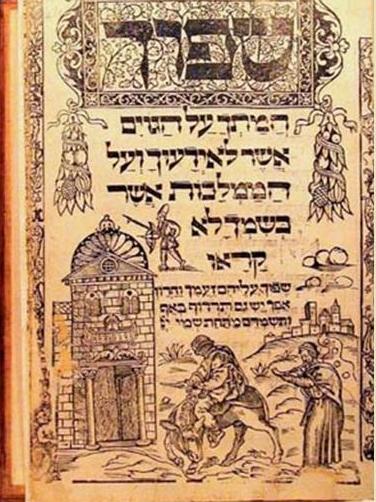
Now, it is likely that our ancestors added these verses in the Middle Ages to cry out to God for revenge against their non-Jewish tormentors. It was a statement of defiance in the face of powerlessness, delivered when the door was open to show the gentile neighbors that they were not doing anything nefarious. Our national memory of these times is, to put it mildly, not good.

Our ancestors probably could not have foreseen a day when people of different faiths could be allies against the forces of chaos. That idea was simply not a part of Jewish memory for many centuries.

But that is where we are right now, and that is what I said on Thursday night in the presence of our Presbyterian guests. We should not read these lines as a deliberate insult to non-Jews; we should instead absolutely read them as a statement against those who malign religious faith and attack worshippers in synagogues, churches, mosques, temples and gurdwaras and children in religious schools of any sort.

I do not think that I am the only one here who sees that the chaos grows as our society, as the people around us, grow more distant from religious tradition. Without a framework of spirituality, we create a world without rules, without principles, without dedication to the holiness of the other. Truth becomes relative; we worship the idols of politics and money and power. A world without religious tradition becomes one in which each individual is their own highest authority, where there are no guideposts and no guardrails. 

The power of allyship across religious lines is extraordinarily important today. United, we are a serious force within our society, and not for the purposes of indoctrinating others into our religion, but rather for improving the condition of all people.

I mentioned in this space on the first day of Pesaḥ that the “swatting” hoaxes of last week, which have lamentably continued, are creating fear in our communities. Last week it was Central Catholic; Monday night it was students at Pitt. Our friend Rev. Canon Natalie Hall’s children were in lockdown, subject to very real fear. 

We, the allies in faith, can push back against the forces of chaos, like those who are maliciously causing these security messes. We may not entirely win; chaos has always been with us. But we can do the best we can to build bridges, to heal wounds, to discuss our memories and our history and yes, even our theology and how we read the Torah differently. And that will, I am absolutely certain, go a long way toward helping to cure this fractured world.

When we meet together and learn together and break bread together as allies, we will be prepared to navigate together the many challenges which now plague our society and world. True people of faith know that we accomplish more when build bridges instead of walls, and we must add the sense of allyship to contemporary Jewish memory.

Our grandparents, our parents, the people whom we remember today, came with their families to this country to escape the persecutions of the Old World, to flee the rigid social lines of Europe, where they had always been outsiders. Here we are free not only to practice our traditions, not only to be considered as equals to our non-Jewish neighbors, but also to work together with partners whom our ancestors could never have imagined. 

In their memory, together, we can build a better world. Thank God.

And, if you want an opportunity to learn Tanakh (the Hebrew Bible) in an interfaith setting, please join us for A Conversation Between Christians & Jews Toward Friendship & Discovery. The first session is this coming Sunday, April 23, 2023, and it will be an engaging series focused on building and strengthening connections while studying our shared texts.

~

Rabbi Seth Adelson

(Originally delivered at Congregation Beth Shalom, Pittsburgh, PA, 8th Day of Pesaḥ, 4/13/2023.)

* The Passover seder (plural: sedarim) is a special dinner and storytelling ritual that is observed on the first two nights of Pesaḥ. It includes displaying and eating special foods and telling the story of the Israelites’ Exodus from Egypt.
Categories
Sermons

Building Bridges of Prayer – Bo 5781

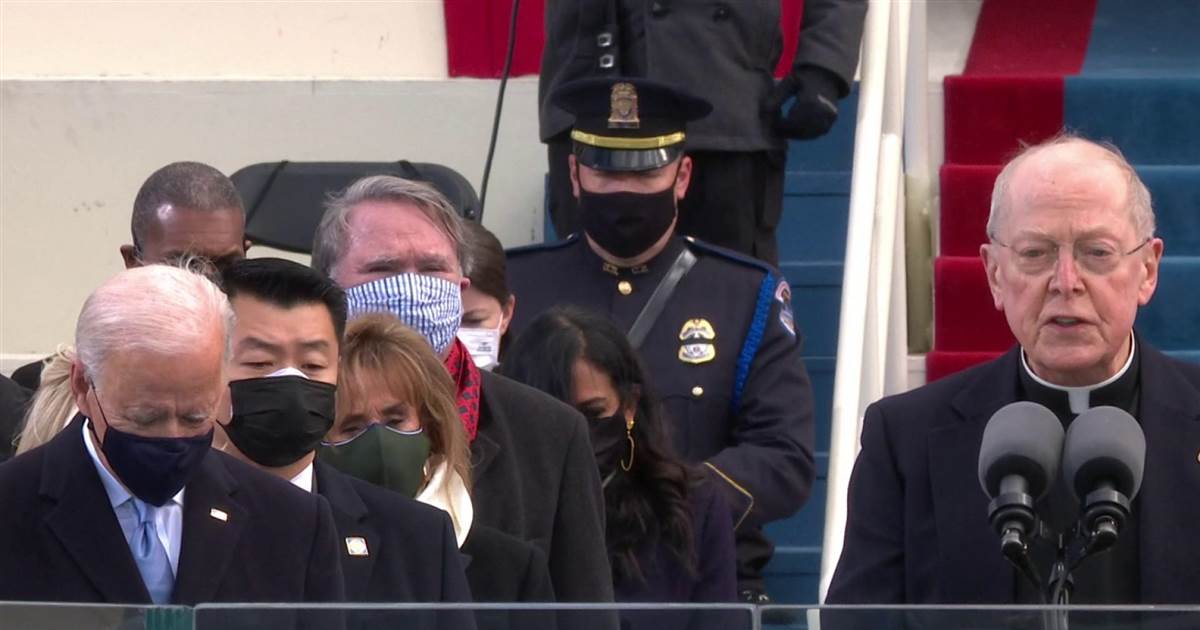
The 46th president of the United States, just before he was sworn in on Wednesday, did something remarkable: he prayed. As his predecessor boarded Air Force One to head out of town, Joe Biden went to the Cathedral of St. Matthew the Apostle in Washington, presumably to daven (pray) the Catholic equivalent of shaharit / the morning service.

As you know, I am a big fan of prayer. I do it every day, and I am convinced that tefillah / prayer is good for you. It is the original Jewish form of mindfulness meditation. Tefillah centers me; in the morning it gets me ready to face the day; in the evening it is a gentle, reflective conclusion, an opportunity to check in with myself. 

I am convinced that if we all did just a little more prayer, if we all took reflective moments more frequently, our world would be a better, kinder, gentler, more united world. And of course that applies to all of us – not just the Jews, of course, or the Christians, but all of us, and even those who do not belong to a particular faith tradition. Prayer, whatever form it takes or whatever you call it, has the potential to bring us all together, to build bridges.

The television coverage that I saw on Wednesday morning did not actually show the president-elect in prayer, just the exterior of the church. Nonetheless, to see this very public, yet also very private moment of prayer brought tears to my eyes.

A little while later, Father Leo O’Donovan, a Catholic priest, gave the invocation before the swearing-in, and he said the following:

There is a power in each and every one of us that lives by turning to every other one of us, a thrust of the spirit to cherish and care and stand by others, and above all those most in need. It is called love, and its path is to give ever more of itself. Today, it is called American patriotism, born not of power and privilege but of care for the common good – “with malice toward none and with charity for all.”

In Father O’Donovan’s words, I hear the yearning to be once again “one nation, under God,” acknowledging the love and faith that should bind us together as a society in pursuit of the common good. 

And so we find ourselves this week in perhaps a more prayerful stance as a nation, and it is absolutely serendipitous that we read from Parashat Bo this morning, including arguably the most essential items in the story of yetzi’at Mitzrayim, the Exodus from Egypt.

One of the key features of the Exodus narrative is that the freedom, the redemption from slavery that Moshe and the Israelites seek includes as a fundamental principle the ability to worship the one true God. By definition, slavery (in Hebrew, עבדות avdut, from the shoresh עבד, to serve), precludes service to God. Integral to that freedom for the Israelites is the license to worship God, the autonomy to be a servant of faith rather than a servant of other people. 

Almost every time, when Moshe approaches Pharaoh to ask for freedom, he says something similar to what we find up front in Parashat Bo, Shemot / Exodus 10:7: שַׁלַּח֙ אֶת־הָ֣אֲנָשִׁ֔ים וְיַֽעַבְד֖וּ ה’ אֱ-לֹהֵיהֶ֑ם Shalah et ha-anashim veya’avdu et Adonai eloheihem. Let the people go to worship the Lord their God! 

Freedom, as the Torah sees it, includes that holy relationship with the Qadosh Barukh Hu.

And so too today: building a better future in our very divided country necessitates God’s presence in our lives, however we understand that presence.

Now, do not go reading this as a screed against atheists, or a repudiation of the separation of church and state. On the contrary: we need a greater sense of shared faith in this country, among the diverse people of this nation, because, as Father O’Donovan suggested, that will, through love, enable us to build a better nation, infused with a unified pursuit of the common good. As servants of God who see the Divine spark in each other, who see our shared humanity, we can and should work together to build bridges, to create a stronger, more resilient society and a healthier democracy. Even those who reject theology outright can, I hope, get on board with seeking the common good through shared love of humanity, of our fellow citizens.

And a key piece of this sense of shared love is interfaith cooperation.

You may know that I grew up in an area with relatively few Jews. Until I went to college, virtually all of my friends and neighbors and classmates were Christian, mainline Protestants and Catholics, and my family was among a handful of Jewish families in my home town. We all knew each other, and I think it is fair to say that, to some extent, we the Jews felt like outsiders. Not that our neighbors treated us badly or as enemies, but there was definitely a mutual awareness of our difference. Sometimes this awareness bred resentment, as, for example, when well-meaning Christian friends failed to understand that we did not celebrate Christmas. It was sometimes hard to see past this, given some of the history of Christian/Jewish relations. There was a time in my life when I would not have wanted to listen to the words of a Catholic priest giving an invocation at an official gathering.

My sense is that things are somewhat different today; the religious landscape in America has changed. Many of us now look at each other across religious divisions as allies. Yes, of course there are issues that divide us. But what we who are partners in faith share is much greater, and much more powerful.

Rabbi Jeremy Markiz and I were at a meeting on Thursday of the Priest-Rabbi dialogue, a discussion between local Catholic and Jewish clergy which meets from time to time to discuss interesting theological issues. At this meeting, we read a statement from 2002 produced by a group of influential North American Christian scholars attempting to reframe the historically fraught relationship between Jews and Christians. Among the principles expressed in this document were, “God’s covenant with the Jewish people endures forever,” and, “Ancient rivalries must not define Christian-Jewish relations today.”

Our discussion broke toward the points of disagreement among Christian theologians and within the Jewish world about some subtleties of our beliefs. But the greater message is well-taken: today we are allies in the struggle against disorder, disunity, and distrust. We are united in facing the challenges of poverty and racism, hunger and homelessness, mental health and addiction and isolation. 

I heard a podcast this week from the Pardes Institute of Jewish Studies in Jerusalem about Parashat Bo, taught by Pardes teacher Tovah Leah Nachmani, about emunah / faith. She pointed to a commentary by Ramban, aka Nachmanides, who lived in 13th-century Spain. In surveying Parashat Bo, Ramban points to the symbols of emunah found in this parashah: the annual observance of Pesah / Passover that we read this morning, and the wearing of tefillin (Ex. 13:16, the last line in the parashah). Ramban suggests that these symbols (the Hebrew term is ot, sign) of faith are meant to remind us of the role that God plays in our lives. There will not be an Exodus in every generation, says Ramban, but every year when we celebrate Pesah we remember that power. The tefillin that we put on every morning are an ot, a sign of the binding promise that God has made with us to help us live better lives through the framework of mitzvot.

Ms. Nachmani expands on Ramban’s line of thinking to include Shabbat and regular tefillah, such that we have daily, weekly, and annual signs before us: The weekly reminder of Shabbat, also described as an ot (beini uvein benei Yisrael, ot hi le’olam – Ex. 31:17) gives us a taste of the true peace that will someday come if we commit to the common good. 

Faith and freedom are intertwined; we must keep those symbols of faith in front of us; we must use them to remind ourselves to reach out to our neighbors in love. We must also remind ourselves that we have partners, who do not celebrate Pesah or wear tefillin, yet who also have faith; these signs of faith can also lead us to dream about what we can accomplish when we are all praying together.

We remembered this past week the strength of the Reverend Dr. Martin Luther King, what he accomplished, inspired by God and the words of the biblical prophets. Consider that Rabbi Abraham Joshua Heschel had the vision to reach out to and march with Dr. King as a partner in faith, at a time when many of us were not thinking far beyond our own community. 

Our future depends on building bridges of prayer and bridges of emunah / faith. Our Christian, Muslim, Hindu, Sikh, and Buddhist friends and neighbors are all interconnected with us; we may differ on how we approach or understand the Divine and the role that the holy relationship plays in our lives, but we mostly agree on the outcome: that we can build a better world through shared prayer, faith, and love.

~

Rabbi Seth Adelson

(Originally delivered at Congregation Beth Shalom, Pittsburgh, PA, Shabbat morning, 1/23/2021.)

Categories
Sermons

Leadership, Doubt, and Hamilton – Va-era 5779

The whole family and I saw Hamilton at the Benedum Center on Wednesday night. Really, it was awesome. We already knew the soundtrack; my kids have it mostly committed to memory, and, thankfully, they have the good sense to, when singing along with the soundtrack in the car, NOT audibly recite the four-letter words.

One of the themes that the musical tangles with is leadership: what makes a good leader; what was truly revolutionary about the leadership of the American Revolution. When Alexander Hamilton, “young, scrappy, and hungry,” arrives in New York to seek his fortune, he clambers into the spotlight, while the more politic Aaron Burr cautions him to “talk less, smile more.” When George Washington announces that he will not seek a third term as president, we see King George across the pond, guffawing about how ridiculous it is for a leader to yield power to somebody else. Hamilton is not a reluctant leader; he vows over and over not to “throw away his shot,” and makes all the moves to position himself as a leader. He is not afflicted with doubt. He spends every waking moment writing, speaking, publishing, and his gift with words and ability to lead with the pen is formidable.

Alexander Hamilton

Let’s contrast now with that other epic musical that we feature each week here at Beth Shalom, the Torah, and in particular, the leadership of Moshe Rabbeinu, Moses our Teacher, who is filled with uncertainty.

We read today in Parashat Va-era about Moshe’s doubts. In fact, there were a few places where Moshe expresses doubt since we started Shemot / Exodus last week.

  • Last week, when God instructed him to lead the Israelites out of Egypt, Moshe says, “Mi anokhi?” “Who am I that I should go to Pharaoh and free the Israelites from Egypt?” (Ex. 3:11).
  • He further protests (4:1) “What if they do not listen to me?” and (4:10) “I am slow of speech and slow of tongue.”
  • And in Va-era, when prompted by God to go to Pharaoh, he describes himself (twice: 6:12 and 6:30) as “aral sefatayim,” literally, “my lips are uncircumcised.” i.e. that his speech is impeded.

What exactly does this mean? Rashi tells us that the word that is usually translated as “uncircumcised,” “arel,” actually means, “obstructed.” The prophet Jeremiah uses the term in reference to the ears and the heart, suggesting that these organs can also be obstructed. Moshe is uncertain of his abilities as a leader because he is not a public speaker. He is obstructed. In some sense, Moshe is the anti-Hamilton.

From the moment that we meet Moshe, in fact, we rarely see him emerge from this state of self-doubt.

But I would like to make the case that Moshe’s uncertainty is what makes him a good leader. Doubt is healthy and natural. Consider your own doubts.

Or, consider mine. I remember a teaching session back at Temple Israel of Great Neck when I expressed my own doubt about God always hearing prayer.

One of the attendees confided in me afterwards that he was uncomfortable with his rabbi expressing doubt. I offered the following in response: we all have doubts. Even rabbis. But the way to approach faith is not by eliminating all doubt (which is impossible), but to acknowledge it.

Maimonides, for example, strongly rejected the idea that God has any kind of physical form, or human-like body parts. But we all know that the Torah and many rabbinic texts reference God’s arm, or God’s face, or God’s hair. So which is “true”? And, by the way, how can God hear prayer without ears?

Doubt is a universally-human trait, and anybody who claims to be 100% certain about any spiritual matter is exaggerating. It would be deeply disingenuous of me to stand before you and say that I agree with everything in our tradition, that I accept every word of the Torah as the absolutely true word of God received by Moshe on Mt. Sinai, that I approach God and Judaism unquestioningly. And I sincerely doubt that God gave us intellect and reason specifically so that we could ignore that gift in matters of faith. And I am 100% certain that Rambam would stand with me on that one.

To achieve honest faith, we must acknowledge our doubts. And as American Jews living in skeptical times, when religion holds far less sway than in past decades, we must openly embrace these doubts and those that have them, so that we can keep the door open for those who might otherwise leave. We in the Conservative movement maintain an intellectual openness that is essential today.

These are deeply skeptical times; we do not look to the heroes of past years, or turn proudly to our institutions for uncorrupted inspiration. The 20th century, the American century is long over. As a society we are struggling to maintain traditions, religious and secular, in the wake of the fall from grace of our once-glorified political, social, and religious leaders. Our suspicions about authority of any kind – government, corporate, religious, even medical – run deep. All the emperors are naked.

Add to this the fact that we are quite far removed from the ancient daily struggles that kept our ancestors coming back to God. We do not face the immediate life and death challenges that our ancestors – Israelite subsistence farmers – faced: the dependence on rain, the helplessness in the face of disease and famine and war, the great natural risks involved in childbearing, and so forth. And thank God, we live in an open society in which we can draw spiritual inspiration from many wells, not just the Jewish one.

All of these things conspire to make it very hard for any of us to feel very deeply about religion, let alone achieve faith in the face of doubt. Indifference is rampant. No thanks, Rabbi Adelson. I’m good. No need for me to come to shul (synagogue).

Rabbi Abraham Joshua Heschel was keenly aware of the challenge of faith, of the power of doubt. As we wrestle with God and ourselves, the likelihood is that our experiences of the Divine are fleeting, if not entirely absent. How then can we justify faith? Heschel says in God in Search of Man (pp. 154-5) that

“Faith in the living God is not easily attained… Why, we often ask in our prayers, why hast Thou made it so difficult to find Thee? Why must we encounter so much anguish and travail before we can catch a glance of Thy presence?”

We must work hard, says Heschel, to find God. And although most of us want, even the skeptics among us, to find that connection to the Divine, very few of us do.

Honest faith, therefore, must reflect this struggle; lack of certainty is an essential part of faith. It is in the struggle that Jews find God, just as Yaaqov did, and so too did Moshe. It is in this cosmic wrestling match that we discover the power that Judaism has to alter our lives. That is why we are Yisrael, the ones who struggle with God.

And that is why we should fear the leader that has no self-doubt.

By emphasizing Moshe’s concern about his “uncircumcised lips,” the Torah is actually insinuating that he is the correct choice to lead the Israelites out of Egypt. It is not his lips that are uncircumcised, but rather his heart — he does not want to accept that he is, in fact, capable.

But we know how the story ends.

What do we learn from all of this? That we can, as with Jeremiah (4:4), cut away that obstruction around our hearts, and pursue our faith with an honest acknowledgment of doubt. It’s what makes us human.

We cannot allow the fundamentalist groups in this world, who tolerate no doubt, to control the dialogue about any religion, particularly Judaism. We cannot allow the extremists in our midst to shift the conversation to some inhuman, unrealistic position that does not account for the complex nature of human thought. Uncertainty is an essential part of who we are. We do not unquestioningly accept every word of authority as truth. On the contrary, we challenge. We argue. We wrestle. And we occasionally do not believe.

Doubt is what makes faith real and honest. It is the essential nature of faith, that those of us who are sometimes uncertain still step forward to grasp the mantle of Jewish tradition. So cut away that which obstructs your ability to seek God wholeheartedly, and embrace the doubt.

And furthermore, uncertainty is what ultimately makes leaders great. The ability to re-evaluate, to re-frame, to re-work the plan when necessary, the willingness to concede your uncertainty is what allows for a true leader to thrive. I would pick Moshe over Alexander Hamilton any day. (I think.)

Shabbat shalom.

~

Rabbi Seth Adelson

(Originally delivered at Congregation Beth Shalom, Shabbat morning, 1/5/2019.)

Categories
Festivals Sermons

Ani Ma’amin / I Believe – Shemini Atzeret 5778

We are in difficult times. Wildfires. Hurricanes. A horrific mass shooting. A president who thrives on insults and can’t distinguish between Nazis and “fine people.”

I’m going to talk today about faith, about commitment to our spiritual tradition, in the context of challenging times. Ani Ma’amin. I believe.

Belief is a funny thing. My sense is that we don’t believe in too much today, do we? We like our distance, our cool, reserved, “let’s wait and see” stance.

How many of us believe so strongly in something that we can actually put ourselves into it bodily? How many of us fully invest ourselves in a cause, for example, that we’re actually out in the streets, marching? How many of us feel so strongly about our tradition that we commit to the actions of the tradition, rather than merely checking the “High Holiday” or “Yizkor” box?

There is really no greater figure on the Jewish bookshelf than Rabbi Moshe ben Maimon, aka Maimonides, aka Rambam. He lived in the 12th century, primarily in Egypt, and wrote two major works: the Mishneh Torah, and the Moreh Nevukhim, the Guide for the Perplexed. These two works come at Judaism from two different perspectives. The Moreh Nevukhim is written for the skeptic, the one who has not yet bought into the idea of Judaism. It’s written to try to initiate the uninitiated; it presents the meaning of our rituals and customs and texts with an eye to inspiring connection. It is written in Judeo-Arabic, the language of the Jews of Egypt of the 12th century.

Spain - Cordoba - statue of the Jewish scholar Maimonides ...
Statue of Maimonides in Cordoba, Spain

The Mishneh Torah, on the other hand, is a halakhic guide. Its title means, literally, the second Torah, boldly titled to almost suggest that if you read this book, you would not need to read the original Torah. It’s for the already-convinced, the committed Jew who wants to know how to do Judaism properly. It’s for the one who throws his or her whole body and heart and mind into it. It’s written in beautiful, crisp medieval Hebrew, easily understandable to those who have studied our essential tongue.

Sitting next to each other on the shelf, what might this suggest about the Jews that Rambam knew in 12th-century Cairo? Certainly, the Mishneh Torah suggests that there were some Jews who were committed to halakhah and wanted to know more, wanted to know from a master interpreter of our tradition what exactly makes a sukkah kosher, or what Psalms to recite for Hallel. But the Moreh Nevukhim, The Guide for the Perplexed, suggests that there were many that were not yet ready to believe, not yet ready to commit.

Having just completed the odyssey of the Yamim Nora’im, the High Holidays, I must say that I find it extraordinarily ironic that one of the best-known piyyutim (liturgical poems) of those days is “Vekhol Ma’aminim.” It includes a litany of statements about God that “all [of us] believe.” And yet, I know that in the sanctuary on those days, there are many who do not believe – do not buy into fundamental traditional understandings of our tradition, of Jewish theology, of the halakhic system, of mitzvot, and so forth. Many of us do not believe, even some of us who are singing along.

Whenever we say the word “amen,” we are saying, I am in a state of faith with you. I believe.

But tefillah, prayer, is not a portrait of what is; it is a vision of what could be. So it’s certainly possible to be in a state of faith that tefillah helps us along the path to building that vision. And that’s certainly where I am.

I believe in the power of Judaism to change your life. I believe in the richness of wisdom that is found in our ancient texts. I believe in the holy spark that may be found in all people, and in all of God’s creation. I believe in the power of that force that flows around and through us that we refer to as the Qadosh Barukh Hu, the Holy Blessed One, to change us and to change the world.

Maybe that makes me an outlier. But it puts me in good company.

A few years back, Elie Wiesel was featured at a performance at the 92nd St. Y in New York. He told a story about how his mother, who came from a well-known family of Vizhnitzer Hasidim, brought him on one Shabbat in 1943 to the court of the Vizhnitzer Rebbe. Elie was 15, and although rumors had reached his home town, Sighet, Romania, about what the Nazis were doing to Jews in Poland, nobody knew for certain.

Elie Wiesel: 1928-2016

Also there on that Shabbat was a nephew of the Vizhnitzer Rebbe, a young man who had been in Nazi-occupied Poland, but managed to find his way back Vizhnitz, in the Ukraine. The Hasidim there that Shabbat pressed him for information, but he would not say a thing. He simply could not tell them what he had likely seen: the ghettos, the Einsatzgruppen, SS mobile killing squads, rail transports to death camps in cattle cars, and so on. On all these things, the young man was silent. Instead, he only sang. He sang the words of Ani Ma’amin, Maimonides’ fundamental statement of faith in the coming of the mashiah. But embedded in the words, and in the melody, was the message that they needed to maintain faith despite the coming cataclysm:

(You can hear the recording of Elie Wiesel singing this song by clicking here.)

אני מאמין
באמונה שלמה
בביאת המשיח
ואף על פי שיתמהמה
עם כל זה אחכה לו
בכל יום שיבוא

Ani ma-amin
Be-emunah shelemah
Bevi-at hamashiah
Ve-af al pi sheyitmahmeah
Im kol zeh ahakeh lo
B
ekhol yom sheyavo

I believe
With perfect faith
In the coming of the mashiah (the anointed one)
And although he tarries
Nonetheless, I wait for him
Every day, that he may come

What did the Jews of Vizhnitz and Elie Wiesel learn that Shabbat? That whatever unspeakable horrors lay in front of them, they would survive. That whatever fate was awaiting them at the hands of their oppressors, that some of them would make it to the other side. That there would be Jews at some future time, Jews who would be on this Earth to greet the arriving mashiah. That even though there are dark times ahead, that they would eventually pass.

There is always hope for the future. Our tradition teaches us to be patient, and to look past the current darkness to the better days ahead. Ani ma’amin. I believe.

To be sure, Elie Wiesel lost his faith; he chronicles that moment in his first book, Night, his account of the Shoah, when he arrives at Auschwitz and is hustled out of the cattle car, and an SS officer points to the flames coming from the crematorium and screams, Do you see that chimney over there? See it? Do you see those flames? (Yes, we did see the flames.) Over there-that’s where you’re going to be taken. That’s your grave, over there.And in that moment, reports Wiesel, he loses his faith. A God that could have allowed such a thing did not deserve his reverence. His faith, he says, was consumed in those flames.

At some point, later in life, he found Judaism again. But anybody who survived the camps had to struggle with belief. I had a congregant back on Long Island who, late in life, authored an account of her own Shoah story. It was particularly striking to me that, in the book, she conceded that, while she raised a family in Jewish tradition, and her children and grandchildren were believers, she could not find the same belief within herself.

And yet, it is that belief that enabled some to survive. It is that sense of “Ani ma-amin,” I believe, that has given our people hope for millennia, through destruction and exile and Crusades and Inquisition and expulsion and genocide.

I believe that we are here today because of our belief.

Because we will be here forever, if we all just reach a little deeper, if we all just put a little more of ourselves into learning our tradition, into acting on our tradition, in keeping the holy opportunities, the mitzvot of our tradition in front of us. If we let go of some of that cool reserve, if we put ourselves bodily into our rituals and customs bodily, if we pray with fervor, if we reach higher to keep the mitzvot, if we yearn to reach past the perplexity to seek answers, to act on that belief, we will survive whatever challenges we face.

Ani ma-amin. I believe. And I’ll wait, and continue to daven every day, until we get to the other side.


~

Rabbi Seth Adelson

(Originally delivered at Congregation Beth Shalom, morning of Shemini Atzeret, Thursday, 10/12/2017.)