Categories
Sermons

Where Are Our Friends? – Noaḥ 5784

I was in church last Sunday. It was the first time in many years that I had been to church for a Sabbath service. Our dear friend and teacher Rev. Canon Natalie Hall invited me to participate in the service at the Church of the Redeemer (Episcopalian) in Squirrel Hill, where I led the congregation in the English recitation of Psalm 121, and sang with them (in Hebrew!) the first verse: Esa einai el heharim, me-ayin yavo ezri? I lift up my eyes to the mountains; from where does my help come? My help comes from Adonai, the Maker of Heaven and Earth.

The Church of the Redeemer

As many of you know, Pastor Hall and her family were here with us last Shabbat to show their support and solidarity with our community in the context of the immense grief and loss we have felt for the last two weeks.

It is good to have friends.

You know who had no friends? Noaḥ. You know how we know that? Because in the first verse of the parashah, Bereshit / Genesis 6:9, the Torah says, אֶת־הָֽאֱלֹהִ֖ים הִֽתְהַלֶּךְ־נֹֽחַ, generally understood to mean, Noaḥ walked with God. But that is because, as the only somewhat righteous person in an evil generation, he had no friends. The 15th-century Portuguese commentator, Don Yitzḥaq Abarbanel, observes that:

והיה זה לפי ש”את האלהים התהלך נח” רוצה לומר שעם היות שדר בתוך רשעים לא הלך בדרך אתם אבל נתחבר ונדבק אל האלהים לא נפרד ממנו כל ימיו

… and so it was that Noaḥ walked with God, that is to say that despite the fact that  he lived among wicked people, he did not walk on their path with them, but rather was bound to and cleaved to God, and was not separated from God for all of his life.

The Hebrew word for “friend,” ḥaver, has the same root as the word that Abarbanel uses for “bound”: נתחבר / nitḥabber. Noaḥ’s only ḥaver, was God; he was bound to God because he had no other friends. And that is further reinforced by the fact that for all the time he and his family spent on the Ark, they did not seem to pine for other humans. They never had friends among the people with whom they lived.

With the shining examples of Pastor Natalie Hall and her husband Rev. Dan Hall and the Church of the Redeemer excepted, I must say that I am not exactly feeling the love right now from the people around us. Where are the allies? Where are all the righteous gentiles standing up for the Jews? Where is the unequivocal condemnation of the unconscionable, horrifying murder, abuse, and kidnapping of Jews by thousands of Hamas terrorists? Where is the non-Jewish outcry regarding the greatest pogrom since the Nazis? 

Do you remember, after October 27th, 2018, when Soldiers and Sailors Memorial Hall in Oakland was standing-room only, and a sea of umbrellas stood outside as well, to grieve together in memory of our qedoshim, the beloved members of our community who were brutally murdered by an anti-Semitic terrorist? Do you remember seeing the huge group of local clergy on that stage? Christians and Muslims and Hindus along with the Jews.
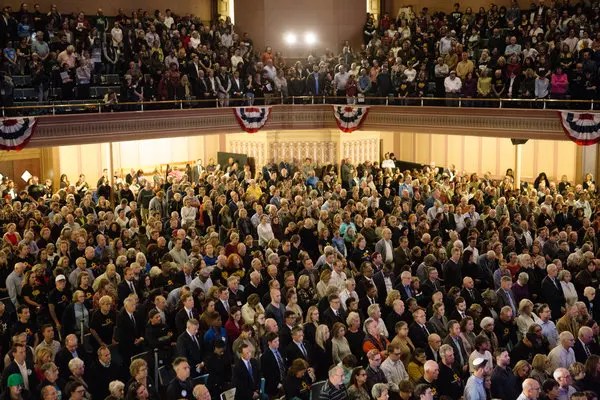
Soldiers and Sailors Memorial Hall, 10/28/2018

And do you remember when the whole world erupted when a Minneapolis police officer knelt on George Floyd’s neck for 8-½ minutes, murdering him? All over the country, people marched and knelt down on one knee and screamed for “justice.” I gave four sermons about it. Late night comedians could barely crack a smile for weeks.

And now, 1400 Jews are dead; thousands more injured, physically and emotionally. Israelis are living in bomb shelters. Shoah survivors and children kidnapped. 200 are hostages. Hostages! Young women taken captive were paraded as trophies, and much worse. I have avoided watching these videos, but they are out there.

Where are the voices condemning Hamas?

Where are the voices calling for regime change in Gaza? 

Where are the voices crying out for the release of the hostages? 

Why is there NOT outrage when Palestinian deaths are caused by Hamas?

Why leave it to Israel to do the dirty work of removing Hamas? 

Why make Israel suffer alone the consequences of the horrific body count that is unfolding as Israel defends herself through eliminating this malignant cancer on humanity? 

Why blame Israel for civilian casualties, when Hamas places their people in harm’s way? 

And where, oh where are all the well-meaning people marching for justice for Israel? 

Why is nobody calling out, “Defund Hamas,” or “Defund Iran”? Gaza has received billions of dollars in the last 16 years from the international community. Where has that money gone? Not to the people of Gaza.

What happened to the moral clarity of the university presidents who have made embarrassingly pareve statements? 

America’s greatest ally is sitting shiv’ah, a thousand times over. How hard would it have been merely to say, We decry the brutal murders of 1400 Israelis, Americans, French, Thai citizens, and so forth? How difficult is it to stand unequivocally against terrorism? To say that we who stand up for every kind of underdog in the world, every oppressed individual, we stand with the Jewish people at this moment of pain and grief.

But no. What we got were mealy-mouthed, half-mumbled, half-statements about protecting all life in the region. And the Ivory Tower has turned into a Petri dish of anti-Semitism. Over 30 student groups at Harvard University who said, “We, the undersigned student organizations, hold the Israeli regime entirely responsible for all unfolding violence.” No mention of Hamas. 

We got the professor at Cornell, my alma mater, who was “exhilarated” by the attack on Israeli civilians, stating “Hamas has challenged the monopoly of violence.” Just to be clear, he was saying that Israel holds the monopoly of violence, and he was proud that Hamas took the reins by mutilating Israelis in their homes, by dragging them through the streets.

To be fair, we have a few bold leaders who have said the right things. 

Thank God for President Biden and French President Emmanuel Macron, who said all the right things. German Chancellor Olaf Scholz and British PM Rishi Sunak went to Israel this week to offer support. Thank God for Lt. Gov. Austin Davis, who addressed the Federation’s Vigil for Israel on Thursday evening, and for PA Senators Bob Casey and John Fetterman, who have been unwavering in their support.

Thank God for Pastor Natalie Hall. And Russ Cain, our occasional security guard, who, when he saw us at the first Federation gathering, gave Judy and me a big hug, tears in his eyes, and told us he was praying for us, and for my son.

But I’m not feeling very supported outside of my Jewish circle. And I fear for what the future holds. How many friends do we really have?

OK, so our tradition teaches us to give kaf zekhut, the benefit of the doubt. Maybe there was no fierce condemnation of Hamas or terrorism or rape or kidnapping or torture because Israel is just too complicated.

  • Maybe it is because some see the Jews as “privileged.”
  • Maybe it is because of the misinformed impression that a reductive body count is the sole indicator of who is to blame and shove Oct. 7 into the specious trope of the “cycle of violence.”
  • Maybe it is because some people simply cannot see the hypocrisy of denying that Jews are indigenous to the land of Israel, believing instead in some sort of insulting and woefully myopic narrative that Israel is the aggressor here, that “colonizers” are carrying out “genocide.” As if Israelis could simply pick up and return to Poland, Iran, Yemen and Ukraine.
  • Maybe it is because the agenda of those committed to so-called “Diversity, Equity, and Inclusion” somehow excludes Jewish suffering due to anti-Semitism.

Whatever the reasons, I am looking around and wondering where our friends are. And I wish God would send us an Ark, because very soon there may be a torrential downpour of criticism of Israel as they try the best they can to dismantle Hamas, the very source of violence, the enemy of Israel and indeed the people of Gaza.

At this point, I would like to make sure that I offer you something more than righteous indignation. What can we do, from so far away?

  1. Call / email / text your friends in Israel to express your support/condolences/grief etc. The same for the people in your neighborhood whose children and grandchildren are there right now, serving in the IDF and throughout Israel.
  2. I do not generally advocate for the use of social media for stuff like this, but when you see people saying grossly inaccurate or completely unfair statements, you have a duty to at least try to state the truth. If we let the social media spaces become sewers of Jew Hatred, that will be on us.
  3. Write and or call your elected officials. Thank those who have been honestly and forthrightly supportive of Israel and the Jewish people. Demand that they help keep up political pressure to bring home the hostages.
  4. Let your supportive non-Jewish friends and neighbors know how you are feeling at this time. To share with them your sense that this attack was felt by the whole Jewish world, that we are in pain, and we want to know that you are with us and for us. I know that is not so easy to do, but it helps spread the word among the wider population that the Israeli people are important to us here in America.
  5. Donate to the Federation’s emergency relief fund for Israel. The Jewish Federations of North America have set a goal of raising $500 million for emergency relief for Israel; they have already raised $380 million, $5 million of which has been pledged in Pittsburgh. Every dollar helps.

Ḥevreh, I am anxious about the future, about the near term and the long term. I want Israel to continue to thrive, and I want a just political arrangement for all people on that tiny, yet emotionally-wrought piece of land. I want peace. And let me be clear: we must also pray for peace for all the inhabitants of that land. But I also know that the forces of terrorism will not bring peace; they will only bring more terrorism. 

And as we continue to pray for Israel, let us hope that our friends find the courage to stand with us.

~

Rabbi Seth Adelson

(Originally delivered at Congregation Beth Shalom, Pittsburgh, PA, Shabbat morning, 10/21/2023.)

Categories
Festivals Sermons Yizkor

Allies in Faith – 8th Day Pesaḥ 5783 / Yizkor

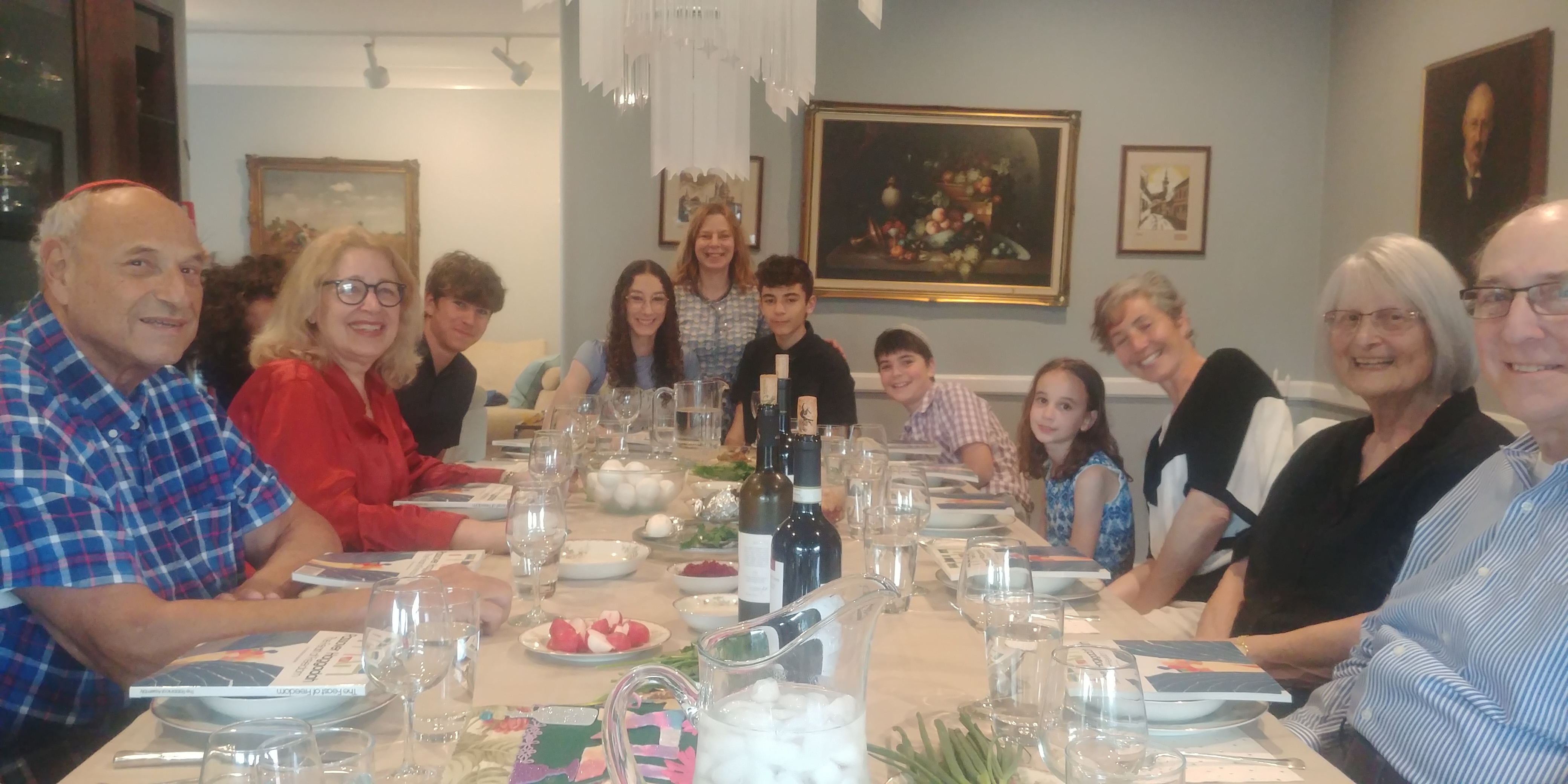
Passover, like no other holiday, trades in memory, personal and national. Just about every seder* that I have ever attended relies on memories of past sedarim, of family gatherings, of special foods, some which we liked and some which we memorably did not; memories of your funny uncle who would take a sip out of Elijah’s cup when everybody was watching the door, of good times singing Eḥad Mi Yodea and Ḥad Gadya and Dayyenu, of the hunt for the afikoman and of course all the grandparents and aunts and uncles around the table, the people who are no longer with us. And certainly the remembrance that comes with Yizkor at the end of Pesaḥ puts a final flourish on the sense of personal memory that this holiday features.

And also perhaps like no other holiday, Pesaḥ trades on historical memories of our people. Yetzi’at Mitzrayim, the Exodus from Egypt, is not only the foundational moment of Benei Yisrael, the people of Israel, but is also an essential statement of who we are as a people. The family of Ya’aqov / Jacob descends into Egypt as a group of 70 people escaping famine, and emerges 430 years later as a great nation, ready to receive the Torah and inherit the Land of Israel which has been promised to them. 

But this family becomes a nation by experiencing slavery and subsequent redemption, ensuring from the outset that from generation to generation Jewish people would understand what it means to be a slave, to be oppressed and persecuted, to be subjugated by another and denied our own spiritual means. Pesaḥ is therefore emblematic of all the ways in which we continue to act on that arc of slavery and redemption, in which we seek to bring about redemption for ourselves and the world by highlighting the holiness of the others around us.

And we hear that story replayed over and over throughout Jewish history, with the Babylonian Exile and return in the 6th c. BCE; the Roman destruction and dispersion of the Jews from Israel in the 1st c. CE; the Inquisition, the pogroms, the Shoah / Holocaust, the establishment of the State of Israel in 1948. 

Persecution and redemption. Displacement, dispersion, and return. These are the major themes of Jewish existence going all the way back to slavery in Egypt. That is why the memories of our people speak so powerfully; that is why the Pesaḥ seder is still one of the most-practiced Jewish observances, because it is so deeply laden with history. The Pesaḥ memory machine, every spring, serves up its products along with the matzah and maror.

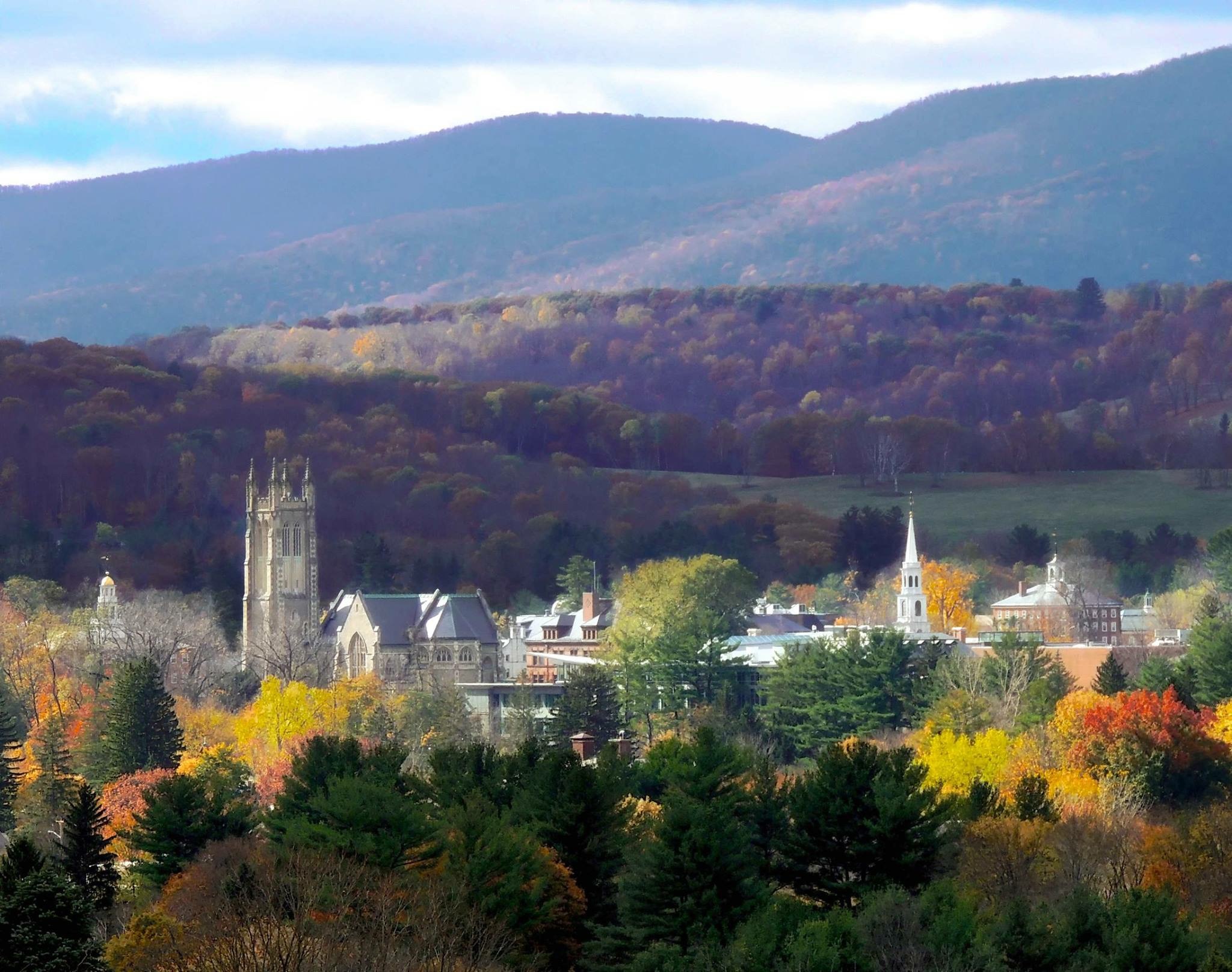
As you may know, I grew up in a fairly non-Jewish place, in the rustic and handsome Berkshire hills of Western Massachusetts. My parents had to work hard to ensure that my brother and sister and I had a strong connection to our tradition, our community, our customs and rituals, that we would be deeply connected to that memory machine. Our Conservative synagogue was 17 miles away, a 30-minute car ride. The nearest kosher meat market was in Albany, NY, an hour by car over a mountain. My grandparents and many close relatives with whom we spent some holidays were three hours away in Boston. There was no Jewish day school nearby. 

Williamstown, Massachusetts. Yes, I grew up there.

Virtually all of my closest school friends were Christian, and many were active in their churches. I was often, if you will, the token Jew: the only one bringing matzah sandwiches on Pesaḥ or missing school on Rosh HaShanah. I was always in some sense an outsider. I did not share my personal and national memories with my friends and neighbors.

But one of the things I have come to understand in recent years is that what unites people of faith is far greater than what divides us. We, the Jews, have the potential to be allies with other like-minded Christians, Muslims, Hindus, Sikhs, Jains, Buddhists, Bahai, Druze, and so forth.

Consider what we share:

  • Commitment to a framework of holy behavior which elevates and enriches our lives and the lives of the other people around us
  • Cultivation of the values of respect, gratitude, compassion, charity, community, education, and justice
  • Rituals which create meaning for our lives, including regular prayer, holidays, and lifecycle events: birth, coming-of-age, marriage, and death and mourning
  • Understanding that the role of Divinity in our lives provides a template for interacting with others
  • A textual basis for all of the above

Now, of course there is tremendous variation in style and language and the range of values that we hold dear, and of course theology. As just one small example, Judaism tends to emphasize action, Christianity belief. And of course we differ on matters of religious law, and how we read and interpret our shared texts, rituals and foods and customs and so forth. 

But think of all of the potential power contained within all of those which we do share, and how, if people of faith work in concert with one another, we can truly build a better society and a better world.

At the congregational seder last Thursday night here at Beth Shalom, among the 85 attendees were five Christian guests, young adult members of the East Liberty Presbyterian Church who had requested to attend. I was certain that they were quite overwhelmed by the scene. 

But I was really somewhat anxious, given these non-Jewish attendees, about one standard passage of the haggadah, which comes deep into the seder, right as we open the door (ostensibly to invite in Elijah the Prophet). We say, 

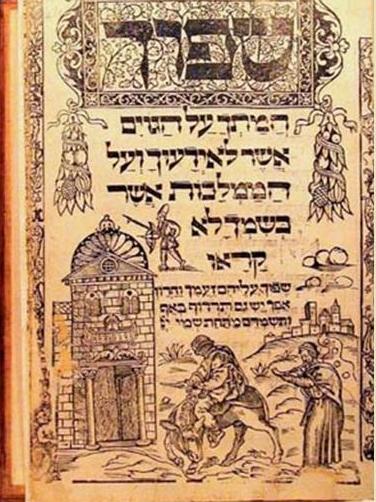
שְׁפֹךְ חֲמָתְךָ אֶל־הַגּוֹיִם אֲשֶׁר לֹא יְדָעוּךָ וְעַל־מַמְלָכוֹת אֲשֶׁר בְּשִׁמְךָ לֹא קָרָאוּ. כִּי אָכַל אֶת־יַעֲקֹב וְאֶת־נָוֵהוּ הֵשַׁמּוּ. שְׁפָךְ־עֲלֵיהֶם זַעֲמֶךָ וַחֲרוֹן אַפְּךָ יַשִּׂיגֵם. תִּרְדֹף בְּאַף וְתַשְׁמִידֵם מִתַּחַת שְׁמֵי ה

Pour your wrath upon the nations that do not know You and upon the kingdoms that do not call upon Your Name! Since they have consumed Ya’aqov and laid waste his habitation (Psalms 79:6-7). Pour out Your fury upon them and the fierceness of Your anger shall reach them (Psalms 69:25)! You shall pursue them with anger and eradicate them from under the skies of the Lord (Lamentations 3:66).

Now, it is likely that our ancestors added these verses in the Middle Ages to cry out to God for revenge against their non-Jewish tormentors. It was a statement of defiance in the face of powerlessness, delivered when the door was open to show the gentile neighbors that they were not doing anything nefarious. Our national memory of these times is, to put it mildly, not good.

Our ancestors probably could not have foreseen a day when people of different faiths could be allies against the forces of chaos. That idea was simply not a part of Jewish memory for many centuries.

But that is where we are right now, and that is what I said on Thursday night in the presence of our Presbyterian guests. We should not read these lines as a deliberate insult to non-Jews; we should instead absolutely read them as a statement against those who malign religious faith and attack worshippers in synagogues, churches, mosques, temples and gurdwaras and children in religious schools of any sort.

I do not think that I am the only one here who sees that the chaos grows as our society, as the people around us, grow more distant from religious tradition. Without a framework of spirituality, we create a world without rules, without principles, without dedication to the holiness of the other. Truth becomes relative; we worship the idols of politics and money and power. A world without religious tradition becomes one in which each individual is their own highest authority, where there are no guideposts and no guardrails. 

The power of allyship across religious lines is extraordinarily important today. United, we are a serious force within our society, and not for the purposes of indoctrinating others into our religion, but rather for improving the condition of all people.

I mentioned in this space on the first day of Pesaḥ that the “swatting” hoaxes of last week, which have lamentably continued, are creating fear in our communities. Last week it was Central Catholic; Monday night it was students at Pitt. Our friend Rev. Canon Natalie Hall’s children were in lockdown, subject to very real fear. 

We, the allies in faith, can push back against the forces of chaos, like those who are maliciously causing these security messes. We may not entirely win; chaos has always been with us. But we can do the best we can to build bridges, to heal wounds, to discuss our memories and our history and yes, even our theology and how we read the Torah differently. And that will, I am absolutely certain, go a long way toward helping to cure this fractured world.

When we meet together and learn together and break bread together as allies, we will be prepared to navigate together the many challenges which now plague our society and world. True people of faith know that we accomplish more when build bridges instead of walls, and we must add the sense of allyship to contemporary Jewish memory.

Our grandparents, our parents, the people whom we remember today, came with their families to this country to escape the persecutions of the Old World, to flee the rigid social lines of Europe, where they had always been outsiders. Here we are free not only to practice our traditions, not only to be considered as equals to our non-Jewish neighbors, but also to work together with partners whom our ancestors could never have imagined. 

In their memory, together, we can build a better world. Thank God.

And, if you want an opportunity to learn Tanakh (the Hebrew Bible) in an interfaith setting, please join us for A Conversation Between Christians & Jews Toward Friendship & Discovery. The first session is this coming Sunday, April 23, 2023, and it will be an engaging series focused on building and strengthening connections while studying our shared texts.

~

Rabbi Seth Adelson

(Originally delivered at Congregation Beth Shalom, Pittsburgh, PA, 8th Day of Pesaḥ, 4/13/2023.)

* The Passover seder (plural: sedarim) is a special dinner and storytelling ritual that is observed on the first two nights of Pesaḥ. It includes displaying and eating special foods and telling the story of the Israelites’ Exodus from Egypt.