Categories
High Holidays Sermons

Ayin leTziyyon Tzofiyyah / An Eye Still Gazes Toward Zion – Into the Future, Part III: Kol Nidrei 5784

There is a healthy portion of folks among us who believe politics has no place on the bimah. Others want to hear political views, but only if those views reflect their own. 

I need to preface my remarks this evening by pointing out that Beth Shalom has been a Zionist congregation since at least 1921*, and the Conservative movement is the only movement that has been Zionist from the outset. So speaking about politics in Israel, on this holiest night of the year, when the Faye Rubinstein Weiss Sanctuary is quite full, is, one might say, fundamental to our mission. As those who love and support the people and the State of Israel,we must be aware of and engaged with the current events I am going to discuss this evening.

Eretz Yisrael, the Land of Israel, to the Jews, is different from any other place. It is where we came from, and where our tradition has focused its yearnings for return for two millennia. Our people are indigenous to that land, and even though many of us live comfortably in Diaspora, it is the only place in the world where the Jewish people can exercise their own democratic self-determination as a people. 

The establishment of the State of Israel in 1948 by a tremendous confluence of historical events created a merkaz ruani, a spiritual center for the Jewish people in that land, to use the language of the proto-Zionist writer Aḥad HaAm. Most of us in this room are American Jews, but what ultimately unites us with the rest of the Jewish world is our connection to the land of Israel, to the city of Jerusalem, and of course to the largest Jewish community in the world, which lives there. It is the center hub of the Jewish wheel. Like it or not, our fate in Diaspora is intimately tied to that land, and we refer to the State in our prayers as “reishit tzemiḥat ge-ulateinu,” the dawn of the flowering of our redemption.

Ahad HaAm

When it comes to Israel, passions run quite high and whatever I say, some will be pleased while others upset. 

So I am going to do something which some might say is in bad form, but given that it is Yom Kippur is actually completely appropriate. I am first going to ask for your seliḥah, your forgiveness. I am going to try to describe the challenge that Israel faces at the moment, and then give us a charge regarding how we should respond. And I am going to do the best I can do not to inflame or disparage, but rather to highlight the principles which we all share, and which I hope that the State of Israel continues to share. And I might fail. So please, I ask for your forgiveness in advance.

***

My first visit to Israel was in the summer of 1987. I was seventeen years old, and I attended the Alexander Muss High School in Israel, which is a study-abroad program for high school students. It was an eye-opening and emotional experience, and gave life and a tangible connection to our people’s deep yearning for a homeland, and that land in particular.

What I saw that summer, now 36 years ago, was a young and growing nation seeking a sense of normalcy. Unlike where I grew up, this was a place where Jewish people who had come from diverse lands, speaking many languages and carrying aspects of many cultures, came to fulfill the ancient dream of qibbutz galuyot / the ingathering of the exiles. The Ethiopian Jews were new to the country then, having been transported from their war-torn homeland. It was all very exciting, and it filled me with Jewish and Zionist pride.

I recall a powerful shared experience that perhaps some of you had as well, during my first visit to the Kotel, the Western Wall in Jerusalem. Every single one of the members of our group, even the one non-Jewish kid, upon approaching the wall, found tears welling up out of nowhere. We all touched that warm, ancient rock, and bawled our eyes out. I am still not sure entirely why this happened, but it was remarkable.

When I returned, 12 years later in 1999 to live there as an adult, the depth and breadth of my love for the land and the State matured to include understanding some of the challenges that the State of Israel faced: growing concern about the water supply and environmental degradation, deep political divisions of various sorts, high cost of living compared to salaries, crowded cities, poor customer service,  a high-stress environment, and similar issues of poverty and dysfunction and malfeasance that are present in all nations. And traffic. Horrible vehicular traffic. In short, I came to see Israel as a real country, rather than some imagined Jewish utopia reflecting the spirit of Herzl and Aḥad HaAm and other Zionist dreamers.

Many American Jews have been to Israel and care deeply about her. Many of us have celebrated Israel’s successes and mourned her losses. We have a deep, emotional and religious connection with this land, its people, and of course the very idea of a Jewish state. And we should absolutely strive to maintain that.

But we also have to be aware that the State of Israel is right now engaged in the deepest internal conflict of her 75-year history. We need to be informed about it, why it is happening, and what we can do. And of course we have to stand by our Israeli cousins in their hour of need.

Here’s a brief anecdote to introduce the challenge at hand. 

One thing that Israel has done recently to alleviate at least some of the traffic is to build new light rail systems in Jerusalem and Tel Aviv. The first line of the TLV system just opened in August, and you might have thought that it was a slam dunk for Tel Aviv. Unfortunately, that’s not exactly what transpired.
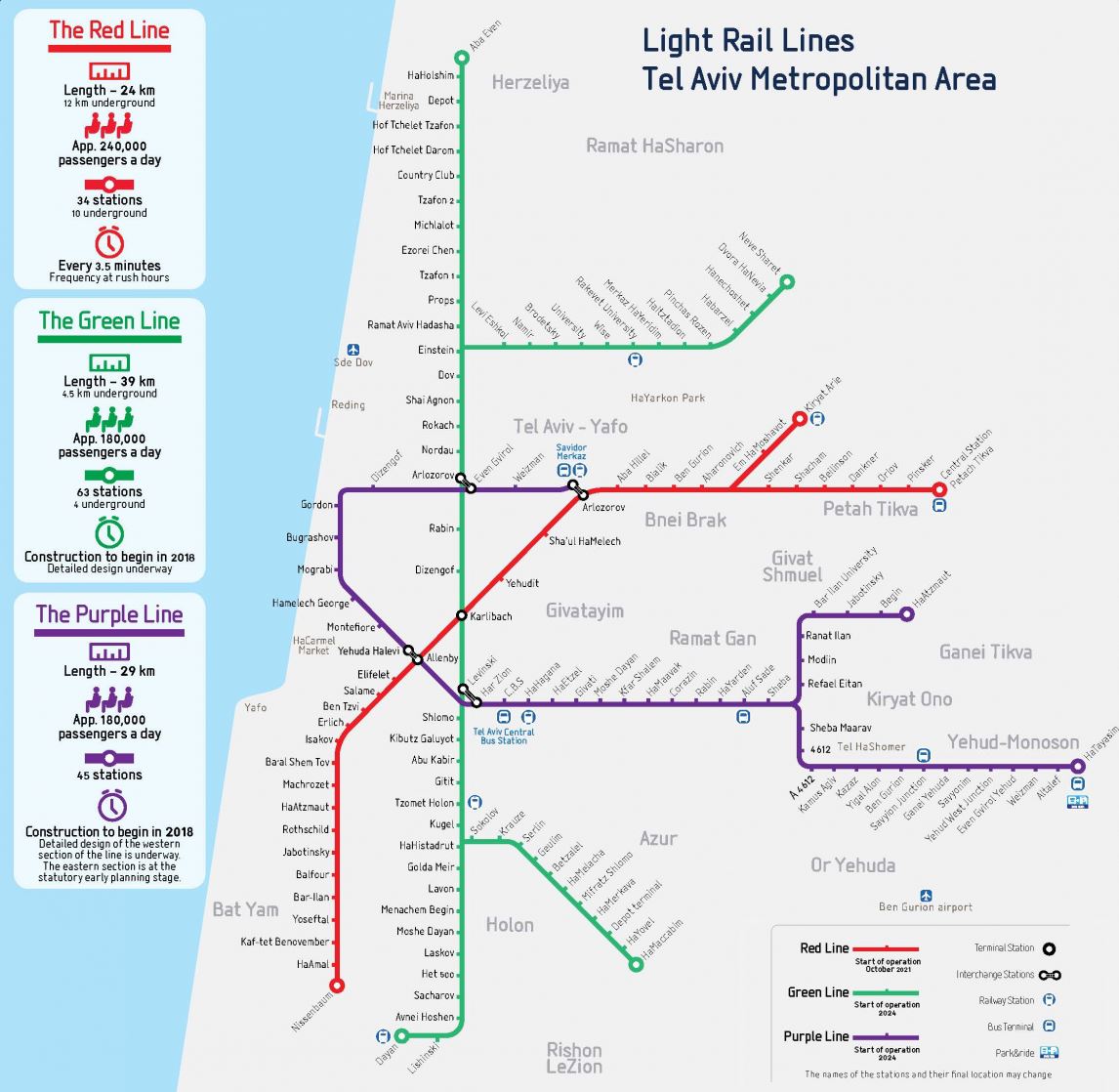
When Prime Minister Benjamin Netanyahu cut the ribbon on the new line on August 16, after eight years of construction and two years of pandemic delay, not only was the ceremony not attended by Tel Aviv mayor Ron Huldai, but it attracted protesters and threats of a boycott. 

The protests were at least nominally in reaction to the fact that the new system does not run on Shabbat. Tel Aviv is a very secular city, and some residents are upset that their metro line is shomer shabbat / Sabbath observant. 

Struggles between religious Jewish observance and secular independence are not new in Israel. But the dynamic in play right now is actually more complicated, and much deeper, part of a larger context regarding the long-term struggle over the vision of the State and her future.

Now for some essential background.

Israel is a tribal place, where political rivals continue to try to best one another at all costs, and old resentments run deep. The vision of what Israel can and should be varies greatly between these tribes. Let me explain:  

These resentments began with the fractiousness of early Zionism, dating to the late 19th century. There were religious Zionists, secular Zionists, political Zionists, cultural and socialist and Hebraist Zionists and in reaction to all of them, the Orthodox and Reform non-Zionists. 

David Ben-Gurion and his associates were secular, and when they declared statehood in 1948 they turned over religious affairs to religious Jews. They gave the Chief Rabbinate control over personal status issues and exempted young, fervently Orthodox men from army service, creating a situation which yielded resentment between secular and Orthodox Israelis from the beginning that has only continued to build to this day. In ‘48, the secular leadership figured that the small number of so-called aredi (sometimes referred to in English as “ultra-Orthodox,” although that is not necessarily an accurate term) Jews in Israel at the time would never be significant; they were wrong.
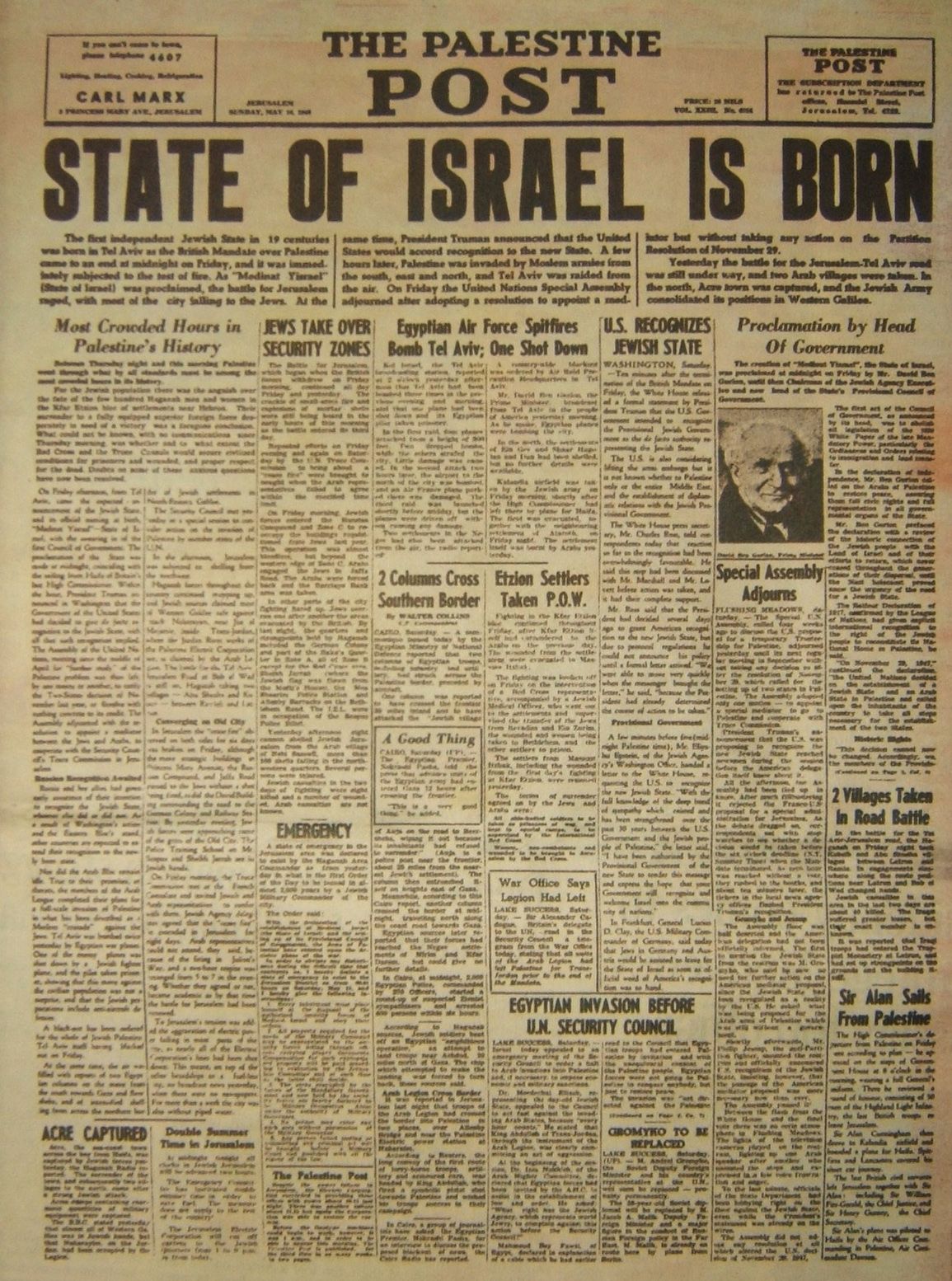
During the early years of the State, even more resentment was bred when new Jewish immigrants from Arab countries, often referred to as Mizraḥim (“Eastern”), were housed in tent cities, sometimes for years, while Ashkenazi arrivals received apartments. 

And then of course there is the 20% of Israeli citizens who are Arab and resentful of their treatment at the hands of the Jewish majority. And then there is the very real challenge of the Palestinian territories and the moribund process for the creation of a Palestinian state alongside Israel. 

What has held most of these tribes more or less together for much of the last 75 years is Israeli liberal democracy. Not political liberalism, but liberal in the sense of liberty: committed to the rule of law, balance of government powers, and protecting civil rights, and in particular the rights of minorities. Failing democracies often see tribes forego protecting minority rights in favor of a winner-takes-all mentality, which causes a fraying of the social order and reversion to tribalism. The stage is set for that right now in Israel. 

Let’s talk about the current governing coalition, and some of the characters found therein.

The last election was nearly a year ago, and in the months following, Netanyahu’s center-right Likud party forged a Knesset coalition of right-wing and Ḥaredi / “ultra-Orthodox” parties with a slender majority of 64 seats out of 120. This majority reflects a narrow popular-vote win of about 30,000 out of 4.7 million votes cast. 

This means that, for the sake of forming that coalition, a few unsavory characters have now been elevated to positions of power.  Let’s take a close look at a few.

Among the Members of Knesset in this current coalition is the chair of the Religious Zionist party, Bezalel Smotrich, who is currently the Finance Minister of the State of Israel. 

His views on Arab citizens of Israel are controversial even within some right-wing quarters. He opposes the Two-State Solution, has questioned the legitimacy of Arab members of Knesset, claiming, “It’s a mistake that Ben-Gurion didn’t finish the job and throw you out in 1948,” and he has tweeted support for segregated maternity wards in Israeli hospitals, claiming “It is natural that my wife would not want to lie down next to someone who just gave birth to a baby that might want to murder her baby in another 20 years.” 

He has also claimed to be a “proud homophobe,” having created the “Beast Parade” in Jerusalem in 2006, a protest against that city’s gay pride parade.

He has denied the legitimacy of non-Orthodox conversions, and described Reform Judaism as ‘fake religion.” 

In 2005, in the context of Israel’s withdrawal from the Gaza Strip, Smotrich was arrested by the Shin Bet along with four others for being in possession of 700 gallons of gasoline with the intent to blow up a part of the Ayalon Freeway, the main artery through Tel Aviv. 

In 2019, Benjamin Netanyahu refused to give Smotrich either the cabinet position of Justice Minister, due to his advocating for “restoring Torah justice,” or the Minister of Diaspora Affairs, because Netanyahu was concerned that doing so would alienate Diaspora Jews (i.e. us).

Nevertheless, in this new government, Smotrich is now the Finance Minister, one of the most powerful positions in the cabinet.

Another member of this coalition is Itamar Ben-Gvir. Ben-Gvir is the only Member of Knesset from the Otzma Yehudit (literally, “Jewish Power”) party. As a teenager, Ben-Gvir was involved with the youth movement of the Rabbi Meir Kahane’s party, Kach. The Kach party was deemed so extreme that it was in fact outlawed in 1994 for supporting Jewish terrorists like Baruch Goldstein, who massacred 29 Palestinians at the Tomb of the Patriarchs in Ḥevron that year. (It has been reported that Ben-Gvir had a poster of Goldstein in his living room until three years ago.)

When Ben-Gvir was 18 and went through the draft process as most young Israelis do, he was barred from service in the IDF due to his extremist views.

He has continued to be a provocateur, going so far in 2019 as to state that Arab citizens of Israel who are not loyal to the state must be expelled. 

Itamar Ben-Gvir is now the Minister of National Security, whose portfolio includes supervising Israel’s activities in the West Bank. 

There are others: Avi Maoz, the sole representative of the Noam party, who has advocated for legalizing gay conversion therapy, is against women serving in the IDF, and has called for greater separation of gender at public events. 

And there is Aryeh Deri of the Shas party, former Interior Minister who was convicted in 2000 of taking $155,000 in bribes and served three years in prison; he re-entered politics and was convicted again in 2021, this time for tax offenses. Netanyahu appointed him Interior Minister, Health Minister, and Deputy Prime Minister in the current government, but within a month the Supreme Court struck down his appointment due to his convictions. 

In ordinary times, these characters would not be part of the majority coalition, much less given cabinet portfolios. But we are not in ordinary times. And while no one can dispute that Benjamin Netanyahu is a shrewd center-right politician who stands firm for the security of the Israeli people, it is obvious to nearly everybody that he has embraced these far-right allies to save himself from the multiple criminal charges he faces for fraud, breach of trust, and accepting bribes.

Many, many Israelis are extraordinarily upset by the makeup of this coalition, and they are rightfully concerned that it will discriminate based on religion, deny rights to women and minorities, annex the territories and put a stake through the heart of the Two-State Solution. Many are upset that military exemption will continue to be granted to young aredim, even though the Supreme Court has ruled in recent years that they must serve in the army.

Some of these things are explicit goals of coalition partners. And the means to make all of this happen is through judicial reform. 

As you may know, Israel has no constitution. And unlike in America, where we have a balance of powers between the Executive, Legislative, and Judicial branches of government, Israel only has two: the Knesset (which incorporates the Executive branch) and the Supreme Court. If the Knesset runs roughshod over liberal democratic norms by passing legislation which tramples on minority rights, the only check on its power is the Supreme Court.

In this Knesset, the majority coalition has presented a legislative package of judicial reforms, which aim to limit the power of the Supreme Court and thereby allow this government to have its way without any interference. Many Israelis see this as an existential crisis, an attack on the very principles of liberal democracy enshrined in its Declaration of Independence. 

The first major piece of this judicial reform package passed the Knesset in July. This law prevents the Supreme Court from using “reasonableness” as a standard for upholding the law. When the vote was taken, the opposition walked out en masse in protest, so the law passed 64-0. 

What this legislation effectively says is that if a simple majority of elected politicians, even 61 out of 120, believe that a government decision is reasonable, it does not matter if all the other 59 members of Knesset and all 15 members of the Supreme Court feel it is unreasonable. This is a tyranny of the majority that opens the door to corruption, among other potential abuses.

The Supreme Court began reviewing this law on September 12, and there is a strong likelihood that they will strike it down. If that happens, the State of Israel will be in uncharted waters.

And this “reasonableness” legislation is only the beginning of the reforms.

Remember that Israel has no separation between “synagogue and state.” Given the makeup of this government, everybody in this room is effectively part of a minority whose rights will be curtailed by a government which tips its hat to theocracy. Israel right now is only barely tolerant of non-Orthodox Judaism. How about an Israel that makes it outright illegal? Imagine being on a synagogue trip with your rabbi, holding a Shabbat service according to our customs, and suddenly we are arrested because men and women are sitting and praying together?

For 38 weeks now, every Saturday night, Israelis numbering in the hundreds of thousands, have taken to the streets in protest. I hope you have seen photos of the sea of Israeli flags held aloft by those gathered in Tel Aviv and Jerusalem and all over the country, as they chant, “De-mo-krat-ya!” – democracy, and “Bushah!” – shame. For those of us who know and love the State of Israel, it has been heartbreaking, and inspiring, to watch Israelis from different tribes – secular and religious, the political left and the center right, Ashkenazi and Mizraḥi, Arabs and Jews – speak out together against their own government. A range of professional groups – the Israel Medical Association, the Israel Bar Association, the Israel Business Forum, consisting of the 150 largest private-sector companies, have all raised their voices in protest. 

Many Israelis feel dejected. Anecdotal reports are that people are leaving, and of course the ones who can leave are generally the well-off: the entrepreneurs and investors, the high-tech employees. This is not good news for the economy, and of course for the poor of Israel.

Around 10,000 reserve-duty soldiers have signed a pledge refusing to do their voluntary army service, which is of great concern to the armed forces, particularly regarding the highly-specialized reservists like fighter pilots. Israel’s security may already be seriously compromised.

Estimates vary, but one conservative figure is that 2 million Israelis have joined protest marches. Israel’s population is about 10 million, so that would be an equivalent in America of about 70 million people in the streets, an astonishing number.

If you happened to catch the 60 Minutes piece on this last week, you heard from leaders of a group of army reservists called Aḥim LeNesheq, Brothers and Sisters in Arms. Citing the examples of Poland and Hungary, which are nominally democratic states leaning toward autocracy, they spoke in an unvarnished way.

Shira Eting, a former combat helicopter pilot, one of the few female pilots, and now a Principal at the Vintage Investment fund, which invests in early-stage technologies, said “Every democracy that has turned into a dictatorship was elected in a democratic way. This is how democracies become dictatorships.” 

Ron Sherf, former commander of the elite Sayyeret Matkal unit, and VP for R&D at Stratasys, immediately added, “And it’s not like you wake up one day and say, ‘OK, now we are a dictatorship.’ Small, small things will change the face of Israel. People tend to say, ‘Wow! In my country, THIS can happen? No, no, it’s only these guys shouting. But it’s happening.’”

I hope now that you understand the challenge of the current moment the way that a clear majority of Israelis see it. The State is in crisis. Nothing about this current reality is normal.

Now we have to turn to the future. What can we do, here on the other side of the world?

It would be very easy to just look the other way, and go about our business as usual, to give lip-service and merely continue being supportive of Israel from a distance, and assume that the Israeli public will sort it out for themselves. Israel advocacy in America in recent years has been mostly that. We’ll send you our military support, we’ll send you our tourist dollars, and we will not comment on your internal politics. 

And in fact, Israelis have historically demanded that of American Jews. “How dare you tell us how to deal with our problems, when you don’t face the daily possibility of terrorist attacks, when you don’t send your beloved 18-year-old girls and boys into the army to face real enemies who want to kill you. How dare you challenge our political choices when you do not live in the pressure-cooker that is the Middle East?! Make aliyah, come here and live this first, and then we’ll talk politics.”

It is absolutely true that the State of Israel is in a precarious position, and all the more so, that is why we must have skin in this game. We cannot turn away. As we sing in Hatiqvah, “Ayin letziyyon tzofiyyah.” Our eye still gazes toward Zion, as it has throughout our history.

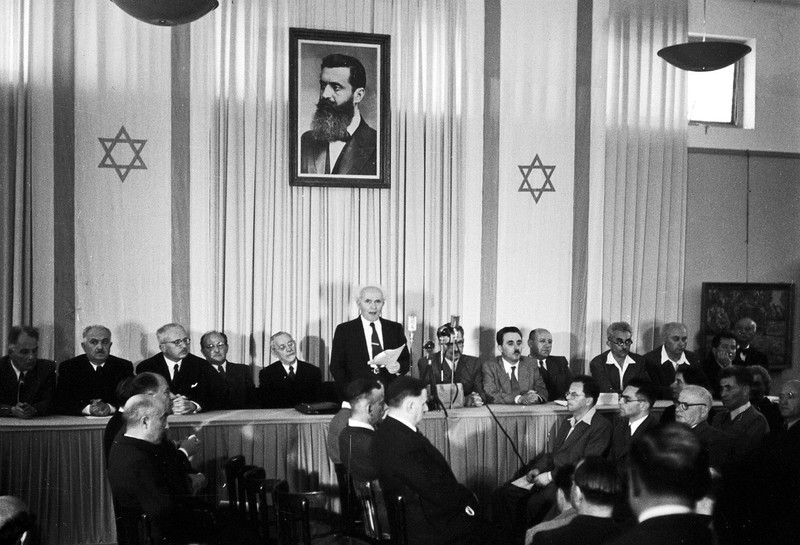
We should all be aware of is the following text from Israel’s Declaration of Independence, which was read by Ben Gurion in what is today called Independence Hall in Tel Aviv, May 12, 1948, as he declared Israeli statehood:

THE STATE OF ISRAEL will be open for Jewish immigration and for the Ingathering of the Exiles; it will foster the development of the country for the benefit of all its inhabitants; it will be based on freedom, justice and peace as envisaged by the prophets of Israel; it will ensure complete equality of social and political rights to all its inhabitants irrespective of religion, race or sex; it will guarantee freedom of religion, conscience, language, education and culture; it will safeguard the Holy Places of all religions; and it will be faithful to the principles of the Charter of the United Nations.
This vision of a State rooted in the prophetic vision of our tradition, connects Israel to fundamental Jewish values: Oseh shalom bimromav (May God bring some heavenly peace to Earth); Tzedeq, tzedeq tirdof (Justice, you shall pursue justice – Devarim / Deuteronomy 16:20). This vision should guarantee freedom of religion, specifically leaving room for the protection of other religious traditions and cultures. 

Ben-Gurion went on:

WE APPEAL to the Jewish people throughout the Diaspora to rally round the Jews of Eretz-Israel in the tasks of immigration and upbuilding and to stand by them in the great struggle for the realization of the age-old dream – the redemption of Israel.

From the very beginning, 75 years ago, Diaspora Jewry was called to help redeem the people and the Land of Israel. And so we must do today, as the State of Israel is in crisis.

We must lean in. We must be at the table in every way we can: being in touch with our Israeli friends and relatives, expressing our love of Israel and our concern to our elected representatives here in America, and of course being financially supportive, and this imperative can take multiple forms.

We must be a part of the struggle for liberal democracy in Israel. We can do so by redirecting our financial resources, not by withdrawing support, to be intentional with our dollars in a way that sends a message yet does not hurt Israel’s most vulnerable citizens. We must support charitable organizations that stand for democracy and good government in Israel. Here are a few such organizations:

And we must raise our voices for the vision of Israel which maintains democratic norms, the rule of law and the balance of power, which protects the rights of minorities, which ensures that Israel does not slide into religious or ethnic intolerance, or discrimination of any kind.

The Talmud teaches us that the Second Temple was destroyed due to sin’at ḥinnam, baseless hatred. After the Romans destroyed that Temple and laid waste to Jerusalem, the Jews were scattered all over the world, unredeemed and wandering for nearly two millennia. 

This Yom Kippur marks 50 years since Israel was attacked unawares by her Arab neighbors; we cannot allow  sin’at ḥinnam to succeed in doing what tanks and combat aircraft could not.

Theodor Herzl, the Hungarian journalist who set in motion the modern Zionist movement which culminated in the establishment of the State, wrote the following:

I once called Zionism an infinite ideal…as it will not cease to be an ideal even after we attain our land, the Land of Israel. For Zionism… encompasses a hope not only for a legally secured homeland for our people… but also the aspiration to reach moral and spiritual perfection.

Ayin leTziyyon tsofiyyah. As our eyes continue to gaze eastward, to our ancient homeland, we must keep Herzl’s vision of moral and spiritual perfection before us all. We must continue to sit at the Zionist table, to support the people, the idea, and the State of Israel, to support freedom, justice, and peace in that land, in our land, the vision of our prophets. And we must rally around the vision of democracy as we continue to seek the realization of that age-old dream of redemption.

~

Rabbi Seth Adelson

(Originally delivered at Congregation Beth Shalom, Pittsburgh, PA, evening of Yom Kippur 5784, 9/24/2023.)

* I am grateful to Eric Lidji, director of the Rauh Jewish History Program & Archives at the Senator John Heinz History Center, and Dr. Barbara Burstin, member of Beth Shalom and instructor at the University of Pittsburgh, who shared with me archival materials about Beth Shalom’s early involvement with raising funds for Zionist causes.

Categories
High Holidays Sermons

Into the Future, Part II: Why Conservative Judaism – Rosh Hashanah 5784, Day 2

I have been a Conservative rabbi now for sixteen years, and sixteen is a great number for those who love math: it’s two to the fourth power, the base for the hexadecimal system, a favorite of computer programmers. Also, in gematria, the system of interpreting Hebrew letters through their numerical values, sixteen represents one half of the the four-letter name of God (the Tetragrammaton), which is so holy, even only the half of it, that when we represent numbers in Hebrew we don’t use the letters “yod-vav” (10+6) to represent sixteen, but rather “tet-zayin,” which is 9+7. It’s a different path to the same thing, but remarkable nonetheless. So sixteen is considered a powerful and resonant number in Jewish life.

But more importantly, I am also a lifelong Conservative Jew, and I was committed to the principles of our movement long before I could even identify and explain them. 

[Read the first in the Into the Future series: It’s About Us]

Growing up in Western Massachusetts, in a fairly rural area, our Conservative synagogue felt like an extension of our living room, even though we lived 20 miles away, which for most of us seems quite far. But we knew about the Conservative teshuvah / rabbinic opinion permitting driving to synagogue if you lived too far to walk, and that was very important to us. We were a regular Shabbat-morning family, and the friendly mix of people and melodies and easygoing, egalitarian approach to halakhah was just right for us. 

My childhood synagogue: Congregation Knesset Israel, Pittsfield, Massachusetts

Some of you may have noticed that back in August, the Pittsburgh Jewish Chronicle hosted a poll on their website about identification with movements. It was heartening to see that 30% of respondents indicated that they identify with the Conservative movement. Now, of course that’s a totally non-scientific poll, drawing on presumably a more highly-engaged segment of the Jewish community. Nonetheless, that figure is about twice the national average of identification found in recent demographic studies. So there are still plenty of people in our neighborhood who are drawn to what we do and continue to see Beth Shalom as a source of inspiration and holiness.

And with good reason. I will totally concede my bias here, but I believe firmly that what we do in the Conservative movement still holds great appeal for many Jews, and if we could be better at explaining ourselves, many more would see that our approach to Judaism is the key to the Jewish future.

Conservative Judaism’s strength lies in its ability to hold on to our tradition but adapt to a changing world. This feature will be essential in the future, as we face rapid change.

And that is why the future of the Conservative movement is so important. And that is why we need you to be not just participants, not just members of Beth Shalom, but active ambassadors for what we do.

So what is it we do? What are the positively-articulated principles that make us not simply “not Reform and not Orthodox”? Or, as the old, totally inappropriate joke goes, not just the “hazy” between the “lazy” and “crazy.”

What makes this shul different from all other shuls? 

We surveyed 100 congregants, and the top seven answers are on the board. (OK, so I didn’t have the budget for a board.)

  1. We are halakhic. First and foremost, we accept halakhah, Jewish law, as framing our rituals and our behavior. But we also understand that halakhic framework as being subject to minimal (i.e. “conservative”) change to reflect contemporary values. This means that our path to spiritual fulfillment reflects considered and often lenient approaches to matters within Jewish law. In doing so, we aim to ensure that our rituals and our liturgy reflect where we are today.
  2. We are egalitarian. All adults, including those who have been traditionally excluded from some of our essential mitzvot, are counted equally as full participants in Jewish life. For example, we call young women to the Torah as a bat mitzvah at age 13, just like the boys. This is for many of us a fundamental value, and I know from many conversations with members over the years that it is a defining characteristic that has brought many of us here.
  3. We are scientific. Our current body of knowledge guides our understanding of the origins of the world, and Torah, and the unfolding of our tradition over the last few thousand years. That is, while we acknowledge the Divine origin of Judaism, we also accept the undeniable evidence of the human hand in crafting and interpreting our ancient holy texts. Where science and the Torah disagree, we acknowledge that having multiple stories upon which we can draw for inspiration is in fact a strength.
  4. We are open to modern understandings of God. We need not be limited to seeing God only as the all-powerful yet vengeful character in the Torah who sits on a throne and metes out reward and punishment. Now, that is a conception from which we may like to draw, particularly on High Holidays, but there are many wonderful modern theologians – Rabbi Abraham Joshua Heschel, Martin Buber, Rabbi Mordecai Kaplan, Rabbi Neil Gillman – who have given us the gift of contemporary theology, enabling each of us to wrestle with God personally in a meaningful way.
  5. We maintain a traditional communal standard. While we acknowledge that there is a wide range of personal observance choices within our community, Beth Shalom is a building in which we keep kosher, we observe Shabbat in a traditional way, and we uphold our traditions and rituals mostly as we have inherited them.
  6. We believe in Am Yisrael, Jewish peoplehood, while grappling in an honest way with current realities of American Jewry, which reflect the wider palette of Americans: non-traditional families and not exclusively Ashkenazic ancestry for everyone within our view, while of course maintaining a halakhic standard regarding who is a Jew.
  7. We remain firmly committed to the idea and the people of the State of Israel. Like any other people, Jews have the right to self-determination in their own land. While Jews living in the Diaspora are proud and loyal citizens of their lands, the Diaspora must also be connected and invested in Israel to ensure her survival as the spiritual center of the Jewish world. And of course we are committed to our family and friends who live there, while also acknowledging the very real challenges that the State faces in managing its own future. (I will be speaking about this at length at our Kol Nidrei service.)

Those are the top of my list of our most important principles; I am sure that some of you might value another principle that is missing here, but that’s the nature of our tradition! 

Each of those principles which I just outlined is at least a sermon unto itself.

But we do not have time for that, so instead I am going to share a piece of Torah as a sort of capstone to these seven principles, and I hope you will take this to heart as you step forward to be an ambassador for Conservative Judaism and for Beth Shalom. It’s from the first chapter of Pirqei Avot, the 2nd-century collection of rabbinic wisdom featured in the Mishnah:

Pirqei Avot 1:12

הִלֵּל וְשַׁמַּאי קִבְּלוּ מֵהֶם. הִלֵּל אוֹמֵר, הֱוֵי מִתַּלְמִידָיו שֶׁל אַהֲרֹן, אוֹהֵב שָׁלוֹם וְרוֹדֵף שָׁלוֹם, אוֹהֵב אֶת הַבְּרִיּוֹת וּמְקָרְבָן לַתּוֹרָה

Hillel and Shammai received the oral tradition from their teachers. Hillel used to say: be like the disciples of Aaron, loving peace and pursuing peace, loving all people and drawing them close to the Torah.

This passage is notable not only because of its essential message, but also because it replaces a passage found in most Orthodox siddurim. And the fact that the Conservative movement substituted this passage about loving and pursuing peace is quite telling indeed. 

You see, the way most Orthodox services unfold in the morning is that they read a series of texts about animal sacrifices in the ancient Temple in Jerusalem, which of course was destroyed by the Romans in the year 70 CE. And then they say, “May the Temple in Jerusalem be rebuilt speedily in our days.” 

Model of the Second Temple in Jerusalem at the Israel Museum

So at some point in the 20th century the Conservative movement decided that well, we’re just not so excited about rebuilding the Beit haMiqdash and restoring the process of sacrificing animals that ended nearly 2,000 years ago. We have prayer, which is, ultimately, a better way of reaching God.

So we took out many of those references to animal sacrifice, and substituted language which suits our values. The suggestion is that we start each day not with an imperative to rebuild the Temple, but rather to reach out to one another with the goal of peace: peace between individuals, peace between nations, and all of that undergirded with words of Torah. We respond to God’s loving gift of Torah with love; and we act on that love to pursue peace in our world.

Because what should Torah do, when applied properly? It should bring people together. It should tear down walls and cause us to make peace with one another. Torah is the source of shalom, and acting on Torah with love for our fellow Jews and our fellow people of all walks of life is the way we create a holier future.

And there is a certain irony in that passage, because Hillel and Shammai were rivals in Jewish thought. Hillel generally took lenient positions in halakhah, and Shammai took the stringent position. They disagreed on virtually every place where it was possible to disagree. And yet in doing so, they sought peace. In fact, the Talmud teaches us (BT Yevamot 13b) that despite their disagreements, the scholars in each of the opposing schools still married each others’ daughters. That is, they continued to live together and raise families together despite fundamental disagreement. 

The Conservative movement seeks the path of love and peace by acknowledging that we live in a world that is quite different from the one in which the Talmud, and all the more so, the Torah were written. We see that in order to follow the path of love and peace, we have to live in this world, and not isolate ourselves. And we must also still remain in community with those with whom we disagree, to the right and to the left.

We are the vibrant center that can hold the Jewish world together. Our current climate is one which breeds division of all sorts; as the movement which occupies the center of Jewish life, all over the world, it is within our purview to reach out to find common ground.

We offer what is for many still a viable spiritual home: adherence to tradition, with a willingness to consider how the world has changed and how our tradition should change with it. Hence counting all adults as equal in Jewish law. Hence treating a marriage between two Jewish men or two Jewish women as being equivalent to that between a man and a woman. Hence understanding that taking lenient positions, like Hillel himself, strengthens our connection to our tradition and widens our tent, creating more peace.

Some of you know that our local Federation scholar, Rabbi Danny Schiff, published a book within the past year called, Judaism in a Digital Age, in which he declared that the moment for movements within Judaism has passed. Rabbi Schiff and I had a very spirited public disputation about the Jewish future here at Beth Shalom last winter. I’m a movement guy, by which I mean that I believe that institutions such as the United Synagogue of Conservative Judaism still hold a good deal of value as a “brand” within the Jewish world. And I am proud that we are affiliated with the movement. 

Beth Shalom has emerged from the pandemic not just unscathed, but also with a path forward for sustainability, including the $1 million matching grant for redevelopment from the State of Pennsylvania. 

We have successfully launched the Ḥavurah program, which connects members of our congregation in small groups for social activities, and I am certain it will help build more connections in our community, to make Beth Shalom more highly integrated. (By the way, if you missed joining, it’s not too late! Be in touch with our Executive Director, Robert Gleiberman, and we’ll connect you with other Beth Shalom members like you.)

All of that is wonderful, but it is not enough. The future of Beth Shalom, and the Conservative movement, depends on you. It depends on your willingness to commit yourself not only to belonging, but also to showing up. To take advantage of everything that we do here, and to take it home and make it a part of who you are and how you live.

Now of course, stepping up your involvement may seem daunting. Where do you start? How about coming to see me to talk about how to engage more in Jewish life and your community. I am happy to help you craft a path to enriching your Jewish involvement so that you and your family may benefit more handsomely from everything that Jewish living offers.

And trust me on this: your investment of time and energy and resources into Beth Shalom will be worth it. In being more deeply connected to our tradition and to each other, you will gain a sense of kedushah / holiness, of groundedness which will carry you confidently into the future.

So what will make the future of Beth Shalom and the Conservative movement brighter? Of course there are the essential principles I outlined above, which we must continue to uphold and value – I take those things as a baseline. But here are some other things we will be addressing, moving forward:

  1. Complete egalitarianism with respect to ritual practice. As with all transitions within institutions, change is slow. So while many women in our congregation have embraced the mitzvah of wearing a tallit during morning services, and a small number fulfill the mitzvah of tefillin, we still have a long way to go to ensure that all feel welcome and indeed obligated to participate fully in the time-bound mitzvot which have traditionally only been incumbent upon men. This is an active conversation at the Religious Services Committee.
  2. Telling our story. We need to be able to positively articulate why we do what we do. That is precisely why I gave you the list of seven essential principles today. Having that language available will make you a better ambassador for Beth Shalom, which will lead to a more sustainable future for this congregation. Feel free to cut and paste from above! You need to know this, and you need to be able to share it with others. Our story, our values, our principles, have real value that we must continue to broadcast to the world.

    We also have to tell and retell our story as a congregation, particularly as we enter the upcoming capital campaign. Our future will depend on our being able to describe where we have been and where we are going, and we hope to engage all of you with that as we move forward.
  3. Increased interconnectedness. The Ḥavurot are just one means. The more you come to Beth Shalom – for services, for programs, for lifecycle events – the more that you will feel ownership and connected to others. Just about everything we do includes food and schmoozing opportunities – there is a reason for that! We want you to feel like you are an essential part of this community, that this is your shul, that I am your rabbi.

We have the ability, as the ideological center of the Jewish world, to hold us all together. We are a model for living together even in the face of disagreement,  for peace and love in Torah. And the world needs that now, more than ever.

So go out there and be an ambassador. That will ensure a healthy future for the Conservative movement, and for the rest of the Jewish world as well.

And here is one way you can do so: Rabbi Shugerman and I and a few other lay leaders and staff will be headed to the USCJ Biennial convention (which, for unexplained reasons, they are calling a “Convening” this year) in Baltimore from Dec. 3-5. It will require an investment of time and money, but every time we send a delegation to this convention, we come back with new ideas which help us be a better congregation. If you’re thinking about it, come talk to me. We would love to have you join us.

A final note from the Mishnah I quoted above. The text reads:

אוהב שלום ורודף שלום

Ohev shalom verodef shalom. Loving peace and pursuing peace. Those are two different things! It’s not enough merely to love peace; you have to go out there and make it happen. Likewise for the future of Beth Shalom: it will not be enough for us merely to appreciate Conservative Judaism. Rather, we have to continue to practice it, support it, and spread the word.  

Shanah tovah!

Next in the series:

Kol Nidrei: The Future of Israel

Yom Kippur: The Future Must Be Human

Categories
High Holidays Sermons

Into the Future, Part I: It’s About Us – Rosh Hashanah 5784, Day 1

Once upon a time, I was a big fan of science fiction. I loved the work of Arthur C. Clarke, and in particular 2001: A Space Odyssey, both the book and Stanley Kubrick’s fantastic 1968 film version. Clarke’s visions were often of future worlds where humans interacted with usually-benevolent alien powers. Humanity was not inclined to destroy itself; rather, humans found their way off of our home planet and out into the universe with gradual technological innovation, facilitated by alien assistance. Sure, in 2001 the computer HAL 9000 goes on a murderous rampage in an epic fail of artificial intelligence, but that is just a small hiccup on the way to the creation of the Star-Child by some vastly superior alien power to aid humanity.

I think that many of us are concerned that the future may not be as bright as science fiction writers like Clarke and others envisioned. In our current moment, it may seem as though Clarke misread the future by being hopelessly naive about our species. After all, many things have gone horribly wrong. Consider where we are today:

  • The very people who created artificial intelligence are warning that it may in fact be a real threat
  • We are being relentlessly tracked and mined for data by commercial and government interests
  • What is objectively true has become relative to your political perspective
  • Culture wars have pitted us against our neighbors on multiple fronts
  • Anxiety and depression are on the rise
  • Anti-Semitic activity has increased dramatically
  • Authoritarianism is also back with a vengeance while democracy is in decline

I could go on. Global warming. Opioid abuse. Homelessness. Loneliness. The list of society’s ills continues to grow.

One of my primary jobs as a rabbi is to try to keep us inspired and optimistic about the future. It’s not so easy in today’s environment.

But we Jews have an ancient secret that has enabled us to survive the worst of times for thousands of years. We have survived persecution and dispersion; we have survived exile and genocide; we have survived forced conversions, forced conscriptions, anti-Jewish legislation and regimes of all sorts. We survived the destruction of Jerusalem at the hands of the Babylonians 2600 years ago, and the Romans 2000 years ago. We survived accusations that the Jews caused the Black Death in the 14th century and we survived the Expulsion from Spain a century-and-a-half later. We survived the Holocaust. Even as we in Pittsburgh continue to mourn the 11 holy souls whom we lost on the 27th of October, 2018, we as a community survive and continue to thrive.

And what is that secret Jewish super-power? It is our holy framework, which has unfolded over the last 3,000 years through Torah and its ongoing interpretation. It is the story of our past, coupled with our willingness to continue to engage with it, to retell it, to cling to it, and to apply it to navigate the present. And it is our inclination to gather with other Jews, to be together in community for mutual support and meaningful engagement.

In short, it’s about us. Our story, our community, and our rituals, all intertwined.

One piece of ancient wisdom we learn in Pirqei Avot (4:21):

רַבִּי יַעֲקֹב אוֹמֵר, הָעוֹלָם הַזֶּה דּוֹמֶה לִפְרוֹזְדוֹר בִּפְנֵי הָעוֹלָם הַבָּא. הַתְקֵן עַצְמְךָ בַפְּרוֹזְדוֹר, כְּדֵי שֶׁתִּכָּנֵס לַטְּרַקְלִין:

Rabbi Ya’aqov taught: this world is like a vestibule before the world to come; prepare yourself in the vestibule, so that you may enter the banquet hall.

If we are to enter the future in a way that is healthy and sustainable, we have to be ready for it. And the way that we the Jews can do so, for the benefit of the rest of the world, is to use the framework that we have received from our ancestors, because it has worked for thousands of years. It is our fervent desire, for our collective benefit, that humanity makes it to the banquet hall of the future.

Over these High Holidays, we will be talking about moving “Into the Future” from different angles. Today, it’s about us. Tomorrow, we will be discussing the future of Conservative Judaism. On the evening of Kol Nidrei, we will discuss our future vis-à-vis the State of Israel. And on the day of Yom Kippur, we will be speaking about retaining our humanity as artificial intelligence infuses itself into our lives.

***

In all of the challenges that we have faced at any point in time, the Jewish inclination has always been to look to the past. How did our ancestors survive? By re-reading the Torah, by arguing about it, by following its guidelines for behavior and emulating the better qualities of its major characters, and by applying it to our lives wherever we have been and whatever we have faced.  

And this formula still works today. 

In his 2017 book Homo Deus, the Israeli history Yuval Noaḥ Harari explains what fundamentally differentiates humans from other animals. While there are many species, from ants to chimpanzees, that form social groups in which the individuals cooperate by playing distinct roles, only humans have the potential to act collectively in a way that can change our destiny. In other words, a bee hive is a kind of community, but bee colonies will always more or less be the same – the same structure, the same system of “governance,” with, as far as we know, no long-term sense of past or future.

But humanity is different, particularly due to our ability to gather around shared stories. And all the more so for us, the Jews. Our stories, our texts, our wisdom hold us together and help us move forward, with an eye to our past. Our strength as a people is on our collective bookshelf, and in our hearts and minds. 

One essential lesson, fundamental to Jewish life, is the idea that we are all connected to one another. Two pieces of wisdom in particular say, in essence, that we have to think about “us” before we think about “me” or “you” or “them.” 

  1. Kol Yisrael arevim zeh bazeh (Midrash Sifra on Vayiqra / Leviticus 26:37)

We are all “arevim” – guarantors for one another. The word arevim comes from the Hebrew for “to mix.” We are all mixed up, or integrated with one another. And given the way we live today, not just with fellow Jews, but with our non-Jewish neighbors. We must all be responsible for one another.

  1. Al tifrosh min hatzibbur (Pirqei Avot 2:4)

Do not separate yourself from the community. We cannot all be individuals in complete isolation from one another. Our shared, just, sustainable future depends on our willingness to be in relationship, to acknowledge each other’s humanity. That is, we have to think about us as a collective with a shared destiny. And that is harder to do than it is to say, particularly given that the way our society is constructed today tends to isolate, rather than bring together.

And to universalize once again, the same is true for the entire world. It has become woefully easy to divorce yourself from the people around you. And this is not good for humanity.

Back in August, my son introduced me to a YouTube channel online produced by a “YouTuber” who goes by the name of Mrwhosetheboss. What he does is review hi-tech products, and we watched a review of a new gadget: Apple’s virtual-reality headset, which will be available early next year at the low, low, bargain-basement price of $3500.

After gushing about the revolutionary marvels of this gadget he makes a stunning confession: 

There’s already very little separation between us and our technology. You only have to take your phone out of your pocket and your screen auto-turns-on and you’re blasted by notifications. When the device is on your face, there’s no escaping it, and that’s slightly worrying… But the key thing about this headset that I don’t think any future or vision of this headset can solve is the potential for isolation. I am so incredibly excited that this new era of tech is here, but I’ve never wanted, and NOT wanted, a product to exist at the same time as much as I do with this one, for the simple fact that I do think this is the start of the end for shared experiences.

That is not the future for me, in which we are all in our own sensory bubbles, where all of our communication with others and the outside world is through an intermediary, which controls every aspect of the experience. That seems to me a wee bit too close to The Matrix, rather than Arthur C. Clarke.

Now, I need to state clearly:  I am NOT anti-technology. In fact I believe technology will do wonderful things for us if we use it cautiously. 

But here is the point: every one of us in this room has a wonderful tool at your disposal to build social capital and fight isolation: Judaism. Our faith is one of the best sources of social capital. This synagogue is an ancient technology that still does an amazing job at bringing people together as a force for good in the world. 

Here is a four-point plan (out of many more possible Jewish points) to save our future:

  1. Shabbat (or, setting aside sacred time)
  2. Kashrut (or mindful consumption)
  3. Shemirat halashon (or mindful speech)
  4. Tefillah (or, meditative moments)

Each of these items are among the most important principles of Jewish life, located at the nexus of the personal and the communal. They unite the “me” with the “us.”

Shabbat / Setting Aside Sacred Time

Many of us observe Shabbat in a traditional way in this congregation: we have luxurious family meals, often with guests, on Friday night and Saturday afternoon; we attend synagogue; we “unplug” for 25 hours from sunset on Friday till dark on Saturday night to devote time to family, friends, ritual and reflection.

In my own home, Shabbat is when the imperatives of our busy lives are placed on hold and we play games: Settlers of Catan, Wingspan, Rummikub, building with Legos. And of course, dining and napping as well.

But there are many more of us who do not unplug and reconnect on Shabbat. And even if you have some sense of what you might be missing by not observing Shabbat traditionally, I understand. It’s not so easy to close all your digital devices for that time, to disconnect, to not go shopping or watch YouTube. It’s not so easy even to plan Shabbat meals with family or friends.

But once you have truly tasted the traditional observance of Shabbat, where our range of activities is minimal and our relationship with the Earth and each other is more immediate and organic, you understand the value of setting aside sacred time.

And furthermore, when the news-and-outrage cycle goes non-stop, as Big Tech vies for your eyeballs and your money, shutting all of that down – even if just for 25 hours each week – is a mitzvah not just for you, but for the future of humanity.

Shabbat is good for your soul, but it also helps you connect with the people in your neighborhood, which is where we should all be at least once a week.

Shabbat / setting aside sacred time: it’s about us.

Kashrut / Mindful Consumption

Sure, you might think that holy eating is just an annoyance, an obstacle to living a full gustatory life, unencumbered by antiquated rules. Come on, Rabbi, what’s wrong with shrimp? Didn’t God also create shellfish? And beef is beef, whether an old guy with a beard blessed it or not, right?

Ask any parent whether they can properly raise children without boundaries. Kashrut is just that: a daily reminder that we cannot merely take all we want when we want it. Kashrut is Jewish mindfulness, a structure to help us maintain a sense of holiness in this world. And if we embrace a mindful consumption practice, it leads to a sense of interconnectedness with each other and all of God’s creatures. If we were all to practice this mindful way of eating, we have the potential to spread that awareness of our consumption patterns far and wide.

Even during my years as a young adult when I was not going regularly to synagogue, I maintained my kashrut practice, because it reminded me on a daily basis of my connection to our people and our tradition. Paying careful attention to what we eat, where it came from, and how our consumption affects God’s Creation models behavior for the rest of the world to appreciate.

Kashrut / mindful consumption: It’s about us.

Shemirat haLashon / Mindful speech

Our tongues need guards. We have to be ever-vigilant about the way we talk, and text, and tweet. With the dissolution of guardrails in speech, and with social media platforms which exercise little control over what is acceptable, we are in danger of creating a future in which words will be weaponized in unimaginable ways. It has never been so easy to destroy a person, an institution, an idea as it is today. If we are to maintain any sense of togetherness as a society, we have to be careful about what we say and how we say it. 

But sanctified speech is that where we acknowledge the power of our words and their potential for danger. Too many today are focused on dividing people through speech; only through shemirat halashon may we succeed in bringing people together for a better humanity and a better future.

Mindful speech is about respecting the humanity in each person.  Shemirat haLashon is about us.

Tefillah / Meditative Moments

There are many paths through Jewish life. But there is only one thing that gathers the Jews like no other, and that is being together in our house, the beit kenesset, the synagogue, the ancient and modern house of Jewish gathering.

Now, I know that tefillah is hard. It requires intent, concentration and practice, all things that can be challenging in a busy sanctuary during the High Holidays. And there is a high bar to entry. To fully participate, you have to be able to read Hebrew, or at least puzzle through transliterations. And there are tunes and choreography and ritual gear, which can be off-putting to the uninitiated.

But when we have prayerful moments together, when all the people in this room sing together, or meditate together, or even mumble together, it is breathtaking. And it is also be liberating – an upward spiral of energy that moves us as a community and ascends heavenward.

The Hebrew word, tefillah, does not mean, “to recite a jumble of ancient words in a language that nobody speaks.” It actually means “self-judgment.” When we stand together, ideally in silence, reciting the words of the Amidah, we create a strong sense of power in the room – hearts united in deep, meditative analysis of the self. If we allow ourselves to be swept up in the sense of tefillah as a community, it will help us all be better people, opening our hearts and bringing us together as a community. And this too has the potential to infuse the whole world with awareness and connection.

Tefillah / meditative moments: it’s about us.

***

OK, Rabbi, that all sounds great, but you have not convinced me. How exactly will this framework create a better future?

We have the power, when we think and act together, when we draw on our shared stories and ritual, to face all the challenges of our world in a way that will enable us to overcome. That is why the Jews are still here. We are a model for resilience, a model which can be shared with others.

My goal as your rabbi is, in facing the future, to recognize the awesome power of our Jewish framework, of your heritage, and to give it to the world. This world, God help us, needs to set aside sacred time, needs mindful consumption, mindful speech and meditative moments.

And indeed, the situation is urgent. We all have the potential to think, “Hey, I’m a good person. I am respectful of my neighbors. I make charitable donations. I replaced my incandescents with LEDs. I buy organic produce.” And hey, those things are great. 

But we have to think wider and greater than that. We have to think not just about ourselves or our immediate relations, but rather how we can influence the world for the better. Our future as a species depends on you to consider how your personal observance of essential Jewish principles can bring us safely and sustainably into the future. And this may only be realized if we take up the reins of our own personal Jewish observance and demonstrate its value to the world.

So here is a suggestion: Take one element of Shabbat – a holy moment every Friday evening at sunset to light candles as a family, for example -and build on that. One element of kashrut. Come once more to synagogue for a service than you ordinarily would, to learn a new prayer, a new tune, a new idea from our rich textual tradition.

And as you come to appreciate these aspects of our tradition yourself, you must share them with your friends and neighbors. Our ancient secret can be universalized and presented to the world. Not that we should try to make non-Jews practice Judaism, but to understand the eternal value of these principles so the whole world can derive the benefits of the Jewish secret. 

Do it for yourself, but all the more so, do it for us, so that we may all enter the banquet hall together. Into the future.

***

Next in the series:

Rosh HaShanah, Day 2: The Future of Conservative Judaism

Kol Nidrei: The Future of Israel

Yom Kippur: The Future Must Be Human

~

Rabbi Seth Adelson

(Originally delivered at Congregation Beth Shalom, Pittsburgh, PA, first day of Rosh Hashanah 5784, 9/16/2023.)

Categories
Sermons

The Color of Elul – Ki Tetze 5783

The gypsy-punk group Gogol Bordello’s first hit was a curious song called “Start Wearing Purple.” Maybe you know the song? 

Start wearing purple, wearing purple
Start wearing purple for me now
All your sanity and wits, they will all vanish
I promise, it’s just a matter of time

The lead singer of the group, Ukrainian-born Eugene Hütz, claims the song is about a crazy neighbor who would dress entirely in purple. I have been told that purple is our bat mitzvah‘s favorite color. (It’s something that she shares with my daughter, who, when I asked about it, said, matter-of-factly, “Purple is objectively the best color.”)

Well, I have some good news: purple is an appropriate color for the month of Elul, which we are in right now. Why? Because it is a balance of two other colors, red and blue. It’s a kind of coalition color. And it suggests exactly the way we should feel in Elul. I’ll come back to that.

The fighting in Ukraine passed a grim milestone this past week: one half-million people who have been killed or wounded in the fighting, Russians and Ukrainians. Some among us might take some small comfort, given the nature and origin of the conflict, in knowing that the count is higher on the Russian side, but I think it is always in bad taste to gloat in the loss and suffering of others, and in this case particularly because this seems to be such a senseless war. Furthermore, some of the soldiers who are dying for Mother Russia feel that they have been deceived by their government regarding why they are fighting in Ukraine.

But as much as we may be inclined to be supportive of Ukraine, whether because of the politics of Putin or the Jewish background of Volodymyr Zelensky or because Russia attacked a fledgling democracy for completely selfish reasons, I think that standing up for Ukraine is a fraught endeavor for the Jews. 

That is the land that my great-grandparents fled, and probably many of yours did as well. Ukraine, having been gradually captured by Poland in the 14th and 15th centuries, was a place where the local peasants loathed the Jews in particular, because Polish nobles sent Jewish tax collectors to the Ukrainian lands. When the Ukrainian Cossacks rose up against their Polish overlords during the Khmelnytsky Uprising of the mid-17th century, it is not too hard to understand why they massacred Jews as they rebelled against the Poles. 

Israeli Prime Minister Golda Meir, the subject of a biopic which opened this weekend, wrote in her autobiography that growing up in Kyiv she recalled her father boarding up the door to keep out marauding Ukrainians, who regularly attacked Jews. In the film, Golda describes Christmas pogroms as an annual event, and they hid in terror waiting to see if they’d make it through the night unscathed. To this day, rates of native anti-Semitism in Ukraine still run relatively high, despite being the only nation in the world other than Israel with a Jewish head of state.*

Not that things are any better in Russia, by the way. But let’s face it: our shared history makes Ukraine a mixed bag. When my grandmother left her little shtetl in what is today northwest Ukraine in 1921, she and hundreds of thousands like her were happy to be out of that blood-soaked land. They never looked back.

So today, while there is no question that the Ukrainians deserve our support in casting out Putin and his troops, I nonetheless feel a certain ambivalence about standing for people who did not really want the Jews in their land to begin with, and certainly did not miss us after Hitler’s Einsatzgruppen came through. It’s undeniably fraught. 

We are of course celebrating today as a young woman is called to the Torah for the first time as a bat mitzvah, an inheritor of the obligation to the mitzvot of adult Jewish life. And a part of that inheritance is of course the imperative to take stock of our lives in the month of Elul. 

This is the month preceding Aseret Yemei Teshuvah, the ten days of repentance which go from Rosh Hashanah until Yom Kippur. It is time to take inventory, to reflect on our lives, on the past year, on where we are and where we would like to be. It is a time to consider the ways in which we have failed, the ways in which we might be better, the things about ourselves with which we are satisfied.

And the reality that each of us must face at this time of year is that life has its ups and its downs, that each of us is a complex being. We have our good points and our not-so-good points. And it is our duty in this season, and all the more so during the Aseret Yemei Teshuvah, to think of ourselves as exactly that: scales in balance. Maimonides, in his Hilkhot Teshuvah, his book of law about how to go about repentance, says that it is mandatory at this time to see ourselves as having performed an equal number of good deeds and transgressions; that each pan of the scale weighs exactly equal to its partner. We are all “beinoni,” in-between in these days. And our job is to tip the scale to the good side by striving harder to perform more mitzvot, so that we may be inscribed for a good year.

Your own estimation of your deeds over the past year does not actually matter, because we tend to judge ourselves with kaf zekhut, the benefit of the doubt. We are inclined to think, “Yeah, I was a good husband, a terrific father, a fantastic coworker, an extraordinarily respectful driver (most of the time), a responsible Jew. I shovel my sidewalk when it snows and I do the dishes and feed the cat when nobody else wants to. OK, I’m not perfect, but who is? I’m certainly better than most people, so the mass of my ‘good deeds’ in that scale pan surely outweighs the other one.”

None of that matters, because we like to see the overwhelming good in ourselves, even as we fail to see the same in others. There is a certain amount of self-protective inclination built into all of us; we love to believe that, as Garrison Keillor used to say about the children of Lake Wobegon, we are all above average.

Truth is, we are all in the middle somewhere, in the purple, if you will. We all fail sometimes. We all occasionally give half as much as we should. We all have our strong and weak points. We are all occasionally quick to anger, or blatantly self-interested, or too willing to criticize. It is easy to give ourselves credit for the good, and a little less so when it comes to our less-desirable behaviors.

And the Torah acknowledges the complexity of humanity in many ways. Consider just the opening verse of Parashat Ki Tetse, which we read this morning (Devarim / Deuteronomy 21:10):

כִּֽי־תֵצֵ֥א לַמִּלְחָמָ֖ה עַל־אֹיְבֶ֑יךָ

When you go out to war against your enemies…

The Torah does not even give us the opportunity to consider a world in which there is no war, in which you will not have enemies. War is simply an inevitability. We want to believe that people will prevent war, but lamentably we know that human nature does not always incline to peace. Similarly, in last week’s parashah, Re’eh, in which we read explicitly that even though it is our duty to work for a world in which there will be no needy, there will always be poor people.

So on the one hand, the Torah continues to inspire us to be better people, teaching us (for example) to create a society in which people provide for others in need, as our bat mitzvah discussed earlier. But on the other hand, the Torah reminds us that the ills of war and poverty will always be with us.

Perhaps that is what makes purple so wonderful: that it is a human color, reflecting the nature of our lives and our society. Blue and red are primary colors; they suggest one way or the other. But purple, being in-between, reminds us that to be human is to see our lives as a mixture. We take the bad with the good. We acknowledge that there are no ones and zeroes, no absolutes. No individual is perfectly righteous; and nobody is completely wicked. We are all beinoni, all somewhere in-between.

As we continue to move through Elul and into 5784, we should think purple; we should remember that each of us is in balance, and we want to tilt the scales in our favor, by going a little bit further for those around us, by seeking out the extra mitzvah, by working a little harder to stave off war and poverty if we can, and of course by remembering that we will never be free of either obligation.

Now is the time to start wearing purple.

~

Rabbi Seth Adelson

(Originally delivered at Congregation Beth Shalom, Pittsburgh, PA, Shabbat morning, 8/26/2023.)

*The current Prime Minister of France, Elizabeth Borne, has a Jewish father and a non-Jewish mother, although to my knowledge is not halakhically Jewish.

Categories
Sermons

לאן הולכים מכאן / Where Do We Go From Here? – Eqev 5783

The portion of the Torah that we read this morning, up front in Parashat Eqev, is one of the most Zionist moments in the Five Books of Moshe. It’s so Zionist that when the Conservative movement established the custom of reading Torah on Yom HaAtzma’ut (Israel’s Independence Day), which we do here at Beth Shalom, they chose this passage to read. In particular, Eqev says the following (Devarim / Deuteronomy 8:7-10):

כִּ֚י ה’ אֱ-לֹקֶ֔יךָ מְבִֽיאֲךָ֖ אֶל־אֶ֣רֶץ טוֹבָ֑ה אֶ֚רֶץ נַ֣חֲלֵי מָ֔יִם עֲיָנֹת֙ וּתְהֹמֹ֔ת יֹצְאִ֥ים בַּבִּקְעָ֖ה וּבָהָֽר׃ אֶ֤רֶץ חִטָּה֙ וּשְׂעֹרָ֔ה וְגֶ֥פֶן וּתְאֵנָ֖ה וְרִמּ֑וֹן אֶֽרֶץ־זֵ֥ית שֶׁ֖מֶן וּדְבָֽשׁ׃ (ט) אֶ֗רֶץ אֲשֶׁ֨ר לֹ֤א בְמִסְכֵּנֻת֙ תֹּֽאכַל־בָּ֣הּ לֶ֔חֶם לֹֽא־תֶחְסַ֥ר כֹּ֖ל בָּ֑הּ אֶ֚רֶץ אֲשֶׁ֣ר אֲבָנֶ֣יהָ בַרְזֶ֔ל וּמֵהֲרָרֶ֖יהָ תַּחְצֹ֥ב נְחֹֽשֶׁת׃ וְאָכַלְתָּ֖ וְשָׂבָ֑עְתָּ וּבֵֽרַכְתָּ֙ אֶת־ה’ אֱ-לֹקֶ֔יךָ עַל־הָאָ֥רֶץ הַטֹּבָ֖ה אֲשֶׁ֥ר נָֽתַן־לָֽךְ׃

(7) For YHWH your God is bringing you into a good land, a land with streams and springs and fountains issuing from plain and hill; (8) a land of wheat and barley, of vines, figs, and pomegranates, a land of olive trees and honey; (9) a land where you may eat food without stint, where you will lack nothing; a land whose rocks are iron and from whose hills you can mine copper. (10) When you have eaten your fill, give thanks to YHWH your God for the good land which God has given you.

What I hear in this passage is a love letter to the Land of Israel, describing its bounty, its landscape, its minerals, and its intimate connection to the body of stories and laws and customs known as Judaism. It includes, of course, the list of the Seven Species typical to the land, and of course the passage that we know from Birkat haMazon / grace after meals, in which we are required to express our gratitude liturgically after eating. 

Of course, it is somewhat anachronistic to impose a late-19th-century political movement for the return to Israel onto a text written about two-and-a-half millennia earlier. “Zionism” per se is not exactly what the Torah is invoking, as Moshe addresses the Israelites on the far side of the Jordan River. Rather, this passage is meant as an incentive to the Israelites, speaking to their perspective as the children of former slaves wandering through the wilderness. Fear not, it seems to say; you will soon be in a place where everything is wonderful. You have an ancient and eternal connection to this land, and when you inherit it properly now as the significant nation you have become, you will fully reap the benefits that God has promised you as part of the berit, the covenant with your ancestors.

We are living, of course, in a very different world today, 75 years into the existence of the modern, democratic State of Israel, which of course bears little resemblance to the Torah’s vision of Israelite governance. And yet, this text surely summons the Zionist passion which many of us feel.

Hatikvah 6

There is an Israeli pop song that’s been floating through my head all week. It’s by the reggae group Hatikvah 6 called “לאן הולכים מכאן” (Le-an holkhim mikan / Where do we go from here?). The song hints at the political protests of 2011, when hundreds of Israelis set up tents in central Tel Aviv to decry the astronomical cost of living. The movement launched careers for a few politicians, but ultimately had minimal lasting effect on apartment rental prices in Israeli cities. In fact, in 2022, Tel Aviv was the third most-expensive city in the world.

But the question of “Where do we go from here?” neatly captures the current moment in Israel. As you may know, the governing coalition in the Knesset, which holds a slight majority of 64 seats out of 120, passed a piece of legislation known as the “reasonableness clause” as a part of a larger package of judicial reform. This law would prevent the Israeli Supreme Court from using “reasonableness” as a standard for upholding the law, and in particular as a check on legislative orders from the Knesset. Given the uproar in Israel over these reforms, the opposition walked out en masse in protest, so the law passed 64-0. 

What this legislation effectively says is that if a simple majority of elected politicians, even 61 out of 120, believe that a government decision is reasonable, it does not matter if all the other 59 members of Knesset and the entire Supreme Court feel it is unreasonable. Commentators have observed that this might open the door to corruption. (BTW, the best analysis I have read about the situation in Israel is by David Horovitz, editor of the Times of Israel.)

The Supreme Court has already announced that it will debate the legality of the law. When they strike it down, as I anticipate that they will, the State of Israel will be in uncharted “constitutional” territory. I say “constitutional” in quotes, because, as you may know, Israel has no constitution, and no upper parliamentary body, so the Supreme Court is really the only check on the power of the majority coalition in the Knesset. This attempt by the Netanyahu coalition to reign in the judiciary amounts to what some in the opposition have labeled a “coup,” weakening the Supreme Court and thereby giving too much power to the Knesset majority.

Furthermore, the “reasonableness” legislation is only the beginning. There are more pieces of judicial reform to come from this coalition. And when the hobbling of the courts is complete, they will turn to those pieces of legislation that are features of the coalition agreements, the back-room horse-trading deals which hold the coalition together and which might otherwise be struck down by the court, as explained by Horovitz. Those include:

… the legalization of discrimination based on religious beliefs, the annexation of parts or all of the West Bank without equal rights for Palestinians, the restricting of media, the constriction of women’s rights, the blanket exemption of the fastest-growing sector of the populace, the ultra-Orthodox, from military and national service.

Make no mistake: everybody in this room is part of a minority whose rights will be curtailed by a government which tips its hat to theocracy. We all know that Israel right now is only barely tolerant of non-Orthodox Judaism. How about an Israel that makes it illegal? Imagine being on a synagogue trip with your rabbi, observing Shabbat according to our customs, and suddenly we are arrested for hosting a service in which men and women are sitting together?

Israelis of all sorts, but particularly the intellectual elite, are facing a state which they do not recognize. Hundreds of thousands have been out in the streets. Some are actively leaving. Israeli reservists are writing letters to the IDF leadership to tell them that they will no longer serve their reserve duty. The economic and security toll of the actions of this government is inestimable.

So לאן הולכים מכאן? Where do we go from here? The challenge here for us as Diaspora Jews, most of whom are not Israeli citizens, but all of whom have a significant stake in the State of Israel, is how to respond to this.

We have supported, and must continue to support Israel because the right to a tiny strip of our ancestral land, as described in Parashat Eqev, where we Jews are guaranteed self-determination, is essential to our survival as a people. We support Israel because of the values espoused in her Declaration of Independence. We support Israel because we see her democratic government committed to upholding those values, protecting minority voices and giving strength to the disenfranchised. 

There are really only two things that might affect the situation. First, ongoing protests in the streets of Israel, which did succeed in at least delaying the vote a few months back, and made the opinion of what is likely a majority of Israelis painfully clear.

Second, economic protest, and here is where things get thorny for the American Jewish community. We provide $3.8 billion of military aid to Israel every year. This is really a “back-door” subsidy to American defense contractors: the money goes to them, and the arms (like the Iron Dome system, which shoots down incoming missiles, launched largely from Gaza) go to Israel. This subsidy protects Israeli citizens and makes life safe and livable in a rough neighborhood, and of course supports American jobs. I would not want to see this money go away.

Also, we Americans have always demonstrated our support by sending personal charitable contributions to Israel. So the dilemma we are facing is how to continue to support the Israeli people and the democratic norms within Israeli society without enabling the more problematic aspects of the current government.

One such organization that we might want to support is called התנועה לאיכות השלטון, the Movement for Quality Government in Israel, a well-established, non-partisan non-profit that works for improved government, to expose corruption and flaws in the democratic system. There are probably others, and as I become aware of them, I will share that info with you as well. 

A final thought: there is a reason we call immigrating to Israel “making aliyah,” where “aliyah” literally means, “ascent.” In the Talmud, Israel is described as the highest spiritual point in the world; one “ascends” to Israel from anywhere else in the world, and within Israel one ascends to Jerusalem.

During the protests of the last couple of weeks, thousands of Israelis made the 40-odd mile trek on foot from Tel Aviv to Jerusalem. They ascended physically and spiritually, and their aliyah was a sign not only of their commitment to the State of Israel but also to its democratic principles.

I hope that as they were climbing through the Shefelah, the fertile Judean foothills in the center of the country, at least a few of them thought about Parashat Eqev: the Seven Species, and the sense of expressing gratitude for this land. I hope that some of them were thinking, and perhaps causing some other Israelis to pause and think that the only way that we might continue to eat, to be satisfied, and to express thanks for what they have is to ensure that we do not deepen this growing rift in Israel and indeed the Jewish world. That we must continue to make a metaphorical aliyah together.

לאן הולכים מכאן? Where do we go from here? We keep going up. We do not have a choice.

~

Rabbi Seth Adelson

(Originally delivered at Congregation Beth Shalom, Shabbat morning, 8/5/2023.)

Categories
Sermons

A Visit to the Jewish Quarter of Toledo, Spain

אֵיכָ֣ה  יָשְׁבָ֣ה בָדָ֗ד הָעִיר֙ רַבָּ֣תִי עָ֔ם הָיְתָ֖ה כְּאַלְמָנָ֑ה רַבָּ֣תִי בַגּוֹיִ֗ם שָׂרָ֙תִי֙ בַּמְּדִינ֔וֹת הָיְתָ֖ה לָמַֽס׃    

Alas! Lonely sits the city / Once great with people!
She that was great among nations / Is become like a widow;
The princess among states / Is become a thrall.

Eikhah / Lamentations 1:1

If you ever went to a Jewish summer camp, you may have encountered a long list of Jewish catastrophes that have taken place on Tish’ah BeAv, the ninth day of the month of Av. One item that often appears on this list is the signing of the edict of the Expulsion of Jews from Spain in 1492. It sits alongside other such calamitous moments in Jewish history as the destruction of the First and Second Temples in Jerusalem (586 BCE and 70 CE, respectively) and the fall of the fortress of Betar in the Bar Kochba Rebellion in 135 CE. 

Technically speaking, that is not historically accurate. The final edict of Expulsion was signed in the spring of 1492, not the summer. And, of course, it is worth noting that Spain was neither the first nor the last country from which the Jews were expelled. 

Nonetheless, the Expulsion from Spain was tragic not only due to its scope and profound impact on the Jewish history of the last half-millennium, but also in particular because of the long and rich history of the Jews of the Iberian peninsula. Spain became, undeniably, the center of the Jewish world following the decline of the Iraqi Jewish community in the late first millennium. 

In the 11th and 12th centuries, the Jews enjoyed a fruitful period of economic and intellectual development there. The ferment of Christian, Jewish, and Muslim philosophers and poets and scholars in that era led to a golden age for the Jews, spawning such brilliant contributors as Yehudah haLevi, Ramban (Nachmanides), Avraham ibn Ezra, Shemuel haNagid, Shelomoh Ibn Gevirol, and of course Rambam / Maimonides, the greatest figure of the Middle Ages.

While Judy and I were away from Pittsburgh during my sabbatical, we visited Toledo, which was for many centuries the spiritual center of Spain, for the Christians as well as the Jews. Under Christian rule from the late 11th century, Toledo became a center for translation between Arabic, Hebrew, and Castilian Spanish, and was therefore also the epicenter of cross-cultural intellectual development. There is a Jewish Quarter, which is identified on all the tourist maps, containing a few sites of Jewish interest, including two ancient synagogue buildings. According to our tour guide, there are only four known synagogue buildings from prior to 1492 which are still standing, this from the hundreds or maybe thousands which would have stood at the peak of Spain’s Jewish community.

Both synagogues at one time must have been grand buildings. The larger of the two, known as “El Tránsito,” was built in 1357 by Shemuel haLevi Abulafia, the treasurer to King Pedro I of Castile, also known as “Pedro the Cruel.” It has a lofty wooden ceiling and many decorative frescos and Hebrew inscriptions, including a dedication to King Pedro (who is referred to in large Hebrew letters as המלך דון פדרו / Hamelekh Don Pedro).

Wooden ceiling of El Tránsito. The Arabic inscription can be seen above the Hebrew.
Dedication to King Pedro I, aka “Pedro the Cruel.”
Beginning of Psalm 84, which continues around the entire length of the walls.

The smaller, older synagogue, known as “La Sinagoga de Santa María la Blanca,” dates to the late 12th century, and while it contains some lovely Moorish architectural features, virtually nothing can be seen of its original design.

Santa María la Blanca. This is not the original synagogue decor.

Following the Expulsion, both buildings were repurposed as churches, which is why they are referred to by Christian names. “El Tránsito” is short for “El Tránsito de la Virgen María,” the “Dormition of the Virgin Mary.”

Judy and I paid a few Euros to visit these ancient buildings, which, despite their state, seem to ooze with history. El Tránsito features not only Hebrew inscriptions, but Arabic as well, as if to suggest that interfaith relations in the 14th century were hunky-dory.

There is today no Jewish community to speak of in Toledo. For the nearest minyan, you have to drive an hour or so to get to Madrid. Shemuel haLevi Abulafia, who built that grand synagogue dedicated to Pedro the Cruel, was tortured to death by his employer a few years after it was built. His adjacent house now holds the El Greco museum and its collection of 16th-century Christian paintings. The main street through the center of the neighborhood is called “Calle de los Reyes Católicos,” the street of the Catholic Kings, and a contemporary sculpture of the 12 Christian apostles stands in a central square opposite an unflattering bust of Shemuel haLevi Abulafia, who is seemingly scowling at the apostles for not joining him for minyan.

In retrospect, the scene was really quite depressing. The so-called Jewish Quarter, where there are shops selling stylish menorahs and mezuzot and you can see artistic graffiti tags of חי (hai / life) and ספרד (Sefarad / Spain) all over the place, is no more Jewish than Utah’s Zion National Park. It is there for tourists, and nothing more. The majestic inscriptions on the walls of El Tránsito are merely museum pieces, not meant to inspire or bring the worshippers closer to God.

Alas! Lonely sits the city / Once great with people!

Traveling through Spain, we found Roman ruins in multiple places: aqueducts, city walls, bathhouses. It reminded us of Israel, except that in the latter, there are many much older pre-Roman sites as well. And the coast and countryside seemed in some sense like a mirror-image of Israel, reflecting across the Mediterranean: the rocky, arid landscape, the olive trees. I could not keep the words of Yehudah haLevi (ca. 1075 Toledo – 1141 Israel) from infiltrating my mind:

לִבִּי בְמִזְרָח וְאָנֹכִי בְּסוֹף מַעֲרָב / אֵיךְ אֶטְעֲמָה אֵת אֲשֶׁר אֹכַל וְאֵיךְ יֶעֱרָב

אֵיכָה אֲשַׁלֵּם נְדָרַי וֶאֱסָרַי, בְּעוֹד / צִיּוֹן בְּחֶבֶל אֱדוֹם וַאֲנִי בְּכֶבֶל עֲרָב

יֵקַל בְּעֵינַי עֲזֹב כָּל טוּב סְפָרַד, כְּמוֹ / יֵקַר בְּעֵינַי רְאוֹת עַפְרוֹת דְּבִיר נֶחֱרָב

My heart is in the East, and I in the uttermost West–
How can I find savor in food? How shall it be sweet to me?
How shall I render my vows and my bonds, while yet
Zion lies beneath the fetter of Edom, and I in Arab chains?
An easy thing would it seem to me to leave all the good things of Spain
Seeing how precious in mine eyes to behold the dust of the desolate sanctuary.

At the end of his life, Yehudah haLevi left Spain to travel to Israel. The apocryphal story is that upon reaching Jerusalem, he knelt down to kiss the ground, and was immediately trampled to death by an Arab horseman.

And yet, the irony is that Toledo today is effectively Judenrein, free of Jews, and Jerusalem is a thriving city filled with Jews, Christians, and Muslims. No, they do not always get along, but any imagined interfaith utopia in 11th century Spain was almost certainly equally fraught. I think Yehudah haLevi would have been pleased with the reality on the ground in Yerushalyim shel Matah, the Earthly Jerusalem, if not the politics found therein.

Perhaps the reality on the ground in today’s Toledo is roughly analogous to how Yehudah haLevi encountered Jerusalem when he made his journey across the Mediterranean; while Jerusalem had Jewish residents in the 12th century, it was at the time hardly an intellectual center for world Jewry; for Jews, it was largely a ruin, a place from which history had moved on.

One of the lessons of Shabbat Ḥazon, the “Shabbat of Vision” which always precedes Tish’ah beAv, is that true vision of the past, present, and future acknowledges that life comes with high points and low points. Freedom, democracy, self-determination: these represent high points in Jewish, and human, existence. Exile, dispersion, Inquisition, genocide are the low points. Our Jewish story includes all of these, and we should never feel so comfortable and high on ourselves as to forget the low points. That’s what Tish’ah beAv is for. That is why we have one day of the Jewish year set aside to commemorate our suffering. Life is not all sangría and roses.
We began the book of Devarim / Deuteronomy this week, and right up front Moshe reminds the Jews of their journey from slavery in Egypt through the wilderness. Our people have been on the move ever since. 

What gives me hope, and what our people have cleaved to throughout our history is that as we have traveled from place to place, whether compelled to by sword or economics or persecution, we have continued to build and rebuild. Toledo was one stop along the Jewish journey; so too Baghdad, Warsaw, and New York. But I would pick Jerusalem over any of them. Yehudah haLevi’s yearnings rang in my ears driving through the Spanish countryside, passing castles and windmills and shopping malls, reminding me how fortunate we are to live in a time when my heart and my body can both be in the East, rather than the uttermost West.

Eikhah / the book of Lamentations concludes with a verse we know well. We sing it with gusto every time we put the Torah away:

הֲשִׁיבֵ֨נוּ ה’ אֵלֶ֙יךָ֙ וְֽנָשׁ֔וּבָה חַדֵּ֥שׁ יָמֵ֖ינוּ כְּקֶֽדֶם׃

Hashiveinu Adonai eilekha, venashuvah; hadesh yameinu keqedem.

Return us to you, Adonai, and we shall return; renew our days as of old.

Eikhah / Lamentations 5:21

The hopeful note after destruction is that we always have a chance to return, to rebuild. May that always be our vision for the future.

~

Rabbi Seth Adelson

(Originally delivered at Congregation Beth Shalom, Pittsburgh, PA, Shabbat morning, 7/22/2023.)

Categories
Sermons

Life, Death, and Justice – Beha’alotekha 5783

I received a call from a good friend last week: my colleague and former senior rabbi on Long Island, Rabbi Howard Stecker. He was wondering how our community was reacting to the trial in Pittsburgh of the 10/27/2018 Tree of Life attacker.

And the truth is, I was not sure how to answer. I have reached out to the members of Beth Shalom who have testified or will soon, and for them this is a particularly emotional time. I have discussed with a few folks who are certainly feeling the gravitas of this moment, including some who are taking the active decision not to read the news. There is at least one person in my orbit who is quite distraught, and has been so since the day of the attack.

But my sense is that our reaction is, on the whole, somewhat muted. Everybody knows it is going on, but at least as far as I can detect, we are, emotionally and spiritually, in a much better place than we were in the months following the shooting. Thank God.

I suspect that many of us have by now built up good defenses that enable us to feel and grieve the losses of that day, but not allow ourselves to slide back into the depths of the trauma of 4½ years ago. Contrary to expectations, extremist protesters supporting the defendant outside the courthouse have not materialized. And for that I am grateful.

I have been skimming reports in the Pittsburgh Post-Gazette without reading too closely. I did see the photo of the Siddur Sim Shalom for Shabbat and Festivals (the dark blue one) which Rabbi Jeff Myers took with him from the building; it has a bullet hole on the top. I hope that siddur ends up in the Rauh Archives, if not some other museum that is a testament to the survival of the Jewish people.

Rabbi Stecker asked me, as you might imagine, about the death penalty, about how folks in our community feel about it, and of course I told him that we are divided. We certainly have members of this community who are vociferously against, and some others who are decidedly for, and probably many of us who are uncertain exactly where we stand.

I have certainly thought, at many points in my life, that the death penalty is wrong, that the only figure in our world with the authority to issue and carry out execution, to actually end a human life, is God. I must concede, however, that this case gives me pause.

Now, you might think that the logical thing for a rabbi to do in this case is to go to the Jewish bookshelf for an answer. And the answer, as you may imagine, is not so simple. So I would like to add a brief caveat at this point:

My role as rabbi is not to tell you how to think. My role, rather, is to complicate the discourse by adding depth, to provide you with traditional tools from the Jewish bookshelf. A rabbi is a teacher of our religious tradition, and our sources demand that we consider challenging issues from multiple perspectives.

The Torah is clearly in favor of the death penalty. Not just in favor, but let’s put it this way: the phrase, “mot yumat,” “he shall be surely put to death” for some crime occurs at least 31 times in the Torah; it is mandated for such crimes as violating Shabbat (Ex. 31:15), adultery (Deut. 22:22), and of course first-degree murder (Ex. 21:12-13). There is also the famous case of the “ben sorer umoreh,” the wayward and defiant son, who is to be stoned to death by the men of the city (Deut. 21:18-21). For the record, we do NOT put anybody to death these days. (So our bar mitzvah boy and all of his friends can relax.)

One theory about these punishments is that the original meaning in many of these cases is not execution by human hand, but rather by God. See e.g. the explanation by Rabbi Ishmael, Babylonian Talmud Sanhedrin 84a, which indicates that in the case of a non-kohen who approaches the altar (Numbers 18:7), mot yumat; R. Ishmael asserts that this execution is “biydei shamayim,” by the hand of heaven.
But the ancient rabbis, who arrive on the scene many centuries after the Torah was completed, engage with the question of the death penalty in a more nuanced way than the Torah itself. On the one hand, they did not eliminate the death penalty, but on the other, their agenda is clearly to ensure that it is rarely, if ever, applied. The Talmud insists, in capital cases, on careful selection and questioning of witnesses, of requiring 23 judges instead of the usual three, and other ways to set the bar so high such that almost nobody would ever be executed.

And perhaps one of the best-known mishnayot on the subject, Makkot 1:10, says the following:

סַנְהֶדְרִין הַהוֹרֶגֶת אֶחָד בְּשָׁבוּעַ נִקְרֵאת חָבְלָנִית. רַבִּי אֶלְעָזָר בֶּן עֲזַרְיָה אוֹמֵר, אֶחָד לְשִׁבְעִים שָׁנָה. רַבִּי טַרְפוֹן וְרַבִּי עֲקִיבָא אוֹמְרִים, אִלּוּ הָיִינוּ בַסַּנְהֶדְרִין לֹא נֶהֱרַג אָדָם מֵעוֹלָם. רַבָּן שִׁמְעוֹן בֶּן גַּמְלִיאֵל אוֹמֵר, אַף הֵן מַרְבִּין שׁוֹפְכֵי דָמִים בְּיִשְׂרָאֵל

A Sanhedrin that executes a transgressor once in seven years is characterized as a destructive tribunal. Rabbi Elazar ben Azarya says: This applies to a Sanhedrin that executes a transgressor once in seventy years. Rabbi Tarfon and Rabbi Aqiva say: If we had been members of the Sanhedrin, no person would have ever been executed. Rabban Shim’on ben Gamliel says: In adopting that approach, they too would increase the number of murderers among the Jewish people.

In other words, the Sanhedrin should be guided by the principle that it should carry out the death penalty exceedingly rarely, and the opinion of Rabbi Tarfon and Rabbi Aqiva, who would rather not execute anybody, is countered by Rabban Shim’on ben Gamliel, who suggests that the death penalty should remain as an option because it is a deterrent.

And, consistent with the mishnah, an Israeli court has only handed down the death penalty exactly once in its 75 years of existence. A tribunal in Jerusalem convicted and sentenced to death Adolf Eichmann, the architect of the Nazi “final solution,” in 1962. 

Regarding the trial in our midst, Rabbi Danny Schiff wrote the following, which appeared in the Chronicle on May 10:

The classic ethos of Judaism would not contend that there should be zero executions in America. But it would also posit that the number of executions should not be far distant from zero. Eschewing absolutist positions, Judaism advocates a path that is capable of confronting the worst evil imaginable but does not hold that every heinous crime fits that description.

We must ask ourselves: Given that Judaism wants the death penalty to be rare, does this case rise to the level in which the death penalty is warranted?

There is some small part of me that wants to say, absolutely yes. Yes to Eichmann. Yes to Osama bin Laden. Yes to this person who was so filled with hatred for us, for our people.

And that voice is hard to hear over the din of other voices, which remind me of the Sanhedrin, of Rabbi Akiva and Rabbi Tarfon, or of my own personal feeling that maybe even this one is also biydei shamayim, in the hands of heaven. But I also know that in cases like this, we, the Jews, must defer to the law of the land. As my colleague, Rabbi Abigail Sosland, writes in her essay, Crime and Punishment (in The Observant Life, ed. Martin S. Cohen, p. 467):

The concept of dina demalkhuta dina [“the law of the land is the law”] cannot be ignored and the requirements to convict or acquit need not – and, in the secular justice system should not – come directly from the rabbinic sources, but from the secular law of the land. Still, the values of Jewish tradition, the level of deliberation with which the rabbinic courts were to handle death penalty cases, and their sense of grave responsibility should still inform our participation in such matters.

So how do I feel? I am praying right now that the jury considers the evidence thoroughly, that the attorneys make their cases thoughtfully and honestly, that the witnesses report details faithfully for the record, that the judge ensures that justice is carried out appropriately, that nobody will have any basis on which to say that the defendant did not get a fair trial.

And I am also praying that I will never be faced with the question of life and death in a way that is so completely real.

But perhaps most importantly, I want us all to remember that the focus of Judaism is life. That we are gathered here today to celebrate Shabbat, which is a reminder of the creation of life; that we called a young man to the Torah today, marking a new stage in his life; that we celebrated a bride and groom who will be married tomorrow, in a fundamental affirmation of life. 

That when we say recite the words of Qaddish, in remembrance of those whom we have lost, and in particular in remembrance of those who were so brutally taken from us just down the street 4½ years ago, we recall that those words too are not about death but also an affirmation of life, that we must carry and uphold their names and their spirits as we continue to embrace life.

~

Rabbi Seth Adelson

(Originally delivered at Congregation Beth Shalom, Pittsburgh, PA, Shabbat morning, 6/10/2023.)

Categories
Festivals Sermons Yizkor

We Are Never Finished – Shavu’ot 5783 / Yizkor

As I get older, I find myself more willing to accept a complicated truth about human life: you are never finished. No long-term project, no personal mission, no ideal to be implemented is ever really complete. We are all works-in-progress, and all of our human endeavors are forever in progress. 

This is, I think, an essential piece of the human condition. Life is not a middle-school algebra problem, where there is always a simple answer awaiting the one who takes all the correct steps. Life is definitely not a series of 3-4-5 triangles. It is far more messy. We start new tasks or relationships with zeal and abandon them mid-stream. We change course. We fail at being the parent we hoped to be, or the spouse we thought we were, or the exemplary child we aspired to be.

Among the texts from the Jewish bookshelf to which I most frequently return is Pirqei Avot, the second-century collection of rabbinic wisdom which is included in the Mishnah, but which stands out among the other books in that six-order collection as being quite different from the rest. Almost all of the Mishnah is about laws: instructions to post-Temple Jews regarding how to live life and observe rabbinic Judaism now that there are no more sacrifices. When do we recite Shema in the evening? What types of activities are forbidden on Shabbat? May one eat an egg laid by a hen on a Yom Tov day?

But Pirqei Avot is about how to be a better person. It is about learning and teaching Torah, about being careful with your speech, and about the complexities surrounding judgment and governing. And at the end of the second chapter of Pirqei Avot comes the piece of wisdom to which I return more than anything else in our canon:

הוּא הָיָה אוֹמֵר, לֹא עָלֶיךָ הַמְּלָאכָה לִגְמֹר, וְלֹא אַתָּה בֶן חוֹרִין לִבָּטֵל מִמֶּנָּה 

Rabbi Tarfon used to say: It is not your obligation to finish the work, but neither are you at liberty to neglect it.

This piece of wisdom has guided me through many challenging times. I think of it when I am pulling weeds from my garden, when I am exercising, when I am facing a particularly daunting pastoral situation, when I grieve, when I start a new project, and pretty much every day, as I face the piles of work on my desk that never seem to resolve themselves. It speaks to the challenges facing the State of Israel, and the challenges facing our nation, and of course those facing Congregation Beth Shalom.

Whenever I need to be reminded that the only way to tackle a seemingly-insurmountable project is to take a little at a time and keep moving forward, I think of this mishnah. And it helps.

I thought of this eternally-useful gem a little more than two weeks ago when I first became aware of the death of Justin Ehrenwerth, a young man who I had only met briefly, but was the beloved son and brother and uncle of members of Beth Shalom.

Justin was only 44, and his life was cut short by mental illness. But in those 44 years, Justin accomplished more than most of us do in a lifetime. He studied at Colby College, Oxford University, and Penn Law. He worked for John Kerry’s campaign for president, and then for Barack Obama’s campaign, and then in the Obama administration. He established and ran the government agency responsible for cleaning up the Deepwater Horizon oil spill in the Gulf of Mexico. He became the president of The Water Institute, a New Orleans-based nonprofit dedicated to solving major environmental challenges. (Our member Jordan Fischbach, who was Beth Shalom’s Vice President for Synagogue Life until this past week, was one of Justin’s employees.) 

Justin was a national axe-throwing champion and a skilled harmonica player; a devoted son, brother, father and husband, and a loyal, dedicated friend who went out of his way to be there for others. Oh, and he also served on the Board of his synagogue in New Orleans.

Justin was also a person with plans. Jordan described him as being particularly mission-driven, which is something that many of us aspire to be, but (and I am speaking here for myself) actually is quite a challenging way to live. It requires discipline and energy that few of us are able to successfully muster. And all those who knew Justin recognized that energy; he was the kind of person who lit up a room when he entered. 

And this made his death all the more shocking. This young man, who had a lengthy resume of successes, who did so much good in this world and truly connected with so many people, was suffering quietly.

We laid Justin to rest last Wednesday at the Beth Shalom Cemetery, and during the hesped / eulogy, I said the following, based on a teaching I learned from my homiletics professor at the Jewish Theological Seminary, Rabbi Gerald Zelizer:

The tale of the Jewish people is filled with great figures who died before they completed the projects of their lives. Moshe Rabbeinu, Our Teacher Moses, was only able to view the Promised Land from across the Jordan River. King David set his heart on building the Beit HaMiqdash, the Temple in Jerusalem, but could not do so. Our matriarch Rachel died in childbirth while on the road to Ephrat; she neither reached her destination nor knew her son Benjamin. The Zionist visionary Theodor Herzl died in 1903 at age 44, when he had only just set in motion the forces which would yield a Jewish state 45 years later. 

The number of years is not necessarily the measure of success. The successful life is not necessarily the long life. The seeds that we plant which bear fruit long after we are gone are arguably the better measure.

Our ambitions, our mission, our goals, our hopes, what we strive to be, that is what determines the success or failure of our life, and not its length. How honestly, how nobly, how totally and completely one lives, these are the true measures of who a person is.

***

When we reflect on the lives of all those whom we remember today for Yizkor, we may wish to recall that the true measure of their lives was not a number of years. It cannot be surmised from the hyphen between the dates on their memorial stones. Rather, we might want to recall how they lived, what they lived for, who they loved, and the values they strived to impart through their actions. That was who they were; those were the things that they accomplished on this Earth. And we should all be grateful for that. Even though Moshe Rabbeinu does not make it to Israel, he is still Moshe Rabbeinu. Even though Herzl will forever lie in Jerusalem, in the modern capitol of a state which he imagined but never saw, he will always be the one who made it happen.

And furthermore, we should also cut ourselves some slack. No matter how mission-driven we may fashion ourselves, no matter what goals we achieve or dreams we realize, no matter how dramatically we fail, we might place some hope in the fact that those to whom we give love and life may in fact help complete our work on Earth after we are gone.

All the moreso: לא עליך המלאכה לגמור. It is not up to you to finish the task, because really, you cannot. That is the nature of humanity.

Our tradition acknowledges that. That is one reason that we read the Torah through every year, even though every time we get to the end we see that Moshe once again fails to enter the Promised Land. We knew that was coming. And yet, Joshua, his anointed successor, makes it.

We have to be willing to live with the fact that every conversation dangles, that every argument continues in some way, that our lives are like an ongoing road trip in which we never quite reach our destination, with side roads and dead ends and occasionally getting lost. 

So what can we do? We can reach out more fully and completely in love to those who need us. We can try our best to move the needle in some small corner of the world. We can aim to fulfill the mitzvot, knowing that we will occasionally miss the mark. And we can try to give to our children and grandchildren the opportunity to not finish the task as well, but also not to neglect it either.

~

Rabbi Seth Adelson

(Originally delivered at Congregation Beth Shalom, Pittsburgh, PA, second day of Shavu’ot 5783, 5/27/2023.)

Categories
Sermons

AI Will Never Be Human – Bemidbar 5783

There has been much concern lately about artificial intelligence. You may have heard that last week a Senate subcommittee hosted the CEO of OpenAI, the creators of ChatGPT, Sam Altman. In his testimony, Altman (who is, BTW, a nice Jewish boy from St. Louis) actually asked the Senate to regulate AI. Many tech companies have zealously fought against regulation, so to hear Mr. Altman express concern about the potential dangers of AI and to seek regulatory controls may have been a relief for some. 

But the complicated part, and perhaps Mr. Altman is gambling on this, is that (a) Congress moves much more slowly than the rate at which widespread use of AI is unfolding, and (b) it is not immediately clear how exactly to regulate it. The devil (not that we Jews believe in such a thing) is in the details.

Nonetheless, this is clearly something to which Jews, as people whose tradition teaches us to be responsible for humanity and our world, should be paying attention.

Speaking of details, Parashat Bemidbar opens with a commandment to count people, to take a census of the Israelites while they are encamped in the wilderness, for the purposes of determining the fighting strength of their army. Much of the parashah is dedicated to these numbers.

This report of numbers by tribe might appear as a dull, bureaucratic endeavor which obscures the personhood of all of those counted, not to mention the women and people under the age of 20 who are not even counted. The first three chapters of Bemidbar come off looking something like the tape from an adding machine – lots of numbers and then a bottom line, which in this case is 603,550. (The extrapolated estimate of the entire population who left Egypt is therefore about two million, which seems like an impossibly high number. But far be it from me to say that something in the Torah is not true…) 

But here’s something that you might miss if you are not looking closely. The Hebrew instruction to perform this census is phrased thus (Bemidbar / Numbers 1:2):

שְׂא֗וּ אֶת־רֹאשׁ֙ כׇּל־עֲדַ֣ת בְּנֵֽי־יִשְׂרָאֵ֔ל

Se-u et rosh kol adat benei Yisra-el

Now, your translation of this verse in the Etz Hayyim ḥumash says, “Take a census of the whole Israelite company.” But the Hebrew speaks idiomatically. A more literal translation is “Lift up the head of the entire group of Israelites.” The suggestion of “lifting up the head” sounds much more personal: Do not merely count heads; lift them up. Take each individual’s face into account. Acknowledge each member of the group as a human being, and as part of the greater whole. As if to drive the point home, the passages about counting are followed by the  the birkat kohanim, the Priestly Blessing of Bemidbar / Numbers 6:24-26, which occurs in Parashat Naso (which we won’t get to until the week after Shavu’ot). The third verse is as follows:

יִשָּׂ֨א ה’ ׀ פָּנָיו֙ אֵלֶ֔יךָ וְיָשֵׂ֥ם לְךָ֖ שָׁלֽוֹם׃

Yisa Adonai panav elekha veyasem lekha shalom.
May God lift up God’s face to you and grant you peace.

It’s the same verb: נשא / to lift up. 

When it comes to counting people, the details matter. It’s not just a strip of adding tape. Every one of us counts. Every one of us must be acknowledged and lifted up.

A brief report caught my eye this week, regarding the state of religion in America. An organization called the Public Religion Research Institute (PRRI) published the results of a recent survey of Americans’ attachment to religion. And, as you might expect, the percentage of us for whom religion is important is going down, and the number of unaffiliated folks continues to rise. 

And the Jews, of course, are the same as everybody else, only more so. 

Now, you certainly have all heard me make the case for the value of Judaism, if not religious practice in general, and I don’t need to do that right now. (But just wait until Rosh HaShanah!). Some of the statistics in this report show that people who attend religious services at least a few times a year tend to be more engaged in civic and political activities, particularly those things where people gather and work together. And I think we all know from anecdotal evidence that religious practice actually induces pro-social behavior in many of us.

So all the more so: religion brings people together, and is good for us as individuals and for society. It lifts us up, and helps us to see each other’s faces and acknowledge our shared humanity. And every one of us counts.

Nowadays, we have many fancy adding machines which help us through our lives: silicon slaves which do our bidding, and can help us achieve things which our ancestors could not even have imagined. 

The Israeli historian and social philosopher Yuval Noah Harari opens his book Homo Deus with an explanation for why people no longer need religion: because we have effectively vanquished plague, famine, and war. Yes, we have just been through a minor plague, and war is clearly still around, but the numbers of people who perish due to these things is far fewer than did so in previous centuries. Harari argues that our ability to live and thrive and not be so concerned on a daily basis for matters of life and death have obviated the need for religion, and for God. And indeed, when we have created tools such as artificial intelligence which may seem to have personality, perhaps we have achieved the status of Homo Deus, of God-like people. 

Sam Altman, in his testimony on Capitol Hill, pointed to the fact that when Photoshop was first introduced, it fooled some people initially, but we quickly learned to distinguish between an actual photo and something which had been altered. That sort of technology will of course continue to improve, and I am certain that it is only a matter of time before our adding machines will be able to deceive us in ways we would never have considered before.

And so too with language models like ChatGPT. They may ultimately sound human. But I do not believe that they will ever replace actual humans. And they will certainly never possess the Divine spark that is at the core of each of us.

ChatGPT will never be able to make a minyan. AI will never be able to give a proper hug to comfort those who mourn. It will never be able to get up and dance with joy as we name a new baby or celebrate a couple who is about to be married. It will not seek atonement on Yom Kippur, or sing moving melodies that turn the heart to God, or pray silently or yearn for God’s presence as we welcome Shabbat with Yedid Nefesh. A computer will never understand the value of Shabbat, or the conscious choice to take the holy opportunities of Jewish life, which give our lives framework and meaning.

Rabbi Danny Schiff, toward the end of his book, Judaism in a Digital Age, which we will be discussing after qiddush, addresses the question of whether the future necessitates a human presence. He writes,

Judaism’s answer to this question is yes. No matter how animated, intelligent, responsive, or reliable our AI creations might become, AI will never attain the combination of qualities that will merit the status of being “created in the image” [betzelem Elohim, a reference to Bereshit / Genesis 1:28]… The gulf between achieving convincing human-like qualities and being human is almost certainly unbridgeable. Jews are mandated to expand the Divine image in the world, not to lessen it. That goal demands the preservation of humanity. Judaism provides no license to contemplate an alternative… The irreplaceable human perspective and the poetry inherent within the grandeur and the struggle of human existence are exquisite… Each human life contains the potential for untold significance, and that will remain true even if AI comes to be viewed as functionally superior.

Put more bluntly, our devices may count us. But no computer will ever lift up our heads and appreciate the fullness of our humanity, of who we are as individuals and as the significant constituent parts of a human collective. 

And furthermore, no amount of technological modification of the human body or mind will make us God-like. God is far too elusive to enable that. Contrary to what Yuval Harari says, the need for religion – for Judaism – will never go away. We will always need to yearn together, to mourn together, to gather for prayer and celebration and comfort. We will always need a transcendent framework which brings us back to the spark of Divinity; no microchip will ever be able to recreate that.

ChatGPT, Google Bard, or whatever else comes after them will surely know Torah. They will be able to recite gemara with ease and probably teach and interpret for knowledgeable Jewish people. But they will hardly be able to convincingly sing ‘Etz ḥayyim hi lamaḥaziqim bah” / The Torah is a tree of life for those who grasp it.

Our strength comes from grasping the words of Torah. And we let that go at our peril. So we just might have to keep holding onto and holding up our tradition, paying attention to the details, and lifting our heads together for the sake of humanity.

~

Rabbi Seth Adelson

(Originally delivered at Congregation Beth Shalom, Pittsburgh, PA, Shabbat morning, 5/20/2023.)

Categories
Sermons

Belafonte, Joy, and the Holiness Code – Aḥarei Mot / Qedoshim 5783

Harry Belafonte died this week. He was among my favorite performers, and although his most successful years as a performing artist were before I was born, I was exposed to his music through my mother’s old vinyl records, and in particular “Belafonte at Carnegie Hall,” his live album from 1959. 

One of the things that made his music so wonderful was his love of a wide range of folk music. Belafonte sang not only the songs of his youth in the Caribbean (his album “Calypso” was the first ever to sell more than one million copies!), but also folk songs from the American, European, Latin American, and yes, even Jewish traditions. He considered Havah Nagilah, which he performed at nearly every live show, to be one of his favorites, and there is a good case to be made that the reason that this song is such an enduring feature of the American Jewish musical landscape is because Belafonte popularized it:

הבה נגילה ונשמחה
הבה נרננה ונשמחה
עורו אחים בלב שמח

Havah nagilah venismeḥah
Havah nerannenah venismeḥah
‘Uru ahim belev sameaḥ.

Let us rejoice and be happy
Let us sing with joy and be happy
Awake, brothers and sisters, with a happy heart.

Although his paternal grandfather was apparently of Dutch Sephardic extraction, Belafonte was not Jewish. Nonetheless, my mother once told me that she and her friends agreed that he would make a wonderful cantor.

But Harry Belafonte’s great talent was bringing people together, and bringing them joy. His audiences were black and white, Jewish and non-, young and old. During his extended version of the calypso classic “Matilda” at Carnegie Hall, you can hear him take great joy in inviting different demographics of the audience to sing along with him during the chorus, lightly poking fun at “all the big spenders” in the orchestra seats, and “those people on scholarship” all the way up in the nosebleeds. And then when he invites “women over 40” to sing along, the whole place erupts in laughter and joy. 

On a more serious note, Belafonte was also an advocate for civil rights, and a personal friend to Rev. Dr. Martin Luther King and the actor Sidney Poitier. And, perhaps due to his charisma, his high profile as an entertainer, and his inclination to bring people together, Belafonte was able to make his voice heard for the benefit of Black Americans. In 1993, he told The Times that he used his songs “to describe the human condition and to give people some insights into what may be going on globally, from what I’ve experienced.”

There were times when he was quite critical, calling out prejudice in unsparing language. Lamenting the roles Black actors received, he said, “TV excludes the reality of Negro life, with all its grievances, passions and aspirations, because to depict that life would be to indict (or perhaps enrich?) much of what is now white America and its institutions. And neither networks nor sponsors want that.”

And Belafonte had the credit to do that, because he was such a master at connecting people through his performance work, because he brought people such joy.

Our tradition, Jewish life and learning, is also heavily invested in joy. But it may not be the first thing that most of us think of when we think of Judaism. Probably the first thing that comes to mind about Jewish life is mitzvot, the 613 opportunities for holiness which our tradition teaches us.

Parashat Qedoshim opens with the line which is, in my humble opinion, the most essential line in the whole Torah (Vayiqra / Leviticus 19:2):

קְדֹשִׁ֣ים תִּהְי֑וּ כִּ֣י קָד֔וֹשׁ אֲנִ֖י’ ה אֱ-לֹהֵיכֶֽם׃

Qedoshim tihyu, ki qadosh ani Adonai Eloheikhem.
You shall be holy, for I the Lord your God am holy.

Our primary duty to other people, our relational mission, is to be holy, to distinguish ourselves as individuals and as a people by acting in a way that understands the presence of God in the other, and the Divine presence found in the space between people. 

And of course, the details are in the passage following, the rest of chapter 19 of Vayiqra / Leviticus, a section known as the Holiness Code: Honor your parents. Keep Shabbat. Leave some of your produce for needy people. Do not steal; deal honestly with your neighbor. And so forth.

What it means to be holy, to emulate God, is to treat others and the Earth with respect, to appreciate what we have been given and not to abuse or take advantage of it. Much of it is a framework of living that is universal; that is, we the Jews read it as having been given to us and required of us.

But let’s face it: the world would be a much better place if we all honored our parents, took a day off to remember God’s creation once a week, and set aside some of our material bounty for others who have none.

The essence of qedushah, of holiness is, in fact, bringing people together rather than driving them apart. Holiness is creating a just society. Holiness is ensuring that other people have food and shelter and clothing. Holiness is following a code of laws which uplifts us all, a set of traditions and customs which bring us framework and meaning.

And we can more easily achieve that when we gather in joy.

I have a student right now with whom I am guiding through the process of conversion. She was raised Catholic, and she has told me that one of the reasons that she was drawn to Judaism was the joy that she has experienced in synagogue, in singing joyfully at the Hod veHadar Instrumental Kabbalat Shabbat service, in watching as we dance as a community for baby-namings and aufrufs. It might be easy for some of us to lose sight, particularly amid Shabbat prohibitions or long Yom Tov days or deep into Yom Kippur afternoon, that Jewish life is filled with music and dancing and joy. We had 85 people here at Beth Shalom on Tuesday evening to celebrate Israel’s 75th birthday, and we danced and ate falafel, after we read the Declaration of Independence. We celebrate together, and even when we are grieving, we grieve together as a community.

My student wants to be a part of that joy. And I suspect that while some of us are here this morning to fulfill the mitzvah of tefillah/prayer, many more of us are here to be joyful together.

You might think of Havah Nagilah merely as a light dance tune. The words are simple. Let’s rejoice, let’s sing with joy. Awake, my brothers and sisters with a happy heart. But we might read that last imperative, ‘Uru, awake, as a call to action. Let’s sing with joy together, so that we can go out tomorrow and work hard to build a better society and a better world. 

Dancing the hora at a displaced persons camp in Germany following WWII

What is the essential point of the Holiness Code found in Qedoshim? To unite people in holiness, so that we can ultimately get down to the business of improving our lives and the lives of others, where we raise our voices for change, just like Harry Belafonte did.

One final thought: Ramban, the Spanish commentator who lives in the 13th century, points out in his commentary to “qedoshim tihyu,” the commandment to be holy, that it is possible to fulfill all the mitzvot of the Torah and still be, in his words, “נבל ברשות התורה,” “naval birshut hatorah,” a scoundrel with the permission of the Torah. That is, one can act fully within the letter of the law and still be a horrible person. You can accept the Holiness Code of Parashat Qedoshim, and keep Shabbat and provide for needy people and honor your parents and not be a thief and so forth, and you can still be mean, ill-tempered, stingy, and all sorts of other negative descriptors.  (Perhaps some of us even know people like that.)

So in order for the system of mitzvot to work properly in helping us to build better lives for ourselves and others, they have to be perceived not as an oppressive set of laws which limit our opportunities for pleasure, but rather as a source of joy. 

And that is why the joy of gathering together for ritual, for singing, for celebrating is so essential. It is the joy which keeps us honest, which reminds us that qedushah, holiness, thrives in that relational space between each of us. We have to keep the focus outward. We have to awaken with a lev sameaḥ, a happy heart, to see the joy in our lives and the holiness in others, in order to effect change.

Awake! Live in the joy right now, so that we can go out tomorrow and face the challenges of improving the state of humanity, with a lev sameaḥ.

~

Rabbi Seth Adelson

(Originally delivered at Congregation Beth Shalom, Pittsburgh, PA, Shabbat morning, 4/29/2023.)