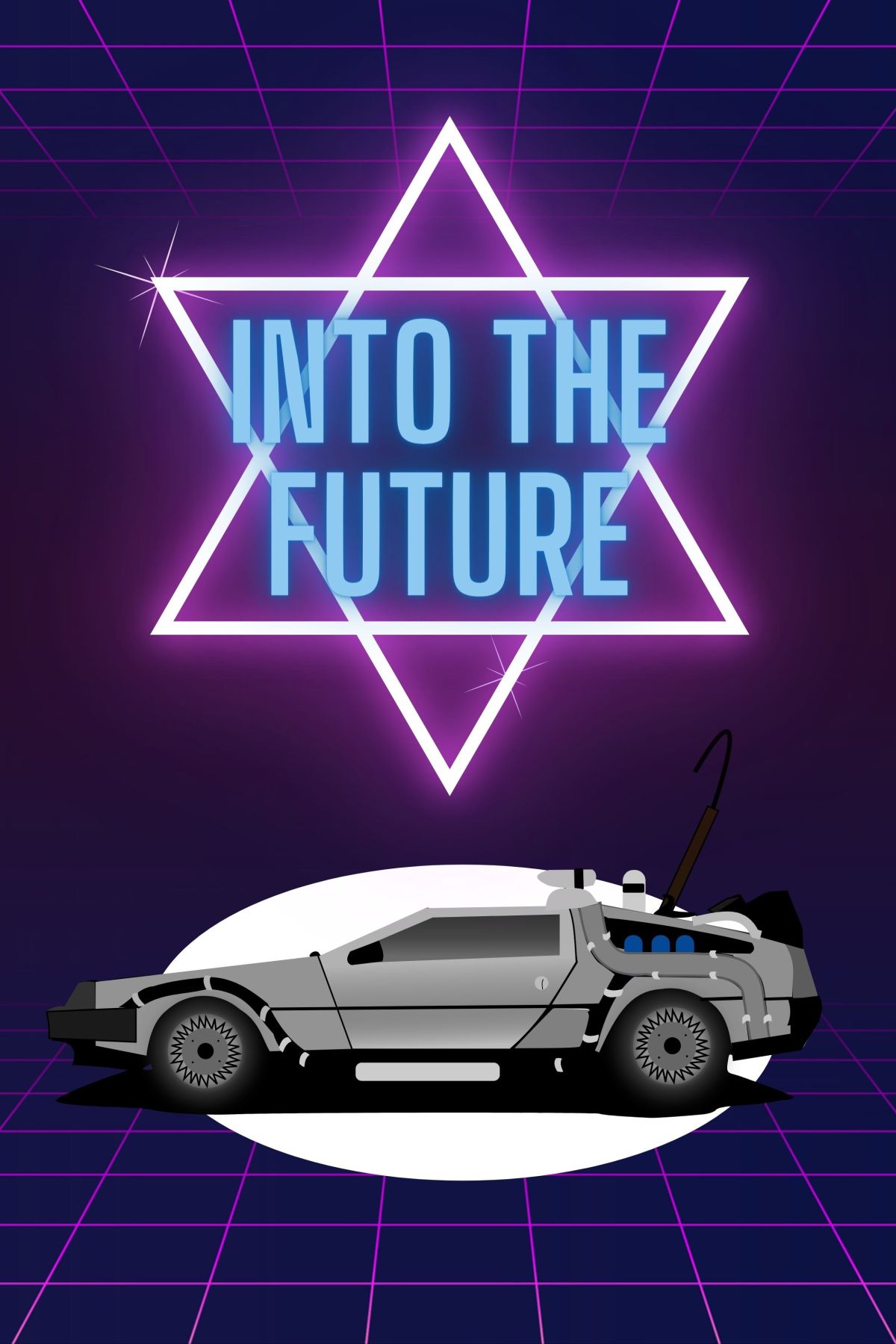
Once upon a time, I was a big fan of science fiction. I loved the work of Arthur C. Clarke, and in particular 2001: A Space Odyssey, both the book and Stanley Kubrick’s fantastic 1968 film version. Clarke’s visions were often of future worlds where humans interacted with usually-benevolent alien powers. Humanity was not inclined to destroy itself; rather, humans found their way off of our home planet and out into the universe with gradual technological innovation, facilitated by alien assistance. Sure, in 2001 the computer HAL 9000 goes on a murderous rampage in an epic fail of artificial intelligence, but that is just a small hiccup on the way to the creation of the Star-Child by some vastly superior alien power to aid humanity.

I think that many of us are concerned that the future may not be as bright as science fiction writers like Clarke and others envisioned. In our current moment, it may seem as though Clarke misread the future by being hopelessly naive about our species. After all, many things have gone horribly wrong. Consider where we are today:
- The very people who created artificial intelligence are warning that it may in fact be a real threat
- We are being relentlessly tracked and mined for data by commercial and government interests
- What is objectively true has become relative to your political perspective
- Culture wars have pitted us against our neighbors on multiple fronts
- Anxiety and depression are on the rise
- Anti-Semitic activity has increased dramatically
- Authoritarianism is also back with a vengeance while democracy is in decline
I could go on. Global warming. Opioid abuse. Homelessness. Loneliness. The list of society’s ills continues to grow.
One of my primary jobs as a rabbi is to try to keep us inspired and optimistic about the future. It’s not so easy in today’s environment.
But we Jews have an ancient secret that has enabled us to survive the worst of times for thousands of years. We have survived persecution and dispersion; we have survived exile and genocide; we have survived forced conversions, forced conscriptions, anti-Jewish legislation and regimes of all sorts. We survived the destruction of Jerusalem at the hands of the Babylonians 2600 years ago, and the Romans 2000 years ago. We survived accusations that the Jews caused the Black Death in the 14th century and we survived the Expulsion from Spain a century-and-a-half later. We survived the Holocaust. Even as we in Pittsburgh continue to mourn the 11 holy souls whom we lost on the 27th of October, 2018, we as a community survive and continue to thrive.
And what is that secret Jewish super-power? It is our holy framework, which has unfolded over the last 3,000 years through Torah and its ongoing interpretation. It is the story of our past, coupled with our willingness to continue to engage with it, to retell it, to cling to it, and to apply it to navigate the present. And it is our inclination to gather with other Jews, to be together in community for mutual support and meaningful engagement.
In short, it’s about us. Our story, our community, and our rituals, all intertwined.
One piece of ancient wisdom we learn in Pirqei Avot (4:21):
רַבִּי יַעֲקֹב אוֹמֵר, הָעוֹלָם הַזֶּה דּוֹמֶה לִפְרוֹזְדוֹר בִּפְנֵי הָעוֹלָם הַבָּא. הַתְקֵן עַצְמְךָ בַפְּרוֹזְדוֹר, כְּדֵי שֶׁתִּכָּנֵס לַטְּרַקְלִין:
Rabbi Ya’aqov taught: this world is like a vestibule before the world to come; prepare yourself in the vestibule, so that you may enter the banquet hall.
If we are to enter the future in a way that is healthy and sustainable, we have to be ready for it. And the way that we the Jews can do so, for the benefit of the rest of the world, is to use the framework that we have received from our ancestors, because it has worked for thousands of years. It is our fervent desire, for our collective benefit, that humanity makes it to the banquet hall of the future.
Over these High Holidays, we will be talking about moving “Into the Future” from different angles. Today, it’s about us. Tomorrow, we will be discussing the future of Conservative Judaism. On the evening of Kol Nidrei, we will discuss our future vis-à-vis the State of Israel. And on the day of Yom Kippur, we will be speaking about retaining our humanity as artificial intelligence infuses itself into our lives.

***
In all of the challenges that we have faced at any point in time, the Jewish inclination has always been to look to the past. How did our ancestors survive? By re-reading the Torah, by arguing about it, by following its guidelines for behavior and emulating the better qualities of its major characters, and by applying it to our lives wherever we have been and whatever we have faced.
And this formula still works today.
In his 2017 book Homo Deus, the Israeli history Yuval Noaḥ Harari explains what fundamentally differentiates humans from other animals. While there are many species, from ants to chimpanzees, that form social groups in which the individuals cooperate by playing distinct roles, only humans have the potential to act collectively in a way that can change our destiny. In other words, a bee hive is a kind of community, but bee colonies will always more or less be the same – the same structure, the same system of “governance,” with, as far as we know, no long-term sense of past or future.
But humanity is different, particularly due to our ability to gather around shared stories. And all the more so for us, the Jews. Our stories, our texts, our wisdom hold us together and help us move forward, with an eye to our past. Our strength as a people is on our collective bookshelf, and in our hearts and minds.
One essential lesson, fundamental to Jewish life, is the idea that we are all connected to one another. Two pieces of wisdom in particular say, in essence, that we have to think about “us” before we think about “me” or “you” or “them.”
- Kol Yisrael arevim zeh bazeh (Midrash Sifra on Vayiqra / Leviticus 26:37)
We are all “arevim” – guarantors for one another. The word arevim comes from the Hebrew for “to mix.” We are all mixed up, or integrated with one another. And given the way we live today, not just with fellow Jews, but with our non-Jewish neighbors. We must all be responsible for one another.
- Al tifrosh min hatzibbur (Pirqei Avot 2:4)
Do not separate yourself from the community. We cannot all be individuals in complete isolation from one another. Our shared, just, sustainable future depends on our willingness to be in relationship, to acknowledge each other’s humanity. That is, we have to think about us as a collective with a shared destiny. And that is harder to do than it is to say, particularly given that the way our society is constructed today tends to isolate, rather than bring together.
And to universalize once again, the same is true for the entire world. It has become woefully easy to divorce yourself from the people around you. And this is not good for humanity.
Back in August, my son introduced me to a YouTube channel online produced by a “YouTuber” who goes by the name of Mrwhosetheboss. What he does is review hi-tech products, and we watched a review of a new gadget: Apple’s virtual-reality headset, which will be available early next year at the low, low, bargain-basement price of $3500.
After gushing about the revolutionary marvels of this gadget he makes a stunning confession:
There’s already very little separation between us and our technology. You only have to take your phone out of your pocket and your screen auto-turns-on and you’re blasted by notifications. When the device is on your face, there’s no escaping it, and that’s slightly worrying… But the key thing about this headset that I don’t think any future or vision of this headset can solve is the potential for isolation. I am so incredibly excited that this new era of tech is here, but I’ve never wanted, and NOT wanted, a product to exist at the same time as much as I do with this one, for the simple fact that I do think this is the start of the end for shared experiences.
That is not the future for me, in which we are all in our own sensory bubbles, where all of our communication with others and the outside world is through an intermediary, which controls every aspect of the experience. That seems to me a wee bit too close to The Matrix, rather than Arthur C. Clarke.
Now, I need to state clearly: I am NOT anti-technology. In fact I believe technology will do wonderful things for us if we use it cautiously.
But here is the point: every one of us in this room has a wonderful tool at your disposal to build social capital and fight isolation: Judaism. Our faith is one of the best sources of social capital. This synagogue is an ancient technology that still does an amazing job at bringing people together as a force for good in the world.
Here is a four-point plan (out of many more possible Jewish points) to save our future:
- Shabbat (or, setting aside sacred time)
- Kashrut (or mindful consumption)
- Shemirat halashon (or mindful speech)
- Tefillah (or, meditative moments)
Each of these items are among the most important principles of Jewish life, located at the nexus of the personal and the communal. They unite the “me” with the “us.”
Shabbat / Setting Aside Sacred Time
Many of us observe Shabbat in a traditional way in this congregation: we have luxurious family meals, often with guests, on Friday night and Saturday afternoon; we attend synagogue; we “unplug” for 25 hours from sunset on Friday till dark on Saturday night to devote time to family, friends, ritual and reflection.
In my own home, Shabbat is when the imperatives of our busy lives are placed on hold and we play games: Settlers of Catan, Wingspan, Rummikub, building with Legos. And of course, dining and napping as well.
But there are many more of us who do not unplug and reconnect on Shabbat. And even if you have some sense of what you might be missing by not observing Shabbat traditionally, I understand. It’s not so easy to close all your digital devices for that time, to disconnect, to not go shopping or watch YouTube. It’s not so easy even to plan Shabbat meals with family or friends.
But once you have truly tasted the traditional observance of Shabbat, where our range of activities is minimal and our relationship with the Earth and each other is more immediate and organic, you understand the value of setting aside sacred time.
And furthermore, when the news-and-outrage cycle goes non-stop, as Big Tech vies for your eyeballs and your money, shutting all of that down – even if just for 25 hours each week – is a mitzvah not just for you, but for the future of humanity.
Shabbat is good for your soul, but it also helps you connect with the people in your neighborhood, which is where we should all be at least once a week.
Shabbat / setting aside sacred time: it’s about us.
Kashrut / Mindful Consumption
Sure, you might think that holy eating is just an annoyance, an obstacle to living a full gustatory life, unencumbered by antiquated rules. Come on, Rabbi, what’s wrong with shrimp? Didn’t God also create shellfish? And beef is beef, whether an old guy with a beard blessed it or not, right?
Ask any parent whether they can properly raise children without boundaries. Kashrut is just that: a daily reminder that we cannot merely take all we want when we want it. Kashrut is Jewish mindfulness, a structure to help us maintain a sense of holiness in this world. And if we embrace a mindful consumption practice, it leads to a sense of interconnectedness with each other and all of God’s creatures. If we were all to practice this mindful way of eating, we have the potential to spread that awareness of our consumption patterns far and wide.
Even during my years as a young adult when I was not going regularly to synagogue, I maintained my kashrut practice, because it reminded me on a daily basis of my connection to our people and our tradition. Paying careful attention to what we eat, where it came from, and how our consumption affects God’s Creation models behavior for the rest of the world to appreciate.
Kashrut / mindful consumption: It’s about us.
Shemirat haLashon / Mindful speech
Our tongues need guards. We have to be ever-vigilant about the way we talk, and text, and tweet. With the dissolution of guardrails in speech, and with social media platforms which exercise little control over what is acceptable, we are in danger of creating a future in which words will be weaponized in unimaginable ways. It has never been so easy to destroy a person, an institution, an idea as it is today. If we are to maintain any sense of togetherness as a society, we have to be careful about what we say and how we say it.
But sanctified speech is that where we acknowledge the power of our words and their potential for danger. Too many today are focused on dividing people through speech; only through shemirat halashon may we succeed in bringing people together for a better humanity and a better future.
Mindful speech is about respecting the humanity in each person. Shemirat haLashon is about us.
Tefillah / Meditative Moments
There are many paths through Jewish life. But there is only one thing that gathers the Jews like no other, and that is being together in our house, the beit kenesset, the synagogue, the ancient and modern house of Jewish gathering.
Now, I know that tefillah is hard. It requires intent, concentration and practice, all things that can be challenging in a busy sanctuary during the High Holidays. And there is a high bar to entry. To fully participate, you have to be able to read Hebrew, or at least puzzle through transliterations. And there are tunes and choreography and ritual gear, which can be off-putting to the uninitiated.
But when we have prayerful moments together, when all the people in this room sing together, or meditate together, or even mumble together, it is breathtaking. And it is also be liberating – an upward spiral of energy that moves us as a community and ascends heavenward.
The Hebrew word, tefillah, does not mean, “to recite a jumble of ancient words in a language that nobody speaks.” It actually means “self-judgment.” When we stand together, ideally in silence, reciting the words of the Amidah, we create a strong sense of power in the room – hearts united in deep, meditative analysis of the self. If we allow ourselves to be swept up in the sense of tefillah as a community, it will help us all be better people, opening our hearts and bringing us together as a community. And this too has the potential to infuse the whole world with awareness and connection.
Tefillah / meditative moments: it’s about us.
***
OK, Rabbi, that all sounds great, but you have not convinced me. How exactly will this framework create a better future?
We have the power, when we think and act together, when we draw on our shared stories and ritual, to face all the challenges of our world in a way that will enable us to overcome. That is why the Jews are still here. We are a model for resilience, a model which can be shared with others.
My goal as your rabbi is, in facing the future, to recognize the awesome power of our Jewish framework, of your heritage, and to give it to the world. This world, God help us, needs to set aside sacred time, needs mindful consumption, mindful speech and meditative moments.
And indeed, the situation is urgent. We all have the potential to think, “Hey, I’m a good person. I am respectful of my neighbors. I make charitable donations. I replaced my incandescents with LEDs. I buy organic produce.” And hey, those things are great.
But we have to think wider and greater than that. We have to think not just about ourselves or our immediate relations, but rather how we can influence the world for the better. Our future as a species depends on you to consider how your personal observance of essential Jewish principles can bring us safely and sustainably into the future. And this may only be realized if we take up the reins of our own personal Jewish observance and demonstrate its value to the world.
So here is a suggestion: Take one element of Shabbat – a holy moment every Friday evening at sunset to light candles as a family, for example -and build on that. One element of kashrut. Come once more to synagogue for a service than you ordinarily would, to learn a new prayer, a new tune, a new idea from our rich textual tradition.
And as you come to appreciate these aspects of our tradition yourself, you must share them with your friends and neighbors. Our ancient secret can be universalized and presented to the world. Not that we should try to make non-Jews practice Judaism, but to understand the eternal value of these principles so the whole world can derive the benefits of the Jewish secret.
Do it for yourself, but all the more so, do it for us, so that we may all enter the banquet hall together. Into the future.
***
Next in the series:
Rosh HaShanah, Day 2: The Future of Conservative Judaism
Kol Nidrei: The Future of Israel
Yom Kippur: The Future Must Be Human
~
Rabbi Seth Adelson
(Originally delivered at Congregation Beth Shalom, Pittsburgh, PA, first day of Rosh Hashanah 5784, 9/16/2023.)






 The Modern Rabbi