I do not usually watch the Super Bowl, but I do enjoy checking out the ads after the fact. There were two ads this year which caught my eye. One, presented by a Christian organization, portrayed scenes of diverse people washing each other’s feet, a reference to an act of compassion performed by Jesus in the Christian scriptures.
The other presented a former speechwriter for Dr. Martin Luther King talking about how all hatred thrives on silence, and connected that to the current rise in antisemitism. This ad, paid for by Robert Kraft’s Foundation to Combat Antisemitism, ended with interchanging hashtags #StandUpToJewishHate and #StandUpToAllHate.
Some news outlets were quick to point out that there was online backlash against both. Critics of the Christian ad were bothered that the money came from Evangelical organizations which are anti-abortion. The anti-antisemitism ad was criticized by some Jewish commentators for being too vague, while antisemitic extremists were apparently thrilled because the ad also at one point displayed the hashtag #Hitlerwasright.
We have become so accustomed to criticism from all sides, no matter how marginal it may be, that we often lose sight of the value of our larger principles. We forget that it is always easier to tear down than to build up.
Our good friend and neighbor, Rev. Canon Natalie Hall of the Church of the Redeemer, was disenchanted by some of her Christian colleagues’ criticism of the very Christian message of compassion. In responding to some of this criticism, she wrote, “Despite many theological and political errors Evangelicals often espouse, I can’t look at a good message with disdain because the messengers might contaminate me with their culture-war cooties. We’re not enemies. It’s calmer over here. Want to join me?”
There is an essential moment in Parashat Terumah, from which we read today, when God calls for materials with which to build the mishkan, the portable sanctuary that the Israelites are to use for worship (Shemot / Exodus 25:2):
You shall accept gifts for Me from every person whose heart is so moved.
Maybe we should read this not as “every individual whose heart moves her/him,” but rather as “all of us, whose hearts are moving us.” That is, all of the Israelites’ hearts will be moved to bring these gifts with which to build the mishkan. And that is exactly what happens. There’s actually so much stuff that Moshe has to ask them all to stop.
We all want to get behind those causes which our hearts are moving us to support. We all want to help out in ways that are constructive.
A question that we might ask, therefore, in our current moment, is, “We are seeing vast rifts in our society right now over complicated issues. How might we be able to speak to one another across political lines, so that we might build, and not tear down?”
I have been thinking quite a bit about this question, particularly since October 7th. And many of us have been engaged in various ways with events here on the ground in Pittsburgh that are related to what is going on in Israel.
For example, there are members of our congregation who regularly attend the vigils held every Sunday to remember the hostages held in Gaza and advocate for bringing them home, and of course we have a visual reminder here on our bimah.
A few weeks back we hosted the United in Compassion event, at which about 75 people of different faiths and backgrounds and political persuasions shared stories which helped elevate our sense of compassion for one another. This was intentionally NOT focused on Israel or politics, but for some participants, it was of course difficult not to think about the war as we were talking.
A different sort of event which I attended, however, was much more challenging, and much more difficult with respect to mustering compassion. It was a two-hour meeting of primarily clergy: three rabbis and four Christian ministers of different denominations, plus Laura Cherner of the Federation’s Jewish Communal Relations Council. This meeting was organized by Rabbi Ron Symons of the JCC, and the intent was to speak with each other about the situation in Israel and Gaza from our individual perspectives, and ideally to listen to one another and perhaps to find common ground. I agreed to participate, although I knew going in that the Christian participants were people with whom I would disagree vehemently.
And I am proud of myself for successfully listening and not letting my anger boil over as I heard them use the inaccurate and inflammatory language that so many pro-Palestinian activists hurl in public: apartheid, genocide, 75 years of occupation, ethnic cleansing, and so forth. My adrenaline pumped for the entire two hours as they urged an immediate ceasefire without regard to hostages or Hamas’ terrorist activities or the brutal sexual violence which they committed on as many as 1500 Israeli women. I clenched my teeth as they cited the Gazan children killed during this war, without acknowledging that about 40% of the widely quoted figure of Palestinian casualties are actually Hamas terrorists. I bristled at the notion, widely accepted in some quarters, that the Israeli treatment of Palestinians is just like the treatment of Black Americans at the hands of police.
And that was hard. To hear that sort of language coming from clergy, people who lead others in faith and compassion, was quite upsetting.
And then we agreed that we should meet again in a month, to keep talking.
And I have been asking myself, why? Why go back, and subject myself to two more hours of adrenaline and clenched teeth. I am not going to change the mind of anybody in that room. I am not going to impact American public opinion on this war, which is gradually shifting away from the Israeli point of view. I am not going to have any control over what is happening in Israel. I am not going to hasten Israeli elections to dump the current coalition for their tremendous failures in allowing all of this mess to happen in the first place. And I am certainly not going to be able to bring the relevant parties to the table to build a hopeful future for the region.
So why go back?
And you know the answer. In order to build, and not merely tear down, you have to be in conversation. You have to meet people face-to-face. You have to talk, even when it is painful and uncomfortable. Even when they are spouting misinformation. Even when their words might be effectively calling for the expulsion of your family from their home.
Merely criticizing and/or demonizing people on the other side will not accomplish anything. Rather, those of us whose hearts are so moved must bring gifts with which to build, and in particular, the gift of presence.
Educator and tour guide Avi Ben Hur spoke last week at the first of three lectures co-sponsored by Beth Shalom, on the current state of affairs in Israel. Among the things he said was that only 27% of Israelis still favor a two-state solution. (He did not mention, although I heard elsewhere, that 38% of Israelis want to re-occupy and re-settle Gaza, which is to me a detestable idea.) And likely even fewer Palestinians than Israelis are interested in a two-state solution.
Ben Hur painted a bleak portrait. How can you even talk about peace, about coexistence, about living side-by-side under our own vines and fig trees, when we are shooting at each other? One of the most well-known Israeli peace activists, Vivian Silver, was murdered by Hamas terrorists at Kibbutz Be’eri on October 7, her life’s work gone in a flash of gunpowder.
While I admire Rabbi Symons’ commitment to keeping us talking to each other, here in Pittsburgh, so far away, I am finding it hard to see anything hopeful.
Except right there in the Torah in Parashat Terumah, reminding us that those whose heart moves them can, in fact, make a difference. We may not be able to begin to build yet, but we can hope that some day, when all of our hearts are moved collectively, that time will come. And in the meantime, we have to keep showing up, and to keep talking.
As many of you know, my Lunch and Learn series this year has focused on playing Israeli pop songs from across the 20th century, as a lens through which to see the history of the State of Israel. One of the most influential pop performance groups of the ‘50s and ‘60s was an army band, one many at the time:Lehaqat haNaḥal, which drew musicians and performers from the Naḥal Brigade of the IDF. (Naḥal was conceived not only as an army unit but also a team to develop new agricultural settlements throughout Israel, playing an essential role in the building of the State. Some of the most well-known Israeli performers were alumni of Lehaqat haNaḥal, including Arik Einstein, Haim Topol, Yardena Arazi, and many, many others who have shaped Israeli pop culture.)
In 1963, Lehaqat haNaḥal sang a song of hope written by Naomi Shemer. That was a time when Israel’s very existence was tenuous, when there was a palpable fear that her enemies on all sides could crush the nascent state. And the song they sang was Maḥar (“Tomorrow”):
מחר אולי נפליגה בספינות מחוף אילת עד חוף שנהב ועל המשחתות הישנות יטעינו תפוחי זהב
כל זה אינו משל ולא חלום זה נכון כאור בצהריים כל זה יבוא מחר אם לא היום ואם לא מחר אז מחרתיים
מחר אולי בכל המשעולים ארי בעדר צאן ינהג מחר יכו באלף ענבלים המון פעמונים של חג
…כל זה אינו משל ולא חלום
מחר יקומו אלף שיכונים ושיר יעוף במרפסות ושלל כלניות וצבעונים יעלו מתוך ההריסות
…כל זה אינו משל ולא חלום
מחר כשהצבא יפשוט מדיו ליבנו יעבור לדום אחר כל איש יבנה בשתי ידיו את מה שהוא חלם היום
…כל זה אינו משל ולא חלום
Tomorrow, perhaps we will sail in ships from the shores of Eilat to the Ivory Coast, And the old destroyers will be loaded with oranges.
All of this is neither a parable nor a dream; it is as true as the light of the afternoon All of this will come tomorrow if not today, and if not tomorrow, then the day after…
Tomorrow, when the army will take off its uniform, our hearts will turn to silence Then each of us will build with our two hands that of which we dreamt today.
*** That dream of peace may seem as far away now as it was in 1963. But Israelis, and Jews all over the world, have never turned away from it. We have to maintain the generosity of spirit that has marked our willingness to contribute since Parashat Terumah. We must continue to bring those gifts, in particular the gift of presence, to keep talking, and seek not to tear down, but rather to build.
The Jews are a notoriously fractious people, and the Torah makes clear that this was the case from our very inception. When did the Jews start complaining? Right after they escaped from Pharaoh’s army, having crossed the Sea of Reeds on dry land, no longer slaves but as free people, last week in Parashat Beshallaḥ. They are already grumbling about why they followed Moshe and Aharon out into the desert (Shemot / Exodus 16:3).
“If only we had died by the hand of God in the land of Egypt, when we sat by the fleshpots, when we ate our fill of bread! For you have brought us out into this wilderness to starve this whole congregation to death.”
One might make the case that the only time that the Israelites, or the Jewish people, spoke in one voice is the moment that we read today in Parashat Yitro (Shemot 19:8):
All those assembled answered as one, saying, “All that God has spoken we will do!”
The Israelites accept the Sinai covenant, even before they have heard the words of Aseret HaDibberot / the “Ten Commandments,” יַחְדָּו֙, as one, in one voice. That has never happened since. I have even made the argument in this space that our inclination to disagree with each other, particularly over the meaning of our ancient texts, is the reason that we are still here. The Romans did us a favor, nearly two millennia ago, by destroying the Beit haMiqdash / Temple in Jerusalem and forcing us to make our tradition portable and democratic, rather than centralized and hierarchical. Hence the disagreement.
Detail from the Arch of TItus, showing Romans carrying Temple implements from Jerusalem
A curious thing happened after October 7th: suddenly, it seemed that the whole Jewish world was united against Hamas. And how could we not be? The Jewish people were attacked, brutally; an area within Israel’s boundaries was occupied by terrorists. More Jewish people were killed that day than on any day since World War II. As horrific as the details and magnitude of what happened are, I fear we will not grasp the full scope of the horror for years.
For a moment or two, we spoke with one voice. The sovereign, democratic State of Israel must defend itself against terrorism. Full stop. The unity in Israel and with Diaspora Jews was unbelievable. When I was in Israel in November, the statement of this unity which I saw and heard everywhere – on billboards, as the lead-in to radio advertisements, projected onto the sides of buildings – was יחד ננצח. Together, we will win.
When Israel called up its reserve soldiers, 150% of those called showed up for duty – something which never happens. Israelis who were trekking through Thailand and Bolivia got on the first plane home. Jews all over the world, including some in Pittsburgh, rounded up needed supplies to send to Israel. Perhaps most remarkably, many Ḥaredim (I’ve heard as many as 4,000) signed up to serve in the IDF, something which they have historically not done in great numbers.
In January, I spent two days with HaZamir, the International Youth Teen Choir, in New Jersey. The HaZamir environment is one of the last places in the (non-Orthodox) Jewish world that is still unquestionably, proudly, unapologetically Zionist. And that is a particularly satisfying feeling for me, because it features Jewish teens singing Hebrew choral music, which I love.
But of course, four months into this war, we are now seeing cracks in the Jewish unity which followed October 7th. In Israel, frustration over the fact that there are still 100+ hostages is boiling over, and anger at Prime Minister Benjamin Netanyahu, which seems to now be carrying over from the pro-democracy protests of last year, is palpable.
We are still seeing plenty of anti-Israel activism around the world. South Africa’s charging Israel with genocide in the UN’s highest court is a prime example. And of course there are Jewish groups (Jewish Voice for Peace, IfNotNow) who are calling for an unconditional ceasefire, something which merely hands Hamas both victory and opportunity to re-arm.
I think it is difficult to argue with the fact that Hamas has succeeded in its diabolical plot far beyond its own expectations. Not only did they excel at murder and hostage-taking, but also, knowing that Israel’s response would be devastating and deadly for the people of Gaza, in soon turning world public opinion, including that of some Jews, against Israel.
Ḥevreh, it is absolutely abhorrent that somewhere around 26,000 Gazans have died in this war. And yes, that number is courtesy of Hamas, but there is no disputing that thousands of civilians have died in a war due to Hamas’ cynical use of their people as human shields. There is no question that we should be seeking a peaceful solution to find a way to preserve human life throughout the region. But in light of what happened at the International Court of Justice a week ago, we should remember a few important things:
That figure of 26,000 includes about 10,000 Hamas fighters. I rarely see an American news outlet even mention that. Furthermore, Hamas likely overestimates the number of children who have been killed.
Remember that Hamas is still firing rockets into Israel, and of course returning fire on advancing Israeli troops, and all of this fighting is taking place in one of the most densely-populated places in the world.
The current tumult about UNRWA, the UN organization which provides humanitarian aid, running schools and hospitals in Gaza and elsewhere, is not surprising to anybody who has been paying attention. The fact that UNRWA employees are not only giving cover and aid to Hamas, and indeed even participated in the attack of October 7th, is deeply problematic.
Netanyahu’s approval rating in Israel right now is somewhere around 26%. If elections were held tomorrow, Likud would lose dramatically. He and his far-right allies are now leaning into their base to try to drum up support for horrible ideas, like re-occupying Gaza, or worse. We should look past this inflammatory rhetoric to the day when he is no longer in power, and that day should be coming soon.
When Theodor Herzl wrote, in his 1902 book Altneuland (“Old-new land”), Im tirtzu, ein zo agadah (“If you will it, it is no dream”), he was, in fact, creating a new idea in Jewish life: that people did not have to wait for God to make the first move in establishing a home for the Jewish people. Decades before the rise of Nazism, Herzl knew that the safety and security of Jews in the Diaspora would wax and wane but never be completely stable, and that the only realistic solution for the Jewish future would be self-determination in the land from which we came.
Herzl could not have predicted the challenge of Hamas, although he was certainly aware that the Zionist idea would not be universally accepted, even by Jews, from the outset.
However, I must say that even though I have thrown my lot with the Diaspora (at least for now), Herzl was right. America, as wonderful as it has been for the Jews, will never be entirely safe. We in Pittsburgh know this all too well. And all the more so many of the other places where Jews have lived.
The Israeli singer Gali Atari made famous the song lyric, “Ein li eretz aḥeret.” I have no other land. And as much as we would like to think that we have succeeded here and elsewhere, I still believe in Herzl’s dream: “Lihyot am ḥofshi be-artzeinu.” To be a free people in our land.
And I must add that while I am a loyal American, grateful to this nation for the safe haven it offered my great-grandparents more than a century ago, I am feeling a lot less safe in this country than I used to. And there are plenty of Jews around the world who live in places that are far less safe and stable.
I do not imagine that we will see the unity of October 8th again any time soon. But I think it is essential for us to hold onto certain principles as we move forward:
The hostages must come home before there will be any ceasefire agreement.
Likewise, Hamas must surrender. The ongoing existence of this terror group is a demonstrable threat to the safety of Israeli citizens as well as Palestinians, and to some extent Jewish people the world over.
The people of Israel need our support. We may not achieve full and complete unity, but we must stand with the nearly 10 million people of that nation, Jews and non-Jews, in their quest to remain a safe, democratic haven in a decidedly non-democratic region.
This war is deeply painful for millions of people across the region, and that pain has, to some extent, impacted Jewish unity. The opening line of Beshallaḥ(Shemot/Exodus 13:17) last week actually spoke to the challenge of war. Instead of sending the Israelites out of Egypt the easy way, to return to Israel on the seaside route, which would have taken just a few weeks, the Torah reports that God sent them the long way, the 40-years-in-the-desert route, because God was concerned that when they saw war (e.g. with the Amalekites, the Philistines, the Canaanites, etc.), they would have a change of heart and return back to Egypt.
In the context of war, it is easy to say, “Let’s go back to Egypt,” Although we all know that would be much, much worse. We should rather recommit to Israel, to commit to the longer, harder journey, if not to the unity we once had.
Context matters. In fact, the way that we understand Judaism – our history, our rituals, and our textual heritage – here in the Conservative movement, is based upon this very principle. We never read our sacred texts or discuss Jewish law or ritual without context, both ancient and modern.
One simple example is the Amidah, the standing, silent prayer mandated by our tradition at least three times each day (four times on Shabbat!). You may know that there is no commandment in the Torah to recite the Amidah. However, when the Romans destroyed our Second Temple in Jerusalem in 70 CE, they put an end to the sacrifices, which ARE described in the Torah. Our rabbis decided that in this new context, daily recitation of the Amidah would take the place of those sacrifices.
And it requires even more context to understand why we invoke not only the Avot of our tradition, the Patriarchs, in the opening line of every Amidah, but also the Imahot, the Matriarchs as well. That is an innovation of the last few decades, an acknowledgment that we also look to the women of our ancient story as well for values and guidance. And it took the context of understanding women and men to be equals in Jewish life for this change to occur.
Our tradition has unfolded over thousands of years, and we always read our texts in the context in which they emerged, and our practices today must reflect our current situation.
Academics know that context matters. It is essential to understanding our world, our history, our cultures.
And yet.
There are some times when the invocation of “context” requires context. When presidents of three universities, when pressed on the question of whether protesters chanting certain anti-Israel and anti-Jewish slogans was permissible speech on campus, they deflected with, “It depends on the context.”
***
Ḥevreh, I must say that I’m just not shocked any more – not about the dramatic rise in anti-Semitic incidents in America, not about the insecurity Jewish students are feeling on campus, not about how many Jews feel that they have been abandoned by their political allies, not about how the American media covers the conflict in Israel.
I’m just not shocked any more.
But I am just a tiny bit surprised that the presidents of Harvard, MIT, and Penn publicly failed in unison to concede that language calling for the killing or displacement of Jews meets their campus standards for bullying or harassment.
The presidents, who responded with legalese when an honest, personal reckoning with the fact that people screaming “Intifada” are, in actuality, calling for the death of Jews. That is what that word meant when it was happening in Israel two decades ago.
And of course they issued apologies for their poor choice of words after the fact, and one of them is no longer a university president. But in the moment, when the spotlight was on them, they failed. When it really counted, they should have been there with the right answer, which is, “Calling for the killing of Jews is wrong under any circumstances. It does NOT depend on the context.”
And they totally, absolutely missed the point, which is that Jews all over America and the world, but most acutely on university campuses, are feeling the rise in anti-Semitism quite personally. The evident double standard here is that in recent years these campuses have gone far out of their way to accommodate the feelings and sensitivities to language of Black, Hispanic, Native, LGBTQ, Asian students and faculty in various ways. Even the slightest discomfort in this regard has caused university leaders to react vigorously and punitively.
But somehow, when it comes to Jews, our feelings do not matter. Anti-Semitism, in the minds of some, is just not enough of a thing. Jews are apparently too “privileged” for university administrators to bother with. When protesters call for “any means necessary,” which implicitly supports the brutalities of Hamas, is that not an actionable offense?
Even if, as a recent poll suggests, less than half of those marching for Palestine know which river and which sea they are referring to in one well-known chant, does the implied destruction of the State of Israel not threaten Jews?
Today in Parashat Miqqetz, we read a captivating moment: it occurs when Yosef’s brothers have come before him with their hands out, seeking food, and of course they do not know that they are standing before the brother they sought to kill many years earlier. And they are speaking to each other in Hebrew, and Yosef, who remembers the language of his youth, can understand them, but they are unaware.
We understood loud and clear what these representatives of the most prestigious universities in the United States were saying, and they had no idea. What they were saying, by referencing “context,” was, we are afraid.
We are afraid that if we admit on the record, before Congress, that “From the river to the sea,” or “Intifada” are anti-Jewish statements, that we will be called out by our allies. We are afraid, because while it is OK for Jews to be fearful, to cower in their dorm rooms, to be harassed on campus, it is definitely NOT OK for any member of any other persecuted group, and we definitely don’t want to anger any of those folks.
Ḥevreh, we, the Jews, cannot be afraid. We cannot allow ourselves to be bullied.
On the contrary, we have to hold our heads up high, to stand proudly with the people and the State of Israel, to stand with and for each other, and to keep doing what Jews have been doing for thousands of years – that is, carrying out the mitzvot / holy opportunities of Jewish life.
Some of you were here last week when Rabbi Mark Goodman taught a couple of Hasidic texts about the pit into which Yosef’s brothers had thrown him, back in Parashat Vayyeshev. One of those texts put forward a fascinating idea, one which we can absolutely draw on today. Rabbi Shemuel Bornsztain, the late 19th-early 20th centure Sochatchover Rebbe, wrote that it is our commitment as Jews to God’s covenant which maintains the presence of the Tzelem Elohim, the Divine Image, within us. When we fail at that covenant, the Tzelem Elohim disappears, and then we are on our own – that is, we are subject to the dangers of the world around us.
Framed more positively, our fulfillment of Jewish life – ritual, prayer, text learning, the mitzvot which highlight the holiness in our relationships – protects us and insulates us from danger. Our secret to survival is not the Anti-Defamation League, which is only 110 years old, although of course they do very important work. The reason we are still here is that we have maintained our spiritual heritage through millennia of persecution. When we merit the presence of the Tzelem Elohim, we have nothing to fear.
Something else happened nearly two weeks ago, which did not shock me, but certainly made me feel just a wee bit unnerved. Roughly 500 anti-Israel protesters showed up outside a kosher falafel restaurant in Philadelphia to charge the owner of the restaurant, our son of Pittsburgh, Michael Solomonov, with “genocide.” Will all those of us who are supportive of Israel soon be subjected to angry mobs?
Protestors in Philadelphia stand outside of a Jewish & Israeli owned falafel restaurant
I have heard from a friend who works for Hillel International, the center for Jewish life at colleges and universities, that the situation on American campuses for Jews is actually much worse than what you might hear on the news. It’s not necessarily the high-profile anti-Semitic incidents, like the one that happened at Cornell a month ago, but the subtler remarks, the low-level incidents, the constant barrage of anti-Israel language on social media and chanted on campus. It’s the pressure to concede to the pro-Palestinian narrative of Jews as oppressors, of the collective guilt of all Jews.
I am relieved to be able to say that we have not yet arrived at the equivalent of Kristallnacht, in November of 1938, when Nazi thugs across Germany destroyed synagogues and Jewish-owned businesses. Thank God.
But should we be concerned? Absolutely. Should we be reaching out to our elected officials? Yes, constantly.
And even more so, now is a crucial moment in Jewish life: a mandate to up our game. We need to double down on the formula which has held us together as a community in spite of the Romans, the Babylonians, Antiochus, King Ferdinand and Queen Isabella, and on and on. We must continue gathering in synagogues for prayer. And kindling lights. And teaching our children the words of our ancient tradition, and the contexts in which they emerged. And upholding all of the traditions which have maintained Tzelem Elohim – God’s image – within each of us.
Context matters, and in our current context, the spiritual framework which has guided and nourished and protected our people for the entirety of our history still works. And we need that framework today, more than ever.
You may have noticed that some members of the Jewish community have put up posters of Israelis held hostage by Hamas on multiple utility poles on Murray Avenue. This is to remind us all of the 140 or so hostages remaining in Gaza, and to keep before us an essential principle of halakhah / Jewish law, that redeeming captives is an urgent obligation which pre-empts many other mitzvot.
Taking down hostage posters on Murray Ave.
And, there are others in our neighborhood who are regularly removing these posters. Perhaps they do not want people to remember the hostages, or maybe they do not believe that there really are hostages, or perhaps they are so consumed with hatred that any acknowledgement of ongoing Israeli suffering would be humanizing the “oppressors” or legitimizing the existence of the State of Israel and therefore forbidden according to their world-view. This phenomenon is not unique to Squirrel Hill; a striking example is that a few weeks back a New York public defender was caught on video doing so.
Parashat Vayishlaḥ opens with one of the most striking transitional moments in the Torah. As Ya’aqov is about to be reunited with his estranged brother Esav, he encounters an angel, with whom he wrestles all night long. This is the scene in which he receives his new name, Yisrael, which, rabbis love to remind us all, means, “the one who struggles with God.”
And yet I, like many of my colleagues, often leave out the second part of the Torah’s etymology of Yisrael (Bereshit / Genesis 32:29):
Said [the angel], “Your name shall no longer be Ya’aqov, but Yisrael, for you have striven with beings divine and human, and have prevailed.”
We are not only the people who struggle with God, but we also struggle with humans. Ya’aqov’s spiritual wrestling match is a foreshadowing of Jewish history: we struggle with the concept of God and how we relate to the Divine, but we are, in some sense, grappling eternally as a people with the others around us, and mostly not by our own choosing. We have been forced to do this for thousands of years, and mostly we have prevailed.
We are in this moment engaged in a battle for the soul of America, if not the world.
Ḥevreh, the world has been sold a bill of goods. Somehow the genocidal terrorists of Hamas, whose stated mission is to destroy the State of Israel and kill Jews wherever they are, whose members torture and rape and murder, who are not bound by the laws of military engagement, has been rebranded as carrying out “resistance,” as “martyrs” who are “freeing Palestine from the river to the sea.” And many Americans, on college campuses, in government offices, on school boards, in media companies, in the performing arts, in think tanks and granting foundations and social service organizations have bought into this lie.
Make no mistake: this is the result of a savvy, coordinated effort to win over the hearts and minds of Americans, whose limited knowledge of history, and in particular Jewish history, has easily enabled it. College students in particular are vulnerable, and many have apparently embraced the narrative of the Jew as oppressor, nonsensically lumping us in with all the other “white supremacists” who must be vanquished in a post-colonial world.
It is this grave distortion of history which denies Hamas brutality, and thus views the removal of those hostage posters not as a denial of Jewish lives, but rather as some kind of twisted standing-up for the underdog.
How did this happen? How did we lose the hearts and minds of those who see themselves as warriors for social justice? How do they justify dehumanizing murdered Israeli citizens, delegitimizing the nation which provided safe haven for Jews following the Nazi slaughter, and fomenting anti-Semitism worldwide? Well, it started with a plan – actually, a public relations crusade.
Gary Wexler, who teaches at USC’s Annenberg School of Communications and who has been creating advertising campaigns for Jewish organizations since the 1980s, recently wrote a piece for the Jewish Journal of Los Angeles, in which he describes meeting the architect of this PR plan in the mid-1990s in Haifa. His name is Ameer Makhoul, and he was the Executive Director of Itijaa, an Israeli-Arab civil rights organization. Wexler quotes Mr. Makhoul as describing it this way:
We will create… Palestinian campus activists in America and all over the world. Bigger and better than any Zionist activists. Just like you spent your summers on the kibbutz, we will bring college students to spend their summers in refugee camps and work with our people. Just like you have been part of creating global pro-Israel organizations, we will create global pro-Palestinian organizations. Just like you today help create PR campaigns and events for Israel, so will we, but we will get more coverage than you ever have.
You wonder how we will make this happen, how we will pay for this? Not with the money from your liberal Jewish organizations who are now funding us. But from the European Union, Arab and Muslim governments, wealthy Arab people and their organizations. Eventually, we will not take another dollar from the Jews.
So if you have found yourself asking aloud in recent weeks, “Why are the people who ostensibly care for every marginalized group of people of every stripe, suddenly marching for making Palestine Judenfrei?” you are not alone. What you are seeing is decades in the making. “Apartheid Week.” BDS. The platform of the Movement for Black Lives, which incorporated language to equate the Palestinian struggle with that of Black Americans. All of it is part of that plan to change the narrative, to deny the Jews our right to self-determination in the land from which we came.
There was a small piece of news here in Pittsburgh which may have crossed your radar (e.g. on WESA or KDKA) in recent weeks. It was about how the Pittsburgh Public Schools is paying a contractor called Quetzal Educational Consulting to help improve math instruction for Black students. The intention is, of course, commendable. There is a significant achievement gap between Black and white students in math.
But if you go to Quetzal’s website, you are greeted with the words, “Decolonize. Reclaim. Reimagine.” And if you check out their Facebook feed, you will quickly find many posts featuring “Free Palestine,” “End the Occupation,” and even a quote equating Zionism and imperialism.
There is no question that Black students deserve better math outcomes, and our public schools should indeed be working hard to ensure that we achieve better outcomes for all students in math, English, science, and particularly history, and maybe even geography. But why should that come at the expense of the Jewish right to self-determination? And what on Earth does supporting the Palestinian cause have to do with math?
I simply cannot get past the feeling that Jews have been unjustly relegated to the wrong side of history. Despite millennia of oppression, despite the very real genocide of Hitler, the forced conscription and pogroms of the czars, the Expulsion from Spain, and yes, October 7th, we are suddenly the oppressors. We are the imperialists. We are the ethnic cleansers.
[Note: the following paragraph is out of date, although I include it here because at the time that I delivered this sermon I was unaware that the UN Women organization had just released a tepid statement, which can be found here. Coming nearly two months after the attack, this statement seems too little, too late.]
** You may have heard that UN Women, the United Nations entity dedicated to gender equality and the empowerment of women, has refused to even acknowledge the sexual atrocities committed by Hamas terrorists. There is abundant proof that these things occurred; where is the outcry from those who marched for #MeToo? **
At a city council meeting in Oakland, California this week regarding a resolution calling for ceasefire, public comments included denial that the atrocities of Oct. 7 were actually carried out by Hamas at all, instead blaming them on the Israelis themselves. And when speakers mentioned that Israeli women were raped, assembled citizens chanted together “Liar! Liar!” The elected officials not only failed to control the hatred and vitriol, but did nothing to correct the record. It’s beyond comprehension.
We are losing the battle for the soul of the world. And not only that, but the narrative has changed to blaming the victim, where Israel and her supporters are concerned. What happened to, “Believe Women!”
The tyranny of the Shoah, the Nazi Holocaust, is that millions of ordinary people all over Europe stood by as the Jews were systematically taken away and slaughtered. Good, well-meaning people let it happen. They stood by and said nothing, because the ideological groundwork had long since been laid by the Nazi regime. We are seeing the stirrings of this facilitated “bystanderism” once again.
Our eternal struggle is simply to be a free people in the land from which we came, unmolested by terrorists as we recline under our own vine and fig tree. October 7th may have shattered that dream. But even worse is the threat that the world may let the terrorists win, as well-intentioned people turn their heads away from the utter depravity of Islamist jihadists.
But you can help win this battle. You have a voice. All you have to do is speak the truth. To remember the hostages. To ensure that the story of what really happened on October 7th is told and retold. To foil those who seek to deny or rewrite history. To thank our politicians who continue to stand against terror. To remind the world why Israel must be allowed to take Hamas out.
Somewhat more to the point, the Jewish world needs to unite and craft a coordinated campaign to counter the one created by Ameer Makhoul, who was ultimately convicted of spying for Syria and spent nine years in an Israeli jail. I know we have a few folks in the Jewish world who could coordinate messaging on Israel in the Diaspora, to win back hearts and minds. Just as we cannot abide Hamas on Israel’s border, so too can we not allow their hate-filled rhetoric to dominate the world’s discourse on the conflict.
Ya’aqov survives the wrestling match with the angel, but limps away. We may be injured, but the Jewish spirit is not broken, and pride in being Jewish, in our peoplehood, our history, our traditions, our text, our rituals, is still found throughout the world. And every time you do something Jewish, every time you walk through the world holding that pride and knowledge and ancient wisdom, every time you raise your voice in defense of the truth, you notch up a tiny, little victory in the battle.
When I was in seventh grade, I read Lord of the Flies by William Golding. In case you have not read it, you should know that it is about a group of English schoolboys who survive a plane crash and are stranded on a desert island with no adults. What soon happens is that, in their attempts to govern themselves, their civility wears away, and the result is tribalism, cruelty, and ultimately murder.
That may have been the first book I read that saw the great potential for evil in the human spirit; that the yetzer hatov, inclination to do good, which we usually display as we go through our lives only masks the yetzer hara, the evil inclination which is just beneath the surface.
It was, for me, a blunt awakening to the realities of humanity. Golding was no stranger to the horrors of war, having landed at Normandy in 1944, and when he wrote Lord of the Flies a decade later, he was also to some extent reflecting on the Cold War and the threat of conflict between nuclear superpowers.
Ḥevreh, I witnessed evil two weeks ago. Evil exists in the human soul, and the Jewish people have very real enemies. When I was in Israel, I saw firsthand the aftermath of their bloody pursuits.
Masorti rabbis witnessing the destruction at Kibbutz Kfar Aza, 11/7/2023.
And I also saw good. I saw people taking care of other people. I saw people who, despite the huge amount of pain that they are carrying, stand up to tell their story, to attempt to help others understand, to step forward as volunteers to bring food and clothing and shelter and comfort in a place where none will be sufficient. I saw people supporting each other – standing together in anguish to hold and hug and give comfort to one another. In the midst of the desolation of destruction and loss and incomparable grief, I also saw togetherness and hope.
Isaac pleaded with God on behalf of his wife, because she was barren; and God responded to his plea, and his wife Rivqah conceived.
The translation of the term לְנֹ֣כַח אִשְׁתּ֔וֹ / lenokhaḥ ishto, found in your ḥumash as Yitzḥaq praying to God “on behalf of his wife,” glosses something much more complex. נֹ֣כַח / nokhaḥ actually means “present.” That is, Yitzḥaq is praying not only in the presence of his wife Rivqah, but also for her presence.
The 16th century Italian commentator, Rabbi Ovadiah Seforno, wrote the following about this:
לנכח אשתו. אף על פי שהובטח על הזרע שיירש, התפלל לאל ית’ שיתן לו אותו הזרע מזאת ההגונה הנצבת נכחו:
“Even though he had been given an assurance from God that he would produce descendants, he prayed to God that these descendants would be meritorious, of the caliber of Rivkah who was present and standing opposite him.”
What Seforno is saying is that the verse tells us not only that Rivqah is standing there as Yitzḥaq prays for his wife, but also that, in being present with her, those children and their offspring would be worthy of all of Rivqah’s many strengths: her values, her modesty, her steadfastness, her tenacity, her wisdom, her character. By being fully present in body and soul at this moment, both Yitzḥaq and Rivqah are setting up the expectation that the Jewish people will reflect those values in their presence eternally.
There is great merit in presence. In being there. “The first act of Jewish peoplehood,” according to an email I received this week from the Shalom Hartman Institute, “is showing up. Jewish Peoplehood is not an abstract concept but an obligation, especially in times of crisis.”
We show up for each other. We are there for each other in times of joy – weddings, benei mitzvah, as we celebrate at this moment, beritot milah and baby namings – and also in times of grief. We are there for each other for funerals and shiv’ah and yizkor / remembrance. And we are there for each other in times of prayer, of pleading for atonement, of rejoicing on holidays.
Some Christians speak of the “ministry of presence” – that is, just being there for others, particularly in times of grief, even when there are no words which might penetrate the depths of pain. That idea is baked fundamentally into Jewish life, such that I do not think that there is even a term for it. The principle in a shiv’ah house, for example, is that you should not speak to the avel, the mourner, until she or he speaks to you. Sometimes sitting in silence, as uncomfortable as it is, is actually the right thing to do when a friend is in pain.
Something that a Hebrew school teacher told me when I was in second grade has stayed with me. She said, “When Jews are in hot water, they stick together.” Now, as a seven-year-old, I had no idea what she meant, and I was left puzzled with images of Jews in a hot bathtub, clinging to one another as if magnetized.
But I witnessed this phenomenon this week, as I traveled with more than 500 members of the Pittsburgh Jewish community, including somewhere around 50 folks from Beth Shalom, to gather on the Mall in Washington, DC with nearly 300,000 others from around our nation. There were people from across the many spectra of the Jewish community – politically left and right, Orthodox, Conservative, Reform, Reconstructionist, secular, Ashkenazi and Sepharadi – as well as non-Jewish allies. It was a powerful moment, which some are claiming as the largest gathering of Jews ever in America.
Washington, DC, November 14, 2023
And we were all there to be present, to be counted. To stand with Israel and with each other. To pray, to sing, to listen to the words of leaders, to hope together that God will help us find our way from darkness to light. And that felt powerful.
Lurking behind the strength of presence was, of course, the need for security. I know that the Jewish Federations of North America spent millions of dollars on trying to ensure the safety of participants. And I saw the need for security when, as we were walking to the Mall along with many others, we were shocked to see a middle-aged man in a car stop in the middle of the street, block traffic, roll down his windows and yell at a group of day school students, in a Middle Eastern accent, “You are terrorists! You are killers! We will overthrow you! We will kick you out!”
I do not know this for a fact, but I am guessing that when there are anti-Israel rallies, at which protesters call Israel an “apartheid” state and claim that she is committing “genocide” and other such falsehoods, those folks do not have to bother with security. One day after 300,000 people gathered peacefully on the Mall to stand with Israel, 150 protesters, members of the anti-Zionist Jewish group IfNotNow engaged in violent clashes with police outside the Democratic National Committee headquarters.
But we, who stand for the memory of innocent civilians who were murdered, for those who were taken hostage and their families, who stand against a cult of death and destruction, we need protection.
Perhaps you heard about Vivian Silver, the Canadian-Israeli peace activist who had been presumed to be a hostage taken from Kibbutz Be’eri until her remains were identified this past week. Ms. Silver had a long and illustrious history of working toward peace and understanding between Jews and Arabs. She founded and ran organizations with this mission. She fought for gender equality in Israel, having worked on a Knesset subcommittee on the subject. She even led tours on the Israel-Gaza border to raise awareness of the plight of Gaza’s citizens. Just three days before she was brutally murdered, she helped organize a peace rally in Jerusalem which gathered 1500 Israeli and Palestinian women.
Vivian Silver
And on October 7th, she was reduced to just one more victim of terror, her life’s work gone in a flash, her breath taken from her by some of those she sought to empower.
True evil does not distinguish between Jew and Muslim, hawk or dove, women, men, children, soldiers, babies, octogenarians. True evil kills, and then points to a “humanitarian crisis” which it has created. True evil hides behind innocent people caught in a war zone, in hospitals and schools and mosques and apartment buildings, to maximize the death toll.
In an Arabic-language interview with Russia Today, a Hamas official was asked why they built 300 miles of tunnels instead of bomb shelters for Gazan civilians. He replied, “We have built the tunnels because we have no other way of protecting ourselves from being targeted and killed. These tunnels are meant to protect us from the airplanes. We are fighting from inside the tunnels. Everybody knows that 75% of the people in Gaza are refugees, and it is the responsibility of the UN to protect them.”
In other words, Hamas sees its job to attack Israel and kill Jews, not to protect the citizens of Gaza when Israel inevitably returns fire. This is evil. This is the cult of death that Hamas has created.
The Torah teaches us that evil is not an abstraction. It is real, and it is found in this world.
And we must respond to evil with presence. By showing up for each other. By standing up and being counted. By emphasizing our values: life, compassion, gratitude, generosity, the steadfastness of peoplehood, mercy and understanding. By sitting in silence with those in pain, and by crying out for justice for those who are held captive.
Adonai oz le’amo yiten; adonai yevarekh et amo bashalom. May God grant strength to God’s people; may God bless God’s people with peace (Tehillim / Psalms 29:11).
Here is a piece of advice for the current moment: Do not take your mezuzot down from your doorposts.
Our patriarch Avraham, the first monotheist and the father of Judaism, Christianity, and Islam, is described in Parashat Vayyera as hospitable; he welcomed guests into his tent. A midrash suggests that this tent was open on four sides, which leads to a very, very important question: were there four mezuzot on the exterior doors of Abraham’s tent?
Now, you might say that question is clearly ridiculous. According to traditional chronology, Moshe receives the Torah on Mt. Sinai nearly 500 years after Avraham walked the Earth, so how could Avraham have known to put mezuzot on his doorposts? The commandment to inscribe the words of the Shema on our doors had not yet been given. But there is another tradition that tells us that the Avot, the patriarchs, and by extension the Imahot/matriarchs as well, kept the entire Torah, even before Mt. Sinai.
So of course Avraham had mezuzot on his tent doors!
I’ll come back to that.
Meanwhile, I’m getting asked quite frequently how I am doing, and in general, as is customary, I answer, “OK.” That is also how my son, who is still in the north of Israel at an artillery position, behind a large gun aimed at Hizbullah, answers when he is asked. I am grateful that he is not on the ground in Gaza, although you may know that we have multiple children of this congregation who are there right now, and we are praying for them all.
But I must say that I am not feeling too good about the world right now. In the coming week we will observe the 85th anniversary of Kristallnacht, the Night of Broken Glass, when Nazi-aligned thugs across Germany, Austria, and the Sudetenland destroyed 267 synagogues, 7,000 Jewish businesses, and murdered at least 91 Jews.
In the wake of Kristallnacht. Fasanenstrasse Synagogue, Berlin, 1938.
What we are seeing around the world right now – on European streets, on American college campuses, and even in our own neighborhood – is tremendously unsettling, even though, thank God, we are not yet seeing a reprise of 1938.
Nonetheless, in Paris, vandals are painting Jewish stars on Jewish-owned buildings. On TikTok, Jewish content creators have been subjected to an avalanche of hatred. At Tulane University, a student was punched in the face for standing with Israel.
I loved the four years I spent on the campus of Cornell University, studying chemical engineering, singing in an a capella group, and occasionally dining at what was at the time a brand-new kosher dining hall.
That kosher dining hall was deserted a week ago, its regular diners too scared to leave their dorm rooms, as threats to the physical safety of Jewish students at Cornell were posted online. Thank God, the police have found the alleged perpetrator. But for those students who felt that their lives were threatened, I do not see how there can be any real comfort right now.
Nor for the students at Columbia who held a press conference to plead for protection from the university from the constant harassment they face from anti-Israel activists. Nor is there comfort for the students at George Washington University, where the slogan, “Glory to the Martyrs” was projected on a building. To be clear, the “martyrs” being glorified here are Hamas terrorists who infiltrated Israel and executed barbarous atrocities too graphic to speak of in a house of worship.
Ladies and gentlemen, Hamas has successfully pulled the wool over the eyes of the world. In a sinister turn, the world’s attention has turned to the humanitarian catastrophe in Gaza, which is undeniably real, and truly awful. But let us be clear: this catastrophe was not created by Israel.
Billions of dollars in aid have been given to Gaza by international organizations. Did Hamas pour that money into infrastructure that would sustain its people? No. They built hundreds of miles of tunnels and more powerful rockets with which to carry out what they cynically call “resistance” to the “Israeli occupation.” They built their headquarters under the main hospital in Gaza City, rather than improving the capacity or care of that hospital.
And so there have been huge demonstrations on college campuses where students and faculty are actually praising Hamas! This past week, more than 100 Columbia professors signed a letter that sought to “recontextualize” the conflict, calling the brutal and horrific attack of October 7 a “military action,” and supporting those students who defend the actions of Hamas.
Here is a question that we might ponder: When Russia invaded Ukraine, at first in 2014 and then escalating in 2022, were there campus protests supporting Vladimir Putin, or “recontextualizing” the Russian invasion? I wonder why not?
The Syrian civil war has been going on now for 12 years, and the UN estimates that over 300,000 Syrians have been killed. Where are those marching for justice in Syria?
Even less well-known is the civil war in Yemen, which, by the way, apparently just declared war on Israel. Somewhere near 400,000 Yemeni civilians have been killed; 85,000 children have died of starvation since 2014. Where are the voices calling for humanitarian aid in Yemen? Where are the calls for “ceasefire now”?
You know where the world’s largest refugee camp is? Bangladesh, where over a million Rohingya Muslims have fled actual genocide at the hands of the military leadership of Myanmar. Where is the outrage? Where are the projections on campus buildings, the graffiti?
So what’s the difference between the action on the ground in Gaza and all of those other situations? Jews. The world simply cannot stand with the Jews.
And though there is always legitimacy, necessity even, to criticizing governments and policies, since Oct. 7, it is apparent that, lurking behind much of the current criticism is the sneaky specter of anti-Semitism. The ADL calculated that the number of anti-Semitic attacks over the first two weeks following Oct. 7 was up 388% from the same period last year. There is a little irony here: anti-Jewish attacks beget more anti-Jewish attacks.
There are even Jews who cannot stand with the Jews. Groups like Jewish Voice for Peace and IfNotNow, who think that they are supporting the Palestinian people by labeling the death of innocent civilians who are being used as human shields as a “genocide,” and by calling for a ceasefire. They are delusional; they are, in fact, supporting terrorists who seek only to destroy.
I know it is very tempting to say, just stop. The idea of a ceasefire is appealing. The problem with calling for “Ceasefire now,” is that a ceasefire benefits ONLY Hamas. Hilary Clinton – not exactly a military hawk – said exactly that this past week.
By the way, there was a ceasefire in place up until October 6th. Who broke it? And what happened? And if there is a ceasefire now, what will inevitably follow? Hamas will regroup, strengthen itself, acquire better rockets and training from Iran, and then attack Israeli civilians again. And again. And again. And the Palestinian people gain nothing – only more death and destruction and sorrow.
In 1946, Lutheran Pastor Martin Niemöller gave a confessional speech in Germany, in which he famously admitted his own guilt, and the guilt of all well-meaning people in Germany, for the murder of 6 million Jews. Although the original text was lost to history, it is often rendered this way:
First they came for the socialists, and I did not speak out— Because I was not a socialist.
Then they came for the trade unionists, and I did not speak out— Because I was not a trade unionist.
Then they came for the Jews, and I did not speak out— Because I was not a Jew.
Then they came for me—and there was no one left to speak for me.
Now is the time for those who care about all that is good and righteous and hopeful for the future to stand up and speak up for the safety of Jewish people, in Israel and around the world. Now is not the time for a ceasefire. Now is the time to do what should have been done long ago: to remove Hamas from power and to give the Palestinian people a government that will work for their benefit.
That is a wee bit too easy to say, I know. But remember also that I have a son who wears the uniform of the Israel Defense Forces, and is standing in the line of terrorist fire, and in some sense, all of us do so as well.
And if nobody else stands up for the Jews, we must stand up for ourselves – for our heritage, history, culture, wisdom, and tradition of discernment. Edmond Fleg was a French Jewish writer, who in 1927 wrote a short treatise called, “Pourquoi je suis Juif.” Why I am a Jew. In it, he said the following:
I am a Jew because the faith of Israel demands no abdication of the mind.
I am a Jew because the faith of Israel demands all the devotion of my soul.
I am a Jew because in all places where there are tears and suffering the Jew weeps…
I am a Jew because the promise of Israel is a universal promise.
I am a Jew because for Israel the world is not finished; men will complete it.
I am a Jew because for Israel man is not yet completed; men are completing him…
I am a Jew because in every age when the cry of despair is heard the Jew hopes.
In completing the world, in weeping and hoping, we must stand one and all with Israel as she engages – we hope, carefully and cautiously and with a minimum loss of life – to do the right thing for humanity.
And we must stand up for ourselves: being loudly and proudly Jewish. And maybe, just maybe, some of our friends and neighbors will stand with us.
So don’t take down your mezuzah. Because if there is one thing that people who hate Jews detest even more than Jewish people, it’s Jewish people who are not afraid to be Jewish.
And I have some good news! Our friend Rev. Canon Natalie Hall told me this week that she is embarking on a mezuzah project with her community, and we hope that it will spread even further. Given the attacks on Jews, the anti-Semitic graffiti, the fear in our very neighborhood, she is going to order a whole bunch of mezuzot boxes (not with scrolls inside) for our non-Jewish neighbors to put on their doors, so anybody seeking out a Jewish house to do harm will not know which ones are actually inhabited by Jews.
It’s a small gesture of solidarity, but I hope it will be tremendously meaningful.
Adonai oz le’amo yiten; adonai yevarekh et amo bashalom. May God grant strength to God’s people; may God bless God’s people with peace.
I have always been a peacenik, and I suspect that many of us here are fellow travelers in that regard. Not a lot of jingoists here at Beth Shalom, I think.
Let me say this right up front, so that this message does not get lost in what follows:
I believe that the only sustainable path for Israel, once the war is over, is to continue to pursue the two-state solution.
I believe that all Israelis, Jewish, Muslim, Christian, Druze, Circassians, deserve to live in peace, unmolested by terror.
I also believe that Palestinians deserve to live in peace as well, in their own democratic nation, governed by legitimately elected, non-corrupt leaders.
And I believe that this can only happen if the terrorist group Hamas is dismantled. There is no co-existence with Hamas.
***
The birkon (which some refer to by the Yiddish word “bencher” – the little book that contains a few prayers and songs used at mealtimes) that we use at our home includes the following addition in Birkat HaMazon, the so-called “Grace after Meals”:
הרחמן הוא ישים שלום בין בני שרה לבין בני הגר
May the Merciful One bring peace between the children of Sarah and the children of Hagar.
You remember Hagar, right? We met her today in Lekh Lekha. She is Sarah’s handmaid, and as Sarah has difficulty conceiving, she allows her husband Avraham and Hagar to have a son together, whose name is Yishma’el. In next week’s parashah, Vayyera, Hagar and Yishma’el will be sent out of Avraham’s house, albeit with the blessing that Yishma’el will be the father of a great nation, which both the Torah and the Qur’an read as the Arab peoples.
So that line in the birkon is a request for peace between the Jewish world and the Arab world – the children of Sarah and the children of Hagar.
I have always tried to remind myself, in times of war in Israel, that our tradition sees the Arabs as our cousins, that our struggles over the Land of Israel are in some sense a manifestation of an ancient family rift that is hard-wired into Middle Eastern culture and politics, a postulate of the region.
And, as a spiritual leader for the Jews, I also have to remind myself that my primary allegiance is to the Jewish people. Maimonides speaks of concentric circles of responsibility; we are responsible for those closest to us first beginning with ourselves, then our immediate family with the circles expanding outward. And the Jews are the people closest to me.
No matter how much I like to see myself as a citizen of the world, as one who cares deeply about all the people around me who are not members of our tribe, I am proud of my Jewish heritage, honored to be a tiny link in a chain which stretches back millennia, and steadfast in my belief that the Jews bring light and wisdom and peace into this world. The Torah narrative follows Avraham’s second son, Yitzḥaq, not Yishma’el, and so my first responsibility is for us.
At this moment, when the whole world seems to be screaming about Israel’s misdeeds, it is extraordinarily important to remember who we are and where our commitments lie. We need to be forthright in standing together as a people, and to stand in particular with our people in Israel.
And standing with Israel does not mean that we are permitted to be indifferent to the suffering of innocent people in Gaza who have been placed in harm’s way by Hamas. Very much to the contrary. But given that the world has historically denied the Jews a place in the hierarchy of nations, I must ask, in the words of Pirqei Avot, the 2nd century collection of rabbinic wisdom (1:14), “Im ein ani li, mi li?” If I am not for myself, then who will be for me?
My relationship with Israel spans my whole life. I am grateful every day that I live in a world in which the Jews have a place to call home, a haven, the doors of which will always be open to us. Our ancestors did not have this for nearly 2,000 years, and some of us in this room even remember that time. I will do everything that I can to maintain that; to protect the people of the State of Israel.
Oryah and I playing in the snow on Mt. Hermon, 2016
In the coming weeks and months, you are going to hear all sorts of language that will be very upsetting. You will hear constant reminders of the body count in Gaza, and the humanitarian crisis there. You will hear falsehoods dismissing Israel as an “apartheid” or “settler colonialist” state, of practicing “genocide” or “ethnic cleansing.” You will hear descriptions of Palestinian “resistance,” calling for the destruction of Israel with chants of “Free Palestine” and the ever-popular “From the river to the sea, Palestine will be free.” You will hear terrorists who were trained and instructed to do horrible, horrible things to innocent Jewish civilians glorified as “martyrs.”
These are not the words of people who seek peace; this is not language of treaties and democratic governments living side-by-side. This is rather the language of terror, of destruction, of denying Jewish people the right to be, as we sing in Hatiqvah, Israel’s national anthem, “Am ḥofshi be-artzeinu.” A free people in our land.
And yet these words and ideas, the language of terrorism, has saturated our public discourse, not just online, but in print and on air and in the hearts of college students and even faculty who have been misled to believe that they are supporting freedom fighters in Gaza.
I learned this week that the Brandeis University Student Union Senate initially failed to pass a resolution condemning Hamas and calling for the return of hostages. The student senator who introduced the resolution claimed that his aim was to support “Jewish, Israeli, Palestinian, and Muslim students,” and to promote “empathy, tolerance, and informed discussion.”
Nevertheless, on Sunday, the vote was 6 in favor of condemning Hamas, 10 against, and 5 abstentions. Four days later, after much outcry, a new attempt apparently passed.
At Brandeis University, founded by Jews, for Jews, my sister’s alma mater, students could not muster the courage to condemn Hamas.
And that is a far cry from what has transpired at George Washington University, my brother’s alma mater, where events on campus have literally celebrated terrorism. The messages, “Glory To Our Martyrs,” “Divestment From Zionist Genocide Now,” and “Free Palestine From The River To The Sea” were projected onto the side of the Gelman Library on campus for two hours.
The newest wave in the ongoing gut-wrenching pain of the ordeal which we have faced since October 7 is not only the failure to condemn what is evil, but also the ideological assault on the very legitimacy of the Jewish state, the retelling of history which declares Israel to be the evil and glorifies terror. Perhaps we have lost the hearts and minds of the youth of America. Perhaps we should lament this, and be outraged. But outrage is not a strategy.
Rather, we have to take the long, reasoned view here. There are many obstacles to pursuing the two-state solution, but the primary irritant is Hamas, Islamic Jihad, Hizbullah, and of course the money and training which flows from Iran. This network of anti-Jewish terror does not want peace, nor would they be capable of creating a just, democratic state for the Palestinian people.
So what does this long path forward look like? I am not a policy expert, nor a military strategist, but I do have a fantasy:
Would this not be a great time for the international community, the West and the Arab world, to help Israel bring the hostages home, neutralize Hamas and help the Palestinians achieve a respectable solution? Israel cannot shoulder this burden alone.
On Thursday, I attended a unique event at Pitt hosted by our bar mitzvah’s mother Dr. Jennifer Murtazashvili, and her colleague Dr. Abdesalam Soudi. In the room were Jews and Muslims and people of other faiths, students and faculty. Such a gathering is particularly challenging in the current moment, when everybody is inflamed. But the point of the session was to find compassion for each other by telling stories, by sharing wisdom and music and yearnings.
Drs. Murtazashvili and Soudi discussing compassion with Pitt students and faculty (and me)
It was a special moment in time, when people who might have found themselves in opposition to each other struggled to find compassion. It was also a reminder that the best way to change hearts and minds is by personal interaction, not through the intermediary of a screen.
If another generation of Israelis and Palestinians grow up without the realization of a two-state solution, empathy and compassion will be the greatest casualty.
Maimonides’ concept of concentric circles necessitates that we first demand the release of the captives. Im ein ani li mi li? If I am not for myself, then who will be for me?
And then we must stand up for Israel by making the case that the only way to make the democratic Palestinian state a reality – a compassionate reality – is by convincing our misguided friends and neighbors that Hamas is the enemy, not the standard-bearer of the Palestinian cause. Ukhshe-ani le’atzmi, mah ani? If I am only for myself, what am I?
Back in Parashat Lekh Lekha, when Hagar realizes that she is pregnant, she flees from her mistress Sarah, fearing Sarah’s mistreatment due to jealousy. And Hagar turns to God, to whom she refers as El Roi, meaning “God is my Shepherd.” God instructs her to return, and this moment in the Torah reminds us that God is pastor to all of God’s flock, particularly those who are in need of comfort and protection. God’s compassion for Hagar is palpable.
Judaism is a culture of life, not death. We do not rejoice at the death of our enemies. We remove wine from our cups at the Passover seder every year to remind ourselves of the Egyptian suffering created by our redemption from slavery. We continue to seek the peace between benei Sarah and benei Hagar, even as we are in pain, even as we mourn the dead and grieve for the hostages and lament the abhorrent cruelty of the attack on Israelis.
Adonai oz le’amo yiten; adonai yevarekh et amo vashalom. May God grant strength to God’s people; may God bless God’s people with peace.
I was in church last Sunday. It was the first time in many years that I had been to church for a Sabbath service. Our dear friend and teacher Rev. Canon Natalie Hall invited me to participate in the service at the Church of the Redeemer (Episcopalian) in Squirrel Hill, where I led the congregation in the English recitation of Psalm 121, and sang with them (in Hebrew!) the first verse: Esa einai el heharim, me-ayin yavo ezri? I lift up my eyes to the mountains; from where does my help come? My help comes from Adonai, the Maker of Heaven and Earth.
The Church of the Redeemer
As many of you know, Pastor Hall and her family were here with us last Shabbat to show their support and solidarity with our community in the context of the immense grief and loss we have felt for the last two weeks.
It is good to have friends.
You know who had no friends? Noaḥ. You know how we know that? Because in the first verse of the parashah, Bereshit / Genesis 6:9, the Torah says, אֶת־הָֽאֱלֹהִ֖ים הִֽתְהַלֶּךְ־נֹֽחַ, generally understood to mean, Noaḥ walked with God. But that is because, as the only somewhat righteous person in an evil generation, he had no friends. The 15th-century Portuguese commentator, Don Yitzḥaq Abarbanel, observes that:
והיה זה לפי ש”את האלהים התהלך נח” רוצה לומר שעם היות שדר בתוך רשעים לא הלך בדרך אתם אבל נתחבר ונדבק אל האלהים לא נפרד ממנו כל ימיו
… and so it was that Noaḥ walked with God, that is to say that despite the fact that he lived among wicked people, he did not walk on their path with them, but rather was bound to and cleaved to God, and was not separated from God for all of his life.
The Hebrew word for “friend,” ḥaver, has the same root as the word that Abarbanel uses for “bound”: נתחבר / nitḥabber. Noaḥ’s only ḥaver, was God; he was bound to God because he had no other friends. And that is further reinforced by the fact that for all the time he and his family spent on the Ark, they did not seem to pine for other humans. They never had friends among the people with whom they lived.
With the shining examples of Pastor Natalie Hall and her husband Rev. Dan Hall and the Church of the Redeemer excepted, I must say that I am not exactly feeling the love right now from the people around us. Where are the allies? Where are all the righteous gentiles standing up for the Jews? Where is the unequivocal condemnation of the unconscionable, horrifying murder, abuse, and kidnapping of Jews by thousands of Hamas terrorists? Where is the non-Jewish outcry regarding the greatest pogrom since the Nazis?
Do you remember, after October 27th, 2018, when Soldiers and Sailors Memorial Hall in Oakland was standing-room only, and a sea of umbrellas stood outside as well, to grieve together in memory of our qedoshim, the beloved members of our community who were brutally murdered by an anti-Semitic terrorist? Do you remember seeing the huge group of local clergy on that stage? Christians and Muslims and Hindus along with the Jews.
Soldiers and Sailors Memorial Hall, 10/28/2018
And do you remember when the whole world erupted when a Minneapolis police officer knelt on George Floyd’s neck for 8-½ minutes, murdering him? All over the country, people marched and knelt down on one knee and screamed for “justice.” I gave four sermons about it. Late night comedians could barely crack a smile for weeks.
And now, 1400 Jews are dead; thousands more injured, physically and emotionally. Israelis are living in bomb shelters. Shoah survivors and children kidnapped. 200 are hostages. Hostages! Young women taken captive were paraded as trophies, and much worse. I have avoided watching these videos, but they are out there.
Where are the voices condemning Hamas?
Where are the voices calling for regime change in Gaza?
Where are the voices crying out for the release of the hostages?
Why is there NOT outrage when Palestinian deaths are caused by Hamas?
Why leave it to Israel to do the dirty work of removing Hamas?
Why make Israel suffer alone the consequences of the horrific body count that is unfolding as Israel defends herself through eliminating this malignant cancer on humanity?
Why blame Israel for civilian casualties, when Hamas places their people in harm’s way?
And where, oh where are all the well-meaning people marching for justice for Israel?
Why is nobody calling out, “Defund Hamas,” or “Defund Iran”? Gaza has received billions of dollars in the last 16 years from the international community. Where has that money gone? Not to the people of Gaza.
What happened to the moral clarity of the university presidents who have made embarrassingly pareve statements?
America’s greatest ally is sitting shiv’ah, a thousand times over. How hard would it have been merely to say, We decry the brutal murders of 1400 Israelis, Americans, French, Thai citizens, and so forth? How difficult is it to stand unequivocally against terrorism? To say that we who stand up for every kind of underdog in the world, every oppressed individual, we stand with the Jewish people at this moment of pain and grief.
But no. What we got were mealy-mouthed, half-mumbled, half-statements about protecting all life in the region. And the Ivory Tower has turned into a Petri dish of anti-Semitism. Over 30 student groups at Harvard University who said, “We, the undersigned student organizations, hold the Israeli regime entirely responsible for all unfolding violence.” No mention of Hamas.
We got the professor at Cornell, my alma mater, who was “exhilarated” by the attack on Israeli civilians, stating “Hamas has challenged the monopoly of violence.” Just to be clear, he was saying that Israel holds the monopoly of violence, and he was proud that Hamas took the reins by mutilating Israelis in their homes, by dragging them through the streets.
To be fair, we have a few bold leaders who have said the right things.
Thank God for President Biden and French President Emmanuel Macron, who said all the right things. German Chancellor Olaf Scholz and British PM Rishi Sunak went to Israel this week to offer support. Thank God for Lt. Gov. Austin Davis, who addressed the Federation’s Vigil for Israel on Thursday evening, and for PA Senators Bob Casey and John Fetterman, who have been unwavering in their support.
Thank God for Pastor Natalie Hall. And Russ Cain, our occasional security guard, who, when he saw us at the first Federation gathering, gave Judy and me a big hug, tears in his eyes, and told us he was praying for us, and for my son.
But I’m not feeling very supported outside of my Jewish circle. And I fear for what the future holds. How many friends do we really have?
OK, so our tradition teaches us to give kaf zekhut, the benefit of the doubt. Maybe there was no fierce condemnation of Hamas or terrorism or rape or kidnapping or torture because Israel is just too complicated.
Maybe it is because some see the Jews as “privileged.”
Maybe it is because of the misinformed impression that a reductive body count is the sole indicator of who is to blame and shove Oct. 7 into the specious trope of the “cycle of violence.”
Maybe it is because some people simply cannot see the hypocrisy of denying that Jews are indigenous to the land of Israel, believing instead in some sort of insulting and woefully myopic narrative that Israel is the aggressor here, that “colonizers” are carrying out “genocide.” As if Israelis could simply pick up and return to Poland, Iran, Yemen and Ukraine.
Maybe it is because the agenda of those committed to so-called “Diversity, Equity, and Inclusion” somehow excludes Jewish suffering due to anti-Semitism.
Whatever the reasons, I am looking around and wondering where our friends are. And I wish God would send us an Ark, because very soon there may be a torrential downpour of criticism of Israel as they try the best they can to dismantle Hamas, the very source of violence, the enemy of Israel and indeed the people of Gaza.
At this point, I would like to make sure that I offer you something more than righteous indignation. What can we do, from so far away?
Call / email / text your friends in Israel to express your support/condolences/grief etc. The same for the people in your neighborhood whose children and grandchildren are there right now, serving in the IDF and throughout Israel.
I do not generally advocate for the use of social media for stuff like this, but when you see people saying grossly inaccurate or completely unfair statements, you have a duty to at least try to state the truth. If we let the social media spaces become sewers of Jew Hatred, that will be on us.
Write and or call your elected officials. Thank those who have been honestly and forthrightly supportive of Israel and the Jewish people. Demand that they help keep up political pressure to bring home the hostages.
Let your supportive non-Jewish friends and neighbors know how you are feeling at this time. To share with them your sense that this attack was felt by the whole Jewish world, that we are in pain, and we want to know that you are with us and for us. I know that is not so easy to do, but it helps spread the word among the wider population that the Israeli people are important to us here in America.
Donate to the Federation’s emergency relief fund for Israel. The Jewish Federations of North America have set a goal of raising $500 million for emergency relief for Israel; they have already raised $380 million, $5 million of which has been pledged in Pittsburgh. Every dollar helps.
Ḥevreh, I am anxious about the future, about the near term and the long term. I want Israel to continue to thrive, and I want a just political arrangement for all people on that tiny, yet emotionally-wrought piece of land. I want peace. And let me be clear: we must also pray for peace for all the inhabitants of that land. But I also know that the forces of terrorism will not bring peace; they will only bring more terrorism.
And as we continue to pray for Israel, let us hope that our friends find the courage to stand with us.
At least 700 Israelis are dead, over 2,000 wounded, and probably 150 taken as captives. 260 brutally murdered at a music festival. Rockets continue to fall; marauding terrorists continue to roam the country. The numbers are staggering and the entire series of events inconceivable.
We are a people in pain, in mourning, in anguish. Joyous festival days were taken from us. The peace of Shabbat and Yom Tov was shattered with heart-wrenching news. On Saturday morning, I found myself in tears during the joyous psalms of Hallel.
While we gathered for Simḥat Torah, the Rejoicing of Torah which concludes the festive season, Congregation Beth Shalom chose a more muted celebration of Torah. We did not dance, but carried the sifrei Torah around the room for seven perfunctory hakafot. At morning minyan on this otherwise-ordinary Monday, there was a heavy sense of grief.
In times of mourning, and also in times of joy, our words of daily prayer are the same. It is the constancy of our spiritual framework which carries us through good times and bad. The liturgy is the same from day to day; it is we who change. We bring our whole selves into tefillah, channeling whatever is in our hearts and minds, and allow the ancient words to lift us up and console us and challenge us and help us reflect.
Nonetheless, the words of certain prayers resonate with us more at certain times, and sometimes we need to supplement to speak to the moment. This morning, we added Psalm 121:
A song for ascents. I turn my eyes to the mountains; from where will my help come? My help comes from Adonai, Maker of heaven and earth. Adonai will not let your foot give way; your Guardian will not slumber; See, the Guardian of Israel neither slumbers nor sleeps! Adonai is your guardian, Adonai is your protection at your right hand. By day the sun will not strike you, nor the moon by night. Adonai will guard you from all harm; God will guard your life. Adonai will guard your going and coming now and forever.
As our hearts turn to Israel at this moment, we pray that our help from the Shomer Yisrael, the Guardian of Israel will come soon. May the hands of those who protect our sisters and brothers in the Holy Land be strengthened to expel the enemies in their midst.
We mourn grievously for those murdered by terrorist infiltrators, and we seek comfort for their families where little can be found.
We urge the Maker of Heaven and Earth to guide the hands of the medical professionals who are tending to the wounded.
We pray that those who are cowering in fear for their lives be safely liberated and regain a sense of security.
We implore the Kadosh Barukh Hu to impart wisdom and speed to the authorities, so that they might find their footing and restore balance and stability to the State of Israel and the Jewish people.
And we pray with utmost fervor that those who are captive are soon set free and returned safely to their homes.
There is a healthy portion of folks among us who believe politics has no place on the bimah. Others want to hear political views, but only if those views reflect their own.
I need to preface my remarks this evening by pointing out that Beth Shalom has been a Zionist congregation since at least 1921*, and the Conservative movement is the only movement that has been Zionist from the outset. So speaking about politics in Israel, on this holiest night of the year, when the Faye Rubinstein Weiss Sanctuary is quite full, is, one might say, fundamental to our mission. As those who love and support the people and the State of Israel,we must be aware of and engaged with the current events I am going to discuss this evening.
Eretz Yisrael, the Land of Israel, to the Jews, is different from any other place. It is where we came from, and where our tradition has focused its yearnings for return for two millennia. Our people are indigenous to that land, and even though many of us live comfortably in Diaspora, it is the only place in the world where the Jewish people can exercise their own democratic self-determination as a people.
The establishment of the State of Israel in 1948 by a tremendous confluence of historical events created a merkaz ruḥani, a spiritual center for the Jewish people in that land, to use the language of the proto-Zionist writer Aḥad HaAm. Most of us in this room are American Jews, but what ultimately unites us with the rest of the Jewish world is our connection to the land of Israel, to the city of Jerusalem, and of course to the largest Jewish community in the world, which lives there. It is the center hub of the Jewish wheel. Like it or not, our fate in Diaspora is intimately tied to that land, and we refer to the State in our prayers as “reishit tzemiḥat ge-ulateinu,” the dawn of the flowering of our redemption.
Ahad HaAm
When it comes to Israel, passions run quite high and whatever I say, some will be pleased while others upset.
So I am going to do something which some might say is in bad form, but given that it is Yom Kippur is actually completely appropriate. I am first going to ask for your seliḥah, your forgiveness. I am going to try to describe the challenge that Israel faces at the moment, and then give us a charge regarding how we should respond. And I am going to do the best I can do not to inflame or disparage, but rather to highlight the principles which we all share, and which I hope that the State of Israel continues to share. And I might fail. So please, I ask for your forgiveness in advance.
***
My first visit to Israel was in the summer of 1987. I was seventeen years old, and I attended the Alexander Muss High School in Israel, which is a study-abroad program for high school students. It was an eye-opening and emotional experience, and gave life and a tangible connection to our people’s deep yearning for a homeland, and that land in particular.
What I saw that summer, now 36 years ago, was a young and growing nation seeking a sense of normalcy. Unlike where I grew up, this was a place where Jewish people who had come from diverse lands, speaking many languages and carrying aspects of many cultures, came to fulfill the ancient dream of qibbutz galuyot / the ingathering of the exiles. The Ethiopian Jews were new to the country then, having been transported from their war-torn homeland. It was all very exciting, and it filled me with Jewish and Zionist pride.
I recall a powerful shared experience that perhaps some of you had as well, during my first visit to the Kotel, the Western Wall in Jerusalem. Every single one of the members of our group, even the one non-Jewish kid, upon approaching the wall, found tears welling up out of nowhere. We all touched that warm, ancient rock, and bawled our eyes out. I am still not sure entirely why this happened, but it was remarkable.
When I returned, 12 years later in 1999 to live there as an adult, the depth and breadth of my love for the land and the State matured to include understanding some of the challenges that the State of Israel faced: growing concern about the water supply and environmental degradation, deep political divisions of various sorts, high cost of living compared to salaries, crowded cities, poor customer service, a high-stress environment, and similar issues of poverty and dysfunction and malfeasance that are present in all nations. And traffic. Horrible vehicular traffic. In short, I came to see Israel as a real country, rather than some imagined Jewish utopia reflecting the spirit of Herzl and Aḥad HaAm and other Zionist dreamers.
Many American Jews have been to Israel and care deeply about her. Many of us have celebrated Israel’s successes and mourned her losses. We have a deep, emotional and religious connection with this land, its people, and of course the very idea of a Jewish state. And we should absolutely strive to maintain that.
But we also have to be aware that the State of Israel is right now engaged in the deepest internal conflict of her 75-year history. We need to be informed about it, why it is happening, and what we can do. And of course we have to stand by our Israeli cousins in their hour of need.
Here’s a brief anecdote to introduce the challenge at hand.
One thing that Israel has done recently to alleviate at least some of the traffic is to build new light rail systems in Jerusalem and Tel Aviv. The first line of the TLV system just opened in August, and you might have thought that it was a slam dunk for Tel Aviv. Unfortunately, that’s not exactly what transpired.
When Prime Minister Benjamin Netanyahu cut the ribbon on the new line on August 16, after eight years of construction and two years of pandemic delay, not only was the ceremony not attended by Tel Aviv mayor Ron Huldai, but it attracted protesters and threats of a boycott.
The protests were at least nominally in reaction to the fact that the new system does not run on Shabbat. Tel Aviv is a very secular city, and some residents are upset that their metro line is shomer shabbat / Sabbath observant.
Struggles between religious Jewish observance and secular independence are not new in Israel. But the dynamic in play right now is actually more complicated, and much deeper, part of a larger context regarding the long-term struggle over the vision of the State and her future.
Now for some essential background.
Israel is a tribal place, where political rivals continue to try to best one another at all costs, and old resentments run deep. The vision of what Israel can and should be varies greatly between these tribes. Let me explain:
These resentments began with the fractiousness of early Zionism, dating to the late 19th century. There were religious Zionists, secular Zionists, political Zionists, cultural and socialist and Hebraist Zionists and in reaction to all of them, the Orthodox and Reform non-Zionists.
David Ben-Gurion and his associates were secular, and when they declared statehood in 1948 they turned over religious affairs to religious Jews. They gave the Chief Rabbinate control over personal status issues and exempted young, fervently Orthodox men from army service, creating a situation which yielded resentment between secular and Orthodox Israelis from the beginning that has only continued to build to this day. In ‘48, the secular leadership figured that the small number of so-called Ḥaredi (sometimes referred to in English as “ultra-Orthodox,” although that is not necessarily an accurate term) Jews in Israel at the time would never be significant; they were wrong.
During the early years of the State, even more resentment was bred when new Jewish immigrants from Arab countries, often referred to as Mizraḥim (“Eastern”), were housed in tent cities, sometimes for years, while Ashkenazi arrivals received apartments.
And then of course there is the 20% of Israeli citizens who are Arab and resentful of their treatment at the hands of the Jewish majority. And then there is the very real challenge of the Palestinian territories and the moribund process for the creation of a Palestinian state alongside Israel.
What has held most of these tribes more or less together for much of the last 75 years is Israeli liberal democracy.Not political liberalism, but liberal in the sense of liberty: committed to the rule of law, balance of government powers, and protecting civil rights, and in particular the rights of minorities. Failing democracies often see tribes forego protecting minority rights in favor of a winner-takes-all mentality, which causes a fraying of the social order and reversion to tribalism. The stage is set for that right now in Israel.
Let’s talk about the current governing coalition, and some of the characters found therein.
The last election was nearly a year ago, and in the months following, Netanyahu’s center-right Likud party forged a Knesset coalition of right-wing and Ḥaredi / “ultra-Orthodox” parties with a slender majority of 64 seats out of 120. This majority reflects a narrow popular-vote win of about 30,000 out of 4.7 million votes cast.
This means that, for the sake of forming that coalition, a few unsavory characters have now been elevated to positions of power. Let’s take a close look at a few.
Among the Members of Knesset in this current coalition is the chair of the Religious Zionist party, Bezalel Smotrich, who is currently the Finance Minister of the State of Israel.
His views on Arab citizens of Israel are controversial even within some right-wing quarters. He opposes the Two-State Solution, has questioned the legitimacy of Arab members of Knesset, claiming, “It’s a mistake that Ben-Gurion didn’t finish the job and throw you out in 1948,” and he has tweeted support for segregated maternity wards in Israeli hospitals, claiming “It is natural that my wife would not want to lie down next to someone who just gave birth to a baby that might want to murder her baby in another 20 years.”
He has also claimed to be a “proud homophobe,” having created the “Beast Parade” in Jerusalem in 2006, a protest against that city’s gay pride parade.
He has denied the legitimacy of non-Orthodox conversions, and described Reform Judaism as ‘fake religion.”
In 2005, in the context of Israel’s withdrawal from the Gaza Strip, Smotrich was arrested by the Shin Bet along with four others for being in possession of 700 gallons of gasoline with the intent to blow up a part of the Ayalon Freeway, the main artery through Tel Aviv.
In 2019, Benjamin Netanyahu refused to give Smotrich either the cabinet position of Justice Minister, due to his advocating for “restoring Torah justice,” or the Minister of Diaspora Affairs, because Netanyahu was concerned that doing so would alienate Diaspora Jews (i.e. us).
Nevertheless, in this new government, Smotrich is now the Finance Minister, one of the most powerful positions in the cabinet.
Another member of this coalition is Itamar Ben-Gvir. Ben-Gvir is the only Member of Knesset from the Otzma Yehudit (literally, “Jewish Power”) party. As a teenager, Ben-Gvir was involved with the youth movement of the Rabbi Meir Kahane’s party, Kach. The Kach party was deemed so extreme that it was in fact outlawed in 1994 for supporting Jewish terrorists like Baruch Goldstein, who massacred 29 Palestinians at the Tomb of the Patriarchs in Ḥevron that year. (It has been reported that Ben-Gvir had a poster of Goldstein in his living room until three years ago.)
When Ben-Gvir was 18 and went through the draft process as most young Israelis do, he was barred from service in the IDF due to his extremist views.
He has continued to be a provocateur, going so far in 2019 as to state that Arab citizens of Israel who are not loyal to the state must be expelled.
Itamar Ben-Gvir is now the Minister of National Security, whose portfolio includes supervising Israel’s activities in the West Bank.
There are others: Avi Maoz, the sole representative of the Noam party, who has advocated for legalizing gay conversion therapy, is against women serving in the IDF, and has called for greater separation of gender at public events.
And there is Aryeh Deri of the Shas party, former Interior Minister who was convicted in 2000 of taking $155,000 in bribes and served three years in prison; he re-entered politics and was convicted again in 2021, this time for tax offenses. Netanyahu appointed him Interior Minister, Health Minister, and Deputy Prime Minister in the current government, but within a month the Supreme Court struck down his appointment due to his convictions.
In ordinary times, these characters would not be part of the majority coalition, much less given cabinet portfolios. But we are not in ordinary times. And while no one can dispute that Benjamin Netanyahu is a shrewd center-right politician who stands firm for the security of the Israeli people, it is obvious to nearly everybody that he has embraced these far-right allies to save himself from the multiple criminal charges he faces for fraud, breach of trust, and accepting bribes.
Many, many Israelis are extraordinarily upset by the makeup of this coalition, and they are rightfully concerned that it will discriminate based on religion, deny rights to women and minorities, annex the territories and put a stake through the heart of the Two-State Solution. Many are upset that military exemption will continue to be granted to young Ḥaredim, even though the Supreme Court has ruled in recent years that they must serve in the army.
Some of these things are explicit goals of coalition partners. And the means to make all of this happen is through judicial reform.
As you may know, Israel has no constitution. And unlike in America, where we have a balance of powers between the Executive, Legislative, and Judicial branches of government, Israel only has two: the Knesset (which incorporates the Executive branch) and the Supreme Court. If the Knesset runs roughshod over liberal democratic norms by passing legislation which tramples on minority rights, the only check on its power is the Supreme Court.
In this Knesset, the majority coalition has presented a legislative package of judicial reforms, which aim to limit the power of the Supreme Court and thereby allow this government to have its way without any interference. Many Israelis see this as an existential crisis, an attack on the very principles of liberal democracy enshrined in its Declaration of Independence.
The first major piece of this judicial reform package passed the Knesset in July. This law prevents the Supreme Court from using “reasonableness” as a standard for upholding the law. When the vote was taken, the opposition walked out en masse in protest, so the law passed 64-0.
What this legislation effectively says is that if a simple majority of elected politicians, even 61 out of 120, believe that a government decision is reasonable, it does not matter if all the other 59 members of Knesset and all 15 members of the Supreme Court feel it is unreasonable. This is a tyranny of the majority that opens the door to corruption, among other potential abuses.
The Supreme Court began reviewing this law on September 12, and there is a strong likelihood that they will strike it down. If that happens, the State of Israel will be in uncharted waters.
And this “reasonableness” legislation is only the beginning of the reforms.
Remember that Israel has no separation between “synagogue and state.” Given the makeup of this government, everybody in this room is effectively part of a minority whose rights will be curtailed by a government which tips its hat to theocracy. Israel right now is only barely tolerant of non-Orthodox Judaism. How about an Israel that makes it outright illegal? Imagine being on a synagogue trip with your rabbi, holding a Shabbat service according to our customs, and suddenly we are arrested because men and women are sitting and praying together?
For 38 weeks now, every Saturday night, Israelis numbering in the hundreds of thousands, have taken to the streets in protest. I hope you have seen photos of the sea of Israeli flags held aloft by those gathered in Tel Aviv and Jerusalem and all over the country, as they chant, “De-mo-krat-ya!” – democracy, and “Bushah!” – shame. For those of us who know and love the State of Israel, it has been heartbreaking, and inspiring, to watch Israelis from different tribes – secular and religious, the political left and the center right, Ashkenazi and Mizraḥi, Arabs and Jews – speak out together against their own government. A range of professional groups – the Israel Medical Association, the Israel Bar Association, the Israel Business Forum, consisting of the 150 largest private-sector companies, have all raised their voices in protest.
Many Israelis feel dejected. Anecdotal reports are that people are leaving, and of course the ones who can leave are generally the well-off: the entrepreneurs and investors, the high-tech employees. This is not good news for the economy, and of course for the poor of Israel.
Around 10,000 reserve-duty soldiers have signed a pledge refusing to do their voluntary army service, which is of great concern to the armed forces, particularly regarding the highly-specialized reservists like fighter pilots. Israel’s security may already be seriously compromised.
Estimates vary, but one conservative figure is that 2 million Israelis have joined protest marches. Israel’s population is about 10 million, so that would be an equivalent in America of about 70 million people in the streets, an astonishing number.
If you happened to catch the 60 Minutes piece on this last week, you heard from leaders of a group of army reservists called Aḥim LeNesheq, Brothers and Sisters in Arms. Citing the examples of Poland and Hungary, which are nominally democratic states leaning toward autocracy, they spoke in an unvarnished way.
Shira Eting, a former combat helicopter pilot, one of the few female pilots, and now a Principal at the Vintage Investment fund, which invests in early-stage technologies, said “Every democracy that has turned into a dictatorship was elected in a democratic way. This is how democracies become dictatorships.”
Ron Sherf, former commander of the elite Sayyeret Matkal unit, and VP for R&D at Stratasys, immediately added, “And it’s not like you wake up one day and say, ‘OK, now we are a dictatorship.’ Small, small things will change the face of Israel. People tend to say, ‘Wow! In my country, THIS can happen? No, no, it’s only these guys shouting. But it’s happening.’”
I hope now that you understand the challenge of the current moment the way that a clear majority of Israelis see it. The State is in crisis. Nothing about this current reality is normal.
Now we have to turn to the future. What can we do, here on the other side of the world?
It would be very easy to just look the other way, and go about our business as usual, to give lip-service and merely continue being supportive of Israel from a distance, and assume that the Israeli public will sort it out for themselves. Israel advocacy in America in recent years has been mostly that. We’ll send you our military support, we’ll send you our tourist dollars, and we will not comment on your internal politics.
And in fact, Israelis have historically demanded that of American Jews. “How dare you tell us how to deal with our problems, when you don’t face the daily possibility of terrorist attacks, when you don’t send your beloved 18-year-old girls and boys into the army to face real enemies who want to kill you. How dare you challenge our political choices when you do not live in the pressure-cooker that is the Middle East?! Make aliyah, come here and live this first, and then we’ll talk politics.”
It is absolutely true that the State of Israel is in a precarious position, and all the more so, that is why we must have skin in this game. We cannot turn away. As we sing in Hatiqvah, “Ayin letziyyon tzofiyyah.” Our eye still gazes toward Zion, as it has throughout our history.
We should all be aware of is the following text from Israel’s Declaration of Independence, which was read by Ben Gurion in what is today called Independence Hall in Tel Aviv, May 12, 1948, as he declared Israeli statehood:
THE STATE OF ISRAEL will be open for Jewish immigration and for the Ingathering of the Exiles; it will foster the development of the country for the benefit of all its inhabitants; it will be based on freedom, justice and peace as envisaged by the prophets of Israel; it will ensure complete equality of social and political rights to all its inhabitants irrespective of religion, race or sex; it will guarantee freedom of religion, conscience, language, education and culture; it will safeguard the Holy Places of all religions; and it will be faithful to the principles of the Charter of the United Nations.
This vision of a State rooted in the prophetic vision of our tradition, connects Israel to fundamental Jewish values: Oseh shalom bimromav (May God bring some heavenly peace to Earth); Tzedeq, tzedeq tirdof (Justice, you shall pursue justice – Devarim / Deuteronomy 16:20). This vision should guarantee freedom of religion, specifically leaving room for the protection of other religious traditions and cultures.
Ben-Gurion went on:
WE APPEAL to the Jewish people throughout the Diaspora to rally round the Jews of Eretz-Israel in the tasks of immigration and upbuilding and to stand by them in the great struggle for the realization of the age-old dream – the redemption of Israel.
From the very beginning, 75 years ago, Diaspora Jewry was called to help redeem the people and the Land of Israel. And so we must do today, as the State of Israel is in crisis.
We must lean in. We must be at the table in every way we can: being in touch with our Israeli friends and relatives, expressing our love of Israel and our concern to our elected representatives here in America, and of course being financially supportive, and this imperative can take multiple forms.
We must be a part of the struggle for liberal democracy in Israel. We can do so by redirecting our financial resources, not by withdrawing support, to be intentional with our dollars in a way that sends a message yet does not hurt Israel’s most vulnerable citizens. We must support charitable organizations that stand for democracy and good government in Israel. Here are a few such organizations:
And we must raise our voices for the vision of Israel which maintains democratic norms, the rule of law and the balance of power, which protects the rights of minorities, which ensures that Israel does not slide into religious or ethnic intolerance, or discrimination of any kind.
The Talmud teaches us that the Second Temple was destroyed due to sin’at ḥinnam, baseless hatred. After the Romans destroyed that Temple and laid waste to Jerusalem, the Jews were scattered all over the world, unredeemed and wandering for nearly two millennia.
This Yom Kippur marks 50 years since Israel was attacked unawares by her Arab neighbors; we cannot allow sin’at ḥinnam to succeed in doing what tanks and combat aircraft could not.
Theodor Herzl, the Hungarian journalist who set in motion the modern Zionist movement which culminated in the establishment of the State, wrote the following:
I once called Zionism an infinite ideal…as it will not cease to be an ideal even after we attain our land, the Land of Israel. For Zionism… encompasses a hope not only for a legally secured homeland for our people… but also the aspiration to reach moral and spiritual perfection.
Ayin leTziyyon tsofiyyah. As our eyes continue to gaze eastward, to our ancient homeland, we must keep Herzl’s vision of moral and spiritual perfection before us all. We must continue to sit at the Zionist table, to support the people, the idea, and the State of Israel, to support freedom, justice, and peace in that land, in our land, the vision of our prophets. And we must rally around the vision of democracy as we continue to seek the realization of that age-old dream of redemption.
~
Rabbi Seth Adelson
(Originally delivered at Congregation Beth Shalom, Pittsburgh, PA, evening of Yom Kippur 5784, 9/24/2023.)
* I am grateful to Eric Lidji, director of the Rauh Jewish History Program & Archives at the Senator John Heinz History Center, and Dr. Barbara Burstin, member of Beth Shalom and instructor at the University of Pittsburgh, who shared with me archival materials about Beth Shalom’s early involvement with raising funds for Zionist causes.
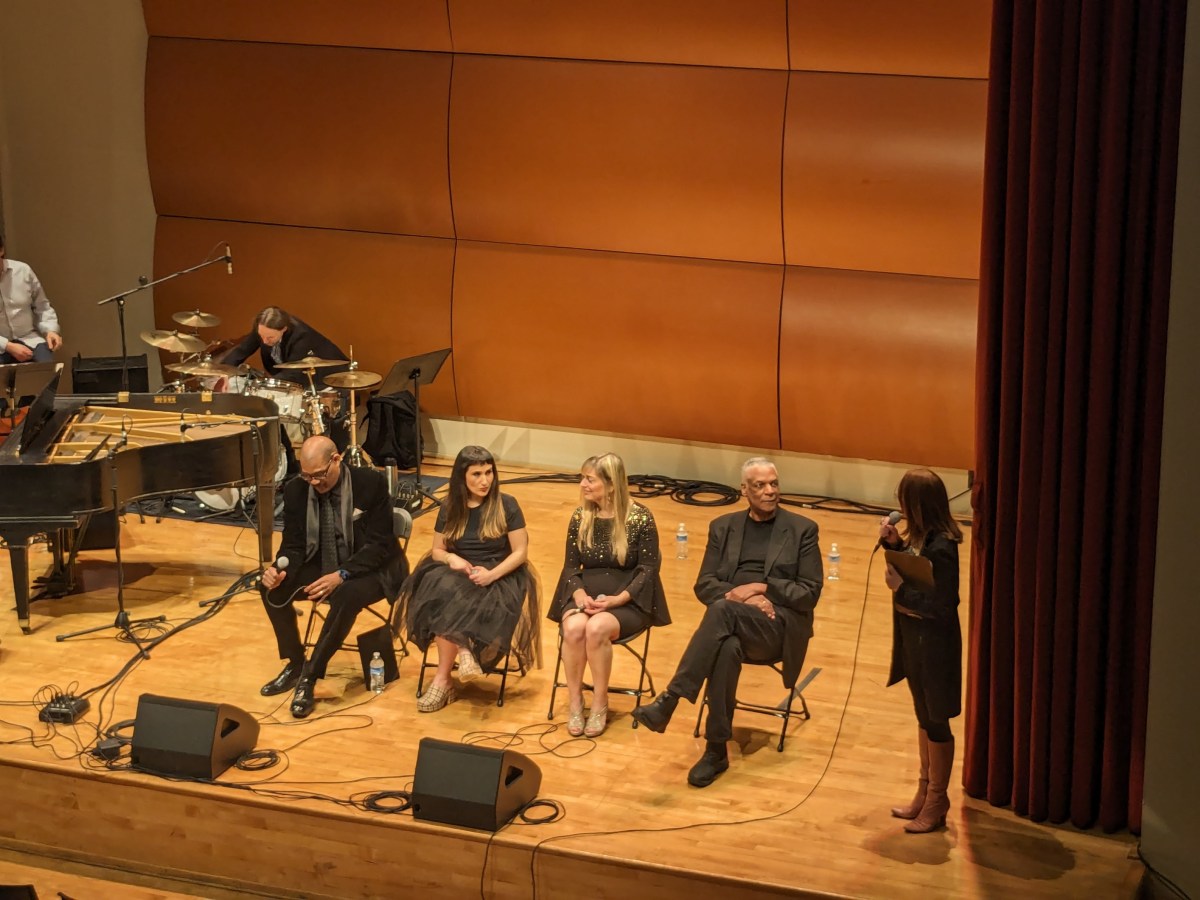


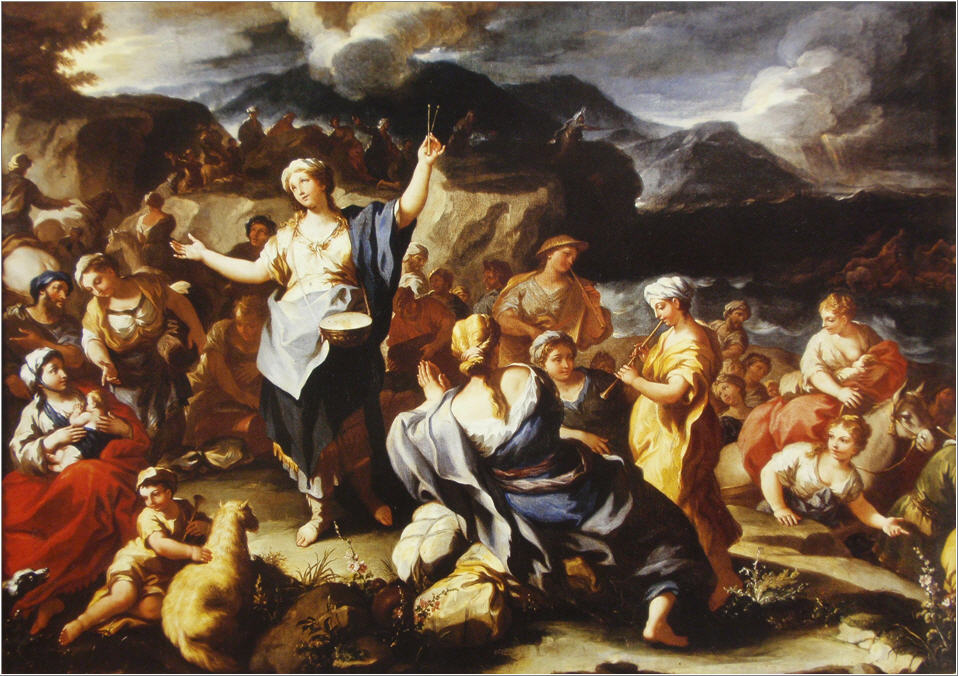


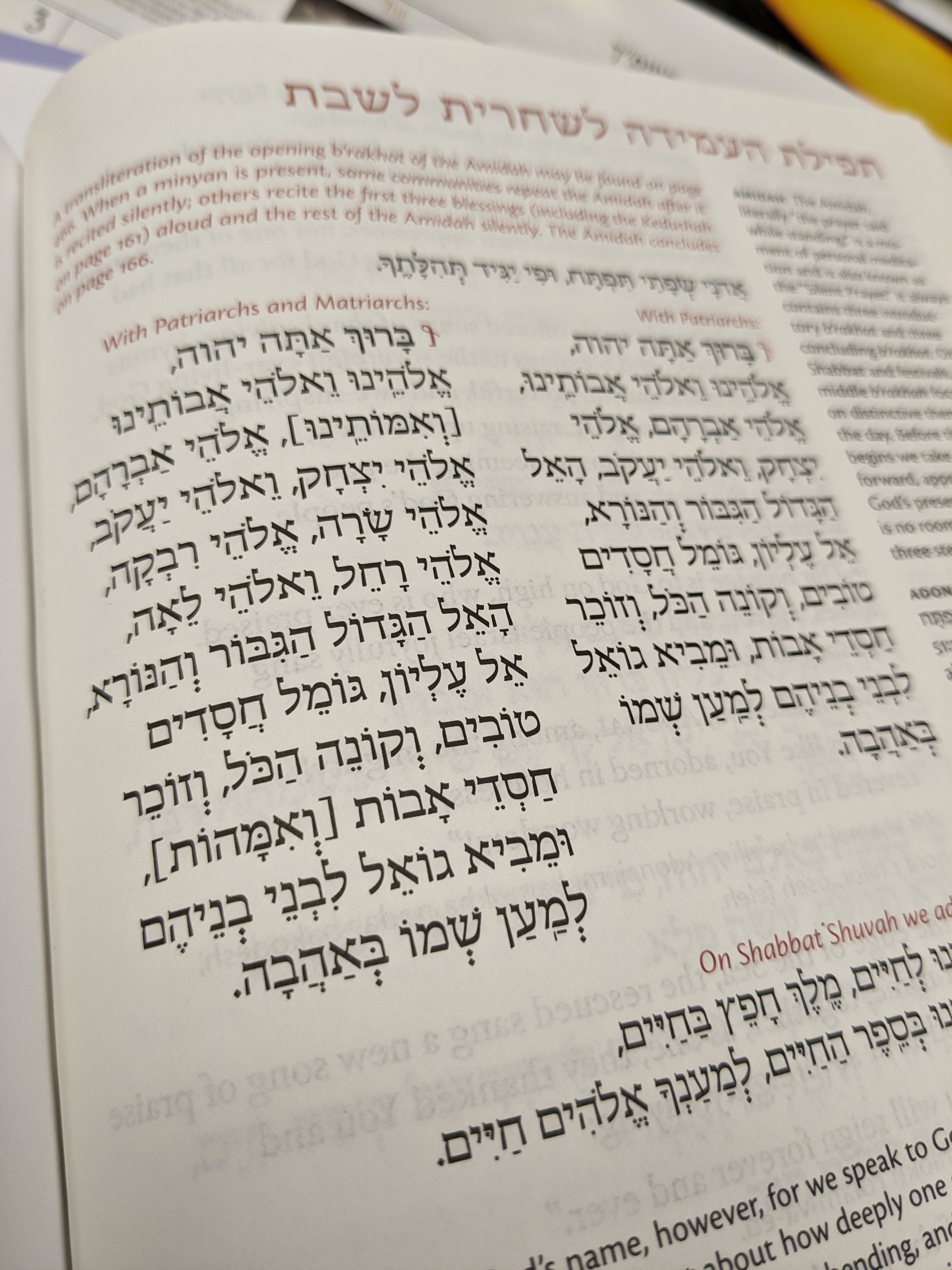
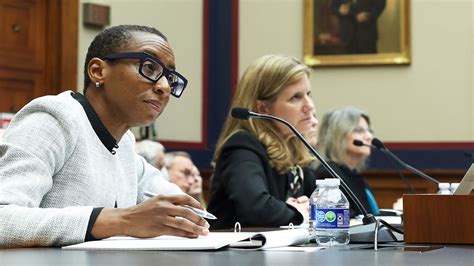

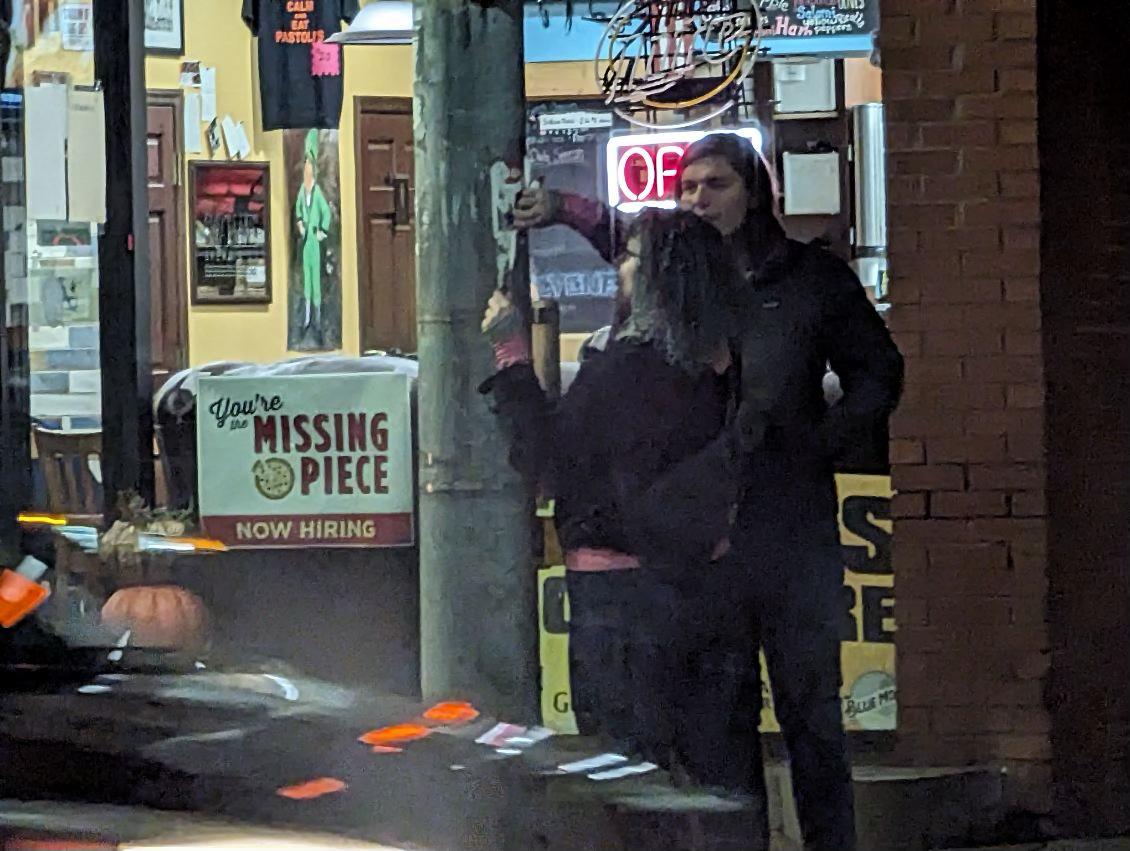


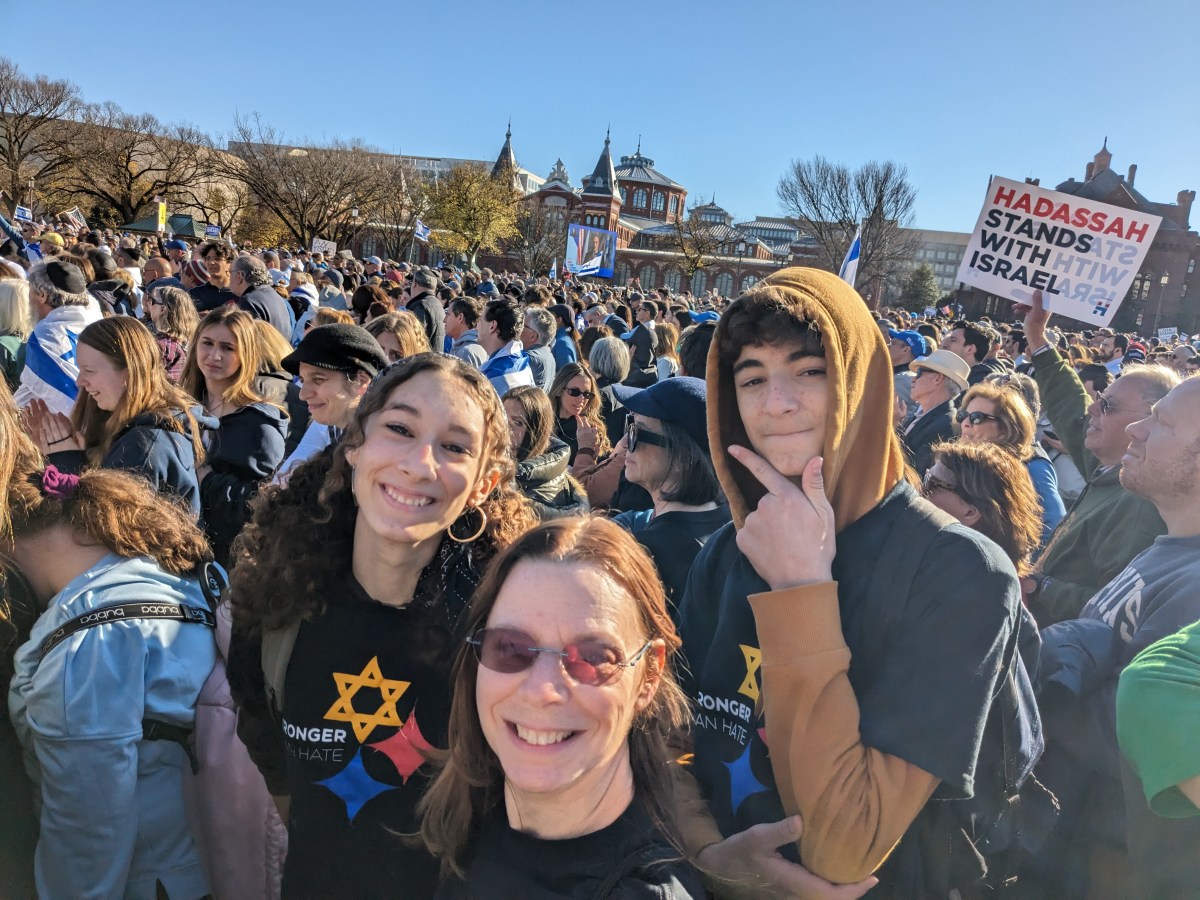







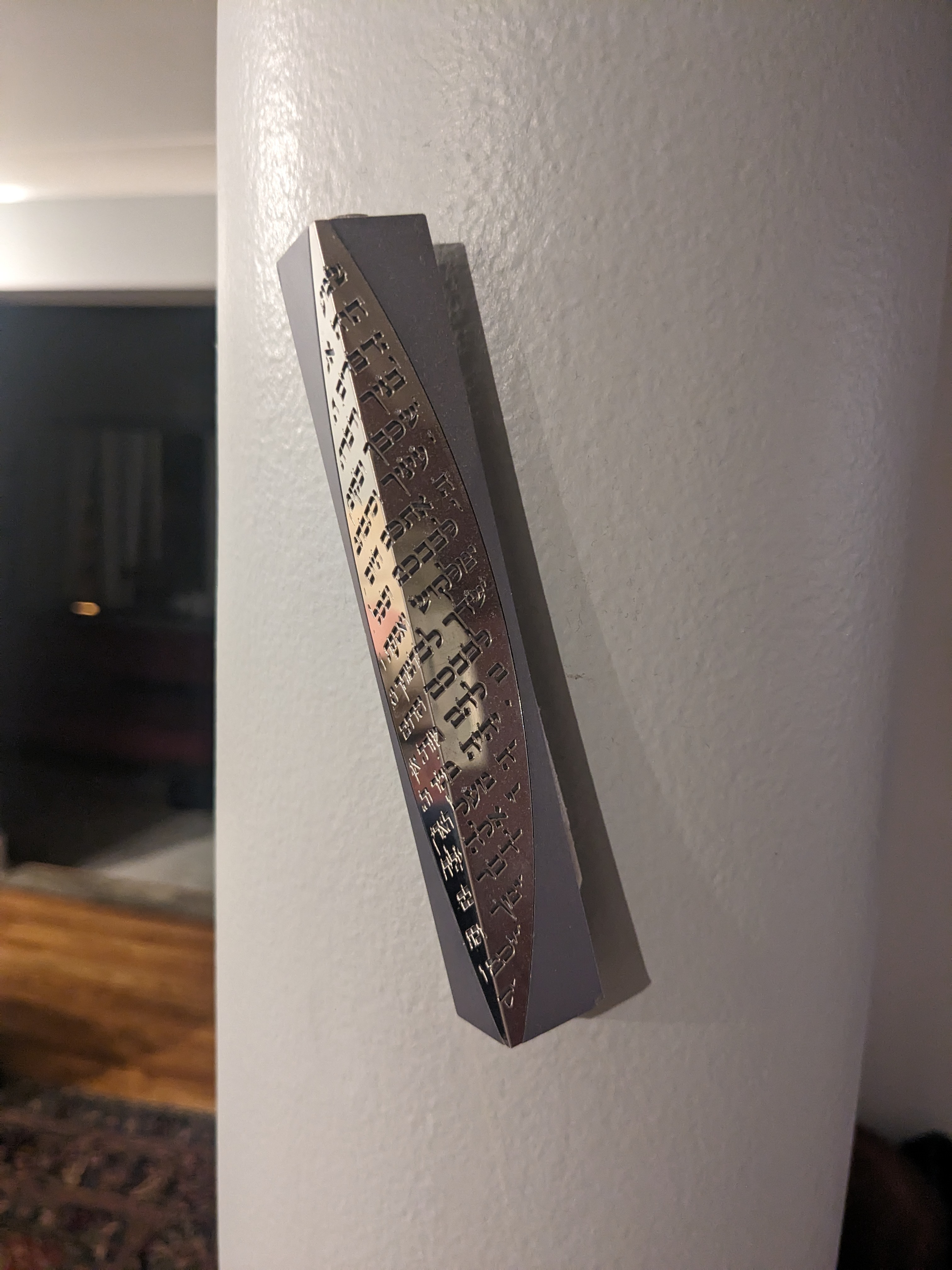


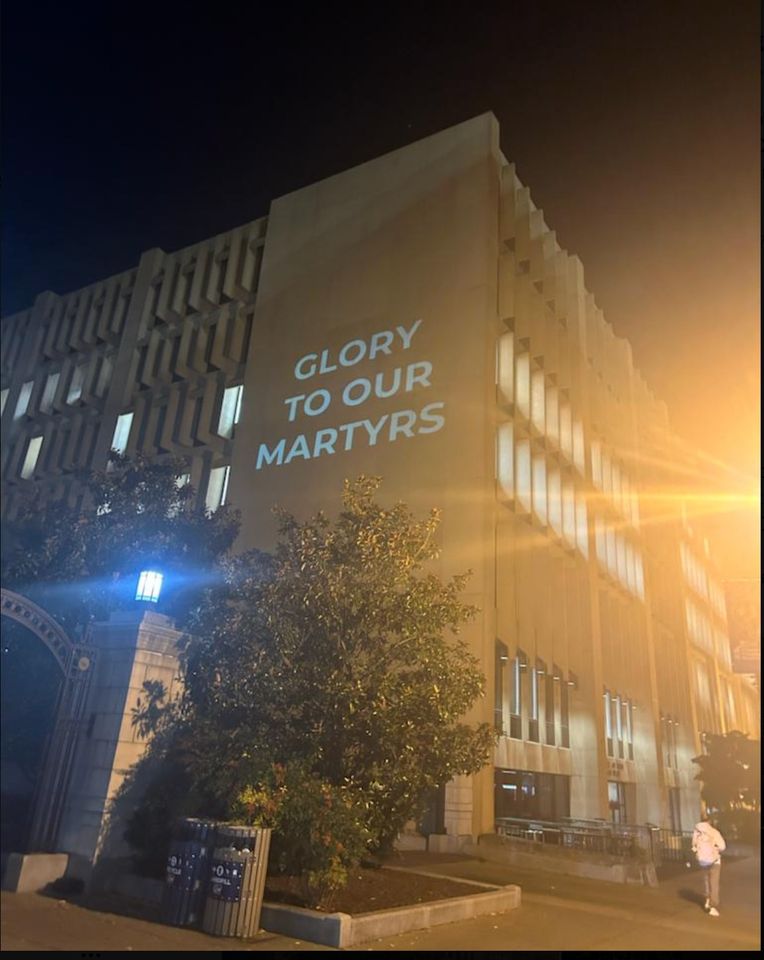


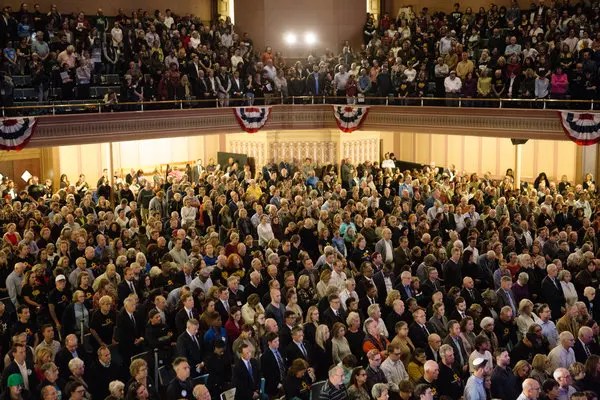




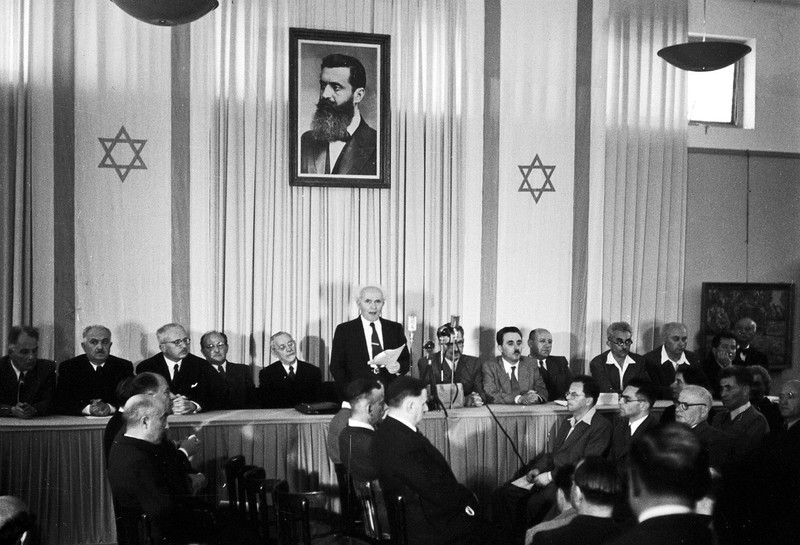

 The Modern Rabbi