Categories
High Holidays Sermons

Ayin leTziyyon Tzofiyyah / An Eye Still Gazes Toward Zion – Into the Future, Part III: Kol Nidrei 5784

There is a healthy portion of folks among us who believe politics has no place on the bimah. Others want to hear political views, but only if those views reflect their own. 

I need to preface my remarks this evening by pointing out that Beth Shalom has been a Zionist congregation since at least 1921*, and the Conservative movement is the only movement that has been Zionist from the outset. So speaking about politics in Israel, on this holiest night of the year, when the Faye Rubinstein Weiss Sanctuary is quite full, is, one might say, fundamental to our mission. As those who love and support the people and the State of Israel,we must be aware of and engaged with the current events I am going to discuss this evening.

Eretz Yisrael, the Land of Israel, to the Jews, is different from any other place. It is where we came from, and where our tradition has focused its yearnings for return for two millennia. Our people are indigenous to that land, and even though many of us live comfortably in Diaspora, it is the only place in the world where the Jewish people can exercise their own democratic self-determination as a people. 

The establishment of the State of Israel in 1948 by a tremendous confluence of historical events created a merkaz ruani, a spiritual center for the Jewish people in that land, to use the language of the proto-Zionist writer Aḥad HaAm. Most of us in this room are American Jews, but what ultimately unites us with the rest of the Jewish world is our connection to the land of Israel, to the city of Jerusalem, and of course to the largest Jewish community in the world, which lives there. It is the center hub of the Jewish wheel. Like it or not, our fate in Diaspora is intimately tied to that land, and we refer to the State in our prayers as “reishit tzemiḥat ge-ulateinu,” the dawn of the flowering of our redemption.

Ahad HaAm

When it comes to Israel, passions run quite high and whatever I say, some will be pleased while others upset. 

So I am going to do something which some might say is in bad form, but given that it is Yom Kippur is actually completely appropriate. I am first going to ask for your seliḥah, your forgiveness. I am going to try to describe the challenge that Israel faces at the moment, and then give us a charge regarding how we should respond. And I am going to do the best I can do not to inflame or disparage, but rather to highlight the principles which we all share, and which I hope that the State of Israel continues to share. And I might fail. So please, I ask for your forgiveness in advance.

***

My first visit to Israel was in the summer of 1987. I was seventeen years old, and I attended the Alexander Muss High School in Israel, which is a study-abroad program for high school students. It was an eye-opening and emotional experience, and gave life and a tangible connection to our people’s deep yearning for a homeland, and that land in particular.

What I saw that summer, now 36 years ago, was a young and growing nation seeking a sense of normalcy. Unlike where I grew up, this was a place where Jewish people who had come from diverse lands, speaking many languages and carrying aspects of many cultures, came to fulfill the ancient dream of qibbutz galuyot / the ingathering of the exiles. The Ethiopian Jews were new to the country then, having been transported from their war-torn homeland. It was all very exciting, and it filled me with Jewish and Zionist pride.

I recall a powerful shared experience that perhaps some of you had as well, during my first visit to the Kotel, the Western Wall in Jerusalem. Every single one of the members of our group, even the one non-Jewish kid, upon approaching the wall, found tears welling up out of nowhere. We all touched that warm, ancient rock, and bawled our eyes out. I am still not sure entirely why this happened, but it was remarkable.

When I returned, 12 years later in 1999 to live there as an adult, the depth and breadth of my love for the land and the State matured to include understanding some of the challenges that the State of Israel faced: growing concern about the water supply and environmental degradation, deep political divisions of various sorts, high cost of living compared to salaries, crowded cities, poor customer service,  a high-stress environment, and similar issues of poverty and dysfunction and malfeasance that are present in all nations. And traffic. Horrible vehicular traffic. In short, I came to see Israel as a real country, rather than some imagined Jewish utopia reflecting the spirit of Herzl and Aḥad HaAm and other Zionist dreamers.

Many American Jews have been to Israel and care deeply about her. Many of us have celebrated Israel’s successes and mourned her losses. We have a deep, emotional and religious connection with this land, its people, and of course the very idea of a Jewish state. And we should absolutely strive to maintain that.

But we also have to be aware that the State of Israel is right now engaged in the deepest internal conflict of her 75-year history. We need to be informed about it, why it is happening, and what we can do. And of course we have to stand by our Israeli cousins in their hour of need.

Here’s a brief anecdote to introduce the challenge at hand. 

One thing that Israel has done recently to alleviate at least some of the traffic is to build new light rail systems in Jerusalem and Tel Aviv. The first line of the TLV system just opened in August, and you might have thought that it was a slam dunk for Tel Aviv. Unfortunately, that’s not exactly what transpired.
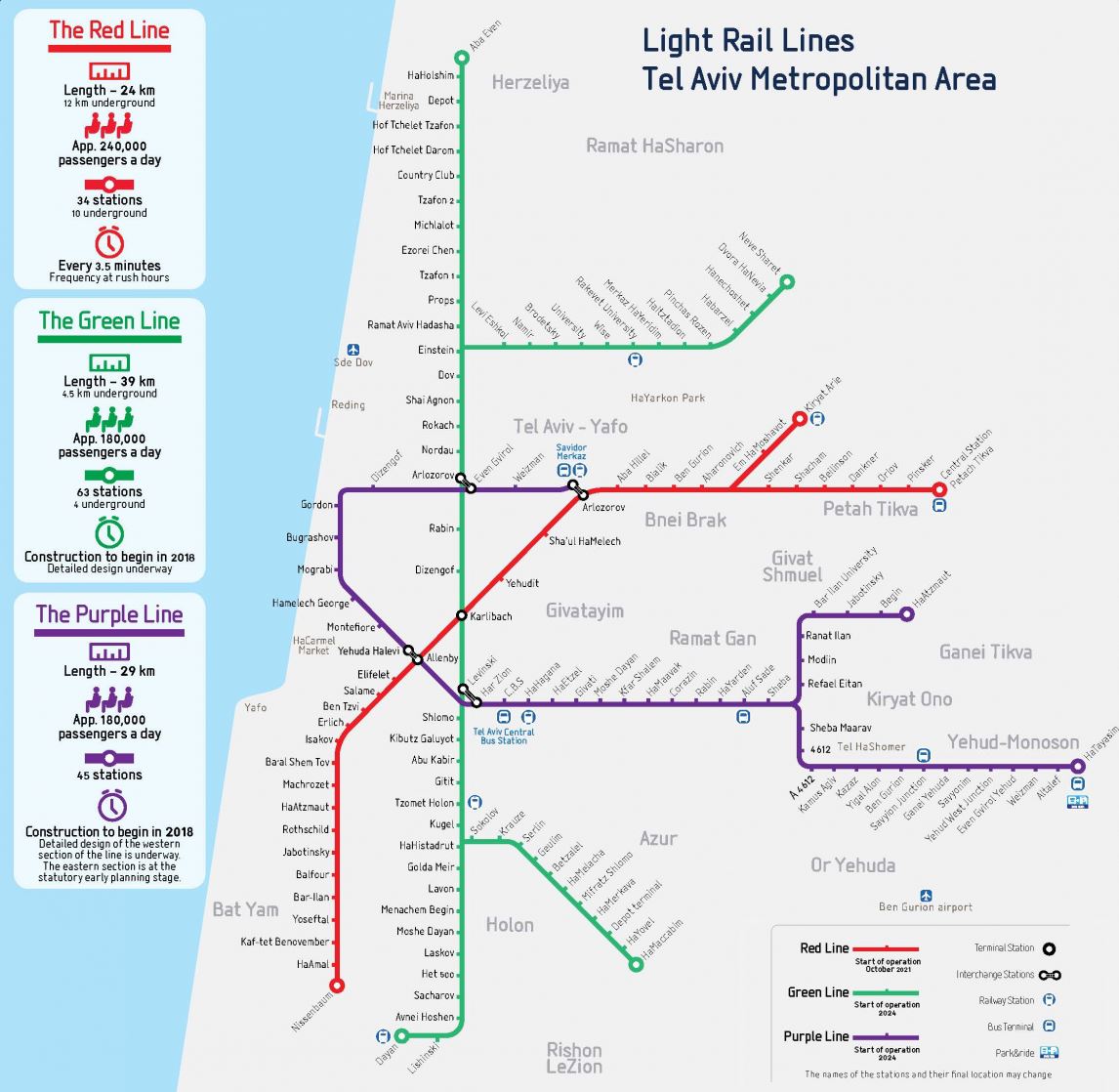
When Prime Minister Benjamin Netanyahu cut the ribbon on the new line on August 16, after eight years of construction and two years of pandemic delay, not only was the ceremony not attended by Tel Aviv mayor Ron Huldai, but it attracted protesters and threats of a boycott. 

The protests were at least nominally in reaction to the fact that the new system does not run on Shabbat. Tel Aviv is a very secular city, and some residents are upset that their metro line is shomer shabbat / Sabbath observant. 

Struggles between religious Jewish observance and secular independence are not new in Israel. But the dynamic in play right now is actually more complicated, and much deeper, part of a larger context regarding the long-term struggle over the vision of the State and her future.

Now for some essential background.

Israel is a tribal place, where political rivals continue to try to best one another at all costs, and old resentments run deep. The vision of what Israel can and should be varies greatly between these tribes. Let me explain:  

These resentments began with the fractiousness of early Zionism, dating to the late 19th century. There were religious Zionists, secular Zionists, political Zionists, cultural and socialist and Hebraist Zionists and in reaction to all of them, the Orthodox and Reform non-Zionists. 

David Ben-Gurion and his associates were secular, and when they declared statehood in 1948 they turned over religious affairs to religious Jews. They gave the Chief Rabbinate control over personal status issues and exempted young, fervently Orthodox men from army service, creating a situation which yielded resentment between secular and Orthodox Israelis from the beginning that has only continued to build to this day. In ‘48, the secular leadership figured that the small number of so-called aredi (sometimes referred to in English as “ultra-Orthodox,” although that is not necessarily an accurate term) Jews in Israel at the time would never be significant; they were wrong.
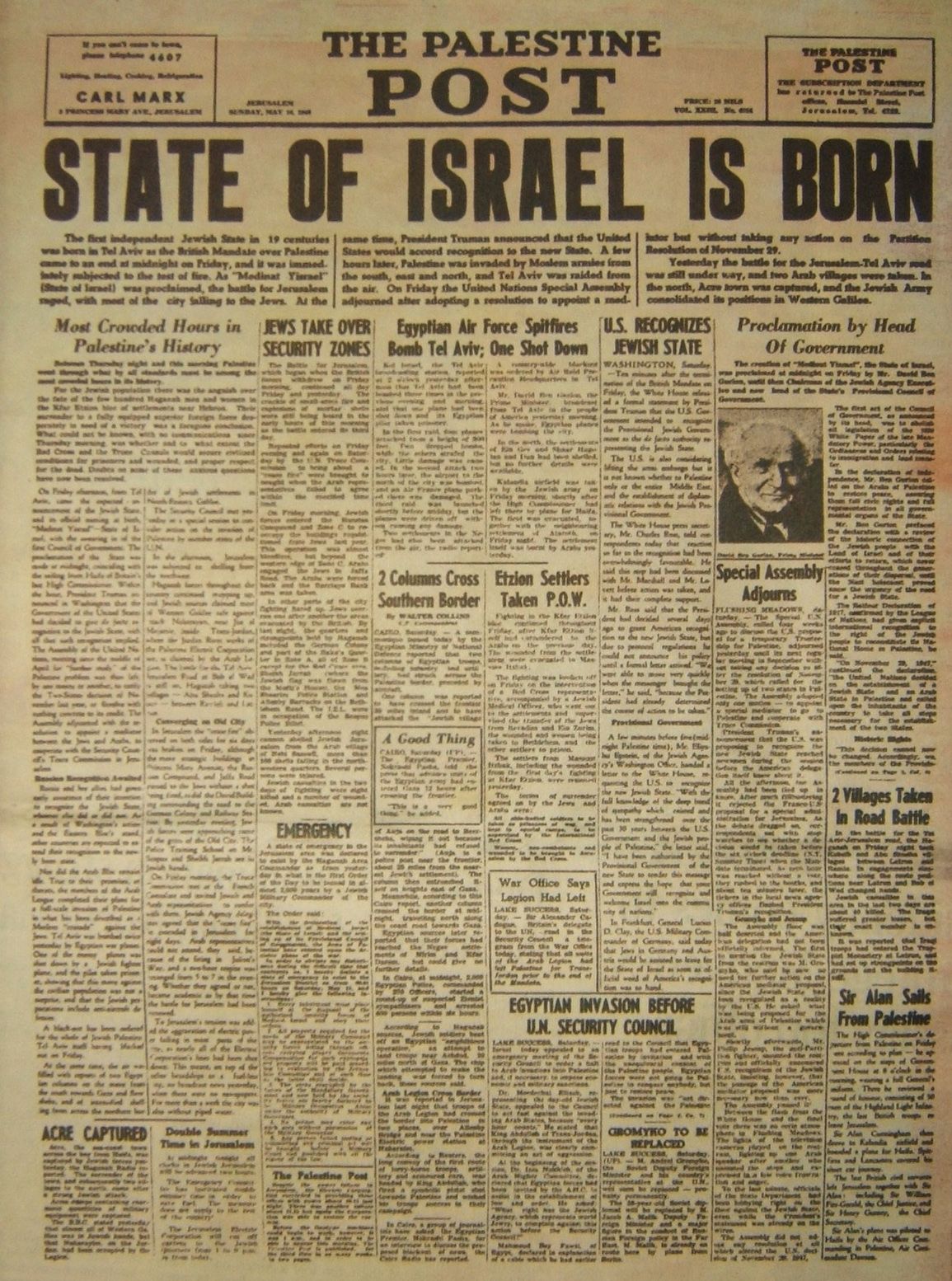
During the early years of the State, even more resentment was bred when new Jewish immigrants from Arab countries, often referred to as Mizraḥim (“Eastern”), were housed in tent cities, sometimes for years, while Ashkenazi arrivals received apartments. 

And then of course there is the 20% of Israeli citizens who are Arab and resentful of their treatment at the hands of the Jewish majority. And then there is the very real challenge of the Palestinian territories and the moribund process for the creation of a Palestinian state alongside Israel. 

What has held most of these tribes more or less together for much of the last 75 years is Israeli liberal democracy. Not political liberalism, but liberal in the sense of liberty: committed to the rule of law, balance of government powers, and protecting civil rights, and in particular the rights of minorities. Failing democracies often see tribes forego protecting minority rights in favor of a winner-takes-all mentality, which causes a fraying of the social order and reversion to tribalism. The stage is set for that right now in Israel. 

Let’s talk about the current governing coalition, and some of the characters found therein.

The last election was nearly a year ago, and in the months following, Netanyahu’s center-right Likud party forged a Knesset coalition of right-wing and Ḥaredi / “ultra-Orthodox” parties with a slender majority of 64 seats out of 120. This majority reflects a narrow popular-vote win of about 30,000 out of 4.7 million votes cast. 

This means that, for the sake of forming that coalition, a few unsavory characters have now been elevated to positions of power.  Let’s take a close look at a few.

Among the Members of Knesset in this current coalition is the chair of the Religious Zionist party, Bezalel Smotrich, who is currently the Finance Minister of the State of Israel. 

His views on Arab citizens of Israel are controversial even within some right-wing quarters. He opposes the Two-State Solution, has questioned the legitimacy of Arab members of Knesset, claiming, “It’s a mistake that Ben-Gurion didn’t finish the job and throw you out in 1948,” and he has tweeted support for segregated maternity wards in Israeli hospitals, claiming “It is natural that my wife would not want to lie down next to someone who just gave birth to a baby that might want to murder her baby in another 20 years.” 

He has also claimed to be a “proud homophobe,” having created the “Beast Parade” in Jerusalem in 2006, a protest against that city’s gay pride parade.

He has denied the legitimacy of non-Orthodox conversions, and described Reform Judaism as ‘fake religion.” 

In 2005, in the context of Israel’s withdrawal from the Gaza Strip, Smotrich was arrested by the Shin Bet along with four others for being in possession of 700 gallons of gasoline with the intent to blow up a part of the Ayalon Freeway, the main artery through Tel Aviv. 

In 2019, Benjamin Netanyahu refused to give Smotrich either the cabinet position of Justice Minister, due to his advocating for “restoring Torah justice,” or the Minister of Diaspora Affairs, because Netanyahu was concerned that doing so would alienate Diaspora Jews (i.e. us).

Nevertheless, in this new government, Smotrich is now the Finance Minister, one of the most powerful positions in the cabinet.

Another member of this coalition is Itamar Ben-Gvir. Ben-Gvir is the only Member of Knesset from the Otzma Yehudit (literally, “Jewish Power”) party. As a teenager, Ben-Gvir was involved with the youth movement of the Rabbi Meir Kahane’s party, Kach. The Kach party was deemed so extreme that it was in fact outlawed in 1994 for supporting Jewish terrorists like Baruch Goldstein, who massacred 29 Palestinians at the Tomb of the Patriarchs in Ḥevron that year. (It has been reported that Ben-Gvir had a poster of Goldstein in his living room until three years ago.)

When Ben-Gvir was 18 and went through the draft process as most young Israelis do, he was barred from service in the IDF due to his extremist views.

He has continued to be a provocateur, going so far in 2019 as to state that Arab citizens of Israel who are not loyal to the state must be expelled. 

Itamar Ben-Gvir is now the Minister of National Security, whose portfolio includes supervising Israel’s activities in the West Bank. 

There are others: Avi Maoz, the sole representative of the Noam party, who has advocated for legalizing gay conversion therapy, is against women serving in the IDF, and has called for greater separation of gender at public events. 

And there is Aryeh Deri of the Shas party, former Interior Minister who was convicted in 2000 of taking $155,000 in bribes and served three years in prison; he re-entered politics and was convicted again in 2021, this time for tax offenses. Netanyahu appointed him Interior Minister, Health Minister, and Deputy Prime Minister in the current government, but within a month the Supreme Court struck down his appointment due to his convictions. 

In ordinary times, these characters would not be part of the majority coalition, much less given cabinet portfolios. But we are not in ordinary times. And while no one can dispute that Benjamin Netanyahu is a shrewd center-right politician who stands firm for the security of the Israeli people, it is obvious to nearly everybody that he has embraced these far-right allies to save himself from the multiple criminal charges he faces for fraud, breach of trust, and accepting bribes.

Many, many Israelis are extraordinarily upset by the makeup of this coalition, and they are rightfully concerned that it will discriminate based on religion, deny rights to women and minorities, annex the territories and put a stake through the heart of the Two-State Solution. Many are upset that military exemption will continue to be granted to young aredim, even though the Supreme Court has ruled in recent years that they must serve in the army.

Some of these things are explicit goals of coalition partners. And the means to make all of this happen is through judicial reform. 

As you may know, Israel has no constitution. And unlike in America, where we have a balance of powers between the Executive, Legislative, and Judicial branches of government, Israel only has two: the Knesset (which incorporates the Executive branch) and the Supreme Court. If the Knesset runs roughshod over liberal democratic norms by passing legislation which tramples on minority rights, the only check on its power is the Supreme Court.

In this Knesset, the majority coalition has presented a legislative package of judicial reforms, which aim to limit the power of the Supreme Court and thereby allow this government to have its way without any interference. Many Israelis see this as an existential crisis, an attack on the very principles of liberal democracy enshrined in its Declaration of Independence. 

The first major piece of this judicial reform package passed the Knesset in July. This law prevents the Supreme Court from using “reasonableness” as a standard for upholding the law. When the vote was taken, the opposition walked out en masse in protest, so the law passed 64-0. 

What this legislation effectively says is that if a simple majority of elected politicians, even 61 out of 120, believe that a government decision is reasonable, it does not matter if all the other 59 members of Knesset and all 15 members of the Supreme Court feel it is unreasonable. This is a tyranny of the majority that opens the door to corruption, among other potential abuses.

The Supreme Court began reviewing this law on September 12, and there is a strong likelihood that they will strike it down. If that happens, the State of Israel will be in uncharted waters.

And this “reasonableness” legislation is only the beginning of the reforms.

Remember that Israel has no separation between “synagogue and state.” Given the makeup of this government, everybody in this room is effectively part of a minority whose rights will be curtailed by a government which tips its hat to theocracy. Israel right now is only barely tolerant of non-Orthodox Judaism. How about an Israel that makes it outright illegal? Imagine being on a synagogue trip with your rabbi, holding a Shabbat service according to our customs, and suddenly we are arrested because men and women are sitting and praying together?

For 38 weeks now, every Saturday night, Israelis numbering in the hundreds of thousands, have taken to the streets in protest. I hope you have seen photos of the sea of Israeli flags held aloft by those gathered in Tel Aviv and Jerusalem and all over the country, as they chant, “De-mo-krat-ya!” – democracy, and “Bushah!” – shame. For those of us who know and love the State of Israel, it has been heartbreaking, and inspiring, to watch Israelis from different tribes – secular and religious, the political left and the center right, Ashkenazi and Mizraḥi, Arabs and Jews – speak out together against their own government. A range of professional groups – the Israel Medical Association, the Israel Bar Association, the Israel Business Forum, consisting of the 150 largest private-sector companies, have all raised their voices in protest. 

Many Israelis feel dejected. Anecdotal reports are that people are leaving, and of course the ones who can leave are generally the well-off: the entrepreneurs and investors, the high-tech employees. This is not good news for the economy, and of course for the poor of Israel.

Around 10,000 reserve-duty soldiers have signed a pledge refusing to do their voluntary army service, which is of great concern to the armed forces, particularly regarding the highly-specialized reservists like fighter pilots. Israel’s security may already be seriously compromised.

Estimates vary, but one conservative figure is that 2 million Israelis have joined protest marches. Israel’s population is about 10 million, so that would be an equivalent in America of about 70 million people in the streets, an astonishing number.

If you happened to catch the 60 Minutes piece on this last week, you heard from leaders of a group of army reservists called Aḥim LeNesheq, Brothers and Sisters in Arms. Citing the examples of Poland and Hungary, which are nominally democratic states leaning toward autocracy, they spoke in an unvarnished way.

Shira Eting, a former combat helicopter pilot, one of the few female pilots, and now a Principal at the Vintage Investment fund, which invests in early-stage technologies, said “Every democracy that has turned into a dictatorship was elected in a democratic way. This is how democracies become dictatorships.” 

Ron Sherf, former commander of the elite Sayyeret Matkal unit, and VP for R&D at Stratasys, immediately added, “And it’s not like you wake up one day and say, ‘OK, now we are a dictatorship.’ Small, small things will change the face of Israel. People tend to say, ‘Wow! In my country, THIS can happen? No, no, it’s only these guys shouting. But it’s happening.’”

I hope now that you understand the challenge of the current moment the way that a clear majority of Israelis see it. The State is in crisis. Nothing about this current reality is normal.

Now we have to turn to the future. What can we do, here on the other side of the world?

It would be very easy to just look the other way, and go about our business as usual, to give lip-service and merely continue being supportive of Israel from a distance, and assume that the Israeli public will sort it out for themselves. Israel advocacy in America in recent years has been mostly that. We’ll send you our military support, we’ll send you our tourist dollars, and we will not comment on your internal politics. 

And in fact, Israelis have historically demanded that of American Jews. “How dare you tell us how to deal with our problems, when you don’t face the daily possibility of terrorist attacks, when you don’t send your beloved 18-year-old girls and boys into the army to face real enemies who want to kill you. How dare you challenge our political choices when you do not live in the pressure-cooker that is the Middle East?! Make aliyah, come here and live this first, and then we’ll talk politics.”

It is absolutely true that the State of Israel is in a precarious position, and all the more so, that is why we must have skin in this game. We cannot turn away. As we sing in Hatiqvah, “Ayin letziyyon tzofiyyah.” Our eye still gazes toward Zion, as it has throughout our history.

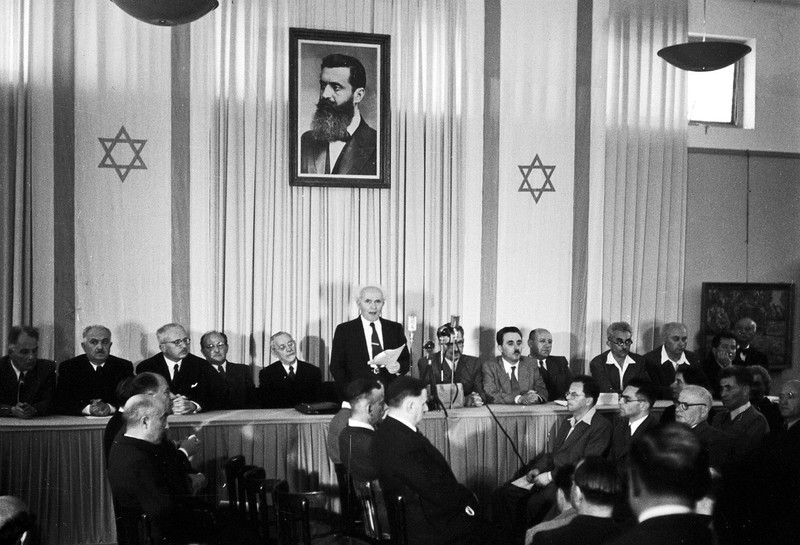
We should all be aware of is the following text from Israel’s Declaration of Independence, which was read by Ben Gurion in what is today called Independence Hall in Tel Aviv, May 12, 1948, as he declared Israeli statehood:

THE STATE OF ISRAEL will be open for Jewish immigration and for the Ingathering of the Exiles; it will foster the development of the country for the benefit of all its inhabitants; it will be based on freedom, justice and peace as envisaged by the prophets of Israel; it will ensure complete equality of social and political rights to all its inhabitants irrespective of religion, race or sex; it will guarantee freedom of religion, conscience, language, education and culture; it will safeguard the Holy Places of all religions; and it will be faithful to the principles of the Charter of the United Nations.
This vision of a State rooted in the prophetic vision of our tradition, connects Israel to fundamental Jewish values: Oseh shalom bimromav (May God bring some heavenly peace to Earth); Tzedeq, tzedeq tirdof (Justice, you shall pursue justice – Devarim / Deuteronomy 16:20). This vision should guarantee freedom of religion, specifically leaving room for the protection of other religious traditions and cultures. 

Ben-Gurion went on:

WE APPEAL to the Jewish people throughout the Diaspora to rally round the Jews of Eretz-Israel in the tasks of immigration and upbuilding and to stand by them in the great struggle for the realization of the age-old dream – the redemption of Israel.

From the very beginning, 75 years ago, Diaspora Jewry was called to help redeem the people and the Land of Israel. And so we must do today, as the State of Israel is in crisis.

We must lean in. We must be at the table in every way we can: being in touch with our Israeli friends and relatives, expressing our love of Israel and our concern to our elected representatives here in America, and of course being financially supportive, and this imperative can take multiple forms.

We must be a part of the struggle for liberal democracy in Israel. We can do so by redirecting our financial resources, not by withdrawing support, to be intentional with our dollars in a way that sends a message yet does not hurt Israel’s most vulnerable citizens. We must support charitable organizations that stand for democracy and good government in Israel. Here are a few such organizations:

And we must raise our voices for the vision of Israel which maintains democratic norms, the rule of law and the balance of power, which protects the rights of minorities, which ensures that Israel does not slide into religious or ethnic intolerance, or discrimination of any kind.

The Talmud teaches us that the Second Temple was destroyed due to sin’at ḥinnam, baseless hatred. After the Romans destroyed that Temple and laid waste to Jerusalem, the Jews were scattered all over the world, unredeemed and wandering for nearly two millennia. 

This Yom Kippur marks 50 years since Israel was attacked unawares by her Arab neighbors; we cannot allow  sin’at ḥinnam to succeed in doing what tanks and combat aircraft could not.

Theodor Herzl, the Hungarian journalist who set in motion the modern Zionist movement which culminated in the establishment of the State, wrote the following:

I once called Zionism an infinite ideal…as it will not cease to be an ideal even after we attain our land, the Land of Israel. For Zionism… encompasses a hope not only for a legally secured homeland for our people… but also the aspiration to reach moral and spiritual perfection.

Ayin leTziyyon tsofiyyah. As our eyes continue to gaze eastward, to our ancient homeland, we must keep Herzl’s vision of moral and spiritual perfection before us all. We must continue to sit at the Zionist table, to support the people, the idea, and the State of Israel, to support freedom, justice, and peace in that land, in our land, the vision of our prophets. And we must rally around the vision of democracy as we continue to seek the realization of that age-old dream of redemption.

~

Rabbi Seth Adelson

(Originally delivered at Congregation Beth Shalom, Pittsburgh, PA, evening of Yom Kippur 5784, 9/24/2023.)

* I am grateful to Eric Lidji, director of the Rauh Jewish History Program & Archives at the Senator John Heinz History Center, and Dr. Barbara Burstin, member of Beth Shalom and instructor at the University of Pittsburgh, who shared with me archival materials about Beth Shalom’s early involvement with raising funds for Zionist causes.

Categories
Sermons

לאן הולכים מכאן / Where Do We Go From Here? – Eqev 5783

The portion of the Torah that we read this morning, up front in Parashat Eqev, is one of the most Zionist moments in the Five Books of Moshe. It’s so Zionist that when the Conservative movement established the custom of reading Torah on Yom HaAtzma’ut (Israel’s Independence Day), which we do here at Beth Shalom, they chose this passage to read. In particular, Eqev says the following (Devarim / Deuteronomy 8:7-10):

כִּ֚י ה’ אֱ-לֹקֶ֔יךָ מְבִֽיאֲךָ֖ אֶל־אֶ֣רֶץ טוֹבָ֑ה אֶ֚רֶץ נַ֣חֲלֵי מָ֔יִם עֲיָנֹת֙ וּתְהֹמֹ֔ת יֹצְאִ֥ים בַּבִּקְעָ֖ה וּבָהָֽר׃ אֶ֤רֶץ חִטָּה֙ וּשְׂעֹרָ֔ה וְגֶ֥פֶן וּתְאֵנָ֖ה וְרִמּ֑וֹן אֶֽרֶץ־זֵ֥ית שֶׁ֖מֶן וּדְבָֽשׁ׃ (ט) אֶ֗רֶץ אֲשֶׁ֨ר לֹ֤א בְמִסְכֵּנֻת֙ תֹּֽאכַל־בָּ֣הּ לֶ֔חֶם לֹֽא־תֶחְסַ֥ר כֹּ֖ל בָּ֑הּ אֶ֚רֶץ אֲשֶׁ֣ר אֲבָנֶ֣יהָ בַרְזֶ֔ל וּמֵהֲרָרֶ֖יהָ תַּחְצֹ֥ב נְחֹֽשֶׁת׃ וְאָכַלְתָּ֖ וְשָׂבָ֑עְתָּ וּבֵֽרַכְתָּ֙ אֶת־ה’ אֱ-לֹקֶ֔יךָ עַל־הָאָ֥רֶץ הַטֹּבָ֖ה אֲשֶׁ֥ר נָֽתַן־לָֽךְ׃

(7) For YHWH your God is bringing you into a good land, a land with streams and springs and fountains issuing from plain and hill; (8) a land of wheat and barley, of vines, figs, and pomegranates, a land of olive trees and honey; (9) a land where you may eat food without stint, where you will lack nothing; a land whose rocks are iron and from whose hills you can mine copper. (10) When you have eaten your fill, give thanks to YHWH your God for the good land which God has given you.

What I hear in this passage is a love letter to the Land of Israel, describing its bounty, its landscape, its minerals, and its intimate connection to the body of stories and laws and customs known as Judaism. It includes, of course, the list of the Seven Species typical to the land, and of course the passage that we know from Birkat haMazon / grace after meals, in which we are required to express our gratitude liturgically after eating. 

Of course, it is somewhat anachronistic to impose a late-19th-century political movement for the return to Israel onto a text written about two-and-a-half millennia earlier. “Zionism” per se is not exactly what the Torah is invoking, as Moshe addresses the Israelites on the far side of the Jordan River. Rather, this passage is meant as an incentive to the Israelites, speaking to their perspective as the children of former slaves wandering through the wilderness. Fear not, it seems to say; you will soon be in a place where everything is wonderful. You have an ancient and eternal connection to this land, and when you inherit it properly now as the significant nation you have become, you will fully reap the benefits that God has promised you as part of the berit, the covenant with your ancestors.

We are living, of course, in a very different world today, 75 years into the existence of the modern, democratic State of Israel, which of course bears little resemblance to the Torah’s vision of Israelite governance. And yet, this text surely summons the Zionist passion which many of us feel.

Hatikvah 6

There is an Israeli pop song that’s been floating through my head all week. It’s by the reggae group Hatikvah 6 called “לאן הולכים מכאן” (Le-an holkhim mikan / Where do we go from here?). The song hints at the political protests of 2011, when hundreds of Israelis set up tents in central Tel Aviv to decry the astronomical cost of living. The movement launched careers for a few politicians, but ultimately had minimal lasting effect on apartment rental prices in Israeli cities. In fact, in 2022, Tel Aviv was the third most-expensive city in the world.

But the question of “Where do we go from here?” neatly captures the current moment in Israel. As you may know, the governing coalition in the Knesset, which holds a slight majority of 64 seats out of 120, passed a piece of legislation known as the “reasonableness clause” as a part of a larger package of judicial reform. This law would prevent the Israeli Supreme Court from using “reasonableness” as a standard for upholding the law, and in particular as a check on legislative orders from the Knesset. Given the uproar in Israel over these reforms, the opposition walked out en masse in protest, so the law passed 64-0. 

What this legislation effectively says is that if a simple majority of elected politicians, even 61 out of 120, believe that a government decision is reasonable, it does not matter if all the other 59 members of Knesset and the entire Supreme Court feel it is unreasonable. Commentators have observed that this might open the door to corruption. (BTW, the best analysis I have read about the situation in Israel is by David Horovitz, editor of the Times of Israel.)

The Supreme Court has already announced that it will debate the legality of the law. When they strike it down, as I anticipate that they will, the State of Israel will be in uncharted “constitutional” territory. I say “constitutional” in quotes, because, as you may know, Israel has no constitution, and no upper parliamentary body, so the Supreme Court is really the only check on the power of the majority coalition in the Knesset. This attempt by the Netanyahu coalition to reign in the judiciary amounts to what some in the opposition have labeled a “coup,” weakening the Supreme Court and thereby giving too much power to the Knesset majority.

Furthermore, the “reasonableness” legislation is only the beginning. There are more pieces of judicial reform to come from this coalition. And when the hobbling of the courts is complete, they will turn to those pieces of legislation that are features of the coalition agreements, the back-room horse-trading deals which hold the coalition together and which might otherwise be struck down by the court, as explained by Horovitz. Those include:

… the legalization of discrimination based on religious beliefs, the annexation of parts or all of the West Bank without equal rights for Palestinians, the restricting of media, the constriction of women’s rights, the blanket exemption of the fastest-growing sector of the populace, the ultra-Orthodox, from military and national service.

Make no mistake: everybody in this room is part of a minority whose rights will be curtailed by a government which tips its hat to theocracy. We all know that Israel right now is only barely tolerant of non-Orthodox Judaism. How about an Israel that makes it illegal? Imagine being on a synagogue trip with your rabbi, observing Shabbat according to our customs, and suddenly we are arrested for hosting a service in which men and women are sitting together?

Israelis of all sorts, but particularly the intellectual elite, are facing a state which they do not recognize. Hundreds of thousands have been out in the streets. Some are actively leaving. Israeli reservists are writing letters to the IDF leadership to tell them that they will no longer serve their reserve duty. The economic and security toll of the actions of this government is inestimable.

So לאן הולכים מכאן? Where do we go from here? The challenge here for us as Diaspora Jews, most of whom are not Israeli citizens, but all of whom have a significant stake in the State of Israel, is how to respond to this.

We have supported, and must continue to support Israel because the right to a tiny strip of our ancestral land, as described in Parashat Eqev, where we Jews are guaranteed self-determination, is essential to our survival as a people. We support Israel because of the values espoused in her Declaration of Independence. We support Israel because we see her democratic government committed to upholding those values, protecting minority voices and giving strength to the disenfranchised. 

There are really only two things that might affect the situation. First, ongoing protests in the streets of Israel, which did succeed in at least delaying the vote a few months back, and made the opinion of what is likely a majority of Israelis painfully clear.

Second, economic protest, and here is where things get thorny for the American Jewish community. We provide $3.8 billion of military aid to Israel every year. This is really a “back-door” subsidy to American defense contractors: the money goes to them, and the arms (like the Iron Dome system, which shoots down incoming missiles, launched largely from Gaza) go to Israel. This subsidy protects Israeli citizens and makes life safe and livable in a rough neighborhood, and of course supports American jobs. I would not want to see this money go away.

Also, we Americans have always demonstrated our support by sending personal charitable contributions to Israel. So the dilemma we are facing is how to continue to support the Israeli people and the democratic norms within Israeli society without enabling the more problematic aspects of the current government.

One such organization that we might want to support is called התנועה לאיכות השלטון, the Movement for Quality Government in Israel, a well-established, non-partisan non-profit that works for improved government, to expose corruption and flaws in the democratic system. There are probably others, and as I become aware of them, I will share that info with you as well. 

A final thought: there is a reason we call immigrating to Israel “making aliyah,” where “aliyah” literally means, “ascent.” In the Talmud, Israel is described as the highest spiritual point in the world; one “ascends” to Israel from anywhere else in the world, and within Israel one ascends to Jerusalem.

During the protests of the last couple of weeks, thousands of Israelis made the 40-odd mile trek on foot from Tel Aviv to Jerusalem. They ascended physically and spiritually, and their aliyah was a sign not only of their commitment to the State of Israel but also to its democratic principles.

I hope that as they were climbing through the Shefelah, the fertile Judean foothills in the center of the country, at least a few of them thought about Parashat Eqev: the Seven Species, and the sense of expressing gratitude for this land. I hope that some of them were thinking, and perhaps causing some other Israelis to pause and think that the only way that we might continue to eat, to be satisfied, and to express thanks for what they have is to ensure that we do not deepen this growing rift in Israel and indeed the Jewish world. That we must continue to make a metaphorical aliyah together.

לאן הולכים מכאן? Where do we go from here? We keep going up. We do not have a choice.

~

Rabbi Seth Adelson

(Originally delivered at Congregation Beth Shalom, Shabbat morning, 8/5/2023.)

Categories
Sermons

On Being a Patriotic Jewish American – Mattot / Mas’ei 5782

Judy and I were at the Jersey Shore for a few days this week. The kids are safely ensconced at Camp Ramah in Canada, so we have had some time to ourselves, which is nice, but of course it reminds us of how much we love and appreciate and miss our children! 

One evening, we had a very patriotic experience. I find that as I get older, these things are much more moving than they were when I was younger. Nowadays, I tear up when veterans are honored for their service to our country, or at any ceremony for those who “paid the ultimate price” to defend our freedom. I have performed many funerals, but generally the only moment I lose control of my own emotions is when, at the funeral of a veteran of the armed forces, the honor guard removes the flag from the casket, folds it, and presents it to a member of the family. 

So we had taken a bike ride late in the afternoon to Sunset Beach, a lovely point with a nice view to the west of Delaware Bay. Unbeknownst to us, the tradition at Sunset Beach in the summer months is that, every day, they fly a different American flag, which had been draped on the casket of an armed-forces veteran during his/her funeral. As the day draws to a close, they lower the flag. So we stuck around for the ceremony.

Lowering the flag at Sunset Beach, NJ

When the time came, we sang “God Bless America,” and “The Star-Spangled Banner,” and then as “Taps” was played, the flag was lowered and folded, and returned to the family of the deceased veteran.

And, sure enough, the tears came. 

This does not happen to me on Independence Day, or on Memorial Day, or when we sing the National Anthem before a ball game, although a room full of Jews singing Hatikvah always gets me right here. But I think that ceremonies that are deeply personal, that tell one person’s story of dedication and service, are in some ways much more powerful than the general, national stories and commemorations.

And yet, the idea of peoplehood is extraordinarily important to me. I am proud, as I know you are as well, to be a member of the Jewish people; I am strongly connected to our history and traditions, and of course to other Jews, even those with whom I disagree deeply about how we interpret our text and our rituals. 

And of course, the vast majority of Jews throughout history have lived under non-Jewish rule. We have been mobile people, often against our will, often fleeing persecution, for thousands of years. A week from tonight we will observe Tish’ah BeAv, on which we commemorate oppression and destruction at the hands of ancient, medieval, and modern empires. And the Torah foreshadows this mobile history in Parashat Mas’ei, from which we read this morning. “Elleh mas’ei benei Yisrael,” it begins. “These are journeys of the Israelites, who started out from the land of Egypt, troop by troop, in the charge of Moses and Aaron.” (Bemidbar / Numbers 33:1). In fact, the book of Bemidbar begins by counting the people, and concludes with recounting the journey; the suggestion is that our peoplehood and our journeys are deeply intertwined. Our ability to journey is predicated upon our peoplehood.

And our ability to live among and subject to others who are not Jews is also made possible by our connection to one another. How did we survive 2,000 years of dispersion and exile? By sticking together. By reading and re-reading and re-interpreting our holy, ancient texts. By maintaining our traditions, distinct from the majority culture around us.

And yet, I am also a proud American, in many ways fully integrated into our society, celebrating American values and lamenting American woes. I am grateful to this nation, which provided a haven to my great-grandparents, which does not restrict our ability to practice freely our customs and traditions, which guarantees me many rights which my ancestors did not have.

The challenges of living as a distinct people and in the context of a wider, non-Jewish nation were well-known to the rabbis of the Talmud. They were, after all, living under Roman rule in ancient Palestine as the Mishnah was written and compiled (1st c. CE), and the Babylonian Gemara was completed under Persian rule in the yeshivot of Babylon (modern-day Iraq). Talmudic statements about the relationship between the Jews and the non-Jewish leadership of their jurisdiction are mixed. Consider, for example, conflicting statements in Pirqei Avot:

Avot 3:2

רַבִּי חֲנִינָא סְגַן הַכֹּהֲנִים אוֹמֵר, הֱוֵי מִתְפַּלֵּל בִּשְׁלוֹמָהּ שֶׁל מַלְכוּת, שֶׁאִלְמָלֵא מוֹרָאָהּ, אִישׁ אֶת רֵעֵהוּ חַיִּים בְּלָעוֹ

Rabbi Ḥanina, the vice-high priest said: pray for the welfare of the government, for were it not for the fear it inspires, every man would swallow his neighbor alive.

Avot 2:3

הֱווּ זְהִירִין בָּרָשׁוּת, שֶׁאֵין מְקָרְבִין לוֹ לָאָדָם אֶלָּא לְצֹרֶךְ עַצְמָן. נִרְאִין כְּאוֹהֲבִין בִּשְׁעַת הֲנָאָתָן, וְאֵין עוֹמְדִין לוֹ לָאָדָם בִּשְׁעַת דָּחְקוֹ

Be careful [in your dealings] with the ruling authorities for they do not befriend a person except for their own needs; they seem like friends when it is to their own interest, but they do not stand by a man in the hour of his distress.

Not exactly a comforting vision of government, right? There is a strong sense of suspicion of the non-Jewish authorities in rabbinic literature, perhaps largely because the Romans had destroyed the Temple and forbidden Jews from living in Jerusalem, but also because the rabbis of this period knew that in order to keep Judaism alive, they would have to prevent the Jews from pursuing the practices of the non-Jews around them. And so the rabbis inveighed against idolatry, of course, but also the bathhouses and the circuses and the other aspects of Greco-Roman culture. They forbid the consumption of foods and wine produced by non-Jews, because sharing these things would lead to fraternization, which would lead to intermarriage.

Perhaps the best-known and most essential statement of the relationship of Judaism and Jewish law to the non-Jewish authorities is the principle, cited four times in the Talmud, of dina demalkuta dina, or “the law of the land is the law.” The idea is that, even though Jews are subject to Jewish law, the non-Jewish law of the land applies in some cases as an extension of halakhah. So if the government requires you to pay taxes, for example, that would be effectively sanctioned by Jewish law as well.

And it makes a certain amount of sense. Had our ancestors not observed the laws of the lands in which they lived, they would surely not have been welcomed (not that they were honestly welcome in many places in which they had lived, of course, but all the more so). We have always had to see ourselves, at least minimally, and often uncomfortably, as subject to the laws and customs around us, even as we practice our own set of laws and customs. And that implies not only the innocuous things like getting a marriage license, for example, but also the more serious things, like serving your country in the armed forces and potentially giving your life in doing so.

One of the people at the flag ceremony in New Jersey was wearing a hat with a political statement on it with which I find myself severely at odds. He was standing with the family of the deceased veteran whose flag was being lowered, so I presume he was a relative. I found myself singing the National Anthem along with him, hands on our hearts, and respectfully observing together as the flag was folded. I am grateful that this man and I each have the ability to believe freely, to express our opinions freely, to practice our religion freely, and to vote freely, even though I am fairly certain that we do not see eye-to-eye on too many things. And I am, of course, deeply concerned that our tendency today to revile one another across the political aisle might eventually lead to curtailing those freedoms.

Which of course brings me to the final Jewish principle which we should consider in our context as Jewish Americans, and that is derekh eretz.

Derekh eretz, which has often been translated as, “respect,” is actually a wide-ranging term in rabbinic literature that might be better defined as, “the way things are done,” although literally, of course, it means, “the way of the land.” That is, derekh eretz is a set of societal norms that are connected to the land which we all share, and not limited to a specific sub-culture or ethnicity or religion. We are connected to the others around us, who may not share our Torah or our language or holidays or rituals, with some basic elements of human decency. 

“This land is your land / this land is my land,” sang Woody Guthrie*. We share the land through derekh eretz, and the way that we keep the land for us, for all Americans, is that we treat each other with respect and dignity and equality. We learn that from our tradition, and I hope that we can continue to spread that word, so that all might hear it.

Woody Guthrie

Although our journeys as a Jewish people will likely never be complete, we continue to, in some sense, be a part of the land wherever we reside. I hope that we all remember that during those moving, patriotic moments, whether personal or national.

~

Rabbi Seth Adelson

(Originally delivered at Congregation Beth Shalom, Pittsburgh, PA, Shabbat morning, 7/30/22.)

* I read online (FWIW) that Guthrie wrote this song, arguably his best-known, in reaction to Irving Berlin’s “God Bless America.”

Categories
Discussions Source Sheets

Democracy and Judaism – Qorah 5779

Parashat Qorah raises particularly resonant questions regarding leadership: Who leads? Who appoints them? From where does the true mandate for leadership come? What happens when a troublesome vocal minority challenges that leadership? Consider these sources for discussion.


Zechariah 8:16(16) These are the things you are to do: Speak the truth to one another, render true and perfect justice in your gates.
זכריה ח׳:ט״ז(טז) אֵ֥לֶּה הַדְּבָרִ֖ים אֲשֶׁ֣ר תַּֽעֲשׂ֑וּ דַּבְּר֤וּ אֱמֶת֙ אִ֣ישׁ אֶת־רֵעֵ֔הוּ אֱמֶת֙ וּמִשְׁפַּ֣ט שָׁל֔וֹם שִׁפְט֖וּ בְּשַׁעֲרֵיכֶֽם׃

Deuteronomy 17:16-18(16) Moreover, he shall not keep many horses or send people back to Egypt to add to his horses, since the LORD has warned you, “You must not go back that way again.” (17) And he shall not have many wives, lest his heart go astray; nor shall he amass silver and gold to excess. (18) When he is seated on his royal throne, he shall have a copy of this Teaching written for him on a scroll by the levitical priests.דברים י״ז:ט״ז-י״ח(טז) רַק֮ לֹא־יַרְבֶּה־לּ֣וֹ סוּסִים֒ וְלֹֽא־יָשִׁ֤יב אֶת־הָעָם֙ מִצְרַ֔יְמָה לְמַ֖עַן הַרְבּ֣וֹת ס֑וּס וַֽה֙’ אָמַ֣ר לָכֶ֔ם לֹ֣א תֹסִפ֗וּן לָשׁ֛וּב בַּדֶּ֥רֶךְ הַזֶּ֖ה עֽוֹד׃ (יז) וְלֹ֤א יַרְבֶּה־לּוֹ֙ נָשִׁ֔ים וְלֹ֥א יָס֖וּר לְבָב֑וֹ וְכֶ֣סֶף וְזָהָ֔ב לֹ֥א יַרְבֶּה־לּ֖וֹ מְאֹֽד׃ (יח) וְהָיָ֣ה כְשִׁבְתּ֔וֹ עַ֖ל כִּסֵּ֣א מַמְלַכְתּ֑וֹ וְכָ֨תַב ל֜וֹ אֶת־מִשְׁנֵ֨ה הַתּוֹרָ֤ה הַזֹּאת֙ עַל־סֵ֔פֶר מִלִּפְנֵ֥י הַכֹּהֲנִ֖ים הַלְוִיִּֽם׃

I Samuel 8:11-19(11) He said, “This will be the practice of the king who will rule over you: He will take your sons and appoint them as his charioteers and horsemen, and they will serve as outrunners for his chariots. (12) He will appoint them as his chiefs of thousands and of fifties; or they will have to plow his fields, reap his harvest, and make his weapons and the equipment for his chariots. (13) He will take your daughters as perfumers, cooks, and bakers. (14) He will seize your choice fields, vineyards, and olive groves, and give them to his courtiers. (15) He will take a tenth part of your grain and vintage and give it to his eunuchs and courtiers. (16) He will take your male and female slaves, your choice young men, and your asses, and put them to work for him. (17) He will take a tenth part of your flocks, and you shall become his slaves. (18) The day will come when you cry out because of the king whom you yourselves have chosen; and the LORD will not answer you on that day.” (19) But the people would not listen to Samuel’s warning. “No,” they said. “We must have a king over us…”שמואל א ח׳:י״א-י״ט(יא) וַיֹּ֕אמֶר זֶ֗ה יִֽהְיֶה֙ מִשְׁפַּ֣ט הַמֶּ֔לֶךְ אֲשֶׁ֥ר יִמְלֹ֖ךְ עֲלֵיכֶ֑ם אֶת־בְּנֵיכֶ֣ם יִקָּ֗ח וְשָׂ֥ם לוֹ֙ בְּמֶרְכַּבְתּ֣וֹ וּבְפָרָשָׁ֔יו וְרָצ֖וּ לִפְנֵ֥י מֶרְכַּבְתּֽוֹ׃ (יב) וְלָשׂ֣וּם ל֔וֹ שָׂרֵ֥י אֲלָפִ֖ים וְשָׂרֵ֣י חֲמִשִּׁ֑ים וְלַחֲרֹ֤שׁ חֲרִישׁוֹ֙ וְלִקְצֹ֣ר קְצִיר֔וֹ וְלַעֲשׂ֥וֹת כְּלֵֽי־מִלְחַמְתּ֖וֹ וּכְלֵ֥י רִכְבּֽוֹ׃ (יג) וְאֶת־בְּנוֹתֵיכֶ֖ם יִקָּ֑ח לְרַקָּח֥וֹת וּלְטַבָּח֖וֹת וּלְאֹפֽוֹת׃ (יד) וְאֶת־שְׂ֠דֽוֹתֵיכֶם וְאֶת־כַּרְמֵיכֶ֧ם וְזֵיתֵיכֶ֛ם הַטּוֹבִ֖ים יִקָּ֑ח וְנָתַ֖ן לַעֲבָדָֽיו׃ (טו) וְזַרְעֵיכֶ֥ם וְכַרְמֵיכֶ֖ם יַעְשֹׂ֑ר וְנָתַ֥ן לְסָרִיסָ֖יו וְלַעֲבָדָֽיו׃ (טז) וְאֶת־עַבְדֵיכֶם֩ וְֽאֶת־שִׁפְח֨וֹתֵיכֶ֜ם וְאֶת־בַּחוּרֵיכֶ֧ם הַטּוֹבִ֛ים וְאֶת־חֲמוֹרֵיכֶ֖ם יִקָּ֑ח וְעָשָׂ֖ה לִמְלַאכְתּֽוֹ׃ (יז) צֹאנְכֶ֖ם יַעְשֹׂ֑ר וְאַתֶּ֖ם תִּֽהְיוּ־ל֥וֹ לַעֲבָדִֽים׃ (יח) וּזְעַקְתֶּם֙ בַּיּ֣וֹם הַה֔וּא מִלִּפְנֵ֣י מַלְכְּכֶ֔ם אֲשֶׁ֥ר בְּחַרְתֶּ֖ם לָכֶ֑ם וְלֹֽא־יַעֲנֶ֧ה יְהוָ֛ה אֶתְכֶ֖ם בַּיּ֥וֹם הַהֽוּא׃ (יט) וַיְמָאֲנ֣וּ הָעָ֔ם לִשְׁמֹ֖עַ בְּק֣וֹל שְׁמוּאֵ֑ל וַיֹּאמְר֣וּ לֹּ֔א כִּ֥י אִם־מֶ֖לֶךְ יִֽהְיֶ֥ה עָלֵֽינוּ׃

Berakhot 55a:11With regard to Bezalel’s appointment, Rabbi Yitzḥak said: One may only appoint a leader over a community if he consults with the community and they agree to the appointment, 

as it is stated: “And Moses said unto the children of Israel: See, the Lord has called by name Betzalel, son of Uri, son of Hur, of the tribe of Judah” (Exodus 35:30). The Lord said to Moses: Moses, is Betzalel a suitable appointment in your eyes? Moses said to Him: Master of the universe, if he is a suitable appointment in Your eyes, then all the more so in my eyes. The Holy One, Blessed be He, said to him: Nevertheless, go and tell Israel and ask their opinion. Moses went and said to Israel: Is Bezalel suitable in your eyes? They said to him: If he is suitable in the eyes of the Holy One, Blessed be He, and in your eyes, all the more so he is suitable in our eyes.
ברכות נ״ה א:י״אאמר רבי יצחק אין מעמידין פרנס על הצבור אלא אם כן נמלכים בצבור 

שנאמר ראו קרא ה׳ בשם בצלאל אמר לו הקדוש ברוך הוא למשה משה הגון עליך בצלאל אמר לו רבונו של עולם אם לפניך הגון לפני לא כל שכן אמר לו אף על פי כן לך אמור להם הלך ואמר להם לישראל הגון עליכם בצלאל אמרו לו אם לפני הקדוש ברוך הוא ולפניך הוא הגון לפנינו לא כל שכן

Pirkei Avot 2:3(3) Be careful [in your dealings] with the ruling authorities for they do not befriend a person except for their own needs; they seem like friends when it is to their own interest, but they do not stand by a man in the hour of his distress.משנה אבות ב׳:ג׳(ג) הֱווּ זְהִירִין בָּרָשׁוּת, שֶׁאֵין מְקָרְבִין לוֹ לָאָדָם אֶלָּא לְצֹרֶךְ עַצְמָן. נִרְאִין כְּאוֹהֲבִין בִּשְׁעַת הֲנָאָתָן, וְאֵין עוֹמְדִין לוֹ לָאָדָם בִּשְׁעַת דָּחְקוֹ: 

Rabbi Eliyahu Mizrahi, ca. 1445-1525, Chief Rabbi of Constantinople

And according to our holy Torah’s decree at Exodus 23:2, “Incline after the majority,” we follow the will of the majority. Indeed, one who disputes with the majority is called a sinner. And it makes no difference whether that majority is made up of rich people or poor, sages or laypeople, since the entire community is called a court for communal matters.

Exodus 23:2(2) You shall neither side with the mighty to do wrong—you shall not give perverse testimony in a dispute so as to pervert it in favor of the mighty—שמות כ״ג:ב׳(ב) לֹֽא־תִהְיֶ֥ה אַחֲרֵֽי־רַבִּ֖ים לְרָעֹ֑ת וְלֹא־תַעֲנֶ֣ה עַל־רִ֗ב לִנְטֹ֛ת אַחֲרֵ֥י רַבִּ֖ים לְהַטֹּֽת׃

Rabbi Francis Nataf (contemporary), Redeeming Relevance; Numbers, Ch. 3 Korach and the Limits of Popular Government

Moreover, ordinary Jews are supposed to have access to their leaders and be represented by them on the political playing field. If the Korach story doesn’t warn against political activity per se, it does warn of the dangers that exist in allowing those easily swayed by personal charisma too much power in choosing their leaders. In that case, direct democracy – where all decisions are decided by the general public – may well be a recipe for disaster.

Questions for further discussion:

  1. How can we learn from the Qorah story regarding the various challenges that democracy has?
  2. What does this imply for our particular political moment? Particularly regarding the current tendency to the extremes?