Categories
Sermons

The Color of Elul – Ki Tetze 5783

The gypsy-punk group Gogol Bordello’s first hit was a curious song called “Start Wearing Purple.” Maybe you know the song? 

Start wearing purple, wearing purple
Start wearing purple for me now
All your sanity and wits, they will all vanish
I promise, it’s just a matter of time

The lead singer of the group, Ukrainian-born Eugene Hütz, claims the song is about a crazy neighbor who would dress entirely in purple. I have been told that purple is our bat mitzvah‘s favorite color. (It’s something that she shares with my daughter, who, when I asked about it, said, matter-of-factly, “Purple is objectively the best color.”)

Well, I have some good news: purple is an appropriate color for the month of Elul, which we are in right now. Why? Because it is a balance of two other colors, red and blue. It’s a kind of coalition color. And it suggests exactly the way we should feel in Elul. I’ll come back to that.

The fighting in Ukraine passed a grim milestone this past week: one half-million people who have been killed or wounded in the fighting, Russians and Ukrainians. Some among us might take some small comfort, given the nature and origin of the conflict, in knowing that the count is higher on the Russian side, but I think it is always in bad taste to gloat in the loss and suffering of others, and in this case particularly because this seems to be such a senseless war. Furthermore, some of the soldiers who are dying for Mother Russia feel that they have been deceived by their government regarding why they are fighting in Ukraine.

But as much as we may be inclined to be supportive of Ukraine, whether because of the politics of Putin or the Jewish background of Volodymyr Zelensky or because Russia attacked a fledgling democracy for completely selfish reasons, I think that standing up for Ukraine is a fraught endeavor for the Jews. 

That is the land that my great-grandparents fled, and probably many of yours did as well. Ukraine, having been gradually captured by Poland in the 14th and 15th centuries, was a place where the local peasants loathed the Jews in particular, because Polish nobles sent Jewish tax collectors to the Ukrainian lands. When the Ukrainian Cossacks rose up against their Polish overlords during the Khmelnytsky Uprising of the mid-17th century, it is not too hard to understand why they massacred Jews as they rebelled against the Poles. 

Israeli Prime Minister Golda Meir, the subject of a biopic which opened this weekend, wrote in her autobiography that growing up in Kyiv she recalled her father boarding up the door to keep out marauding Ukrainians, who regularly attacked Jews. In the film, Golda describes Christmas pogroms as an annual event, and they hid in terror waiting to see if they’d make it through the night unscathed. To this day, rates of native anti-Semitism in Ukraine still run relatively high, despite being the only nation in the world other than Israel with a Jewish head of state.*

Not that things are any better in Russia, by the way. But let’s face it: our shared history makes Ukraine a mixed bag. When my grandmother left her little shtetl in what is today northwest Ukraine in 1921, she and hundreds of thousands like her were happy to be out of that blood-soaked land. They never looked back.

So today, while there is no question that the Ukrainians deserve our support in casting out Putin and his troops, I nonetheless feel a certain ambivalence about standing for people who did not really want the Jews in their land to begin with, and certainly did not miss us after Hitler’s Einsatzgruppen came through. It’s undeniably fraught. 

We are of course celebrating today as a young woman is called to the Torah for the first time as a bat mitzvah, an inheritor of the obligation to the mitzvot of adult Jewish life. And a part of that inheritance is of course the imperative to take stock of our lives in the month of Elul. 

This is the month preceding Aseret Yemei Teshuvah, the ten days of repentance which go from Rosh Hashanah until Yom Kippur. It is time to take inventory, to reflect on our lives, on the past year, on where we are and where we would like to be. It is a time to consider the ways in which we have failed, the ways in which we might be better, the things about ourselves with which we are satisfied.

And the reality that each of us must face at this time of year is that life has its ups and its downs, that each of us is a complex being. We have our good points and our not-so-good points. And it is our duty in this season, and all the more so during the Aseret Yemei Teshuvah, to think of ourselves as exactly that: scales in balance. Maimonides, in his Hilkhot Teshuvah, his book of law about how to go about repentance, says that it is mandatory at this time to see ourselves as having performed an equal number of good deeds and transgressions; that each pan of the scale weighs exactly equal to its partner. We are all “beinoni,” in-between in these days. And our job is to tip the scale to the good side by striving harder to perform more mitzvot, so that we may be inscribed for a good year.

Your own estimation of your deeds over the past year does not actually matter, because we tend to judge ourselves with kaf zekhut, the benefit of the doubt. We are inclined to think, “Yeah, I was a good husband, a terrific father, a fantastic coworker, an extraordinarily respectful driver (most of the time), a responsible Jew. I shovel my sidewalk when it snows and I do the dishes and feed the cat when nobody else wants to. OK, I’m not perfect, but who is? I’m certainly better than most people, so the mass of my ‘good deeds’ in that scale pan surely outweighs the other one.”

None of that matters, because we like to see the overwhelming good in ourselves, even as we fail to see the same in others. There is a certain amount of self-protective inclination built into all of us; we love to believe that, as Garrison Keillor used to say about the children of Lake Wobegon, we are all above average.

Truth is, we are all in the middle somewhere, in the purple, if you will. We all fail sometimes. We all occasionally give half as much as we should. We all have our strong and weak points. We are all occasionally quick to anger, or blatantly self-interested, or too willing to criticize. It is easy to give ourselves credit for the good, and a little less so when it comes to our less-desirable behaviors.

And the Torah acknowledges the complexity of humanity in many ways. Consider just the opening verse of Parashat Ki Tetse, which we read this morning (Devarim / Deuteronomy 21:10):

כִּֽי־תֵצֵ֥א לַמִּלְחָמָ֖ה עַל־אֹיְבֶ֑יךָ

When you go out to war against your enemies…

The Torah does not even give us the opportunity to consider a world in which there is no war, in which you will not have enemies. War is simply an inevitability. We want to believe that people will prevent war, but lamentably we know that human nature does not always incline to peace. Similarly, in last week’s parashah, Re’eh, in which we read explicitly that even though it is our duty to work for a world in which there will be no needy, there will always be poor people.

So on the one hand, the Torah continues to inspire us to be better people, teaching us (for example) to create a society in which people provide for others in need, as our bat mitzvah discussed earlier. But on the other hand, the Torah reminds us that the ills of war and poverty will always be with us.

Perhaps that is what makes purple so wonderful: that it is a human color, reflecting the nature of our lives and our society. Blue and red are primary colors; they suggest one way or the other. But purple, being in-between, reminds us that to be human is to see our lives as a mixture. We take the bad with the good. We acknowledge that there are no ones and zeroes, no absolutes. No individual is perfectly righteous; and nobody is completely wicked. We are all beinoni, all somewhere in-between.

As we continue to move through Elul and into 5784, we should think purple; we should remember that each of us is in balance, and we want to tilt the scales in our favor, by going a little bit further for those around us, by seeking out the extra mitzvah, by working a little harder to stave off war and poverty if we can, and of course by remembering that we will never be free of either obligation.

Now is the time to start wearing purple.

~

Rabbi Seth Adelson

(Originally delivered at Congregation Beth Shalom, Pittsburgh, PA, Shabbat morning, 8/26/2023.)

*The current Prime Minister of France, Elizabeth Borne, has a Jewish father and a non-Jewish mother, although to my knowledge is not halakhically Jewish.

Categories
Festivals Sermons

Happiness? Or Meaning? (Turn! Turn! Turn!) – Shabbat Hol Hamo’ed Sukkot 5780

Sukkot is acknowledged throughout Jewish tradition as the happiest festival of the year. We referred to it today in Shaharit / the morning service as “Zeman simhateinu,” the time of our joy. The Torah reading from this morning included the commandment, usmahtem lifnei Adonai, you shall rejoice before God on this holiday.

And what’s the best-known Sukkot song?

וְשָׂמַחְתָּ֖ בְּחַגֶּ֑ךָ… וְהָיִ֖יתָ אַ֥ךְ שָׂמֵֽחַ׃

Vesamahta behaggekha… vehayyita akh sameah.

You shall rejoice in your festival, and you shall have nothing but joy. (Devarim / Deuteronomy 16:14-15)

But what does it mean to rejoice? To be happy? And is happiness a goal unto itself, or should we rather seek “meaning”? And what does “meaning” mean, anyway?

When I was a sophomore at Cornell, the folk singer Pete Seeger played on campus. I have always loved folk music, and Seeger’s performances (he was already quite advanced in years then) were special because of the way he incorporated the audience, urging them to sing with him as he accompanied on the banjo.

One of Pete Seeger’s best-known songs goes like this (sing with me):

To everything (turn, turn, turn)
There is a season (turn, turn, turn)
And a time for every purpose under heaven
A time to be born, a time to die 
A time to plant, a time to reap 
A time to laugh, a time to weep 
A time to kill, a time to heal

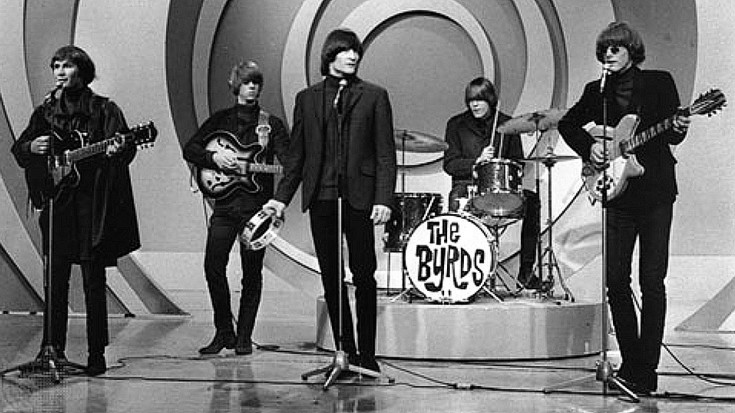
Of course, it was popularized by the Byrds. But Seeger wrote the music.

Not the lyrics, however. It is almost a direct quote of the opening verses of Chapter 3 of the King James translation of Ecclesiastes, known in Hebrew as Qohelet, some of which we read earlier. This particular passage, to which scholars refer as “the Catalogue of Times,” is a reminder that while every event in life occurs in its proper time, we have no control over these times; the “when” is solely in the hands of God. Since they are paired as opposites, one way of reading this is that neither happy times nor sad ones are to be expected. Reality is such that sometimes we are happy, sometimes we are sad, and much of the time we are neither.

Qohelet, ostensibly written by an ancient king of that name, is among the more-challenging books of the Tanakh, theologically-speaking. It puts itself forward as a book of philosophy (e.g. 1:14: “I observed all the happenings beneath the sun, and I found that all is futile and pursuit of wind.”), but, somewhat like the book of Job, leaves us with a very unsatisfying conclusion. To Qohelet, effectively everything that we pursue – wealth, wisdom, food and drink, labor, and so forth – is vanity and emptiness. Nothing will bring you lasting satisfaction. Qohelet’s conclusion is, therefore, merely to enjoy the things that you have when you have them, fear God and perform the mitzvot. That’s it.

Not very satisfying, right? Perhaps, though, there is an important message here. After all, there must be a reason that we read this book during Sukkot, the most joyous festival of the year. So what’s the reason? One possibility is that Qohelet points to the transience of human life, which is also suggested by the fragile, temporary sukkot in which we are commanded to live for the week. Another is that fall is the season that most suggests mortality, a feature of our lives that the Catalogue of Times clearly invokes.

Here is another thought: in the wake of Yom Kippur, after beating our chests and seeking return and forgiveness and afflicting our souls and so forth, it may be our intent to seek happiness, albeit perhaps from a new perspective. Qohelet is a reminder that happiness is not an end unto itself, but rather ebbs and flows with the randomness of our lives.

Speaking of ebb and flow, allow me to return for a moment to Cornell University of the late ‘80s and early ‘90s. Despite a physical chemistry lecture that occasionally made me consider javelin catching as a career, those were great days. The academic ferment of that particular ivory tower provided a rich backdrop for developing strong social bonds and discovering who I was as a person. I had good friends and good times. It makes me think of the well-known song, “Those Were the Days” (Mary Hopkins, 1968, although based on a Russian folk tune).

We tend to speak of the “good old days.” Maybe those were they; there is a time for every purpose under heaven.

But perhaps reality is not so simple; we do tend to see the past through etrog-scented glasses (or something like that). The gypsy-punk band Gogol Bordello recorded a philosophically-minded song titled “Ultimate,” which decries the existence of such days. On the contrary, the song suggests that to refer to the “good old days” is in fact an insult to both the present and future:

There were never any good old days,
They are today, they are tomorrow
It’s a stupid thing we say
Cursing tomorrow with sorrow.

Qohelet, I think, would agree with Gogol Bordello. There were no “good old days,” says Qohelet. Ve-ein kol hadash tahat hashamesh. And there is nothing new under the sun (Eccl. 1:9).

Maybe my university days were the good old days, or maybe these days are just as good, and 5780 will be even better. Only God knows, and about that I’m not even so sure.

One thing, however, is certain: happiness is fleeting, while “meaning” is enduring. Rather than seek happiness, we should seek meaning. That is a message that is difficult for a college student to understand, but it is a message that we can glean from Jewish tradition.

An article in The Atlantic from a few years back cited a study published in the Journal of Positive Psychology that

asked nearly 400 Americans aged 18 to 78 whether they thought their lives were meaningful and/or happy. Examining their self-reported attitudes toward meaning, happiness, and many other variables — like stress levels, spending patterns, and having children — over a month-long period, the researchers found that a meaningful life and happy life overlap in certain ways, but are ultimately very different. Leading a happy life, the psychologists found, is associated with being a “taker” while leading a meaningful life corresponds with being a “giver.”

This is a fascinating revelation. Perhaps Qohelet’s suggestion to fear God and fulfill the mitzvot is an ancient attempt to steer us away from seeking happiness in favor of meaning. You might make the case that a certain portion of the mitzvot are about giving, not taking: giving your time and yourself over to holy pursuits. It’s not what we reap in this world, to borrow Qohelet’s language, but rather what we sow.

And that may in fact be one message of Sukkot. Why does the Torah command us to live in a shack in the backyard for a week? To remember that it is not our possessions that are important and valuable; that meaning may be sought in the simplest environment. That living in a sturdy, well-appointed home, when compared to a shaky, non-climate-controlled sukkah, might seem more like taking than giving.

The article goes on to say:

Meaning is not only about transcending the self, but also about transcending the present moment — which is perhaps the most important finding of the study, according to the researchers. While happiness is an emotion felt in the here and now, it ultimately fades away, just as all emotions do; positive affect and feelings of pleasure are fleeting. The amount of time people report feeling good or bad correlates with happiness but not at all with meaning.

Meaning, on the other hand, is enduring. It connects the past to the present to the future. “Thinking beyond the present moment, into the past or future, was a sign of the relatively meaningful but unhappy life,” the researchers write. “Happiness is not generally found in contemplating the past or future.” That is, people who thought more about the present were happier, but people who spent more time thinking about the future or about past struggles and sufferings felt more meaning in their lives, though they were less happy.”

In other words, happiness is in the moment. Those university days were joyful for what they were, but the real satisfaction of living comes from the fullness of life’s experiences: the glorious and the miserable, the bountiful and the meager, the cacaphonous and the silent, and the entire palette of humanity in between. The researchers agree that “What sets human beings apart from animals is not the pursuit of happiness, which occurs all across the natural world, but the pursuit of meaning, which is unique to humans.”

To everything there is a season, and we all need the carefree periods in our lives in which to pursue the momentary happiness that sustains youth. But we also need, at some point, to reach deeper, to seek out those things which bring us meaning, to give as much as we have taken, and maybe more. The good old days are indeed today and tomorrow.

So it is as much comforting your screaming child in the middle of the night as it is to see her standing under the huppah, as much receiving a wonderful promotion as losing a parent that makes life meaningful and rich. These are the things that make us human, and this is the takeaway from Sukkot.

As we celebrate the transience of life on this joyous festival, we would do well not only to fulfill the mitzvah de’oraita (commandment from the Torah) of being happy in the wake of Yom Kippur, but also to reflect on the discomfort that comes with being removed from your house for a week. Spend some time in the sukkah, with the bugs and the rain and the cool fall breeze. It’s the human thing to do, and will help make these days as good as the good old days.

~

Rabbi Seth Adelson

(Delivered at Congregation Beth Shalom, Pittsburgh, PA, Shabbat Hol Hamo’ed Sukkot, 10/19/2019.)