Categories
Sermons

A Visit to the Jewish Quarter of Toledo, Spain

אֵיכָ֣ה  יָשְׁבָ֣ה בָדָ֗ד הָעִיר֙ רַבָּ֣תִי עָ֔ם הָיְתָ֖ה כְּאַלְמָנָ֑ה רַבָּ֣תִי בַגּוֹיִ֗ם שָׂרָ֙תִי֙ בַּמְּדִינ֔וֹת הָיְתָ֖ה לָמַֽס׃    

Alas! Lonely sits the city / Once great with people!
She that was great among nations / Is become like a widow;
The princess among states / Is become a thrall.

Eikhah / Lamentations 1:1

If you ever went to a Jewish summer camp, you may have encountered a long list of Jewish catastrophes that have taken place on Tish’ah BeAv, the ninth day of the month of Av. One item that often appears on this list is the signing of the edict of the Expulsion of Jews from Spain in 1492. It sits alongside other such calamitous moments in Jewish history as the destruction of the First and Second Temples in Jerusalem (586 BCE and 70 CE, respectively) and the fall of the fortress of Betar in the Bar Kochba Rebellion in 135 CE. 

Technically speaking, that is not historically accurate. The final edict of Expulsion was signed in the spring of 1492, not the summer. And, of course, it is worth noting that Spain was neither the first nor the last country from which the Jews were expelled. 

Nonetheless, the Expulsion from Spain was tragic not only due to its scope and profound impact on the Jewish history of the last half-millennium, but also in particular because of the long and rich history of the Jews of the Iberian peninsula. Spain became, undeniably, the center of the Jewish world following the decline of the Iraqi Jewish community in the late first millennium. 

In the 11th and 12th centuries, the Jews enjoyed a fruitful period of economic and intellectual development there. The ferment of Christian, Jewish, and Muslim philosophers and poets and scholars in that era led to a golden age for the Jews, spawning such brilliant contributors as Yehudah haLevi, Ramban (Nachmanides), Avraham ibn Ezra, Shemuel haNagid, Shelomoh Ibn Gevirol, and of course Rambam / Maimonides, the greatest figure of the Middle Ages.

While Judy and I were away from Pittsburgh during my sabbatical, we visited Toledo, which was for many centuries the spiritual center of Spain, for the Christians as well as the Jews. Under Christian rule from the late 11th century, Toledo became a center for translation between Arabic, Hebrew, and Castilian Spanish, and was therefore also the epicenter of cross-cultural intellectual development. There is a Jewish Quarter, which is identified on all the tourist maps, containing a few sites of Jewish interest, including two ancient synagogue buildings. According to our tour guide, there are only four known synagogue buildings from prior to 1492 which are still standing, this from the hundreds or maybe thousands which would have stood at the peak of Spain’s Jewish community.

Both synagogues at one time must have been grand buildings. The larger of the two, known as “El Tránsito,” was built in 1357 by Shemuel haLevi Abulafia, the treasurer to King Pedro I of Castile, also known as “Pedro the Cruel.” It has a lofty wooden ceiling and many decorative frescos and Hebrew inscriptions, including a dedication to King Pedro (who is referred to in large Hebrew letters as המלך דון פדרו / Hamelekh Don Pedro).

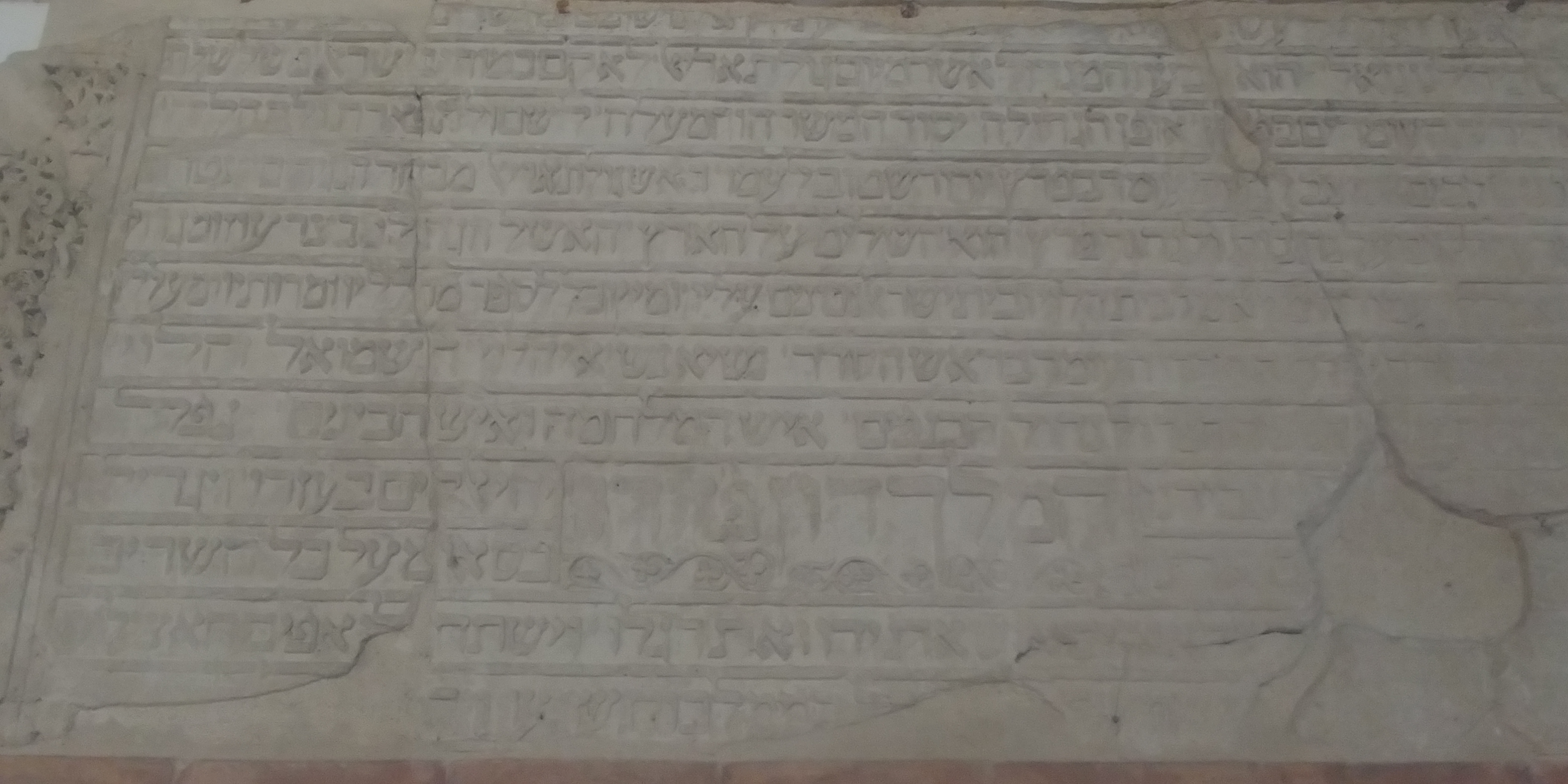
Wooden ceiling of El Tránsito. The Arabic inscription can be seen above the Hebrew.
Dedication to King Pedro I, aka “Pedro the Cruel.”
Beginning of Psalm 84, which continues around the entire length of the walls.

The smaller, older synagogue, known as “La Sinagoga de Santa María la Blanca,” dates to the late 12th century, and while it contains some lovely Moorish architectural features, virtually nothing can be seen of its original design.

Santa María la Blanca. This is not the original synagogue decor.

Following the Expulsion, both buildings were repurposed as churches, which is why they are referred to by Christian names. “El Tránsito” is short for “El Tránsito de la Virgen María,” the “Dormition of the Virgin Mary.”

Judy and I paid a few Euros to visit these ancient buildings, which, despite their state, seem to ooze with history. El Tránsito features not only Hebrew inscriptions, but Arabic as well, as if to suggest that interfaith relations in the 14th century were hunky-dory.

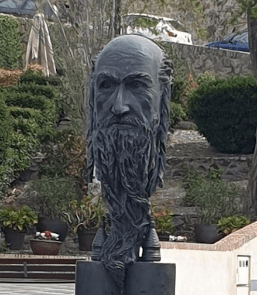
There is today no Jewish community to speak of in Toledo. For the nearest minyan, you have to drive an hour or so to get to Madrid. Shemuel haLevi Abulafia, who built that grand synagogue dedicated to Pedro the Cruel, was tortured to death by his employer a few years after it was built. His adjacent house now holds the El Greco museum and its collection of 16th-century Christian paintings. The main street through the center of the neighborhood is called “Calle de los Reyes Católicos,” the street of the Catholic Kings, and a contemporary sculpture of the 12 Christian apostles stands in a central square opposite an unflattering bust of Shemuel haLevi Abulafia, who is seemingly scowling at the apostles for not joining him for minyan.

In retrospect, the scene was really quite depressing. The so-called Jewish Quarter, where there are shops selling stylish menorahs and mezuzot and you can see artistic graffiti tags of חי (hai / life) and ספרד (Sefarad / Spain) all over the place, is no more Jewish than Utah’s Zion National Park. It is there for tourists, and nothing more. The majestic inscriptions on the walls of El Tránsito are merely museum pieces, not meant to inspire or bring the worshippers closer to God.

Alas! Lonely sits the city / Once great with people!

Traveling through Spain, we found Roman ruins in multiple places: aqueducts, city walls, bathhouses. It reminded us of Israel, except that in the latter, there are many much older pre-Roman sites as well. And the coast and countryside seemed in some sense like a mirror-image of Israel, reflecting across the Mediterranean: the rocky, arid landscape, the olive trees. I could not keep the words of Yehudah haLevi (ca. 1075 Toledo – 1141 Israel) from infiltrating my mind:

לִבִּי בְמִזְרָח וְאָנֹכִי בְּסוֹף מַעֲרָב / אֵיךְ אֶטְעֲמָה אֵת אֲשֶׁר אֹכַל וְאֵיךְ יֶעֱרָב

אֵיכָה אֲשַׁלֵּם נְדָרַי וֶאֱסָרַי, בְּעוֹד / צִיּוֹן בְּחֶבֶל אֱדוֹם וַאֲנִי בְּכֶבֶל עֲרָב

יֵקַל בְּעֵינַי עֲזֹב כָּל טוּב סְפָרַד, כְּמוֹ / יֵקַר בְּעֵינַי רְאוֹת עַפְרוֹת דְּבִיר נֶחֱרָב

My heart is in the East, and I in the uttermost West–
How can I find savor in food? How shall it be sweet to me?
How shall I render my vows and my bonds, while yet
Zion lies beneath the fetter of Edom, and I in Arab chains?
An easy thing would it seem to me to leave all the good things of Spain
Seeing how precious in mine eyes to behold the dust of the desolate sanctuary.

At the end of his life, Yehudah haLevi left Spain to travel to Israel. The apocryphal story is that upon reaching Jerusalem, he knelt down to kiss the ground, and was immediately trampled to death by an Arab horseman.

And yet, the irony is that Toledo today is effectively Judenrein, free of Jews, and Jerusalem is a thriving city filled with Jews, Christians, and Muslims. No, they do not always get along, but any imagined interfaith utopia in 11th century Spain was almost certainly equally fraught. I think Yehudah haLevi would have been pleased with the reality on the ground in Yerushalyim shel Matah, the Earthly Jerusalem, if not the politics found therein.

Perhaps the reality on the ground in today’s Toledo is roughly analogous to how Yehudah haLevi encountered Jerusalem when he made his journey across the Mediterranean; while Jerusalem had Jewish residents in the 12th century, it was at the time hardly an intellectual center for world Jewry; for Jews, it was largely a ruin, a place from which history had moved on.

One of the lessons of Shabbat Ḥazon, the “Shabbat of Vision” which always precedes Tish’ah beAv, is that true vision of the past, present, and future acknowledges that life comes with high points and low points. Freedom, democracy, self-determination: these represent high points in Jewish, and human, existence. Exile, dispersion, Inquisition, genocide are the low points. Our Jewish story includes all of these, and we should never feel so comfortable and high on ourselves as to forget the low points. That’s what Tish’ah beAv is for. That is why we have one day of the Jewish year set aside to commemorate our suffering. Life is not all sangría and roses.

We began the book of Devarim / Deuteronomy this week, and right up front Moshe reminds the Jews of their journey from slavery in Egypt through the wilderness. Our people have been on the move ever since. 

What gives me hope, and what our people have cleaved to throughout our history is that as we have traveled from place to place, whether compelled to by sword or economics or persecution, we have continued to build and rebuild. Toledo was one stop along the Jewish journey; so too Baghdad, Warsaw, and New York. But I would pick Jerusalem over any of them. Yehudah haLevi’s yearnings rang in my ears driving through the Spanish countryside, passing castles and windmills and shopping malls, reminding me how fortunate we are to live in a time when my heart and my body can both be in the East, rather than the uttermost West.

Eikhah / the book of Lamentations concludes with a verse we know well. We sing it with gusto every time we put the Torah away:

הֲשִׁיבֵ֨נוּ ה’ אֵלֶ֙יךָ֙ וְֽנָשׁ֔וּבָה חַדֵּ֥שׁ יָמֵ֖ינוּ כְּקֶֽדֶם׃

Hashiveinu Adonai eilekha, venashuvah; hadesh yameinu keqedem.

Return us to you, Adonai, and we shall return; renew our days as of old.

Eikhah / Lamentations 5:21

The hopeful note after destruction is that we always have a chance to return, to rebuild. May that always be our vision for the future.

~

Rabbi Seth Adelson

(Originally delivered at Congregation Beth Shalom, Pittsburgh, PA, Shabbat morning, 7/22/2023.)
Categories
Sermons

Why Fast on Tish’ah BeAv?

One of my favorite places in Israel is the Israel Museum, the sprawling art complex located on one of the hills of Jerusalem, not far from the Knesset. When I was living in Jerusalem in the year 2000, I was studying at Machon Schechter, the property of which abutted the back end of the Israel Museum, and I periodically visited the museum to stroll its galleries. The Israel Museum possesses significant collections of some Jewish artists, and one in particular that I recall is Camille Pissarro, whose birth name was Jacob Abraham Camille Pissarro; his parents were of Portuguese and French Jewish ancestry.

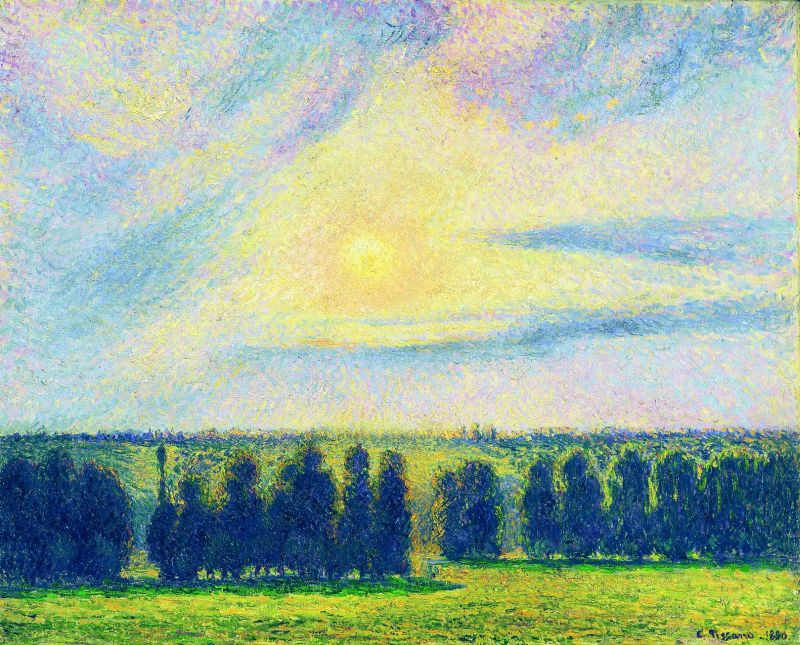
Pissarro is primarily known as an Impressionist, although he also spent a few years in the late 1880s painting in the Pointillist style, a technique which uses carefully-placed dots of individual colors which, when seen from a distance, create a cohesive image. Today we might think of this style as “pixelated,” although of course that term did not exist in the 19th century.

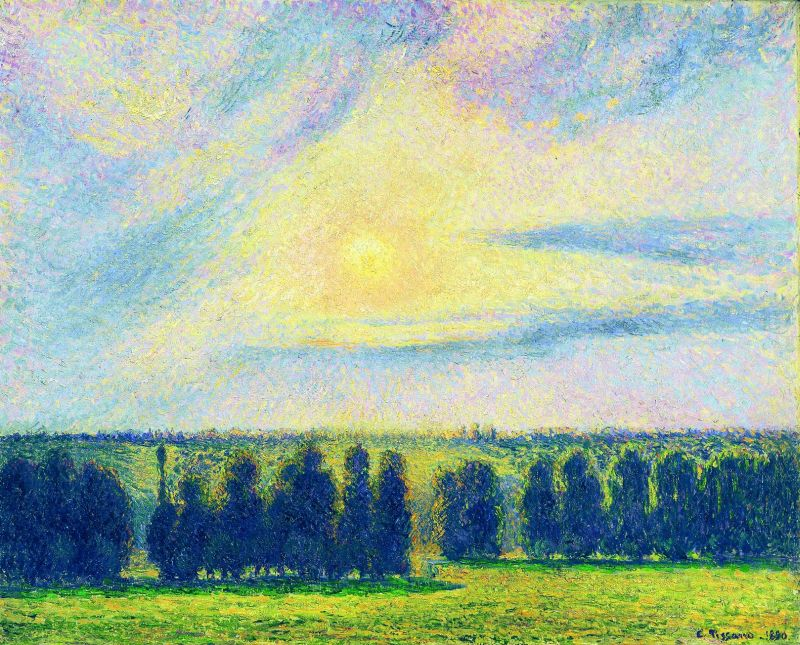
One such painting of Pissarro’s is found in the Israel Museum: Sunset at Eragny, which he painted as he was emerging from this Pointillist period:

Sunset at Eragny – Camille Pissarro

If you zoom into the upper part of the painting, you see dots of blue, purple, green, red, and yellow, swirling around each other in a kind of trippy miasma. When you pull back, it is clear that you are looking at a sunset. 

Which leads me, of course, to Tish’ah BeAv, the saddest day of the Jewish calendar, the only day other than Yom Kippur on which we fast for a full 25 hours. This is the day on which we recall the destruction of the First and Second Temples, and a long list of other calamities which have befallen the Jewish people on this date. (Why is the sunset a good transition to Tish’ah BeAv? Because there is no other day of the year on which those of us who fast look forward so desperately to sunset.)

We might ask ourselves, why should we continue to fast on this day? Why should Tish’ah BeAv still be the day of mourning it has been for our people for 2,000 years? Why should we continue to afflict ourselves on this day? After all, we have the State of Israel, built on the national yearning of two millennia.

Furthermore, despite the current spike in anti-Semitism, most of us still live quite comfortably here in America. And let’s face it, at least those of us in the non-Orthodox quarters of the Jewish world are not exactly eager to rebuild the Temple in Jerusalem, reinstall the hierarchical kohanic priesthood, and resume animal sacrifices. I’ll stick with Rabbinic Judaism, which is far more democratic (with a small “d”), and involves far less bovine blood, thank you very much.

So why fast? Should not the Ninth of Av be instead a day of joy, a day of triumph? They tried to kill us; we won; let’s eat!

It’s a fair question. Let’s leave aside the Holocaust – we have Yom HaShoah for that. But mourning for the Temple, which represents an ancient Jewish practice that is more or less completely alien to how we live and worship as Jewish today? Do we really need to do that?

And the answer, of course, is yes. Absolutely. But it is not really about the Temple and the kohanim and the sacrifices. Really, it is about the arc of Jewish history, and the precariousness of life. This day of mourning and fasting stands in contrast to Yom Kippur, the other 25-hour fast, which is about our own personal development.

The challenge, ḥevreh, is one of context. How do we understand what is going on around us without the bigger picture? How can we make sense of current events without seeing them in relation to everything else?

At any given moment, we might be experiencing one particular dot in a Pointillist painting. One pixel. Now we are in a blue dot; next month we’ll be in a red dot, and so forth. We cannot fully grasp the wider significance of our current circumstances until they are long past, until we have the gift of context, which in some cases takes many, many years. 

Surely our ancestors in Jerusalem, in the year 70 CE, could see that the Romans had laid waste to the city, toppled the Temple, killed some of their fellow Jews, and forced those who remained out of the city limits. From their perspective, Judaism was done. It was over. With no Temple, no kohanic hierarchy, no levitical choir, no Sanhedrin, and no Holy City, there was no future to Judaism. Or so they thought from their vantage point, in the immediate moment.

Detail from the Arch of Titus in Rome, showing Roman soldiers carrying away implements from the Second Temple in 70 CE

And yet, out of the chaos and destruction came this, what we know as Judaism, the way that we practice our faith today. And while the prior form of Judaism, the Temple-centric, sacrificial cult lasted for more than a thousand years, Rabbinic Judaism has now been around for nearly twice that time. 

The book of Eikhah, Lamentations, tells the story not of that destruction, but the one at the hands of the Babylonian Empire seven centuries earlier. It is notable for its structure: four out of the five chapters have exactly 22 verses, and chapter 3 has 66; four out of the five chapters are “aleph-betical,” that is, the first letter of each verse follows the pattern of the Hebrew aleph-bet. The impression one gets, when pulling back the lens, is that as the book tells the tale of Jerusalem laid waste and desolate, that Eikhah itself is trying to bring some sense of order to the chaos of the Babylonian Exile.

Like Pissaro’s Sunset at Eragny, we cannot see the full context of a particular moment in time or an event until we are far removed from it. And how far removed must we be? Tish’ah BeAv allows us to focus on essential moments in Jewish history and recall our fundamental vulnerability; we fast on this day not to remember the Temple or call for its rebuilding but to remind ourselves that what we have right now can be taken away. Our safety, our comfort, our wealth could all evaporate.

Let us hope that is not the case. Nonetheless, we know that the world is changing. We know that as we Jews have wandered through history, situations and events and empires have come and go, and our rituals and text have sustained us. We celebrate freedom on Pesaḥ and Ḥanukkah and Purim; we pray for atonement on Yom Kippur; we celebrate the bounty of life on Sukkot and the gift that keeps on giving, the gift of Torah on Shavu’ot. And on Tish’ah BeAv we remind ourselves of human frailty, that any moment a great wind could knock the fiddler off the roof.

And yet, there is something of a hopeful note to Tish’ah BeAv as well. As the day progresses, the affliction gets lighter. Those who sit on the floor in the evening and at Shaarit move up to the chairs at minah. The nusa becomes less despondent, the scriptural readings less dire. We recite the berakhot of personal gratitude that we omit in the morning. Our historical context has also shown us, over and over again, that in the wake of loss and destruction there is hope. Grief and mourning will eventually yield to joy. 

At the southern end of the Western Wall, rocks that fell during the Roman destruction of Jerusalem

Tish’ah BeAv is a yearly reminder to re-examine our lives, to take the long view of the context in which we find ourselves, and to hope for a better future. We cannot know what current events will bring us; we can only see our immediate circumstances. And as our history has taught us over and over, just because we are relatively comfortable right now does not mean that it will still be true next year, or in a decade or a century. It’s our communal way of guarding against complacency, a psychological exercise in being prepared.

So take a day and be uncomfortable. As we listen to the mournful tones of Tish’ah BeAv, perhaps we will all gain a little perspective.

~

Rabbi Seth Adelson

(Originally delivered at Congregation Beth Shalom, Pittsburgh, PA, Shabbat morning, 8/6/2022.)

Categories
Sermons

Life in the Fast Lane – Shabbat Ḥazon, 5781

As a child, I used to look skyward on clear nights and imagine going to space. I was a fan of science fiction stories and movies; I fell in love with Kirk and Spock and the whole gang on the USS Enterprise at a young age.

But adulthood has the unfortunate tendency to kill many a childhood fantasy, and I must admit that I had not been paying so much attention in recent years to human efforts to conquer space. But something caught my attention this week, and you probably heard about it as well: Sir Richard Branson, English business magnate and founder of Virgin Group, flew into sub-orbital space, about 50 miles up, achieving weightlessness for a few minutes. Among the many companies he controls is Virgin Galactic, a company that promises to be able to provide flights into space for the general public in the near future. 

Sir Richard

Branson just barely edged out Jeff Bezos, the founder and CEO of Amazon, who will also be traveling into space in his own craft in a few weeks. And of course there is investor Elon Musk’s SpaceX project, which has sent a few rockets skyward recently, including partnerships with NASA.

All of these endeavors are the stuff of dreams. And, of course, they are fabulously expensive. These companies are somewhat tight-lipped about how much money they are investing in these flights, but it must be in the hundreds of millions of dollars. Bezos will have a companion on his flight who has reportedly paid $28 million for the seat. Three people have paid $55 million each for seats on a SpaceX flight to the International Space Station next year. Virgin Galactic already has 600 people signed up for trips into space that will cost more than $250,000 per seat.

But what about the rest of us here on Earth? As much as I am sure that many of us would love the opportunity to travel into space, I will confess that this strikes me as, in the words of Qohelet / Ecclesiastes, “Hevel havalim.” Vanity of vanities.

After all, if these investors were to take that money and invest it in people here on Earth – education, literacy, health care, clean water, clean energy, democratic governments, solutions for climate change – imagine the good that they could do on the ground. And in particular at this time, when we are still suffering from a worldwide pandemic.

I am certainly not accusing these men of not being charitable. Bezos made the largest charitable gift in the world last year: a $10 billion commitment to fight climate change. According to what I could find on the Interwebs, Musk and Branson have each pledged to give away half of their wealth to charity. I am merely concerned about the optics of this race into the final frontier when so many are suffering down here on Earth. The great ballyhoo surrounding such extravagant projects that will truly only benefit a tiny few seems a bit tone-deaf.

OK, so let’s face it: there is so much to celebrate right now – success in creating vaccines, returning to something approaching normalcy, seeing people again. The rate of joblessness is going down as people return to the workforce. The economy is beginning to move again, particularly in the hospitality and tourism industries, which were devastated by Covid.

But there is also much to mourn. And that brings me to Tish’ah BeAv, the official Jewish day of mourning. Starting this evening and going through tomorrow night, we will fast for 25 hours to remind ourselves that we are a people that is still in mourning, 1,949 years after the Romans laid waste to Jerusalem, destroying the Beit HaMiqdash, the Temple that was the center of Jewish life up until then, for the second and final time. While the Beit HaMiqdash occupies a special place in our hearts and minds, it has never been rebuilt. In recalling this destruction, we chant the book of Eikhah / Lamentations this evening, perhaps the most evocative poetry of desolation ever composed (1:1): 

אֵיכָ֣ה ׀ יָשְׁבָ֣ה בָדָ֗ד הָעִיר֙ רַבָּ֣תִי עָ֔ם הָיְתָ֖ה כְּאַלְמָנָ֑ה

Eikha yashevah vadad ha’ir rabbati am hayetah ke-almanah.

How lonely sits the city, which was once full of people; She who was great among nations, now is like a widow.

Tonight and tomorrow we will mourn not only the destruction of the First and Second Temples, but also many other cataclysmic moments in Jewish life: the Crusades, the Expulsion from Spain, the Shoah, and so forth. We are a people whose paths of exile are wet with tears, whose persecutions and dispersions we carry with us just as much as we carry our words of Torah. We are a people for whom there is little solace in history, not much more comfort in the present, and only a modicum of optimism for the future. Jerusalem, rebuilt though she may be, still vibrates with the rumblings of ancient destructions.

Tish’ah BeAv keeps us close to mourning. And that is a good thing. We should not be so high on ourselves that we forget the misery, the pain of our history. We should not be so proud as to think we can conquer time or space, or be free of anti-Semitism, or be liberated from the woes of human life.

Now, I’m sure that many of you are thinking, “OK, Rabbi, we’ve had nearly a year and a half of isolation, of anxiety, of losing beloved family members to a deadly virus. We have grieved enough. It’s time to party, right? Now is not the right moment to lean into the official Jewish day of mourning.”

But, as with Yom Kippur, the goal of fasting and remembering on this day is not for its own sake; it is not merely a day on which we should be miserable just because. As with Pesaḥ, when we recall being freed from slavery and deny ourselves a whole range of foods, we do not do so merely to encourage constipation.

Rather, we afflict our souls on Tish’ah BeAv because occasionally we need to be humbled, so that we know what it is like to be hungry and miserable. We need to remember that there are people for whom every day is a fast day, who have no luxurious leather shoes, who have no comfortable furniture on which to sit, who have no climate-controlled home in which to live. 

Over our month of sabbatical, Judy and I saw many homeless people in the cities we visited along the Eastern seaboard. I do not know if there has been an uptick in homelessness due to the pandemic, but I certainly would not be surprised if that were the case; the number of people living on the streets is heartbreakingly large.

ט֣וֹב שְׁפַל־ר֭וּחַ אֶת־עֲנָוִ֑ים מֵחַלֵּ֥ק שָׁ֝לָ֗ל אֶת־גֵּאִֽים׃

Better to be humble and among the lowly than to share spoils with the proud. (Mishlei / Proverbs 16:19)

We fast on Tish’ah BeAv to remind ourselves of the most fundamental responsibilities we have as Jews: to take care of the others around us, to remember their suffering, to recall that even as we aim for the stars, we must work hard to provide comfort for those who have none on Earth.

We have to remember the pain. If we do not, we’ll all be in space, and we will lose sight of what is really going on here on the ground.

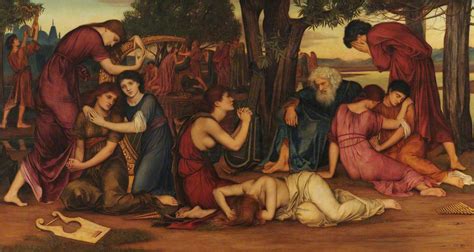
By the Waters of Babylon, by Evelyn De Morgan, 1855-1919

I mentioned earlier that this is Shabbat Ḥazon, the Shabbat of the vision of Yeshayahu (known in English as Isaiah). Yeshayahu’s vision is one of suffering, of invasion by the Assyrian empire, brought about by the faithlessness of his audience. Echoing the opening of Eikhah, he says (Yeshayahu / Isaiah 1:21-22):

אֵיכָה֙ הָיְתָ֣ה לְזוֹנָ֔ה קִרְיָ֖ה נֶאֱמָנָ֑ה מְלֵֽאֲתִ֣י מִשְׁפָּ֗ט צֶ֛דֶק יָלִ֥ין בָּ֖הּ וְעַתָּ֥ה מְרַצְּחִֽים׃ כַּסְפֵּ֖ךְ הָיָ֣ה לְסִיגִ֑ים סׇבְאֵ֖ךְ מָה֥וּל בַּמָּֽיִם׃

Alas, she has become a harlot, the faithful city that was filled with justice, where righteousness dwelt— but now murderers. Your silver has turned to dross; your wine is cut with water.

Faith has turned to faithlessness; luxuries have been reduced to waste. But, says Yeshayahu, whose very name means “God will save,” we can change that. We return to our holy obligations, and there is redemption. As with the conclusion of Eikhah (5:21),

הֲשִׁיבֵ֨נוּ ה ׀ אֵלֶ֙יךָ֙ וְֽנָשׁ֔וּבָה חַדֵּ֥שׁ יָמֵ֖ינוּ כְּקֶֽדֶם׃

Take us back, O LORD, to Yourself, and let us come back; renew our days as of old! 

If we use this fast to spur us to action, to return to Torah and mitzvot, to remember the needy among us, God will save us from future suffering.

God will surely not, however, save us from our own vanity. That is up to us as individuals, and as a society.

Shabbat shalom, and have a meaningful fast.

~

Rabbi Seth Adelson

(Originally delivered at Congregation Beth Shalom, Shabbat morning, 7/17/2021.)

Categories
Sermons

A National Day of Mourning / Shabbat Hazon 5780

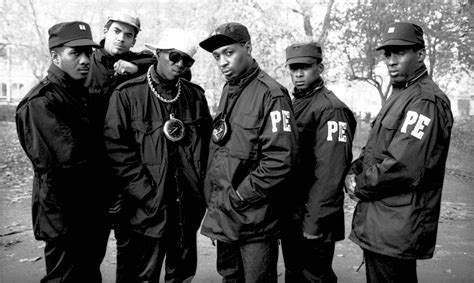
You may find this hard to believe, but I once saw the hip-hop group Public Enemy live in concert. It was 1991, and I happened to be visiting a friend at Yale when they played in New Haven. I knew very little about what we called “rap” in the 1980s, and although I had the sense that Public Enemy was somewhat controversial, I figured it might be a way to expand my musical horizons.

Public Enemy

I enjoyed the show, and I was blissfully unaware that some of the controversy surrounding the group was about somebody who was by then a former member, Professor Griff, whose real name is Richard Griffin. Griffin had been kicked out of the group in 1989 for making anti-Semitic statements in an interview with the Washington Times. Among the things he said were, ”The Jews are wicked. And we can prove this,” and that the Jews are responsible for ”the majority of wickedness that goes on across the globe.” 

So when an interview of Richard Griffin surfaced two weeks ago, by celebrity Nick Cannon  (who, I must admit, I had never heard of – perhaps you get a sense that pop culture is not really my bag?), in which Cannon indulged in some classic anti-Semitic accusations (e.g. that “Zionists” and “Rothschilds” hold lots of power), I was surprised to learn that apparently Griffin had not made amends for past transgressions. Cannon, who as a result of the interview lost his position as host of comedy improv show Wild ‘N Out, offered a pareve non-apology for his remarks.

Meanwhile, Philadelphia Eagles’ wide receiver DeSean Jackson recently posted an inflammatory statement on Instagram, incorrectly attributed to Adolf Hitler, about how the Jews “blackmail” and “extort” America, and their intent for “world domination.” Mr Jackson later apologized, and has been in dialogue with a 94-year-old Holocaust survivor in an attempt to learn. (I must say that I am indeed puzzled that a Black person could deliberately quote Hitler, whether the quote was real or not.)

But the upshot of these incidents is that my favorite Pittsburgh Steeler, offensive tackle Zach Banner (OK, so I had also not heard of Mr. Banner before last week) posted a moving video in response to Mr. Jackson, in which he drew on his experience as a Pittsburgh resident in the context of the Tree of Life shooting. In it, he stated:

…We need to understand Jewish people deal with the same amount of hate and similar hardships and hard times. I’m not trying to get emotional right now, but I want to preach to the black and brown community that we need to uplift them and put our arms around them. Just as much when we talk about Black Lives Matter and elevating ourselves, we can’t do that while stepping on the back of other people to elevate ourselves, and that’s very, very important to me, and it should be important to everyone. . . .

We can’t preach equality but in result flip the script and change the hierarchy, if that makes sense. Change your heart, put your arm around people, and let’s all uplift each other.

Steelers Offensive Tackle Zach Banner

Mr. Banner’s words speak for themselves; we must all be united in the struggle against hate.

In a similar vein, basketball great Kareem Abdul-Jabbar, now a columnist for the Hollywood Reporter, wrote a column asking, “Where is the outrage over anti-Semitism in sports and in Hollywood?” Mr. Abdul-Jabbar, noting the disturbing recent rise in anti-Jewish hate crimes in recent years, called out rapper Ice Cube, basketball player  Stephen Jackson, and Chelsea Handler (who is, in fact, Jewish) for promoting anti-Semitic material, and drew a direct link from the spreading of such material via social media to the Tree of Life massacre.

With all of the concern right now in the world for how Black people have been treated by white America, something which I have spoken about repeatedly over the last several weeks, we cannot lose sight of the fact that anti-Semitism has a much longer history than European exploitation of African peoples. We cannot forget that anti-Semitism is pernicious and ever-present; it is, you might say, the “Ur-racism.” We cannot forget that anti-Jewish conspiracy theories still infuse much of the world. We cannot forget that these theories motivate actual killers, and we will not forget that one of those killers was driven by this nonsense to murder people that many of us actually knew personally, a half a mile away from where I stand.

So thank God for Black allies like Kareem Abdul-Jabbar and Zach Banner. Thank God that there are people who understand the power of language, the danger of ideas. Thank God that there are some who get that hatred of any group is all cut from the same cloth, that, as Rabbi Abraham Joshua Heschel put it in 1963 in his essay, “Religion and Race,” “What begins as inequality of some inevitably ends as inequality of all.”

Five days from now is Tish’ah BeAv, the saddest day of the Jewish year, the only full 25-hour fast aside from Yom Kippur. It is a day on which we recall all of the greatest tragedies of Jewish history: the destruction of the First and Second Temples, the Expulsion from Spain, the crushing of the Warsaw Ghetto Uprising, and so forth. It is a day for literally sitting on the floor and weeping, for not bathing or doing anything that brings enjoyment. It is the day of the Jewish calendar on which we recall our oppression and dispersion and persecution throughout our lengthy history.

Detail from the Arch of Titus, showing Romans carrying away holy objects from the Second Temple

But Tish’ah BeAv is not merely a day on which to be hungry, thirsty, and miserable. It is also a day on which doing so should make us reflect on our behavior, on our words, and our relationships, stirring our souls in the direction of action. We read Eikhah, the Book of Lamentations, to remind us of the destruction of Jerusalem; indeed, the very first verse, which portrays Jerusalem as a bereft widow, always fills me with woe:

אֵיכָ֣ה ׀ יָשְׁבָ֣ה בָדָ֗ד הָעִיר֙ רַבָּ֣תִי עָ֔ם הָיְתָ֖ה כְּאַלְמָנָ֑ה רַּבָּ֣תִי בַגּוֹיִ֗ם שָׂרָ֙תִי֙ בַּמְּדִינ֔וֹת הָיְתָ֖ה לָמַֽס׃

Alas! Lonely sits the city once great with people! She that was great among nations is become like a widow; The princess among states has become a slave.

The Talmud teaches us (Babylonian Talmud, Tractate Yoma 9b) that the First Temple was destroyed by the Babylonians in 586 BCE due to the most serious transgressions according to Jewish law: murder, idolatry, and inappropriate sexual liaisons. But the Second Temple was destroyed by the Romans in 70 CE due to sin’at hinnam, causeless hatred among the Jews.

And, ladies and gentlemen, the world is still filled with causeless hatred. And one of the messages of Tish’ah BeAv is that we are responsible for eliminating it. We remember what and who we have lost; we acknowledge our suffering; and we rebuild as we head toward the coronation days of Rosh HaShanah.

And so I call on all of us to consider this Tish’ah BeAv not just a national day of mourning for the Jews, but a national day of mourning for all of us: for the 150,000 Americans who have succumbed to Covid-19, yes, but also for all of the forms of destruction wrought by sin’at hinnam, causeless hatred – from the destruction of Black Wall Street in Tulsa to the internment of American citizens of Japanese ancestry during World War II to the Shoah to the Tree of Life murders to the killing of George Floyd by a police officer. This Thursday is a day on which all of us should reach deep down inside ourselves to find and acknowledge the sin’at hinnam within each of us as individuals and as a society, and to pledge to stamp it out.

Antique illustration of people (veiled women, men and kids) praying at the Place of Weeping (part of the Western Wall, Wailing Wall or Kotel in the Old City of Jerusalem, Israel)

And that of course applies to the Jews as well as to everybody else; just as Messrs. Abdul-Jabbar and Banner have called out anti-Semitism promoted by Black people, so too must we the Jews call out racism and other forms of hatred in our own community when we see it.

At this particular moment in history, we have a lot for which to mourn, on this most mournful day of the Jewish calendar. But let us turn this mourning into a call to action, to improve ourselves and work harder to fix this broken world, to reach out to others in partnership and in the spirit of teaching and learning from one another, so that detestable ideas of any sort about other groups of people may be expunged from the collective human heart.

~

Rabbi Seth Adelson

(Originally delivered at Congregation Beth Shalom, Pittsburgh, PA, Shabbat morning, 7/25/2020.)