Categories
Sermons

Planting Seeds of Dialogue – Yitro 5779

Two decades ago, when I was living in Houston and working at my final job as a chemical engineer, I learned to meditate at a Buddhist temple. Conscious of my Judaism and wary of our tradition’s all-encompassing prohibition of everything to do with idolatry (we read a taste of that in the Ten Commandments today), I made sure that nothing that I was doing could be construed as violating that prohibition.

There was a Burmese monk who was something like the local rabbi, and he would give a little inspirational talk after the meditation hour. One day he told the story of how the Dalai Lama was speaking somewhere in California, and was asked by a member of the audience if he could tell them how to find the quickest path to enlightenment.

The Dalai Lama did not answer the question. He simply started crying.

There is no easy path to enlightenment. It takes work. Years of careful, thoughtful work.

But the wider lesson here is that very few significant things in life are achievable without careful planning and preparation. Consider the moment on Mt. Sinai that we read today, where God begins the revelatory process with Moshe / Moses: this was such a fundamental moment for our ancestors that it required extensive preparation – days of communal and individual purification, and let’s not forget the whole Exodus story which preceded it. Many things needed to be in place before the moment of contact between God and Israel.

I am concerned that our national state of anxiety, coupled with the new tools of social media, have created a climate in which everything happens in an uncontrolled frenzy. Consider the news story that unfolded over the past week about the apparent stand-off between a Native American drummer and a high-school kid by the Lincoln Memorial in Washington. An initial video, shared widely and rapidly via social media, seemed to show the teen and his posse mocking the drummer. When other footage surfaced, the picture seemed more complicated, involving an hour or more of prior invective from a couple of Black Hebrew Israelites, who are known to spew hatred at passersby in some cities. (I myself was verbally assaulted on multiple occasions by these guys on the streets of New York.)

standoff

Subsequent analyses of the situation only seemed to muddy the waters, to the point where it is difficult to say who was at fault, who was mocking whom, what the motives of the various parties were at the time. And then as the news cycle turned over and PR firms were hired, the scene became a kind of Rorschach test for the observer.

I concede that I do not know what exactly happened that day. But what concerns me is not only the scene of people from disparate ethnic groups clashing with each other, but also our rush to judgment; our willingness to assume that we knew what was going on from a few seconds of out-of-context video footage. It is almost as if we wanted to see conflict, to point fingers unambiguously. No chance of enlightenment here.

This is just one small example of the many ways in which we are losing patience for the careful, diligent work it takes to understand the other, to effect change, to exert leadership, to get to know somebody, to cooperate across racial or religious or ethnic lines. We have lost interest in intellectual rigor, in authority based in years of experience. And we are all just too darned busy to dig deeper, to create relationships, to foster real discussion.

The second-century CE collection of Jewish wisdom known as Pirqei Avot, verses of the ancestors, tells us the following (4:23):

רַבִּי שִׁמְעוֹן בֶּן אֶלְעָזָר אוֹמֵר, אַל תְּרַצֶּה אֶת חֲבֵרְךָ בִשְׁעַת כַּעֲסוֹ, וְאַל תְּנַחֲמֶנּוּ בְּשָׁעָה שֶׁמֵּתוֹ מֻטָּל לְפָנָיו

Rabbi Shimon ben Elazar says: Do not attempt to assuage the anger of your friend while he is angry; do not try to console her at the time when her deceased lies before her.

In other words, don’t try to tell anybody something that they are not ready to hear. Even words of comfort are alienating when the time is not right, when the other person is not able to listen. True communication happens only when both parties are prepared for it.

Last Sunday morning, we featured Beth Shalom member Zack Block in our Lox and Learning series. Zack is the Executive Director of Repair the World Pittsburgh, whose mission is to “make meaningful service a defining part of American Jewish life.” In short, what Repair the World does is to engage Jews in a range of volunteer activities with partner organizations.

One of Repair the World’s activities is maintaining community gardens, and Zack used the example of gardening as a community-building activity. First, he said, you bring people together to plant seeds in pots indoors. You water the seedlings regularly. Some time later, you bring people together again to take the seedlings to the garden and plant them. There is watering and fertilizing and weeding and pruning and all sorts of ongoing maintenance. And then you bring people together again for harvesting, and bringing those fruits and vegetables to food pantries, or to bag them and make them available for nearby residents to take and use, or to host an exciting event with an up-and-coming local chef who can do something brilliant with string beans and eggplant.

seedling

It occurred to me that this is an excellent metaphor for dialogue across political, religious, ethnic, racial, or even gender-based lines. And, since this past Monday was Tu Bishvat, the 15th day of the Hebrew month of Shevat, which, according to the Talmud, is the new year for the trees, the plant metaphor works well in this season.

This is how diplomacy works: you plant “seeds”; you tend to them, and when the time is right, you “harvest” the solutions, the compromises, the social justice commitments, and then you pass the garden on to your successors.

Let’s acknowledge for a moment that we have guests in our Sanctuary today. Welcome, members of the Episcopal Diocese of Pittsburgh, and a special welcome to the Right Reverend Dorsey McConnell, Bishop of the Diocese. We will have a Q&A with Bishop McConnell and myself and Rabbi Markiz after qiddush (i.e. “collation”), and I hope you will join us for that. We are all in agreement that, particularly in the wake of October 27th, both here in Pittsburgh and across these United States, we are all in need of more communication with people outside of our own circles.

I sometimes feel that we are a nation in retreat: retreating to our own news bubbles, retreating to our comfy armchairs and our Netflix subscriptions, retreating to our own kind, or into ourselves. Where do we see examples of true dialogue in our society today?  Where there was once discussion we see diatribe; where there was once debate we see demagoguery. We are all just screaming to be heard, striving to collect the most “likes,” to achieve the most re-tweeted tweet, to post the most outrageous selfie.

I hope that today we will plant some seeds and mark the beginning of a conversation between our communities, a conversation that will ultimately yield fruit in making meaningful connections across a religious divide. And there are more gardens to plant, conversations to be had – many groups reached out to us following the Tree of Life massacre.

But it will take time. We need to talk. To break bread together. To make small-talk. Only after you have come into our space, and we have come into yours, and you have asked us questions, and we have asked you questions, can we really start to dig deeply and honestly into the difficult issues that we all face. One meeting is not enough.

Just as there is no speedy path to enlightenment, there is no quick way into meaningful dialogue. As with the rabbinic wisdom from Pirqei Avot I cited above, there is no shortcut to being able to enter the truly challenging, but essential, conversations; there is only the garden, in all its labor-intensive greenery.

A final note: the main event of Parashat Yitro (our Torah reading for today) occurred in the reading of the Aseret haDibberot, the Decalogue. But the name of the parashah comes from Moshe’s father-in-law, Yitro / Jethro, who is a Midianite kohen, that is, a non-Israelite priest. In the words of Rabbi Sharon Cohen-Anisfeld, president of Hebrew College in Boston:

Yitro embodies a quality of capaciousness – and indeed, his name itself comes from the Hebrew root yeter, or yoter. Abundance. More-than-enoughness. What Yitro embodies here is a quality of big-heartedness. There is more than enough room in his heart to truly rejoice in the blessings of another people.

Like Yitro, we should all have more than enough room in our hearts for our neighbors, for diplomacy, for reaching out and creating the depth of relationship required to achieve honest, heartfelt discussion. That is how we may achieve enlightenment.


~

Rabbi Seth Adelson

(Originally delivered at Congregation Beth Shalom, Shabbat morning, 1/26/2019.)


Categories
Sermons

Singing Together with Dr. Martin Luther King, Jr. – Beshallah 5779

Some of you may recall that a few weeks back I spoke about refrigerator-magnet texts – short, pithy statements from our textual tradition that are the most resonant, the most useful in our day-to-day lives, and how we should keep them in front of us at all times. (I’m actually looking into making refrigerator magnets; will keep you posted.)

Dr. Martin Luther King, Jr. had a few go-to verses of his own, pieces of Biblical wisdom that he continued to return to in his sermons and speeches and writings. One with which you may be familiar is from the prophet Amos (5:24):

וְיִגַּל כַּמַּיִם, מִשְׁפָּט; וּצְדָקָה, כְּנַחַל אֵיתָן

Veyiggal kamayim mishpat, utzdaqah kenahal eitan.

Let justice run down like water, and righteousness like a mighty stream.

It’s a verse that appears in our siddur / prayerbook in the Prayer for Peace (Siddur Lev Shalem, p. 178), which we occasionally recite. It also appears in one of the quotes inscribed around the perimeter of the Martin Luther King, Jr. Memorial in Washington, DC:

We are determined here in Montgomery to work and fight until justice runs down like water, and righteousness like a mighty stream.’

Dr. King delivered that verse on Dec. 5, 1955, in Montgomery, Alabama, on the first day of the Montgomery bus boycott, just a few days after Rosa Parks famously refused to surrender her seat in the front of the bus.

One month after the shooting here in Pittsburgh, my family and I went to Washington, DC for Thanksgiving. It was my first visit there with our kids, and although I have been to our nation’s capitol many times, somehow this trip was so much more emotional. Perhaps it was because it was the first time that I was seeing the monuments to our democracy through the eyes of my children; perhaps it was because the communal wounds of October 27th were still bleeding; perhaps it was because of the divided state of our body politic. In any case, when I got to the Martin Luther King Memorial, I found myself tearing up and indeed even sobbing out loud.

Have you been there? Let me describe it: The three-quarter bust of Dr. King is hewn from a piece of stone which looks as though it has been cut out of and moved forward from a larger stone hill. Inscribed on the bust is the line, “Out of a mountain of despair, a stone of hope.”

dr king bust

And around the entire plaza are a series of fourteen of the most powerful quotes from Dr. King’s oratorical bounty. With virtually every one of those quotes, I cried even more. Here is just a taste:

Injustice anywhere is a threat to justice everywhere. We are caught in an inescapable network of mutuality, tied in a single garment of destiny. Whatever affects one directly, affects all indirectly.

(Letter from Birmingham, Alabama jail, April 16, 1963.)

We must come to see that the end we seek is a society at peace with itself, a society that can live with its conscience.

(Montgomery, Alabama, March 25, 1965.)

Dr. King had a special gift that brought people together, that made Jewish kids from New York want to go down South and work on behalf of African-Americans, that made Rabbi Abraham Joshua Heschel want to walk with him in Selma, that made people want to stand together, to march together, to sing together.

DR. MARTIN LUTHER KING JR.; DR. RALPH BUNCHE;  Rabbi Abraham Joshua Heschel;  Rev. Fred Shuttlesworth
Dr. Martin Luther King Jr. links arms with other civil rights leaders as they begin the march to the state capitol in Montgomery from Selma, Ala. on March 21, 1965. The demonstrators are marching for voter registration rights for blacks. Accompanying Dr. Martin Luther King Jr. (fourth from right), are on his left Ralph Bunche, undersecretary of the United Nations, Rabbi Abraham Joshua Heschel, and Rev. Fred Shuttlesworth. They are wearing leis given by a Hawaiian group. (AP Photo)

When we face the types of social challenges that we are up against right now as a society: the scourge of hatred in all its forms, the struggle for equality for all people, the breakdown of family and neighborhood ties, the curse of opioid addiction, the seemingly endless cases of unarmed black men and boys shot by policemen, it would do us good to remember that the framework of religion, and the interfaith coalitions that this framework often spawns, have helped us in the past to overcome such challenges. Dr. King’s leadership was successful not only because of his knowledge of pithy texts, but also because of his ecumenical sense of, “We’re all in this together.”

And we do indeed all need to be in this together.

And even while our paths to God may vary, the true strength of what unites us is formidable.

Take for example, the following:

Make a career of humanity. Commit yourself to the noble struggle for equal rights. You will make a better person of yourself, a greater nation of your country, and a finer world to live in.

(March for Integrated Schools, April 18, 1959.)

To me this suggests two different mishnayot from Pirqei Avot, the 2nd-century collection of rabbinic wisdom:

Pirqei Avot 2:2

Rabban Gamliel, son of Rabbi Judah the Patriarch, taught:…

All who serve on behalf of the community should do so for heaven’s sake. Their work will prosper because the inherited merit of our ancestors endures forever…

Pirqei Avot 1:18

Rabban Shim’on ben Gamliel taught: The world rests on three things – on justice, on peace, and on truth, as it is written (Zechariah 8:16): “With truth, justice, and peace shall you judge in your gates.”

These words drove our ancestors in ancient times to keep our faith alive; they drove some of our parents and grandparents to join forces with Dr. King in the fight for civil rights. They will also always drive Jews to work on behalf of the common good, to seek justice and equality for all.

Dr. King spoke and wrote and marched at a time when churches, synagogues and other faith-based organizations worked as focal points of community organizing.

But we have a problem today: fewer and fewer of us are in the sanctuary. Fewer of us are in the pews. Religion holds much less sway as an organizing factor than it did in the 1960s, because so many of us have opted out.

And yet it is here that we sing together. It is here that we learn together. It is here that we take our ancient wisdom and learn to apply it to today, to launch the words of Torah out into the world. We need synagogues, we need churches and mosques and all other houses of worship to gather people together so that we can all be inspired to repair this broken world.

And in all those houses of worship, we need to double down on the words of our various traditions – the texts that speak of justice and peace, of community and equal rights, of our nation and of God. We can make change by coming together, by emphasizing the principles that we share. We still have the power to act on Dr. King’s vision, that vision in which people of all races and religions and socio-economic statuses can in fact cooperate for the common good.

When we sing together, loudly, as people of faith, our voices will be heard.

Back at the Dr. King memorial, from his Christmas sermon in Atlanta in 1967, I also read the following:

If we are to have peace on earth, our loyalties must become ecumenical rather than sectional. Our loyalties must transcend our race, our tribe, our class, and our nation; and this means we must develop a world perspective.

Here is a challenge for us all: How much do we love our nation? How much do we love our city? How much do we love our neighbors? How much do we love the world?

If we desire to act on the love that we explored over the High Holidays, then we all need to reach out, as a community of faith, to other such communities: to our black and brown and white neighbors, to partner with them to make this world a more just and equal and peaceful place, a place where no child is separated from their parents, where nobody is shot for any reason, where no drug company can work to convince doctors to write out more prescriptions of addictive pain medication, where we as a nation and a world can wrap our brains around the realities of climate change and protect the populations which will soon become the most vulnerable.

On this Shabbat Shirah, this Shabbat of Song that coincides with Dr. Martin Luther King Day weekend, we remember that when we sing together, our voices are stronger.

We already sang the song at the Sea of Reeds, an ancient song of redemption sung by our ancestors, which was introduced as follows:

אָז יָשִׁיר-מֹשֶׁה וּבְנֵי יִשְׂרָאֵל אֶת-הַשִּׁירָה הַזֹּאת, לַיה

Az yashir Moshe uvnei Yisrael et hashirah hazot ladonai

Thus sang Moses and the Israelites this song to God…

Moses and his sister Miriam lead the Israelites in singing together, and a midrash says not only that all the men, women, and children were dancing and singing, but even the unborn babies – the fetuses in the wombs of some of the women – sang along as well.

Every single voice joined together for that song. And we continue to sing it today, every morning, as a symbol of our ongoing desire for redemption, as a spur to work harder to build the society that Dr. King envisioned, the one in which we truly understand that “injustice anywhere is a threat to justice everywhere,” and that we become “a society at peace with itself, a society that can live with its conscience.” A nation where justice will run down like water, and righteousness like a mighty stream.

We need to raise our voices together with those of our neighbors, express our love together through song, and bring a little more redemption to this very broken world.


~

Rabbi Seth Adelson

(Originally delivered at Congregation Beth Shalom, Shabbat morning, 1/19/2019.)


Categories
Sermons

Leadership, Doubt, and Hamilton – Va-era 5779

The whole family and I saw Hamilton at the Benedum Center on Wednesday night. Really, it was awesome. We already knew the soundtrack; my kids have it mostly committed to memory, and, thankfully, they have the good sense to, when singing along with the soundtrack in the car, NOT audibly recite the four-letter words.

One of the themes that the musical tangles with is leadership: what makes a good leader; what was truly revolutionary about the leadership of the American Revolution. When Alexander Hamilton, “young, scrappy, and hungry,” arrives in New York to seek his fortune, he clambers into the spotlight, while the more politic Aaron Burr cautions him to “talk less, smile more.” When George Washington announces that he will not seek a third term as president, we see King George across the pond, guffawing about how ridiculous it is for a leader to yield power to somebody else. Hamilton is not a reluctant leader; he vows over and over not to “throw away his shot,” and makes all the moves to position himself as a leader. He is not afflicted with doubt. He spends every waking moment writing, speaking, publishing, and his gift with words and ability to lead with the pen is formidable.

Alexander Hamilton

Let’s contrast now with that other epic musical that we feature each week here at Beth Shalom, the Torah, and in particular, the leadership of Moshe Rabbeinu, Moses our Teacher, who is filled with uncertainty.

We read today in Parashat Va-era about Moshe’s doubts. In fact, there were a few places where Moshe expresses doubt since we started Shemot / Exodus last week.

  • Last week, when God instructed him to lead the Israelites out of Egypt, Moshe says, “Mi anokhi?” “Who am I that I should go to Pharaoh and free the Israelites from Egypt?” (Ex. 3:11).
  • He further protests (4:1) “What if they do not listen to me?” and (4:10) “I am slow of speech and slow of tongue.”
  • And in Va-era, when prompted by God to go to Pharaoh, he describes himself (twice: 6:12 and 6:30) as “aral sefatayim,” literally, “my lips are uncircumcised.” i.e. that his speech is impeded.

What exactly does this mean? Rashi tells us that the word that is usually translated as “uncircumcised,” “arel,” actually means, “obstructed.” The prophet Jeremiah uses the term in reference to the ears and the heart, suggesting that these organs can also be obstructed. Moshe is uncertain of his abilities as a leader because he is not a public speaker. He is obstructed. In some sense, Moshe is the anti-Hamilton.

From the moment that we meet Moshe, in fact, we rarely see him emerge from this state of self-doubt.

But I would like to make the case that Moshe’s uncertainty is what makes him a good leader. Doubt is healthy and natural. Consider your own doubts.

Or, consider mine. I remember a teaching session back at Temple Israel of Great Neck when I expressed my own doubt about God always hearing prayer.

One of the attendees confided in me afterwards that he was uncomfortable with his rabbi expressing doubt. I offered the following in response: we all have doubts. Even rabbis. But the way to approach faith is not by eliminating all doubt (which is impossible), but to acknowledge it.

Maimonides, for example, strongly rejected the idea that God has any kind of physical form, or human-like body parts. But we all know that the Torah and many rabbinic texts reference God’s arm, or God’s face, or God’s hair. So which is “true”? And, by the way, how can God hear prayer without ears?

Doubt is a universally-human trait, and anybody who claims to be 100% certain about any spiritual matter is exaggerating. It would be deeply disingenuous of me to stand before you and say that I agree with everything in our tradition, that I accept every word of the Torah as the absolutely true word of God received by Moshe on Mt. Sinai, that I approach God and Judaism unquestioningly. And I sincerely doubt that God gave us intellect and reason specifically so that we could ignore that gift in matters of faith. And I am 100% certain that Rambam would stand with me on that one.

To achieve honest faith, we must acknowledge our doubts. And as American Jews living in skeptical times, when religion holds far less sway than in past decades, we must openly embrace these doubts and those that have them, so that we can keep the door open for those who might otherwise leave. We in the Conservative movement maintain an intellectual openness that is essential today.

These are deeply skeptical times; we do not look to the heroes of past years, or turn proudly to our institutions for uncorrupted inspiration. The 20th century, the American century is long over. As a society we are struggling to maintain traditions, religious and secular, in the wake of the fall from grace of our once-glorified political, social, and religious leaders. Our suspicions about authority of any kind – government, corporate, religious, even medical – run deep. All the emperors are naked.

Add to this the fact that we are quite far removed from the ancient daily struggles that kept our ancestors coming back to God. We do not face the immediate life and death challenges that our ancestors – Israelite subsistence farmers – faced: the dependence on rain, the helplessness in the face of disease and famine and war, the great natural risks involved in childbearing, and so forth. And thank God, we live in an open society in which we can draw spiritual inspiration from many wells, not just the Jewish one.

All of these things conspire to make it very hard for any of us to feel very deeply about religion, let alone achieve faith in the face of doubt. Indifference is rampant. No thanks, Rabbi Adelson. I’m good. No need for me to come to shul (synagogue).

Rabbi Abraham Joshua Heschel was keenly aware of the challenge of faith, of the power of doubt. As we wrestle with God and ourselves, the likelihood is that our experiences of the Divine are fleeting, if not entirely absent. How then can we justify faith? Heschel says in God in Search of Man (pp. 154-5) that

“Faith in the living God is not easily attained… Why, we often ask in our prayers, why hast Thou made it so difficult to find Thee? Why must we encounter so much anguish and travail before we can catch a glance of Thy presence?”

We must work hard, says Heschel, to find God. And although most of us want, even the skeptics among us, to find that connection to the Divine, very few of us do.

Honest faith, therefore, must reflect this struggle; lack of certainty is an essential part of faith. It is in the struggle that Jews find God, just as Yaaqov did, and so too did Moshe. It is in this cosmic wrestling match that we discover the power that Judaism has to alter our lives. That is why we are Yisrael, the ones who struggle with God.

And that is why we should fear the leader that has no self-doubt.

By emphasizing Moshe’s concern about his “uncircumcised lips,” the Torah is actually insinuating that he is the correct choice to lead the Israelites out of Egypt. It is not his lips that are uncircumcised, but rather his heart — he does not want to accept that he is, in fact, capable.

But we know how the story ends.

What do we learn from all of this? That we can, as with Jeremiah (4:4), cut away that obstruction around our hearts, and pursue our faith with an honest acknowledgment of doubt. It’s what makes us human.

We cannot allow the fundamentalist groups in this world, who tolerate no doubt, to control the dialogue about any religion, particularly Judaism. We cannot allow the extremists in our midst to shift the conversation to some inhuman, unrealistic position that does not account for the complex nature of human thought. Uncertainty is an essential part of who we are. We do not unquestioningly accept every word of authority as truth. On the contrary, we challenge. We argue. We wrestle. And we occasionally do not believe.

Doubt is what makes faith real and honest. It is the essential nature of faith, that those of us who are sometimes uncertain still step forward to grasp the mantle of Jewish tradition. So cut away that which obstructs your ability to seek God wholeheartedly, and embrace the doubt.

And furthermore, uncertainty is what ultimately makes leaders great. The ability to re-evaluate, to re-frame, to re-work the plan when necessary, the willingness to concede your uncertainty is what allows for a true leader to thrive. I would pick Moshe over Alexander Hamilton any day. (I think.)

Shabbat shalom.

~

Rabbi Seth Adelson

(Originally delivered at Congregation Beth Shalom, Shabbat morning, 1/5/2019.)

Categories
Sermons

We Are Not Defined By Those Who Hate Us: Report From Hungary – Vayyiggash 5779

We have almost arrived at the end of Bereshit, Genesis, the Torah’s first and longest book, and the one that tells the story of the family of Avraham, the family that yields Yisrael and monotheism and really our entire heritage. And the end of the book turns on the story of Yosef and his tale of exile and redemption. And in today’s parashah, Vayyiggash, we have the denouement,  when Yosef reveals himself to his brothers and is reunited with his father Ya’aqov. It is the moment when, you might say, the chickens come home to roost. Or, rather, that the chickens all move to Egypt and begin the process that leads to their enslavement.

I must say that I feel like I have learned some uncomfortable truths over the last seven weeks, the most salient of which is that we the Jews can no longer count on our safety here in America. Perhaps that safety was an illusion of the last several decades; my sense growing up in the 1980s was that the arc of humanity’s progress, led by America’s inspiring democracy and tolerance, would ultimately stamp out anti-Semitism for good. After all, we defeated the Nazi regime, we prevailed over the Soviet Union and the mistreatment of their Jews, and we are Israel’s strongest ally and supporter.

October 27th brought home for me the feeling that this is not the case. And as we all scramble to catch up with the rest of the Diaspora world in terms of providing security for our institutions, the loss of innocence is palpable. The hatred of Jews has not only not gone away, but it is growing, on both the left and the right.

Many of you know that I spent Hanukkah in Budapest. My sister and her family live there, and my Israeli son flew in to stay with us as well. Also, my wife still has Hungarian cousins, people who survived World War II and stayed there. So we had family gatherings for the holiday. But the reality of contemporary Hungary was an unpleasant backdrop to the visit.

To begin with, Hungary has a bad record when it comes to the Jews. The Hungarian government during World War II collaborated with the Nazis and participated in sending its Jews to death camps, including my father-in-law. A few years back, the openly anti-Semitic political party Jobbik advocated in the Hungarian Parliament for drawing up a list of all Jews in the country who pose a “security risk.” Hungarians today have, as polls have shown, among the highest rates of anti-Semitic attitudes in Europe.

If any of you have been following the news, you know that the current government is dominated by the right-wing party Fidesz, led by the Prime Minister, Viktor Orban. Mr. Orban’s leadership is so strong that he has successfully eroded democratic freedoms in Hungary: there is no more free press – virtually all news outlets are controlled by friends of Orban; the independence of the courts has been limited, and just this week it was announced that a new series of “administrative courts” will be established which will be effectively controlled by Orban and his buddies.

Perhaps you remember the flow of refugees, mostly from Syria, that the Hungarian government built a fence to keep out three years ago? While Germany has welcomed refugees and tried to integrate them into German society, Hungary has tried to prevent them from entering.

And in October, the government passed a law banning homeless people from “living in public places.” The law is vague, but in effect, it criminalizes homelessness. This is not only ridiculous, it’s cruel. My Hungarian brother-in-law said it reminded him of the famous poem by Pastor Martin Niemöller :

First they came for the socialists, and I did not speak out—

    Because I was not a socialist.

Then they came for the trade unionists, and I did not speak out—

    Because I was not a trade unionist.

Then they came for the Jews, and I did not speak out—

    Because I was not a Jew.

Then they came for me—and there was no one left to speak for me.

In 2014, the Orban government unveiled a new memorial sculpture in Freedom Square in Budapest, called the “Living Memorial,” ostensibly to recall those who were killed by the Nazis. It depicts the angel Gabriel, pure and innocent and representing Hungary, and a nasty German eagle swooping down, claws bared. On the side, in multiple languages, including Hebrew, it says merely, “In memory of the victims.” No other commentary.

living memorial

The problem with the memorial is that it whitewashes Hungary’s collaboration with the Nazis and assistance in deporting her Jewish citizens. Critics have created a massive protest wall of photos, memorabilia and statements right in front of the memorial to counter and portray the truth of what really happened.  To the government’s credit, these materials have remained there for five years, although they have been vandalized by neo-Nazis.

And the other item of note is that the Hungarian government is building a Holocaust memorial museum, although, citing concerns about further blurring of the Hungarian role in the Shoah, the Israeli Holocaust museum Yad Vashem has furiously criticized the project.

Add to that Mr. Orban’s portrayal of Hungarian-born Jewish financier George Soros as a sinister character, an outside influencer seeking to corrupt Hungary through his support of NGOs and the Central European University in Budapest. The billboards that were seen around Hungary in 2017 were remarkably disturbing, drawing on traditional anti-Semitic tropes of the Jew as one who undermines Christian society.

soros
From Hungary in 2017. Text reads, “National consultation about the Soros plan – Don’t let it pass without any words.”

What do we learn from this?

When Robert Bowers walked into Tree of Life with an assault rifle and began shooting, he was motivated by hatred of Jews. But not only that: he was driven by a fear that is promulgated in the hate-filled, dark corners of white nationalist websites, that Jews like George Soros are trying to bring immigrants and refugees to this country to lessen the political power of white, Christian Americans.

When an assortment of right-fringe hate groups marched in Charlottesville a year and a half ago, among the things they chanted was, “Jews will not replace us.” I did not understand this at the time – I thought the meaning of the slogan was that Jews themselves will not literally take the jobs of white Christians or their positions of authority in government and civic life. But no – what they were saying was, “We will not let the Jews replace us with non-white, non-Christian immigrants and refugees.” As if the Jews are pulling all the strings. As if the Jews are actively smuggling people from all over the world into America to destroy our society.

The wall on our southern border; the attacks on our free press; the use of George Soros, Janet Yellen, and Lloyd Blankfein in a campaign ad to stir up fear on the far right; the disinformation that we hear daily. Anti-Semitism is not only here with us, back and better than ever, ladies and gentlemen, but it is also the lynchpin in white nationalism. Hungary is a case study for where some of our fellow citizens want us to be. Thank God, we are not there yet. But now is the time for vigilance.

When I went to synagogue last Shabbat, there were two guards outside the building. Not only did they ask for my ID (which I carried with me even though there is no eruv in Budapest), but they asked me several questions: Where are you from? Why are you here this morning? Where are you staying? This is, sadly, par for the course in Europe, and will likely be standard procedure in America soon as well. Like Ya’aqov’s entire family, we are returning, in some sense, to Egypt. The good old days are over.

My son and I spent a day in Vienna, a short train ride from Budapest last week; upon returning, the Hungarian police barely glanced at my American passport, but his Israeli passport was scrutinized. They bent it, shined a flashlight through it, asked more intrusive questions and for more identification, which he did not have. We have different last names, so they did not believe me when I said he was my son. It was not until I showed them a photo on my smartphone of his American passport, which he did not have with him, that they let us back into Hungary.

Now, I do not know if they were roughing us up because of Hungarian attempts to keep out unwelcome immigrants, or because his passport was from Israel. But does it really matter?

At this point, when my wife read this sermon, she said, wisely (as she always does), “Seth, you have raised the spectre of anti-Semitism, something which rabbis have done for generations, but you have not offered us any positive thing to grasp onto. Living a Jewish life is not only about knowing that there are people who hate us. We are not defined by anti-Semitism.”

Given that I’ve already reached the end of my Shabbat-morning quota, I am going to leave a more complete response to this for the next sermon, probably in two weeks. (Next Shabbat is the monthly Discussion Service.) But here is a little something:

Despite the climate in Hungary, the Budapest Chabad organization held a public candle-lighting for Hanukkah every evening in a busy square in front of the major train station. There were plenty of police for protection, but people came out to participate. I was told that there was a big bar mitzvah happening at one of the city’s synagogues last Shabbat morning. Jewish life goes on in Hungary.

Our response to hatred is not to try to fade into the woodwork. It is, rather, to live Jewishly and proudly, to put our Jewish values into action, and remain strong and vigilant. To quote 20th-century French philosopher Edmond Fleg:

I am a Jew because my faith demands no abdication of the mind.

I am a Jew because my faith demands all the devotion of my heart.

I am a Jew because wherever there is suffering, the Jew weeps.

I am a Jew because wherever there is despair, the Jew hopes.

We weep, we hope, and we commit ourselves again and again to our tradition, to our ancient wisdom, to our values. As we continue to face an imperfect world, one in which we know there are people who malign us, Lo alekha hamelakhah ligmor, velo atah ben horin lehibbatel mimmena (Pirqei Avot 2:21). It is not up to you to finish the task, nor are you free to desist from it. We continue to practice our customs and live our values, to build a better society, a better nation, a better planet.

There is much work to be done in facing our contemporary challenges, here and abroad. Our ancestors have always faced these challenges, and so will we.

Shabbat shalom.


~

Rabbi Seth Adelson

(Originally delivered at Congregation Beth Shalom, Shabbat morning, 12/15/2018.)

Categories
Uncategorized

From Remembrance to Building – Vayyeshev 5779

Some of you were with me last Monday evening at the Federation’s communal ceremony marking the end of sheloshim, the 30-day mourning period. It was an appropriate conclusion to the most emotional month of my life. A remarkable moment was a video address from Rabbi Jonathan Sacks, former Chief Rabbi of the Commonwealth of Nations (i.e. the former British Empire). He pointed out that sheloshim marks the end of the most intense grieving, the period of looking back at the lives of those lost, and a transition to looking forward, to the future. He gave as an example the three incidences in the book of Bereshit / Genesis where the word, “Vayizkor,” he remembered, appears. They are as follows:

Vayizkor Elohim et Noah (Bereshit / Genesis 8:1)

God remembered Noah and brought him out of the ark onto dry land to begin again.

Vayizkor Elohim et Avraham (Bereshit / Genesis 19:29)

God remembered Avraham and rescued his nephew Lot from the destruction of Sodom

Vayizkor Elohim et Rahel (Bereshit / Genesis 30:22)

God remembered Rahel and gave her a child.

In each case, Rabbi Sacks observed, the remembrance is about looking toward the future. God remembered each of those characters, and the remembering leads to forward movement, to building. “In Judaism,” he said, “all remembering is about the future, and about life. We cannot change the past, but by remembering it, we can change the future.”

It’s worth noting that, with respect to Jewish tradition, the ceremony on Monday evening was too early. Sheloshim is actually measured not from the date of death, but, as with shiv’ah, from the date of burial. And so, for the families of the 11 souls taken by a Jew-hater with an assault rifle, sheloshim following the final burial actually ends tomorrow.

As some of you may know, we have been reading the names of the 11 murder victims at every service, morning and evening, and reciting kaddish together. And I think it is fitting that we continue to recite those names until the full twelve months of mourning is complete.

But now that sheloshim is ending, it is time for us to also look forward, to the future, as Rabbi Sacks suggests. This is going to be a year of rebuilding: rebuilding ourselves and our community.

And in particular, this is also a year of rebuilding Beth Shalom. This is a dream that we have been pursuing in the three and a half years that I have been here, and perhaps it is time to look forward with even more intensity.

Speaking of dreams, you may recall that the master of dreams in the Torah is none other than our hero Yosef, whose dreams are featured heavily in Parashat Vayyeshev, which we read today. Yosef has dreams that come true, or explains dreams for others, which also come true.

Part of the Sulam for Strategic Planners process, in which we are engaged right now, is setting before ourselves a dream, a vision for the future which we will make come true. At a visioning session with the Board of Trustees three weeks ago, we spent time notating and discussing our dreams for this community. Dreams of this sort do not simply happen; they need to be planned, discussed, and acted upon.

Let me tell you what I mean.

Two weeks ago, after Shabbat, nes gadol hayah poh – a great miracle happened here. We had two events in this building: a concert featuring the a capella singing group Pizmon, attended by somewhere near 500 people, and a silent auction fundraiser attended by more than 250 people. Held back-to-back, these events took a huge amount of effort to pull off. While a few of the organizers were paid staff members of Beth Shalom, the vast majority of the hours spent putting these things together were volunteer time – members of the congregation who sacrificed from their busy days and evenings to help build something wonderful. (I cannot name them all, for fear that I might miss somebody, but thank-yous are posted in the building today.) And we are grateful.

The good news is that we raised a small amount of money, in the vicinity of $24,000, including sponsorships. That’s wonderful. But even more valuable than the funds raised is the sense of community created by volunteers working together to build something. Nearly 70 people, young and not-so, members and non-members, long-time Pittsburghers and recent transplants gave their time to make it happen. And coordinating all those people for that one evening was no small feat. But at the end of the evening, they all went home with a sense of satisfaction, feeling as though they had accomplished something special. Because they did.

And what comes from this is a sense of community, of togetherness, a feeling that we all really needed two weeks ago, and we still need right now.

And that is truly what a synagogue is for. Yes, the services; yes, the learning; yes, the occasional bar mitzvah. But what makes this place a qehillah qedoshah, a community forged in holiness, is the willingness that we all have to show up and make it holy with our presence, our time, our good spirits, and our desire to build.

Vayizkor Elohim et Noah, et Avraham, et Rahel. God remembers us, and we build the future. As we turn now to the dream of rebuilding, we need you. We need to engage more of you to make that future even more luminous.

Here is what we need:

  • We need you to come to a couple of community conversations that are coming up: First, on Dec. 20th with the Pennsylvania Interfaith Impact Network, to discuss how our relationship with other faith communities can be heightened through social action
  • Another community conversation in the winter, as part of building a new vision for the strategic plan process
  • We need you to help us plan and carry out our Purim festivities
  • We need you to help us welcome new members at the New Members’ Welcoming Ceremony in January
  • We need you to help us build a greeting team, so that everybody is properly acknowledged as they enter our building
  • We need you to help us build a social action team, as a part of Derekh, to help repair this world and build bridges with our non-Jewish neighbors
  • We need you to help us re-invigorate the Membership Committee. This is an essential committee that connects us all to each other, and right now is in need of new leadership and new ideas. And right now, when we are all looking for community, this body’s role is crucial to building a thriving congregation: connecting members to Shabbat meals, creating affinity groups for various activities, planning a Sunday morning “walking minyan” in the park or a coffee klatch or a spring picnic or a potluck Friday night dinner.

As a part of the Sulam for Strategic Planners process, one of the task forces that will be launched at the end of January will produce a report with recommendations on how to engage more members; another task force will be focused on developing leadership in our community. Right now, there is a lot of inertia in what we do – we are only doing it because that’s the way we’ve always done it. (And I think you know how I feel about that.) We need you to help us find new ways to involve more people in our dreams and our reality.

We have to up our game.

There are two levels of engaged members: those who come to events and programs and services, and those who step forward to make those things happen. What makes us function as a synagogue, ladies and gentlemen, is not that the staff is sitting in the office cooking up plans and going over detailed lists of logistical concerns. Rather, it is your willingness to volunteer for Congregation Beth Shalom to help create magic, like what we saw two weeks ago.

That is my dream: not the one in which the rabbi runs everything. My dream is that we function as a group of people who want so badly to learn about our tradition and practice it and give it to our children that we will gladly give of our precious time to Beth Shalom to make this the most wonderful, supportive, intellectually-rigorous and yet accessible, loving institution it can be.

We need you to build that future, even as we remember the past.

Rabbi Sacks, who gave such an inspiring message for the end of sheloshim, made a subtle editorial choice. There are actually four occurrences of the word “vayizkor,” he remembered, in Bereshit / Genesis. The fourth is (Bereshit 42:9)  “Vayizkor Yosef et hahalomot asher halam lahem.” Yosef remembered the dreams he had about his brothers, dreams which occurred in Parashat Vayyeshev, and they were fulfilled. So too will our dreams be fulfilled, but, as with Yosef, it will take time and plot-twists and some hard work. But we will build the Beth Shalom of our dreams.

As we mark the end of sheloshim, as we connect remembering to building, and as we kindle lights in the coming week to remind ourselves of the need to spread more light in this world, let us turn our energies back into our community. Every hour that you put into making Beth Shalom happen will be repaid to you in triple, in satisfaction and joy and love.

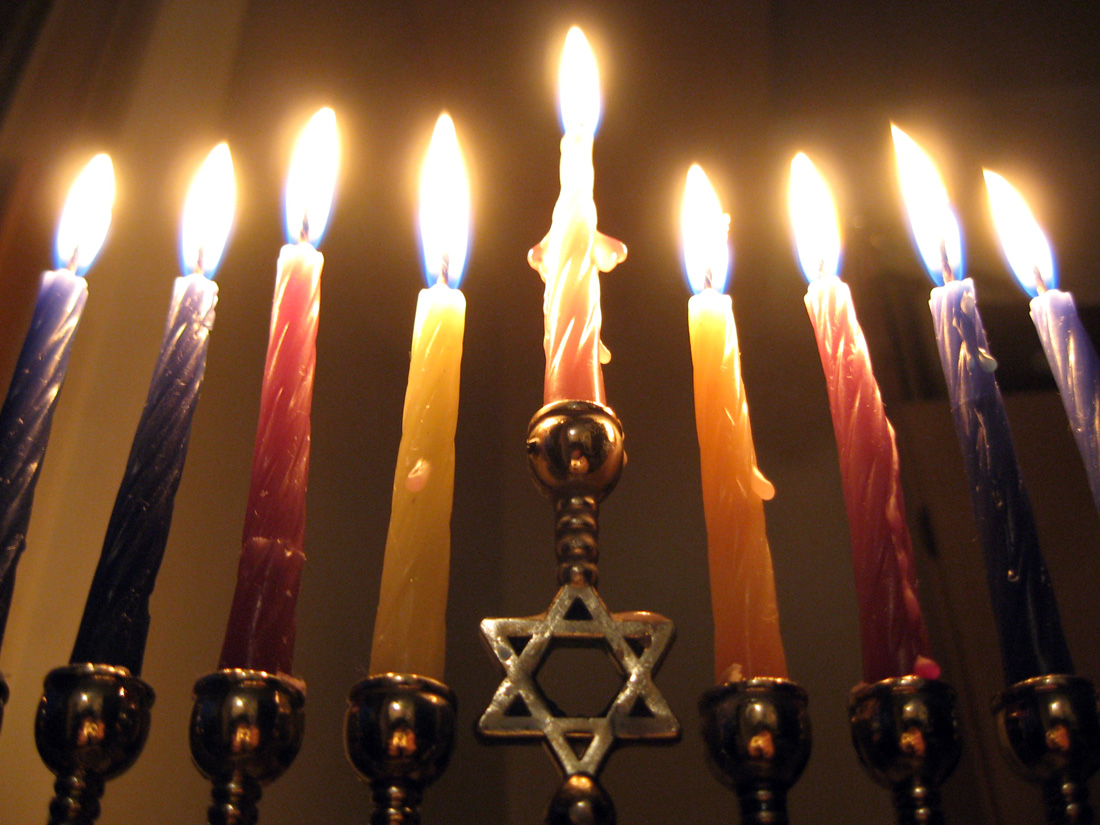
hanukkah

Shabbat shalom, and hag urim sameah, a happy Festival of Lights to you.

Categories
Kavvanot

Praying for Our Country: A Thanksgiving Thought

If you have been to Congregation Beth Shalom in the last few years, you might have heard me say this: Tefillah is not intended to be rushed through, intoned meaninglessly. Pirkei Avot (2:13) tells us that our words of prayer should not be rote recitation, but rather pleas for mercy and supplication before God. It should never be that we mumble empty words of tefillah, trying to get from point A to point B as quickly as possible, without connecting those ancient words with ourselves.

The same is true for the English “Prayer for Our Country” that we recite each Shabbat morning (p. 177 in Siddur Lev Shalem). There is a good case to be made that the words of this prayer are arguably more essential right now than ever before, as our nation faces great challenges:

  • The challenge of division, wherein people on opposite sides of the aisle cannot speak to each other civilly, or at all;
  • The challenge of distinct narratives, in which online echo chambers reinforce that division;
  • The challenge of hatred of those not like us; of hatred of all kinds; of fear of the immigrant and refugee;
  • The challenge of race; of fashioning a just society in which all are given a fair shot in life regardless of the color of their skin; and
  • The challenge posed by the erosion of our democratic ideals and the diminishing respect for scientific inquiry.

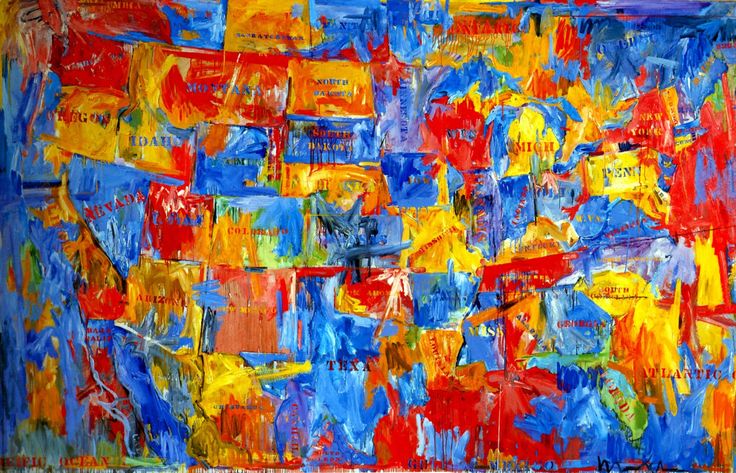
Jasper_Johns's_'Map',_1961
Jasper Johns, Map, 1961.

As we pray now for an end to hatred and bigotry, to poverty and racism, let us remember that we all need each other; that we cannot sing together until all voices join in. We have no choice but to rise above party and group identity, to reach beyond boundaries of religion and race and ethnicity for the sake of the common good.

We celebrate Thanksgiving this week, a holiday on which we as a nation recall our gratitude for what we have. Perhaps on this Thanksgiving, we will all spend some time reflecting on those things that still connect us, be grateful for them, and consider what we need to do to build on those connections.

Let this Thanksgiving be a prayerful one.


~

Rabbi Seth Adelson

(Originally delivered at Congregation Beth Shalom, Shabbat morning, 11/17/2018.)


Categories
Sermons

The Sinkholes of Grief and the Ponds of Hope – Toledot 5779

If you have been to the area around the Dead Sea in the last few years, you may have noticed a relatively new phenomenon: large sink-holes have appeared close to the current shoreline. Our guide told us that there are as many as 6,000 of them.

.

As our Beth Shalom group was on the bus this past Tuesday, headed from Jerusalem to Masada, we saw many such sink-holes. They are the result of the Dead Sea’s rate of evaporation, abetted by the rate of consumption of water by both Israel and Jordan. Areas from which the water has receded have underground pockets of salts, and when it rains, fresh water dissolves those salts, leaving empty holes under the exposed area, and then the ground above collapses. There is an area near Ein Gedi where the road actually collapsed into a sink-hole. Israeli transportation engineers anticipated it and built a bypass before it collapsed, and are apparently monitoring the rest of the road for similar problems.

Ladies and gentlemen, we are celebrating today that a young woman has come into direct relationship with the mitzvot of Jewish life. As she stood here today and demonstrated her entry into Jewish adulthood by being called to the Torah in the presence of her family, friends, and community, we are all filled with joy and pride. The cycle of life continues.

But we are also still in sheloshim, the 30-day mourning period following burial, and our community is still grieving today, and we must acknowledge that. Even though sheloshim is a less-intense time than shiv’ah, many of us are nonetheless still wrought with emotion.

Something has become quite clear to me in the past two weeks, and that is that we all respond to grief differently.

Some respond by wailing.

Some respond in anger.

Some respond in panic.

Some respond by clamming up.

Some respond by calling out.

Some respond by pointing fingers.

Some respond with a call to action, and some retreat.

Some of us fell into sink-holes two weeks ago, and have not yet emerged. And some of us are still waiting on the loose ground on top, not knowing when it will collapse. Some of us have already crawled out onto safe, stable land.

Our responses vary with our personalities, of course. Parashat Toledot, which Elana taught us something about earlier, details ways in which Ya’aqov and Esav are quite different: Ya’aqov is mild-mannered; he likes to cook, to hang around in the tent. He’s something of a homebody, his mother’s son. He is reasoned and strategic, and willing to deceive to get his way.

His brother Esav, meanwhile, is described in almost brutish terms; he is a hunter who likes meat, he’s covered with hair, he is impulsive. Esav is favored by their father Yitzhaq. With Esav, what you see is what you get. Elsewhere, the Torah reveals to us traits of other main characters: Moshe is a strong leader who has anger management issues; Abraham is a gracious and faithful host who argues with God; Sarah is brave and tenacious, but laughs at the wrong time; Aaron is holy and speaks well, yet he acquiesces when he should stand up strong.

These characters are templates for humanity; we see in ourselves, and in the palette of human expression, many of these personality features. And many of them are present in how we have responded to the attack of two weeks ago.

The Jewish mourning customs are the best around for managing grief, however it is expressed, because they acknowledge that our responses to grief reflect our personalities. One of the customs of shiv’ah is that, when visiting avelim, mourners, in their homes, we do not address them directly; we wait for the bereaved person to speak first. That way, we give space for the avelim to do what’s best for them. If they want to talk, they talk. If they want to sit there in silence, then we let them do that, and sit by patiently. If they want to cry, they cry. If they want comfort, we hold them tight. If they want to be alone, we leave them alone. It is within that framework of allowing the avel to fashion his or her own response to grief that we acknowledge their humanity.

I want to share with you a piece of wisdom that Rabbi Yolkut at Congregation Poale Zedeck brought to his community last Shabbat. It’s from the Shulhan Arukh, the authoritative 16th-century codification of Jewish law.

Last week, we visited the synagogue and beit midrash / study hall of Rabbi Yosef Karo, the primary author of the Shulhan Arukh, in the northern city of Tzfat. In his portion of the book, Rabbi Karo documents the Sephardic practice of his time. Rabbi Moshe Isserles, living contemporaneously in Poland, inserted into Rabbi Karo’s text clarifications when the Ashkenazic practice differed with Karo’s. Rabbi Isserles, known by his acronym, the Rama, had been working on a similar codification, but Rabbi Karo beat him to publication.

In the context of laws about mourning, the Shulhan Arukh addresses the question about whether or not one may cry on Shabbat. Shabbat is, of course, a day on which we are happy; we gather with friends and family to celebrate, to eat festive meals, to sing joyful songs. Those who are in shiv’ah generally do not mourn publicly on Shabbat by wearing torn clothing or sitting on a low seat or receiving guests in their homes. But is it permissible to cry? The Rama says the following: (Shulhan Arukh, Orah Hayyim רפח:ב)

If it brings one pleasure to cry on Shabbat, such that the sorrow may be lifted from his heart, then one may cry.

Crying in pain may bring you pleasure, and we give space to the avel to cry as necessary on Shabbat. I’m thinking here of Rosey Grier singing on the classic children’s album from 1972, Free to Be You and Me:

It’s alright to cry
Crying gets the sad out of you
It’s alright to cry
It might make you feel better

Raindrops from your eyes
Washing all the mad out of you
Raindrops from your eyes
It’s gonna make you feel better

How many of us have felt really wounded, and found that a good cry made at least some of the pain go away? That has certainly happened to me, and perhaps the Rama as well.

There is a hopeful note about the sink-holes: some of them have trapped water that has run off the mountains, and are now little ponds surrounded by new growth, new trees and bushes and reeds. As you drive by, these look like little oases in the otherwise barren landscape. These ponds, unlike the water of the Dead Sea itself, have a salinity content that is apparently low enough for things to grow around them.

And you know what that looks like? It looks to me like hope. The rings of greenery in the desert around these new ponds are sort of like the proverbial cloud with the silver lining. if you’ll allow me to mix metaphors.

On our final day in Israel, we visited the Israel Museum in Jerusalem, what is effectively the Louvre of Israel. It’s a fantastic museum, ranging from antiquities to modern art; I can get my Kandinsky fix not far from the 10th-century Aleppo Codex, which is one of the two oldest existing Masoretic* manuscripts in the world; the volume was consulted by Maimonides himself in 12th-century Cairo. Among the items we saw together included synagogues and Judaica from all over the Jewish world, from China to Poland to Suriname. And I remembered that the cataclysm of the destruction of the Second Temple by the Romans in 70 CE did not bring Judaism and Jewish life to an end. Rather, it fundamentally changed it, and strengthened our tradition for the millennia of dispersion that lay ahead. And the Jews responded by carving ornate arks and covering with gold leaf in the 16th century in Italy, and crafting spice boxes in the shape of windmills in 18th-century Holland; by producing polished-silver Torah tikkim (that the Sephardic cabinet that houses a Torah) in India and illuminated Esther scrolls in Iran and bowls made of crystalline sugar for wedding celebrations in Afghanistan.

The richness of Jewish life continues even after tragic events. Just as our people responded to destruction and dispersion with artistic creativity and continuing to embrace the richness of Jewish life, so too will we. While there will always and forever be a before and after in the Pittsburgh Jewish community, I am certain beyond a shadow of a doubt that the after will be even more vibrant.

But there is still grieving to be done, and we will continue to do so, each in our own way, even as we celebrate all the other joyous moments: benei mitzvah, weddings, births, holidays, and so forth. So please continue to give yourself space for that, even as we seek joy and pleasure. And if you can’t get out of your sink-hole, or you were on stable ground and you suddenly find yourself falling, please come see me or one of the other rabbis in the neighborhood. We are here to help, to listen, to give you the space to cry if necessary.

We will continue to grieve in all the ways that we do, and we will never forget those whom we lost. But we will emerge stronger together.

stronger together

Shabbat shalom.
* The Tiberian Masoretes were Jewish scholars living in the north of Israel in the 6th-9th centuries; they were responsible for, among other things, creating an authoritative, vocalized text of the Tanakh, the Hebrew Bible. The Aleppo Codex and the Leningrad Codex are the two existing texts that are closest to the original Masoretic manuscript.


~

Rabbi Seth Adelson

(Originally delivered at Congregation Beth Shalom, Shabbat morning, 11/11/2018.)

Categories
Kavvanot

Love, Tenderness, and Peaceful Co-Existence: A Thought from Mr. Rogers

While I was on the plane to Ben Gurion Airport on Wednesday morning, feeling a whole lot of ambivalence about leaving Squirrel Hill, I was fortunate to watch for a second time parts of the recent documentary, “Won’t You Be My Neighbor,” about our neighborhood’s most famous resident, Fred Rogers, zikhrono livrakhah (may his memory be for a blessing).

When Mr. Rogers testified before a Senate committee in 1969 to argue for funding for public broadcasting, he said that among his essential principles was the idea that children’s feelings were always OK.

… I feel that if we in public television can only make it clear that feelings are mentionable and manageable, we will have done a great service for mental health.

We are all filled with emotion today. We are raw, sad, angry, distraught, anxious, worn-out, and a whole range of other feelings. Although I am physically far away from all of you, in Jerusalem, I and the rest of our Beth Shalom group here feel the same things.

Mr. Rogers did not shy away from facing difficult, emotional situations on his show. In fact, in the first week it aired, he tackled the war in Vietnam, by having King Friday XIII declare war on people who “want to change things.” The residents of the Neighborhood of Make Believe were all upset and fearful, and tried to convince the king to back down from his aggression. Daniel Striped Tiger said, “I want there to be peace in this neighborhood. It’s been a hard time for everybody.” Together, they crafted a plan to influence the king: they tied messages like “Love” and “Tenderness” and “Peaceful co-existence” to balloons, and floated them up to the king’s castle, and ultimately the king relented.

Right now, I want all of us to remember that if Mr. Rogers were here, he would tell us that it is perfectly normal to be upset. Let the tears flow; let the emotions run. And think of the balloons that you would send up right now. If all of us take our desires for love and tenderness and peaceful co-existence, and saturate them with those tears, and cause them to radiate outward from Squirrel Hill to the rest of the world, we will all help each other manage that pain. And while we may not repair the hole in our communal heart, we just might help repair the world.

~

Rabbi Seth Adelson

(Originally delivered by Rabbi Jeremy Markiz at Congregation Beth Shalom, 11/3/2018.)

Categories
Kavvanot

A Shabbat of Comfort

This has been perhaps the most challenging week that many of us have ever lived through. Right now, we all need a little comfort, and a little qedushah, an extra measure of holiness in our lives. When we gather together as a community, there is strength and comfort in that.

In the context of shiv’ah, the seven-day period of mourning following burial, it is customary to say to those who mourn, Hamaqom yenaḥem etkhem betokh she-ar aveilei tziyyon viyrushalayim. May God comfort you among all the mourners of Zion and Jerusalem.

Hamaqom” is an infrequently-used euphemism for God. Literally, it means, “the place.” It sounds nonsensical if you translate the saying as, “May the place comfort you…” But the suggestion is very clear: we do not count only on God for comfort; we as individuals are as much a part of this place as God is. It reads as a kind of unity of us and God. Together in partnership we comfort those who mourn. And in this place, in this time, we are all mourning. Right now, we are all in shiv’ah.

Join us Friday evening at 6 PM and Shabbat morning at 9:30 AM, and every evening and morning at Beth Shalom as we not only offer words of tefillah / prayer in solidarity with each other and with God, but also moments of holiness, togetherness, and comfort. Although I am in Jerusalem with Beth Shalom’s congregational trip, in spirit I will be in our place, in our synagogue, with you in solidarity. Come be with your community this Shabbat, and stay strong.


~

Rabbi Seth Adelson


Categories
Kavvanot

A Post-Shooting Thought

During the minhah service at Beth Shalom this afternoon, we read the beginning of Parashat Hayyei Sarah, which recounts in its second verse the death of Sarah Imeinu, our mother Sarah:

וַיָּבֹא֙ אַבְרָהָ֔ם לִסְפֹּ֥ד לְשָׂרָ֖ה וְלִבְכֹּתָֽהּ

Vayavo Avraham lispod leSarah velivkotah.

Abraham proceeded to mourn for Sarah and to bewail her (Genesis 23:2).

You can’t see this above, but in the Torah, the letter kaf (כ) in velivkotah is smaller than the other letters; it is an ancient scribal tradition. We read this small kaf as suggesting that Abraham, in losing Sarah, felt a little smaller as he wept for his wife.

The events of this tragic Shabbat in Pittsburgh have made me feel a little smaller, a little more powerless, a little more anxious. I wept at multiple points today as I began to comprehend the way our community’s soul was torn by a killer with an assault rifle who was spitting anti-Semitic slurs, for the synagogue-goers who had to run and hide as holy words of tefillah / prayer trailed from their mouths, for the families of those who are still awaiting confirmation of their loved one’s status.

Nonetheless, our community is a strong one, and I hope that at this time we continue to draw strength from our tradition and from each other as we grieve. Our people have survived millennia of persecution, oppression, displacement, pogroms, and genocide; Jewish Pittsburgh will overcome this tragedy as well. Even as we are all made smaller today, we pray for those whom we have lost, and we recall that it is our duty as Jews to continue proudly doing what we do and being who we are.


~

Rabbi Seth Adelson