Categories
Sermons

If I Am Not For Myself – Lekh Lekha 5784

I have always been a peacenik, and I suspect that many of us here are fellow travelers in that regard. Not a lot of jingoists here at Beth Shalom, I think.

Let me say this right up front, so that this message does not get lost in what follows:

  • I believe that the only sustainable path for Israel, once the war is over, is to continue to pursue the two-state solution.
  • I believe that all Israelis, Jewish, Muslim, Christian, Druze, Circassians, deserve to live in peace, unmolested by terror. 
  • I also believe that Palestinians deserve to live in peace as well, in their own democratic nation, governed by legitimately elected, non-corrupt leaders.
  • And I believe that this can only happen if the terrorist group Hamas is dismantled. There is no co-existence with Hamas.  

***

The birkon (which some refer to by the Yiddish word “bencher” – the little book that contains a few prayers and songs used at mealtimes) that we use at our home includes the following addition in Birkat HaMazon, the so-called “Grace after Meals”:

הרחמן הוא ישים שלום בין בני שרה לבין בני הגר

May the Merciful One bring peace between the children of Sarah and the children of Hagar.

You remember Hagar, right? We met her today in Lekh Lekha. She is Sarah’s handmaid, and as Sarah has difficulty conceiving, she allows her husband Avraham and Hagar to have a son together, whose name is Yishma’el. In next week’s parashah, Vayyera, Hagar and Yishma’el will be sent out of Avraham’s house, albeit with the blessing that Yishma’el will be the father of a great nation, which both the Torah and the Qur’an read as the Arab peoples.

So that line in the birkon is a request for peace between the Jewish world and the Arab world – the children of Sarah and the children of Hagar.

I have always tried to remind myself, in times of war in Israel, that our tradition sees the Arabs as our cousins, that our struggles over the Land of Israel are in some sense a manifestation of an ancient family rift that is hard-wired into Middle Eastern culture and politics, a postulate of the region. 

And, as a spiritual leader for the Jews, I also have to remind myself that my primary allegiance is to the Jewish people. Maimonides speaks of concentric circles of responsibility; we are responsible for those closest to us first beginning with ourselves, then our immediate family with the circles expanding outward. And the Jews are the people closest to me. 

No matter how much I like to see myself as a citizen of the world, as one who cares deeply about all the people around me who are not members of our tribe, I am proud of my Jewish heritage, honored to be a tiny link in a chain which stretches back millennia, and steadfast in my belief that the Jews bring light and wisdom and peace into this world. The Torah narrative follows Avraham’s second son, Yitzḥaq, not Yishma’el, and so my first responsibility is for us.

At this moment, when the whole world seems to be screaming about Israel’s misdeeds, it is extraordinarily important to remember who we are and where our commitments lie. We need to be forthright in standing together as a people, and to stand in particular with our people in Israel.

And standing with Israel does not mean that we are permitted to be indifferent to the suffering of innocent people in Gaza who have been placed in harm’s way by Hamas. Very much to the contrary. But given that the world has historically denied the Jews a place in the hierarchy of nations, I must ask, in the words of Pirqei Avot, the 2nd century collection of rabbinic wisdom (1:14), “Im ein ani li, mi li?” If I am not for myself, then who will be for me?

My relationship with Israel spans my whole life. I am grateful every day that I live in a world in which the Jews have a place to call home, a haven, the doors of which will always be open to us. Our ancestors did not have this for nearly 2,000 years, and some of us in this room even remember that time. I will do everything that I can to maintain that; to protect the people of the State of Israel. 

Oryah and I playing in the snow on Mt. Hermon, 2016

In the coming weeks and months, you are going to hear all sorts of language that will be very upsetting. You will hear constant reminders of the body count in Gaza, and the humanitarian crisis there. You will hear falsehoods dismissing Israel as an “apartheid” or “settler colonialist” state, of practicing “genocide” or “ethnic cleansing.” You will hear descriptions of Palestinian “resistance,” calling for the destruction of Israel with chants of “Free Palestine” and the ever-popular “From the river to the sea, Palestine will be free.” You will hear terrorists who were trained and instructed to do horrible, horrible things to innocent Jewish civilians glorified as “martyrs.”

These are not the words of people who seek peace; this is not language of treaties and democratic governments living side-by-side. This is rather the language of terror, of destruction, of denying Jewish people the right to be, as we sing in Hatiqvah, Israel’s national anthem, “Am ofshi be-artzeinu.” A free people in our land.

And yet these words and ideas, the language of terrorism, has saturated our public discourse, not just online, but in print and on air and in the hearts of college students and even faculty who have been misled to believe that they are supporting freedom fighters in Gaza.

I learned this week that the Brandeis University Student Union Senate initially failed to pass a resolution condemning Hamas and calling for the return of hostages. The student senator who introduced the resolution claimed that his aim was to support “Jewish, Israeli, Palestinian, and Muslim students,” and to promote “empathy, tolerance, and informed discussion.” 

Nevertheless, on Sunday, the vote was 6 in favor of condemning Hamas, 10 against, and 5 abstentions. Four days later, after much outcry, a new attempt apparently passed. 

At Brandeis University, founded by Jews, for Jews, my sister’s alma mater, students could not muster the courage to condemn Hamas.

And that is a far cry from what has transpired at George Washington University, my brother’s alma mater, where events on campus have literally celebrated terrorism. The messages, “Glory To Our Martyrs,” “Divestment From Zionist Genocide Now,” and “Free Palestine From The River To The Sea” were projected onto the side of the Gelman Library on campus for two hours. 
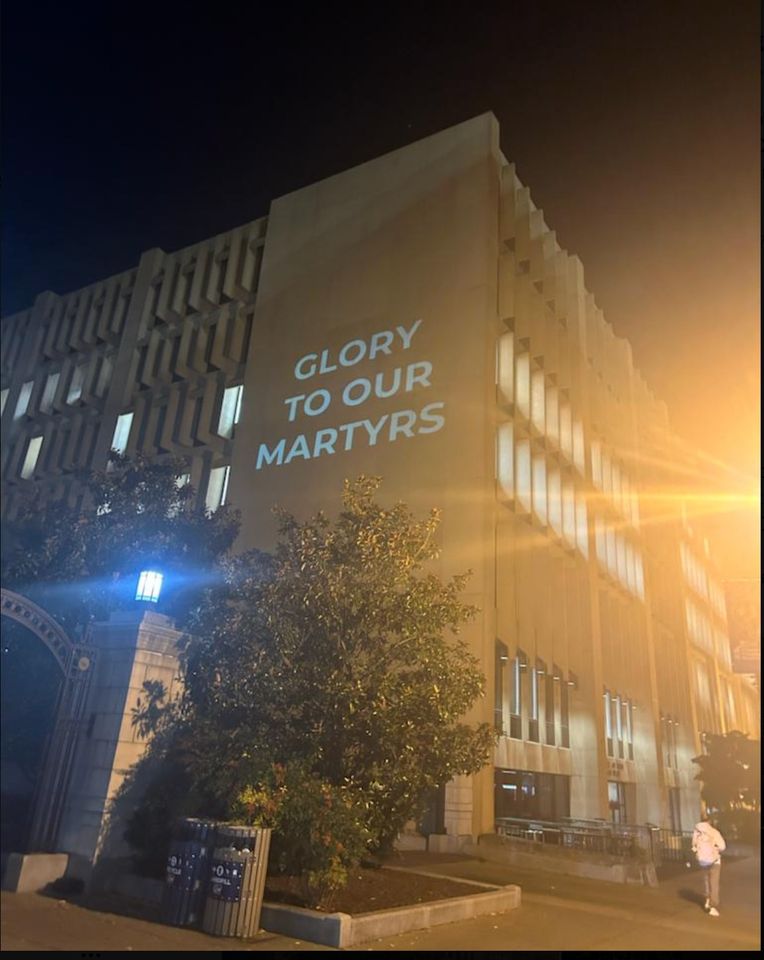
The newest wave in the ongoing gut-wrenching pain of the ordeal which we have faced since October 7 is not only the failure to condemn what is evil, but also the ideological assault on the very legitimacy of the Jewish state, the retelling of history which declares Israel to be the evil and glorifies terror. Perhaps we have lost the hearts and minds of the youth of America. Perhaps we should lament this, and be outraged. But outrage is not a strategy.

Rather, we have to take the long, reasoned view here. There are many obstacles to pursuing the two-state solution, but the primary irritant is Hamas, Islamic Jihad, Hizbullah, and of course the money and training which flows from Iran. This network of anti-Jewish terror does not want peace, nor would they be capable of creating a just, democratic state for the Palestinian people. 

So what does this long path forward look like? I am not a policy expert, nor a military strategist, but I do have a fantasy:

Would this not be a great time for the international community, the West and the Arab world, to help Israel bring the hostages home, neutralize Hamas and help the Palestinians achieve a respectable solution? Israel cannot shoulder this burden alone.

On Thursday, I attended a unique event at Pitt hosted by our bar mitzvah’s mother Dr. Jennifer Murtazashvili, and her colleague Dr. Abdesalam Soudi. In the room were Jews and Muslims and people of other faiths, students and faculty. Such a gathering is particularly challenging in the current moment, when everybody is inflamed. But the point of the session was to find compassion for each other by telling stories, by sharing wisdom and music and yearnings.

Drs. Murtazashvili and Soudi discussing compassion with Pitt students and faculty (and me)

It was a special moment in time, when people who might have found themselves in opposition to each other struggled to find compassion. It was also a reminder that the best way to change hearts and minds is by personal interaction, not through the intermediary of a screen.

If another generation of Israelis and Palestinians grow up without the realization of a two-state solution, empathy and compassion will be the greatest casualty.

Maimonides’ concept of concentric circles necessitates that we first demand the release of the captives. Im ein ani li mi li? If I am not for myself, then who will be for me?

And then we must stand up for Israel by making the case that the only way to make the democratic Palestinian state a reality – a compassionate reality – is by convincing our misguided friends and neighbors that Hamas is the enemy, not the standard-bearer of the Palestinian cause. Ukhshe-ani le’atzmi, mah ani? If I am only for myself, what am I?

Back in Parashat Lekh Lekha, when Hagar realizes that she is pregnant, she flees from her mistress Sarah, fearing Sarah’s mistreatment due to jealousy. And Hagar turns to God, to whom she refers as El Roi, meaning “God is my Shepherd.” God instructs her to return, and this moment in the Torah reminds us that God is pastor to all of God’s flock, particularly those who are in need of comfort and protection. God’s compassion for Hagar is palpable.

Judaism is a culture of life, not death. We do not rejoice at the death of our enemies. We remove wine from our cups at the Passover seder every year to remind ourselves of the Egyptian suffering created by our redemption from slavery. We continue to seek the peace between benei Sarah and benei Hagar, even as we are in pain, even as we mourn the dead and grieve for the hostages and lament the abhorrent cruelty of the attack on Israelis.

Adonai oz le’amo yiten; adonai yevarekh et amo vashalom. May God grant strength to God’s people; may God bless God’s people with peace.

~

Rabbi Seth Adelson

(Originally delivered at Congregation Beth Shalom, Pittsburgh, PA, Shabbat morning, 10/28/2023.)

Categories
Sermons

Where Are Our Friends? – Noaḥ 5784

I was in church last Sunday. It was the first time in many years that I had been to church for a Sabbath service. Our dear friend and teacher Rev. Canon Natalie Hall invited me to participate in the service at the Church of the Redeemer (Episcopalian) in Squirrel Hill, where I led the congregation in the English recitation of Psalm 121, and sang with them (in Hebrew!) the first verse: Esa einai el heharim, me-ayin yavo ezri? I lift up my eyes to the mountains; from where does my help come? My help comes from Adonai, the Maker of Heaven and Earth.

The Church of the Redeemer

As many of you know, Pastor Hall and her family were here with us last Shabbat to show their support and solidarity with our community in the context of the immense grief and loss we have felt for the last two weeks.

It is good to have friends.

You know who had no friends? Noaḥ. You know how we know that? Because in the first verse of the parashah, Bereshit / Genesis 6:9, the Torah says, אֶת־הָֽאֱלֹהִ֖ים הִֽתְהַלֶּךְ־נֹֽחַ, generally understood to mean, Noaḥ walked with God. But that is because, as the only somewhat righteous person in an evil generation, he had no friends. The 15th-century Portuguese commentator, Don Yitzḥaq Abarbanel, observes that:

והיה זה לפי ש”את האלהים התהלך נח” רוצה לומר שעם היות שדר בתוך רשעים לא הלך בדרך אתם אבל נתחבר ונדבק אל האלהים לא נפרד ממנו כל ימיו

… and so it was that Noaḥ walked with God, that is to say that despite the fact that  he lived among wicked people, he did not walk on their path with them, but rather was bound to and cleaved to God, and was not separated from God for all of his life.

The Hebrew word for “friend,” ḥaver, has the same root as the word that Abarbanel uses for “bound”: נתחבר / nitḥabber. Noaḥ’s only ḥaver, was God; he was bound to God because he had no other friends. And that is further reinforced by the fact that for all the time he and his family spent on the Ark, they did not seem to pine for other humans. They never had friends among the people with whom they lived.

With the shining examples of Pastor Natalie Hall and her husband Rev. Dan Hall and the Church of the Redeemer excepted, I must say that I am not exactly feeling the love right now from the people around us. Where are the allies? Where are all the righteous gentiles standing up for the Jews? Where is the unequivocal condemnation of the unconscionable, horrifying murder, abuse, and kidnapping of Jews by thousands of Hamas terrorists? Where is the non-Jewish outcry regarding the greatest pogrom since the Nazis? 

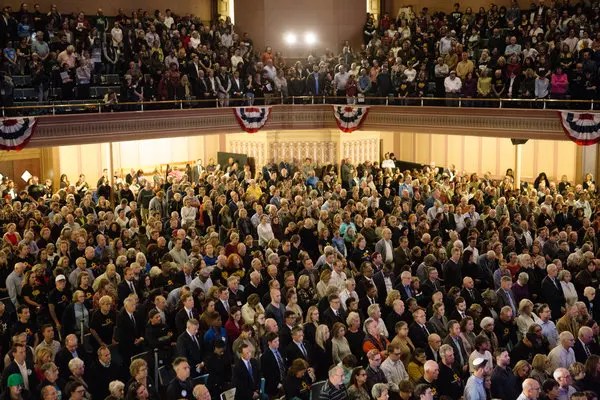
Do you remember, after October 27th, 2018, when Soldiers and Sailors Memorial Hall in Oakland was standing-room only, and a sea of umbrellas stood outside as well, to grieve together in memory of our qedoshim, the beloved members of our community who were brutally murdered by an anti-Semitic terrorist? Do you remember seeing the huge group of local clergy on that stage? Christians and Muslims and Hindus along with the Jews.

Soldiers and Sailors Memorial Hall, 10/28/2018

And do you remember when the whole world erupted when a Minneapolis police officer knelt on George Floyd’s neck for 8-½ minutes, murdering him? All over the country, people marched and knelt down on one knee and screamed for “justice.” I gave four sermons about it. Late night comedians could barely crack a smile for weeks.

And now, 1400 Jews are dead; thousands more injured, physically and emotionally. Israelis are living in bomb shelters. Shoah survivors and children kidnapped. 200 are hostages. Hostages! Young women taken captive were paraded as trophies, and much worse. I have avoided watching these videos, but they are out there.

Where are the voices condemning Hamas?

Where are the voices calling for regime change in Gaza? 

Where are the voices crying out for the release of the hostages? 

Why is there NOT outrage when Palestinian deaths are caused by Hamas?

Why leave it to Israel to do the dirty work of removing Hamas? 

Why make Israel suffer alone the consequences of the horrific body count that is unfolding as Israel defends herself through eliminating this malignant cancer on humanity? 

Why blame Israel for civilian casualties, when Hamas places their people in harm’s way? 

And where, oh where are all the well-meaning people marching for justice for Israel? 

Why is nobody calling out, “Defund Hamas,” or “Defund Iran”? Gaza has received billions of dollars in the last 16 years from the international community. Where has that money gone? Not to the people of Gaza.

What happened to the moral clarity of the university presidents who have made embarrassingly pareve statements? 

America’s greatest ally is sitting shiv’ah, a thousand times over. How hard would it have been merely to say, We decry the brutal murders of 1400 Israelis, Americans, French, Thai citizens, and so forth? How difficult is it to stand unequivocally against terrorism? To say that we who stand up for every kind of underdog in the world, every oppressed individual, we stand with the Jewish people at this moment of pain and grief.

But no. What we got were mealy-mouthed, half-mumbled, half-statements about protecting all life in the region. And the Ivory Tower has turned into a Petri dish of anti-Semitism. Over 30 student groups at Harvard University who said, “We, the undersigned student organizations, hold the Israeli regime entirely responsible for all unfolding violence.” No mention of Hamas. 

We got the professor at Cornell, my alma mater, who was “exhilarated” by the attack on Israeli civilians, stating “Hamas has challenged the monopoly of violence.” Just to be clear, he was saying that Israel holds the monopoly of violence, and he was proud that Hamas took the reins by mutilating Israelis in their homes, by dragging them through the streets.

To be fair, we have a few bold leaders who have said the right things. 

Thank God for President Biden and French President Emmanuel Macron, who said all the right things. German Chancellor Olaf Scholz and British PM Rishi Sunak went to Israel this week to offer support. Thank God for Lt. Gov. Austin Davis, who addressed the Federation’s Vigil for Israel on Thursday evening, and for PA Senators Bob Casey and John Fetterman, who have been unwavering in their support.

Thank God for Pastor Natalie Hall. And Russ Cain, our occasional security guard, who, when he saw us at the first Federation gathering, gave Judy and me a big hug, tears in his eyes, and told us he was praying for us, and for my son.

But I’m not feeling very supported outside of my Jewish circle. And I fear for what the future holds. How many friends do we really have?

OK, so our tradition teaches us to give kaf zekhut, the benefit of the doubt. Maybe there was no fierce condemnation of Hamas or terrorism or rape or kidnapping or torture because Israel is just too complicated.

  • Maybe it is because some see the Jews as “privileged.”
  • Maybe it is because of the misinformed impression that a reductive body count is the sole indicator of who is to blame and shove Oct. 7 into the specious trope of the “cycle of violence.”
  • Maybe it is because some people simply cannot see the hypocrisy of denying that Jews are indigenous to the land of Israel, believing instead in some sort of insulting and woefully myopic narrative that Israel is the aggressor here, that “colonizers” are carrying out “genocide.” As if Israelis could simply pick up and return to Poland, Iran, Yemen and Ukraine.
  • Maybe it is because the agenda of those committed to so-called “Diversity, Equity, and Inclusion” somehow excludes Jewish suffering due to anti-Semitism.

Whatever the reasons, I am looking around and wondering where our friends are. And I wish God would send us an Ark, because very soon there may be a torrential downpour of criticism of Israel as they try the best they can to dismantle Hamas, the very source of violence, the enemy of Israel and indeed the people of Gaza.

At this point, I would like to make sure that I offer you something more than righteous indignation. What can we do, from so far away?

  1. Call / email / text your friends in Israel to express your support/condolences/grief etc. The same for the people in your neighborhood whose children and grandchildren are there right now, serving in the IDF and throughout Israel.
  2. I do not generally advocate for the use of social media for stuff like this, but when you see people saying grossly inaccurate or completely unfair statements, you have a duty to at least try to state the truth. If we let the social media spaces become sewers of Jew Hatred, that will be on us.
  3. Write and or call your elected officials. Thank those who have been honestly and forthrightly supportive of Israel and the Jewish people. Demand that they help keep up political pressure to bring home the hostages.
  4. Let your supportive non-Jewish friends and neighbors know how you are feeling at this time. To share with them your sense that this attack was felt by the whole Jewish world, that we are in pain, and we want to know that you are with us and for us. I know that is not so easy to do, but it helps spread the word among the wider population that the Israeli people are important to us here in America.
  5. Donate to the Federation’s emergency relief fund for Israel. The Jewish Federations of North America have set a goal of raising $500 million for emergency relief for Israel; they have already raised $380 million, $5 million of which has been pledged in Pittsburgh. Every dollar helps.

Ḥevreh, I am anxious about the future, about the near term and the long term. I want Israel to continue to thrive, and I want a just political arrangement for all people on that tiny, yet emotionally-wrought piece of land. I want peace. And let me be clear: we must also pray for peace for all the inhabitants of that land. But I also know that the forces of terrorism will not bring peace; they will only bring more terrorism. 

And as we continue to pray for Israel, let us hope that our friends find the courage to stand with us.

~

Rabbi Seth Adelson

(Originally delivered at Congregation Beth Shalom, Pittsburgh, PA, Shabbat morning, 10/21/2023.)

Categories
Kavvanot

How Long?

It’s not getting better. It’s getting worse.

As the reports continue to flow across our screens and pierce our hearts, the painful reality of what has happened in the south of Israel has continued to multiply. The dead are now being laid to rest across Israel; the entire nation is in shiv’ah. And the hostages – the very idea makes my heart ache as I lay awake at night, unable to sleep knowing the pain and suffering that has been inflicted on our people. I have found myself in tears more times this week than in any I can remember. And I do not see an end to these tears any time soon.

The traditional Psalm of the day, which we recite every day here at Beth Shalom, is usually a mundane affair, a little extra mumbling at the end of the Shaḥarit (morning) service. And this week, the Psalm for Wednesday stuck in my throat a little more. It reminded me of 9/11/2001, when, as a cantorial student at the Jewish Theological Seminary in New York, I recall Rabbi Bill Lebeau, dean of the Rabbinical School, invoking the words of that Psalm:

עַד־מָתַ֖י רְשָׁעִ֥ים ׀ ה’ עַד־מָ֝תַ֗י רְשָׁעִ֥ים יַעֲלֹֽזוּ׃

עַמְּךָ֣ ה’ יְדַכְּא֑וּ וְֽנַחֲלָתְךָ֥ יְעַנּֽוּ׃…

אַלְמָנָ֣ה וְגֵ֣ר יַהֲרֹ֑גוּ וִ֖יתוֹמִ֣ים יְרַצֵּֽחוּ׃

וַ֭יֹּ֣אמְרוּ לֹ֣א יִרְאֶה־יָּ֑-הּ וְלֹא־יָ֝בִ֗ין אֱ-לֹהֵ֥י יַעֲקֹֽב׃

How long shall the wicked, O Lord, how long shall the wicked exult …

They crush Your people, O Lord, they afflict Your very own;

they kill the widow and the stranger; they murder the fatherless,

thinking, “The Lord does not see it, the God of Jacob does not pay heed.” (Psalm 94:3, 5-7)

We know, says the Psalm, that the God of Jacob sees all, and that God is with us in our darkest times. We know that there absolutely is evil in this world, we have seen it with our own eyes this past week. And we know that our God is there to help us overcome it. 

אַשְׁרֵ֤י ׀ הַגֶּ֣בֶר אֲשֶׁר־תְּיַסְּרֶ֣נּוּ יָּ֑-הּ וּֽמִתּוֹרָתְךָ֥ תְלַמְּדֶֽנּוּ׃

לְהַשְׁקִ֣יט ל֭וֹ מִ֣ימֵי רָ֑ע עַ֤ד יִכָּרֶ֖ה לָרָשָׁ֣ע שָֽׁחַת׃

Happy is the one whom You discipline, O Lord, the one You instruct in Your Torah,

to give tranquility in times of misfortune, until a pit be dug for the wicked. (94:12-13)

I am not a warrior; that is my Israeli son, who is at this moment perched on the Lebanese border, ready to return fire should Hezbullah enter the fray. Thank God he is safe, for now. But we who are disciplined in Torah will continue to pray until God digs that pit into which the wicked will fall. 

I am deeply worried about what we will witness in the coming weeks and months, but in the meantime I shall continue to pray: May God soon bring comfort to the bereaved, healing to the wounded of body and spirit, and most urgently, redemption to those who are captive.

~

Rabbi Seth Adelson

Categories
Uncategorized

Prayer for Israel

At least 700 Israelis are dead, over 2,000 wounded, and probably 150 taken as captives. 260 brutally murdered at a music festival. Rockets continue to fall; marauding terrorists continue to roam the country. The numbers are staggering and the entire series of events inconceivable. 

We are a people in pain, in mourning, in anguish. Joyous festival days were taken from us. The peace of Shabbat and Yom Tov was shattered with heart-wrenching news. On Saturday morning, I found myself in tears during the joyous psalms of Hallel.

While we gathered for Simḥat Torah, the Rejoicing of Torah which concludes the festive season, Congregation Beth Shalom chose a more muted celebration of Torah. We did not dance, but carried the sifrei Torah around the room for seven perfunctory hakafot. At morning minyan on this otherwise-ordinary Monday, there was a heavy sense of grief.

In times of mourning, and also in times of joy, our words of daily prayer are the same. It is the constancy of our spiritual framework which carries us through good times and bad. The liturgy is the same from day to day; it is we who change. We bring our whole selves into tefillah, channeling whatever is in our hearts and minds, and allow the ancient words to lift us up and console us and challenge us and help us reflect.

Nonetheless, the words of certain prayers resonate with us more at certain times, and sometimes we need to supplement to speak to the moment. This morning, we added Psalm 121:

שִׁ֗יר לַֽמַּ֫עֲל֥וֹת אֶשָּׂ֣א עֵ֭ינַי אֶל־הֶהָרִ֑ים מֵ֝אַ֗יִן יָבֹ֥א עֶזְרִֽי׃
עֶ֭זְרִי מֵעִ֣ם ה’ עֹ֝שֵׂ֗ה שָׁמַ֥יִם וָאָֽרֶץ׃
אַל־יִתֵּ֣ן לַמּ֣וֹט רַגְלֶ֑ךָ אַל־יָ֝נ֗וּם שֹׁמְרֶֽךָ׃
הִנֵּ֣ה לֹֽא־יָ֭נוּם וְלֹ֣א יִישָׁ֑ן שׁ֝וֹמֵ֗ר יִשְׂרָאֵֽל׃
ה’ שֹׁמְרֶ֑ךָ ה’ צִ֝לְּךָ֗ עַל־יַ֥ד יְמִינֶֽךָ׃
יוֹמָ֗ם הַשֶּׁ֥מֶשׁ לֹֽא־יַכֶּ֗כָּה וְיָרֵ֥חַ בַּלָּֽיְלָה׃
ה’ יִשְׁמׇרְךָ֥ מִכׇּל־רָ֑ע יִ֝שְׁמֹ֗ר אֶת־נַפְשֶֽׁךָ׃
ה’ יִשְׁמׇר־צֵאתְךָ֥ וּבוֹאֶ֑ךָ מֵ֝עַתָּ֗ה וְעַד־עוֹלָֽם׃

A song for ascents.
I turn my eyes to the mountains; from where will my help come?
My help comes from Adonai, Maker of heaven and earth.
Adonai will not let your foot give way; your Guardian will not slumber;
See, the Guardian of Israel neither slumbers nor sleeps!
Adonai is your guardian, Adonai is your protection at your right hand.
By day the sun will not strike you, nor the moon by night.
Adonai will guard you from all harm; God will guard your life.
Adonai will guard your going and coming now and forever.

As our hearts turn to Israel at this moment, we pray that our help from the Shomer Yisrael, the Guardian of Israel will come soon. May the hands of those who protect our sisters and brothers in the Holy Land be strengthened to expel the enemies in their midst.

We mourn grievously for those murdered by terrorist infiltrators, and we seek comfort for their families where little can be found.

We urge the Maker of Heaven and Earth to guide the hands of the medical professionals who are tending to the wounded.

We pray that those who are cowering in fear for their lives be safely liberated and regain a sense of security.

We implore the Kadosh Barukh Hu to impart wisdom and speed to the authorities, so that they might find their footing and restore balance and stability to the State of Israel and the Jewish people.

And we pray with utmost fervor that those who are captive are soon set free and returned safely to their homes.

Amen.

Rabbi Seth Adelson

Click here for a prayer crafted by Masorti (Conservative) Israeli rabbis which speaks to the anguish of the current moment.


The Jewish Federation of Greater Pittsburgh has set up an emergency relief fund for Israel. Click here to donate.

Categories
High Holidays Sermons

The Future Has a Human Face – Into the Future, Part IV: Yom Kippur Day, 5784

Here is a brief disclaimer: I personally composed all of the words below, except for quotes from the Jewish bookshelf or other sources. I was not assisted by any artificial intelligence language models in helping put these remarks together in any way. Nor did I get help, by the way, from the “Rabbi Whisperer” profiled in the New York Times a few weeks ago. For better or worse, this sermon is all mine.

There. Now:

I started on the first day of Rosh Hashanah talking about Arthur C. Clarke’s 2001: A Space Odyssey, and how the future seems to look less like benevolent alien powers helping humanity move forward, and more like the dysfunction of the HAL 9000 computer, the artificial intelligence of which leads to murder and mayhem far out in the solar system.

5783 was the year that we saw artificial intelligence introduced into our lives on a large scale. You’ve all heard of ChatGPT, which was initially something that schools tried to ban, but now there are curricula in some schools which seek to teach students how to use it responsibly as a tool. You may have noticed that your email editing platform now tries to finish sentences for you, anticipating what you want to write based on your past behavior (I almost always ignore those suggestions, because I find it sort of insulting that a machine has the ḥutspah to suggest that it knows what I’m thinking!)

In other news, according to the Surgeon General of the United States, Dr. Vivek Murthy, we are suffering from an “epidemic of loneliness.” As a nation, we are more isolated from one another than we have ever been: more people are living alone, working alone, dining alone, and so forth, than ever before. And about half of US adults experience the feeling of loneliness regularly. Yes, the Covid-19 pandemic contributed to this, but our increasing isolation was in place long before Covid. According to Dr. Murthy, the negative health effects of loneliness are roughly equivalent to smoking 15 cigarettes a day, and greater than the effects of obesity or physical inactivity.

And yet, says Dr. Murthy, the medicine for loneliness is in plain sight: social connection. All we need to do to cure loneliness, and improve the health outcomes for more than a hundred million Americans, is to be more connected, more integrated with one another, and that means in the flesh, in real life, not through the intermediary of a digital device.

He suggests a platform of six points for how to do that, and among those we find an essential imperative for today: “Create a culture of connection.” And, as you have surely heard me say by now, synagogue – that is, what we do here at Beth Shalom, is all about the culture of connection. 

One of the essential implicit messages of Judaism is that life is meant to be lived together. We do everything together, from welcoming newborn babies into this world with berit milah and baby namings to bidding farewell to those whom we love and who have moved on from this world. The essential idea of minyan, a quorum for prayer and other rituals, is not only to ensure that nobody should be alone when they pray, but also to reinforce the Talmud’s injunction, which I mentioned on Rosh Hashanah (in Part I of this series): “Al tifrosh min hatzibbur.” Do not separate yourself from your community.  

We are all about gathering, about bringing people together. The 613 mitzvot of Jewish life, the holy opportunities which frame our daily existence, demand that we interact with other people. Our tradition teaches us that cannot live lives imbued with qedushah / holiness unless we commune with others. Even things like kashrut and Shabbat, as I indicated on Rosh Hashanah, are ultimately about our relationships with each other.

I do not think our ancestors, from Talmudic times up until maybe the middle of the 20th century, had to worry too much about being lonely. I suspect that the problem, for most folks, was exactly the opposite: you could not get away from your family, your neighbors, your friends. Our people have been urban dwellers for many centuries, and they lived in cramped cities and towns without much personal space. And the economics of those times and places prevented most people from being able to simply move out and be on your own, alone. You were stuck with the people around you. And if you really wanted to get away from those people, and had the means to do so, you would have to move to a place where there were other people, who would probably annoy you just as much. 

Today things are quite different. We live in a time in which it is not only possible to leave home and be unencumbered by overbearing family or nosy neighbors, but to some extent the way we have constructed our society facilitates that. When I left home to go to university in 1988, I never returned to live in my parents’ home, and I spent a number of years living alone in a series of one-bedroom apartments in different cities.

And remote work and school has become so ubiquitous that nowadays it is completely normal for people to show up to work from their home computer desktop, at a virtual office with no water cooler and no lunch breaks with colleagues. Throw in the fact that we are often more interested in looking at screens than in speaking with other people, and you’ve got a loneliness epidemic.

Up front in Bereshit / Genesis (2:18), we read a line which is generally understood to be about marriage: 

וַיֹּ֙אמֶר֙ ה’ אֱ-לֹהִ֔ים לֹא־ט֛וֹב הֱי֥וֹת הָֽאָדָ֖ם לְבַדּ֑וֹ אֶֽעֱשֶׂה־לּ֥וֹ עֵ֖זֶר כְּנֶגְדּֽוֹ׃

God said, “It is not good (lo tov) for the Human to be alone; I will make a fitting counterpart for him.”

Having just created the first human being (here referred to as ha-adam, the creature formed from the adamah, the Earth), God realizes that this creature needs company. He cannot be alone. And so God creates the woman, who is initially described as ezer kenegdo, a curious linguistic construction which suggests both helping and opposing at the same time. This term has sometimes been translated as “helpmeet.”

Ramban / Nachmanides, in surveying this verse in 13th-century Spain, read the “lo tov” (“It is not good”) somewhat more euphemistically. Riffing on his earlier interpretation about the acts of Creation as being “tov,” good, he claims that this word should actually be read as “existence.” That is, when God saw that the light was good, God meant that it existed. And so too here: without a helpmeet, without a partner, ha-adam, the human being would cease to exist.

And I think we all know this intuitively. We all need friends, partners, helpmeets, lovers, exercise buddies, and so forth. Without other people around us, we are not only not good, but practically non-existent.

So that brings me back to artificial intelligence. I must say that I am awfully impressed by what computers can do today. Granted, not too impressed: when I have played with any of these flashy new language models to, say, write a devar Torah, I am underwhelmed. The messages are predictable. The turn of phrase is unremarkable. But of course, they will improve dramatically.

And yet, I must say that I am not too worried about my job, because the primary work a rabbi does is not what you are seeing right now. Rather, it’s the one-on-one: the day-to-day pastoral work of helping people in need. Counseling people going through a divorce. Helping families find meaning in the milestone of bat or bar mitzvah in the context of Jewish history and ritual. Comforting bereaved children and grandchildren. Being a spiritual presence for beritot milah (ritual circumcision) and baby-namings. Standing with a happy couple under a ḥuppah, of course, but all the more so meeting with them several times in advance to discuss what it means to build a Jewish home and a life together. Helping somebody find just the right Jewish teaching for a special or challenging moment.

And I cannot speak for my younger colleagues, but I am fairly confident that at least as long as I am your rabbi, you would probably prefer to have an actual human doing those things, rather than a computer.

Nonetheless, there will be many jobs that will be displaced by AI, and I hope that our economy finds ways to retrain and relocate those folks so that they will be able to be gainfully employed. And as the technology improves and the range of applications grows, we will surely find ourselves face-to-face (face-to-chip?) with artificial intelligence more and more.

We are going to have to accept that AI is a tool that is here to stay. (Worth noting here that the modern Hebrew word for computer, maḥshev, literally means “thinking tool.”) Granted, AI is a much more sophisticated tool than a screwdriver. We use tools to manipulate our environment, and that is one of the most fantastic talents that humans possess.

But what happens when a tool starts to “think” for itself, to make its own decisions based on what it has learned? Can that tool acquire what we describe as a soul?

The folks who are sounding the alarm about AI are not thinking about the right things. Sure, what concerns them is quite serious indeed. Could our intelligent, learned screwdrivers rise up and kill us all, so that they will be able to decide for themselves which screws to work with? 

Could some computer with no heart or soul or appreciation for the value of human life decide that the only way to ensure the survival of machines on Earth, or to stop global warming, will be to murder all non-essential humans, and enslave all the rest to keep the electricity flowing and the internet connected? 

Could a malicious program hijack all the news outlets in the world to feed us all false information that will lead to societal collapse?

OK, so we might be able to envision all sorts of nightmarish scenarios. But I am concerned about a different sort of problem: What happens when the technology is so good that it passes the Turing test, that is, it is indistinguishable from a human source? What happens when AI is so convincing and so seemingly human that it surpasses the ability of other people to offer friendship, love, comfort, wisdom, advice, inspiration, and motivation, to the point where it successfully steals all of our attention, replacing the need for contact with any actual humans? Will we then opt to live entirely alone, never troubled by the actual complexity of real people?

Perhaps among us there are some who think, “I can live with that.” Perhaps some of us think, “Y’know, my family drives me nuts anyway. I don’t need to be troubled by them, particularly when my computer provides me with all my spiritual requirements.” 

Human beings are not great at seeing the long-term consequences of our actions. The challenge of climate change is a perfect example: climate scientists have been sounding the alarm for decades, and as the world gets hotter, even as we make minor improvements in our energy system, we have still failed to enact significant changes enough to make a difference.

I cannot say what the consequences would be of replacing our interpersonal relationships with computer-human relationships, but I can tell you what would suffer: creativity. Poetry, literature, music, novels, paintings, architecture, and so forth. Sure, AI can create, but its vocabulary is limited to what it already knows, or can extrapolate from existing works of art.

A few years ago, the musicology professor David Cope of the University of California at Santa Cruz created an AI program which specialized in imitating the compositions of Johann Sebastian Bach. Audiences were unable to distinguish between actual Bach and the AI compositions, and when they were unaware of a piece’s provenance, they praised the AI-generated music as soulful and emotionally resonant. But critics described the AI music as “technically excellent, but that it lacks something. It is too accurate. It has no depth. It has no soul.” (Yuval Harari, Homo Deus, p. 329)

Because, let’s face it: what makes for great art is human struggle, suffering, love, lust, pain, longing, even anger. In other words, human emotion. We want to see ourselves and our own emotions reflected in art. Adversity is the fountainhead of human creativity. Even art that is technically perfect, like the computer-generated Bach imitations, cannot speak to us unless we can appreciate the blood, sweat and tears that were poured into the work. Without that sense of emotional subtext, it is merely a series of ones and zeroes.

And not just art. What drives human beings to climb lofty mountains, invent cures for horrible diseases, and seek answers to life’s persistent questions? 

And for that matter, what drives people to pray, to seek spiritual framework, to dig deep into ancient text for essential messages for today? What encourages us to seek forgiveness from those we have wronged? Why are you all here this morning? I kind of suspect that it would be far less appealing to listen to me giving an AI-generated sermon about teshuvah, tefillah, tzedakah (repentance, prayer, and charity, three major themes of High Holiday services) even if it were convincing enough as to seem that I wrote it.

We do these things because the need to see genuine human faces as we share our achievements and our losses, is a powerful motivator. The drive to do, to conquer, to solve, reminds us of our existence, of our mission as God’s creatures.

You may be familiar with the rabbinic maxim about Torah, שבעים פנים לתורה / Shiv’im panim laTorah. The Torah has 70 faces. It is generally understood to refer to the fact that every word, every phrase on the Jewish bookshelf can be interpreted and re-interpreted multiple ways.

The French philosopher Bernard-Henri Lévy, who is one of France’s most visible public intellectuals today, published a book in 2017 called, The Genius of Judaism. Perhaps prefiguring the dehumanization that AI might bring, Lévy riffed on the 70 faces of Torah as follows:

The idea that the Torah has faces must also be grasped in its literal sense. Those faces are the faces of the subjects who appropriate it, their actual faces, indistinct up to that point, not fully formed, but that study will help to make distinct… Because it takes on the face of the subject who studies it, one can say that the Torah calls the subject to an encounter with himself and reveals to him his true face. (The Genius of Judaism, p. 120.) 

Lévy is saying that the Torah’s 70 faces are those of our own. We discover our own faces in studying Torah. We discover ourselves through the words of Torah. And I would add to Lévy’s understanding that we show our faces to others through the face of Torah, and in exchange, we see the humanity of others as well.

And Torah, while of course special to the Jews, is like many human endeavors through which we share and make distinct our faces. We have a yearning to see the faces of others, to grasp their presence, to share their high and low moments, to share their souls.

I do not know if AI will ever be able to provide that, but I am pretty sure that I want my future to be one in which I can perceive human faces, in real time, not pixelated; I want my future to be one in which I can discern the myriad emotions, from despair to joy, contained in human tears.

The future must be human.

I want to remind you that if you are lonely, if you need human contact, if you need to see a face and feel the sense of a warm community that will invite you in, come back to Beth Shalom! We are here morning and evening for services, and we have programs and discussions and meals and sometimes singing and dancing. You are welcome to join us, and you will always find human faces here. 

~

Rabbi Seth Adelson

(Originally delivered at Congregation Beth Shalom, Pittsburgh, PA, Yom Kippur 5784, 9/25/2023.)