
The Jews are a notoriously fractious people, and the Torah makes clear that this was the case from our very inception. When did the Jews start complaining? Right after they escaped from Pharaoh’s army, having crossed the Sea of Reeds on dry land, no longer slaves but as free people, last week in Parashat Beshallaḥ. They are already grumbling about why they followed Moshe and Aharon out into the desert (Shemot / Exodus 16:3).
וַיֹּאמְר֨וּ אֲלֵהֶ֜ם בְּנֵ֣י יִשְׂרָאֵ֗ל מִֽי־יִתֵּ֨ן מוּתֵ֤נוּ בְיַד־ה֙’ בְּאֶ֣רֶץ מִצְרַ֔יִם בְּשִׁבְתֵּ֙נוּ֙ עַל־סִ֣יר הַבָּשָׂ֔ר בְּאׇכְלֵ֥נוּ לֶ֖חֶם לָשֹׂ֑בַע כִּֽי־הוֹצֵאתֶ֤ם אֹתָ֙נוּ֙ אֶל־הַמִּדְבָּ֣ר הַזֶּ֔ה לְהָמִ֛ית אֶת־כׇּל־הַקָּהָ֥ל הַזֶּ֖ה בָּרָעָֽב׃
“If only we had died by the hand of God in the land of Egypt, when we sat by the fleshpots, when we ate our fill of bread! For you have brought us out into this wilderness to starve this whole congregation to death.”
One might make the case that the only time that the Israelites, or the Jewish people, spoke in one voice is the moment that we read today in Parashat Yitro (Shemot 19:8):
וַיַּעֲנ֨וּ כׇל־הָעָ֤ם יַחְדָּו֙ וַיֹּ֣אמְר֔וּ כֹּ֛ל אֲשֶׁר־דִּבֶּ֥ר ה’ נַעֲשֶׂ֑ה
All those assembled answered as one, saying, “All that God has spoken we will do!”
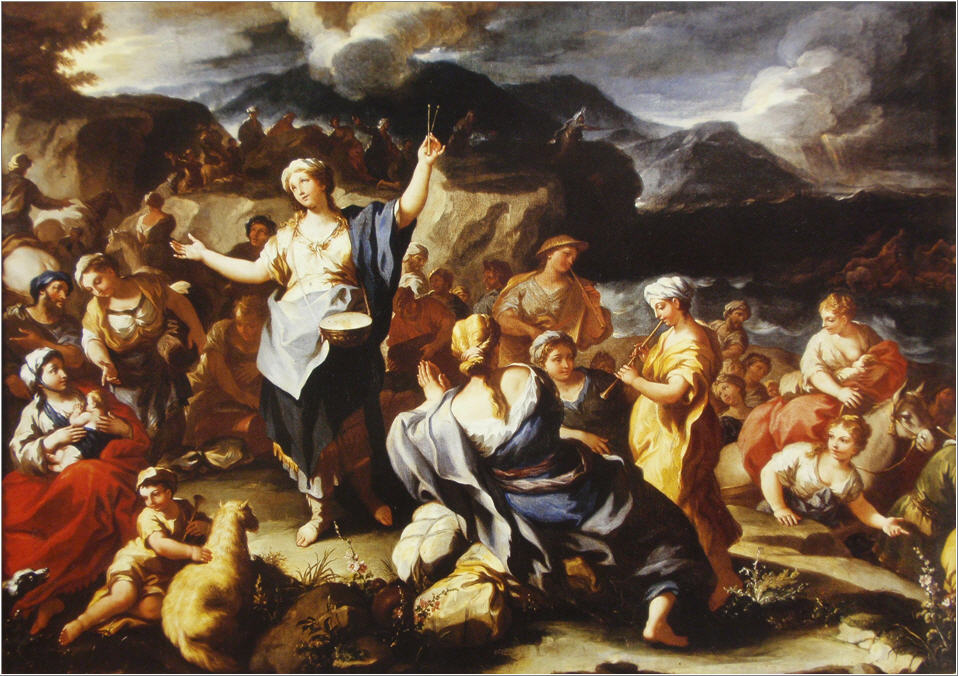
The Israelites accept the Sinai covenant, even before they have heard the words of Aseret HaDibberot / the “Ten Commandments,” יַחְדָּו֙, as one, in one voice. That has never happened since. I have even made the argument in this space that our inclination to disagree with each other, particularly over the meaning of our ancient texts, is the reason that we are still here. The Romans did us a favor, nearly two millennia ago, by destroying the Beit haMiqdash / Temple in Jerusalem and forcing us to make our tradition portable and democratic, rather than centralized and hierarchical. Hence the disagreement.

A curious thing happened after October 7th: suddenly, it seemed that the whole Jewish world was united against Hamas. And how could we not be? The Jewish people were attacked, brutally; an area within Israel’s boundaries was occupied by terrorists. More Jewish people were killed that day than on any day since World War II. As horrific as the details and magnitude of what happened are, I fear we will not grasp the full scope of the horror for years.
For a moment or two, we spoke with one voice. The sovereign, democratic State of Israel must defend itself against terrorism. Full stop. The unity in Israel and with Diaspora Jews was unbelievable. When I was in Israel in November, the statement of this unity which I saw and heard everywhere – on billboards, as the lead-in to radio advertisements, projected onto the sides of buildings – was יחד ננצח. Together, we will win.
When Israel called up its reserve soldiers, 150% of those called showed up for duty – something which never happens. Israelis who were trekking through Thailand and Bolivia got on the first plane home. Jews all over the world, including some in Pittsburgh, rounded up needed supplies to send to Israel. Perhaps most remarkably, many Ḥaredim (I’ve heard as many as 4,000) signed up to serve in the IDF, something which they have historically not done in great numbers.
In January, I spent two days with HaZamir, the International Youth Teen Choir, in New Jersey. The HaZamir environment is one of the last places in the (non-Orthodox) Jewish world that is still unquestionably, proudly, unapologetically Zionist. And that is a particularly satisfying feeling for me, because it features Jewish teens singing Hebrew choral music, which I love.

But of course, four months into this war, we are now seeing cracks in the Jewish unity which followed October 7th. In Israel, frustration over the fact that there are still 100+ hostages is boiling over, and anger at Prime Minister Benjamin Netanyahu, which seems to now be carrying over from the pro-democracy protests of last year, is palpable.
We are still seeing plenty of anti-Israel activism around the world. South Africa’s charging Israel with genocide in the UN’s highest court is a prime example. And of course there are Jewish groups (Jewish Voice for Peace, IfNotNow) who are calling for an unconditional ceasefire, something which merely hands Hamas both victory and opportunity to re-arm.
I think it is difficult to argue with the fact that Hamas has succeeded in its diabolical plot far beyond its own expectations. Not only did they excel at murder and hostage-taking, but also, knowing that Israel’s response would be devastating and deadly for the people of Gaza, in soon turning world public opinion, including that of some Jews, against Israel.
Ḥevreh, it is absolutely abhorrent that somewhere around 26,000 Gazans have died in this war. And yes, that number is courtesy of Hamas, but there is no disputing that thousands of civilians have died in a war due to Hamas’ cynical use of their people as human shields. There is no question that we should be seeking a peaceful solution to find a way to preserve human life throughout the region. But in light of what happened at the International Court of Justice a week ago, we should remember a few important things:
- That figure of 26,000 includes about 10,000 Hamas fighters. I rarely see an American news outlet even mention that. Furthermore, Hamas likely overestimates the number of children who have been killed.
- Remember that Hamas is still firing rockets into Israel, and of course returning fire on advancing Israeli troops, and all of this fighting is taking place in one of the most densely-populated places in the world.
- The current tumult about UNRWA, the UN organization which provides humanitarian aid, running schools and hospitals in Gaza and elsewhere, is not surprising to anybody who has been paying attention. The fact that UNRWA employees are not only giving cover and aid to Hamas, and indeed even participated in the attack of October 7th, is deeply problematic.
- Netanyahu’s approval rating in Israel right now is somewhere around 26%. If elections were held tomorrow, Likud would lose dramatically. He and his far-right allies are now leaning into their base to try to drum up support for horrible ideas, like re-occupying Gaza, or worse. We should look past this inflammatory rhetoric to the day when he is no longer in power, and that day should be coming soon.
When Theodor Herzl wrote, in his 1902 book Altneuland (“Old-new land”), Im tirtzu, ein zo agadah (“If you will it, it is no dream”), he was, in fact, creating a new idea in Jewish life: that people did not have to wait for God to make the first move in establishing a home for the Jewish people. Decades before the rise of Nazism, Herzl knew that the safety and security of Jews in the Diaspora would wax and wane but never be completely stable, and that the only realistic solution for the Jewish future would be self-determination in the land from which we came.
Herzl could not have predicted the challenge of Hamas, although he was certainly aware that the Zionist idea would not be universally accepted, even by Jews, from the outset.
However, I must say that even though I have thrown my lot with the Diaspora (at least for now), Herzl was right. America, as wonderful as it has been for the Jews, will never be entirely safe. We in Pittsburgh know this all too well. And all the more so many of the other places where Jews have lived.
The Israeli singer Gali Atari made famous the song lyric, “Ein li eretz aḥeret.” I have no other land. And as much as we would like to think that we have succeeded here and elsewhere, I still believe in Herzl’s dream: “Lihyot am ḥofshi be-artzeinu.” To be a free people in our land.
And I must add that while I am a loyal American, grateful to this nation for the safe haven it offered my great-grandparents more than a century ago, I am feeling a lot less safe in this country than I used to. And there are plenty of Jews around the world who live in places that are far less safe and stable.
I do not imagine that we will see the unity of October 8th again any time soon. But I think it is essential for us to hold onto certain principles as we move forward:
The hostages must come home before there will be any ceasefire agreement.
Likewise, Hamas must surrender. The ongoing existence of this terror group is a demonstrable threat to the safety of Israeli citizens as well as Palestinians, and to some extent Jewish people the world over.
The people of Israel need our support. We may not achieve full and complete unity, but we must stand with the nearly 10 million people of that nation, Jews and non-Jews, in their quest to remain a safe, democratic haven in a decidedly non-democratic region.
This war is deeply painful for millions of people across the region, and that pain has, to some extent, impacted Jewish unity. The opening line of Beshallaḥ (Shemot/Exodus 13:17) last week actually spoke to the challenge of war. Instead of sending the Israelites out of Egypt the easy way, to return to Israel on the seaside route, which would have taken just a few weeks, the Torah reports that God sent them the long way, the 40-years-in-the-desert route, because God was concerned that when they saw war (e.g. with the Amalekites, the Philistines, the Canaanites, etc.), they would have a change of heart and return back to Egypt.
In the context of war, it is easy to say, “Let’s go back to Egypt,” Although we all know that would be much, much worse. We should rather recommit to Israel, to commit to the longer, harder journey, if not to the unity we once had.
~
Rabbi Seth Adelson
(Originally delivered at Congregation Beth Shalom, Pittsburgh, PA, Shabbat morning, 2/3/2024.)
 The Modern Rabbi