Categories
Sermons

Context Matters – Miqqetz 5784

Context matters. In fact, the way that we understand Judaism – our history, our rituals, and our textual heritage – here in the Conservative movement, is based upon this very principle. We never read our sacred texts or discuss Jewish law or ritual without context, both ancient and modern.

One simple example is the Amidah, the standing, silent prayer mandated by our tradition at least three times each day (four times on Shabbat!). You may know that there is no commandment in the Torah to recite the Amidah. However, when the Romans destroyed our Second Temple in Jerusalem in 70 CE, they put an end to the sacrifices, which ARE described in the Torah. Our rabbis decided that in this new context, daily recitation of the Amidah would take the place of those sacrifices.

And it requires even more context to understand why we invoke not only the Avot of our tradition, the Patriarchs, in the opening line of every Amidah, but also the Imahot, the Matriarchs as well. That is an innovation of the last few decades, an acknowledgment that we also look to the women of our ancient story as well for values and guidance. And it took the context of understanding women and men to be equals in Jewish life for this change to occur.
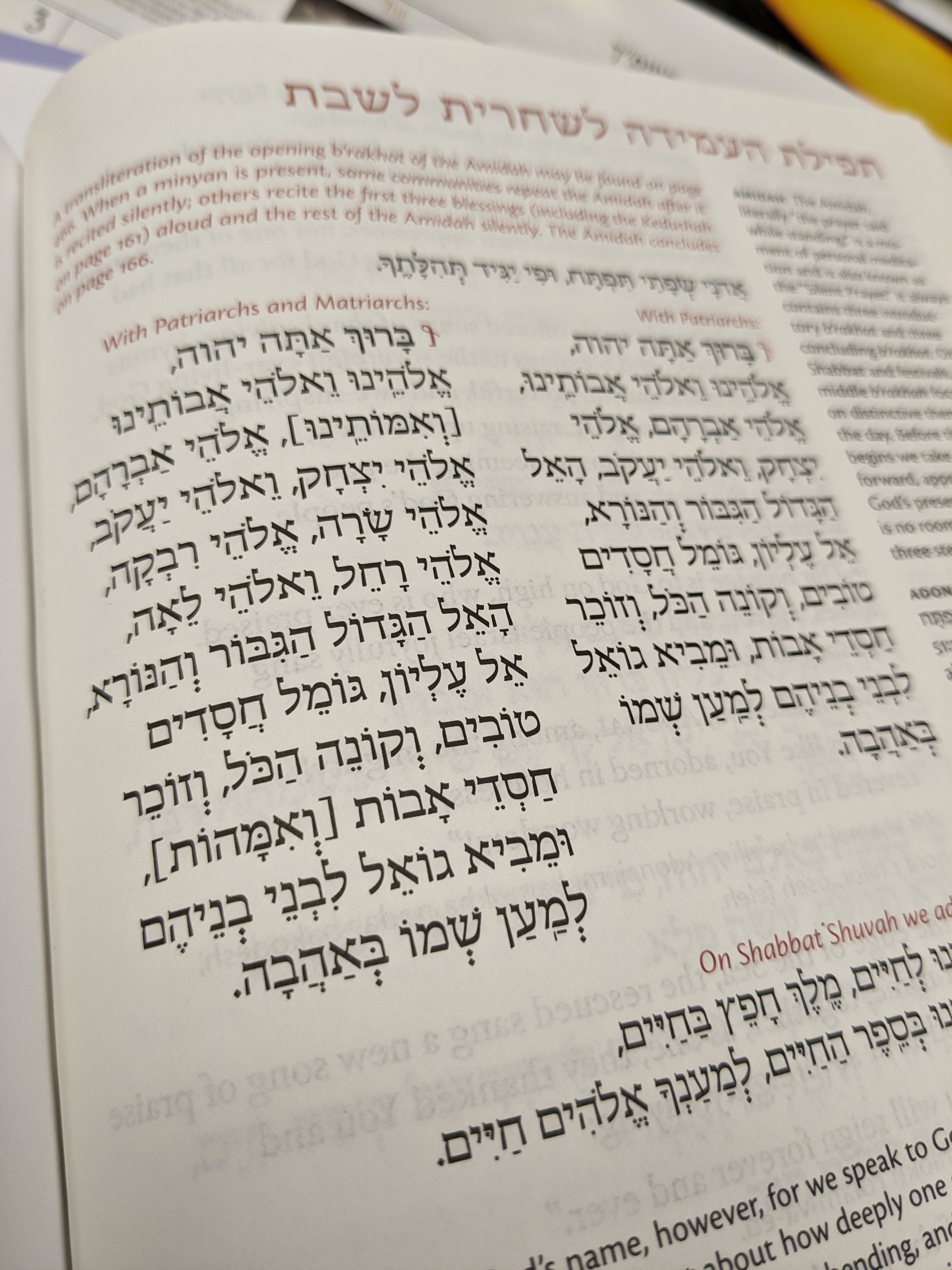
Our tradition has unfolded over thousands of years, and we always read our texts in the context in which they emerged, and our practices today must reflect our current situation.

Academics know that context matters. It is essential to understanding our world, our history, our cultures.

And yet.

There are some times when the invocation of “context” requires context. When presidents of three universities, when pressed on the question of whether protesters chanting certain anti-Israel and anti-Jewish slogans was permissible speech on campus, they deflected with, “It depends on the context.”

***

Ḥevreh, I must say that I’m just not shocked any more – not about the dramatic rise in anti-Semitic incidents in America, not about the insecurity Jewish students are feeling on campus, not about how many Jews feel that they have been abandoned by their political allies, not about how the American media covers the conflict in Israel.

I’m just not shocked any more.

But I am just a tiny bit surprised that the presidents of Harvard, MIT, and Penn publicly failed in unison to concede that language calling for the killing or displacement of Jews meets their campus standards for bullying or harassment.
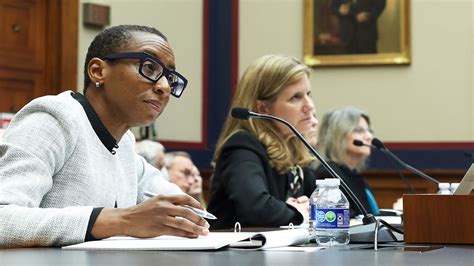
The presidents, who responded with legalese when an honest, personal reckoning with the fact that people screaming “Intifada” are, in actuality, calling for the death of Jews. That is what that word meant when it was happening in Israel two decades ago.

And of course they issued apologies for their poor choice of words after the fact, and one of them is no longer a university president. But in the moment, when the spotlight was on them, they failed. When it really counted, they should have been there with the right answer, which is, “Calling for the killing of Jews is wrong under any circumstances. It does NOT depend on the context.”

And they totally, absolutely missed the point, which is that Jews all over America and the world, but most acutely on university campuses, are feeling the rise in anti-Semitism quite personally. The evident double standard here is that in recent years these campuses have gone far out of their way to accommodate the feelings and sensitivities to language of Black, Hispanic, Native, LGBTQ, Asian students and faculty in various ways. Even the slightest discomfort in this regard has caused university leaders to react vigorously and punitively.

But somehow, when it comes to Jews, our feelings do not matter. Anti-Semitism, in the minds of some, is just not enough of a thing. Jews are apparently too “privileged” for university administrators to bother with. When protesters call for “any means necessary,” which implicitly supports the brutalities of Hamas, is that not an actionable offense? 

Even if, as a recent poll suggests, less than half of those marching for Palestine know which river and which sea they are referring to in one well-known chant, does the implied destruction of the State of Israel not threaten Jews?

Today in Parashat Miqqetz, we read a captivating moment: it occurs when Yosef’s brothers have come before him with their hands out, seeking food, and of course they do not know that they are standing before the brother they sought to kill many years earlier. And they are speaking to each other in Hebrew, and Yosef, who remembers the language of his youth, can understand them, but they are unaware.

We understood loud and clear what these representatives of the most prestigious universities in the United States were saying, and they had no idea. What they were saying, by referencing “context,” was, we are afraid.

We are afraid that if we admit on the record, before Congress, that “From the river to the sea,” or “Intifada” are anti-Jewish statements, that we will be called out by our allies. We are afraid, because while it is OK for Jews to be fearful, to cower in their dorm rooms, to be harassed on campus, it is definitely NOT OK for any member of any other persecuted group, and we definitely don’t want to anger any of those folks.

Ḥevreh, we, the Jews, cannot be afraid. We cannot allow ourselves to be bullied. 

On the contrary, we have to hold our heads up high, to stand proudly with the people and the State of Israel, to stand with and for each other, and to keep doing what Jews have been doing for thousands of years – that is, carrying out the mitzvot / holy opportunities of Jewish life.

Some of you were here last week when Rabbi Mark Goodman taught a couple of Hasidic texts about the pit into which Yosef’s brothers had thrown him, back in Parashat Vayyeshev. One of those texts put forward a fascinating idea, one which we can absolutely draw on today. Rabbi Shemuel Bornsztain, the late 19th-early 20th centure Sochatchover Rebbe, wrote that it is our commitment as Jews to God’s covenant which maintains the presence of the Tzelem Elohim, the Divine Image, within us. When we fail at that covenant, the Tzelem Elohim disappears, and then we are on our own – that is, we are subject to the dangers of the world around us. 

Framed more positively, our fulfillment of Jewish life – ritual, prayer, text learning, the mitzvot which highlight the holiness in our relationships – protects us and insulates us from danger. Our secret to survival is not the Anti-Defamation League, which is only 110 years old, although of course they do very important work. The reason we are still here is that we have maintained our spiritual heritage through millennia of persecution. When we merit the presence of the Tzelem Elohim, we have nothing to fear.

Something else happened nearly two weeks ago, which did not shock me, but certainly made me feel just a wee bit unnerved. Roughly 500 anti-Israel protesters showed up outside a kosher falafel restaurant in Philadelphia to charge the owner of the restaurant, our son of Pittsburgh, Michael Solomonov, with “genocide.” Will all those of us who are supportive of Israel soon be subjected to angry mobs?

I have heard from a friend who works for Hillel International, the center for Jewish life at colleges and universities, that the situation on American campuses for Jews is actually much worse than what you might hear on the news. It’s not necessarily the high-profile anti-Semitic incidents, like the one that happened at Cornell a month ago, but the subtler remarks, the low-level incidents, the constant barrage of anti-Israel language on social media and chanted on campus. It’s the pressure to concede to the pro-Palestinian narrative of Jews as oppressors, of the collective guilt of all Jews.

I am relieved to be able to say that we have not yet arrived at the equivalent of Kristallnacht, in November of 1938, when Nazi thugs across Germany destroyed synagogues and Jewish-owned businesses. Thank God. 

But should we be concerned? Absolutely. Should we be reaching out to our elected officials? Yes, constantly.

And even more so, now is a crucial moment in Jewish life: a mandate to up our game. We need to double down on the formula which has held us together as a community in spite of the Romans, the Babylonians, Antiochus, King Ferdinand and Queen Isabella, and on and on. We must continue gathering in synagogues for prayer. And kindling lights. And teaching our children the words of our ancient tradition, and the contexts in which they emerged. And upholding all of the traditions which have maintained Tzelem Elohim – God’s image – within each of us.

Context matters, and in our current context, the spiritual framework which has guided and nourished and protected our people for the entirety of our history still works. And we need that framework today, more than ever.

~

Rabbi Seth Adelson

(Originally delivered at Congregation Beth Shalom, Pittsburgh, PA, Shabbat morning, 12/16/2023.)
Categories
Sermons

Battle for the Soul of America – Vayishlaḥ 5784

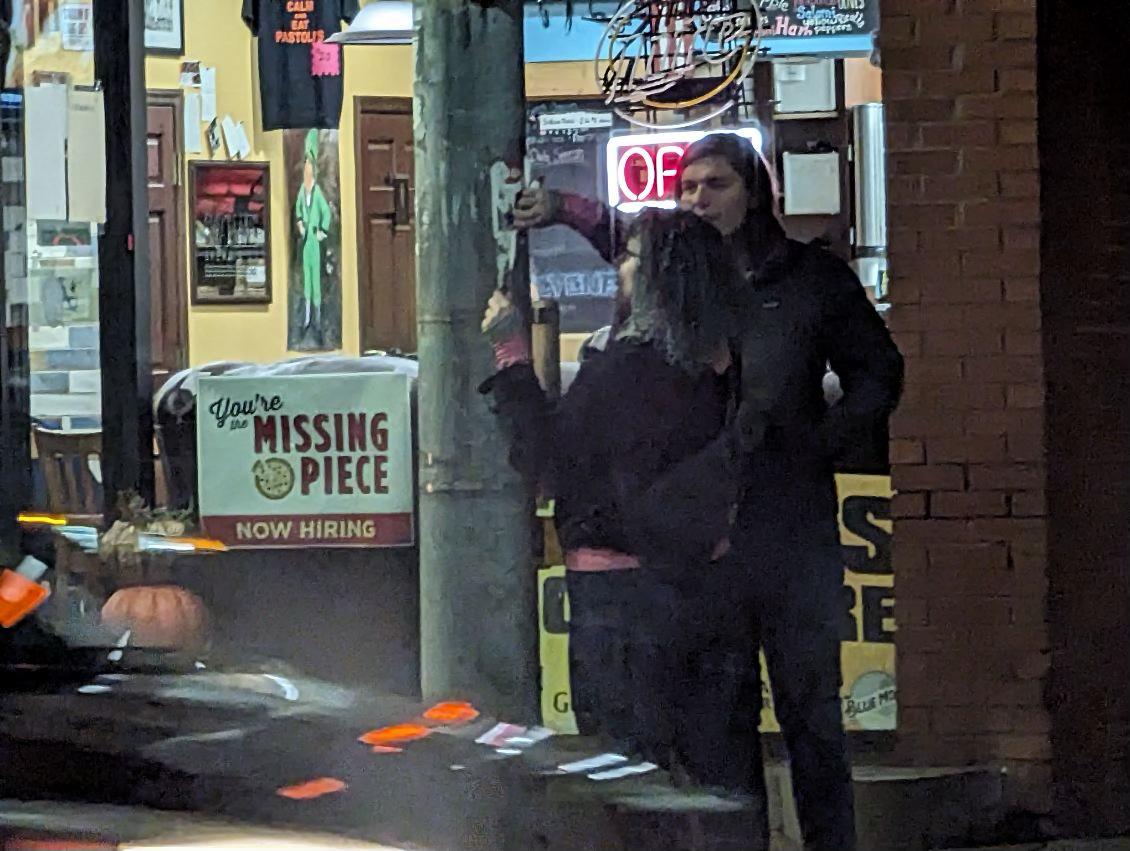
You may have noticed that some members of the Jewish community have put up posters of Israelis held hostage by Hamas on multiple utility poles on Murray Avenue. This is to remind us all of the 140 or so hostages remaining in Gaza, and to keep before us an essential principle of halakhah / Jewish law, that redeeming captives is an urgent obligation which pre-empts many other mitzvot.

Taking down hostage posters on Murray Ave.

And, there are others in our neighborhood who are regularly removing these posters. Perhaps they do not want people to remember the hostages, or maybe they do not believe that there really are hostages, or perhaps they are so consumed with hatred that any acknowledgement of ongoing Israeli suffering would be humanizing the “oppressors” or legitimizing the existence of the State of Israel and therefore forbidden according to their world-view. This phenomenon is not unique to Squirrel Hill; a striking example is that a few weeks back a New York public defender was caught on video doing so.

Parashat Vayishlaḥ opens with one of the most striking transitional moments in the Torah. As Ya’aqov is about to be reunited with his estranged brother Esav, he encounters an angel, with whom he wrestles all night long. This is the scene in which he receives his new name, Yisrael, which, rabbis love to remind us all, means, “the one who struggles with God.”

And yet I, like many of my colleagues, often leave out the second part of the Torah’s etymology of Yisrael (Bereshit / Genesis 32:29):

וַיֹּ֗אמֶר לֹ֤א יַעֲקֹב֙ יֵאָמֵ֥ר עוֹד֙ שִׁמְךָ֔ כִּ֖י אִם־יִשְׂרָאֵ֑ל כִּֽי־שָׂרִ֧יתָ עִם־אֱ-לֹהִ֛ים וְעִם־אֲנָשִׁ֖ים וַתּוּכָֽל׃

Said [the angel], “Your name shall no longer be Ya’aqov, but Yisrael, for you have striven with beings divine and human, and have prevailed.”

We are not only the people who struggle with God, but we also struggle with humans. Ya’aqov’s spiritual wrestling match is a foreshadowing of Jewish history: we struggle with the concept of God and how we relate to the Divine, but we are, in some sense, grappling eternally as a people with the others around us, and mostly not by our own choosing. We have been forced to do this for thousands of years, and mostly we have prevailed.

We are in this moment engaged in a battle for the soul of America, if not the world.

Ḥevreh, the world has been sold a bill of goods. Somehow the genocidal terrorists of Hamas,  whose stated mission is to destroy the State of Israel and kill Jews wherever they are, whose members torture and rape and murder, who are not bound by the laws of military engagement, has been rebranded as carrying out “resistance,” as “martyrs” who are “freeing Palestine from the river to the sea.” And many Americans, on college campuses, in government offices, on school boards, in media companies, in the performing arts, in think tanks and granting foundations and social service organizations have bought into this lie.

Make no mistake: this is the result of a savvy, coordinated effort to win over the hearts and minds of Americans, whose limited knowledge of history, and in particular Jewish history, has easily enabled it. College students in particular are vulnerable, and many have apparently embraced the narrative of the Jew as oppressor, nonsensically lumping us in with all the other “white supremacists” who must be vanquished in a post-colonial world. 

It is this grave distortion of history which denies Hamas brutality, and thus views the removal of those hostage posters not as a denial of Jewish lives, but rather as some kind of twisted standing-up for the underdog.

How did this happen? How did we lose the hearts and minds of those who see themselves as warriors for social justice? How do they justify dehumanizing murdered Israeli citizens, delegitimizing the nation which provided safe haven for Jews following the Nazi slaughter, and fomenting anti-Semitism worldwide? Well, it started with a plan – actually, a public relations crusade.

Gary Wexler, who teaches at USC’s Annenberg School of Communications and who has been creating advertising campaigns for Jewish organizations since the 1980s, recently wrote a piece for the Jewish Journal of Los Angeles, in which he describes meeting the architect of this PR plan in the mid-1990s in Haifa. His name is Ameer Makhoul, and he was the Executive Director of Itijaa, an Israeli-Arab civil rights organization. Wexler quotes Mr. Makhoul as describing it this way: 

We will create… Palestinian campus activists in America and all over the world. Bigger and better than any Zionist activists. Just like you spent your summers on the kibbutz, we will bring college students to spend their summers in refugee camps and work with our people. Just like you have been part of creating global pro-Israel organizations, we will create global pro-Palestinian organizations. Just like you today help create PR campaigns and events for Israel, so will we, but we will get more coverage than you ever have. 

You wonder how we will make this happen, how we will pay for this? Not with the money from your liberal Jewish organizations who are now funding us. But from the European Union, Arab and Muslim governments, wealthy Arab people and their organizations. Eventually, we will not take another dollar from the Jews.

So if you have found yourself asking aloud in recent weeks, “Why are the people who ostensibly care for every marginalized group of people of every stripe,  suddenly marching for making Palestine Judenfrei?” you are not alone. What you are seeing is decades in the making. “Apartheid Week.” BDS. The platform of the Movement for Black Lives, which incorporated language to equate the Palestinian struggle with that of Black Americans. All of it is part of that plan to change the narrative, to deny the Jews our right to self-determination in the land from which we came.

There was a small piece of news here in Pittsburgh which may have crossed your radar (e.g. on WESA or KDKA) in recent weeks. It was about how the Pittsburgh Public Schools is paying a contractor called Quetzal Educational Consulting to help improve math instruction for Black students. The intention is, of course, commendable. There is a significant achievement gap between Black and white students in math.

But if you go to Quetzal’s website, you are greeted with the words, “Decolonize. Reclaim. Reimagine.” And if you check out their Facebook feed, you will quickly find many posts featuring “Free Palestine,” “End the Occupation,” and even a quote equating Zionism and imperialism.

There is no question that Black students deserve better math outcomes, and our public schools should indeed be working hard to ensure that we achieve better outcomes for all students in math, English, science, and particularly history, and maybe even geography. But why should that come at the expense of the Jewish right to self-determination? And what on Earth does supporting the Palestinian cause have to do with math?

I simply cannot get past the feeling that Jews have been unjustly relegated to the wrong side of history. Despite millennia of oppression, despite the very real genocide of Hitler, the forced conscription and pogroms of the czars, the Expulsion from Spain, and yes, October 7th, we are suddenly the oppressors. We are the imperialists. We are the ethnic cleansers.

[Note: the following paragraph is out of date, although I include it here because at the time that I delivered this sermon I was unaware that the UN Women organization had just released a tepid statement, which can be found here. Coming nearly two months after the attack, this statement seems too little, too late.]

** You may have heard that UN Women, the United Nations entity dedicated to gender equality and the empowerment of women, has refused to even acknowledge the sexual atrocities committed by Hamas terrorists. There is abundant proof that these things occurred; where is the outcry from those who marched for #MeToo? **

At a city council meeting in Oakland, California this week regarding a resolution calling for ceasefire, public comments included denial that the atrocities of Oct. 7 were actually carried out by Hamas at all, instead blaming them on the Israelis themselves. And when speakers mentioned that Israeli women were raped, assembled citizens chanted together “Liar! Liar!” The elected officials not only failed to control the hatred and vitriol, but did nothing to correct the record. It’s beyond comprehension.

We are losing the battle for the soul of the world. And not only that, but the narrative has changed to blaming the victim, where Israel and her supporters are concerned. What happened to, “Believe Women!”

The tyranny of the Shoah, the Nazi Holocaust, is that millions of ordinary people all over Europe stood by as the Jews were systematically taken away and slaughtered. Good, well-meaning people let it happen. They stood by and said nothing, because the ideological groundwork had long since been laid by the Nazi regime. We are seeing the stirrings of this facilitated “bystanderism” once again.

Our eternal struggle is simply to be a free people in the land from which we came, unmolested by terrorists as we recline under our own vine and fig tree. October 7th may have shattered that dream. But even worse is the threat that the world may let the terrorists win, as well-intentioned people turn their heads away from the utter depravity of Islamist jihadists. 

But you can help win this battle. You have a voice. All you have to do is speak the truth. To remember the hostages. To ensure that the story of what really happened on October 7th is told and retold. To foil those who seek to deny or rewrite history. To thank our politicians who continue to stand against terror. To remind the world why Israel must be allowed to take Hamas out.

Somewhat more to the point, the Jewish world needs to unite and craft a coordinated campaign to counter the one created by Ameer Makhoul, who was ultimately convicted of spying for Syria and spent nine years in an Israeli jail. I know we have a few folks in the Jewish world who could coordinate messaging on Israel in the Diaspora, to win back hearts and minds. Just as we cannot abide Hamas on Israel’s border, so too can we not allow their hate-filled rhetoric to dominate the world’s discourse on the conflict.

Ya’aqov survives the wrestling match with the angel, but limps away. We may be injured, but the Jewish spirit is not broken, and pride in being Jewish, in our peoplehood, our history, our traditions, our text, our rituals, is still found throughout the world. And every time you do something Jewish, every time you walk through the world holding that pride and knowledge and ancient wisdom, every time you raise your voice in defense of the truth, you notch up a tiny, little victory in the battle. 

~

Rabbi Seth Adelson

(Originally delivered at Congregation Beth Shalom, Pittsburgh, PA, Shabbat morning, 12/2/2023.)